The Real Cost of Replacing a Tesla Battery in 2026
The single most persistent fear among prospective Tesla buyers — and used-Tesla shoppers especially — is the high-voltage traction battery. If it fails out of warranty, what are you actually paying? The short answer: the cost of a new battery for Tesla ranges from roughly $12,000 to $22,000+ depending on the model and battery pack size, before labor. But that number without context is misleading. The vast majority of Tesla batteries outlast the vehicles they're installed in, and degradation data from hundreds of thousands of real-world vehicles tells a far less alarming story than internet forums suggest.
This guide breaks down replacement costs by model, examines real degradation curves, explains the chemistry differences between Tesla's LFP and NMC/NCA packs, and gives you actionable steps to maximize battery longevity. All figures reflect 2026 pricing and current Tesla warranty terms.
Tesla Battery Replacement Cost by Model (2026 Estimates)
| Model | Battery Pack (kWh) | Chemistry | Part Cost (Est.) | Labor (Est.) | Total Range |
|---|---|---|---|---|---|
| Model 3 RWD | ~60 kWh | LFP | $12,000–$14,000 | $1,500–$2,500 | $13,500–$16,500 |
| Model 3 Long Range / Performance | ~75–82 kWh | NMC/NCA | $15,000–$18,000 | $1,500–$2,500 | $16,500–$20,500 |
| Model Y RWD | ~60 kWh | LFP | $12,000–$14,500 | $1,500–$2,500 | $13,500–$17,000 |
| Model Y Long Range / Performance | ~75–82 kWh | NMC/NCA | $15,000–$18,500 | $1,500–$2,500 | $16,500–$21,000 |
| Model S (Long Range / Plaid) | ~100 kWh | NCA | $18,000–$22,000 | $2,000–$3,000 | $20,000–$25,000 |
| Model X (Long Range / Plaid) | ~100 kWh | NCA | $18,000–$22,000 | $2,000–$3,500 | $20,000–$25,500 |
Sources: Tesla service center estimates, independent EV repair shops (e.g., Electrified Garage, Gruber Motors), and community-reported invoices. Actual costs vary by region, model year, and whether Tesla installs a new or remanufactured pack. Remanufactured packs can reduce costs by $3,000–$5,000.
A critical nuance: Tesla frequently replaces failed packs with remanufactured units — packs that have been tested, had weak modules swapped, and certified to meet a minimum capacity threshold. These cost less than brand-new packs and are the norm for out-of-warranty replacements. A full new-from-factory pack sits at the top of these ranges.
How Long Do Tesla Batteries Actually Last?
Tesla's 2025 Impact Report (the latest published data) showed that Model 3 and Model Y batteries retain approximately 85% of their original capacity after 200,000 miles. Model S and Model X packs show slightly more variance but average around 80–85% retention at the same mileage. For a Model 3 Long Range with an EPA-rated 341 miles, that means roughly 290 miles of usable range at 200,000 miles — still more than most drivers need daily.
Typical Tesla Battery Degradation Curve
| Mileage | Avg. Capacity Retained (Model 3/Y) | Avg. Capacity Retained (Model S/X) | Real-World Range Impact |
|---|---|---|---|
| 0 (new) | 100% | 100% | Full EPA range |
| 30,000 mi | ~95% | ~94% | ~15–17 mi loss (LR) |
| 60,000 mi | ~93% | ~91% | ~22–25 mi loss (LR) |
| 100,000 mi | ~90% | ~88% | ~30–35 mi loss (LR) |
| 150,000 mi | ~88% | ~85% | ~38–42 mi loss (LR) |
| 200,000 mi | ~85% | ~82% | ~48–52 mi loss (LR) |
Data synthesized from Tesla Impact Reports, tesla.com/impact, and aggregated fleet data from Recurrent Auto. Individual results vary based on charging habits, climate, and usage patterns.
The degradation curve is not linear. Most capacity loss occurs in the first 20,000–30,000 miles (roughly 3–5%), after which the curve flattens considerably. This "bathtub" pattern is consistent across lithium-ion chemistries and means that a battery surviving its first few years healthy is very likely to remain functional well past 200,000 miles.
Catastrophic failure — where a pack suddenly becomes non-functional rather than gradually losing capacity — is rare. When it does occur, it's typically linked to manufacturing defects caught under warranty, physical damage, or coolant leaks that corrode internal components. The odds of needing an out-of-warranty replacement due to sudden failure are low, estimated at well under 5% of all Tesla vehicles based on service data.
Tesla Battery Warranty: What's Covered and What Isn't
Tesla's battery warranty is one of the strongest in the industry, but understanding the fine print matters before you assume you're fully protected.
Tesla High-Voltage Battery Warranty (2026 Models)
| Model / Trim | Warranty Period | Mileage Limit | Minimum Capacity Retention |
|---|---|---|---|
| Model 3 RWD (LFP) | 8 years | 100,000 miles | 70% |
| Model 3 Long Range / Performance | 8 years | 120,000 miles | 70% |
| Model Y RWD (LFP) | 8 years | 100,000 miles | 70% |
| Model Y Long Range / Performance | 8 years | 120,000 miles | 70% |
| Model S (all trims) | 8 years | 150,000 miles | 70% |
| Model X (all trims) | 8 years | 150,000 miles | 70% |
Source: Tesla New Vehicle Limited Warranty. Whichever comes first — time or mileage.
Key warranty details buyers often miss:
- The 70% threshold means Tesla will only replace or repair the battery if its usable capacity drops below 70% of the original kWh within the warranty period. A pack that degrades to 72% at 119,000 miles on a Long Range model is not covered — even though you've lost nearly a third of your range.
- Coverage includes defects and abnormal degradation, but not damage from accidents, flooding, fire, or rodent damage. Modifications that affect the battery system can also void coverage.
- Tesla may replace with a remanufactured pack that meets the minimum capacity threshold — not necessarily a brand-new battery.
- The warranty is transferable to subsequent owners automatically, which supports resale value on used Teslas.
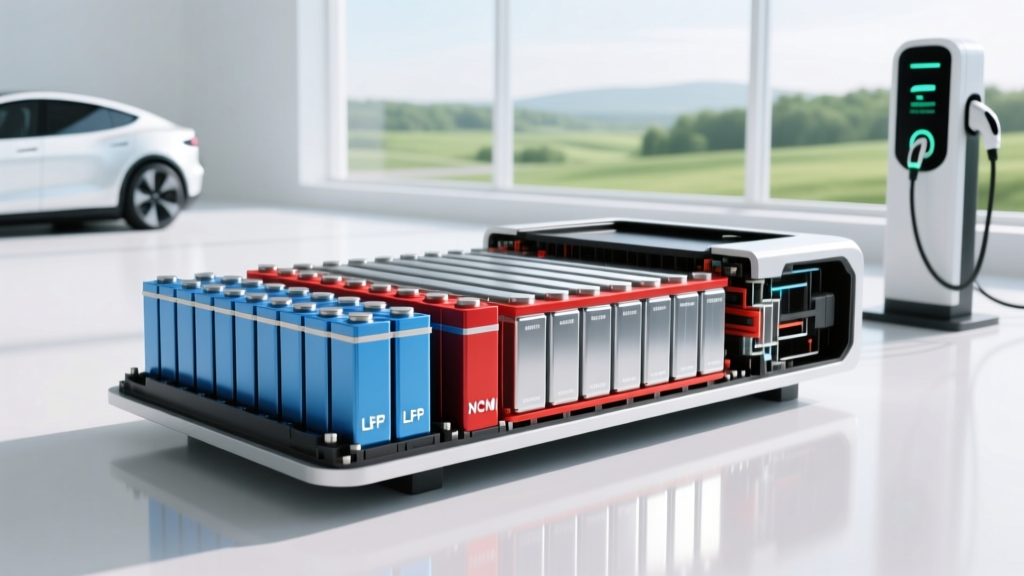
LFP vs NMC/NCA: Which Tesla Battery Chemistry Is Right for You?
Tesla uses two distinct battery chemistries across its lineup, and the differences have real implications for cost, longevity, range, and how you should charge.
Tesla Battery Chemistry Comparison
| Attribute | LFP (Lithium Iron Phosphate) | NMC/NCA (Nickel Manganese Cobalt / Nickel Cobalt Aluminum) |
|---|---|---|
| Used in | Model 3 RWD, Model Y RWD | Model 3 LR/Perf, Model Y LR/Perf, Model S, Model X |
| Energy density | Lower (~160 Wh/kg cell-level) | Higher (~250–270 Wh/kg cell-level) |
| Range (EPA) | 272 mi (Model 3 RWD) | Up to 363 mi (Model 3 LR AWD) |
| Cycle life | 3,000–5,000+ cycles | 1,000–2,000 cycles |
| Recommended daily charge | 100% (Tesla recommends weekly 100% charge) | 80–90% daily; 100% for trips only |
| Cold-weather performance | More range loss in cold (~30–40% at 20°F) | Better cold performance (~20–30% loss at 20°F) |
| Cost per kWh | Lower — drives cheaper vehicle MSRP | Higher — premium for range and performance |
| Cobalt content | None | Contains cobalt and/or nickel |
| Replacement cost | $12,000–$14,500 (part) | $15,000–$22,000 (part) |
EPA range figures from fueleconomy.gov. Cold-weather estimates based on Recurrent Auto and AAA cold-weather EV testing.
Which is better? It depends entirely on your use case. If you commute under 60 miles daily, can charge at home every night, and want the lowest total cost of ownership, LFP is the pragmatic choice. Its longer cycle life means it will likely outlast the car, and the ability to charge to 100% daily without degradation concern simplifies ownership. If you regularly drive 200+ miles between charges, live in a cold climate where every mile of range matters, or want the performance variants, NMC/NCA delivers the energy density you need — at higher replacement cost and with more careful charging discipline required.
What Determines How Long Your Tesla Battery Lasts?
Battery degradation isn't purely a function of time or mileage. How you use and charge the vehicle has measurable impact on long-term State of Health (SoH).
Battery Longevity: Best Practices and Risk Factors
- Daily charge limit: Set to 80% for NMC/NCA packs; 100% is fine (and recommended weekly) for LFP. Sustained time at 100% SoC on NMC accelerates calendar degradation.
- DC fast charging frequency: Occasional Supercharging has minimal impact. Daily DC fast charging — especially at high SoC — increases degradation by an estimated 2–5% over 100,000 miles compared to Level 2 home charging, based on fleet data from Recurrent Auto.
- Extreme heat exposure: Sustained ambient temperatures above 95°F with the vehicle parked at high SoC accelerates calendar aging. Use the Tesla app's cabin overheat protection and preconditioning.
- Extreme cold: Cold doesn't permanently damage the battery but temporarily reduces available capacity. Always precondition before driving in cold weather — the Tesla app allows scheduled departure preconditioning, which warms the battery using grid power.
- Deep discharges: Avoid regularly driving below 10% SoC. Occasional low-SoC events are fine; habitual deep discharges stress the cells.
- Storage: If storing a Tesla for weeks, set charge to 50% and leave it plugged in. Tesla's battery management system (BMS) will maintain optimal SoC.
The thermal management system in Teslas is among the best in the industry — active liquid cooling and heating keeps cells within an optimal temperature window during charging and driving. This is a significant reason Tesla packs show lower degradation rates than some competitors with passive or less sophisticated thermal systems.
How to Check Your Tesla's Battery Health (State of Health)
Tesla doesn't display a simple "battery health percentage" in the vehicle UI the way some competitors do. But there are several reliable methods to assess SoH:
Method 1: The Range Calculation
Charge your Tesla to 100% (for LFP) or note the projected range at a known SoC (for NMC/NCA — charge to 90% and extrapolate). Compare the displayed range at full charge to the original EPA rating. For example, if your Model 3 Long Range originally rated 341 miles EPA and now shows 305 miles at 100%, your SoH is approximately 89%. Note: Tesla's displayed range is based on rated (EPA-like) efficiency, not recent driving consumption, making it a reasonably consistent metric.
Method 2: Tesla Service Mode (2023+ Vehicles)
On vehicles running recent software versions, navigate to Controls → Software → swipe right on the model name to access Service Mode. Under the "High Voltage Battery" section, you can view the nominal full pack (current usable kWh) versus the nominal new pack (original kWh). Dividing the former by the latter gives you a direct SoH percentage. This is the most accurate in-vehicle method.
Method 3: Third-Party Apps and Services
Apps like Tessie and Stats for Tesla pull telemetry data from the Tesla API and can track estimated SoH over time. Recurrent Auto offers a free battery health report that compares your pack's degradation to a fleet of similar vehicles. For pre-purchase inspections on used Teslas, a Tesla Service Center can run a battery health test — typically included in a pre-purchase inspection for around $150–$200.
Method 4: OBD-II Dongles
Devices like the OBDLink SX paired with apps such as Scan My Tesla can read BMS data directly, including cell-level voltage variance, pack capacity, and energy throughput. This is the most granular method but requires hardware and technical comfort.
When Will You Actually Need a Battery Replacement?
Based on current degradation data, the honest answer is: probably never during your ownership. Consider the math:
- Average US driver covers ~14,000 miles per year (FHWA data).
- Average vehicle ownership duration: ~6–8 years.
- That's 84,000–112,000 miles — well within the warranty period for most trims.
- At 112,000 miles, a Model 3/Y battery retains ~89–90% capacity on average.
- Even at 200,000 miles (14+ years of average driving), retention averages 85%.
The scenarios where out-of-warranty replacement becomes necessary are:
- Catastrophic failure — coolant leak, manufacturing defect that manifests late, or physical damage. Rare; estimated at <5% of vehicles.
- High-mileage commercial use — rideshare drivers, delivery fleets, or owners consistently covering 30,000+ miles/year who exceed warranty mileage limits within 5–6 years.
- Second or third owners of older Model S/X vehicles (2012–2017) whose packs have aged past warranty and show significant degradation.
For the typical buyer planning 5–8 years of ownership, the battery is effectively a non-issue financially. The warranty covers the risk period, and degradation is gradual and manageable.
What's Next: Solid-State and Silicon-Anode Batteries
Several next-generation battery technologies are in development that could eventually reduce replacement costs and extend longevity further. It's important to frame these with realistic timelines:
- Solid-state batteries: Replace the liquid electrolyte with a solid material, potentially offering higher energy density, faster charging, and improved safety. Companies like Toyota, QuantumScape, and Samsung SDI have announced prototype milestones, but mass production for consumer vehicles is not expected before 2028–2030. These will likely debut in premium models before reaching Tesla's price range.
- Silicon-anode batteries: Replace graphite anodes with silicon, boosting energy density by 20–40%. Companies like Sila Nanotechnologies and Group14 are in early production, with some cells expected in vehicles by 2026–2027. Tesla's own 4680 cell roadmap includes silicon-anode variants, though production scale remains limited as of early 2026.
- Sodium-ion batteries: A lower-cost alternative to lithium for entry-level EVs. CATL has begun production, and Tesla may adopt sodium-ion packs for base trims in certain markets, though US availability is not confirmed.
None of these technologies are currently available in Tesla vehicles. If you're buying today, you're choosing between proven LFP and NMC/NCA chemistries — both of which have demonstrated excellent longevity in hundreds of thousands of real-world vehicles.
Tesla Battery Cost & Longevity FAQ
How much does a new Tesla battery cost in 2026?
Replacement costs range from approximately $13,500 to $25,500 including labor, depending on the model and whether the replacement pack is new or remanufactured. Model 3 and Model Y RWD (LFP) packs are at the lower end ($13,500–$17,000), while Model S and Model X packs ($20,000–$25,500) sit at the top due to their larger ~100 kWh capacity.
How long do Tesla batteries last before needing replacement?
Based on Tesla's published fleet data, most packs retain 85%+ capacity at 200,000 miles. Catastrophic failure is rare (<5%). For the average driver covering 14,000 miles/year, a Tesla battery should last 15+ years without needing replacement — often outlasting the rest of the vehicle.
Does the Tesla battery warranty cover degradation?
Yes, but only if capacity drops below 70% within the warranty period (8 years / 100,000–150,000 miles depending on model). Normal, gradual degradation above the 70% threshold is not covered. Tesla may replace the pack with a remanufactured unit that meets the minimum retention standard.
Is LFP better than NMC for Tesla batteries?
LFP offers longer cycle life (3,000–5,000 cycles vs. 1,000–2,000), lower replacement cost, and simpler charging habits (100% daily is fine). NMC/NCA provides higher energy density, more range per charge, and better cold-weather performance. LFP is better for daily commuting and cost-conscious buyers; NMC is better for long-distance drivers and cold climates.
How do I check my Tesla's battery State of Health?
The most accurate in-vehicle method is Service Mode (Controls → Software → swipe right on model name), which shows current vs. original pack capacity in kWh. You can also compare displayed range at 100% charge to the original EPA rating, use third-party apps like Tessie or Recurrent Auto, or request a battery health check at a Tesla Service Center ($150–$200).
Does frequent Supercharging damage the battery?
Occasional Supercharging has minimal long-term impact thanks to Tesla's active thermal management. However, fleet data from Recurrent Auto suggests that daily DC fast charging may increase degradation by 2–5% over 100,000 miles compared to primarily Level 2 home charging. For maximum longevity, use Level 2 for daily charging and reserve Supercharging for road trips.
Will solid-state batteries make Tesla replacements cheaper?
Possibly, but not soon. Solid-state batteries are not expected in mass-market consumer vehicles before 2028–2030. Current LFP and NMC/NCA chemistries are proven, cost-effective, and demonstrate strong longevity. Buyers should not delay a purchase waiting for next-generation battery tech.