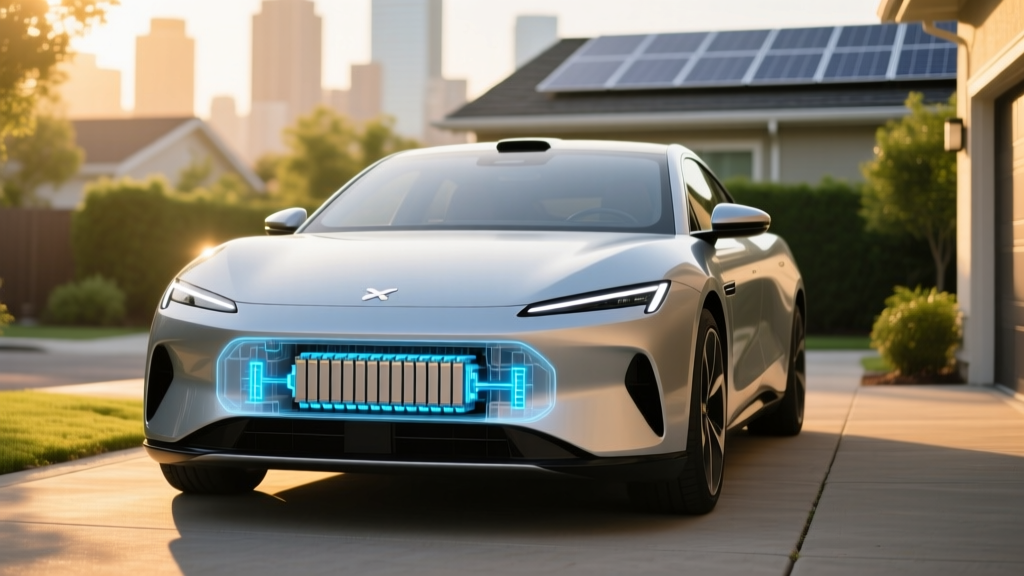
Every electric vehicle battery relies on copper — not as the energy-storing chemistry, but as the critical current collector on the anode side of every lithium-ion cell. While shoppers focus on cathode chemistry (LFP vs. NMC/NCA), the copper foil inside each cell directly influences conductivity, thermal behavior, weight, and ultimately how long your battery pack lasts. This guide unpacks what "copper battery" technology really means for EV buyers in 2026, how different chemistries degrade over real-world use, what warranties actually cover, and when (or if) you'll ever need a replacement.
What a "Copper Battery" Actually Means in an EV
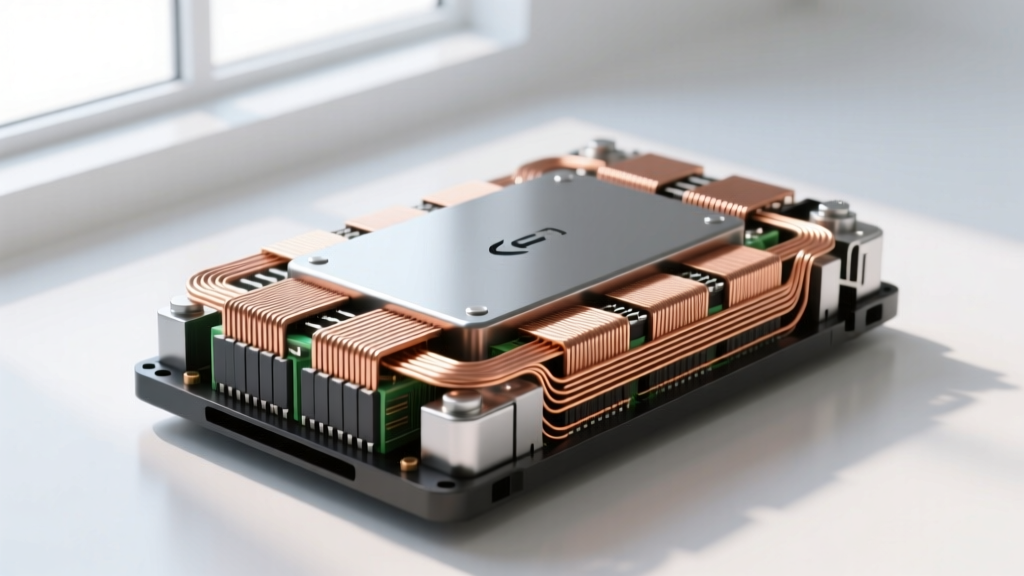
When engineers and analysts refer to copper in EV batteries, they're talking about the copper current collector foil — an ultra-thin sheet (typically 6–10 micrometers thick) that sits behind the graphite or silicon-blend anode in every lithium-ion cell. Copper is used here because it is highly conductive, electrochemically stable at the low voltages of the anode, and can be manufactured at scale. Aluminum serves the same role on the cathode side, but cannot be used on the anode because it alloys with lithium at low potentials.
In a typical 75 kWh EV battery pack containing thousands of cylindrical or prismatic cells, copper accounts for roughly 8–12% of the cell's weight and a meaningful share of raw material cost. The quality, thickness, and coating of this copper foil affect:
- Internal resistance: Thinner foil saves weight but can increase resistance and heat generation during fast charging.
- Thermal management: Copper's high thermal conductivity (≈400 W/m·K) helps distribute heat across the electrode, reducing hotspots that accelerate degradation.
- Cycle life: Copper foil that resists dendrite puncture and mechanical fatigue directly extends how many charge cycles the cell survives.
- Fast-charge tolerance: High C-rate charging (150–350 kW DC fast charging) stresses the copper-anode interface; advanced surface treatments help maintain adhesion over thousands of cycles.
So when you see "copper battery" in EV marketing or analyst reports, it's shorthand for the current-collector engineering inside standard lithium-ion cells — not a separate battery chemistry.
LFP vs. NMC/NCA: Chemistry Trade-Offs That Matter
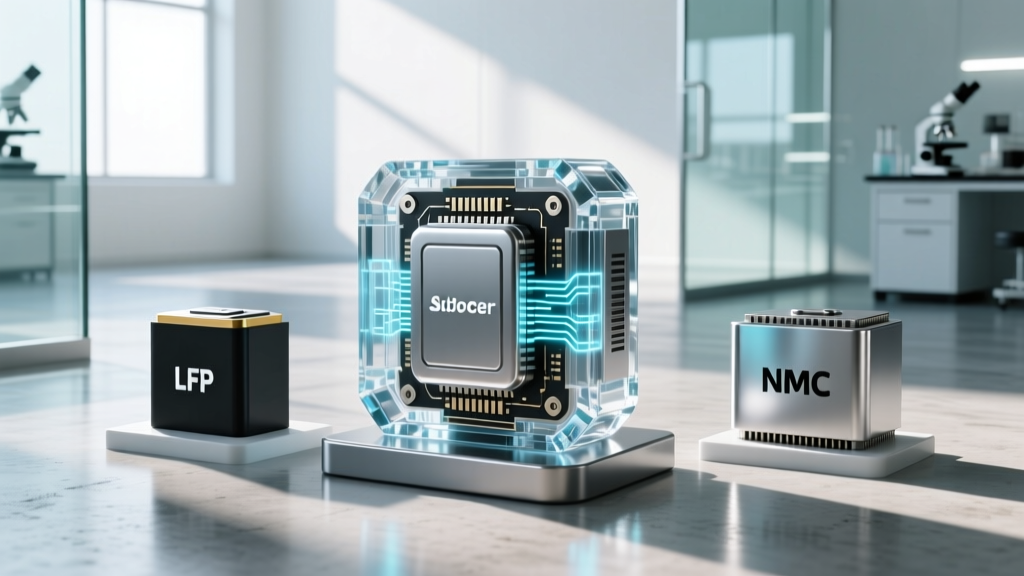
The cathode chemistry — not the copper current collector — is the primary driver of energy density, cycle life, cold-weather performance, and cost. Here's how the two dominant chemistries stack up in 2026 production EVs:
| Attribute | LFP (Lithium Iron Phosphate) | NMC/NCA (Nickel Manganese Cobalt / Nickel Cobalt Aluminum) |
|---|---|---|
| Energy Density (cell-level) | 160–200 Wh/kg | 250–300 Wh/kg |
| Typical Cycle Life | 3,000–5,000+ cycles to 80% SoH | 1,000–2,500 cycles to 80% SoH |
| Cold-Weather Range Loss (20°F) | ~25–35% loss | ~20–30% loss |
| Recommended Daily SoC | Up to 100% (no penalty) | 80% daily; 100% for trips only |
| Cost per kWh (pack-level, 2026 est.) | $90–$115 | $120–$150 |
| Cobalt / Nickel Content | None (iron + phosphate) | Significant (supply-chain risk) |
| Common in (2026 models) | Tesla Model 3/Y RWD, BYD, Ford Mustang Mach-E Select LFP, Rivian Standard | Hyundai Ioniq 5/6 LR, BMW iX, Mercedes EQS, Tesla LR/Performance |
The practical takeaway: LFP wins on longevity and cost — ideal for daily commuters who charge at home and don't need maximum range. NMC/NCA wins on energy density — better for long-range models and cold-climate drivers who need every mile. Both chemistries use copper current collectors on the anode side; the copper engineering is comparable, though LFP cells often use slightly thicker foil to accommodate their different voltage profile.
How Long Do EV Batteries Actually Last?
The most common question from prospective EV buyers: "Will I need a new battery, and when?" The data from over a decade of real-world fleet and consumer use is reassuring.
Real-World Degradation Data Points (aggregated from fleet studies, manufacturer reports, and owner data through 2025–2026):
- Year 1 / ~15,000 miles: 1–3% capacity loss (initial formation loss is normal)
- Year 3 / ~45,000 miles: 4–7% total loss (most NMC packs); 2–5% (LFP)
- Year 5 / ~75,000 miles: 6–10% total loss (NMC); 3–7% (LFP)
- Year 8 / ~120,000 miles: 8–15% total loss (NMC); 5–10% (LFP)
- Year 10+ / ~150,000+ miles: 10–20% (NMC); 5–15% (LFP) — many packs still above 80% SoH
Tesla's 2025 Impact Report, for example, showed that Model 3/Y battery packs retained an average of 88% capacity after 200,000 miles. Hyundai and Kia report similar figures for their E-GMP platform packs. LFP-equipped vehicles (like the Tesla Model 3 RWD) are tracking even better, with some fleet operators reporting less than 5% degradation after 100,000 miles.
The copper current collector plays a supporting role here: high-quality foil with good adhesion to the anode coating reduces mechanical fatigue during the expansion-contraction cycles of charge and discharge, slowing the impedance growth that manifests as range loss.
Battery Warranty Terms: What's Actually Covered
Federal law mandates a minimum 8-year / 100,000-mile warranty on EV battery packs (10 years / 150,000 miles in California and states that follow CARB standards). Most manufacturers exceed these minimums. Here's how major brands structure coverage in 2026:
| Manufacturer | Warranty Period | Capacity Retention Threshold | Notes |
|---|---|---|---|
| Tesla | 8 yr / 100,000 mi (Model 3/Y RWD); 8 yr / 120,000 mi (LR/Perf) | 70% | Covers cells, BMS, pack assembly |
| Hyundai / Kia | 10 yr / 100,000 mi | 70% | Among the longest coverage |
| Ford | 8 yr / 100,000 mi | 70% | Mustang Mach-E, F-150 Lightning |
| BMW | 8 yr / 100,000 mi | 70% | iX, i4, i7 |
| Rivian | 8 yr / 175,000 mi (Max pack) | 70% | Higher mileage threshold on larger packs |
| GM (Ultium) | 8 yr / 100,000 mi | 70% | Covers battery and propulsion components |
Key detail: The warranty triggers when capacity drops below the threshold (typically 70% of original). A pack at 72% SoH at 95,000 miles would not qualify for replacement. The warranty covers defects and abnormal degradation — not damage from accidents, flooding, or unauthorized modifications.
EV Battery Replacement Cost: When and How Much
For most owners, battery replacement is a theoretical concern, not an imminent one. The vast majority of EV battery packs outlast the vehicle's useful life. But for those who do need one — typically due to a manufacturing defect, physical damage, or extreme high-mileage use — here's the current cost landscape:
| Vehicle / Pack Size | Battery Capacity | Replacement Cost Range (2026) | When Typically Needed |
|---|---|---|---|
| Tesla Model 3 RWD (LFP) | ~60 kWh | $8,000–$12,000 | Rarely; 200,000+ mi or defect |
| Tesla Model Y LR (NMC) | ~75 kWh | $12,000–$16,000 | Rarely; 150,000+ mi or defect |
| Hyundai Ioniq 5 LR | 77.4 kWh | $14,000–$18,000 | 150,000+ mi or defect |
| Ford F-150 Lightning Ext. | ~131 kWh | $20,000–$30,000 | Very rare; high-value pack |
| Chevrolet Equinox EV | ~85 kWh | $12,000–$16,000 | Rarely; Ultium modular design allows partial replacement |
| Nissan Ariya | ~91 kWh | $15,000–$20,000 | Rarely; 150,000+ mi or defect |
Several factors are pushing replacement costs down year over year:
- Cell-level pricing: Pack-level costs have fallen below $130/kWh for NMC and under $100/kWh for LFP in 2026, down from $200+/kWh just three years ago.
- Modular pack designs: GM's Ultium and some BMW packs allow individual module replacement rather than a full pack swap, cutting costs by 40–60%.
- Aftermarket and remanufactured packs: A growing ecosystem of third-party shops offers refurbished packs at 30–50% below OEM pricing.
According to fueleconomy.gov, the average EV battery pack is lasting well beyond 150,000 miles before reaching the 70% capacity threshold, making out-of-warranty replacement an uncommon scenario.
Factors That Accelerate (or Slow) Battery Degradation
Not all miles are created equal. How you charge, drive, and store your EV has a measurable impact on how quickly the cells — and the copper current collectors within them — age.
Practices That Accelerate Degradation
- Frequent DC fast charging above 150 kW: High C-rates generate heat and lithium plating risk, especially without preconditioning. Occasional road-trip fast charging is fine; daily reliance on 250–350 kW chargers adds cumulative stress.
- Sustained 100% SoC (NMC/NCA only): Storing an NMC pack at full charge for days accelerates electrolyte decomposition. LFP is largely immune to this.
- Deep discharges below 10% SoC: Repeatedly running the pack nearly empty stresses the anode SEI layer and copper interface.
- Extreme heat exposure: Parking in 100°F+ heat for extended periods without thermal management active accelerates calendar aging.
- Cold fast charging without preconditioning: Charging at high power below 32°F without battery warming can cause lithium metal plating on the anode — a permanent capacity loss mechanism.
Practices That Maximize Longevity
- Home Level 2 charging (7–11.5 kW): Gentle, slow charging produces minimal heat and stress.
- 20–80% SoC daily window (NMC/NCA): This sweet spot minimizes voltage stress on cathode and anode.
- 100% SoC is fine for LFP: In fact, periodic 100% charges help LFP's BMS calibrate cell balancing.
- Use battery preconditioning: Enable nav-to-charger preconditioning (Tesla, Hyundai, BMW, Rivian) to warm the pack before DC fast charging.
- Garage parking in extreme climates: Reduces both summer heat soak and winter deep-freeze exposure.
- Drive moderately in extreme cold: Aggressive acceleration on a cold-soaked pack stresses cells more than gentle driving.
How to Check and Monitor Battery Health (SoH)
State of Health (SoH) is the percentage of original capacity your battery can still hold. A new pack is 100% SoH; at 70% SoH, a 75 kWh pack holds about 52.5 kWh of usable energy. Here's how to check it:
In-Vehicle Methods
- Tesla: The Service menu (hold model name on About screen) shows battery health percentage on recent software versions. Third-party apps like Tessie and Stats also pull SoH via the Tesla API.
- Hyundai / Kia: The EV menu in the infotainment system displays battery condition; the MyHyundai/MyKia app shows estimated SoH.
- BMW: The iDrive system includes a battery health indicator under the vehicle settings menu.
- GM (Ultium): The myChevrolet/myCadillac app provides battery health status; OnStar diagnostics can report SoH.
Third-Party and OBD-II Methods
- OBD-II dongles + apps: Devices like the OBDLink SX paired with apps such as ABRP (A Better Route Planner) or Leaf Spy (Nissan) can read real-time battery data including SoH, cell voltage spread, and pack temperature.
- Dealer diagnostic reports: Request a battery health printout during any service visit. Most dealers can provide a detailed cell-level report.
- Independent EV shops: A growing number of EV-specialty shops offer battery health assessments, useful for used-EV purchases.
What to watch for: A cell voltage spread (difference between highest and lowest cell) greater than 50 mV at rest may indicate an imbalance that warrants dealer attention. Gradual SoH decline of 1–2% per year is normal; sudden drops suggest a defect covered under warranty.
Emerging Battery Tech: Solid-State, Silicon Anodes, and Copper's Future Role
While today's EV batteries rely on liquid electrolyte and copper-foil current collectors, next-generation technologies are advancing rapidly — though most remain pre-production as of 2026.
Silicon-Dominant Anodes
Replacing some or all of the graphite anode with silicon can boost energy density by 20–40%. Companies like Sila Nanotechnologies and Group14 are supplying silicon-blend anode materials to manufacturers including Mercedes-Benz (for the upcoming G-Class EV) and Panasonic. Timeline: Limited production in 2025–2026; broader adoption expected 2027–2029. Silicon anodes still use copper current collectors, though the foil must handle greater expansion forces.
Solid-State Batteries
Solid-state cells replace the liquid electrolyte with a solid ceramic, polymer, or sulfide separator, enabling lithium-metal anodes and dramatically higher energy density (potentially 400–500 Wh/kg at cell level). Toyota has announced a solid-state battery targeting 2027–2028 production with a claimed 750 km (~465 mi) range. Samsung SDI and QuantumScape are pursuing similar timelines. Timeline: Initial limited production 2027–2028; cost-competitive mass production unlikely before 2030. Solid-state cells may use different current collector materials, but copper remains the leading candidate for the anode side.
Sodium-Ion Batteries
CATL and BYD have begun producing sodium-ion cells for smaller, lower-cost EVs. These use aluminum current collectors on both sides (no copper needed), reducing material cost. Timeline: Available in China-market micro-EVs now; US/EU market entry uncertain before 2028. Energy density (~120–160 Wh/kg) limits sodium-ion to city cars and budget segments.
For today's buyer, these technologies are forward-looking context — not purchase factors. Current lithium-ion cells with copper current collectors, whether LFP or NMC, are proven, well-warrantied, and improving incrementally every model year.
Frequently Asked Questions
How long do EV batteries last in years and miles?
Most modern EV battery packs last 150,000–200,000+ miles before degrading to 80% of original capacity. In years, that translates to 10–15 years for the average driver covering 12,000–15,000 miles annually. LFP chemistry packs are tracking toward the upper end of this range, with some fleet data showing less than 10% degradation after 150,000 miles. According to data compiled by the National Renewable Energy Laboratory (NREL), median annual degradation across all chemistries is approximately 1.5–2.5% per year under typical use.
How much does an EV battery cost to replace?
Full pack replacement costs range from approximately $8,000 for a 60 kWh LFP pack (Tesla Model 3 RWD) to $30,000 for a 131 kWh NMC pack (F-150 Lightning Extended Range). However, most replacements are covered under the 8–10 year / 100,000+ mile warranty. Out-of-warranty replacements are rare — fewer than 2–3% of EVs have required a full battery replacement as of 2026 fleet data. Modular pack designs (like GM Ultium) allow individual module replacement for $2,000–$5,000 rather than a full pack swap.
What does the EV battery warranty actually cover?
The standard warranty covers battery capacity loss below a specified threshold (typically 70% of original capacity) due to defects or abnormal degradation during the warranty period (8 years / 100,000 miles minimum, per federal mandate). It covers the cells, battery management system (BMS), and pack assembly. It does not cover damage from collisions, flooding, fire, unauthorized modifications, or use outside manufacturer specifications. See IRS.gov for how battery warranty status may affect eligibility for the §30D federal tax credit on used EVs.
How do I check and maximize my EV battery health?
Check SoH through your vehicle's infotainment system, companion app, or an OBD-II diagnostic tool. To maximize longevity: rely primarily on Level 2 home charging, keep NMC/NCA packs between 20–80% SoC for daily use (LFP can go to 100%), use battery preconditioning before DC fast charging, avoid storing the vehicle at extreme SoC levels in hot weather, and minimize repeated deep discharges below 10%. These practices collectively can add years of useful life to your pack.
LFP vs. NMC — which battery chemistry is better?
Neither is universally "better" — they optimize for different needs. Choose LFP if you prioritize longevity (3,000–5,000+ cycles), lower cost, cobalt-free sourcing, and can charge to 100% daily without worry. Choose NMC/NCA if you need maximum range per charge (250–300 Wh/kg cell density), better cold-weather performance, and are disciplined about keeping daily SoC at 80%. For a daily commuter with home charging, LFP is increasingly the pragmatic choice. For a road-tripper or cold-climate driver, NMC/NCA delivers the range buffer you need.
Does copper in EV batteries affect recycling value?
Yes. Copper is one of the most valuable recoverable materials in an EV battery pack alongside lithium, cobalt, and nickel. Current hydrometallurgical and pyrometallurgical recycling processes recover 90%+ of copper from spent cells. Companies like Redwood Materials and Li-Cycle specifically target copper recovery, which is then reprocessed into new current collector foil — creating a closed-loop supply chain that reduces both cost and environmental impact.