As electric vehicle adoption accelerates, a new concept is gaining traction in residential neighborhoods and multi-unit dwellings: the community battery. Unlike a single home's Level 2 charger paired with a residential solar-plus-storage system, a community battery is a shared high-capacity energy storage asset—typically 50–200 kWh of lithium-ion or LFP cells—installed in a common area, parking structure, or neighborhood microgrid hub. It allows multiple EV owners to draw from (and sometimes contribute to) a pooled energy reserve, lowering individual infrastructure costs and easing grid strain.
But shared storage introduces questions that go beyond plugging in at home. What chemistry should a community battery use? How fast will it degrade under heavy multi-user cycling? Who covers warranty claims? And how does the health of a shared battery compare to the traction battery inside your EV? This guide breaks down the battery science, economics, and ownership realities behind community battery systems—grounded in the same data EV buyers use to evaluate their vehicles.
What Is a Community Battery, and How Does It Differ from Your EV's Traction Battery?
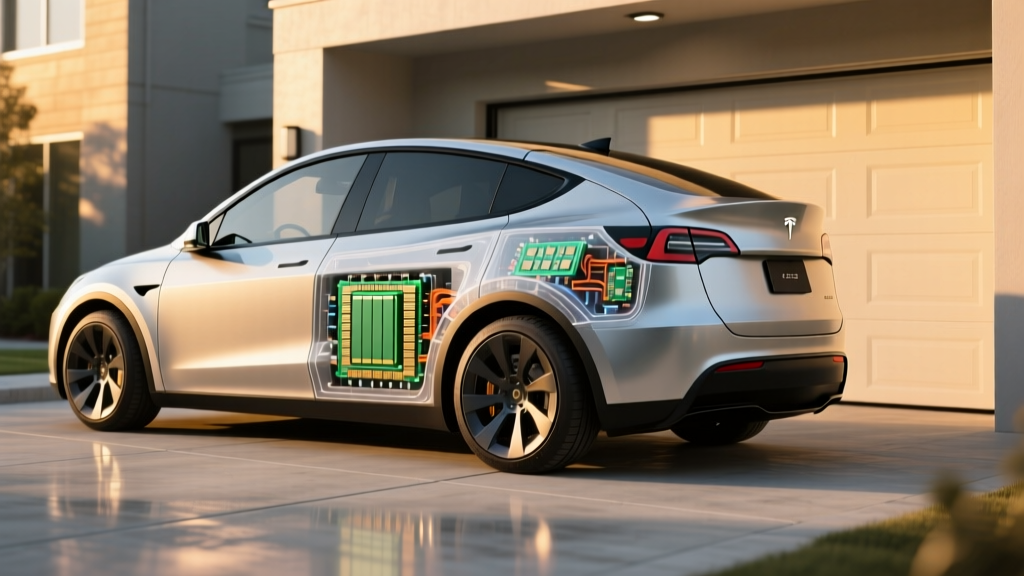
A community battery is a stationary energy storage system (BESS) designed for shared use among multiple EV owners or households. It is not the high-voltage traction battery inside your vehicle—that 60–120 kWh pack that powers the drivetrain. It is also not the 12V auxiliary battery that runs your EV's lights, infotainment, and control modules.
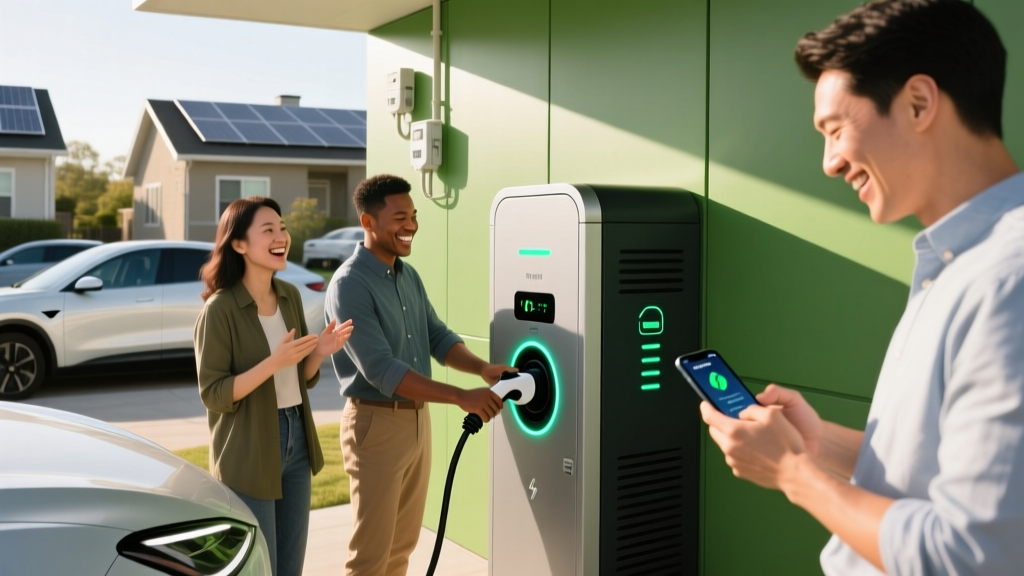
Instead, a community battery sits between the grid (or local solar array) and the EV chargers in a shared parking area, apartment complex, or neighborhood hub. Typical configurations include:
- Apartment/condo garage systems: 50–100 kWh LFP racks feeding 4–12 Level 2 (7–19 kW) chargers
- Neighborhood microgrid hubs: 100–200 kWh systems with DC fast-charge capability (50–150 kW output to one or two CCS/NACS stalls)
- Workplace or fleet depots: 200+ kWh systems with smart load management across dozens of vehicles
The community battery buffers grid demand, stores off-peak or solar-generated energy, and delivers it to EVs on demand—reducing per-owner installation costs (no individual 240V circuit or panel upgrade needed) and avoiding utility demand charges.
LFP vs NMC/NCA: Which Chemistry Powers Community Batteries?
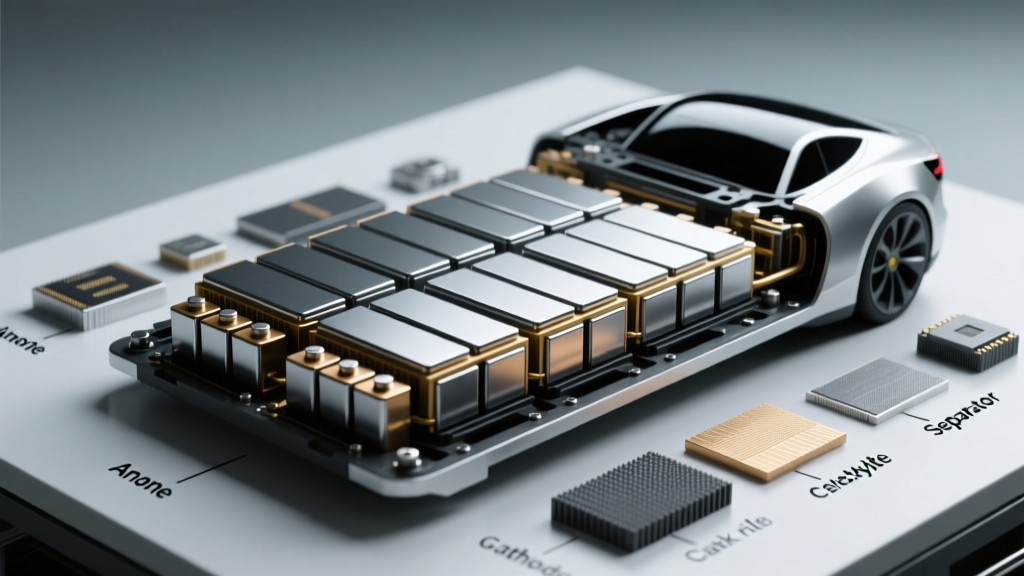
The two dominant lithium-ion chemistries in both EV traction packs and stationary storage are LFP (lithium iron phosphate) and NMC/NCA (nickel manganese cobalt / nickel cobalt aluminum). For community battery systems, the choice has major implications for lifespan, safety, and cost.
| Attribute | LFP (LiFePO₄) | NMC/NCA |
|---|---|---|
| Energy Density | ~160–180 Wh/kg (lower) | ~220–300 Wh/kg (higher) |
| Cycle Life | 3,000–6,000+ cycles to 80% SoH | 1,000–2,500 cycles to 80% SoH |
| Calendar Life | 15–20+ years | 10–15 years |
| Cold-Weather Performance | Reduced charge acceptance below 0°C; needs thermal management | Better low-temp charge/discharge |
| Thermal Stability / Safety | Excellent; minimal thermal runaway risk | Good but requires robust BMS and cooling |
| Cost (2026, per kWh installed) | ~$180–$250/kWh | ~$220–$320/kWh |
| Best Use Case | Daily cycling, long-life stationary storage | Space-constrained, high-energy applications |
For community battery installations, LFP is the dominant choice in 2026. The reason is cycle life: a shared system may cycle 1–2 times per day (365–730 cycles/year), meaning an LFP pack rated for 5,000 cycles can deliver 7–14 years of service before reaching 80% State of Health (SoH). NMC, while more energy-dense, would require replacement sooner under the same duty cycle. LFP's superior thermal stability also reduces fire risk in enclosed parking structures—a critical consideration for multi-tenant buildings.
That said, NMC remains common in the EVs themselves (Tesla Model Y Long Range, Hyundai Ioniq 5, Ford Mustang Mach-E Extended Range) because vehicle packaging prioritizes energy density and driving range over cycle count. Some EVs, like the Tesla Model 3 Standard Range and BYD vehicles sold globally, use LFP traction packs—a trade-off of slightly lower range for longer life and lower cost.
How Long Do EV and Community Batteries Last? Degradation Data
Battery degradation—the gradual loss of usable capacity over time and charge cycles—is the central concern for any battery investment. Here's what real-world data shows for both EV traction batteries and stationary LFP community systems:
- Year 1–2: ~2–5% capacity loss (initial formation loss)
- Year 3–5: ~1–2% per year (linear degradation phase)
- Year 8: Average ~10–15% total loss (85–90% SoH retained)
- Year 10–12: ~15–25% total loss depending on use patterns
Source: Geotab fleet data analysis of 6,300+ EVs.
- 1 cycle/day, 80% DoD: ~0.02–0.04% per cycle → ~7–15% loss over 10 years
- Expected SoH at year 10: 85–93%
- End-of-life threshold (80% SoH): typically 12–18 years for LFP stationary systems
The key difference: a community battery using LFP cells and managed by a professional Battery Management System (BMS) with active thermal control will degrade significantly slower than an EV traction battery exposed to DC fast charging, highway discharge rates, and ambient temperature swings. Most EV traction batteries will outlast the vehicle itself—Consumer Reports estimates average EV battery lifespan at 150,000–200,000 miles (roughly 12–15 years for average drivers).
What Does the Battery Warranty Cover? EV vs. Community Systems
Understanding warranty terms is essential whether you're evaluating your EV's traction pack or a community battery your HOA is considering.
| Warranty Term | EV Traction Battery (Federal Minimum) | Community Battery (Commercial BESS) |
|---|---|---|
| Duration | 8 years / 100,000 miles (federal mandate) | 10–15 years (contract-dependent) |
| Capacity Threshold | 70% SoH (most OEMs); 65–70% for some LFP packs | 70–80% SoH guaranteed |
| What's Covered | Defects, excessive degradation below threshold | Capacity fade, cell failure, BMS defects |
| Exclusions | Damage from accidents, modifications, extreme abuse | Grid surges, improper installation, force majeure |
| Transferable? | Yes, to subsequent owners | Per service contract terms |
Under U.S. federal law, all EV manufacturers must warranty the traction battery for at least 8 years or 100,000 miles. California Air Resources Board (CARB) states require 10 years / 150,000 miles. Many OEMs, including Hyundai, Kia, and Tesla, meet or exceed these thresholds. The warranty triggers if the battery degrades below the stated SoH threshold—typically 70% of original capacity—during the warranty period.
For community batteries, warranty terms are negotiated between the property owner (HOA, building management, municipality) and the BESS installer/manufacturer. Leading commercial LFP providers like Fluence, BYD, and Sonnen offer 10–15 year warranties with 70–80% SoH guarantees, often bundled with monitoring and maintenance contracts.
How Much Does It Cost to Replace an EV Battery?
While most EV batteries outlast the vehicle, out-of-warranty replacement is a real consideration for used-EV buyers and long-term owners. Replacement costs vary dramatically by battery size, chemistry, and model:
| Vehicle | Battery Size | Chemistry | Replacement Cost (Parts + Labor) |
|---|---|---|---|
| Tesla Model 3 Standard Range | 60 kWh | LFP | $10,000–$14,000 |
| Hyundai Ioniq 5 Long Range | 77.4 kWh | NMC | $14,000–$20,000 |
| Ford F-150 Lightning Extended Range | 131 kWh | NMC | $22,000–$32,000 |
| Chevrolet Bolt EV | 65 kWh | NMC | $14,000–$16,000 |
| BMW iX xDrive50 | 111.5 kWh | NMC | $25,000–$35,000 |
These figures represent full pack replacement at OEM dealerships. Third-party refurbishment and module-level repair (replacing only degraded cell groups) can reduce costs by 30–50%. However, module-level repair requires specialized diagnostics and is not available for all models.
For community batteries, replacement economics differ. A 100 kWh LFP rack system might cost $18,000–$25,000 to replace, but this cost is shared among all participating households—and the longer cycle life of LFP means replacement is unlikely within the first 12–15 years of operation.
Factors That Accelerate Battery Degradation (and How to Minimize Them)
Whether you're managing your EV's traction battery or contributing to a community battery system, these factors drive capacity loss:
- Avoid sustained 100% SoC: Store and park at 50–80% SoC when possible. Daily charging to 100% accelerates calendar degradation, especially in NMC cells.
- Limit DC fast charging: Frequent 150+ kW DCFC sessions generate heat stress. Use Level 2 (7–19 kW) for daily charging; reserve DCFC for road trips.
- Manage temperature extremes: Park in shade or a garage when possible. Precondition your battery before fast charging in cold weather (below 40°F / 4°C).
- Avoid deep discharges: Try not to regularly drain below 10–15% SoC. Shallow cycles (20–80%) extend cycle life significantly.
- Use battery preconditioning: Many EVs (Tesla, Hyundai/Kia, Ford) precondition the battery when navigating to a charger—this optimizes charge acceptance and reduces thermal stress.
- For community batteries: Ensure the BMS enforces DoD (depth of discharge) limits of 80–90% and maintains cell temperatures between 15–35°C.
How to Monitor Battery Health (State of Health / SoH)
Knowing your battery's current State of Health—the percentage of original capacity still usable—is critical for resale value, warranty claims, and peace of mind.
Checking SoH in Your EV
- Tesla: The in-car service menu (or TeslaFi/Scan My Tesla third-party apps via OBD-II) displays estimated SoH. Tesla does not show a direct SoH percentage in the main UI.
- Hyundai/Kia: The EV menu in the infotainment system shows battery health status. Third-party tools like Car Scanner ELM OBD2 can read detailed SoH data.
- Nissan Leaf: The dashboard displays "capacity bars" (out of 12), which correlate roughly to SoH percentage. Leaf Spy Pro app provides precise readings.
- GM (Chevy Bolt, Cadillac Lyriq): OnStar diagnostics or myChevrolet/myCadillac apps provide battery health summaries.
- Universal OBD-II tools: Devices like the OBDLink MX+ paired with apps such as ABRP (A Better Route Planner) or EV Pro can read SoH, cell voltage delta, and degradation trends across most EVs.
Monitoring Community Battery Health
Commercial BESS installations include cloud-based monitoring dashboards accessible to property managers and, in some cases, end users. These dashboards display real-time SoH, cycle count, cell temperature, and charge/discharge efficiency. If your building or HOA operates a community battery, request quarterly SoH reports from the system operator.
Emerging Battery Technologies: What's Next After LFP and NMC?
Several next-generation battery technologies are in development, though none are commercially available for consumer EVs or community storage as of early 2026:
- Solid-state batteries: Replace the liquid electrolyte with a solid ceramic or polymer, promising 2–3× energy density and improved safety. Toyota, Samsung SDI, and QuantumScape are targeting limited production in 2027–2029 vehicles. Realistic mass-market availability: 2030+.
- Silicon-dominant anodes: Replace graphite anodes with silicon to boost energy density by 20–40%. Companies like Sila Nanotechnologies and Group14 are supplying early production cells for premium EVs (e.g., Mercedes-Benz G-Class electric). Expect broader adoption by 2028–2029.
- Sodium-ion batteries: Use abundant sodium instead of lithium, offering lower cost and excellent cycle life at the expense of energy density. CATL has begun limited production in China for budget EVs and stationary storage. U.S. availability for community batteries: likely 2027–2028.
- Lithium manganese iron phosphate (LMFP): An evolution of LFP with 15–20% higher energy density while retaining long cycle life. Expected in mid-range EVs and stationary systems by 2027.
For community battery planning today, LFP remains the most cost-effective and durable option. These emerging chemistries may become relevant for system upgrades or replacements in the 2030s.
Frequently Asked Questions
How long do EV batteries last in real-world use?
Most modern EV traction batteries (NMC or LFP) retain 85–90% of original capacity at 8 years / 100,000 miles, and 75–85% at 12–15 years. Fleet data from Geotab shows average annual degradation of ~1.8% for liquid-cooled packs. Many batteries will outlast the vehicle's mechanical components.
How much does an EV battery cost to replace?
Full replacement ranges from $10,000 for a 60 kWh LFP pack (Tesla Model 3 SR) to $35,000 for a 130+ kWh NMC pack (F-150 Lightning, BMW iX). Module-level repair can reduce costs by 30–50%. Under warranty (8 yr/100k mi minimum), replacement is free if SoH drops below the threshold (typically 70%).
What does the EV battery warranty actually cover?
Federal law mandates 8 years / 100,000 miles of coverage for defects and excessive degradation (below ~70% SoH). CARB states require 10 yr / 150k mi. Warranties do not cover accident damage, unauthorized modifications, or abuse (e.g., repeated deep discharge with no recharge). The warranty transfers to subsequent owners.
How do I check my EV's battery State of Health?
Use your vehicle's built-in diagnostics menu, OEM mobile app, or a third-party OBD-II scanner (OBDLink MX+ with ABRP or EV Pro app). For Tesla, TeslaFi or Scan My Tesla provide detailed SoH data. Check SoH annually or before purchasing a used EV.
LFP vs NMC — which battery chemistry is better for me?
Choose LFP if you prioritize longevity (5,000+ cycles), lower cost, and can accept slightly lower range per charge. Ideal for daily commuters, fleet vehicles, and community battery systems. Choose NMC/NCA if you need maximum range, faster cold-weather charging, or are buying a long-range AWD model. Most 300+ mile EVs use NMC. Both chemistries are safe and reliable when properly managed.
Can a community battery power my home during an outage?
Some community battery systems are designed with V2H (vehicle-to-home) or grid-islanding capability, allowing stored energy to power building common areas or individual units during outages. This depends on the inverter configuration and local utility interconnection rules. Ask your system installer about backup power functionality before committing.
Is a community battery eligible for federal tax incentives?
Under the Inflation Reduction Act, standalone energy storage systems of 3 kWh or larger qualify for the Residential Clean Energy Credit (IRC §25D)—30% of installed cost through 2032. Commercial installations may qualify for the Investment Tax Credit (ITC, IRC §48). Consult a tax professional for eligibility specifics based on ownership structure.