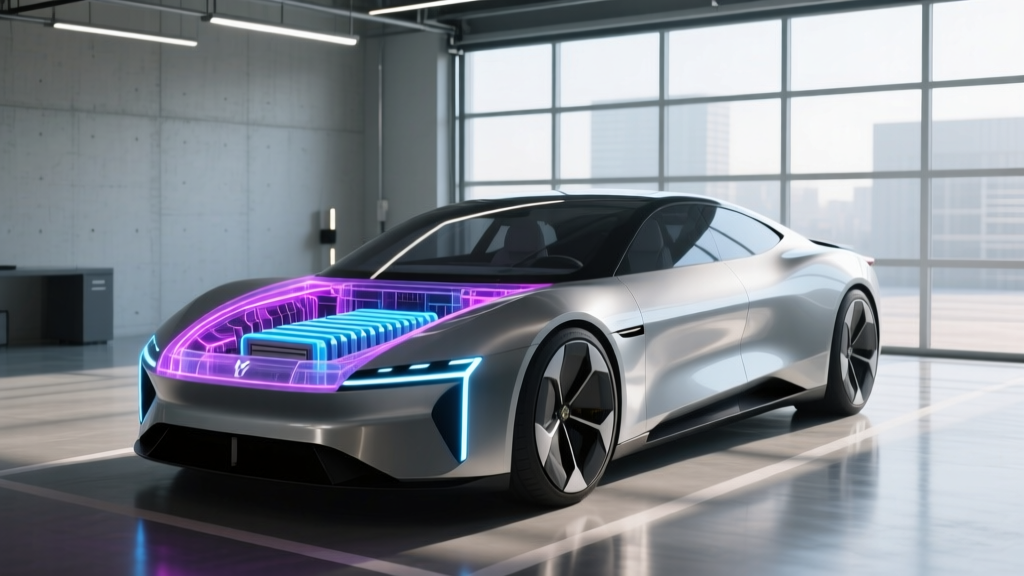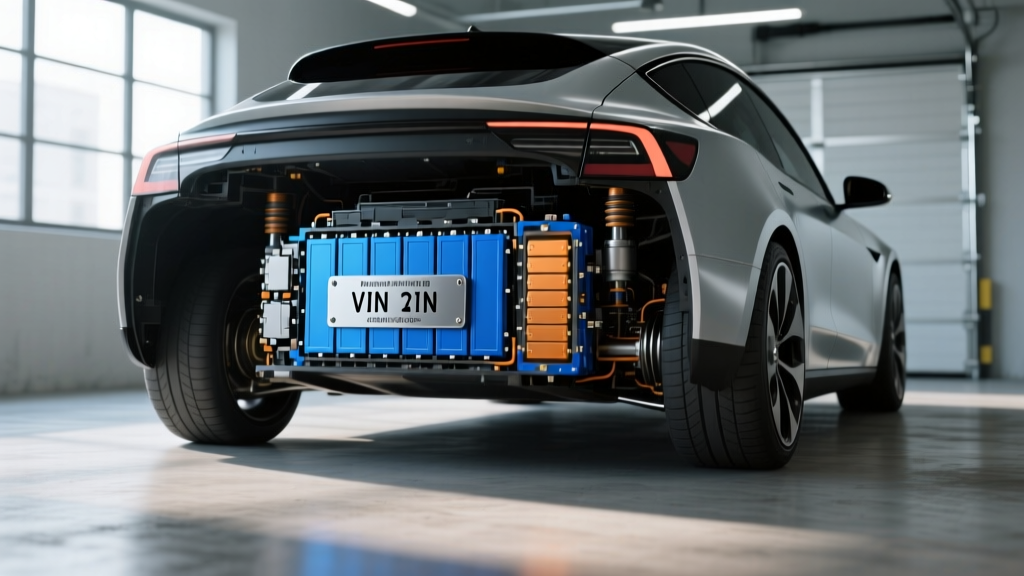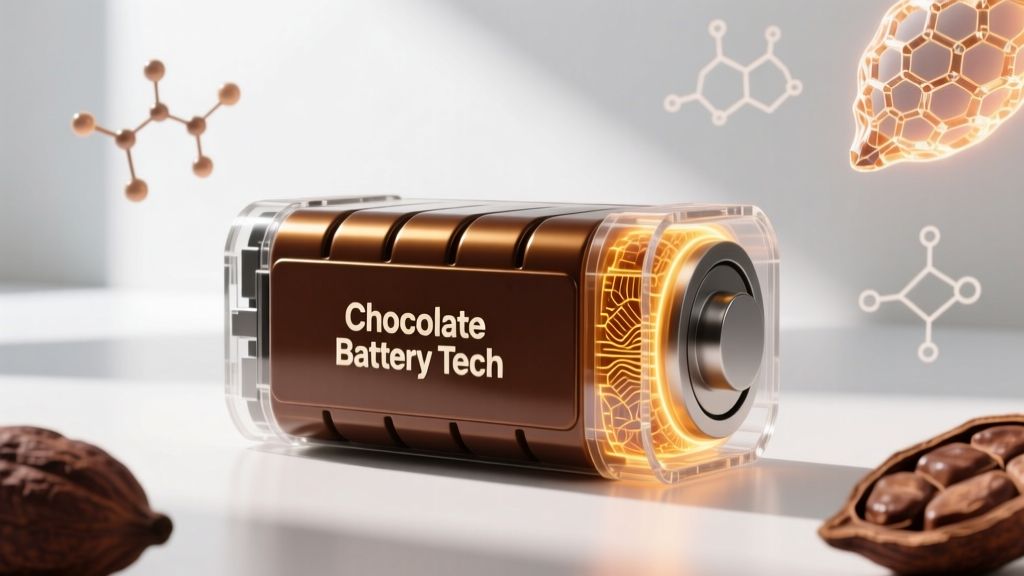
If you have been browsing EV forums or science-news feeds, you may have stumbled across the term chocolate battery and wondered whether your next EV might run on cocoa. The short answer: no. The longer answer is a useful tour through what makes an EV battery actually work in 2026, why lab curiosities like cocoa-fat cells remain years — likely decades — from any garage, and what real-world buyers should actually be watching: chemistry (LFP vs NMC/NCA), degradation curves, warranty fine print, and replacement economics.
This guide separates the viral headline from the high-voltage reality, then gives you the exact numbers you need to evaluate any EV battery on sale today.
What a 'Chocolate Battery' Actually Is (And Isn't)
The phrase chocolate battery traces back to materials-science research where cocoa-derived carbon — essentially the charred remains of cocoa shells or cocoa butter — is used as a precursor for porous carbon anodes. Researchers at institutions including the University of Technology Sydney and various Indian Institutes of Technology have demonstrated that cocoa-derived carbon can be processed into high-surface-area electrode material suitable for lithium-ion and sodium-ion lab cells.
Key facts to anchor expectations:
- It is an anode material experiment, not a complete cell chemistry. The cathode, electrolyte, and separator are all conventional.
- Energy density at lab scale is comparable to, not better than, commercial graphite anodes — roughly 330–360 mAh/g for the carbon itself.
- No automaker or tier-1 cell supplier (CATL, LG Energy Solution, Panasonic, BYD, Samsung SDI) has announced a production program using cocoa-derived carbon as of early 2026.
- Realistic timeline to production, if it ever happens: 2032–2035+ at the earliest, given the typical 8–12 year lab-to-gigafactory pipeline.
The appeal is mostly marketing and sustainability narrative: using a food-waste byproduct (cocoa shells are discarded by the tonne in West Africa and Southeast Asia) to displace mined graphite. That is a legitimate circular-economy goal, but it has nothing to do with whether the EV you buy next month will be reliable for 15 years. For that, you need to understand the chemistries that are actually shipping.
The Chemistries That Actually Power 2026 EVs: LFP vs NMC vs NCA
Forget cocoa for a moment. Every mainstream EV sold in the US in 2026 uses one of three lithium-ion cathode families, paired with a graphite (or graphite-silicon) anode:
- LFP — Lithium Iron Phosphate (LiFePO₄). Used in base Tesla Model 3/Y RWD, BYD Seal/Atto 3, Ford Mustang Mach-E Select (2024+), many Chinese-market vehicles.
- NMC — Nickel Manganese Cobalt (various ratios: 811, 622, 532). Dominates long-range variants: Hyundai Ioniq 5/6, Kia EV6/EV9, VW ID.4, Ford F-150 Lightning Extended, Rivian R1T/R1S, Cadillac Lyriq.
- NCA — Nickel Cobalt Aluminum. Primarily Tesla Long Range and Performance models, plus some Panasonic-supplied applications.
| Attribute | LFP | NMC (811) | NCA |
|---|---|---|---|
| Cell-level energy density | 160–180 Wh/kg | 230–260 Wh/kg | 250–280 Wh/kg |
| Pack-level range (typical) | 240–310 mi EPA | 280–360 mi EPA | 310–405 mi EPA |
| Cycle life (to 80% SoH) | 3,000–5,000+ | 1,000–2,000 | 800–1,500 |
| Cold-weather range loss (0°F) | ~30–40% | ~25–35% | ~25–35% |
| Thermal runaway risk | Lowest | Moderate | Highest of the three |
| Cobalt content | None | 5–10% | ~5% |
| Recommended daily SoC | 100% OK | 80% daily, 100% for trips | 80% daily, 100% for trips |
| Relative cell cost (2026) | ~$85–100/kWh | ~$110–130/kWh | ~$120–140/kWh |
Which is better? There is no single answer — it depends on your use case. LFP wins on longevity, safety, and cost; NMC/NCA win on range-per-pound and fast-charge performance in cold weather. A commuter who charges at home nightly and keeps cars 10+ years is often better served by LFP. A road-tripper who needs 340+ miles of real-world highway range needs NMC/NCA.
How Long Do EV Batteries Actually Last? (Degradation Data)
The fear that EV batteries "die" at 100,000 miles is a legacy of early-2010s Nissan Leaf experience (passively cooled cells, no thermal management). Modern liquid-cooled packs degrade far more gracefully.
Aggregated real-world data from Recurrent Auto, Geotab, and Tesla's own 2025 Impact Report show the following typical degradation trajectory for 2020–2026 liquid-cooled packs:
- Year 1 / 15k mi: ~95–97% SoH (initial "break-in" drop)
- Year 3 / 45k mi: ~92–94% SoH
- Year 5 / 75k mi: ~89–92% SoH
- Year 8 / 120k mi: ~85–90% SoH
- Year 12 / 180k mi: ~80–87% SoH (projected)
- Year 15 / 225k mi: ~75–83% SoH (projected)
LFP packs typically show a flatter curve — slightly more early loss, then very slow fade — and frequently exceed 3,000 cycles with less than 10% total loss.
Two concrete examples from the 2026 fleet:
- Tesla Model 3 RWD (LFP, 60 kWh usable): owners reporting ~93% SoH at 60,000 miles with daily 100% charging — consistent with LFP's cycle-life advantage.
- Hyundai Ioniq 5 Long Range (NMC, 77.4 kWh usable): owners averaging ~90% SoH at 70,000 miles with 80% daily SoC and occasional DC fast charging on road trips.
The honest takeaway: most modern EV batteries will outlast the rest of the car. At 200,000 miles, a well-cared-for pack still holds 80%+ of original capacity — meaning a 300-mile EPA car still delivers ~240 real-world miles.
Battery Warranties in 2026: What's Actually Covered
Federal law (via EPA/CARB certification requirements) effectively sets a floor: 8 years / 100,000 miles for battery capacity retention on EVs sold in the US. Most automakers match or exceed this.
| Brand | Term | Capacity threshold | Notes |
|---|---|---|---|
| Tesla (Model 3/Y RWD LFP) | 8 yr / 120,000 mi | 70% | Longest mileage floor in the segment |
| Tesla (Model 3/Y LR, S, X) | 8 yr / 120,000 mi | 70% | NMC/NCA packs |
| Hyundai / Kia | 10 yr / 100,000 mi | 70% | Among the longest calendar terms |
| Ford (Mach-E, F-150 Lightning) | 8 yr / 100,000 mi | 70% | Transferable to second owner |
| GM (Ultium platform) | 8 yr / 100,000 mi | 70% (60% on some commercial) | Varies by model — verify on window sticker |
| Rivian | 8 yr / 175,000 mi | 70% | Highest mileage cap for a light-duty EV |
| BMW / Mercedes-Benz | 8 yr / 100,000 mi | 70% | Often includes one SoH certification at sale |
Critical fine print: warranty claims require a verified capacity drop below the threshold — not just a subjective "range feels shorter." The dealer runs a standardized SoH test. Also, "70% retention" means 70% of original usable capacity, not of the EPA-rated range. Cold weather, tire wear, and driving style are explicitly excluded.
For current §30D federal tax credit eligibility on new EVs, the IRS clean vehicle credit page remains the authoritative source — battery sourcing and critical-mineral rules continue to tighten through 2026, and eligibility varies by VIN. Consult a tax professional before relying on the credit in your purchase math.
EV Battery Replacement Cost: The Numbers, Without the Fear-Mongering
Yes, EV battery packs are expensive. But context matters: the vast majority of 2026 EVs will never need a full pack replacement in their first-owner lifetime, and when they do, prices are falling.
| Vehicle class / example | Pack size | Replacement cost (OEM new) | Refurb / salvage option |
|---|---|---|---|
| Compact LFP (Tesla Model 3 RWD, BYD) | 55–65 kWh | $9,000–$13,000 | $5,500–$8,000 |
| Mid-size NMC (Ioniq 5, EV6, ID.4) | 72–84 kWh | $13,000–$18,000 | $8,500–$12,000 |
| Long-range sedan (Model S, Lucid Air) | 90–118 kWh | $18,000–$26,000 | $12,000–$17,000 |
| Full-size truck/SUV (F-150 Lightning, Rivian, Escalade IQ) | 100–200+ kWh | $20,000–$38,000 | $14,000–$22,000 |
Two offsetting trends worth knowing:
- Module-level repair is increasingly viable. Most packs are built from 12–24 modules. A single weak module (a $600–$1,500 part plus ~$1,500 labor) can often be swapped without touching the rest of the pack. Independent EV shops like Electrified Garage and Gruber Motors now do this routinely.
- Cell prices keep falling. BloombergNEF's 2025 battery price survey pegged volume-weighted pack prices at ~$115/kWh, down from ~$140/kWh in 2023. By the time a 2026 EV actually needs a replacement (likely 2035+), out-of-warranty pricing will be materially lower.
For a sanity check on any specific model's EPA-rated range and efficiency, fueleconomy.gov remains the gold-standard lookup — cross-reference the kWh/100mi figure against real-world trip data before assuming the battery is at fault.
What Kills an EV Battery Early (And What Doesn't)
Not all miles are created equal. The factors that genuinely accelerate degradation, ranked by impact based on Geotab and Recurrent fleet data:
- Chronic high-SoC storage at high temperature — parking a 100%-charged EV in a Phoenix summer for weeks is the single worst thing you can do. The combination of high voltage and heat accelerates electrolyte decomposition.
- Frequent DC fast charging in extreme heat without preconditioning — modern packs precondition before a nav-routed Supercharger/EA stop, but repeated 150+ kW sessions on a hot pack with no cooldown between drives add up over years.
- Regularly running to 0% SoC — deep discharge stresses the anode SEI layer. Most BMS systems include a bottom buffer (typically 2–5 kWh hidden below "0%"), but habitually stranding the car is still suboptimal.
- Aftermarket "range extenders" or non-OEM chargers with poor voltage regulation — rare, but documented in warranty-denial cases.
And what doesn't matter nearly as much as forums claim:
- Occasional 100% charges for road trips — fine, especially on NMC/NCA. Just don't sit on 100% for days.
- Daily Level 2 home charging — actually gentle on the pack; slow charge rates (~7–11 kW) produce minimal heat.
- Regenerative braking use — regen currents are well within the cell's continuous C-rate spec and do not meaningfully accelerate wear.
- Cold-weather driving — cold temporarily reduces range (see our 0°F loss figures above) but does not cause permanent damage. The BMS will limit charge rate until the pack warms.
How to Check Your Battery's State of Health (SoH)
State of Health (SoH) is the percentage of original usable capacity the pack still holds. In 2026, owners have three practical ways to measure it:
- In-car telemetry — Tesla's Service Mode (accessible via the software screen), Hyundai/Kia's diagnostic menus, and GM's myChevrolet/myCadillac apps now surface SoH directly or via a "battery health" readout.
- Third-party apps — Tessie, TezLab, and Recurrent's free app pull SoC/range data over the vehicle's API and estimate SoH by comparing current range-at-full-charge to the factory baseline.
- Dealer/Shop OBD-II scan — a $0–$150 service that reads the BMS-reported SoH value directly. Recommended before buying any used EV.
Rule of thumb: if a 5-year-old EV shows 88%+ SoH, the pack is aging normally. Below 80% at any age, investigate warranty coverage. Between 80–88% at high mileage, you are in the "normal but watchful" zone.
Beyond Lithium-Ion: Solid-State, Silicon Anodes, and the Real Timelines
This is the section where hype usually takes over. Here is the sober 2026 outlook, marked as forward-looking:
- Silicon-dominant anodes (e.g., Sila Nanotechnologies, Group14) — already shipping in limited 2025–2026 applications (Mercedes G580 EQG, select Porsche cells). Adds ~15–20% energy density vs graphite. Scaling to mainstream volume: 2027–2030.
- Semi-solid-state cells (NIO's 150 kWh pack, WeLion/Gotion) — in limited Chinese-market service as of 2025. US/European availability: 2028–2031, likely premium segments first.
- True solid-state (Toyota, Samsung SDI, QuantumScape) — repeatedly announced, repeatedly delayed. Toyota's own revised timeline now targets 2028–2030 for limited production; volume at mainstream price points is 2032+ at the earliest. Treat any "2027 solid-state EV" headline with skepticism.
- Sodium-ion batteries — real and shipping in 2026 Chinese-market micro-EVs and energy storage (BYD, CATL). Lower energy density (~140–160 Wh/kg) limits them to urban runabouts and stationary use in the near term.
- Cocoa-derived carbon anodes (the "chocolate battery") — still a lab-scale materials science curiosity. No announced production program. Timeline to any vehicle: 2032–2035+ at the very earliest, and more likely never at scale given abundant, cheap, well-understood graphite and silicon alternatives.
For buyers making a decision in 2026: buy the chemistry that fits your life today. The next breakthrough will not make your current EV obsolete any faster than the iPhone 15 made the iPhone 14 unusable.
Frequently Asked Questions
How long do EV batteries last in years and miles?
Modern liquid-cooled EV batteries typically retain 80–90% of original capacity at 150,000–200,000 miles (12–15 years) under normal use. LFP packs often exceed 3,000 full-equivalent cycles with minimal loss, which mathematically translates to 500,000+ miles before hitting 80% SoH — far beyond the life of the vehicle around them.
How much does it cost to replace an EV battery?
Out of warranty, a full OEM pack replacement runs $9,000–$38,000 depending on pack size (see table above). Refurbished packs are 35–50% cheaper. Module-level repair for a single failed module is typically $2,000–$3,500 installed. By the time a 2026 EV actually needs replacement (likely mid-2030s), cell pricing is projected to be 30–40% lower than today.
What does the EV battery warranty actually cover?
Standard US coverage is 8 years / 100,000–175,000 miles against capacity loss below 70% of original usable capacity, verified by a dealer SoH test. It does not cover range loss from cold weather, tire changes, or driving style. Some brands (Hyundai, Rivian, Tesla RWD) offer more generous mileage or calendar terms — always check the window sticker.
How do I check my EV battery's State of Health?
Use the vehicle's built-in service menu (Tesla Service Mode, Hyundai diagnostic screen), a third-party app like Tessie or Recurrent that pulls API data, or a dealer OBD-II scan. For a used-EV purchase, pay for a dealer SoH readout before signing — it is the single most important data point on the car.
LFP vs NMC — which should I choose?
Choose LFP if: you charge at home nightly, want to keep the car 10+ years, live in a mild climate, and are fine with 250–310 miles of real-world range. Choose NMC/NCA if: you regularly road-trip 300+ miles, live in a cold climate where LFP's winter range hit hurts more, or need maximum cargo/towing capacity (which benefits from NMC's higher energy density per pound).
Will a 'chocolate battery' EV ever be sold?
Possibly, but not this decade. Cocoa-derived carbon is a lab-scale anode precursor with no announced production program from any major cell supplier as of 2026. If it reaches production at all, expect 2032–2035+ — and it will compete against already-mature silicon-anode and sodium-ion alternatives. Treat any "chocolate battery EV" headline as a materials-science curiosity, not a shopping consideration.
Does frequent DC fast charging ruin the battery?
Occasional DC fast charging (road trips, a few times per month) has minimal long-term impact on modern liquid-cooled packs. Daily exclusive reliance on 150+ kW DC charging does measurably accelerate degradation — Geotab's fleet data shows ~1–2% additional loss over 5 years vs L2-only charging. For a daily driver, home Level 2 is both cheaper and gentler.
The honest bottom line: a 2026 EV battery is one of the most over-engineered, warranty-backed, and data-monitored components on any vehicle sold today. Skip the cocoa headlines, watch your SoH once a year, avoid chronic high-SoC heat storage, and the pack will almost certainly outlive your ownership of the car.