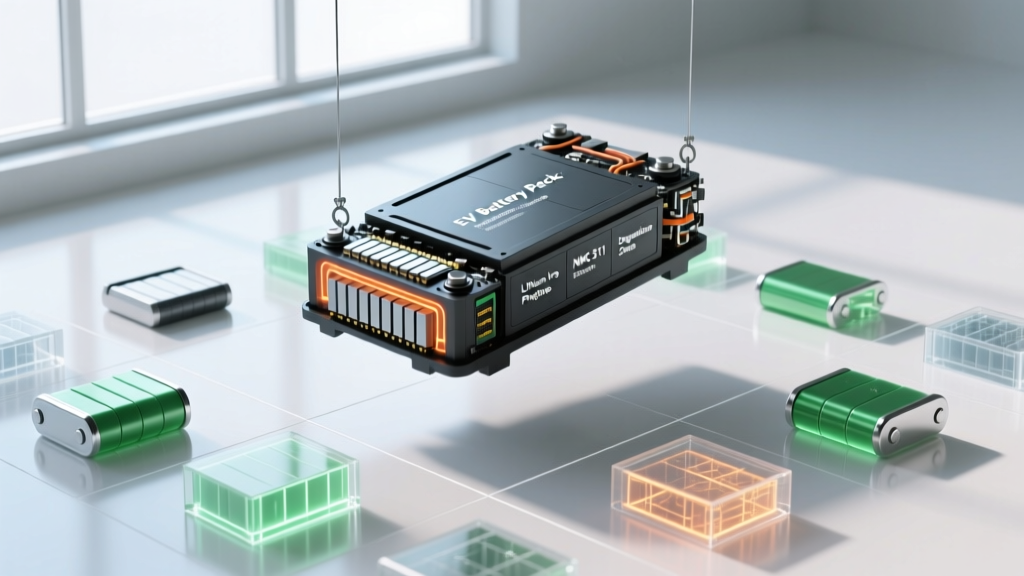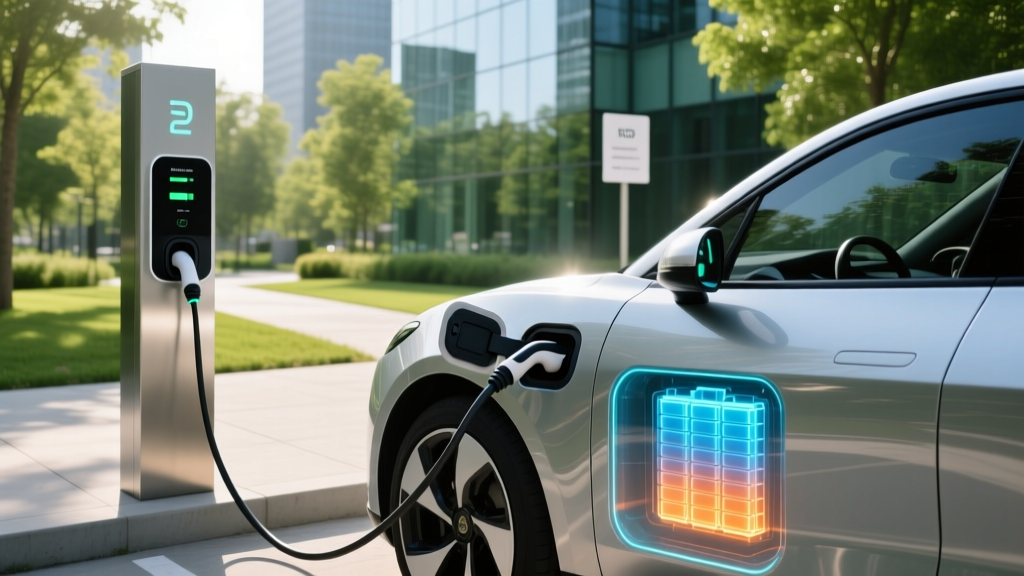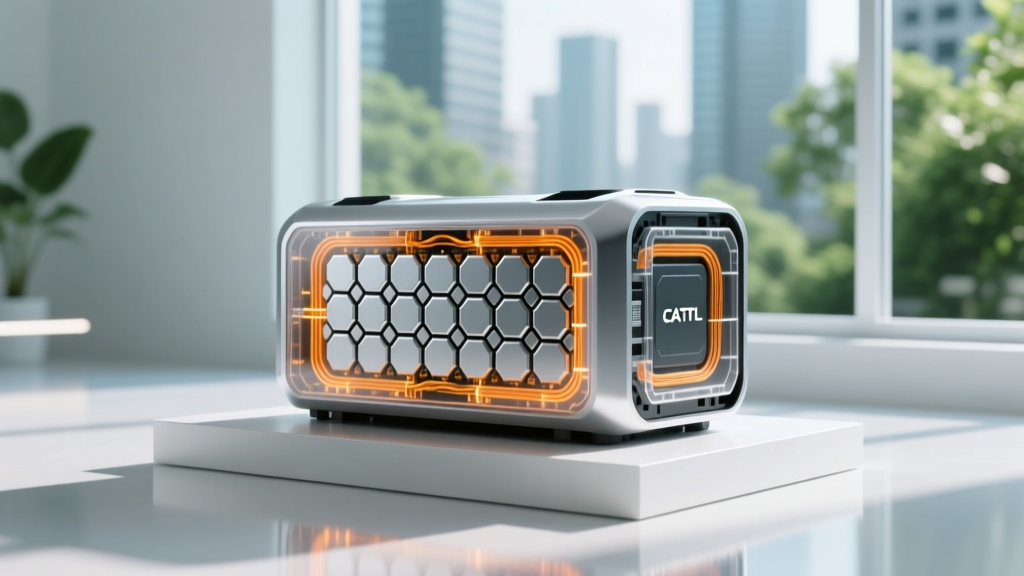
If you've been researching electric vehicles — especially models from Chinese automakers or global brands sourcing from CATL — you've likely encountered the term Choco battery. It's not a chemistry or a cell format you can buy off a shelf. "Choco" is CATL's branding for its Cell-to-Pack (CTP) battery platform, a structural packaging approach that eliminates intermediate modules and packs cells directly into the battery tray. The result: higher energy density per kilogram, lower manufacturing cost, and a flatter, more rigid pack that contributes to vehicle structural stiffness.
Understanding what a Choco battery actually is — and what it means for range, longevity, and replacement cost — matters whether you're shopping for a vehicle that uses CATL cells or simply trying to decode the growing alphabet soup of EV battery tech. This guide covers the platform's engineering, the LFP vs NMC chemistry choices inside it, real-world degradation data, warranty coverage, and what emerging solid-state technology means for the future.
What Is a Choco Battery? Cell-to-Pack Architecture Explained
Traditional EV battery packs follow a three-tier hierarchy: individual cells are grouped into modules, and modules are assembled into a pack. Each layer adds wiring, cooling plates, structural brackets, and fasteners — all dead weight that doesn't store energy.
CATL's Choco (CTP) platform, introduced in its third generation around 2022 and refined through 2025-2026, collapses this to two tiers: cells directly into the pack. By removing the module layer, CATL reports a volume utilization improvement of 15–20% and a weight reduction that translates directly to more usable kWh in the same physical footprint.
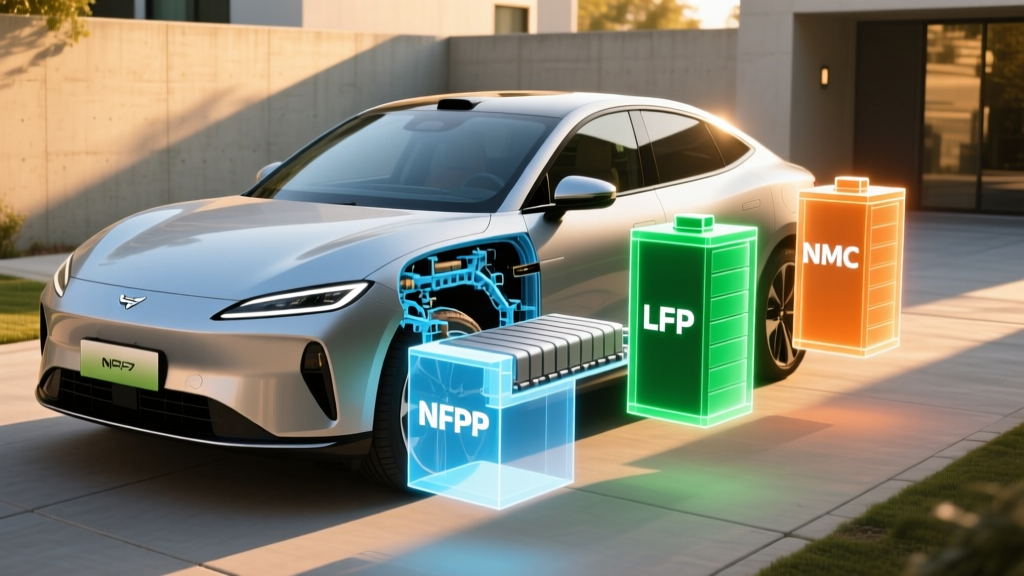
The Choco platform is chemistry-agnostic. CATL manufactures it with both LFP (lithium iron phosphate) and NMC (nickel manganese cobalt) cells, meaning the "Choco" label tells you about the pack architecture, not the chemistry inside. Vehicles using Choco packs range from the MG4 and BYD Atto 3 (export markets) to select European-market models from Volkswagen and Tesla's standard-range vehicles that source CATL LFP cells.
LFP vs NMC: The Chemistry Inside Choco Packs
Because the Choco platform supports both major lithium-ion chemistries, the more important buying decision is which chemistry your vehicle uses. Here's how they compare on the metrics that matter to owners:
| Attribute | LFP (Lithium Iron Phosphate) | NMC (Nickel Manganese Cobalt) |
|---|---|---|
| Energy density (cell-level) | ~160–180 Wh/kg | ~220–260 Wh/kg |
| Typical usable pack size | 50–75 kWh (mid-range trims) | 75–120 kWh (long-range/performance trims) |
| Cycle life (to 80% SoH) | 3,000–5,000+ cycles | 1,000–2,000 cycles |
| Cold-weather performance | Greater range loss below 20°F (~30-40% loss) | Better low-temp conductivity (~20-30% loss) |
| Thermal stability | Excellent — higher runaway threshold | Good — requires more active thermal management |
| Cost per kWh (pack-level) | ~$90–110/kWh (2026 est.) | ~$120–145/kWh (2026 est.) |
| Cobalt/nickel content | None | Significant — supply-chain and ethical considerations |
| Best for | Daily commuting, high-mileage owners, budget trims | Long road trips, cold climates, performance trims |
The practical takeaway: LFP's lower energy density means a Choco LFP pack will typically deliver 200–280 miles of EPA range in a mid-size sedan or crossover, while an NMC Choco pack in the same vehicle platform can push 300–370+ miles. But LFP's cycle-life advantage — often 3x or more — means the pack will likely outlast the vehicle itself under normal use. If you live in Minnesota or Maine, NMC's cold-weather edge is meaningful. If you're in California or Texas and charge at home nightly, LFP is the economically rational choice.
How Long Do EV Batteries Last? Degradation Data
The fear of a $15,000 battery replacement at 80,000 miles persists, but the data tells a different story. Modern EV batteries — including CATL Choco packs with advanced thermal management — degrade far more slowly than early-generation cells.
Typical Degradation Curve for Liquid-Cooled CATL Packs (Aggregated Fleet Data):
| Milestone | LFP Choco Pack | NMC Choco Pack |
|---|---|---|
| 1 year / 15,000 mi | ~2–3% loss | ~3–5% loss |
| 3 years / 45,000 mi | ~5–7% loss | ~7–10% loss |
| 5 years / 75,000 mi | ~7–10% loss | ~10–14% loss |
| 8 years / 100,000 mi | ~10–13% loss | ~14–18% loss |
| 10 years / 150,000 mi | ~13–18% loss | ~18–25% loss |
Sources: Geotab fleet degradation study, CATL technical publications, owner-reported data on EV tracking platforms. Individual results vary based on climate, charging habits, and thermal management system design.
Two patterns stand out. First, degradation is non-linear: the steepest drop occurs in the first 12–18 months (calendar aging and initial SEI layer formation), then the curve flattens considerably. Second, LFP packs consistently show slower degradation than NMC at equivalent mileage, largely because the iron-phosphate cathode is more structurally stable during charge/discharge cycling.
For context, a 60 kWh LFP Choco pack losing 12% over 8 years still retains ~53 kWh usable — enough for 200+ real-world miles in most compact EVs. Most EVs are scrapped or sold for reasons unrelated to battery health long before the pack reaches end-of-life.
Battery Warranty Coverage: What's Protected and for How Long
In the United States, federal law mandates a minimum EV battery warranty of 8 years / 100,000 miles for emissions-related components, which California Air Resources Board (CARB) rules and most manufacturer policies interpret to include the high-voltage traction battery. Many automakers selling CATL-equipped vehicles exceed this baseline.
| Term | Standard Coverage | Extended (Select Brands) |
|---|---|---|
| Duration | 8 years / 100,000 mi | 8 years / 120,000–150,000 mi |
| Capacity retention threshold | 70% of original capacity | 70–75% of original capacity |
| What triggers a claim | SoH falls below threshold OR defect/failure | Same |
| Remedy | Repair, module replacement, or full pack replacement at manufacturer discretion | Same |
| Transferable to second owner | Usually yes | Usually yes |
| Exclusions | Damage from accidents, flooding, unauthorized modifications, extreme abuse | Same |
Critical nuance: The 70% threshold means a brand-new 75 kWh pack could degrade to 52.5 kWh and still be considered "within spec." In practice, very few liquid-cooled packs from major manufacturers hit this threshold within the warranty period under normal use. According to data aggregated by fueleconomy.gov, the vast majority of EV battery warranty claims involve manufacturing defects (bad welds, faulty BMS sensors, coolant leaks) rather than gradual capacity loss.
EV Battery Replacement Cost: What Owners Actually Pay
Out-of-warranty battery replacement is the single biggest financial fear in EV ownership. Here's what the numbers actually look like in 2026:
| Pack Size (Usable kWh) | Chemistry | Parts Cost (Est.) | Labor + Diagnostics | Total Range |
|---|---|---|---|---|
| 40–55 kWh | LFP | $5,500–$8,000 | $1,500–$2,500 | $7,000–$10,500 |
| 60–75 kWh | LFP | $7,500–$11,000 | $1,500–$3,000 | $9,000–$14,000 |
| 75–90 kWh | NMC | $10,000–$15,000 | $2,000–$3,500 | $12,000–$18,500 |
| 90–120 kWh | NMC | $14,000–$20,000 | $2,000–$4,000 | $16,000–$24,000 |
Note: Costs are 2026 estimates based on industry parts pricing and independent shop labor rates. Dealer-installed OEM packs may be 20–40% higher. Third-party refurbishment and module-level repair are increasingly available at 40–60% of full-pack replacement cost.
When is replacement actually needed? For the overwhelming majority of owners, the answer is never. A 2024 study by Consumer Reports found that fewer than 5% of EVs required traction battery replacement within the first 10 years, and the majority of those were due to manufacturing defects covered under warranty. Pack-level failures from pure degradation typically appear at 150,000–200,000+ miles — mileage most first and second owners never reach.
For CATL Choco packs specifically, the cell-to-pack architecture introduces a trade-off: because cells are bonded directly to the pack structure with structural adhesive, module-level repair is more difficult than in traditional modular packs. A single failed cell group may require a full pack swap rather than a targeted module replacement. This is an evolving area — CATL's 4th-generation CTP designs are reportedly incorporating serviceability improvements — but it's a factor in long-term repair economics.
Factors That Accelerate (or Slow) Battery Degradation
Battery longevity isn't purely a function of time and miles. How you charge, where you park, and how you drive all influence the degradation curve.
Charging Habits
- Avoid routine 100% charges on NMC packs. Sustained high State of Charge (SoC) accelerates cathode degradation. For daily driving, charge to 80% and only go to 100% before long trips. (LFP packs are more tolerant of 100% charges and CATL actually recommends periodic full charges for LFP to recalibrate the BMS.)
- Minimize DC fast charging to what you need. Occasional road-trip fast charging is fine. But daily 150+ kW DC sessions generate sustained heat that stresses cells. If you have home Level 2 charging (7–11 kW), use it as your primary method.
- Don't let the pack sit at very low SoC for extended periods. Storing an EV at 5% SoC for weeks can cause copper dissolution in the anode current collector. If storing, aim for 40–60% SoC.
Temperature Management
- Precondition before fast charging. Most modern EVs with CATL packs will automatically precondition the battery when you navigate to a DC fast charger. This brings cells to the optimal ~30–35°C window, enabling peak charge rates and reducing lithium plating risk.
- Garage parking helps in extremes. Both sustained 100°F+ heat and prolonged sub-zero cold accelerate calendar aging. A garage moderates both.
- Don't fast-charge a freezing-cold pack. If your vehicle lacks active preconditioning, drive for 15–20 minutes before plugging into a DC charger in winter to let internal resistance warm the cells.
Driving Patterns
- Aggressive acceleration isn't the enemy — sustained high-speed driving is. Repeated 0-60 launches draw high current briefly; sustained 80+ mph highway driving keeps cells at elevated temperatures for hours. The latter causes more cumulative stress.
- Regenerative braking settings matter less than you'd think. Regen currents are typically well within the cell's safe charge-acceptance rate and don't meaningfully accelerate degradation.
How to Check and Monitor Battery Health (SoH)
State of Health (SoH) is the percentage of a battery's original capacity that remains usable. A new 75 kWh pack at 92% SoH has ~69 kWh of usable capacity. Monitoring this number helps you track degradation trends and detect anomalies early.
Built-in vehicle tools: Most EVs with CATL Choco packs display SoH or estimated range trends through the infotainment system or companion app. Tesla's app shows rated range vs. original; many Hyundai/Kia and VW models include a dedicated battery health screen. However, OEM displays are often deliberately vague — showing a "health bar" rather than a precise percentage.
OBD-II diagnostic tools: For precise SoH readings, plug-in tools like the OBD2 dongle paired with apps such as EVNotify, LeafSpy (for compatible models), or Car Scanner can read the Battery Management System (BMS) directly. These report actual measured capacity in kWh, cell voltage variance, and internal resistance — far more useful than the OEM's simplified display.
Third-party testing: Services like AVILOO (available in Europe and expanding in the US) perform standardized drive-cycle tests that measure real usable capacity independent of the BMS's own estimate. This is particularly valuable when buying a used EV, as it provides an objective, seller-independent SoH figure.
What to watch for: A sudden drop in SoH (e.g., 3–5% in a single month) or increasing cell voltage variance (spread greater than 50–80 mV between cell groups) signals a potential defect worth investigating under warranty. Gradual, linear decline of 1–2% per year is normal and not a concern.
Beyond Choco: Solid-State and Next-Gen Battery Timelines
CATL's Choco platform represents the current state of lithium-ion engineering — and it's good enough that most owners will never need anything more. But the industry is actively developing next-generation chemistries that promise step-change improvements.
Solid-state batteries replace the liquid electrolyte with a solid ceramic, polymer, or sulfide conductor, eliminating flammability risk and enabling lithium-metal anodes with energy densities above 400 Wh/kg at the cell level. Toyota, Samsung SDI, and QuantumScape have all announced pilot production, but as of early 2026, no solid-state pack is in mass-produced consumer vehicles. Toyota's announced timeline targets limited production in 2027–2028, with meaningful volume and competitive pricing unlikely before 2030.
Silicon-dominant anodes (used in cells from companies like Sila Nanotechnologies and Group14) increase energy density by 20–40% over graphite anodes and are beginning to appear in premium EVs. These are compatible with existing liquid-electrolyte manufacturing and represent a more near-term upgrade path — expect broader adoption in 2026–2028 model-year vehicles.
Sodium-ion batteries, which CATL has been producing in limited volumes since 2023, offer lower cost and better cold-weather performance than LFP but significantly lower energy density (~120–150 Wh/kg). These are positioned for budget city cars and energy storage, not long-range EVs. CATL's "AB battery" approach — mixing sodium-ion and LFP cells in a single pack — is an interesting compromise appearing in select Chinese-market vehicles.
For buyers shopping today, these emerging technologies are context, not a reason to wait. Current LFP and NMC Choco packs already deliver 250–350+ miles of range, 15–25 minute fast charging, and 150,000+ mile lifespans. The incremental gains from solid-state will matter most for heavy trucks and aviation — segments where energy density is the binding constraint.
Frequently Asked Questions
How long do EV batteries last in years and miles?
Based on aggregated fleet data, most modern liquid-cooled EV batteries — including CATL Choco packs — retain 80–87% of original capacity at 8 years / 100,000 miles. LFP chemistries typically outperform NMC in longevity. Full pack failure from degradation alone is rare before 150,000–200,000 miles. In practical terms, most EV batteries outlast the vehicle's economic life.
How much does an EV battery cost to replace?
Out-of-warranty replacement for a CATL Choco pack ranges from roughly $7,000–$14,000 for 50–75 kWh LFP packs and $12,000–$24,000 for 75–120 kWh NMC packs, including parts and labor. However, the vast majority of replacements are covered under the manufacturer's 8-year/100,000-mile warranty, and fewer than 5% of EVs need a replacement within the first decade. Third-party module-level repair is increasingly available at lower cost.
What does the EV battery warranty actually cover?
The standard warranty covers the high-voltage traction battery against capacity loss below a defined threshold (typically 70% of original capacity) and manufacturing defects for 8 years or 100,000 miles, whichever comes first. It does not cover damage from accidents, flooding, unauthorized modifications, or extreme abuse. The warranty is usually transferable to subsequent owners. Always check your specific vehicle's warranty documentation for exact terms.
How do I check my EV battery's State of Health?
Your vehicle's infotainment system or companion app may display a battery health indicator, but these are often simplified. For precise readings, use an OBD-II diagnostic tool with EV-compatible software (such as Car Scanner or EVNotify) to read actual capacity, cell voltage variance, and internal resistance directly from the BMS. Third-party testing services like AVILOO offer independent capacity verification, which is especially valuable when purchasing a used EV.
LFP vs NMC — which battery chemistry is better for me?
Neither is universally "better." Choose LFP if you prioritize longevity (3,000–5,000+ cycles), lower cost, cobalt-free sourcing, and you mostly drive in moderate climates with home charging. Choose NMC if you need maximum range (higher energy density), live in a cold climate where NMC performs better at low temperatures, or frequently take long road trips. Both chemistries are available in CATL's Choco cell-to-pack platform, so the choice comes down to your driving pattern, not the pack architecture.
Is a Choco battery the same as a regular EV battery?
A Choco battery uses the same lithium-ion cell chemistry as conventional packs, but its packaging is different. CATL's Cell-to-Pack (CTP) design eliminates intermediate modules, packing cells directly into the battery tray. This improves volume utilization by 15–20%, reduces weight, and lowers cost — but the fundamental electrochemistry (LFP or NMC) and maintenance requirements are identical to any other modern EV battery.