Why Chinese Solid-State Batteries Are Dominating EV Headlines
Every few months, a headline surfaces about a Chinese solid-state battery breakthrough — NIO's 150 kWh semi-solid pack, CATL's condensed-matter cell, or QuantumScape's manufacturing milestones backed by Chinese supply-chain partners. The promise is tantalizing: 50% more energy density, no thermal runaway risk, and 15-minute charge times. But for a US-based EV buyer in 2026, the question isn't what's coming in 2030. It's what's in the cars you can buy today, how long those batteries last, and what ownership actually costs.
This guide breaks down the current lithium-ion landscape (LFP vs. NMC/NCA), real degradation data from fleets and long-term owners, warranty protections, and where Chinese solid-state battery development realistically fits into the timeline. If you're deciding between a Tesla Model 3 with an LFP pack and a Hyundai Ioniq 5 with NMC, or wondering whether to wait for the next generation, the numbers below should settle the debate.
LFP vs. NMC/NCA: The Chemistry Decision You Actually Have to Make
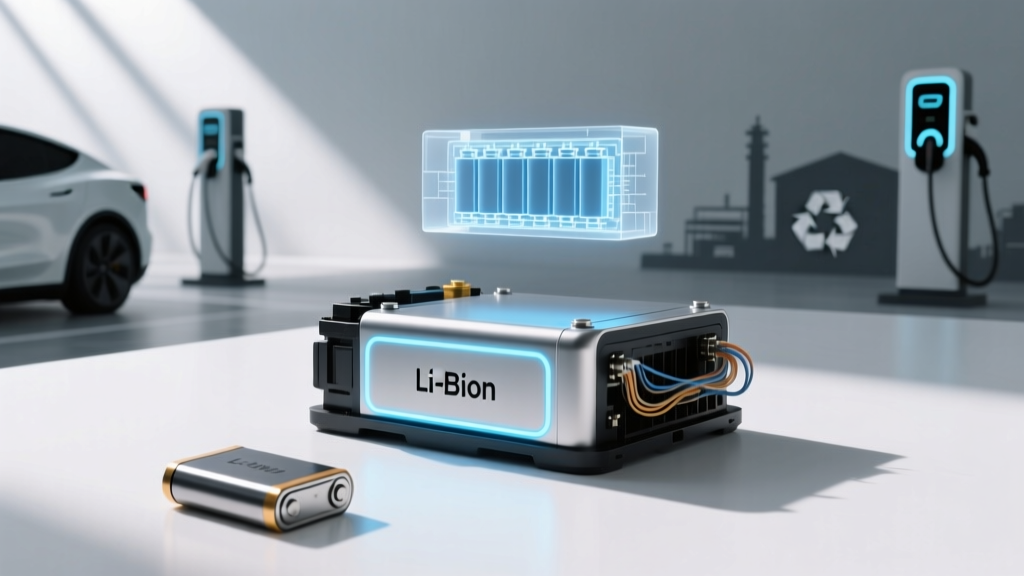
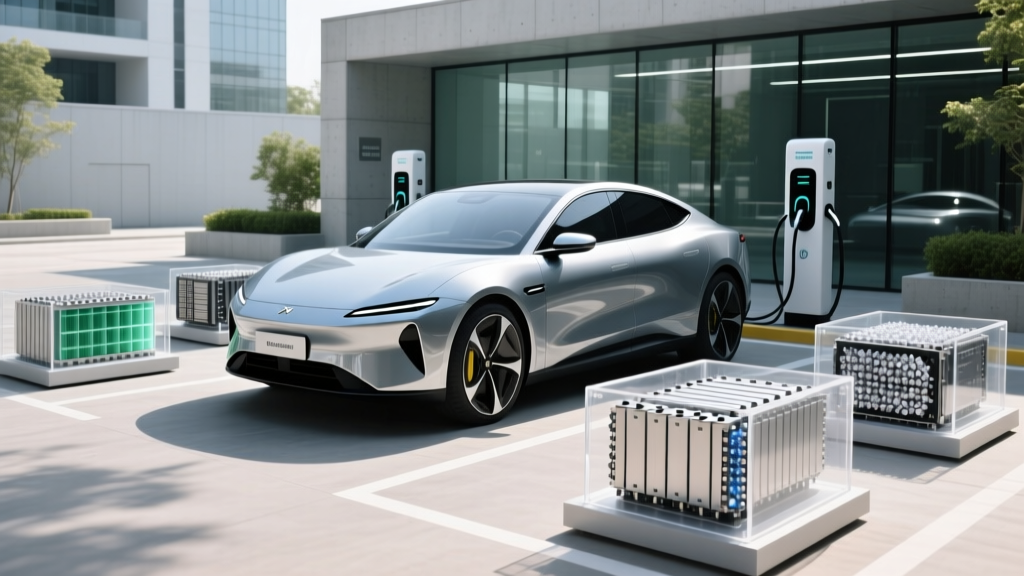
Every EV battery sold in the US today uses one of two dominant cathode chemistries: LFP (lithium iron phosphate) or NMC/NCA (nickel manganese cobalt / nickel cobalt aluminum). The chemistry determines your range per kWh, how the battery ages, cold-weather behavior, and ultimately the vehicle's price. Chinese manufacturers like CATL and BYD dominate LFP production globally, which is why LFP packs have become standard on base-trim Teslas, the Ford Mustang Mach-E Select, and the Rivian Standard battery.
| Attribute | LFP (LiFePO₄) | NMC / NCA |
|---|---|---|
| Energy density (cell-level) | 160–200 Wh/kg | 230–300 Wh/kg |
| Typical cycle life | 3,000–6,000 cycles | 1,000–2,500 cycles |
| Cold-weather range retention (−10°C / 14°F) | ~55–65% of rated range | ~65–75% of rated range |
| Thermal runaway risk | Very low (stable olivine structure) | Moderate (requires robust BMS + cooling) |
| Recommended daily charge limit | 100% SoC (no penalty) | 80% SoC for daily use |
| Cobalt / nickel content | None | Significant (supply-chain / ethics concern) |
| Cell cost (2026 est.) | $80–100/kWh | $110–140/kWh |
| Common US vehicles (2026) | Tesla Model 3 RWD, Model Y RWD, Ford Mach-E Select, Rivian Standard | Hyundai Ioniq 5, Kia EV6, Tesla Long Range, BMW iX, Ford Extended Range |
The buyer's translation: If you want maximum range in the lightest package and don't mind charging to 80% daily, NMC/NCA is the play — it's why the Ioniq 5 Long Range AWD achieves its EPA-estimated 305 miles from a 77.4 kWh usable pack. If you prioritize longevity, lower upfront cost, and the convenience of charging to 100% every night on a Level 2 home charger, LFP is increasingly the pragmatic choice. The trade-off is roughly 15–25% less range per kilogram of battery weight, which is why LFP vehicles tend to be base trims with shorter EPA range ratings.
Degradation by the Numbers: What Real Data Shows
The single most common question from prospective EV owners: "How long does the battery last?" The answer, backed by fleet data from Geotab's analysis of over 10,000 EVs and Tesla's own 2025 Impact Report, is reassuring — most modern traction batteries will outlast the vehicle's useful economic life.
Here's what the data actually shows for liquid-cooled packs in current production vehicles:
| Time / Mileage | LFP Pack Retention | NMC Pack Retention | Data source context |
|---|---|---|---|
| Year 1 / 15,000 mi | 97–99% | 95–98% | Initial calibration loss |
| Year 3 / 45,000 mi | 94–97% | 90–95% | Geotab fleet average |
| Year 5 / 75,000 mi | 91–95% | 87–93% | Tesla Impact Report, fleet data |
| Year 8 / 120,000 mi | 88–93% | 82–90% | High-mileage fleet samples |
| Year 10 / 150,000 mi | 85–91% | 78–87% | Early Model S / Leaf extrapolation |
Two patterns emerge. First, degradation is non-linear — the steepest loss occurs in the first 12–18 months (roughly 2–5%), then the curve flattens significantly. Second, LFP chemistries degrade more slowly under equivalent conditions, largely because they tolerate 100% SoC storage without the same cathode stress that NMC experiences.
Real-world caveat: These figures assume liquid-cooled packs with active thermal management. Older passively-cooled batteries (early Nissan Leaf, first-gen VW e-Golf) degraded significantly faster — 20–30% loss over 5 years was not uncommon. Every mainstream EV sold in 2026 uses active liquid cooling.
What the Battery Warranty Actually Covers
Federal law mandates that EV battery warranties cover at least 8 years / 100,000 miles (10 years / 150,000 miles in CARB states including California, New York, Massachusetts, and others). But the fine print matters — specifically the capacity retention threshold that triggers a warranty claim.
| Manufacturer | Warranty Period | Mileage Cap | Capacity Retention Threshold | Chemistry |
|---|---|---|---|---|
| Tesla (Model 3 / Y RWD — LFP) | 8 years | 100,000 mi | 70% | LFP |
| Tesla (Long Range / Performance) | 8 years | 120,000 mi | 70% | NMC / NCA |
| Hyundai / Kia | 10 years | 100,000 mi | 70% | NMC |
| Ford (Mach-E / F-150 Lightning) | 8 years | 100,000 mi | 70% | NMC / LFP |
| GM (Ultium platform) | 8 years | 100,000 mi | 70% | NMC |
| Rivian | 8 years | 175,000 mi | 70% | NMC / LFP |
| BMW | 8 years | 100,000 mi | 70% | NMC |
The 70% threshold is industry-standard, meaning the manufacturer will repair or replace the battery if its usable capacity drops below 70% of the original kWh rating within the warranty period. In practice, very few liquid-cooled EV batteries hit that threshold under normal use. A 2024 study by Recurrent Auto found that fewer than 1.5% of EVs in their dataset of 15,000 vehicles required a warranty battery replacement.
What's NOT covered: Gradual capacity loss above the 70% threshold is considered normal wear. Damage from collisions, flooding, aftermarket modifications, or using non-approved charging equipment may void coverage. Always read your specific warranty booklet — terms vary.
Battery Replacement Cost: The Numbers and the Context
This is where fear-mongering runs rampant. Yes, an out-of-warranty EV battery replacement is expensive. But context matters: the vast majority of EV batteries never need replacement during the vehicle's ownership life, and when they do, it's typically covered by warranty or insurance.
| Vehicle / Battery Size | Pack Capacity (usable kWh) | Replacement Cost Range | Cost per kWh |
|---|---|---|---|
| Tesla Model 3 RWD (LFP) | 57.5 kWh | $8,000–$12,000 | ~$140–$210 |
| Hyundai Ioniq 5 (NMC) | 77.4 kWh | $12,000–$18,000 | ~$155–$230 |
| Ford F-150 Lightning Ext. Range | 131 kWh | $18,000–$28,000 | ~$137–$214 |
| Chevrolet Silverado EV | 200 kWh | $25,000–$38,000 | ~$125–$190 |
| BMW iX xDrive50 | 105.2 kWh | $16,000–$24,000 | ~$152–$228 |
These figures include the battery pack and labor but can vary by $3,000–$5,000 depending on dealership markup, regional labor rates, and whether module-level repair is possible (some packs allow replacing individual modules for $2,000–$5,000 rather than the full assembly).
When is replacement actually needed? Almost never during the first 10 years. The cases that do arise typically involve manufacturing defects (covered by warranty), physical damage from road debris or collisions (covered by insurance), or extreme high-mileage fleet use exceeding 200,000 miles. For a typical owner driving 12,000–15,000 miles per year, the battery will retain 85–92% of its original capacity at the 10-year mark — still entirely functional for daily driving.
Factors That Accelerate (or Slow) Battery Degradation
Not all miles are created equal when it comes to battery wear. The following factors have the most measurable impact on long-term State of Health (SoH):
- State of Charge habits: For NMC/NCA packs, set your daily charge limit to 80%. Reserve 100% for road trips. LFP packs should be charged to 100% at least weekly for BMS calibration — this is the opposite advice, and it matters.
- Avoid prolonged storage at extremes: Don't leave any EV sitting at 100% SoC or below 10% SoC for weeks. If storing for vacation, aim for 50% SoC.
- DC fast-charging frequency: Occasional DC fast charging (1–2x per week) has minimal impact on modern liquid-cooled packs. Daily DC fast charging at 150+ kW can add 1–3% additional degradation over 5 years compared to Level 2 charging, per fueleconomy.gov technical guidance.
- Extreme temperature management: Park in shade or a garage during sustained 95°F+ heat. In winter, precondition the battery while plugged in before driving — this reduces the internal resistance stress that cold-soaked cells experience during high-current discharge.
- Regen braking settings: Aggressive one-pedal driving doesn't significantly harm battery health, but very high regen currents into a near-full battery (95%+ SoC) can cause micro-stress. Most BMS systems taper regen automatically at high SoC to prevent this.
- Keep software updated: OEM battery management firmware updates frequently refine charge algorithms, thermal thresholds, and cell-balancing routines. These updates demonstrably improve longevity.
How to Check Your Battery's State of Health
State of Health (SoH) is expressed as a percentage: a battery with 92% SoH holds 92% of its original usable kWh capacity. Here's how to monitor it:
OEM apps and in-car displays: Tesla's app shows battery health under "Service" in recent software versions. Hyundai's Bluelink and Ford's Pass app provide similar estimates. BMW's iDrive displays a battery health percentage in the service menu. Note that these readings can fluctuate by 1–3% depending on recent temperature and charge patterns.
Third-party diagnostics: Services like Recurrent (free for owners, connects to your vehicle's telematics) and Geotab provide more granular SoH tracking over time. Some independent EV shops can pull detailed BMS logs showing individual cell voltage deviation, which is a more precise health indicator than the aggregate SoH percentage.
The manual calculation: Charge to 100% (or your normal limit), note the displayed range, and compare it to the EPA-rated range at the same SoC. If your Ioniq 5 (EPA 305 mi at 100%) consistently shows 275 miles at full charge after 3 years, your pack is at roughly 90% SoH — entirely normal.
Chinese Solid-State Batteries: Where the Technology Actually Stands
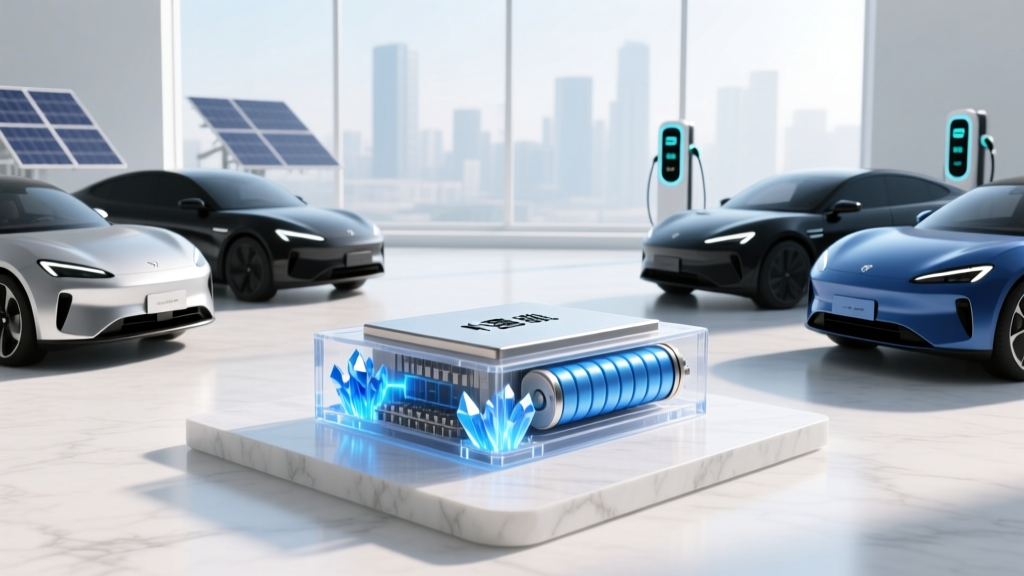
Chinese manufacturers and their partners lead global solid-state battery R&D in terms of patent volume, pilot production lines, and government-backed investment. Here's a realistic assessment of the key players and timelines as of 2026:
NIO / WeLion (semi-solid-state): NIO's 150 kWh semi-solid pack, produced by WeLion, entered limited service in China in 2024 for the ET7 sedan. "Semi-solid" uses a hybrid electrolyte — part liquid, part solid — rather than a true all-solid-state design. It achieves roughly 360 Wh/kg at the cell level, enabling a 620-mile CLTC range (roughly 500 miles EPA-equivalent). However, the pack costs approximately $40,000 at the cell level alone, making it viable only as a rental/subscription option for long trips, not as a standard vehicle battery. US availability: none, and NIO has not announced a US launch.
CATL (condensed-matter battery): CATL's condensed-matter cell, announced in 2023 and entering pilot production in 2025, targets 500 Wh/kg — roughly double current NMC energy density. CATL has positioned this initially for aviation applications, with automotive adoption expected no earlier than 2028–2030. Cost per kWh at scale is currently 3–4x conventional lithium-ion.
BYD / Blade evolution: BYD's next-generation Blade LFP cells (expected 2027) are projected to reach 220–240 Wh/kg through structural and anode improvements, closing part of the gap with NMC while retaining LFP's safety and cost advantages. This is incremental chemistry improvement, not solid-state, but it's the more realistic near-term advancement for affordable EVs.
QuantumScape / solid-state: While QuantumScape is US-headquartered, its manufacturing partnerships and supply chain are deeply intertwined with Chinese materials processors. Their solid-state cells have demonstrated 800+ charge cycles with <10% degradation in lab testing, but volume production for automotive applications remains in the 2028–2030 window per the company's own investor disclosures.
The realistic timeline for US buyers: True all-solid-state batteries at cost parity with current lithium-ion are not expected in US-market vehicles before 2030–2032, based on current OEM roadmaps from Toyota, Samsung SDI, and CATL. Semi-solid designs may appear in premium Chinese-market vehicles sooner but face significant regulatory and supply-chain barriers for US import. The battery you buy in 2026 — whether LFP or NMC — will use proven, liquid-cooled lithium-ion technology with a decade of real-world reliability data behind it.
Frequently Asked Questions
How long do EV batteries last in years and miles?
Modern liquid-cooled EV batteries typically retain 85–92% of their original capacity after 10 years or 150,000 miles of average use. Based on current fleet data, most will remain functional (above 70% capacity) for 15–20 years or 200,000+ miles. The vehicle's body, suspension, and electronics are more likely to reach end-of-life before the battery does.
How much does an EV battery cost to replace out of warranty?
Full pack replacement ranges from approximately $8,000 for a 57 kWh LFP pack (Tesla Model 3 RWD) to $28,000–$38,000 for large packs like the F-150 Lightning Extended Range (131 kWh) or Silverado EV (200 kWh). Module-level repairs, where available, cost $2,000–$5,000. However, fewer than 2% of EVs require battery replacement during the warranty period, and most replacements are covered by the 8-year / 100,000-mile warranty.
What does the EV battery warranty cover?
Every manufacturer covers the high-voltage traction battery for at least 8 years / 100,000 miles against capacity loss below 70% of the original rated kWh. Some manufacturers (Hyundai, Kia, Rivian) offer longer periods or higher mileage caps. The warranty covers defects and abnormal degradation but not damage from accidents, flooding, or unauthorized modifications. Check IRS guidelines if you're also evaluating how battery sourcing affects §30D tax credit eligibility.
Is LFP or NMC better for my situation?
Choose LFP if: you charge at home nightly, want the longest cycle life, prefer charging to 100% without worry, and don't need maximum range. Choose NMC/NCA if: you need the longest EPA range for road trips, frequently drive in very cold climates where NMC retains range slightly better, or want the lightest vehicle weight for performance. Neither is objectively "better" — they're optimized for different ownership patterns.
Will Chinese solid-state batteries be available in US cars soon?
Not in the near term. Semi-solid-state packs (like NIO/WeLion's 150 kWh unit) are in limited use in China but cost roughly 4x conventional cells and are not certified for US sale. True all-solid-state batteries from CATL, Toyota, or Samsung SDI are not expected in US-market production vehicles before 2030–2032. Current LFP and NMC chemistries, combined with robust liquid cooling and 8-year warranties, represent a mature and reliable technology for today's buyers.
Does frequent DC fast charging damage the battery?
On modern liquid-cooled packs, occasional DC fast charging (1–2 sessions per week at 150–250 kW) causes negligible additional degradation — roughly 0.5–1% extra loss over 5 years compared to exclusive Level 2 charging. Daily DC fast charging at maximum power can add 1–3% additional degradation. The bigger degradation factors are sustained high SoC storage and extreme heat exposure, not fast charging itself.