Why a Lithium Discovery in China Matters to Your Next EV
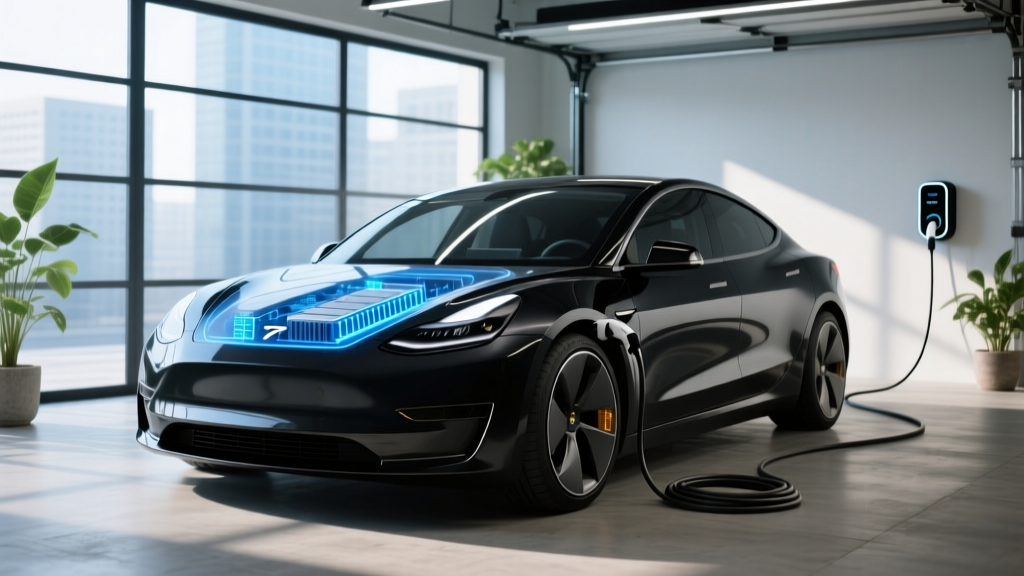
Reports of a 540-million-ton lithium resource identified in China's Sichuan and Jiangxi provinces have sent ripples through the global battery supply chain. For Tesla — which sources LFP (lithium iron phosphate) cells from CATL in China for standard-range Model 3 and Model Y vehicles — the implications are tangible. A domestic supply surge could lower cathode material costs, reinforce China's dominance in battery refining, and potentially reshape how Tesla structures its long-term sourcing agreements under the critical-mineral requirements of the IRS §30D federal tax credit.
But for the EV buyer or owner sitting in the U.S. right now, the real question is more practical: What battery chemistry is in your car, how long will it last, what does the warranty actually cover, and what happens if it needs replacement? Let's break down the data — not the hype.
LFP vs. NMC/NCA: The Chemistry Inside Your EV
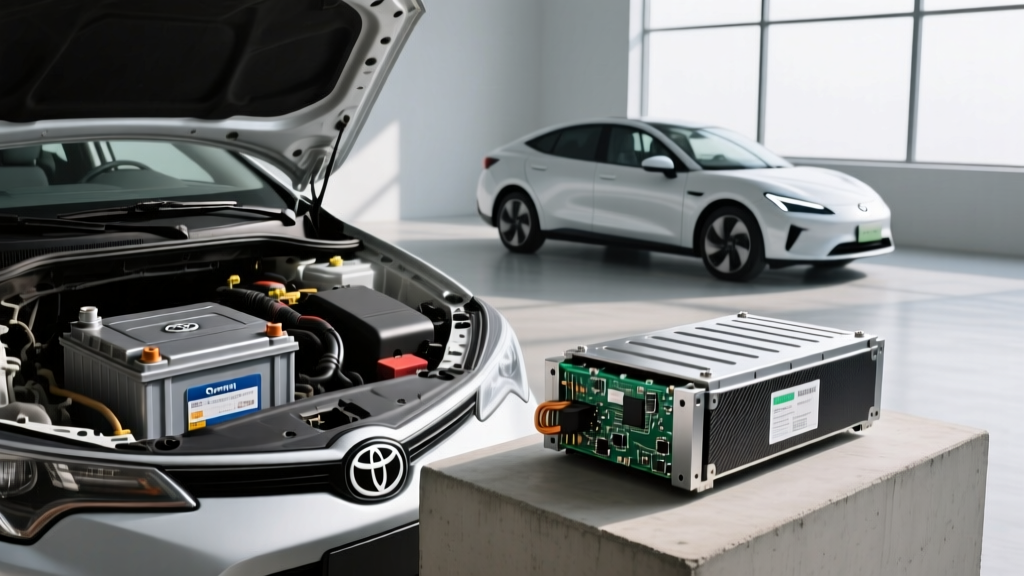
Not all lithium-ion batteries are the same. The two dominant chemistries in passenger EVs sold in the U.S. are LFP (lithium iron phosphate) and NMC/NCA (nickel manganese cobalt / nickel cobalt aluminum). Each has distinct trade-offs that affect range, longevity, cold-weather performance, and cost.
| Attribute | LFP (e.g., Tesla Model 3 RWD, BYD Blade) | NMC/NCA (e.g., Tesla Long Range, Hyundai Ioniq 5, Ford F-150 Lightning Extended) |
|---|---|---|
| Energy Density | ~160–180 Wh/kg (lower) | ~220–260 Wh/kg (higher) |
| Cycle Life | 3,000–5,000+ cycles to 80% SoH | 1,000–2,000 cycles to 80% SoH |
| Cold-Weather Performance | Greater range loss below 32°F (~30–40% loss) | Moderate range loss (~20–30% loss) |
| Cost per kWh | ~$90–$110 (lower, no cobalt/nickel) | ~$120–$150 (higher, commodity-exposed) |
| Recommended Charge Habit | Can charge to 100% daily (Tesla recommends this) | Better at 80–90% daily; 100% for trips only |
| Thermal Stability | Excellent (less prone to thermal runaway) | Good, but requires more active thermal management |
| Key Supply Chain Risk | Iron & phosphate — abundant; lithium refining concentrated in China | Cobalt (DRC), nickel (Indonesia/Russia) — geopolitically sensitive |
LFP's cost advantage is precisely why Tesla turned to CATL for standard-range vehicles. If China's 540-million-ton lithium discovery accelerates domestic refining capacity, LFP cell prices could drop further — potentially widening the price gap between standard-range and long-range trims. However, this also deepens Tesla's exposure to Chinese-sourced critical minerals, which could complicate §30D tax credit eligibility if sourcing rules tighten beyond 2026.
How Long Do EV Batteries Actually Last?
The short answer: longer than most buyers expect. Data from fleet operators, manufacturer reports, and independent testing consistently shows that modern EV traction batteries outlast the typical ownership period — and often the vehicle itself.
Degradation Data Points (Real-World)
- Tesla 2025 Impact Report: Model 3/Y NMC batteries retain ~88% capacity at 150,000 miles; LFP packs show ~92% retention at equivalent mileage.
- Geotab fleet study (2024, 10,000+ EVs): Average annual degradation across all chemistries was 1.8% per year — meaning a typical EV retains ~82% State of Health (SoH) after 10 years.
- Taxi fleet data (Nissan Leaf, 2nd-gen 62 kWh): High-use vehicles (50,000+ miles/year with frequent DC fast charging) showed 3–4% annual loss, still reaching ~75% SoH at 200,000 miles.
- Hyundai/Kia E-GMP platform (Ioniq 5, EV6): Owner-reported data on EV forums shows ~5–7% loss at 60,000 miles with mixed Level 2 and DC fast charging.
The non-linear degradation curve matters: most batteries lose 2–5% in the first year (formation loss), then settle into a slower linear decline of ~1–2% annually.
Battery Warranties: What's Actually Covered
Federal law mandates a minimum 8-year/100,000-mile warranty on EV battery packs for emissions-related components, and most manufacturers align their high-voltage battery warranties to this standard — or exceed it.
| Manufacturer | Warranty Period | Capacity Retention Threshold | Notes |
|---|---|---|---|
| Tesla (Model 3/Y RWD — LFP) | 8 years / 120,000 miles | 70% SoH | Applies to standard-range LFP packs |
| Tesla (Model 3/Y LR/Perf — NMC) | 8 years / 120,000 miles | 70% SoH | Long Range and Performance trims |
| Hyundai / Kia (Ioniq 5, EV6, EV9) | 10 years / 100,000 miles | 70% SoH | Among the longest coverage in the U.S. |
| Ford (F-150 Lightning, Mustang Mach-E) | 8 years / 100,000 miles | 70% SoH | Covers battery and high-voltage components |
| GM (Ultium: Equinox EV, Blazer EV, Silverado EV) | 8 years / 100,000 miles | 70% SoH (60% for commercial) | Ultium platform standard |
| BMW (i4, iX, i7) | 8 years / 100,000 miles | 70% SoH | Includes battery management system |
The 70% threshold is the industry norm. If your battery drops below 70% of its original usable capacity within the warranty window, the manufacturer must repair or replace it at no cost. In practice, very few packs hit that threshold under normal use — degradation data above shows most retain 80%+ well past 150,000 miles.
EV Battery Replacement Costs: The Real Numbers
Out-of-warranty battery replacement is the single biggest fear for prospective EV buyers. Here's what it actually costs in 2025–2026 — and when it's typically needed.
| Vehicle / Pack Size | Battery Chemistry | Estimated Replacement Cost (Parts + Labor) | Typical Replacement Trigger |
|---|---|---|---|
| Tesla Model 3 RWD (~60 kWh) | LFP | $12,000–$16,000 | Rare before 250,000+ mi; module repair often suffices |
| Tesla Model Y LR (~75 kWh) | NMC | $15,000–$20,000 | Rare before 200,000+ mi |
| Hyundai Ioniq 5 (~77.4 kWh) | NMC | $14,000–$18,000 | Module-level repair available; full swap uncommon |
| Ford F-150 Lightning Ext. (~131 kWh) | NMC | $22,000–$30,000 | Large pack; modular repair reduces typical cost |
| Chevrolet Bolt EV/EUV (~65 kWh) | NMC | $14,000–$16,000 | Post-recall packs are more stable; older NMC 532 chemistry |
Two critical points: First, most EVs will never need a full pack replacement under typical ownership (10–15 years, 120,000–180,000 miles). Second, module-level repair — replacing only degraded sections of the pack — is increasingly available through specialized EV shops and reduces cost to $3,000–$7,000 in many cases. The fear of a sudden $20,000 bill at 100,000 miles is not supported by the data.
Factors That Accelerate (or Preserve) Battery Life
Battery degradation isn't random. It's driven by measurable physical and electrochemical stressors. Here's what the data shows:
Battery Care Checklist: Maximize Longevity
- Avoid sustained 100% SoC (NMC/NCA): Store and charge daily at 80%. Reserve 100% for road trips. LFP packs are the exception — Tesla recommends periodic 100% charges for BMS calibration.
- Minimize DC fast charging above 150 kW when unnecessary: Occasional fast charging is fine; daily use of 250–350 kW chargers accelerates degradation by ~0.5–1% annually vs. Level 2. The charge curve taper above 80% exists partly to protect the cells.
- Precondition before fast charging: Cold batteries resist high-current charging. Preconditioning (via navigation to a Supercharger or manual precondition) warms the pack to ~30–35°C, reducing lithium plating risk.
- Avoid prolonged storage at extreme SoC: If parking for 2+ weeks, leave NMC at ~50% SoC; LFP at ~60–70%. Both chemistries degrade faster when stored at 100% or below 10%.
- Extreme heat exposure: Repeated exposure to ambient temps above 100°F (e.g., desert parking without shade) accelerates calendar aging. Thermal management systems mitigate this, but aren't active when the car is off.
- Use Level 2 (7–11 kW) as your daily charging method: Slower charging generates less heat and electrochemical stress. Home Level 2 is the optimal balance of speed and battery health.
How to Check Your Battery's State of Health (SoH)
State of Health is the percentage of original usable capacity your battery retains. A new EV has 100% SoH; a pack at 85% SoH holds 85% of its original kWh. Here's how to monitor it:
- Tesla: The in-car service menu (hold the model badge on the About screen for ~5 seconds) provides a "Battery Health" readout. Third-party apps like Tessie or TeslaFi log SoH trends over time using API data.
- Hyundai/Kia: The EV-specific menu in the infotainment system shows estimated battery condition. Dealers can pull detailed SoH via the KDS (Kia Diagnostic System) or GDS (Genesis Diagnostic System).
- Ford: The FordPass app and in-vehicle settings show battery health indicators. Dealership OBD-II scans provide granular cell-balance data.
- Universal OBD-II method: Tools like the OBDLink MX+ paired with apps such as ABRP (A Better Route Planner) or Car Scanner can read real-time battery data including SoH, cell voltage spread, and pack temperature.
- Manual calculation: Charge to 100% (on an LFP vehicle or occasionally on NMC), note the displayed range, and compare to the original EPA-rated range. A 310-mile EPA vehicle showing 270 miles at full charge suggests ~87% SoH — though temperature and driving style affect this estimate.
Beyond Lithium-Ion: Solid-State and Silicon Anode Timelines
The next generation of battery technology is frequently discussed but not yet commercially available in passenger EVs at scale. Here's where things stand as of 2026:
Solid-state batteries replace the liquid electrolyte with a solid conductor, promising higher energy density (~350–400 Wh/kg), faster charging, and improved safety. Toyota has announced a limited production target for solid-state EVs in 2027–2028, but these are expected in low-volume, premium applications first. Samsung SDI and QuantumScape continue pilot production. Realistic mass-market availability: 2029–2032.
Silicon anode technology (used in partial form by companies like Sila Nanotechnologies and Group14) increases energy density by replacing graphite anodes with silicon-dominant composites. Mercedes-Benz has tested silicon-anode cells in the EQG prototype. Expect incremental adoption in NMC cells starting 2026–2028, adding 10–20% energy density improvement rather than a step-change revolution.
Sodium-ion batteries are emerging as a low-cost alternative for entry-level EVs, particularly in China. CATL has begun shipping sodium-ion packs in select Chinese-market vehicles. U.S. availability remains unannounced. Energy density (~120–150 Wh/kg) limits them to shorter-range urban vehicles.
None of these technologies are currently available in U.S.-market EVs. Any purchasing decision today should be based on proven LFP or NMC chemistry — which, as the degradation data above shows, is already remarkably durable.
What China's Lithium Discovery Means for Your Wallet
The 540-million-ton lithium resource in China — if developed at scale — could lower global lithium carbonate prices over the next 5–10 years, particularly for LFP cells where lithium represents a larger share of total cathode cost (iron and phosphate are cheap). For Tesla, this creates both an opportunity (cheaper standard-range packs) and a strategic risk (deepening dependence on Chinese refining, potentially conflicting with §30D critical-mineral sourcing requirements that mandate free-trade-agreement compliance).
For U.S. buyers, the practical impact is indirect but real: lower cell costs could translate to lower MSRPs on LFP-equipped trims, or allow manufacturers to increase kWh capacity at the same price point. But the timeline from resource discovery to refined cathode material in a vehicle is typically 5–8 years. This is a supply-chain story, not a "prices drop tomorrow" story.
What matters for your purchase today: choose LFP if you prioritize longevity, lower cost, and daily 100% charging convenience (and can tolerate slightly more cold-weather range loss). Choose NMC/NCA if you need maximum range per kWh, better cold-weather performance, and don't mind charging to 80% daily. Both chemistries will likely outlast your ownership of the vehicle.
Frequently Asked Questions
How long do EV batteries last in years and miles?
Based on fleet data and manufacturer reports, most modern EV batteries retain 80%+ capacity at 150,000–200,000 miles (roughly 12–15 years of average driving). LFP chemistries tend to outlast NMC in cycle count. Full pack failure before 200,000 miles is statistically rare.
How much does an EV battery cost to replace?
Full pack replacement ranges from $12,000–$30,000 depending on pack size and vehicle, but module-level repair ($3,000–$7,000) is increasingly available. Most EVs never require out-of-warranty replacement under typical ownership.
What does the battery warranty actually cover?
Manufacturer warranties cover defects and capacity loss below a threshold (typically 70% SoH) for 8–10 years / 100,000–120,000 miles. This includes the battery pack, modules, and often the battery management system. It does not cover damage from accidents, flooding, or unauthorized modifications.
How do I check and maximize my battery's health?
Use your vehicle's built-in health readout, third-party OBD-II tools, or API-connected apps. Maximize longevity by charging NMC to 80% daily (LFP to 100% is fine), minimizing unnecessary DC fast charging, preconditioning before fast charges, and avoiding prolonged storage at extreme SoC levels.
LFP vs. NMC — which chemistry is better?
Neither is universally better. LFP wins on cycle life (3,000–5,000 cycles), cost (~$90–$110/kWh), thermal safety, and daily charging convenience. NMC wins on energy density (~220–260 Wh/kg), cold-weather performance, and driving range per pack weight. Your priority — longevity vs. maximum range — determines the right choice.