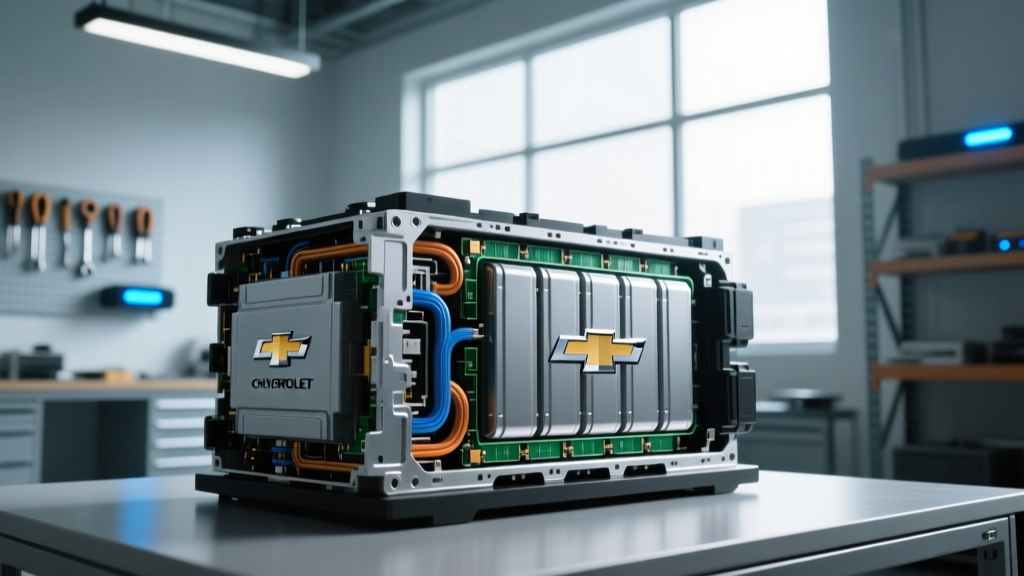
The Chevrolet Silverado EV sits on General Motors' Ultium platform, one of the most modular battery architectures in the EV truck segment. Buyers researching the Chevy Silverado EV battery size encounter a range of pack options — and a web of questions about chemistry, real-world degradation, warranty coverage, and what happens if a replacement is needed years down the road.
This guide covers every Silverado EV battery configuration available for the 2025–2026 model years, explains the NMC chemistry inside the Ultium pack, provides degradation benchmarks from real-world fleet data, and walks through the warranty, replacement economics, and ownership habits that maximize battery lifespan.
Silverado EV Battery Sizes and Configurations by Trim
GM offers the Silverado EV with two primary Ultium battery pack sizes. The exact configuration depends on trim and model year:
| Configuration | Usable Capacity | Available Trims (2025–2026) | EPA Range | Chemistry |
|---|---|---|---|---|
| Standard Ultium Pack | ~200 kWh | Work Truck (WT), LT | ~390 mi (WT) | NMC (NCMA) |
| Extended Ultium Pack | ~240 kWh | RST First Edition, Trail Boss, High Country | ~440 mi (RST) | NMC (NCMA) |
All Silverado EV packs use GM's NCMA (nickel-cobalt-manganese-aluminum) cathode chemistry — a variant of NMC that adds aluminum for improved thermal stability and cycle life. This is distinct from the LFP (lithium iron phosphate) chemistry found in some competitor vehicles like the base Tesla Cybertruck and certain Ford models.
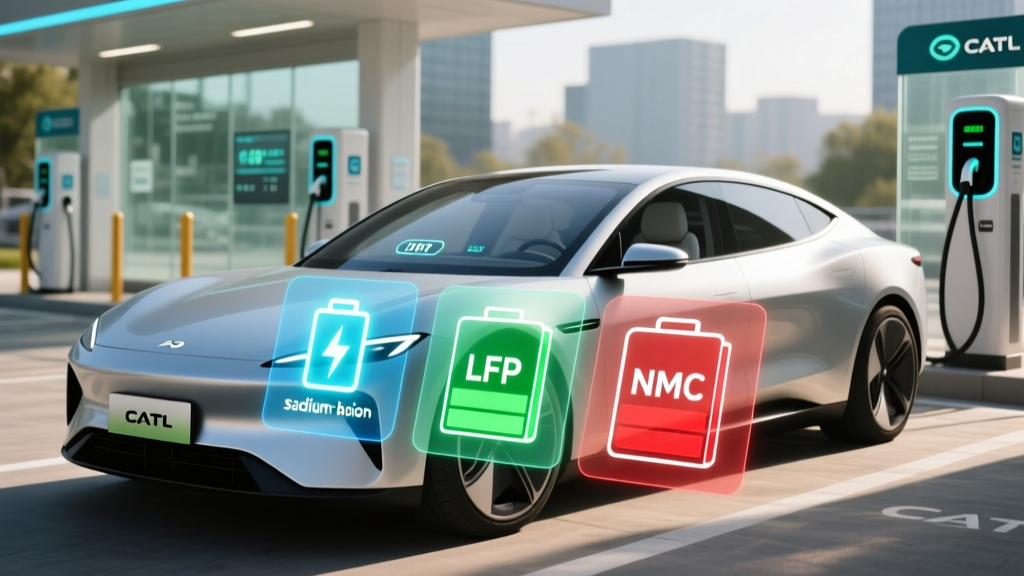
Ultium NMC Chemistry: How It Compares to LFP
Understanding the Silverado EV's battery requires knowing the trade-offs between the two dominant lithium-ion chemistries in today's EV market. GM chose NCMA/NMC for the Silverado EV to prioritize energy density — critical for a full-size truck targeting 400+ miles of range and heavy towing capability.
| Attribute | NMC / NCMA (Silverado EV) | LFP (e.g., Tesla, Rivian Standard) |
|---|---|---|
| Energy Density | Higher (~250–300 Wh/kg cell-level) | Lower (~160–200 Wh/kg cell-level) |
| Range per kg of Battery | Better — enables 400+ mi in large trucks | Requires heavier pack for equivalent range |
| Cycle Life | ~1,000–2,000 full cycles to 80% SoH | ~3,000–5,000+ full cycles to 80% SoH |
| Cold-Weather Performance | Better low-temp power delivery and charging | Reduced charging speed and power below freezing |
| Thermal Stability | Good (aluminum additive improves safety vs older NMC) | Excellent — inherently more stable chemistry |
| Cost per kWh | Higher ($110–$140/kWh pack-level) | Lower ($80–$110/kWh pack-level) |
| Recommended Daily Charge Limit | 80% for daily use (preserves longevity) | 100% OK for daily use (no degradation penalty) |
| Cobalt Content | Low but present (NCMA reduces vs NMC 811) | Zero cobalt |
Why GM chose NMC/NCMA for the Silverado EV: A full-size electric truck carrying a 200–240 kWh battery already weighs over 8,500 lbs. Switching to LFP would require an even heavier pack to achieve the same range, compounding weight and reducing payload and towing efficiency. For a truck where range-per-pound matters enormously, NMC/NCMA's energy density advantage justifies the trade-offs in cycle life and cost.
Battery Degradation: What the Data Actually Shows
EV battery degradation follows a predictable curve: a steeper initial drop in the first 1–2 years (typically 2–5%), followed by a long, slow linear decline. For Ultium-based packs, we can draw on data from GM's earlier Ultium vehicles (Cadillac Lyriq, GMC Hummer EV, Chevy Equinox EV) and industry-wide NMC fleet data from sources like Geotab's EV battery degradation study.
- Year 1 / 15,000 mi: ~2–4% capacity loss (initial formation loss)
- Year 3 / 45,000 mi: ~5–8% total loss
- Year 5 / 75,000 mi: ~8–12% total loss
- Year 8 / 120,000 mi: ~12–18% total loss (approaching warranty threshold)
- Year 10 / 150,000 mi: ~15–22% total loss (varies significantly with usage habits)
Note: These are averages across NMC packs. Individual results depend heavily on charging habits, climate, and DC fast-charging frequency. GM's Ultium packs use active liquid thermal management, which significantly reduces heat-related degradation compared to older passively-cooled packs.
For a Silverado EV with a 200 kWh pack, a 15% loss at 150,000 miles means roughly 170 kWh usable — still enough for ~300+ miles of real-world range. Most EV batteries do not "fail" catastrophically; they slowly lose capacity over time, remaining functional well beyond the point where the vehicle itself is retired.
Silverado EV Battery Warranty: What GM Covers
GM provides a battery warranty that meets the industry standard set by federal guidelines. Here are the exact terms for the 2025–2026 Silverado EV:
| Warranty Component | Coverage Term |
|---|---|
| Battery Limited Warranty | 8 years / 100,000 miles (whichever comes first) |
| Capacity Retention Threshold | 70% of original usable capacity |
| What Triggers a Claim | Battery drops below 70% SoH during warranty period |
| Remedy | GM repairs, replaces modules, or replaces full pack at no cost |
| Powertrain Warranty | 5 years / 60,000 miles (motors, inverter, onboard charger) |
| Transferable | Yes — warranty transfers to subsequent owners |
The 70% threshold is significant. A Silverado EV 4WT starting with ~200 kWh usable would need to drop below ~140 kWh (roughly 270 miles of range) for a warranty claim — a scenario that real-world degradation data suggests is unlikely within 100,000 miles for a liquid-cooled NMC pack under normal use. According to fueleconomy.gov, most modern liquid-cooled EV batteries retain well above 80% capacity at the 100,000-mile mark.
Battery Replacement Cost: What Silverado EV Owners Should Budget For
Out-of-warranty battery replacement is the most-cited fear among prospective EV buyers. Here's the reality for the Silverado EV, based on current GM Ultium pack pricing and industry replacement data:
| Component | Estimated Cost (2025–2026) |
|---|---|
| Full Pack Replacement — 200 kWh | $28,000–$38,000 (parts + labor) |
| Full Pack Replacement — 240 kWh | $34,000–$45,000 (parts + labor) |
| Individual Module Replacement (if supported) | $3,000–$8,000 per module |
| Diagnostic and Programming | $500–$1,500 |
When is replacement typically needed? The honest answer: rarely during the vehicle's normal ownership life. Data from Recurrent Auto and Geotab shows that fewer than 5% of modern liquid-cooled EV batteries require full replacement. Most degradation is gradual capacity loss, not sudden failure. The Ultium platform's modular design also allows GM to replace individual modules rather than the entire pack if a specific cell group fails — significantly reducing cost in partial-failure scenarios.
Battery pack prices continue to decline. BloombergNEF's battery price survey shows pack-level costs falling from ~$140/kWh in 2023 toward ~$100/kWh by 2027–2028. A Silverado EV owner needing a replacement in 2034 would likely pay substantially less than today's estimates.
Maximizing Silverado EV Battery Life: Owner Habits That Matter
NMC chemistry is more sensitive to charging habits than LFP. Following these practices can meaningfully slow degradation over the life of your Silverado EV:
- Daily charge limit: Set to 80%. The myChevrolet app allows you to set a target SoC. Sustained storage above 90% accelerates NMC degradation through electrolyte oxidation at high voltage.
- Use 100% only for road trips. Charging to full is fine when you'll drive the truck within a few hours. Avoid leaving the truck at 100% SoC overnight or for multiple days.
- Minimize DC fast charging above 150 kW. Occasional fast charging is fine — the Ultium thermal management system actively cools the pack during DC sessions. But daily 350 kW sessions generate cumulative heat stress. Favor Level 2 home charging for daily use.
- Precondition while plugged in. Use the myChevrolet app to precondition the cabin and battery while connected to your Level 2 charger. This draws power from the grid, not the battery, and brings the pack to optimal temperature before driving.
- Avoid prolonged storage at low SoC. If storing the truck for more than 2 weeks, leave it plugged in with a 50–60% charge target. Storing below 10% risks cell damage from over-discharge.
- Park in shade or a garage in extreme heat. Sustained battery temperatures above 95°F accelerate calendar aging. The thermal management system runs even when parked, but it can only do so much in a 110°F driveway.
- Don't obsess about regenerative braking settings. Regen intensity has negligible impact on battery longevity compared to SoC and temperature management.
Monitoring Battery Health: How to Check State of Health (SoH)
GM provides several ways for Silverado EV owners to monitor their battery's State of Health:
- myChevrolet App: Displays estimated range, energy usage, and basic battery status. While GM does not expose a raw SoH percentage in-app (unlike some competitors), you can track range trends over time as a proxy.
- OnStar Vehicle Diagnostics: OnStar can run a battery health report and flag capacity anomalies. Available on trims with active OnStar subscriptions.
- Dealer Diagnostic Scan: A Chevy EV-certified dealer can pull the battery management system (BMS) log, which contains detailed cell voltage data, SoH percentage, and historical charge/discharge profiles. Request this during routine service visits.
- OBD-II Third-Party Tools: Devices like the OBDLink SX paired with apps such as EVNotify or Torque Pro can read BMS-reported SoH on GM Ultium vehicles. Accuracy varies, but these provide a useful trend line.
Track your truck's energy efficiency (kWh/100mi) over time. A gradual increase in consumption or decrease in displayed range at the same SoC is the most reliable real-world indicator of degradation. According to Recurrent Auto, most EV owners who track their data see less than 10% range loss in the first 80,000 miles with liquid-cooled packs.
Future Battery Technology: What's on the Horizon for Silverado EV
GM has publicly committed to next-generation battery technologies, though none are available in the current Silverado EV. Here's what's in the pipeline, with realistic timelines:
- Ultium Gen 2 (announced, expected ~2027–2028): GM has indicated the next Ultium iteration will use lower-cobalt or cobalt-free cathode materials and improved cell packaging to reduce cost per kWh by ~20%. This could reduce replacement costs for current Ultium owners if packs are backward-compatible.
- Silicon Anode Cells (pilot stage): GM's partnership with companies exploring silicon-dominant anodes could increase energy density by 20–40%, enabling either more range in the same pack volume or a lighter, smaller pack for the same range. Commercial availability is expected no earlier than 2028–2030.
- Solid-State Batteries (R&D phase): GM has invested in solid-state battery R&D through partnerships, but no production timeline has been announced for truck applications. Industry consensus places solid-state in light-duty vehicles no earlier than 2030–2032, with heavy-duty and truck applications following later. Solid-state promises higher energy density, faster charging, and improved safety — but manufacturing scalability remains the unsolved challenge.
None of these technologies change the buying decision today. The current Ultium NMC pack in the Silverado EV is a mature, liquid-cooled system with proven durability data and an 8-year/100,000-mile warranty. Waiting for solid-state is not a practical strategy for anyone who needs a truck in the next 3–5 years.
Frequently Asked Questions
How long do Chevy Silverado EV batteries last?
Based on NMC fleet degradation data, a Silverado EV battery should retain 80–85% of its original capacity at 100,000 miles and 75–82% at 150,000 miles under normal use. That translates to 12–18 years of functional service before the pack drops below 70% — the point where you'd notice meaningful range reduction. Most batteries outlast the vehicle's body and suspension components.
How much does it cost to replace a Silverado EV battery?
A full pack replacement runs $28,000–$45,000 depending on pack size (200 vs 240 kWh), including parts and labor. However, GM's Ultium platform supports individual module replacement, which can cost $3,000–$8,000 per module. Fewer than 5% of modern liquid-cooled EV batteries ever need full replacement. Prices are also expected to decline as battery manufacturing costs fall.
What does the Silverado EV battery warranty cover?
GM covers the battery for 8 years or 100,000 miles, whichever comes first. If the pack drops below 70% of its original usable capacity within that period, GM will repair or replace it at no cost. The warranty is transferable to subsequent owners, which supports resale value.
Should I charge my Silverado EV to 100% every day?
No. The NMC/NCMA chemistry in the Ultium pack degrades faster when held at high state of charge for extended periods. Set your daily charge limit to 80% using the myChevrolet app and reserve 100% charges for road trips where you'll drive shortly after reaching full. This single habit can add years of useful battery life.
Does frequent DC fast charging hurt the Silverado EV battery?
Occasional DC fast charging (1–2 times per week) has minimal impact thanks to the Ultium pack's active liquid cooling system, which manages cell temperature during high-power sessions. However, daily use of 250–350 kW chargers generates cumulative thermal stress that accelerates degradation over time. For daily charging, a Level 2 home charger (7.7–19.2 kW) is ideal.
Is NMC better than LFP for a truck like the Silverado EV?
For a full-size truck requiring 400+ miles of range, NMC/NCMA is the better choice because of its higher energy density. An LFP pack providing equivalent range would be significantly heavier, reducing payload and towing capacity. LFP's advantages — longer cycle life, lower cost, 100% daily charging tolerance — are more relevant in lighter vehicles with smaller battery packs where energy density is less critical.
Can I check my Silverado EV battery health myself?
Yes, though GM doesn't display a raw State of Health percentage in the myChevrolet app. You can track range trends over time, use OnStar diagnostics for health reports, have a dealer pull the BMS log during service, or use an OBD-II scanner with EV-compatible software to read SoH data directly from the battery management system.
The Chevy Silverado EV's Ultium battery is engineered for the long haul — a liquid-cooled, modular NMC pack with energy density suited to a 400-mile truck and a warranty that reflects GM's confidence in its durability. Understanding the chemistry, following NMC-specific charging practices, and monitoring degradation trends are the practical steps that ensure your Silverado EV battery delivers reliable range for well over a decade of ownership.