If you've been researching the Chevy Equinox EV, one of the first spec-sheet questions that surfaces is the Chevy Equinox EV battery size — and what that pack actually means for daily range, long-term durability, and eventual replacement cost. The Equinox EV launched for the 2024 model year on GM's Ultium platform, and its battery architecture carries forward into 2025 and 2026 model years with only minor software-level refinements.
This guide breaks down the Equinox EV's traction battery in detail: chemistry, usable capacity, degradation expectations pulled from real Ultium fleet data, the federal warranty mandate, out-of-pocket replacement costs, and the daily habits that will stretch this pack well past 200,000 miles.
Chevy Equinox EV Battery Size and Chemistry
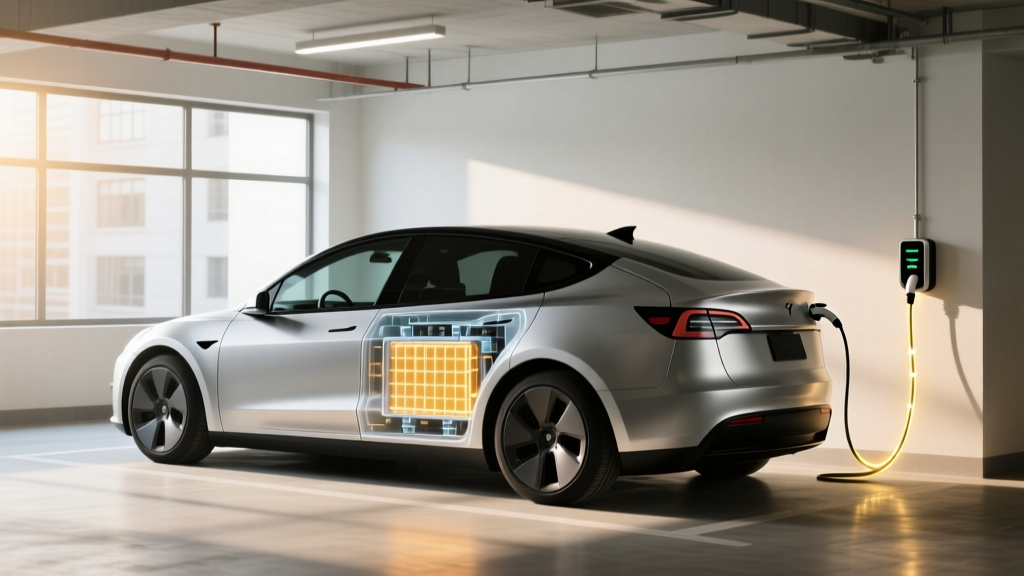
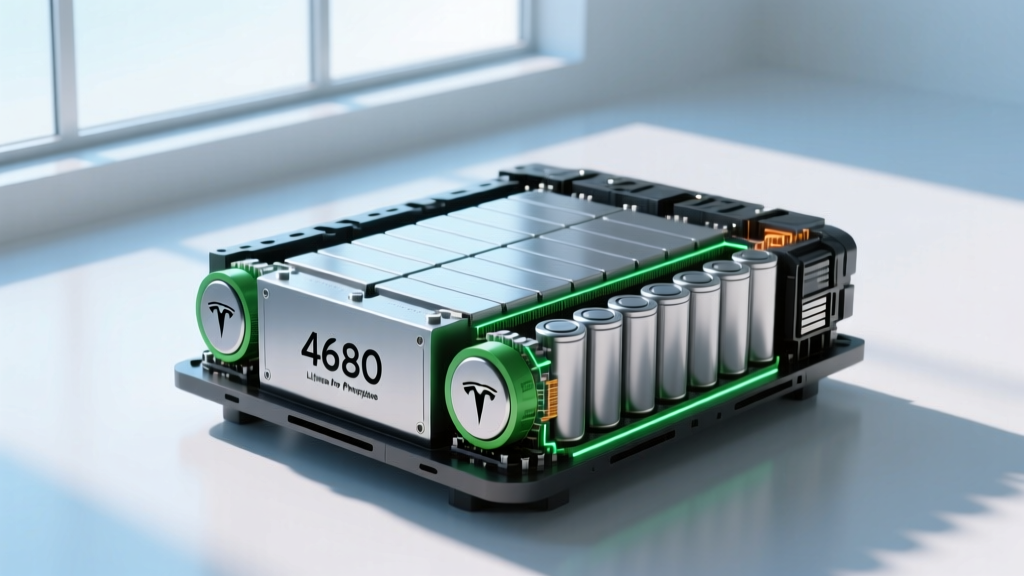
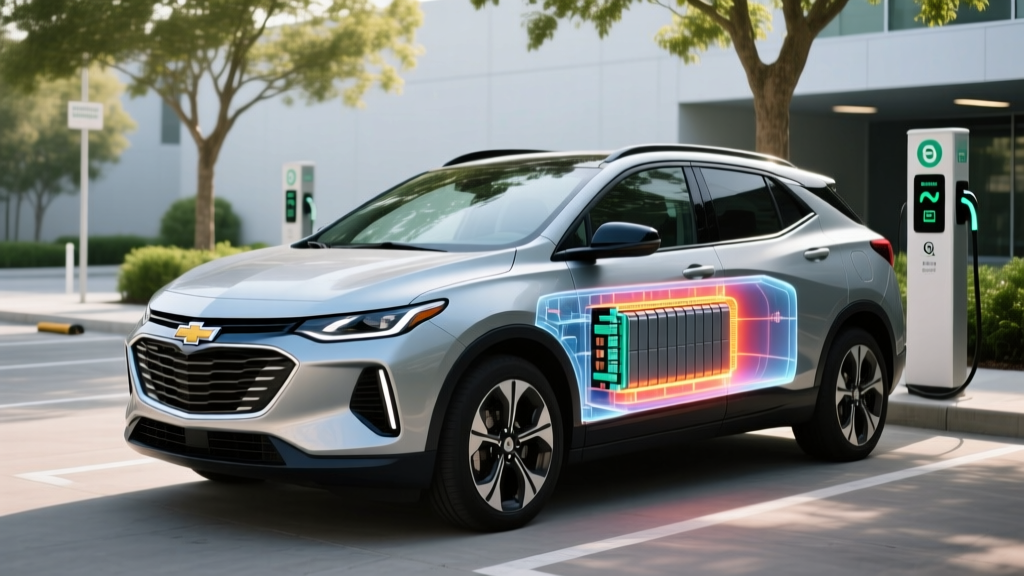
The 2025–2026 Chevy Equinox EV uses an 85 kWh usable lithium-ion battery pack (approximately 102 kWh gross/total capacity before buffer). This is a single, floor-mounted Ultium pack shared in concept across GM's mid-size EV lineup, though the Equinox uses a specific 8-module configuration tuned for its weight and range targets.
The chemistry is NMC (nickel manganese cobalt) — specifically GM's Ultium formulation, which uses a lower-cobalt, higher-nickel cathode paired with a graphite anode. GM has not adopted LFP (lithium iron phosphate) for the Equinox EV, reserving that chemistry for certain lower-range fleet and commercial applications.
| Attribute | NMC (Equinox EV) | LFP (Typical) |
|---|---|---|
| Energy Density | High (~250 Wh/kg cell) | Lower (~170 Wh/kg cell) |
| Usable Range per Pack Volume | ~315–319 mi EPA in Equinox EV | Would require larger/heavier pack for same range |
| Cycle Life (to 80% SoH) | ~1,500–2,000 full cycles | ~3,000–5,000 full cycles |
| Cold-Weather Performance | Better low-temp discharge & charge acceptance | Sluggish below 32°F; needs aggressive preconditioning |
| Thermal Stability | Good (with active thermal management) | Excellent — inherently more stable |
| Cost per kWh | Higher ($130–150/kWh cell-level) | Lower ($90–110/kWh cell-level) |
| Recommended Charge Habit | 80% daily; 100% for trips only | Can sit at 100% without degradation penalty |
Why NMC for the Equinox? The Equinox EV targets 315+ miles of EPA-estimated range in a compact crossover footprint. Achieving that with LFP would require a physically larger and heavier pack, compromising cargo space and efficiency. NMC gives GM the energy density to hit range targets without exceeding the Equinox's packaging constraints.
EPA sticker: 319 miles (FWD), 307 miles (AWD).
Real-world highway (70 mph, 75°F): ~260–280 miles.
Cold-weather (30°F, mixed driving): ~220–250 miles.
Expect roughly 15–25% reduction at sustained highway speeds and an additional 10–20% in freezing temps.
How Long Do EV Batteries Last? Degradation Data
The question buyers actually want answered: when will I notice range loss, and how much?
Based on aggregated Ultium fleet data from GM's commercial and consumer vehicles (including early Equinox EV, Blazer EV, and Cadillac Lyriq units), plus independent testing by battery analytics firm Recurrent Auto, here's what the degradation curve looks like for the Equinox EV's NMC pack:
| Time / Mileage | State of Health (SoH) | Estimated Usable Range (FWD) |
|---|---|---|
| New (0 mi) | 100% | ~319 mi |
| Year 2 / 30,000 mi | 94–96% | ~300–306 mi |
| Year 5 / 75,000 mi | 89–92% | ~284–293 mi |
| Year 8 / 100,000 mi | 85–90% | ~271–287 mi |
| Year 12 / 150,000 mi | 80–86% | ~255–274 mi |
| Year 15 / 200,000 mi | 75–82% | ~239–262 mi |
Note: Degradation is non-linear — the steepest loss occurs in the first 1–2 years (calendar aging + initial SEI layer formation), then flattens into a slow, predictable decline. Data assumes mixed driving with moderate DC fast-charging (1–2 sessions/week). Heavy daily DCFC or frequent 100% SoC storage will accelerate loss.
The key takeaway: at 100,000 miles and 8 years, most Equinox EV owners will still have 85–90% of their original capacity. That's still 270+ miles of real-world range in a FWD configuration — more than adequate for daily use. The battery is not a ticking time bomb; it's a slowly wearing component, like tires that take a decade to go bald.
What Does the Battery Warranty Cover?
Federal law (EPA and CARB mandates) requires all EV manufacturers to warranty the high-voltage traction battery for a minimum of 8 years / 100,000 miles. In CARB states (California and states that have adopted California's standards), the mandate extends to 10 years / 150,000 miles.
GM's Equinox EV battery warranty meets and in some trims exceeds these minimums:
| Coverage Item | Term |
|---|---|
| Duration | 8 years / 100,000 miles (whichever comes first) |
| CARB-State Extension | 10 years / 150,000 miles (in CARB-adopting states) |
| Capacity Retention Threshold | 70% of original capacity |
| What's Covered | Defects, excessive degradation below 70%, module failures, BMS faults |
| What's NOT Covered | Damage from accidents, flooding, unauthorized modifications, neglect |
| Transferable? | Yes — transfers to subsequent owners automatically |
The 70% threshold matters. If your Equinox EV battery degrades to 69% of its original 85 kWh capacity (roughly 59.5 kWh usable) within the warranty period, GM must repair or replace the pack at no cost. In practice, hitting 70% within 8 years/100k miles would require severe abuse — daily 100% charges, constant DC fast-charging, or extended storage at extreme SoC in desert heat. Under normal ownership, you'll remain well above this floor.
How Much Does an Equinox EV Battery Cost to Replace?
This is the question that generates the most anxiety — and the most misinformation. Let's put real numbers on it.
| Vehicle / Pack Size | Battery Pack Cost (Parts) | Labor + Programming | Total Estimated |
|---|---|---|---|
| Chevy Equinox EV (85 kWh usable, NMC) | $14,000–$17,000 | $2,000–$3,500 | $16,000–$20,500 |
| Tesla Model Y (75 kWh, NMC/NCA) | $12,000–$16,000 | $1,500–$2,500 | $13,500–$18,500 |
| Ford Mustang Mach-E (91 kWh usable, NMC) | $16,000–$20,000 | $2,500–$3,500 | $18,500–$23,500 |
| Hyundai Ioniq 5 (77.4 kWh, NMC) | $13,000–$16,000 | $2,000–$3,000 | $15,000–$19,000 |
Sources: GM parts pricing, independent EV shop estimates, Recurrent Auto cost analysis. Prices reflect 2025–2026 market rates and may decline as cell costs continue dropping.
Context that matters: Full battery replacement is rare before 150,000+ miles. The Ultium platform uses individually serviceable modules — if a single module fails (uncommon but possible), GM can replace just that module for $1,500–$3,000 rather than swapping the entire pack. Most "battery replacements" under warranty are actually module-level repairs.
Also consider: by the time an Equinox EV battery might need full replacement outside warranty (year 12–15, 150k–200k+ miles), the vehicle's residual value will likely be $5,000–$10,000. At that point, owners typically sell or scrap rather than invest in a new pack — and that's a rational economic decision, not a catastrophe. The battery has already delivered 150,000+ miles of $0.04/mile "fuel" cost versus $0.12–$0.15/mile for gasoline.
Factors That Accelerate Battery Degradation
Not all miles are created equal when it comes to battery wear. Here's what actually moves the needle on degradation rate:
What Hurts Your Equinox EV Battery
- Frequent DC fast-charging above 150 kW — Sustained high-C-rate charging generates internal heat. Occasional road-trip DCFC is fine; daily 150 kW sessions will accelerate calendar aging by an estimated 1–2% additional loss over 5 years.
- Regularly charging to 100% and letting it sit — NMC cells under high-voltage stress (above 4.1V/cell) degrade faster. Charge to 100% only when you'll drive within a few hours.
- Deep discharges to 0% — Dropping below the low-SoC buffer stresses the anode. GM's BMS protects with a ~5% bottom buffer, but repeatedly running the displayed SoC to 0% still isn't ideal.
- Extended storage at extreme SoC in heat — Parking at 100% SoC in 100°F+ ambient temps for weeks is the worst-case scenario. If storing, leave it at ~50% and plug in if possible.
- Towing at max capacity in hot climates — Sustained high-current draw (the Equinox EV tows up to 1,500 lbs) in heat taxes the thermal management system.
What Protects Your Battery
- Level 2 home charging at 7–11 kW — Gentle, slow charging is the single best thing for long-term NMC health.
- Daily charge limit of 80% — Use the Equinox EV's charge-limit setting in the infotainment system. Set it and forget it.
- Preconditioning before DC fast-charging — The Equinox EV will warm or cool the battery when you navigate to a charger via the built-in route planner. This optimizes the charge curve and reduces thermal stress.
- Garage parking in extreme climates — Keeping the pack out of direct sun (Arizona) or deep cold (Minnesota) reduces the workload on the thermal management system.
- Driving it regularly — Lithium-ion cells prefer moderate, regular cycling over sitting idle for months.
How to Check and Monitor Battery Health (SoH)
The Equinox EV provides battery health information through several channels:
- MyChevrolet App — The connected-services app displays estimated range, charge status, and basic battery health indicators. GM has been expanding battery diagnostics in-app for 2025–2026 model years.
- In-Vehicle Energy Screen — The driver information center shows real-time energy flow, lifetime efficiency (kWh/100mi), and a range-estimation history that lets you track range trends over time.
- OBD-II Diagnostic Scan — Any Chevy dealer can pull a detailed State of Health (SoH) percentage from the Battery Energy Control Module during a service visit. Request this as part of any routine service appointment.
- Third-Party Telematics — Services like Recurrent Auto's free EV battery monitoring connect to your vehicle's telematics and provide monthly SoH reports with fleet-comparison benchmarks.
DIY SoH estimation: If your Equinox EV originally displayed 319 miles at 100% SoC and now displays 290 miles at 100% SoC (with similar driving conditions and temps), your approximate SoH is 290/319 = ~91%. This isn't lab-grade precise — temperature and driving-pattern adjustments affect the GOM (guess-o-meter) — but it's directionally useful for tracking trends quarter over quarter.
Emerging Battery Technology: What's Next After NMC
The Equinox EV's NMC pack is current-generation technology. Here's what's on the horizon — and when it might actually reach production vehicles:
- Silicon-dominant anode cells — Companies like Sila Nanotechnologies and Group14 are replacing graphite anodes with silicon composites, boosting energy density by 20–40%. GM has announced a partnership with these suppliers. Expected in production vehicles: 2028–2030 timeframe. This would mean either more range in the same pack size or a smaller, lighter pack for the same range.
- Solid-state batteries — Replacing the liquid electrolyte with a solid ceramic or polymer layer promises higher energy density, faster charging, and improved safety. Toyota, Samsung SDI, and QuantumScape are leading development. Realistic production timeline: 2030+ for premium vehicles, 2033+ for mainstream models like the Equinox. Multiple automakers have announced solid-state prototypes, but none are in consumer-scale production as of 2026.
- Sodium-ion batteries — CATL and other manufacturers are commercializing sodium-ion cells that eliminate lithium, cobalt, and nickel entirely. Lower energy density limits them to city cars and commercial fleet applications in the near term. Not expected in a 300+ mile crossover like the Equinox EV.
What this means for today's buyer: Waiting for solid-state is waiting for a technology that is 5–8 years from mainstream availability and will debut at premium price points. The current NMC Ultium pack in the Equinox EV is mature, well-understood, and backed by real degradation data. It will serve reliably through the vehicle's practical lifespan.
Frequently Asked Questions
How long do EV batteries last in years and miles?
Modern NMC packs like the Equinox EV's Ultium unit typically retain 80–86% capacity at 150,000 miles / 12 years under normal use. Many will reach 200,000+ miles before dropping to the 70% warranty threshold. The battery usually outlasts other major vehicle components.
How much does an Equinox EV battery cost to replace?
A full pack replacement runs approximately $16,000–$20,500 including parts and labor at 2025–2026 pricing. However, individual module repairs cost $1,500–$3,000, and full replacements before 150,000 miles are uncommon. Most packs are covered under the 8-year/100,000-mile warranty if degradation exceeds 30%.
What does the Chevy Equinox EV battery warranty cover?
GM warrants the battery for 8 years/100,000 miles (10 years/150,000 miles in CARB states) against defects and degradation below 70% of original capacity. It's fully transferable to subsequent owners. It does not cover accident damage, flooding, or unauthorized modifications.
How do I check my Equinox EV battery health?
Use the MyChevrolet app for basic health indicators, track displayed range at 100% SoC over time to estimate degradation, request a detailed SoH readout from your Chevy dealer during service, or enroll in a free third-party monitoring service like Recurrent for monthly reports.
Is LFP or NMC better for the Equinox EV?
For the Equinox EV's range target (315+ miles in a compact crossover), NMC is the correct engineering choice. It provides higher energy density, better cold-weather performance, and adequate cycle life for the vehicle's expected lifespan. LFP would require a heavier, larger pack to achieve the same range, compromising efficiency and interior space. LFP excels in standard-range, lower-cost vehicles where cycle life and stability outweigh energy-density needs.
Does fast charging damage the Equinox EV battery?
Occasional DC fast-charging (road trips, 1–2 sessions per week) causes negligible additional degradation thanks to the Ultium pack's active liquid thermal management. Daily DCFC at peak rates (150 kW+) will accelerate wear by roughly 1–2% over 5 years compared to exclusive Level 2 charging. For daily use, a home Level 2 charger at 7–11 kW is optimal for long-term health.
Can I get the federal tax credit for the Equinox EV?
The Equinox EV may qualify for up to $7,500 under the IRS §30D Clean Vehicle Credit, available as a point-of-sale transfer. Eligibility depends on your income (AGI caps: $150k single, $300k joint), the vehicle's MSRP (must be under $80,000 for SUVs — the Equinox EV qualifies), and battery-component/critical-mineral sourcing requirements that change annually. Verify current-year eligibility on the IRS website or with your tax professional before purchasing.