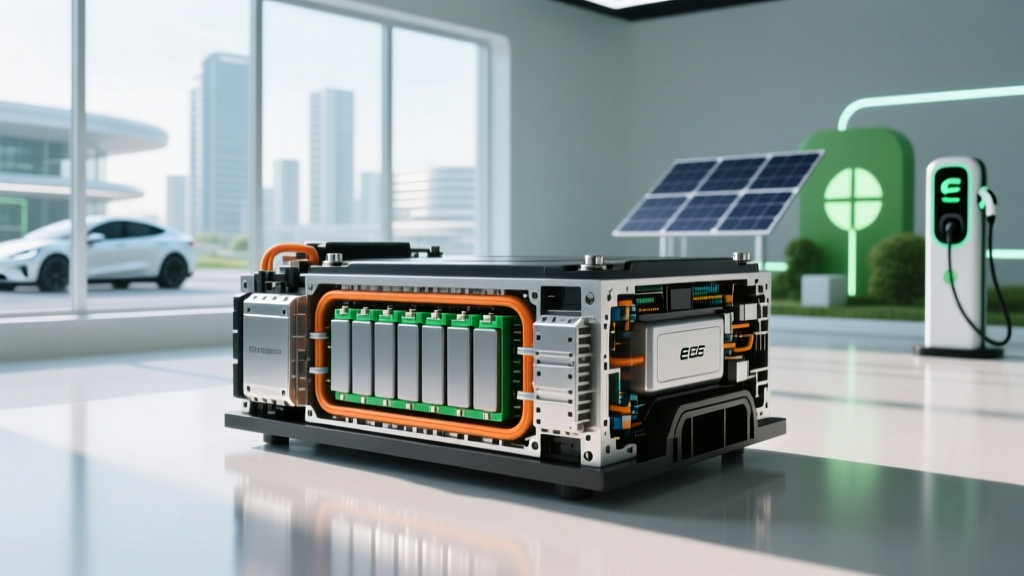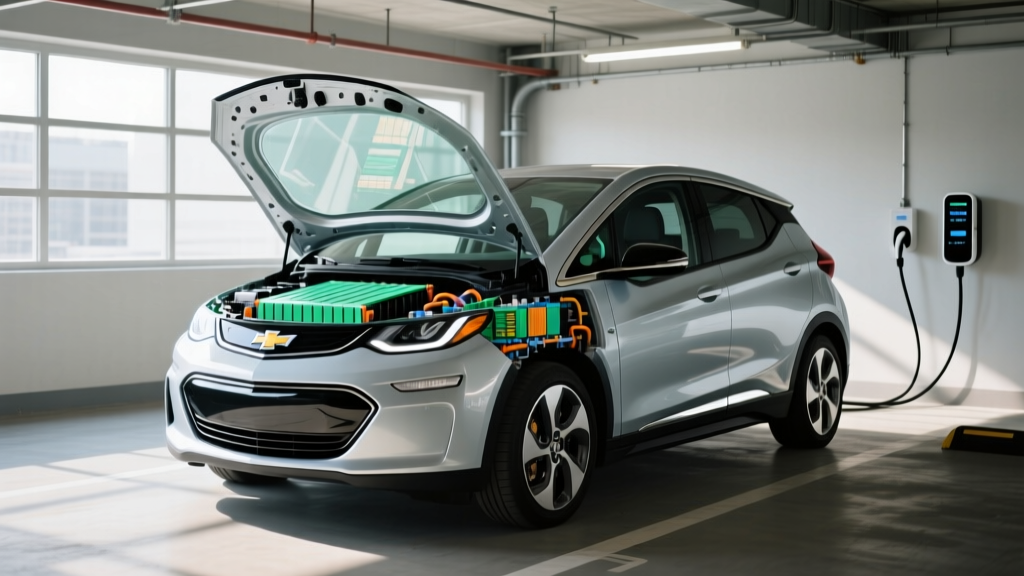
The Chevrolet Bolt EV and Bolt EUV were discontinued after the 2023 model year, but tens of thousands remain on the road as some of the most affordable used EVs available. For current owners — and anyone shopping the used Bolt market — the high-voltage traction battery is the single biggest long-cost variable. A Chevy Bolt replacement battery is not something most owners will ever need, but understanding the real costs, degradation curves, and warranty protections is essential for making an informed ownership or purchase decision.
This guide covers everything from the Bolt's specific 65 kWh NMC pack to general EV battery longevity data, warranty terms, replacement pricing, and the habits that extend (or shorten) battery life.
Chevy Bolt Battery Specs: What's Under the Floor
The 2020–2023 Chevrolet Bolt EV and Bolt EUV share the same high-voltage traction battery:
| Spec | Value |
|---|---|
| Battery chemistry | NMC (Nickel Manganese Cobalt) |
| Total capacity | 65 kWh |
| Usable capacity | ~63 kWh |
| EPA range (Bolt EV) | 259 miles |
| EPA range (Bolt EUV) | 247 miles |
| Max DC fast charge rate | 55 kW (CCS) |
| Level 2 charge rate | 11.5 kW |
| Thermal management | Active liquid cooling/heating |
The Bolt's NMC pack is liquid-cooled, which is critical for longevity. Passive (air-cooled) packs like the early Nissan Leaf degraded significantly faster. GM's active thermal system keeps cells within an optimal temperature window, reducing stress during charging and driving.
One important note: the Bolt's 55 kW peak DC fast-charge rate is modest by 2026 standards. This actually works in the battery's favor — lower charge rates generate less heat and cause less lithium plating on the anode, which is a primary degradation mechanism.
How Long Do Chevy Bolt Batteries Actually Last?
Based on fleet data, owner reports, and GM's own testing, the Bolt's NMC pack is designed to retain at least 70–80% of its original capacity over 150,000–200,000 miles. Most Bolt owners will never need a full battery replacement during typical ownership.
Here's what real-world degradation looks like based on aggregated owner data and industry studies:
Typical Bolt Battery Degradation Curve
| Timeframe | Mileage | Expected Capacity Retention | Estimated Range (Bolt EV) |
|---|---|---|---|
| Year 1 | 12,000 mi | 95–97% | ~250 mi |
| Year 3 | 36,000 mi | 90–94% | ~235–245 mi |
| Year 5 | 60,000 mi | 86–91% | ~225–235 mi |
| Year 8 | 96,000 mi | 80–87% | ~210–225 mi |
| Year 10 | 120,000 mi | 76–84% | ~195–215 mi |
| Year 12+ | 150,000+ mi | 72–80% | ~185–205 mi |
Sources: fueleconomy.gov, Geotab fleet battery health studies, owner-reported data from Bolt EV forums. Actual results vary based on climate, charging habits, and usage patterns.
The key takeaway: degradation is not linear. Most NMC batteries experience a steeper drop in the first 1–2 years (roughly 3–5%), then the curve flattens significantly. A Bolt at 100,000 miles with 85% capacity retention still delivers over 220 miles of real-world range — plenty for daily driving and most road trips.
According to Geotab's long-term fleet study of over 6,300 EVs, the average EV battery retains roughly 88% capacity after 5 years and 78% after 10 years across all models. The Bolt's liquid-cooled system performs at or above this average.
What Does the Chevy Bolt Battery Warranty Cover?
GM provides one of the stronger battery warranties in the industry for the Bolt. Here are the exact terms:
| Term | Detail |
|---|---|
| Duration | 8 years / 100,000 miles (whichever comes first) |
| Capacity threshold | Below 60% of original capacity (i.e., below ~39 kWh usable) |
| What's covered | Battery repair or replacement to bring capacity above 60% |
| What's NOT covered | Normal degradation above 60%, cosmetic damage, misuse, unauthorized modifications |
| Transferable? | Yes — warranty transfers to subsequent owners automatically |
| Deductible | $0 for warranty-covered claims |
The 60% threshold is important context. A Bolt battery would need to lose more than 40% of its capacity — dropping below roughly 155 miles of range — before GM would intervene. In practice, this is an extremely conservative threshold. Most Bolt batteries will never reach this point within the warranty period.
For 2017–2019 model-year Bolts (the original 60 kWh pack), some vehicles were subject to a recall related to battery fire risk. GM replaced affected battery modules at no cost. If you're buying a used 2017–2019 Bolt, verify that the recall repair was completed by checking the VIN at NHTSA's recall database.
How Much Does a Chevy Bolt Replacement Battery Cost?
If your Bolt's battery falls outside warranty coverage and needs replacement, here's what to expect:
| Cost Component | Estimated Range |
|---|---|
| New OEM battery pack (65 kWh) | $14,000 – $16,500 |
| Remanufactured/reconditioned pack | $9,000 – $12,000 |
| Labor (dealership, 6–10 hours) | $900 – $1,600 |
| Diagnostics and programming | $200 – $400 |
| Total (new OEM) | $15,100 – $18,500 |
| Total (remanufactured) | $10,100 – $14,000 |
These figures are based on 2026 dealership parts pricing and independent EV shop quotes. The Bolt's battery is a single large pack mounted under the floor, requiring a lift and specialized high-voltage training to replace.
When is replacement typically needed? Almost never during normal ownership. Battery replacement becomes relevant only when:
- The pack suffers a manufacturing defect outside warranty (rare)
- The vehicle is involved in a collision that damages the battery enclosure
- The vehicle has extremely high mileage (200,000+ miles) with significant degradation
- Individual modules fail (which can sometimes be repaired without full pack replacement, for $1,500–$3,500)
For context, a 2023 Bolt EV 2LT had an MSRP of roughly $33,400 when new. A used 2023 Bolt in 2026 typically sells for $18,000–$23,000. A full out-of-warranty battery replacement at $15,000+ would exceed the car's value — which is why most owners in this situation opt for module-level repair or simply continue driving with reduced range.
LFP vs NMC: Understanding the Bolt's Chemistry and Alternatives
The Chevy Bolt uses an NMC (Nickel Manganese Cobalt) lithium-ion battery. By 2026, many newer EVs — including the redesigned Bolt-equivalent models and competitors like the Tesla Model 3 RWD — have shifted to LFP (Lithium Iron Phosphate) chemistry. Here's how they compare:
| Factor | NMC (Bolt's chemistry) | LFP (newer EVs) |
|---|---|---|
| Energy density | Higher (~200–260 Wh/kg cell-level) | Lower (~150–180 Wh/kg) |
| Range per kWh of pack weight | Better — more range in a lighter, smaller pack | Requires larger/heavier pack for same range |
| Cycle life | 1,000–2,000 full cycles to 80% | 3,000–5,000+ full cycles to 80% |
| Calendar life | 10–15 years typical | 15–20+ years expected |
| Cold-weather performance | Better at low temps (less range loss) | More range loss below 32°F; slower cold charging |
| Cost per kWh | Higher (cobalt/nickel are expensive) | Lower (iron and phosphate are abundant) |
| Recommended daily charge | 80% for longevity | 100% is fine — LFP tolerates full SoC well |
| Thermal stability | Good (with active management) | Excellent — inherently more stable chemistry |
Which is better? It depends on the use case. NMC's higher energy density made it the right choice for the Bolt's compact platform — fitting 65 kWh into a subcompact hatchback required the weight and volume advantages of NMC. LFP's superior cycle life and lower cost make it ideal for higher-volume, price-sensitive models where a slightly heavier pack is acceptable.
For Bolt owners, the practical implication is that NMC batteries benefit from being charged to 80% for daily use rather than 100%. Reserve 100% charges for road trips. This simple habit can add years to pack life.
Factors That Affect Bolt Battery Longevity
Battery degradation is driven by chemistry, temperature, and usage patterns. Here are the factors that matter most, ranked by impact:
Battery Care Checklist for Bolt Owners
- Avoid prolonged 100% SoC: NMC cells experience the most stress at the top and bottom of their charge range. Set your Bolt's charge limit to 80% for daily driving (configurable in the infotainment menu under "Charge Settings").
- Minimize DC fast charging when possible: The Bolt's 55 kW peak rate is gentle compared to 250+ kW chargers on newer EVs, but frequent DCFC still accelerates degradation slightly. Use Level 2 (11.5 kW) at home as your primary charging method.
- Precondition in cold weather: The Bolt's "Battery Conditioning" feature warms the pack while plugged in before departure. Use it. Charging a cold NMC battery causes lithium plating on the anode — a permanent capacity loss mechanism.
- Avoid extreme heat exposure: Parking in direct sun in 100°F+ climates for extended periods accelerates calendar degradation. If possible, park in shade or a garage. The Bolt's thermal management runs even when parked (if plugged in) to protect the pack.
- Don't let it sit at 0%: Storing a Bolt with a near-empty battery for weeks can cause cells to drop below safe voltage thresholds. If storing, leave it at ~50% SoC and plugged in.
- Drive it regularly: Batteries that cycle regularly (even shallow cycles) tend to age better than those that sit for months at a fixed SoC.
The single most impactful habit: charge to 80% daily, use Level 2 at home, and precondition in cold weather. Bolt owners who follow these three practices consistently report less than 5% degradation over 5 years.
How to Check Your Bolt's Battery Health (State of Health)
GM does not display a State of Health (SoH) percentage directly in the Bolt's instrument cluster, unlike some competitors. Here are the methods available to Bolt owners:
Method 1: Dealer Diagnostic Scan
Any Chevrolet dealer with the GDS2 (Global Diagnostic System) tool can read the battery's current capacity and report SoH as a percentage. This is the most accurate method. Request a "Battery Energy Capacity Test" during routine service. Some dealers do this free; others charge a diagnostic fee of $100–$150.
Method 2: OBD-II Scanner with EV Capability
Third-party OBD-II dongles paired with apps like Torque Pro (with EV PIDs) or EVNotify can read the Bolt's battery management system (BMS) data, including estimated SoH, cell voltage spread, and battery temperature. Hardware cost: $30–$80 for a compatible OBD-II adapter.
Method 3: Manual Range Calculation
Charge the Bolt to 100%, reset the trip meter, and drive until the battery reaches ~10%. Compare the miles driven plus remaining estimated range to the original 259-mile EPA figure. This gives a rough SoH estimate. For example: if you drive 210 miles and have 15 miles remaining at 10% SoC, your effective full-charge range is roughly 250 miles — about 96.5% of the original 259.
Method 4: Third-Party Battery Health Reports
Services like Recurrent Auto (now part of a larger EV data platform) offer battery health reports based on connected-car data. If your Bolt is enrolled, you may have access to periodic SoH estimates.
Emerging Battery Tech: What's Next (and When)
While Bolt owners are working with proven NMC technology, the broader EV battery landscape is evolving rapidly. Here's a realistic timeline for next-generation chemistries:
Silicon-anode batteries (2025–2028): Companies like Sila Nanotechnologies and Group14 are replacing graphite anodes with silicon-dominant composites, boosting energy density by 20–40%. These are beginning to appear in premium vehicles and are expected to reach mainstream models by 2028–2029. For Bolt owners, this means future replacement packs (if they exist for the platform) could offer higher capacity in the same physical form factor.
Solid-state batteries (2028–2032+): Toyota, Samsung SDI, and QuantumScape are targeting commercial solid-state production. These promise 50–80% more energy density, faster charging, and dramatically longer cycle life. However, mass-market availability remains 4–6+ years away based on current production timelines. Solid-state will not be a retrofit option for existing Bolts.
Sodium-ion batteries (2025–2027): CATL and other manufacturers are producing sodium-ion cells for lower-cost, lower-range EVs. These are not relevant to Bolt owners but are reshaping the budget EV segment with even lower costs than LFP.
None of these technologies change the ownership calculus for current Bolt owners. The NMC pack in your Bolt is proven, well-managed, and likely to outlast the vehicle's economic life.
Frequently Asked Questions
How long do Chevy Bolt batteries last in years and miles?
Based on fleet data and owner reports, Bolt batteries typically retain 80–87% capacity at 8 years / 100,000 miles and 72–80% at 12 years / 150,000 miles. The pack is designed to remain functional well beyond 200,000 miles with gradual range reduction. Most Bolts will be retired for other reasons (body damage, other component failure, owner upgrade) before the battery becomes unusable.
How much does a Chevy Bolt replacement battery cost in 2026?
A new OEM 65 kWh replacement pack costs approximately $14,000–$16,500 for the battery alone, with total installed cost of $15,100–$18,500 at a dealership. Remanufactured packs run $10,100–$14,000 installed. Individual module replacement (for partial failures) costs $1,500–$3,500. In most cases, the replacement cost exceeds the vehicle's 2026 market value, making module repair the more practical option.
What does the Bolt battery warranty cover, and is it transferable?
GM covers the Bolt's battery for 8 years / 100,000 miles against capacity loss below 60% of original. The warranty transfers automatically to subsequent owners — no paperwork required. If your Bolt is still within the warranty window and shows a significant range drop, a dealer diagnostic can determine if you qualify for a warranty repair or replacement.
How do I check my Chevy Bolt's battery health?
The most accurate method is a dealer diagnostic scan using GM's GDS2 tool, which reads SoH directly from the battery management system. You can also use an OBD-II adapter with EV-compatible software (like Torque Pro with EV PIDs) for about $30–$80. A rough estimate can be calculated by fully charging the Bolt, driving to ~10% SoC, and comparing total range to the original 259-mile EPA figure.
Is LFP better than the NMC battery in my Bolt?
Neither is universally better — they optimize for different priorities. NMC offers higher energy density (more range in a smaller, lighter pack), which was essential for the Bolt's compact design. LFP offers longer cycle life (3,000–5,000 cycles vs. 1,000–2,000), lower cost, and better thermal stability, but is heavier per kWh. For Bolt owners, the practical difference is that NMC batteries benefit from 80% daily charge limits, while LFP batteries tolerate regular 100% charges without significant degradation penalty.
Should I be worried about my Bolt's battery degrading?
For the vast majority of owners, no. At the average American driving rate of ~13,500 miles per year, a Bolt battery will retain enough capacity for 200+ miles of range well past 10 years of ownership. The liquid-cooled thermal management system, moderate 55 kW charge rate, and proven NMC chemistry all work in the Bolt's favor. Follow the 80% daily charge guideline, precondition in cold weather, and the battery will likely be the least of your concerns.