Understanding the Chevy Bolt EV Battery Size and Specifications
The second-generation Chevrolet Bolt EV, reintroduced for the 2025 model year after a brief hiatus, packs a 65 kWh usable lithium-ion battery built on an NMC (nickel-manganese-cobalt) chemistry platform. This battery size represents a significant evolution from the first-generation Bolt's 60 kWh pack, delivering an EPA-estimated range of approximately 259 miles in the current model.
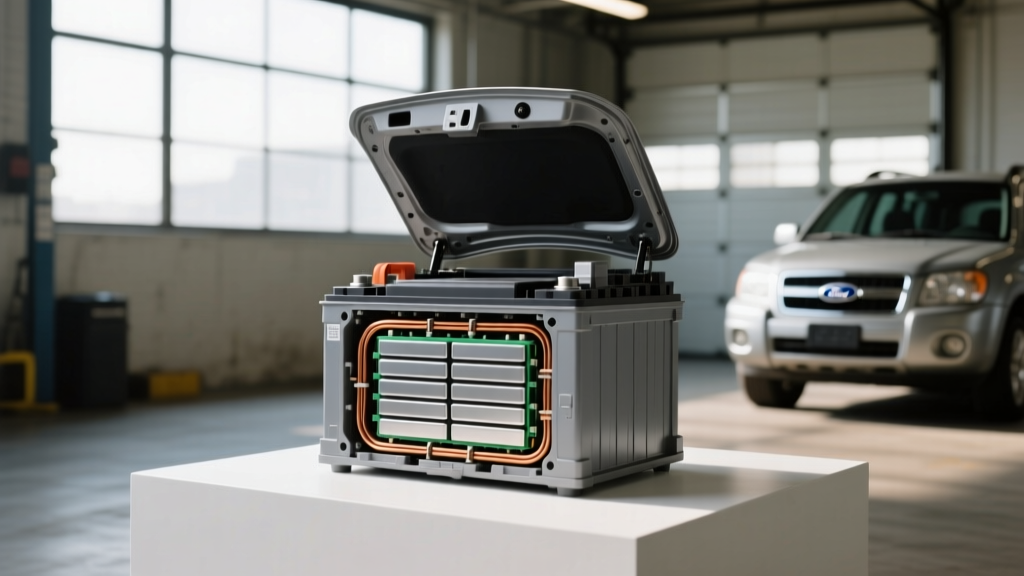
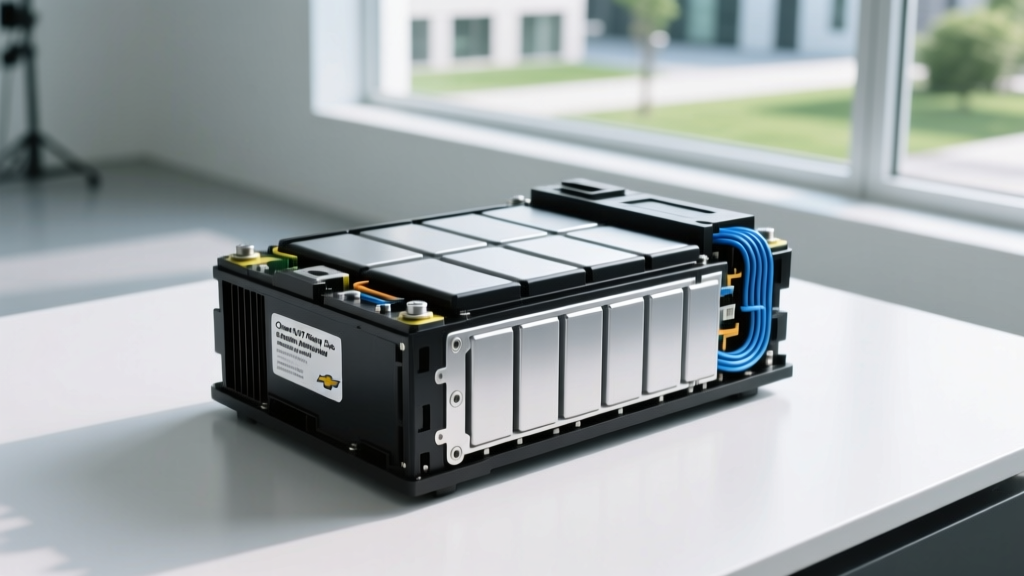
For context on what the Chevy Bolt EV battery size means in practical terms: the 65 kWh pack weighs roughly 960 pounds and sits low in the vehicle chassis, contributing to the Bolt's surprisingly planted handling despite its compact hatchback footprint. The battery operates on GM's Ultium-derived architecture adapted for smaller vehicles, using a liquid-cooled thermal management system that actively conditions cells during charging and extreme temperatures.
| Specification | Value |
|---|---|
| Usable Battery Capacity | 65 kWh |
| Chemistry | NMC (Nickel-Manganese-Cobalt) |
| EPA Range | 259 miles |
| Real-World Highway Range | ~220-235 miles |
| Peak DC Fast Charge Rate | 55 kW (CCS/NACS adapter) |
| 10-80% DC Charge Time | ~45-50 minutes |
| Level 2 Charge Rate | 11.5 kW |
| Level 2 0-100% Time | ~7 hours |
| Thermal Management | Active liquid cooling/heating |
NMC vs LFP: What Chemistry Powers the Bolt and Why It Matters
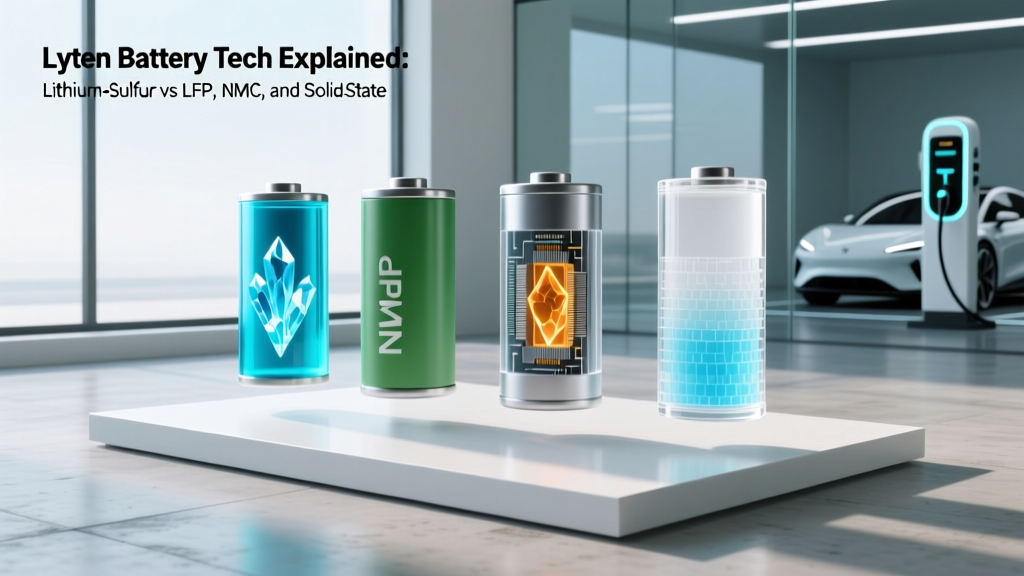
The Chevy Bolt EV uses NMC (nickel-manganese-cobalt) cathode chemistry, which prioritizes energy density — packing more miles into a physically smaller, lighter battery pack. This matters for a compact vehicle like the Bolt where packaging space and weight are at a premium. However, the broader EV market has seen a growing shift toward LFP (lithium iron phosphate) chemistry in entry-level and mid-range vehicles, and it's worth understanding the trade-offs.
| Factor | NMC (Bolt EV) | LFP (e.g., Tesla Model 3 RWD) |
|---|---|---|
| Energy Density | Higher (~250 Wh/kg cell-level) | Lower (~180 Wh/kg cell-level) |
| Range per Pack Size | More miles from smaller pack | Needs larger/heavier pack for same range |
| Cycle Life | ~1,000-1,500 full cycles to 80% SoH | ~2,000-3,000+ full cycles to 80% SoH |
| Cold-Weather Performance | Better low-temp discharge capability | More range loss in freezing conditions |
| Charging to 100% Daily | Not recommended; accelerates degradation | Recommended; no calendar-aging penalty |
| Cost per kWh | Higher (cobalt/nickel supply costs) | Lower (iron/phosphate abundant) |
| Thermal Runaway Risk | Lower threshold, requires robust BMS | Significantly higher thermal stability |
| State-of-Charge Estimation | More accurate (distinct voltage curve) | Flatter voltage curve makes SoC harder to estimate |
For the Bolt EV specifically, GM chose NMC because the vehicle's compact platform benefits from the higher energy density — it's how they fit 259 miles of range into a sub-$30,000 hatchback without making it excessively heavy. If the Bolt used LFP, the pack would need to be roughly 15-20% larger and heavier to deliver equivalent range, compromising cargo space and efficiency.
How Long Do EV Batteries Last? Degradation Data and Expectations
This is the question every prospective EV owner asks, and the answer for the Bolt EV — and modern EVs generally — is reassuring when you look at actual data rather than worst-case scenarios.
Typical degradation trajectory for NMC packs like the Bolt's:
- Year 1-2 (0-30,000 miles): 2-5% capacity loss. This initial drop is normal and represents the battery stabilizing.
- Year 3-5 (30,000-75,000 miles): Degradation slows to roughly 1-2% per year.
- Year 6-10 (75,000-150,000 miles): Continued slow decline; most NMC packs retain 85-90% capacity at 100,000 miles.
- Year 10+ (150,000+ miles): Packs typically retain 75-85% capacity. Many exceed 200,000 miles before hitting the 70% threshold.
What the data shows: According to aggregated fleet data from sources like Geotab's EV battery degradation study, the average modern EV battery loses approximately 1.8% capacity per year under typical use. For the Bolt EV's 65 kWh pack, that translates to losing roughly 1.2 kWh of usable capacity annually — meaning after 8 years, you'd still have approximately 55-57 kWh available, delivering around 220+ miles of real-world range.
First-generation Bolt EVs (2017-2022) with the 60 kWh pack have demonstrated strong longevity in owner forums and fleet data, with many examples exceeding 100,000 miles while retaining 88-92% of original capacity. The recall and battery replacement program for early models (due to manufacturing defect fire risk, not normal degradation) actually gave many first-gen owners brand-new, higher-capacity replacement packs.
When Is Replacement Actually Needed?
Battery replacement for degradation alone is rare. Most EV batteries outlast the vehicle's economic life. You'd typically only need replacement if:
- The pack falls below 70% capacity within the warranty period (covered by manufacturer)
- A cell module fails outside warranty (uncommon but possible after 150,000+ miles)
- Physical damage from a collision compromises the pack enclosure
Battery Warranty Coverage: What GM Guarantees
The Chevy Bolt EV's battery warranty is among the more straightforward in the industry, and understanding exactly what it covers — and what triggers a claim — is essential for ownership planning.
| Coverage Element | Details |
|---|---|
| Duration | 8 years / 100,000 miles (whichever comes first) |
| Capacity Retention Threshold | 70% of original usable capacity |
| What Triggers a Claim | Battery falls below ~45.5 kWh usable (70% of 65 kWh) |
| Defect Coverage | Full replacement or repair of defective modules/components |
| Transferability | Fully transferable to subsequent owners |
| Exclusions | Damage from collisions, floods, improper charging equipment, unauthorized modifications |
| Remedy | Module-level repair or full pack replacement at GM's discretion |
The 70% threshold is the industry standard, shared by most automakers including Tesla, Hyundai, and Ford. In practical terms, hitting 70% capacity on the Bolt EV would mean your 259-mile range drops to approximately 181 miles — still very usable for daily driving. And based on current degradation data, reaching that threshold under normal use would take well beyond the 8-year/100,000-mile warranty window.
Important note for CARB states: If you register your Bolt EV in a state that follows California Air Resources Board emissions rules (including CA, CO, CT, ME, MD, MA, NJ, NY, OR, RI, VT, WA, and others), the battery warranty may extend to 10 years / 150,000 miles under PZEV provisions. Check your specific state's adoption of these rules, as they expand coverage significantly.
EV Battery Replacement Cost: What to Budget For
If you do need an out-of-warranty battery replacement — which remains unlikely for most owners — here's what the financial picture looks like for the Bolt EV and comparable vehicles.
| Vehicle / Pack Size | Estimated Replacement Cost | Notes |
|---|---|---|
| Chevy Bolt EV (65 kWh) | $14,000 - $16,000 | Full pack; module-level repair may be $3,000-$5,000 |
| Tesla Model 3/Y (75-82 kWh) | $13,000 - $18,000 | Varies by pack version; LFP packs may differ |
| Hyundai Ioniq 5 (77.4 kWh) | $15,000 - $20,000 | E-GMP platform; module replacement possible |
| Ford Mustang Mach-E (88 kWh ext.) | $18,000 - $22,000 | Larger pack; pricing from dealer network data |
| Nissan Leaf (62 kWh) | $9,000 - $12,000 | Older platform; passive cooling limits longevity |
Several factors are working in owners' favor regarding replacement costs:
- Battery costs continue declining. Pack-level costs have fallen from over $200/kWh a decade ago to approximately $120-140/kWh in 2025, and are projected to drop further.
- Module-level repair is increasingly viable. Rather than replacing the entire pack, shops can identify and swap individual failed modules, reducing costs to $3,000-$6,000.
- The aftermarket is developing. Independent EV repair shops and refurbished pack suppliers are emerging, offering alternatives to dealer pricing.
- Most packs never need replacement. Data from fueleconomy.gov and fleet operators consistently shows that the vast majority of EV batteries outlast their vehicles without requiring replacement.
Maximizing Battery Life: What Actually Works
NMC batteries like the one in the Bolt EV respond well to specific care habits. Here's an evidence-based approach to maximizing your pack's lifespan, separated from the myths.
Daily and Weekly Habits
- Set a charge limit of 80-85% for daily use. NMC chemistry degrades faster when held at high state-of-charge for extended periods. The Bolt's MyChevrolet app allows you to set a target charge level.
- Avoid letting the battery sit below 10% for more than a day. Deep discharge states stress NMC cathodes. Plug in when you get home, even if you won't charge immediately — the car's thermal management can operate while connected.
- Use Level 2 (home) charging as your primary method. Slow, steady charging generates less heat and puts less stress on cells than repeated DC fast charging.
DC Fast Charging Best Practices
- Use DC fast charging for road trips, not daily top-ups. The Bolt's 55 kW peak charge rate is modest by modern standards, which actually reduces thermal stress. But frequent DC sessions still accelerate degradation compared to Level 2.
- Allow battery preconditioning. When navigating to a DC fast charger via the Bolt's infotainment, the thermal system will warm or cool the pack to optimal charging temperature. This matters significantly in cold weather — a cold pack charges much slower and experiences more stress.
- Don't fast-charge to 100% unless you need the range immediately. Charge curves slow dramatically above 80% anyway, and holding at 100% accelerates calendar aging.
Temperature Management
- Park in shade or a garage when possible in hot climates. Sustained battery temperatures above 95°F accelerate degradation. The Bolt's liquid cooling helps, but ambient temperature still matters during extended parking.
- In winter, plug in when parked. The Bolt can use grid power to maintain battery temperature rather than depleting the pack. Preconditioning while plugged in also means you start with a warm battery and full range.
- Avoid repeated high-speed driving in extreme heat without cool-down periods. Sustained 80+ mph driving generates significant battery heat; if you're on a road trip in summer, the thermal system works hard, but giving the pack time to cool during stops helps.
How to Monitor Battery Health (State of Health)
GM doesn't provide a direct State of Health (SoH) percentage in the Bolt's infotainment system, but you have several ways to monitor your battery's condition:
- Range tracking: Monitor your full-charge range estimate over time. If your 100% charge consistently shows 240+ miles after the first year, degradation is minimal. A drop below 220 at full charge after 2-3 years warrants investigation.
- OBD-II diagnostic apps: Tools like Torque Pro with an OBD-II Bluetooth adapter can read battery-specific PIDs (parameter IDs) that report estimated capacity, cell voltage variance, and pack temperature.
- Dealer diagnostic check: GM dealerships can run a battery health report that provides module-level voltage data and estimated capacity. Request this during routine service visits, especially approaching the warranty period's end.
- Third-party services: Companies like Recurrent Auto offer battery health reports that compare your pack's performance against fleet averages for your model year and mileage. Some provide free basic reports.
Emerging Battery Technology: What's on the Horizon
While the Bolt EV's current NMC pack represents proven, production-ready technology, the battery landscape is evolving rapidly. Here's what's coming — with realistic timelines, not hype.
Solid-State Batteries
Solid-state technology replaces the liquid electrolyte in current lithium-ion cells with a solid material (ceramic, polymer, or sulfide-based), promising higher energy density, faster charging, and improved safety. Companies like QuantumScape, Toyota, and Samsung SDI are advancing prototypes, but:
- Timeline to production vehicles: 2027-2030 for initial limited deployment, likely in premium vehicles first.
- Timeline to affordable mainstream vehicles: 2030-2035 at the earliest, based on current manufacturing scale-up projections.
- Relevance to Bolt-class vehicles: Unlikely to appear in sub-$35,000 EVs until the mid-2030s due to initial production costs.
Silicon Anode Technology
Replacing or supplementing graphite anodes with silicon can increase energy density by 20-40%. Companies like Sila Nanotechnologies and Group14 are already producing silicon-dominant anode materials:
- Current status: Limited deployment in premium applications (Mercedes EQG, Porsche prototypes).
- Expected mainstream adoption: 2027-2029 as manufacturing costs decrease.
- Impact: Could allow future Bolt-class vehicles to achieve 300+ miles from a similarly-sized pack, or maintain current range with a smaller, lighter battery.
Sodium-Ion Batteries
Sodium-ion chemistry eliminates lithium entirely, using abundant sodium instead. CATL and other manufacturers are producing early cells:
- Advantages: Lower cost, better cold-weather performance, no critical mineral supply chain issues.
- Limitations: Lower energy density than NMC or LFP — better suited for urban runabouts and energy storage than long-range vehicles.
- Timeline: 2026-2028 for initial EV deployments, primarily in Chinese-market city cars and potentially US-market fleet/commercial vehicles.
For current Bolt EV buyers, these technologies are forward-looking context rather than purchase factors. The NMC pack in today's Bolt is a mature, well-understood technology with proven longevity data — and waiting for next-generation chemistry is rarely a sound purchase strategy given the years-long timelines involved.
Frequently Asked Questions
How long do EV batteries last in years and miles?
Modern NMC batteries like the Bolt EV's typically retain 85-90% of their original capacity after 100,000 miles and 8 years of use. Many packs exceed 200,000 miles while retaining 75%+ capacity. The battery is designed to last the life of the vehicle under normal use conditions. Fleet data from Geotab and other sources consistently shows average annual degradation of 1.5-2.0% for liquid-cooled packs.
How much does it cost to replace a Chevy Bolt EV battery?
A full pack replacement for the 65 kWh Bolt EV battery is estimated at $14,000-$16,000 at current pricing. However, module-level repairs (replacing individual failed cell modules rather than the entire pack) can cost $3,000-$5,000. Battery costs continue declining, and aftermarket options are emerging. Most importantly, the vast majority of Bolt EV batteries never require replacement — they outlast the vehicle's economic life.
What does the Chevy Bolt battery warranty actually cover?
GM covers the Bolt EV battery for 8 years or 100,000 miles (whichever comes first), guaranteeing it will retain at least 70% of its original usable capacity (approximately 45.5 kWh of the 65 kWh pack). If capacity drops below this threshold within the warranty period, GM will repair or replace the battery at no cost. The warranty is fully transferable to subsequent owners. In CARB states, coverage may extend to 10 years / 150,000 miles.
Should I charge my Bolt EV to 100% every night?
No. For daily driving, set a charge limit of 80-85% using the MyChevrolet app. NMC batteries experience accelerated degradation when held at high states of charge for extended periods. Reserve 100% charges for occasions when you need maximum range for a longer trip. This single habit — daily charging to 80% rather than 100% — is the most impactful thing you can do for long-term battery health.
Is LFP chemistry better than NMC for the Bolt EV?
Neither is universally "better" — they optimize for different priorities. LFP offers longer cycle life, lower cost, better thermal safety, and the ability to charge to 100% daily without degradation concerns. NMC offers higher energy density (more range from a smaller, lighter pack), better cold-weather performance, and more accurate state-of-charge estimation. For a compact, affordable hatchback like the Bolt where packaging space and weight are constrained, NMC is the pragmatic choice — it's how GM delivers 259 miles of range without making the vehicle heavier or reducing cargo space.
Does frequent DC fast charging damage the Bolt's battery?
DC fast charging generates more heat and stress than Level 2 charging, which does accelerate degradation over time. However, the Bolt's relatively modest 55 kW peak charge rate actually limits thermal stress compared to vehicles charging at 200+ kW. Using DC fast charging on road trips while relying on Level 2 for daily charging is a balanced approach. The data suggests that exclusive DC fast charging might add 0.5-1.0% additional annual degradation compared to exclusive Level 2 — meaningful over a decade, but not catastrophic.
How do I check my Bolt EV's battery health?
Monitor your full-charge range estimate over time — a consistent decline below expected values (approximately 250+ miles at full charge in the first 1-2 years) may indicate above-normal degradation. For more precise data, use an OBD-II adapter with apps like Torque Pro to read battery-specific parameters, request a battery health report from your GM dealer during service visits, or use third-party services like Recurrent Auto for fleet-comparison data.
Sources: EPA fuel economy data from fueleconomy.gov, GM official specifications, IRS §30D tax credit guidelines from irs.gov, and Geotab EV battery health research.