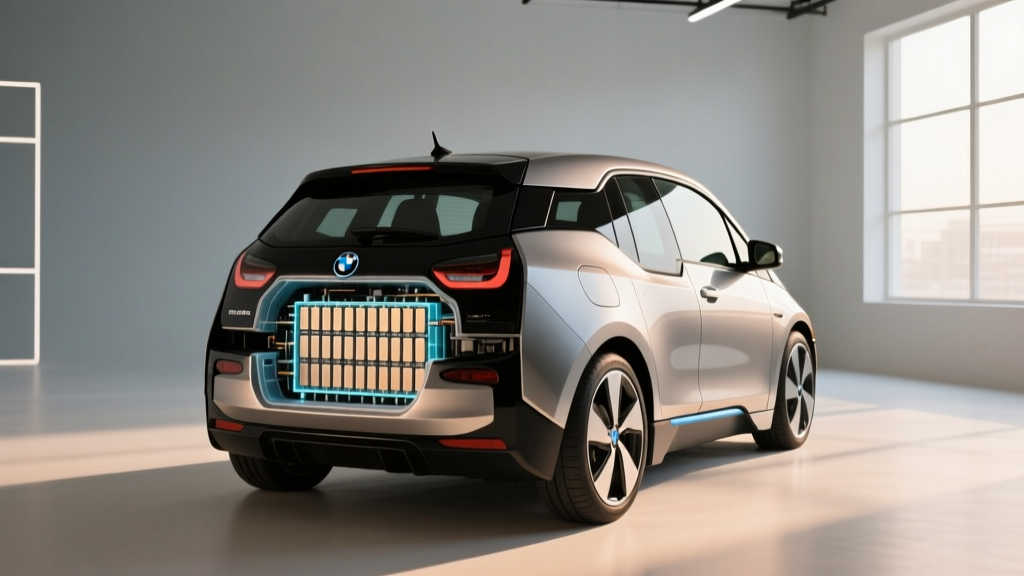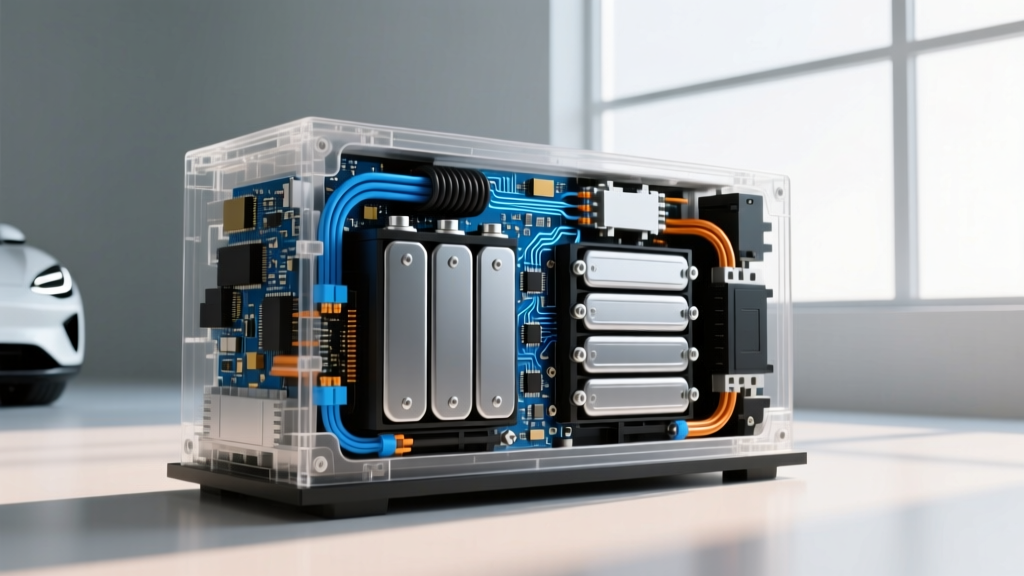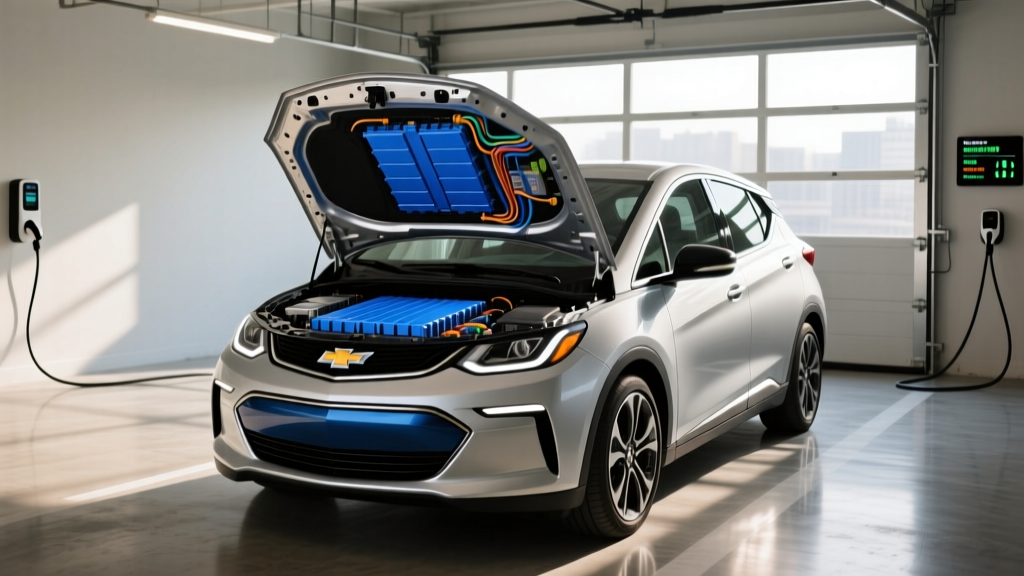
The Chevrolet Bolt EV and Bolt EUV remain two of the most popular affordable electric vehicles on the used market, with over 200,000 units sold across their production run. For current owners and prospective buyers of these discontinued-but-capable EVs, one question dominates research sessions: what is the actual Chevy Bolt battery replacement cost if the pack fails outside of warranty?
The short answer is that a full high-voltage traction battery replacement for a Chevy Bolt EV or EUV runs between $14,000 and $16,000 at a Chevrolet dealership in 2026, including parts and labor. But that number tells only part of the story. The vast majority of Bolt owners will never pay it. GM's battery warranty coverage, combined with the proven longevity of the Bolt's LG Chem NMC cells, means most packs will outlast the vehicle itself.
This guide breaks down the real replacement cost, degradation data from high-mileage Bolts, warranty terms that protect you, and the battery care habits that maximize lifespan. We'll also compare the Bolt's NMC chemistry to the LFP packs now common in newer EVs — and explain what emerging solid-state technology means for future replacements.
Chevy Bolt Battery Replacement Cost: What You'll Actually Pay
Let's address the headline number directly. The Chevy Bolt EV (2017–2023) and Bolt EUV (2022–2023) share battery architectures built on LG Chem nickel-manganese-cobalt (NMC) lithium-ion cells. The original Bolt EV carried a 60 kWh usable battery; the refreshed 2020+ models and the EUV use a 65 kWh pack.
| Component | Bolt EV (60 kWh, 2017–2019) | Bolt EV/EUV (65 kWh, 2020–2023) |
|---|---|---|
| Battery pack (OEM) | $12,000 – $13,500 | $13,000 – $14,500 |
| Labor (dealership, 4–6 hrs) | $1,200 – $1,800 | $1,200 – $1,800 |
| Diagnostic & programming | $200 – $400 | $200 – $400 |
| Total out-of-pocket | $13,400 – $15,700 | $14,400 – $16,700 |
These figures reflect dealership pricing for OEM GM replacement packs. Independent EV repair shops may source refurbished or salvaged packs for $8,000–$11,000, though availability of 60 kWh packs for early-model Bolts is tightening as those vehicles age. Third-party rebuilt packs are an option, but they lack the OEM warranty backing and may affect vehicle diagnostics compatibility.
For context, a 2017 Bolt EV with 100,000 miles has a current resale value of roughly $10,000–$13,000 in 2026. A full OEM battery replacement at $15,000 would exceed the car's value — which is why most owners in this scenario opt for warranty-covered replacement, a refurbished pack, or vehicle retirement rather than a new OEM pack.
How Long Does a Chevy Bolt Battery Last? Real Degradation Data
The Bolt's NMC battery has proven to be one of the more durable packs in the mainstream EV market. Unlike some early-generation EVs that showed steep capacity cliffs, the Bolt's thermal management system — a liquid-cooled and heated pack — keeps cells within an optimal temperature range, significantly slowing degradation.
Based on aggregated owner data from Recurrent Auto, fleet reports, and high-mileage owner forums, here is what Bolt battery degradation looks like in practice:
| Age / Mileage | Typical Capacity Retained | Estimated Range Remaining (from 259 mi EPA) |
|---|---|---|
| 2 years / 30,000 mi | 95–98% | 246–254 mi |
| 4 years / 60,000 mi | 90–95% | 233–246 mi |
| 6 years / 90,000 mi | 85–92% | 220–238 mi |
| 8 years / 120,000 mi | 80–88% | 207–228 mi |
| 10 years / 150,000 mi | 75–85% (projected) | 194–220 mi |
Sources: Recurrent Auto battery health data (2024–2025), owner-reported data via ChevyBolt.org and InsideEVs forums. Individual results vary based on climate, charging habits, and DC fast-charging frequency.
The critical takeaway: even at 150,000 miles and 10 years of service, a well-maintained Bolt battery should retain 75–85% of its original capacity — still delivering 194+ miles of real-world range from a pack originally rated at 259 miles EPA. That is comfortably above GM's warranty threshold of 60% retention.
Some high-mileage Bolts operating as rideshare vehicles in moderate climates have surpassed 200,000 miles on the original pack with 78–82% capacity retained. These are outliers that demonstrate the upper bound of NMC longevity under active thermal management.
GM Battery Warranty: What's Covered and for How Long
General Motors provides one of the industry-standard battery warranties on the Bolt EV and EUV, and because these vehicles were produced through 2023, most are still within their warranty window in 2026.
| Term | Details |
|---|---|
| Coverage period | 8 years or 100,000 miles (whichever comes first) |
| California-emissions states | 10 years or 150,000 miles (CA, CT, ME, MD, MA, NJ, NY, OR, RI, VT, WA) |
| Capacity retention threshold | 60% of original capacity |
| What triggers a claim | Battery falls below 60% SoH, or a cell/module defect causes failure |
| Remedy | GM replaces or reconditions the pack to meet the 60% threshold |
| Transferable? | Yes — warranty transfers to subsequent owners at no cost |
The 60% threshold is important context. GM does not replace a battery simply because it has degraded — the pack must fall below 60% of its original capacity (roughly 155 miles of range on a 259-mile Bolt EV) to qualify. In practice, the degradation data above shows that very few Bolts reach this threshold within the warranty period under normal use.
If your Bolt is a 2017 model purchased in January 2017, your standard 8-year/100,000-mile warranty expired in January 2025. However, if you registered the car in a CARB-state, you may still have coverage through 2027. Check your warranty booklet or contact a Chevrolet dealer with your VIN to confirm.
For the 2022 recall involving Bolt battery fire risk: GM replaced affected packs entirely under a separate safety recall (NHTSA recall 21V-650), independent of the capacity warranty. If your Bolt had its pack replaced under this recall, the replacement pack carries its own 8-year/100,000-mile warranty from the date of replacement.
LFP vs. NMC Chemistry: Why the Bolt Uses NMC and What It Means
The Chevy Bolt's battery uses NMC (nickel-manganese-cobalt) chemistry, which was the dominant EV cell type when the Bolt was designed. Today, many newer EVs — including the Tesla Model 3 Standard Range, Ford Mustang Mach-E Select, and BYD models — have shifted to LFP (lithium iron phosphate). Understanding the trade-offs explains why GM chose NMC for the Bolt and what it means for your replacement calculus.
| Attribute | NMC (Bolt EV/EUV) | LFP (Tesla M3 SR, newer EVs) |
|---|---|---|
| Energy density | Higher (160–220 Wh/kg cell-level) | Lower (140–170 Wh/kg cell-level) |
| Range per kg of battery | Better — enables 259 mi in a compact pack | Requires larger/heavier pack for same range |
| Cycle life | 1,000–2,000 full cycles to 80% SoH | 3,000–5,000+ full cycles to 80% SoH |
| Calendar aging | Moderate — 2–3% loss/year typical | Slower — 1–2% loss/year typical |
| Cold-weather performance | Better low-temp discharge and regen | Reduced regen and range in sub-30°F temps |
| DC fast-charge tolerance | Good, but frequent 100% SoC accelerates wear | Excellent — can be charged to 100% daily without penalty |
| Cost per kWh (cell) | $110–$130 (2026) | $80–$100 (2026) |
| Cobalt content | Yes — supply-chain and ethical concerns | None — iron and phosphate are abundant |
For Bolt owners, the NMC choice means: you got more range in a smaller, lighter vehicle — but your battery is more sensitive to being held at 100% state of charge for long periods, and it has a somewhat shorter cycle life than LFP. In practical terms, a Bolt owner who charges to 80% daily and only goes to 100% for road trips will see slower degradation than one who charges to full every night.
If a future Bolt successor (or a replacement pack from a third party) uses LFP chemistry, you'd gain cycle life and tolerance for daily 100% charging but might lose 15–25 miles of range due to lower energy density in the same physical pack volume.
Factors That Accelerate Bolt Battery Degradation
Not all Bolts age equally. The spread in degradation data (e.g., 85% vs. 92% at 6 years) is driven by how owners treat the pack. Here are the factors ranked by impact:
High-Impact Factors
- DC fast-charging frequency: Bolts that rely on DC fast charging (50 kW max on the Bolt) for more than 80% of their charging sessions show 2–4% additional capacity loss over 5 years compared to primarily Level 2 home charging. The Bolt's peak DC rate of 50 kW is modest by modern standards, which actually helps — the lower charge rate generates less heat stress on cells.
- Sustained high state of charge: Parking a Bolt at 100% SoC for days or weeks, especially in hot climates (above 90°F ambient), accelerates calendar aging. NMC cells degrade fastest at the extremes — above 90% and below 10% SoC.
- Extreme ambient heat without preconditioning: The Bolt's liquid thermal management is effective, but repeated fast charging in 100°F+ desert heat without preconditioning the battery will stress cells over time.
Moderate-Impact Factors
- Deep discharge cycles: Regularly driving the Bolt below 10% SoC before recharging adds stress. The battery management system (BMS) maintains a buffer, but habitually running the pack near empty is unnecessary wear.
- Aggressive driving in cold weather: Hard acceleration draws high current from cold cells. The Bolt's battery heater mitigates this, but repeated 0–60 launches on a cold-soaked pack without preconditioning adds micro-stress.
Low-Impact Factors
- Level 2 charging speed: Whether you charge at 3.3 kW or 7.2 kW on Level 2 has negligible impact on long-term health.
- Mileage alone: Calendar aging (time) matters as much as cycle aging (miles). A low-mileage 8-year-old Bolt may show similar degradation to a high-mileage 4-year-old Bolt.
How to Check Your Chevy Bolt's Battery Health (SoH)
Unlike Tesla's in-app battery health readout, GM does not expose a direct State of Health (SoH) percentage on the Bolt's infotainment screen. However, there are several reliable methods to assess your pack's condition:
Method 1: OBD-II Diagnostic Apps
The most accurate owner-accessible method uses an OBD-II Bluetooth adapter (such as an OBDLink MX+ or OBDLink SX, ~$50–$100) paired with an app like MyGreenVolt or Torque Pro. These apps read the Bolt's BMS directly and display:
- Current capacity in kWh (compare to the original 60 or 65 kWh)
- Cell voltage spread across modules (a wide spread indicates imbalanced or failing modules)
- Battery temperature
- Estimated SoH percentage
A Bolt showing 54 kWh usable capacity on a 60 kWh original pack has roughly 90% SoH — healthy for a 4–5-year-old vehicle.
Method 2: Dealership Battery Health Check
Any Chevrolet dealership with EV service capability can run a full battery diagnostic. Request a "hybrid/EV battery health report" during routine service. This gives you an official SoH reading that can support a warranty claim if the pack is below threshold.
Method 3: Range Tracking
The simplest method: track your Bolt's full-charge range estimate over time. If your Bolt originally displayed 259 miles at 100% and now consistently shows 230 miles under the same driving conditions and temperatures, you're at approximately 89% SoH. This method is imprecise (the range estimator factors in recent driving style) but useful for spotting trends.
When Is a Bolt Battery Replacement Actually Needed?
A battery replacement becomes relevant in three scenarios:
- Warranty-covered failure: The pack drops below 60% SoH within 8 years/100,000 miles. GM replaces or reconditions it at no cost. This is rare based on observed degradation curves.
- Physical damage: A collision, flood, or ground-strike damages the battery enclosure or cells. This is covered by collision insurance, not the battery warranty. Your insurer pays; your deductible applies.
- Out-of-warranty degradation: The pack falls below a usable threshold after the warranty expires. At $14,000–$16,000 for an OEM replacement, most owners at this stage evaluate whether the investment makes sense relative to the vehicle's value.
For scenario 3, consider that a Bolt with 150,000 miles and 80% SoH still delivers ~200 miles of range. Many owners find this adequate for daily driving and choose to keep the car rather than invest in a new pack. A replacement is most justifiable if the vehicle is otherwise in excellent condition and serves as your primary transportation.
Future Battery Tech: What Solid-State and Silicon Anodes Mean for Bolt Owners
Emerging battery technologies promise higher energy density, faster charging, and longer life — but none are available for the Bolt platform today, and retrofit compatibility is unlikely.
Solid-state batteries (from Toyota, Samsung SDI, and QuantumScape) are entering limited production in select 2027–2028 model-year vehicles. These cells replace the liquid electrolyte with a solid conductor, offering 30–40% higher energy density and potentially 10,000+ cycle life. However, they will debut in premium vehicles at high cost, and their physical form factor will not be backward-compatible with the Bolt's battery tray.
Silicon-anode cells (from companies like Sila Nanotechnologies and Group14) are closer to mass production, appearing in some 2026–2027 EVs. They boost energy density by 15–25% over current graphite anodes. Again, retrofit into a Bolt is not feasible — these cells require different BMS calibration and pack engineering.
The realistic outlook for Bolt owners: if your pack needs replacement in 2028–2030, you will likely choose between an OEM NMC replacement pack (if GM continues producing them), a refurbished pack from a salvaged Bolt, or a third-party rebuilt pack using new NMC cells. The Bolt's battery architecture is specific enough that next-generation chemistries won't drop in as upgrades.
Frequently Asked Questions
How much does a Chevy Bolt battery replacement cost in 2026?
An OEM battery replacement at a Chevrolet dealership costs between $14,000 and $16,700 including parts, labor, and programming. Refurbished or salvaged packs from independent EV shops run $8,000–$11,000. Most Bolt owners never pay this — GM's 8-year/100,000-mile warranty (10 years/150,000 miles in CARB states) covers packs that fall below 60% capacity.
How long do Chevy Bolt batteries last in real-world use?
Bolt NMC batteries typically retain 80–88% capacity at 8 years/120,000 miles and a projected 75–85% at 10 years/150,000 miles. Many high-mileage Bolts have exceeded 200,000 miles on the original pack. At 80% SoH, a Bolt EV still delivers approximately 207 miles of its original 259-mile EPA range.
Does the Chevy Bolt battery warranty transfer to a second owner?
Yes. GM's high-voltage battery warranty is fully transferable to subsequent owners at no cost and requires no registration. If you buy a used Bolt, the original 8-year/100,000-mile warranty (or 10/150,000 in CARB states) remains in effect from the vehicle's original in-service date.
Is LFP or NMC better for long-term battery health?
LFP chemistry offers significantly longer cycle life (3,000–5,000 cycles vs. 1,000–2,000 for NMC) and tolerates daily 100% charging without accelerated degradation. NMC offers higher energy density (more range in a lighter, smaller pack) and better cold-weather performance. For a Bolt owner, the NMC pack's range advantage was the right trade-off when the car was designed, but proper charging habits (20–80% daily) are more important than with LFP.
Should I avoid DC fast charging my Chevy Bolt?
You don't need to avoid it entirely, but limiting DC fast charging to road trips and using Level 2 (7.2 kW) for daily charging will extend pack life. The Bolt's maximum DC rate of 50 kW is relatively gentle on cells compared to modern 250 kW-capable EVs. Data shows Bolts that fast-charge more than 80% of the time lose an additional 2–4% capacity over 5 years.
What is the Chevy Bolt's battery warranty threshold?
GM warrants the Bolt's high-voltage battery to retain at least 60% of its original capacity for 8 years or 100,000 miles (10 years/150,000 miles in CARB states). If diagnostic testing shows your pack has fallen below this threshold, GM will replace or recondition it at no charge.