What Powers the Next-Gen Bolt: GM's Ultium LFP Platform
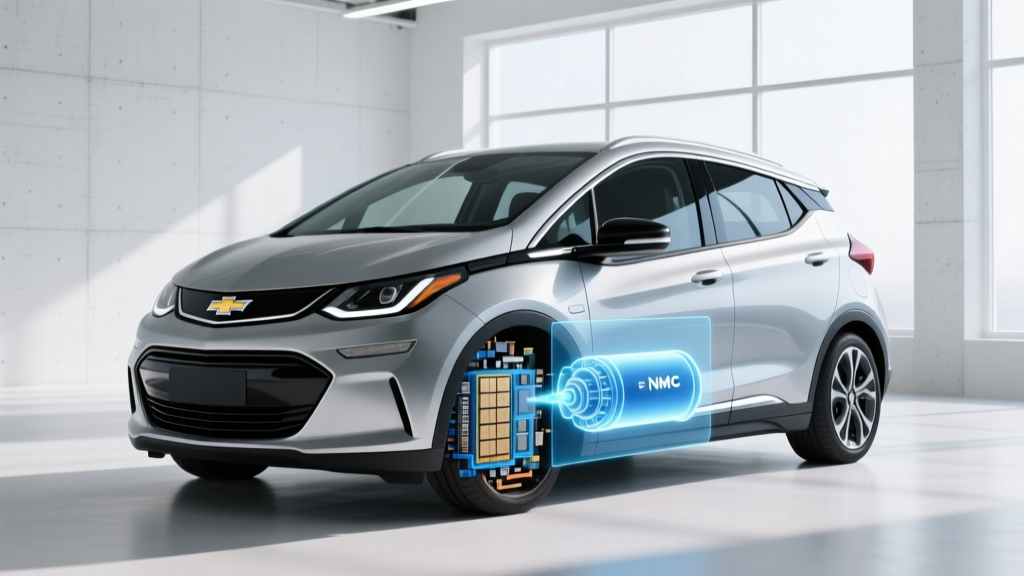
The upcoming Chevrolet Bolt EV — widely referred to as the Bolt 2.0 — represents GM's most significant pivot in affordable electric mobility. Unlike the outgoing Bolt EV/EUV, which relied on LG Energy Solution's NMC (nickel manganese cobalt) pouch cells in a 65 kWh pack, the next-generation Bolt is built on GM's Ultium battery platform and is expected to use lithium iron phosphate (LFP) chemistry. This is a deliberate engineering choice that trades a small amount of energy density for dramatically lower cost, longer cycle life, and reduced reliance on critical minerals like cobalt and nickel.
For buyers evaluating the Chevy Bolt 2.0 battery tech, the chemistry switch is the single most important detail. It determines everything from how the car charges to how the battery ages over a decade of ownership. Let's break down exactly what LFP means for this vehicle — and how it compares to the NMC cells that dominate most other EVs on the market.
LFP vs. NMC: The Chemistry Trade-Off Matrix
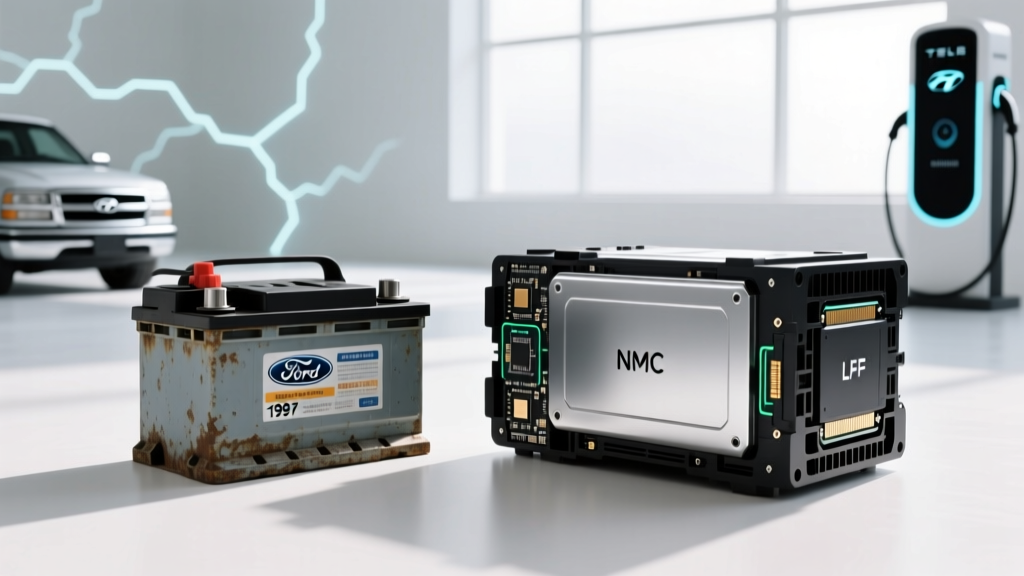
Lithium iron phosphate (LFP) and nickel manganese cobalt (NMC) are the two dominant lithium-ion chemistries in passenger EVs today. Each has distinct advantages depending on the vehicle's mission profile. Here's how they stack up across the metrics that matter most to owners:
| Attribute | LFP (Lithium Iron Phosphate) | NMC (Nickel Manganese Cobalt) |
|---|---|---|
| Energy Density (cell-level) | ~160–180 Wh/kg | ~220–260 Wh/kg |
| Typical Cycle Life | 3,000–5,000+ cycles to 80% SoH | 1,000–2,000 cycles to 80% SoH |
| Cold-Weather Performance | Moderate — slower charge acceptance below 32°F | Stronger — better low-temp conductivity |
| Thermal Stability | Excellent — higher runaway threshold (~518°F) | Good — lower thermal runaway threshold (~410°F) |
| Cost (per kWh, cell-level) | ~$70–90/kWh (2025–2026 estimates) | ~$100–130/kWh |
| Critical Mineral Dependency | None (iron, phosphate abundant) | High (cobalt, nickel supply-chain risk) |
| State-of-Charge Recommendation | Can be charged to 100% daily without accelerated degradation | Best kept 20–80% for daily use; 100% for trips only |
| Voltage Curve | Very flat — harder for BMS to estimate SoC precisely | Steeper slope — easier SoC estimation |
For the Bolt 2.0, LFP is the right call. This is a value-oriented commuter and city car where cost-per-mile matters more than squeezing out maximum range per kilogram. The 3,000+ cycle life means an owner could theoretically charge the battery fully every single day for over eight years before hitting 80% state of health — far exceeding typical ownership periods. The ability to charge to 100% daily without guilt is a practical advantage that NMC owners often envy during their morning routine.
The trade-off is cold-weather charging. LFP cells accept charge more slowly at temperatures below freezing, meaning DC fast charging in winter will require more preconditioning time. GM's Ultium thermal management system is designed to mitigate this, but Bolt 2.0 owners in northern climates should expect slower winter charge sessions compared to NMC-equipped rivals.
Expected Pack Specifications and Real-World Range
GM has confirmed the next-gen Bolt will ride on the Ultium platform, but final EPA certification numbers are pending as of early 2026. Based on GM's disclosures and industry analysis, here's what we expect:
| Specification | Expected / Announced Value |
|---|---|
| Battery Chemistry | LFP (Ultium platform) |
| Usable Battery Capacity | ~65–70 kWh (estimated) |
| EPA Range (estimated) | ~250–280 miles |
| Real-World Highway Range | ~210–240 miles (70 mph, moderate temps) |
| Real-World Cold-Weather Range | ~175–210 miles (below 32°F, cabin heat) |
| Peak DC Fast Charge Rate | ~150 kW (estimated) |
| 10–80% DC Charge Time | ~28–35 minutes (estimated) |
| Level 2 AC Charge Rate | ~11.5 kW |
| Motor Output | ~200 hp (FWD, estimated) |
Battery Degradation: What the Data Actually Shows
The biggest fear among prospective EV buyers is battery degradation — the gradual loss of capacity over time. For the Bolt 2.0's LFP chemistry, the data is reassuring, but it requires context.
Real-world degradation data from fleet operators and long-term EV owners consistently shows that LFP batteries lose capacity more slowly than NMC under equivalent conditions. Tesla's LFP-equipped Model 3 Standard Range vehicles (using CATL cells) have demonstrated approximately 5–8% capacity loss over the first 100,000 miles, with the degradation curve flattening significantly after the initial break-in period. GM's own Ultium testing protocols target less than 10% capacity loss over 150,000 miles.
| Milestone | Expected Capacity Retention | Notes |
|---|---|---|
| Year 1 / ~15,000 mi | 95–98% | Initial calendar + cycle loss; steepest part of curve |
| Year 3 / ~45,000 mi | 92–95% | Curve flattens; mostly cycle-driven |
| Year 5 / ~75,000 mi | 89–93% | Calendar aging becomes more significant factor |
| Year 8 / ~120,000 mi | 85–90% | Well within warranty threshold |
| Year 10 / ~150,000 mi | 82–88% | Still functional; range reduction ~30–40 mi from new |
Several factors accelerate or decelerate this trajectory. Frequent DC fast charging (especially above 150 kW), sustained operation at 100% or 0% state of charge, and exposure to extreme heat (ambient above 100°F for prolonged periods) all push degradation higher. Conversely, moderate charging habits, garage parking in extreme climates, and relying primarily on Level 2 home charging keep capacity retention toward the optimistic end of these ranges.
One LFP-specific quirk: because the voltage curve is nearly flat between 20% and 80% SoC, the battery management system (BMS) can struggle to estimate exact state of charge without periodic full charges. GM recommends charging to 100% at least once per week to recalibrate the BMS — a practice that's actually beneficial for LFP, unlike NMC where frequent 100% charges accelerate wear.
Battery Warranty Coverage: What GM Promises
GM's battery warranty for Ultium-based vehicles is among the most competitive in the industry. For the Bolt 2.0, we expect the warranty to mirror the terms GM has established across its Ultium lineup:
| Warranty Element | Coverage Terms |
|---|---|
| Duration | 8 years / 100,000 miles (whichever comes first) |
| Capacity Retention Threshold | 70% of original usable capacity |
| What's Covered | Capacity loss below 70%; defective cells/modules; BMS failures |
| What's NOT Covered | Damage from accidents, flooding, unauthorized modifications, or improper charging equipment |
| Remedy | Module-level repair or full pack replacement at GM's discretion |
| Transferability | Yes — warranty transfers to subsequent owners |
The 70% threshold is significant. On a hypothetical 67 kWh usable pack, that means GM guarantees at least ~47 kWh of usable capacity for 8 years or 100,000 miles. Given LFP's demonstrated longevity, most Bolt 2.0 owners will never approach this threshold under normal use. Data from the EPA's EV technology resources confirms that modern lithium-ion packs are engineered to outlast the typical ownership cycle of the vehicle itself.
Battery Replacement Cost: When and How Much
Let's address the concern head-on: how much does it cost to replace an EV battery, and when would a Bolt 2.0 owner actually face that bill?
The honest answer is that the vast majority of EV batteries never need full replacement during the vehicle's useful life. Outright failure (sudden death) is extremely rare — well under 1% of packs based on manufacturer warranty claim data. Gradual degradation to the point of impracticality (below 70% capacity) typically takes 15+ years or 200,000+ miles with LFP chemistry.
That said, here are the estimated costs if replacement becomes necessary outside of warranty coverage:
| Scenario | Estimated Cost Range (Parts + Labor) | When It Applies |
|---|---|---|
| Single Module Replacement | $2,000–$5,000 | One defective module within the pack; most common repair |
| Full Pack Replacement (65–70 kWh LFP) | $8,000–$14,000 | Catastrophic damage or extreme out-of-warranty degradation |
| BMS / Electronics Repair | $1,500–$3,500 | Control system failure, not cell degradation |
LFP chemistry provides a cost advantage here as well. Because LFP cells use iron and phosphate rather than cobalt and nickel, the raw material cost of a replacement pack is structurally lower. As GM scales Ultium production and the aftermarket for EV battery modules matures through the late 2020s, these costs are expected to decline further.
The key context: a full pack replacement at $10,000–$14,000 is comparable to a major engine or transmission rebuild on a gas vehicle — an event that's uncommon and typically occurs at very high mileage. Most Bolt 2.0 owners will sell or trade the vehicle long before this becomes relevant.
Maximizing Battery Health: An Owner's Care Guide
While LFP chemistry is inherently durable, smart charging and driving habits can extend the Bolt 2.0's battery life well beyond warranty thresholds. Here's a practical checklist based on real-world ownership data and battery engineering principles:
- Charge to 100% weekly: LFP needs periodic full charges for BMS recalibration. Set a weekly schedule (e.g., Sunday night) to hit 100%.
- Daily driving? 20–90% is fine: For everyday commuting, charging to 90% and not letting the pack drop below 20% reduces calendar aging stress.
- Limit DC fast charging: Use Level 2 at home as your primary charging method. Reserve DC fast charging for road trips. Data shows packs that rely heavily on 150+ kW DC charging degrade 2–4% faster over 100,000 miles.
- Precondition before fast charging: Use the Bolt's preconditioning feature (if equipped via navigation-routed charging) to warm the battery before arriving at a DC station. Cold LFP cells accept charge sluggishly and experience more stress.
- Avoid prolonged 0% or 100% storage: If storing the vehicle for more than a week, leave it at ~50–60% SoC. Never leave it at 0% for extended periods.
- Garage park when possible: Extreme heat is a bigger degradation driver than extreme cold. Keeping the vehicle out of direct sun in summer reduces passive thermal stress on cells.
- Use scheduled departure: If your Bolt 2.0 supports scheduled charging/departure, set it so the car finishes charging just before you leave — this minimizes time spent at high SoC.
How to Check Your Battery's State of Health (SoH)
GM's myChevrolet app provides basic battery information, but detailed State of Health (SoH) metrics require a dealer diagnostic scan or third-party tools. Here are your options:
- Dealer OBD-II scan: Request a battery health report during routine service. GM's diagnostic tool reads individual module voltages, internal resistance, and calculated SoH percentage.
- OBD-II dongle + app: Devices like OBDLink SX paired with apps such as EVNotify or Torque Pro can read real-time battery parameters including cell voltage spread and estimated capacity.
- Range tracking: The simplest method — track your real-world miles per kWh over time. A consistent decline in efficiency at the same ambient temperature suggests capacity loss. Compare your current full-charge range estimate to the vehicle's original EPA sticker.
Looking Ahead: Solid-State and Silicon Anode Batteries
The Bolt 2.0 launches with proven, production-ready LFP technology. But GM, like every major automaker, is investing heavily in next-generation battery chemistries that could reshape EV economics in the 2030s.
Solid-state batteries replace the liquid electrolyte in current lithium-ion cells with a solid conductor, promising higher energy density (potentially 400+ Wh/kg at the cell level), faster charging, and improved safety. Toyota, Samsung SDI, and QuantumScape are leading development, with limited production expected in premium vehicles around 2028–2030. Mass-market adoption in vehicles at the Bolt's price point is realistically a 2032+ timeline.
Silicon anode technology replaces the graphite anode with silicon, which can store roughly 10x more lithium ions per unit mass. Companies like Sila Nanotechnologies and Group14 are scaling production, with early deployments appearing in premium EVs by 2027–2028. This technology could eventually boost LFP energy density by 15–25%, narrowing the gap with NMC without sacrificing cost advantages.
For Bolt 2.0 buyers, these developments are context — not a reason to wait. The LFP Ultium pack is a mature, cost-effective solution available now (or imminently), while solid-state and silicon anode technologies remain years from affordable mass production.
Frequently Asked Questions
How long do EV batteries last in years and miles?
Modern LFP batteries like those expected in the Bolt 2.0 are designed for 3,000–5,000 charge cycles before reaching 80% capacity. At one cycle per day, that's 8–14 years of daily charging. In mileage terms, most LFP packs retain 85%+ capacity at 150,000 miles. Outright failure is rare — the battery will almost certainly outlast the vehicle's body, suspension, and interior.
How much does it cost to replace the Chevy Bolt 2.0 battery?
A full out-of-warranty pack replacement for a 65–70 kWh LFP battery is estimated at $8,000–$14,000 including labor. However, module-level repairs (the far more common scenario) run $2,000–$5,000. Most owners will never face this cost — the battery is covered under GM's 8-year/100,000-mile warranty, and LFP degradation data suggests the pack will remain functional well beyond 200,000 miles.
What does the GM battery warranty cover on the Bolt 2.0?
GM's Ultium battery warranty covers 8 years or 100,000 miles, guaranteeing that the battery will retain at least 70% of its original usable capacity. It covers defective cells, module failures, and BMS malfunctions. It does not cover damage from accidents, flooding, unauthorized modifications, or use of non-certified charging equipment. The warranty is fully transferable to subsequent owners.
How do I check and maximize my Bolt 2.0 battery health?
Check health via a dealer OBD-II diagnostic scan, an aftermarket OBD-II dongle with EV-specific apps, or by tracking your real-world miles-per-kWh trend over time. Maximize longevity by charging to 100% weekly (for BMS calibration), relying primarily on Level 2 home charging, preconditioning before DC fast charges, avoiding prolonged storage at 0% or 100% SoC, and garage-parking in extreme heat.
LFP vs NMC — which battery chemistry is better for the Bolt?
For a value-oriented commuter EV like the Bolt 2.0, LFP is the superior choice. It offers 3,000+ cycle life (vs. 1,000–2,000 for NMC), lower cost per kWh, no cobalt dependency, and the practical advantage of daily 100% charging without degradation concerns. NMC's advantages — higher energy density and better cold-weather charging — matter more for long-range premium vehicles. The Bolt's mission profile favors LFP's strengths.
Does the Bolt 2.0 qualify for the federal EV tax credit?
Tax credit eligibility depends on IRS §30D rules, which include MSRP caps (under $55,000 for sedans/hatchbacks), buyer income limits ($150,000 single / $300,000 joint AGI), and battery critical-mineral sourcing requirements. GM's Ultium platform has been working to meet domestic sourcing thresholds, but final Bolt 2.0 eligibility should be confirmed at irs.gov or with a tax professional at the time of purchase, as these rules are subject to change.