The electric vehicle battery conversation in 2026 extends far beyond the pack sitting under your car's floor. It reaches into lithium mines, refining operations, and the boardrooms of energy giants pivoting toward electrification. Chevron's lithium strategy—anchored by its stake in Controlled Thermal Resources (CTR) and the Salton Sea lithium extraction project in California—signals that the raw materials powering your EV's battery are now as geopolitically significant as the oil this company built its name on.
But for the EV owner or shopper, the practical questions remain grounded in chemistry, degradation curves, and warranty fine print. This guide connects the upstream supply story to what actually matters when you're deciding between an LFP-equipped Tesla Model 3 and an NMC-powered Hyundai Ioniq 5, or wondering whether that 8-year warranty will actually protect you.
Why Chevron Lithium Matters for Your EV Battery
Chevron's entry into lithium production isn't a side project—it's a strategic bet that domestic lithium supply will define the next era of energy. Through its investment in CTR's Hell's Kitchen Lithium and Power project at California's Salton Sea, Chevron is backing direct lithium extraction (DLE) technology that pulls battery-grade lithium from geothermal brine without traditional evaporation ponds.
Why this matters for EV buyers: the IRS §30D federal tax credit requires that an increasing percentage of critical minerals in your EV's battery be sourced from the U.S. or free-trade-agreement partners. Domestic lithium production from projects like CTR's directly supports vehicles qualifying for the full credit. By 2026, the critical-minerals threshold sits at 80% for vehicles placed in service, making supply-chain provenance a wallet issue, not just a geopolitical one.
Chevron's lithium ambitions also signal pricing stability ahead. More domestic supply means reduced exposure to the volatile spot-market swings that pushed lithium carbonate above $80,000 per metric ton in 2022 before collapsing to under $15,000 by late 2024. Stable input costs translate to more predictable battery pricing—and ultimately, more predictable vehicle MSRPs.
LFP vs NMC vs NCA: The Chemistry Decision
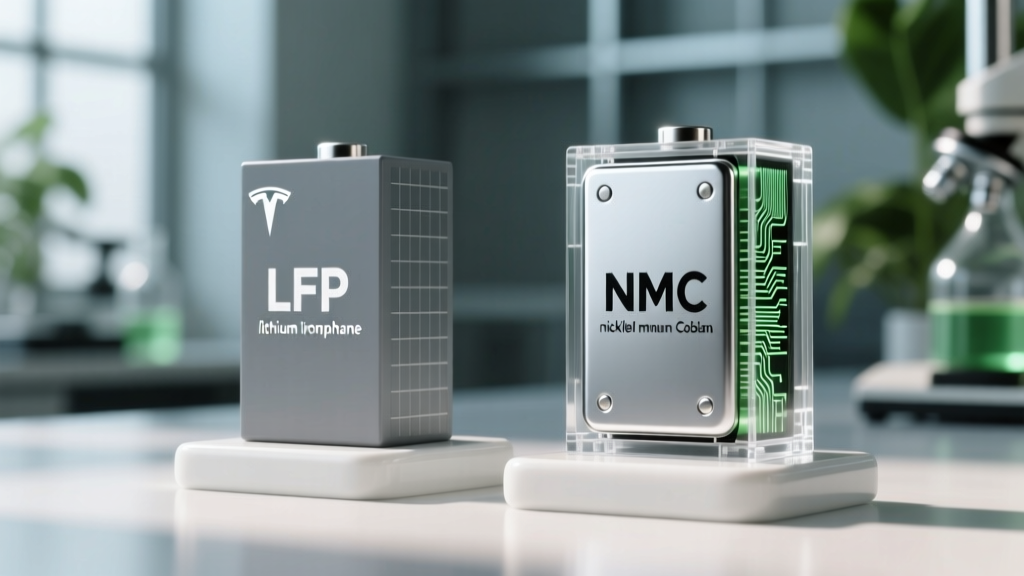
Every EV battery uses a specific cathode chemistry that dictates its energy density, lifespan, thermal behavior, and cost. The two dominant families in 2026 are lithium iron phosphate (LFP) and nickel-manganese-cobalt (NMC), with nickel-cobalt-aluminum (NCA) appearing primarily in Tesla and some Panasonic-produced cells.
| Attribute | LFP (LiFePO₄) | NMC / NCA |
|---|---|---|
| Energy density (cell-level) | 160–180 Wh/kg | 250–300 Wh/kg |
| Typical cycle life | 3,000–6,000+ cycles | 1,000–2,500 cycles |
| Cold-weather performance | Moderate loss; slower charging below 32°F | Better low-temp discharge; preconditioning helps |
| Thermal stability | Excellent — no thermal runaway until ~518°F | Good — runaway onset ~338°F; requires robust BMS |
| Cobalt/nickel content | None | Significant (supply-chain and ethical concerns) |
| Cost per kWh (2026 cell-level) | ~$75–90 | ~$100–130 |
| Charging to 100% daily | Recommended (no degradation penalty) | Not recommended (accelerates wear above 80%) |
| Common in | Tesla Model 3 RWD, Model Y RWD, Ford Mustang Mach-E Select (LFP trims), BYD models | Hyundai Ioniq 5/6, Kia EV6/EV9, Chevy Equinox EV, BMW iX, Tesla Long Range/Performance |
Which Is Better?
There's no universal winner—only the right chemistry for your driving pattern. LFP excels if you charge at home daily, want maximum cycle life, and don't need the longest single-charge range. Its lower energy density means a heavier, bulkier pack for the same kWh, which is why LFP typically appears in standard-range trims. NMC/NCA delivers more range per pound, making it the choice for long-range and performance models where packaging efficiency matters.
If you live in a cold climate and regularly fast-charge in winter, NMC's superior low-temperature charge acceptance matters. LFP cells charge sluggishly below freezing unless the vehicle's thermal management system aggressively preconditions the pack—a feature Tesla handles well but some budget EVs handle poorly.
How Long Do EV Batteries Actually Last?
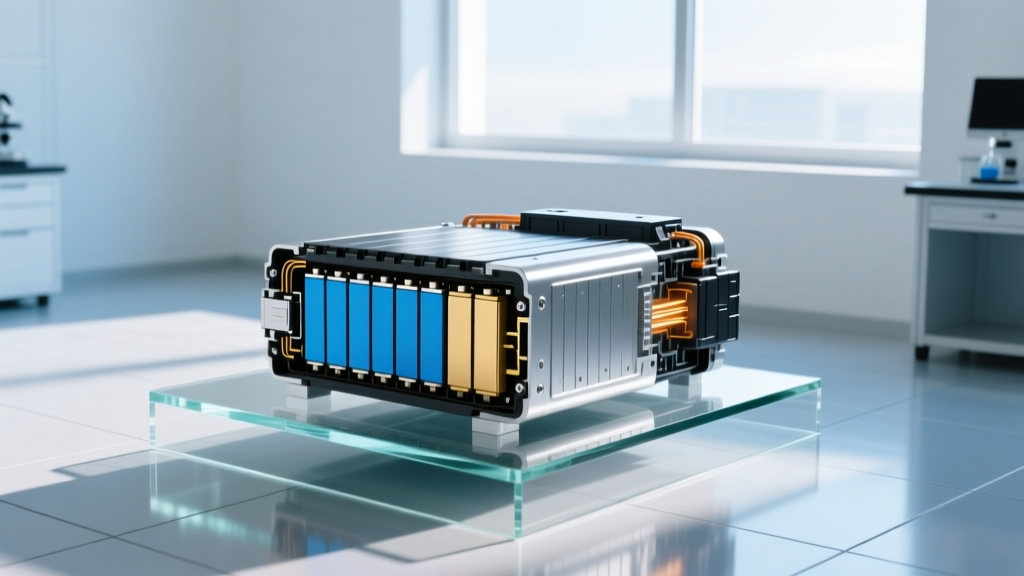
The fear that EV batteries need replacing every few years is not supported by fleet data. Modern liquid-cooled battery packs routinely exceed 150,000 miles with minimal capacity loss. Here's what the numbers show:
Real-world degradation data points (2020–2026 models):
- Tesla Model 3/Y (NMC/NCA, 2020–2023): Average ~5% capacity loss at 100,000 miles, per Tesla's 2024 Impact Report fleet data. Loss rate slows significantly after the initial 10,000–20,000 mile break-in period.
- Tesla Model 3 RWD (LFP, 2022–2025): Under 3% loss reported at 80,000 miles in owner-community fleet tracking; LFP's calendar aging is slower in moderate climates.
- Hyundai Ioniq 5 (NMC, 2022–2024): ~4–6% loss at 60,000–80,000 miles based on owner reports and Recurrent Auto fleet data.
- Chevy Bolt EV/EUV (NMC, 2017–2023): Early-model Bolts with LG cells saw recall-related replacements, but post-recall packs show ~6–8% loss at 80,000 miles.
- Nissan Leaf (passive air-cooled, 2011–2025): Historically higher degradation (10–15% at 80,000 miles) due to lack of liquid cooling—a cautionary tale for thermal management importance.
A typical NMC pack loses roughly 1–2% in its first year (calendar aging), then settles into ~0.2–0.5% annual loss depending on usage patterns. LFP packs degrade even more slowly. Most EV batteries will outlast the vehicle's economic life. Catastrophic failure (sudden brick) is exceedingly rare in liquid-cooled packs.
Battery Warranty: What's Actually Covered
Federal mandate requires that EV battery warranties cover at least 8 years / 100,000 miles (10 years / 150,000 miles in CARB states like California). But the details vary meaningfully:
| Manufacturer | Warranty Term | Capacity Threshold | Notes |
|---|---|---|---|
| Tesla (Model 3/Y LFP) | 8 yr / 120,000 mi | 70% retention | Includes drive unit |
| Tesla (Model 3/Y LR/Perf NMC) | 8 yr / 120,000 mi | 70% retention | Long-range packs |
| Hyundai / Kia | 10 yr / 100,000 mi | 70% retention | Among the longest terms |
| Ford (Mach-E, F-150 Lightning) | 8 yr / 100,000 mi | 70% retention | Transferable to second owner |
| GM (Ultium platform) | 8 yr / 100,000 mi | 70% retention (60% on some commercial) | Module-level replacement possible |
| BMW (iX, i4, i7) | 8 yr / 100,000 mi | 70% retention | Includes 12V lithium auxiliary |
| Rivian | 8 yr / 175,000 mi (R1T/R1S) | 70% retention | Higher mileage cap for trucks |
What triggers a warranty claim: The battery must fall below the stated capacity threshold (typically 70% of original) within the term. A pack that starts at 75 kWh usable and drops to 52 kWh usable qualifies. Gradual degradation above the threshold is considered normal wear and is not covered.
What's excluded: Physical damage (collision, flood, road debris puncture), unauthorized modifications, towing beyond rated capacity that damages the pack, and failure to follow maintenance guidelines. Using third-party DC fast chargers does not void your warranty—this is a persistent myth.
EV Battery Replacement Cost: The Numbers
Out-of-warranty battery replacement is the single biggest cost fear among EV shoppers. Here's the current landscape:
| Vehicle / Pack Size | Battery Capacity | Estimated Replacement Cost (2026) | When Typically Needed |
|---|---|---|---|
| Tesla Model 3 RWD (LFP) | ~57 kWh | $10,000–$13,000 | Rarely within vehicle life |
| Tesla Model Y Long Range | ~75 kWh | $13,000–$16,000 | Rarely within vehicle life |
| Hyundai Ioniq 5 | 77.4 kWh | $14,000–$18,000 | Rarely within vehicle life |
| Ford F-150 Lightning Ext. Range | ~131 kWh | $20,000–$28,000 | Rarely within vehicle life |
| Chevy Equinox EV | ~85 kWh | $12,000–$16,000 | Rarely within vehicle life |
| BMW iX xDrive50 | 105.2 kWh (usable) | $22,000–$30,000 | Rarely within vehicle life |
These are full-pack replacement figures including labor. In practice, module-level repairs (replacing individual cell modules within the pack) can cut costs by 50–70%. GM's Ultium platform and some Hyundai/Kia packs support module-level service. Tesla currently replaces full packs but is developing module-level repair capability for the 4680 cell architecture.
The critical context: the vast majority of EV batteries never need replacement. Recurrent's 2025 fleet analysis found fewer than 1.5% of EVs required battery replacement outside of recalls, and most of those were early-generation models (pre-2018) with inferior thermal management. For a 2026-model EV with liquid cooling, the battery will almost certainly outlast the rest of the vehicle's components.
What Kills an EV Battery (and What Doesn't)
Battery degradation isn't random—it follows predictable electrochemical patterns. Here's what accelerates wear and what the data actually supports:
Factors That Accelerate Degradation
- Sustained high State of Charge (SoC): Storing an NMC battery at 100% for days or weeks accelerates electrolyte decomposition. LFP is immune to this—charge to 100% freely.
- Frequent DC fast charging above 150 kW: Occasional fast charging is fine; daily 350 kW sessions increase lithium plating risk, especially without preconditioning. Tesla's own data shows vehicles that fast-charge >90% of the time see ~1–2% additional loss at 100k miles vs. predominantly home-charged vehicles.
- Extreme heat exposure: Sustained ambient temps above 100°F combined with high SoC is the worst-case scenario. Phoenix and Las Vegas vehicles show marginally higher calendar aging than Pacific Northwest vehicles.
- Deep discharge cycling: Regularly draining below 10% stresses cells. The battery management system (BMS) maintains a bottom buffer (typically 2–5 kWh hidden), but habitually arriving at 0% still accelerates wear.
- Lack of thermal management: Air-cooled packs (older Nissan Leaf, some early Fiat 500e) degrade significantly faster than liquid-cooled packs. This is a design issue, not an owner behavior issue.
Factors That Are Overblown
- Cold weather use: Cold temporarily reduces range (20–30% loss at 20°F) but doesn't cause permanent degradation as long as the BMS prevents charging at freezing cell temps.
- Moderate fast charging: Using 50–150 kW DC chargers a few times per week with proper preconditioning has negligible long-term impact.
- Regenerative braking: Regen currents are well within safe C-rate limits and don't harm cells.
Best Practices for Maximum Battery Life
- Set NMC charge limit to 80% for daily use; charge to 100% only before long trips. LFP owners: charge to 100% at least weekly for BMS calibration.
- Use Level 2 home charging as your primary method; reserve DC fast charging for road trips.
- Enable battery preconditioning when navigating to a fast charger (Tesla, Hyundai, Ford all support this).
- If storing the vehicle for >2 weeks, leave NMC at ~50% SoC; LFP at ~60–70%.
- Park in shade or a garage in hot climates; use a block heater or garage parking in extreme cold.
Monitoring Your Battery's State of Health (SoH)
State of Health represents your battery's current maximum capacity as a percentage of its original capacity. A new pack is 100% SoH; a pack that held 75 kWh when new and now holds 69 kWh sits at 92% SoH.
How to check SoH in 2026:
- In-vehicle displays: Tesla shows battery health percentage in the service menu (Settings → Software → Battery Health on 2024+ models). Hyundai/Kia provides a bar-graph estimate via the infotainment system. BMW's iDrive includes SoH in the battery information screen.
- OBD-II tools: Devices like the OBDLink SX paired with apps such as LeafSpy (Nissan), TeslaFi (Tesla), or ABRP's OBD integration can read cell-level voltage data and compute SoH more precisely than the vehicle's own display.
- Third-party services: Recurrent Auto and Geotab offer fleet and individual battery health reports using telematics data. Several used-EV listing platforms now include SoH certificates.
- Manual calculation: Fully charge to 100%, note the displayed range, divide by the EPA-rated range when new, and adjust for known efficiency changes. This is approximate but directionally useful.
A healthy 2-year-old NMC pack should show 95–98% SoH. A 5-year-old pack at 88–93% is normal. Anything dropping below 2% per year after the first year warrants a dealer diagnostic check.
Beyond Lithium-Ion: Solid-State and Silicon Anode Timelines
The next generation of battery technology promises step-change improvements, but timelines matter more than press releases:
Solid-state batteries: Toyota has announced limited production of solid-state-equipped vehicles for 2027–2028, targeting 750 km (~465 miles) of range with 10-minute fast charging. Samsung SDI and QuantumScape are targeting similar timelines for commercial cells. However, solid-state packs remain 2–3× the cost of current lithium-ion at the cell level, and manufacturing scale-up is the primary bottleneck. Realistically, solid-state will appear in premium/limited-production vehicles by 2028–2029 and reach mainstream pricing by 2032–2035.
Silicon anode technology: Companies like Sila Nanotechnologies and Group14 are already shipping silicon-dominant anode materials to battery manufacturers. These replace graphite anodes with silicon composites, boosting energy density by 20–40% without changing the cathode chemistry. Expect silicon-anode cells in production EVs starting 2026–2027 (the Mercedes-Benz G-Class EV with silicon-anode cells from Group14 is one early example). This is an incremental-but-meaningful improvement, not a revolution, and it works with existing manufacturing lines.
Sodium-ion batteries: CATL and BYD are producing sodium-ion cells for budget EVs in China, offering lower cost and better cold performance at the expense of energy density (~120–150 Wh/kg). These are unlikely to appear in U.S.-market vehicles before 2028 due to manufacturing localization requirements under the §30D credit rules.
None of these technologies invalidate current lithium-ion batteries. Today's LFP and NMC packs are mature, well-understood, and supported by a rapidly scaling domestic supply chain—one that Chevron's lithium investments are actively strengthening.
EV Battery FAQ
How long do EV batteries last in years and miles?
Modern liquid-cooled EV batteries typically last 15–20 years or 200,000+ miles before degrading to 70% of original capacity. Fleet data from Tesla, Hyundai, and tracked by Recurrent shows most 2022–2026 model-year packs lose only 5–8% capacity over their first 100,000 miles. The battery will almost certainly outlast the vehicle's body, suspension, and interior.
How much does an EV battery cost to replace?
Full pack replacement ranges from ~$10,000 for a Tesla Model 3 LFP pack to ~$28,000 for a Ford F-150 Lightning extended-range pack (2026 pricing including labor). Module-level repairs, where supported, cost 50–70% less. However, fewer than 2% of modern EVs ever need out-of-warranty battery replacement, making this a low-probability expense.
What does the EV battery warranty actually cover?
Standard warranties cover capacity loss below a threshold (typically 70% of original) for 8 years/100,000 miles (10 years/150,000 miles in CARB states). Manufacturing defects and premature degradation are covered. Physical damage, misuse, and normal wear above the threshold are not. Warranties are generally transferable to subsequent owners.
How do I check and maximize my EV battery health?
Check SoH via your vehicle's built-in battery health display, OBD-II diagnostic tools, or third-party telematics services like Recurrent. Maximize longevity by keeping NMC packs between 20–80% SoC for daily use, using Level 2 charging as your primary method, enabling preconditioning before DC fast charging, and avoiding prolonged storage at 100% or near 0%.
LFP vs NMC — which is better and why?
LFP wins on cycle life (3,000–6,000+ cycles vs. 1,000–2,500), thermal safety, cost (~$75–90/kWh vs. $100–130/kWh), and the freedom to charge to 100% daily. NMC wins on energy density (250–300 vs. 160–180 Wh/kg), cold-weather charge acceptance, and range-per-pound. Choose LFP for daily commuting with home charging; choose NMC for long-range road-trip needs and cold climates.
Does Chevron's lithium investment affect my EV purchase?
Indirectly, yes. Domestic lithium production from projects like CTR's Salton Sea operation supports the critical-mineral sourcing requirements of the §30D federal tax credit. Increased domestic supply also contributes to long-term battery cost stability. Check IRS.gov for current credit eligibility rules, which vary by vehicle, buyer income, and sourcing percentages.