Can You Charge an EV Battery With the Car On?
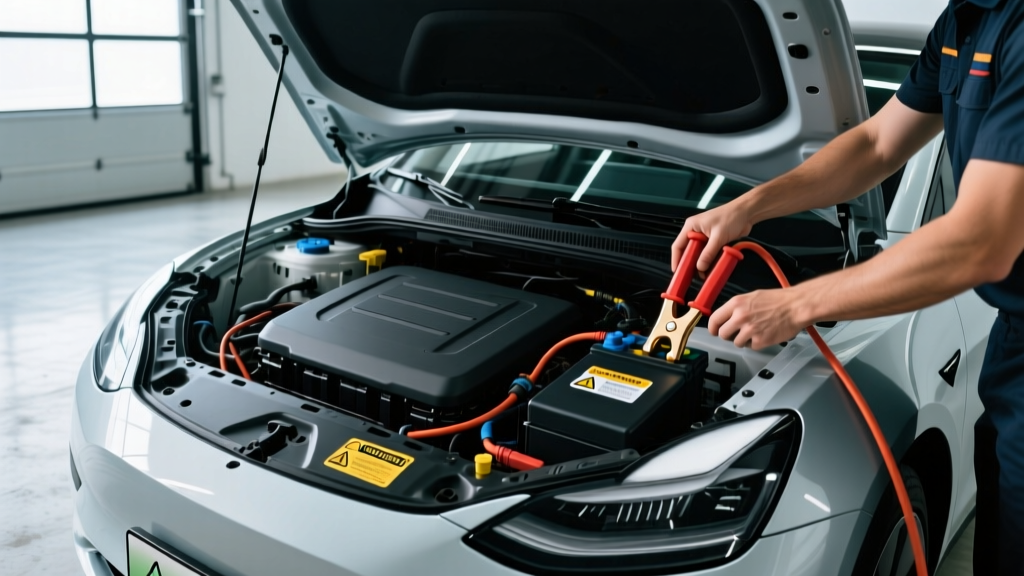
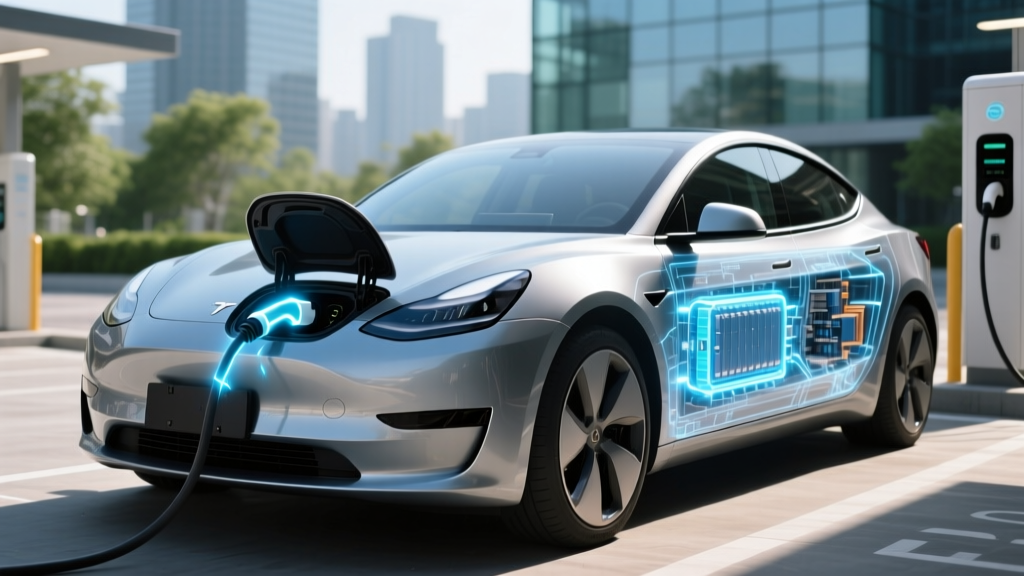
Short answer: yes. Modern electric vehicles are designed to accept a charge while the car is powered on, and in many cases, keeping the car on is actually beneficial. When you plug into a DC fast charger or a Level 2 home station, the vehicle's Battery Management System (BMS) remains active whether the car is "on" or "off." Leaving the car in accessory or ready-to-drive mode lets you monitor the charging progress on the infotainment screen, run the climate control system, and — critically — allows the thermal management system to precondition the battery for optimal charge speeds.
Many EV owners wonder whether charging with the car running causes extra wear or draws power away from the battery. In practice, the energy consumed by the cabin HVAC, infotainment, and 12V systems is negligible compared to the tens of kilowatts flowing into the high-voltage traction battery. At a 150 kW DC fast charger, the climate system might draw 2–5 kW — a rounding error. The real question isn't whether you can charge with the car on, but how you charge, how often, and what chemistry sits under your floor. Those factors determine whether your battery delivers 90% of its original capacity at 150,000 miles or drops to 75%.
This guide breaks down the battery technology inside today's EVs, from chemistry trade-offs to real-world degradation data, warranty coverage, replacement costs, and the habits that maximize longevity.
LFP vs NMC/NCA: Which Battery Chemistry Is Right for You?
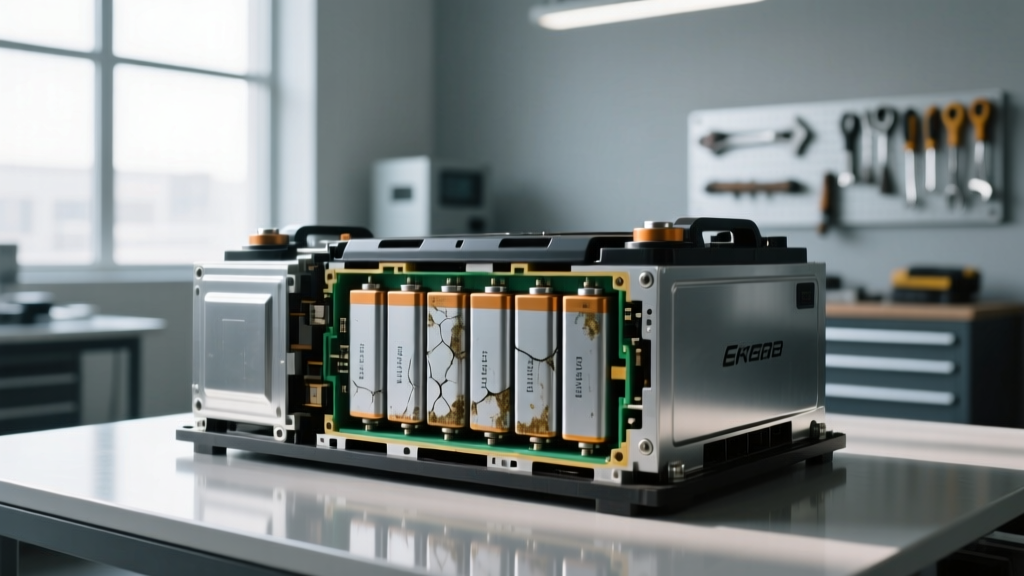
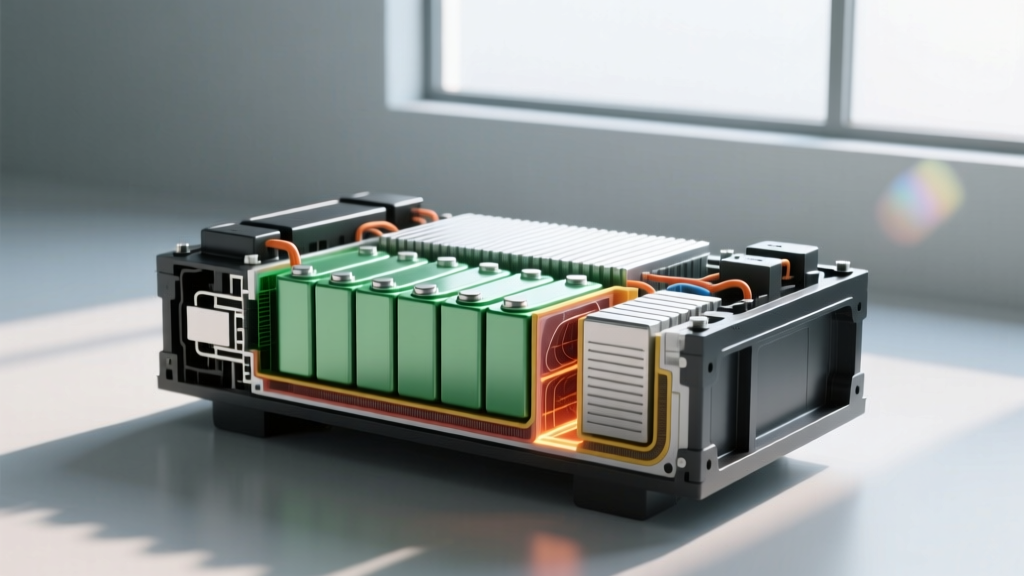
Every EV sold in 2026 uses one of two dominant lithium-ion cathode chemistries: Lithium Iron Phosphate (LFP) or Nickel Manganese Cobalt / Nickel Cobalt Aluminum (NMC/NCA). The chemistry dictates your battery's energy density, cycle life, cold-weather behavior, and cost. Here's how they compare:
| Attribute | LFP (Lithium Iron Phosphate) | NMC / NCA (Nickel-based) |
|---|---|---|
| Energy Density | Lower (~160 Wh/kg cell-level) | Higher (~220–260 Wh/kg cell-level) |
| Typical Cycle Life | 3,000–5,000+ full cycles | 1,000–2,000 full cycles |
| Cold Performance | Reduced; slower charge acceptance below 32°F | Better low-temp performance |
| Recommended Daily SoC | 100% (LFP benefits from full charges) | 80–90% for daily; 100% for trips |
| Cost | Lower (no cobalt or nickel) | Higher (commodity-dependent) |
| Thermal Stability | Excellent; very resistant to thermal runaway | Good; requires robust BMS management |
| Common In 2026 | Tesla Model 3/Y RWD, Ford Mustang Mach-E Select, Rivian Standard | Hyundai Ioniq 5/6, Kia EV6/EV9, Tesla Long Range, BMW iX, Lucid Air |
The trade-off, simplified: LFP gives you longer cycle life, lower cost, and better safety, but with less range per kilogram and weaker cold-weather charging. NMC/NCA gives you more range in a lighter, smaller pack but degrades faster if you routinely charge to 100% or rely exclusively on DC fast charging.
If you commute 40 miles round-trip and charge at home nightly, LFP is arguably the better long-term bet — you can charge to 100% daily without anxiety, and the pack will likely outlast the car. If you need 300+ miles of EPA range for road trips and live in a cold climate, NMC's energy density and cold-weather advantage matter more.
How Long Do EV Batteries Actually Last? Degradation Data
The fear of a dead battery at 80,000 miles is the single biggest barrier to EV adoption — and it's largely unsupported by data. According to fueleconomy.gov, most modern EV batteries are engineered to retain at least 70–80% of their original capacity after 150,000–200,000 miles.
Real-world fleet data supports this. A widely cited study by Geotab, analyzing over 10,000 EVs, found average annual degradation of approximately 1.8% per year for liquid-cooled packs. That means after 8 years, a typical EV battery retains roughly 85–88% of its original capacity — well above warranty thresholds.
- Year 1: ~2–3% loss (initial formation loss)
- Years 2–5: ~1.5–2% per year (linear, gradual)
- Years 6–10: ~1–1.5% per year (tapers further)
- Expected retention at 150,000 mi / 10 years: 82–88%
LFP packs often show even slower degradation, with Geotab data indicating some fleet vehicles retaining 90%+ after 5 years of daily cycling.
However, degradation is not purely a function of time or mileage. A vehicle that lives in Phoenix, charges exclusively at 350 kW DC fast chargers, and sits at 100% state of charge in a hot driveway will degrade faster than one garage-kept in Portland and charged to 80% on a Level 2 home station. The BMS and thermal management system do heavy lifting, but owner habits still matter.
What Does the EV Battery Warranty Actually Cover?
Federal law mandates that EV batteries carry a minimum warranty of 8 years or 100,000 miles (10 years / 150,000 miles in California Air Resources Board states). But the details vary significantly by manufacturer, and the capacity retention threshold — the percentage of original capacity below which the manufacturer must intervene — is the critical number.
| Manufacturer | Warranty Term | Capacity Retention Threshold | Notes |
|---|---|---|---|
| Tesla (Model 3/Y) | 8 yr / 120,000 mi | 70% | LFP and NMC packs covered equally |
| Hyundai / Kia | 10 yr / 100,000 mi | 70% | Among the longest terms in the industry |
| Ford (Mach-E, F-150 Lightning) | 8 yr / 100,000 mi | 70% | Covers battery components and capacity |
| General Motors (Ultium) | 8 yr / 100,000 mi | 70% | Applies across Cadillac, Chevy, GMC EVs |
| BMW | 8 yr / 100,000 mi | 70% | Transferable to second owner |
| Rivian | 8 yr / 120,000 mi (Max pack: 8 yr / 175,000 mi) | 70% | Extended mileage on Max pack |
A 70% threshold means the manufacturer will repair or replace the battery (or individual modules, where applicable) if the pack's usable capacity drops below 70% of its original kWh within the warranty period. In practice, very few owners hit this threshold during the warranty window. According to data from Recurrent Auto, fewer than 1.5% of EVs in their 15,000-vehicle study required a warranty battery replacement.
How Much Does an EV Battery Cost to Replace?
Out-of-warranty battery replacement is the nightmare scenario EV skeptics cite. The cost is real, but context matters: most EV batteries outlast the vehicle's economic life, and module-level repairs are increasingly possible.
| Vehicle | Battery Size (kWh) | Full Pack Replacement (Parts + Labor) | Typical Replacement Trigger |
|---|---|---|---|
| Tesla Model 3 RWD (LFP) | ~60 kWh | $12,000–$16,000 | Rarely needed; LFP longevity |
| Hyundai Ioniq 5 | 77.4 kWh | $18,000–$24,000 | Typically 180,000+ mi or 12+ years |
| Ford F-150 Lightning (Extended) | ~131 kWh | $28,000–$38,000 | Large pack; module repair may be possible |
| Chevrolet Bolt EV/EUV | 65 kWh | $14,000–$17,000 | Recall-replaced packs have refreshed warranty |
| BMW iX xDrive50 | ~111.5 kWh | $25,000–$35,000 | Module-level repair available at some dealers |
These are full-pack replacement figures. Many modern packs (GM Ultium, BMW Gen5, Hyundai E-GMP) are designed with individually serviceable modules, meaning a single degraded or failed module can be swapped for $2,000–$5,000 rather than replacing the entire pack. Always ask your dealer or an independent EV specialist about module-level repair before accepting a full-pack quote.
Factors That Affect EV Battery Life (and What You Can Control)
Battery degradation is driven by three primary stressors: heat, high state of charge, and high charge/discharge rates. Here's how each one works and what you can do:
- Limit DC fast charging to road trips. Daily reliance on 150–350 kW DC charging accelerates degradation. Use Level 2 (7–19 kW) for daily needs. Research from the Idaho National Laboratory showed that vehicles charged exclusively via DC fast charging degraded roughly 10% more over 50,000 miles compared to Level 2-only vehicles.
- Avoid prolonged 100% SoC (NMC/NCA). If your EV uses NMC chemistry, set your daily charge limit to 80–90%. Reserve 100% for road trips and charge to full shortly before departure. LFP owners can (and should) charge to 100% regularly — the BMS needs full-charge cycles to calibrate cell balancing.
- Don't let the battery sit at very low SoC. Storing an EV at 5% SoC for weeks in a hot garage stresses cells more than any single fast-charge session. If storing, aim for 50–60% SoC.
- Precondition before fast charging. Most EVs automatically precondition the battery when you navigate to a DC fast charger. If yours doesn't (or you're overriding navigation), allow 10–15 minutes of driving before plugging in. Cold batteries charge slowly and unevenly.
- Park in the shade or a garage in summer. Prolonged exposure to 100°F+ ambient temperatures at high SoC is the worst-case degradation scenario. A garage can reduce pack temperature by 15–20°F.
- Use scheduled charging. Set your home charger to finish charging right before you leave. This minimizes time spent sitting at high SoC.
How to Check and Monitor Your Battery's State of Health (SoH)
State of Health (SoH) is a percentage representing your battery's current maximum capacity relative to its original capacity. A new EV has 100% SoH; a pack that originally held 77.4 kWh but now holds 68 kWh sits at roughly 88% SoH.
In-vehicle tools: Some manufacturers provide SoH readouts directly. Tesla's service menu (accessible through the software screen) shows battery health data. Hyundai and Kia models sold in certain markets display SoH in the EV settings menu. BMW's iDrive system includes a battery health report.
OBD-II apps: For EVs without a native SoH display, third-party OBD-II dongles paired with apps like Leaf Spy (Nissan Leaf), TeslaFi, or ABRP (A Better Route Planner) OBD can read battery management data including SoH, cell voltage deviation, and cumulative charge cycles.
Dealer diagnostics: Any authorized dealer can pull a full battery health report during a service visit. Request this annually or before a long road trip. Some dealers will provide the report free; others charge a diagnostic fee ($100–$200).
The manual method: Track your vehicle's range over time under consistent conditions (same route, same temperature, same tire pressure). If your 300-mile EPA-rated EV consistently delivers only 240 miles in conditions where it used to deliver 280, that's a rough indicator of 10–15% degradation. This isn't precise, but it flags trends.
Emerging Battery Technology: What's Coming (and When)
Several next-generation battery technologies are in development. None are available in production vehicles as of early 2026, but they're worth tracking:
Solid-state batteries: These replace the liquid electrolyte with a solid ceramic or polymer, promising higher energy density (potentially 400+ Wh/kg), faster charging, and improved safety. Toyota has announced a solid-state battery targeting 2027–2028 production, initially in limited-run vehicles. Samsung SDI and QuantumScape are also pursuing solid-state, but mass-market availability before 2030 remains uncertain. Manufacturing yield and cost are the primary hurdles.
Silicon-dominant anodes: Companies like Sila Nanotechnologies and Group14 are replacing graphite anodes with silicon, which can store roughly 10x more lithium ions per gram. Early applications are appearing in consumer electronics and are expected in EVs by 2027–2029, offering 15–25% range improvement without changing cathode chemistry.
Sodium-ion batteries: CATL has begun limited production of sodium-ion packs for lower-cost, shorter-range vehicles in China. Sodium is abundant and cheap, but energy density is significantly lower than lithium-ion. These may appear in budget EVs and stationary storage by 2027–2028 but are unlikely in US-market long-range vehicles near-term.
For buyers shopping today, current-generation LFP and NMC packs are mature, well-understood, and backed by extensive warranty coverage. Waiting for solid-state is not a practical strategy unless your purchase timeline extends to 2029 or beyond.
Frequently Asked Questions
Can you charge an EV battery with the car on?
Yes. EVs are designed to charge while powered on. The Battery Management System operates regardless of whether the car is "on" or "off." Keeping the car on allows you to run climate control and monitor charging progress. The energy draw from cabin systems (2–5 kW) is negligible compared to the charge rate (50–350 kW at a DC fast charger).
How long do EV batteries last in years and miles?
Most modern liquid-cooled EV batteries retain 82–88% of their original capacity after 150,000 miles or 10 years. Many will last 200,000+ miles before dropping below the 70% warranty threshold. LFP packs often exceed these figures. According to Recurrent Auto, catastrophic battery failure in modern EVs is extremely rare — under 1.5% of vehicles studied required replacement.
How much does an EV battery cost to replace?
Full pack replacement ranges from approximately $12,000 for a smaller pack (Tesla Model 3 LFP, ~60 kWh) to $38,000 for a large pack (Ford F-150 Lightning Extended Range, ~131 kWh). However, most packs outlast the vehicle, and module-level repairs can cost $2,000–$5,000 instead of a full replacement.
What does the EV battery warranty cover?
Federal law requires a minimum of 8 years / 100,000 miles (10 years / 150,000 miles in CARB states). Coverage applies if the battery drops below a specified capacity retention threshold — typically 70% of original capacity. The warranty covers defects and abnormal degradation but not damage from accidents, modifications, or improper use.
LFP vs NMC — which battery is better?
Neither is universally better. LFP offers longer cycle life (3,000–5,000+ cycles), lower cost, better thermal safety, and the convenience of daily 100% charging. NMC delivers higher energy density (more range in a lighter pack) and better cold-weather performance. Choose LFP for commuting and daily driving; choose NMC if you need maximum range and live in a cold climate.
Does fast charging damage the battery?
Occasional DC fast charging (road trips) causes minimal extra degradation. Daily DC fast charging, however, has been shown to accelerate capacity loss. Idaho National Laboratory testing found that vehicles charged exclusively via DC fast charging lost roughly 10% more capacity over 50,000 miles compared to Level 2-only charging. For daily use, a home Level 2 charger (7–19 kW) is the best choice for longevity.