Charging a Battery From Your Car: What V2L, V2H, and V2G Actually Mean
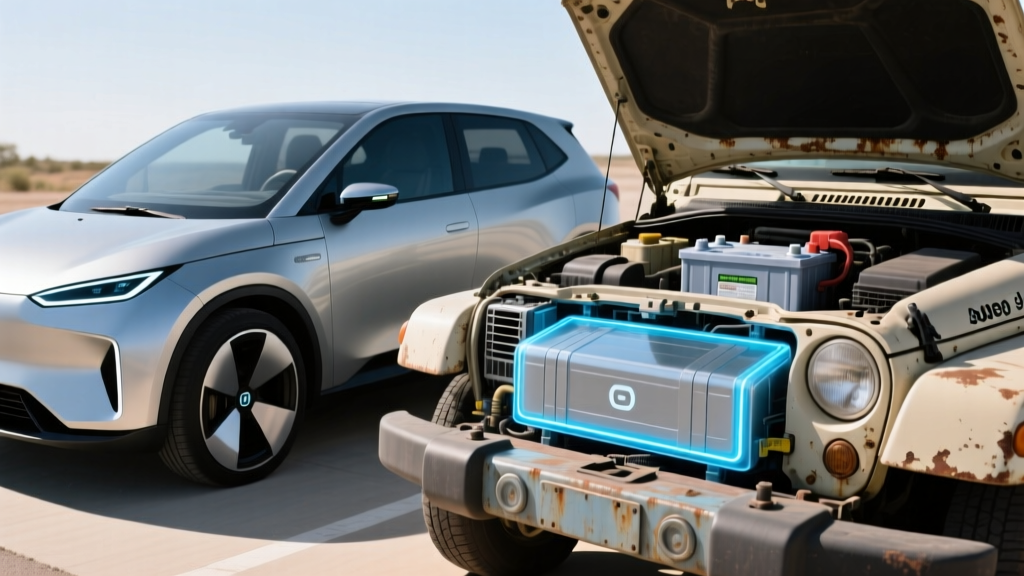
When EV owners search for ways to charge battery from car, they're usually asking one of two questions: Can I use my EV to power an external device or battery pack? And how do I keep the car's own high-voltage traction battery healthy over the long haul? Both questions deserve precise answers, because the hardware capabilities and the chemistry involved are very different from what most gas-car owners are used to.
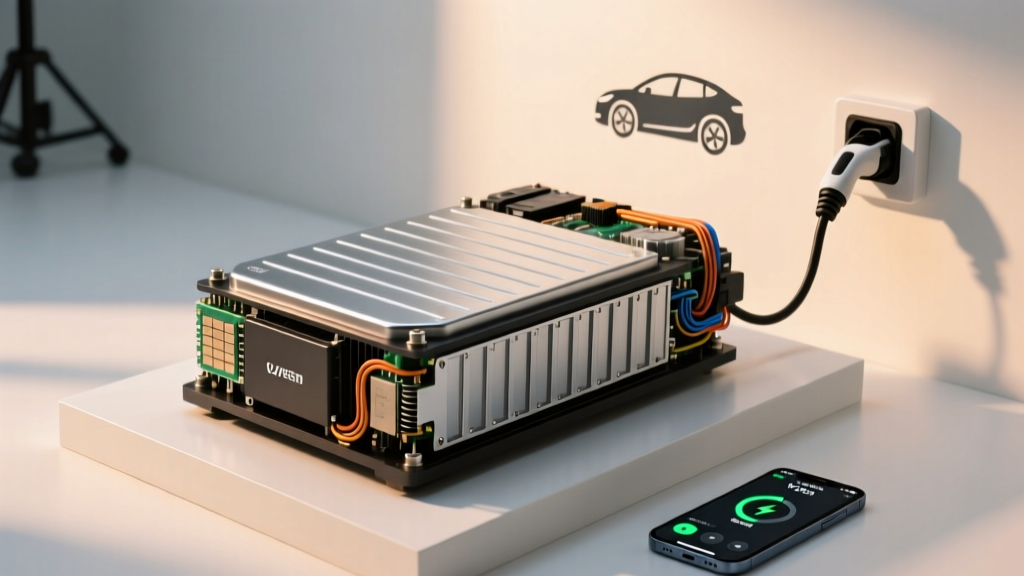
Modern EVs with Vehicle-to-Load (V2L) capability can output 120V AC power directly from the high-voltage battery through a standard outlet or adapter. Models like the Hyundai Ioniq 5, Kia EV6, Ford F-150 Lightning, and Chevrolet Silverado EV offer V2L at 1.9 kW to 9.6 kW, enough to run power tools, charge a portable power station, or even keep essential home circuits alive during an outage. The Ford F-150 Lightning's Pro Power Onboard goes further, offering up to 9.6 kW through bed outlets and a home-transfer switch — effectively turning the truck's 131 kWh (Extended Range) battery into a rolling generator.
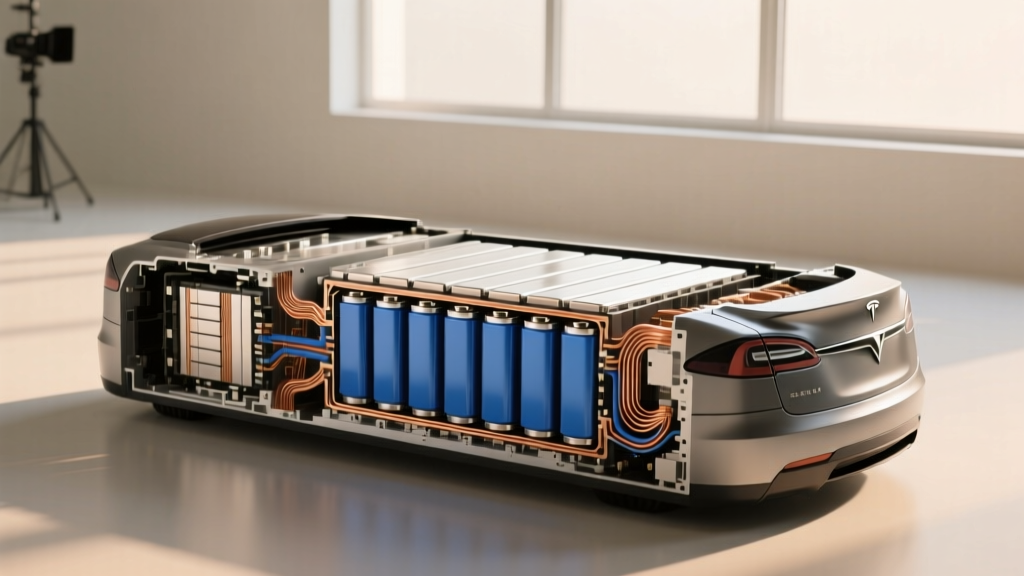
But before you plug in a external battery or appliance, you need to understand what's happening inside your EV's own pack — the chemistry, the degradation curve, and the habits that will determine whether that pack lasts 150,000 miles or 300,000 miles.
- Hyundai Ioniq 5 / Kia EV6: 3.6 kW V2L via interior outlet or exterior adapter
- Ford F-150 Lightning: Up to 9.6 kW via Pro Power Onboard (bed + cabin outlets)
- Chevrolet Silverado EV: Up to 10.2 kW bidirectional (V2L + V2H capable)
- Hyundai Ioniq 9: 3.6 kW V2L standard
LFP vs NMC vs NCA: Which Battery Chemistry Is in Your EV?
The two dominant lithium-ion chemistries in today's EV market are LFP (lithium iron phosphate) and NMC/NCA (nickel manganese cobalt / nickel cobalt aluminum). The chemistry determines energy density, cycle life, cold-weather behavior, and cost — and it fundamentally changes how you should treat the pack day to day.
| Attribute | LFP (LiFePO4) | NMC / NCA |
|---|---|---|
| Energy Density | Lower (~160 Wh/kg cell-level). Heavier pack for same range. | Higher (~250-300 Wh/kg). More range per pound. |
| Cycle Life | 3,000-5,000+ full cycles to 80% SoH | 1,000-2,000 full cycles to 80% SoH |
| Cold Performance | Weaker below 32°F; slower charging, more range loss | Better low-temp discharge and regen acceptance |
| Recommended Daily SoC | Can charge to 100% regularly without harm | Best kept at 80% daily; 100% only for trips |
| Cost per kWh | Lower — no cobalt or nickel | Higher — commodity-sensitive metals |
| Common In (2026) | Tesla Model 3/Y RWD, Ford Mustang Mach-E Select (Standard Range), base Rivian R1S | Tesla Long Range, Hyundai Ioniq 5, BMW i4, most luxury EVs |
| Thermal Runaway Risk | Very low — inherently stable chemistry | Higher — requires robust BMS and cooling |
Which is better? It depends on your use case. If you drive moderate daily distances, have home charging, and want maximum pack longevity, LFP is the pragmatic choice — you can charge to 100% nightly and the pack will likely outlast the vehicle. If you need maximum range per charge, tow frequently, or live in a cold climate where NMC's low-temperature advantage matters, NMC/NCA is the better fit. Neither is universally superior; the right chemistry matches your driving pattern.
How Long Do EV Batteries Actually Last? Degradation Data
The fear that an EV battery will "die" at 100,000 miles is not supported by fleet data. According to Recurrent Auto's analysis of over 15,000 vehicles, the average EV battery retains approximately 90-95% of its original capacity after 5 years and roughly 85-90% after 100,000 miles. Degradation is not linear — it's steepest in the first 1-2 years (typically 2-5% loss as the solid electrolyte interface stabilizes), then flattens into a slow, gradual decline.
- Tesla Model 3/Y (NMC, 2019-2022): ~5% loss at 50,000 mi; ~10% loss at 120,000 mi (Tesla Impact Report 2023 data)
- Chevrolet Bolt EV (NMC, 2017-2022): ~7% average loss at 80,000 mi; some packs replaced under recall
- Nissan Leaf (passive air-cooled, 2011-2017): 15-25% loss at 80,000 mi — a cautionary example of poor thermal management
- Tesla Model S (2013-2016): ~8% average loss at 150,000 mi for liquid-cooled packs
- LFP-equipped Tesla Model 3 RWD (2022+): Early data suggests <3% loss at 40,000 mi, consistent with LFP's superior cycle life
The key takeaway: most modern, liquid-cooled EV batteries will retain 80%+ capacity at 150,000-200,000 miles. At 80% State of Health, a 300-mile EPA range becomes ~240 miles — still usable for daily driving. Full pack failure is rare; gradual capacity fade is the norm.
What Does the EV Battery Warranty Actually Cover?
Federal law mandates that EV batteries carry a minimum warranty of 8 years / 100,000 miles (10 years / 150,000 miles in California Air Resources Board states). But the capacity retention threshold varies by manufacturer, and understanding the fine print matters if you ever need a claim.
| Manufacturer | Warranty Period | Capacity Threshold | Notes |
|---|---|---|---|
| Tesla | 8 yr / 100k-150k mi (varies by model) | 70% retention | Long Range/Performance: 120k mi; RWD: 100k mi |
| Hyundai / Kia | 10 yr / 100,000 mi | 70% retention | Among the longest coverage in the industry |
| Ford | 8 yr / 100,000 mi | 70% retention | Covers battery and hybrid/EV components |
| GM (Chevrolet/Cadillac) | 8 yr / 100,000 mi | 70% retention (60% for Bolt) | Ultium platform packs covered similarly |
| BMW | 8 yr / 100,000 mi | 70% retention | Covers capacity below threshold, not normal wear |
| Rivian | 8 yr / 175,000 mi (R1T/R1S) | 70% retention | Higher mileage threshold reflects truck use case |
Critical nuance: The warranty covers the battery falling below the stated threshold — not any specific amount of degradation. If your pack retains 72% at 9 years, you have no claim, even if you've lost 28% of range. Warranty claims typically require a dealer diagnostic scan showing capacity below the threshold. Keep records of your State of Health readings.
How Much Does an EV Battery Replacement Cost?
Out-of-warranty battery replacement is the single biggest fear among prospective EV buyers. The cost is real, but context matters: most packs never need replacement during the vehicle's typical ownership life.
| Model (Battery Size) | Estimated Replacement Cost | Typical Replacement Scenario |
|---|---|---|
| Tesla Model 3 RWD (60 kWh LFP) | $12,000 - $16,000 | Physical damage; cell failure rare |
| Tesla Model Y LR (82 kWh NMC) | $14,000 - $20,000 | Out-of-warranty capacity loss at 200k+ mi |
| Hyundai Ioniq 5 (77.4 kWh NMC) | $15,000 - $22,000 | Rare; 10yr warranty covers most owners |
| Ford F-150 Lightning Ext. (131 kWh NMC) | $22,000 - $35,000 | Large pack = higher cost; rarely needed |
| Chevrolet Bolt EV (65 kWh NMC) | $14,000 - $16,000 | Many replaced under 2020-2021 recall at no cost |
| Nissan Leaf (40-62 kWh) | $6,500 - $10,000 | More common due to passive cooling degradation |
These figures include the battery pack and labor but vary by region and service center. When is replacement typically needed? In practice, very few owners pay for a full pack replacement. The scenarios that trigger one are usually physical damage (collision, flooding), manufacturing defects caught within the warranty period, or extreme high-mileage use (200,000+ miles with significant capacity loss on early-generation packs). For the vast majority of owners, the battery will retain sufficient capacity to remain functional for the vehicle's entire life.
Factors That Accelerate (or Slow) Battery Degradation
Battery longevity isn't random — it's a function of how the pack is used, charged, and thermally managed. Here are the factors ranked by impact:
- Limit DC fast charging to road trips. Frequent 150+ kW charging generates sustained high temperatures. Occasional fast charging is fine; daily fast charging accelerates degradation by an estimated 1-3% over 5 years vs. Level 2 home charging.
- Avoid storing at 100% SoC for extended periods. For NMC packs, prolonged high state of charge stresses the cathode. Charge to 80% for daily use; set to 100% only when departing on a trip. LFP packs are an exception — periodic 100% charges help calibrate the BMS.
- Don't let the pack sit at very low SoC. Storing below 10% for weeks can trigger copper dissolution in the anode. If parking long-term, leave the car plugged in at ~50% SoC.
- Use preconditioning. Most EVs allow you to precondition the battery before fast charging or departure. This warms the pack to the optimal ~70-90°F operating window, reducing stress and improving charge acceptance. On Teslas, navigate to a Supercharger and the car preconditions automatically.
- Park in shade or a garage in extreme heat. Ambient temperatures above 95°F combined with high SoC accelerate calendar aging. A garage or shaded spot meaningfully reduces thermal stress.
- Use regenerative braking wisely in cold weather. Below freezing, regen may be limited to protect the pack. Don't force high regen settings when the battery is cold — let the car manage it.
- Keep software updated. OEMs regularly refine battery management algorithms via OTA updates. These can improve thermal management, charge curves, and longevity.
How to Check Your EV Battery's State of Health (SoH)
State of Health (SoH) is the percentage of original capacity your battery currently holds. A new pack is 100% SoH; a pack with 10% degradation is at 90% SoH. Monitoring this metric helps you track degradation over time and provides documentation if you ever need a warranty claim.
Built-in methods by brand:
- Tesla: The service menu (accessed via the car's touchscreen in some software versions) shows estimated range at 100% — compare this to the original EPA figure. Third-party apps like Tessie or TeslaFi log SoH estimates from the vehicle's BMS data.
- Hyundai/Kia: The EV-specific menu in the infotainment system shows battery health percentage on newer models (2023+). Dealers can run a full diagnostic scan.
- Ford: The FordPass app and in-car diagnostics provide a battery health indicator. A dealer scan gives a more precise kWh measurement.
- General Motors: myChevrolet/myCadillac apps include battery health status. The Ultium platform provides more granular data than older BEV architectures.
Third-party and OBD-II methods: Devices like the OBDLink SX/MX+ paired with apps such as EV Health or Car Scanner ELM OBD2 can read the BMS-reported SoH directly from the CAN bus. For the most accurate measurement, a full charge-discharge test (charge to 100%, drive to near 0%, measure kWh consumed) gives a real-world capacity figure — but this is impractical for routine checks. Annual dealer diagnostics are the most practical approach for warranty documentation.
Emerging Battery Tech: Solid-State and Silicon Anodes
The next generation of EV batteries promises step-change improvements in energy density and charge speed, but realistic timelines matter more than press-release promises.
Solid-state batteries replace the liquid electrolyte with a solid ceramic, glass, or polymer material, theoretically enabling higher energy density (~400-500 Wh/kg at the cell level), faster charging (potentially 10-80% in under 10 minutes), and improved safety (no flammable electrolyte). Toyota has announced a solid-state battery targeting 2027-2028 production in limited volumes, initially in hybrid applications. Samsung SDI aims for 2027 mass production. QuantumScape's solid-state cells have demonstrated promising cycle-life data in lab testing but remain pre-commercial for automotive use. Realistically, solid-state batteries will appear in limited production vehicles by 2028-2030 and won't reach mainstream pricing until the early 2030s.
Silicon anode technology replaces graphite in the anode with silicon, which can store roughly 10x more lithium ions per gram. The challenge is that silicon swells ~300% during lithiation, causing mechanical degradation. Companies like Sila Nanotechnologies (partnered with Mercedes-Benz for the 2025+ G-Class EV) and Group14 Technologies are bringing partial-silicon anodes to market, offering 10-20% energy density improvements in the near term. This technology is closer to scale than full solid-state and is already appearing in some 2025-2026 model-year vehicles.
Sodium-ion batteries are also emerging as a low-cost alternative for entry-level EVs, particularly from Chinese manufacturers like CATL and BYD. They sacrifice energy density but eliminate lithium, cobalt, and nickel entirely, potentially enabling sub-$20,000 EVs. Expect sodium-ion in US-market vehicles no earlier than 2028.
- 2025-2026: Silicon anode in limited production (Mercedes G-Class, select premium EVs)
- 2027-2028: First solid-state EVs in limited volumes (Toyota, Samsung SDI partners)
- 2028-2030: Solid-state reaches broader production; sodium-ion in budget EVs
- 2030+: Solid-state approaches mainstream pricing parity with NMC
These timelines are based on announced manufacturer plans and may shift. No solid-state EV is currently available for purchase in the US market.
Frequently Asked Questions
Can I charge an external battery pack or power station from my EV?
Yes, if your EV has V2L (Vehicle-to-Load) capability. Models like the Hyundai Ioniq 5, Kia EV6, and Ford F-150 Lightning can output 120V AC power through built-in outlets or adapters. The output ranges from 1.9 kW to 9.6 kW depending on the vehicle. You can charge a portable power station, run appliances, or power tools directly from the EV's high-voltage battery. This draws from your traction battery, so it will reduce your driving range accordingly — a 1.9 kW draw for 5 hours consumes roughly 9.5 kWh, or about 30-40 miles of range in a typical EV.
Does using V2L to charge external devices damage my EV battery?
No. V2L discharge rates (1.9-9.6 kW) are very gentle compared to driving loads, which can exceed 100+ kW under hard acceleration. The battery management system manages the discharge safely. Occasional V2L use has negligible impact on long-term degradation. Just avoid draining the pack below ~10% SoC, as with normal driving.
How long do EV batteries last in years and miles?
Based on fleet data from Recurrent Auto and manufacturer reports, modern liquid-cooled EV batteries typically retain 85-90% capacity at 100,000 miles and 80-85% at 150,000-200,000 miles. In years, most packs remain functional for 15-20 years under normal use. The battery will likely outlast other major vehicle components like suspension, interior, and electronics.
Should I charge my EV to 100% every day?
It depends on your battery chemistry. LFP batteries (Tesla Model 3/Y RWD, Ford Mustang Mach-E Select Standard Range) can and should be charged to 100% regularly — Tesla recommends it for accurate BMS calibration. NMC/NCA batteries (most Long Range and Performance models) should be charged to 80% for daily use and set to 100% only when you need maximum range for a trip. Check your owner's manual for your specific chemistry and recommendation.
Is DC fast charging bad for my battery?
Occasional DC fast charging (road trips, a few times per month) has minimal impact on battery health. The concern arises with exclusive fast charging — if you never use Level 2 and rely solely on 150+ kW DC charging daily, studies suggest an additional 1-3% degradation over 5 years compared to Level 2 charging. Modern thermal management systems mitigate much of this, but the physics of high-current charging generates heat, and heat is the primary enemy of lithium-ion longevity. For daily charging, a home Level 2 charger at 7-11 kW remains the gold standard.
What happens if my EV battery degrades to 70% capacity?
At 70% State of Health, your vehicle still functions — it simply has reduced range. A car with an original 300-mile EPA range would offer approximately 210 miles at 70% SoH. This is the threshold where most manufacturer warranties trigger a repair or replacement. In practice, very few modern EVs reach 70% SoH within the warranty period unless there's a manufacturing defect. For context, many high-mileage Teslas and Nissan Leafs continue operating at 70-75% SoH well past 150,000 miles — reduced range, but still practical for daily commuting.