Changan's Solid-State Battery Push: Where Things Stand in 2026
Changan Automobile has emerged as one of the most vocal Chinese automakers pursuing solid-state battery (SSB) technology, announcing pilot production timelines and partnering with battery suppliers to bring next-generation cells to market. The promise is compelling: higher energy density, faster charging, improved safety, and longer cycle life compared to today's lithium-ion cells. But for EV shoppers evaluating the Changan solid-state battery roadmap — or any solid-state claim from any manufacturer — separating marketing milestones from showroom reality is essential.
As of early 2026, no mass-produced vehicle with a true all-solid-state battery is available for consumer purchase anywhere in the world. Changan has announced semi-solid-state battery packs in select Chinese-market models (leveraging hybrid solid/liquid electrolyte designs from suppliers like CATL and Ganfeng Lithium), and has stated ambitions for full solid-state production by the 2027–2028 timeframe. These are announced targets, not available products. Meanwhile, every EV you can actually buy today — from Changan's Deepal and Avatr sub-brands to Teslas, Hyundais, and Fords — uses some variant of conventional lithium-ion chemistry: either NMC/NCA or LFP.
Understanding those existing chemistries, how they degrade, what warranties cover, and what solid-state technology realistically offers is the foundation of smart EV ownership. Let's build that foundation.
LFP vs NMC/NCA: The Chemistry Decision That Shapes Your EV
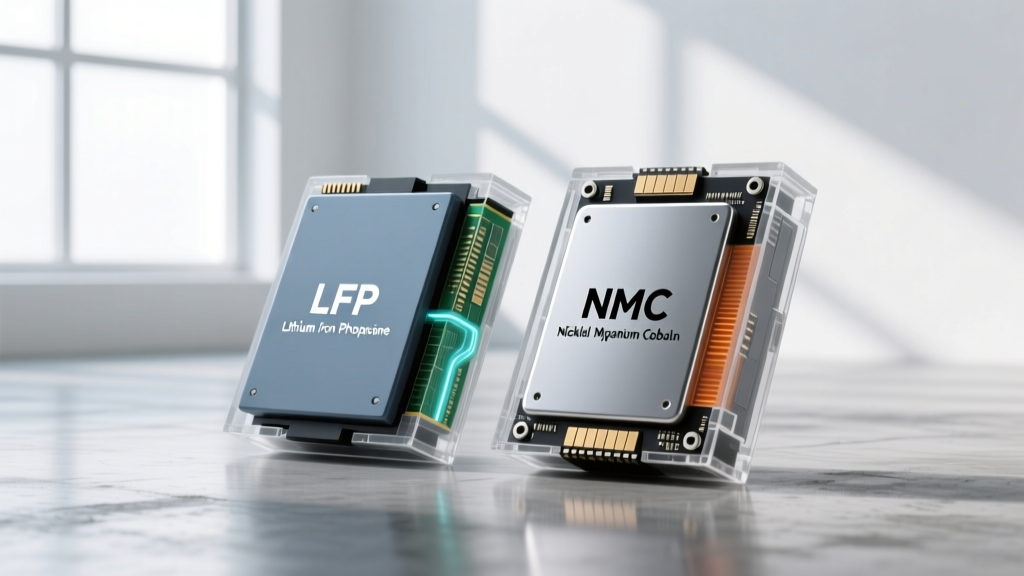
Every EV battery pack on the road in 2026 uses one of two dominant cathode chemistries: LFP (lithium iron phosphate) or NMC/NCA (nickel manganese cobalt / nickel cobalt aluminum). The choice between them affects your range, charging habits, longevity, and even how you should set your daily charge limit.
| Attribute | LFP (Lithium Iron Phosphate) | NMC / NCA (Nickel-Based) |
|---|---|---|
| Energy Density | Lower (~160–180 Wh/kg cell-level) | Higher (~220–300 Wh/kg cell-level) |
| Typical Range Impact | Shorter range for same pack weight | Longer range per kWh of pack mass |
| Cycle Life | 3,000–5,000+ cycles to 80% SoH | 1,000–2,000 cycles to 80% SoH |
| Cold-Weather Performance | More range loss in freezing temps (~30–40%) | Better cold performance (~20–30% loss) |
| Thermal Stability / Safety | Excellent — very resistant to thermal runaway | Good but requires more active thermal management |
| Recommended Daily Charge Limit | 100% OK (manufacturers often recommend periodic full charges for BMS calibration) | 80–90% daily; 100% only for trips |
| Cost per kWh | Lower — no cobalt or nickel | Higher — commodity-priced metals |
| Common In 2026 Models | Tesla Model 3/Y RWD, BYD Blade packs, standard-range models | Long-range AWD models, Hyundai Ioniq 5/6, Ford Mustang Mach-E Extended Range |
The practical takeaway: If you want maximum range per charge and don't mind managing charge limits, NMC/NCA delivers. If you prioritize longevity, can charge to 100% without worry, and accept slightly less range, LFP is the stronger ownership play — especially for high-mileage drivers. This is why Tesla shifted its standard-range Model 3 and Model Y to LFP globally, and why BYD's Blade Battery (LFP) powers most of its lineup.
How Long Do EV Batteries Actually Last? Real Degradation Data
The single most persistent EV myth is that batteries "die" like phone batteries after a few years. The data tells a very different story. Modern EV battery packs are engineered with thermal management systems, buffer zones (unused capacity above and below the displayed state of charge), and chemistries that degrade far more slowly than consumer electronics cells.
Typical Degradation Trajectory (Based on Fleet Data):
- Year 1–2: ~2–5% capacity loss (initial "break-in" degradation, steeper curve)
- Year 3–5: ~1–2% loss per year (linear phase)
- Year 6–10: Continued slow decline; most packs retain 80–90% of original capacity at 100,000–150,000 miles
- Worst-case outlier: ~10–15% loss at 150,000 miles for packs subjected to frequent DC fast charging in hot climates without preconditioning
Data from Geotab's fleet study of over 10,000 EVs showed an average degradation rate of approximately 2.3% per year across all models and chemistries. Tesla's own Impact Report has cited median data showing Model S/X packs retaining roughly 88% capacity at 200,000 miles. LFP packs, with their superior cycle life, are projected to retain even higher percentages over equivalent mileage, though large-scale long-term fleet data for LFP specifically is still maturing as these packs are newer to the market.
The key insight: degradation is non-linear. You lose a few percent quickly, then the curve flattens. Most EV batteries will outlast the vehicle's useful economic life — they are not a ticking time bomb.
What Does the Battery Warranty Actually Cover?
Federal law in the United States mandates that EV battery warranties cover a minimum of 8 years or 100,000 miles (whichever comes first). In California Air Resources Board (CARB) states, that extends to 10 years or 150,000 miles. But the details — specifically the capacity retention threshold — vary by manufacturer and matter enormously.
| Manufacturer | Warranty Period | Capacity Threshold | Notes |
|---|---|---|---|
| Tesla (Model 3/Y LFP) | 8 yr / 120,000 mi | 70% retention | Higher mileage than some competitors |
| Tesla (Model S/X) | 8 yr / 150,000 mi | 70% retention | Longest mileage coverage in Tesla lineup |
| Hyundai / Kia | 10 yr / 100,000 mi | 70% retention | Industry-leading duration |
| Ford (Mach-E, F-150 Lightning) | 8 yr / 100,000 mi | 70% retention | Standard federal minimum mileage |
| GM (Ultium-based) | 8 yr / 100,000 mi | 70% retention (60% on some commercial) | Varies by model; verify on spec sheet |
| BYD | 8 yr / 100,000 mi (varies by market) | 70% retention | Blade Battery (LFP) — strong cycle-life expectations |
What triggers a warranty claim: If your battery's State of Health (SoH) drops below the stated threshold (typically 70% of original capacity) within the warranty period, the manufacturer is obligated to repair or replace the pack — or defective modules within it — at no cost to you. This covers degradation, not just catastrophic failure.
What's NOT covered: Damage from accidents, improper charging equipment, modifications, or using the vehicle as a stationary power source outside approved V2H/V2L protocols. Read your specific warranty booklet.
EV Battery Replacement Cost: What It Actually Takes
Here's where context matters most. Yes, a full EV battery pack replacement is expensive. But the probability of needing one outside warranty coverage is low based on current degradation data. Here are the numbers for perspective:
| Vehicle / Pack Size | Battery Capacity | Estimated Replacement Cost |
|---|---|---|
| Tesla Model 3 RWD (LFP) | ~60 kWh | $8,000 – $12,000 |
| Tesla Model Y Long Range (NMC) | ~75–82 kWh | $12,000 – $16,000 |
| Hyundai Ioniq 5 (NMC) | ~77.4 kWh | $11,000 – $15,000 |
| Ford F-150 Lightning Extended Range | ~131 kWh | $20,000 – $30,000+ |
| Chevrolet Bolt EV/EUV | ~65 kWh | $9,000 – $14,000 |
These figures include the battery pack and labor but can vary significantly by region, dealership vs. independent shop, and whether refurbished or remanufactured packs are available. Module-level repair (replacing only degraded modules rather than the entire pack) is increasingly common and can cost $2,000–$6,000 depending on the number of modules replaced.
When is replacement typically needed? Based on degradation curves, most packs will not fall below 70% SoH before 200,000+ miles under normal use. For a driver averaging 12,000–15,000 miles per year, that's 13–17 years — well beyond the average vehicle ownership period. The vehicles most at risk of out-of-warranty replacement are high-mileage fleet vehicles, rideshare EVs, and early-generation packs (2011–2015 era) with less sophisticated thermal management.
Factors That Accelerate Battery Degradation (and How to Avoid Them)
While modern battery management systems (BMS) do an excellent job protecting cells, owner habits still influence long-term health. Here's what the data shows:
Battery Longevity Best Practices:
- Minimize DC fast charging frequency: Occasional road-trip fast charging is fine. Daily reliance on 150+ kW DC charging accelerates degradation, particularly in hot climates. Use Level 2 home charging as your primary method.
- Avoid sustained 100% or 0% SoC: For NMC/NCA packs, set daily charge limits to 80–90%. For LFP packs, periodic 100% charges are fine and even recommended for BMS calibration. Never leave any pack sitting at 0% for extended periods.
- Use preconditioning: When navigating to a DC fast charger, most EVs will precondition the battery — warming it to optimal temperature for faster charging and reduced cell stress. Always use the car's built-in navigation to chargers to trigger this.
- Avoid extreme heat exposure: Parking in shade or a garage in hot climates reduces thermal stress. Battery packs degrade faster at sustained temperatures above 95°F (35°C).
- Don't obsess over cold-weather range loss: Cold reduces available range temporarily (20–40% depending on chemistry and temperature) but does not cause permanent degradation. Range returns when temperatures normalize.
- Keep software updated: OEMs regularly push BMS optimization updates that improve charge curves and thermal management. Don't skip them.
How to Check Your Battery's State of Health (SoH)
Monitoring your EV's battery health is straightforward but varies by brand:
- Tesla: No native SoH percentage in the app. Third-party tools like Tessie or TeslaFi can estimate SoH by comparing current range at full charge to original EPA range. Service centers can run a battery health test on request.
- Hyundai/Kia: Some models display battery health in the dealer diagnostic tool. Third-party OBD-II readers (like OBDeleven or Carista with EV-compatible adapters) can pull SoH data from the BMS.
- Nissan Leaf: Displays "battery health bars" on the dash (out of 12 bars). The LeafSpy app provides granular SoH percentage via OBD-II.
- GM (Ultium): MyChevrolet/MyCadillac app provides battery health status. Dealer diagnostics available.
- General method: Compare your displayed range at 100% SoC to the original EPA-rated range. A consistent drop of 10%+ signals measurable degradation. Note that displayed range fluctuates with temperature and driving style — track the trend over months, not individual charges.
For pre-purchase inspections on used EVs, request a battery health report from the selling dealer or use a service like Recurrent which provides independent battery health assessments.
Solid-State Batteries: Changan's Roadmap and the Industry's Reality
The Changan solid-state battery program sits within a broader global race. Toyota, Samsung SDI, CATL, QuantumScape, and Solid Power are all pursuing SSB technology, each with announced timelines that have repeatedly slipped. Here's where solid-state stands as a realistic technology outlook:
What solid-state promises:
- Energy density of 400–500 Wh/kg (vs. ~250–300 Wh/kg for today's best NMC) — potentially 500+ mile ranges in sedan form factors
- 10–15 minute fast charging to 80% with reduced degradation risk
- Elimination of liquid electrolyte — dramatically reduced fire risk
- Longer cycle life due to reduced dendrite formation
What's actually happening:
- Semi-solid-state (hybrid solid/liquid electrolyte) is the bridge technology. NIO's 150 kWh semi-solid pack (supplied by WeLion) is available in limited deployment in China. Changan's announced semi-solid packs follow this same approach.
- Full solid-state production at automotive scale faces manufacturing challenges: solid electrolyte material costs, interface resistance between electrode and electrolyte, and scaling production lines from lab to gigafactory.
- Realistic timeline for mass-market availability: 2028–2030 for premium vehicles; 2030+ for mainstream price points. Changan's 2027–2028 target, if met, would place it among the first movers — but targets in this space have historically been optimistic.
For buyers today: Do not delay an EV purchase waiting for solid-state. The technology will debut in premium, high-priced vehicles first, and today's lithium-ion packs already deliver 250–350+ miles of range with proven longevity. Solid-state is a generational improvement when it arrives at scale — but "when" remains the operative word.
Frequently Asked Questions
How long do EV batteries last in years and miles?
Based on fleet data from Geotab and manufacturer reports, most modern EV batteries retain 80–90% of original capacity at 100,000–150,000 miles (roughly 8–12 years of average driving). LFP chemistries are projected to last even longer based on cycle-life ratings of 3,000–5,000+ cycles. Complete battery failure before 200,000 miles is rare in liquid-cooled packs.
How much does an EV battery cost to replace?
Out-of-warranty replacement costs range from approximately $8,000 for smaller packs (60 kWh, like the Tesla Model 3 RWD) to $30,000+ for large packs (131 kWh, like the F-150 Lightning Extended Range). Module-level repairs cost $2,000–$6,000. However, most batteries will not need replacement during typical ownership, and warranty coverage protects against premature degradation.
What does the EV battery warranty cover?
Federal minimum coverage is 8 years/100,000 miles (10 years/150,000 miles in CARB states). The warranty covers capacity loss below a stated threshold — typically 70% of original capacity — as well as manufacturing defects. It does not cover damage from accidents, misuse, or unauthorized modifications. Check your specific manufacturer's warranty booklet for exact terms.
How do I check and maximize my battery's health?
Monitor your range at full charge over time and compare it to the original EPA figure. Use OBD-II tools or brand-specific apps for SoH percentage. To maximize longevity: use Level 2 charging as your primary method, avoid frequent DC fast charging, set charge limits to 80–90% for NMC/NCA (100% is fine for LFP), precondition before fast charging, and avoid leaving the pack at extreme SoC levels for extended periods.
LFP vs NMC — which battery chemistry is better?
Neither is universally "better." LFP wins on cycle life (3,000–5,000+ cycles vs. 1,000–2,000), safety (superior thermal stability), cost (no cobalt/nickel), and convenience (can charge to 100% daily). NMC wins on energy density (more range per pound), cold-weather performance (less range loss in freezing temps), and suitability for long-range AWD models. Choose LFP for daily commuting and high-mileage ownership; choose NMC for maximum range and cold-climate driving.
Is Changan's solid-state battery available to buy now?
No. As of 2026, Changan has announced semi-solid-state battery plans and full solid-state targets for 2027–2028, but no production vehicle with a true all-solid-state battery is available for consumer purchase from any manufacturer globally. Semi-solid-state packs (hybrid electrolyte designs) are in limited deployment in the Chinese market. Mass-market solid-state EVs are not expected before 2028–2030.
Sources: EPA range and efficiency data from fueleconomy.gov; warranty terms from manufacturer specification pages; degradation data from Geotab fleet studies and manufacturer impact reports; IRS §30D tax credit rules at irs.gov.