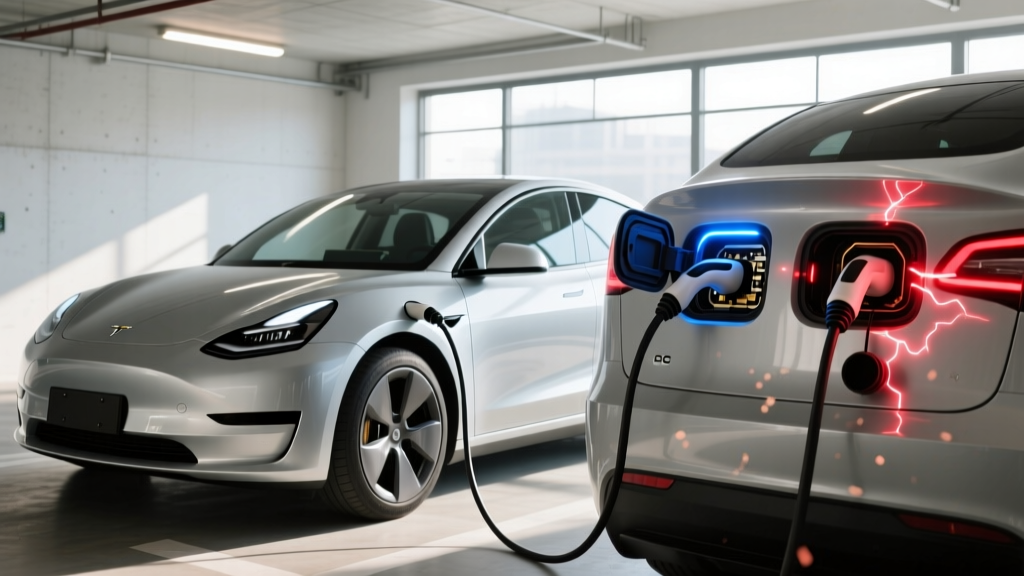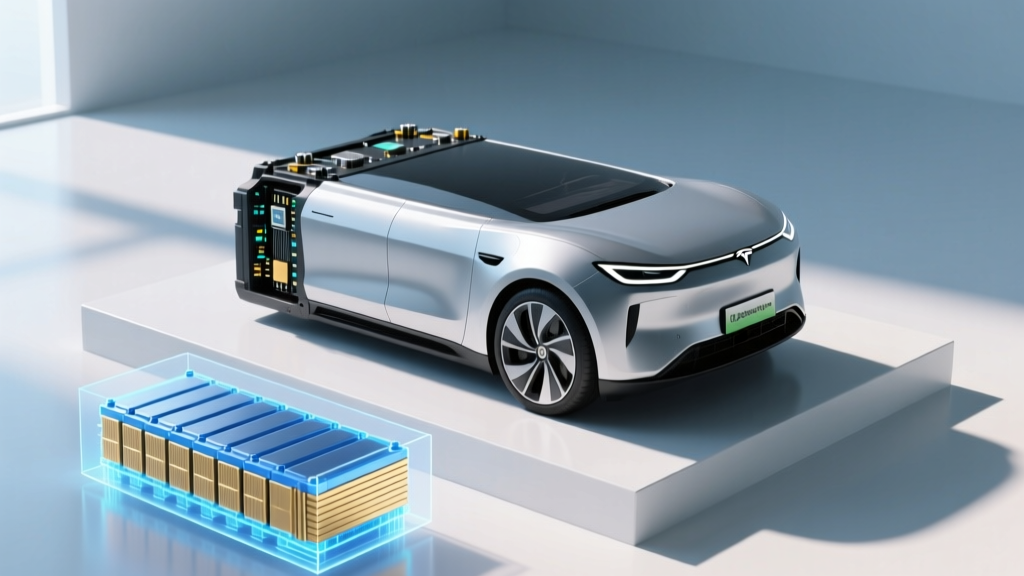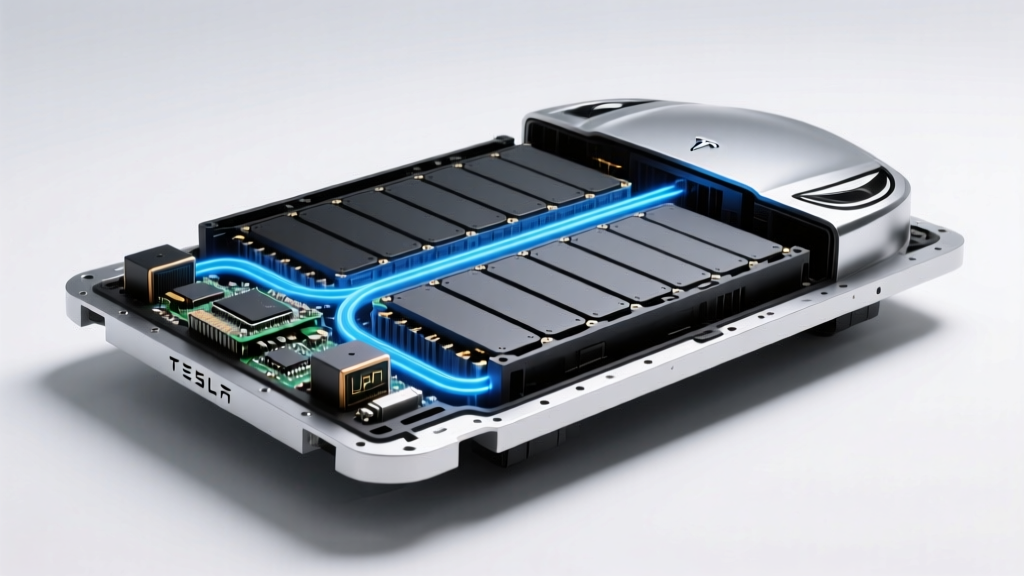
If you have been following EV battery headlines, you have likely seen the term ceramic battery — a shorthand for solid-state cells that use a ceramic electrolyte instead of the flammable liquid electrolyte found in today's lithium-ion packs. The promise is enormous: higher energy density, faster charging, and improved safety. But as of 2026, ceramic solid-state batteries remain in limited pilot production, not in any vehicle you can buy at a U.S. dealership.
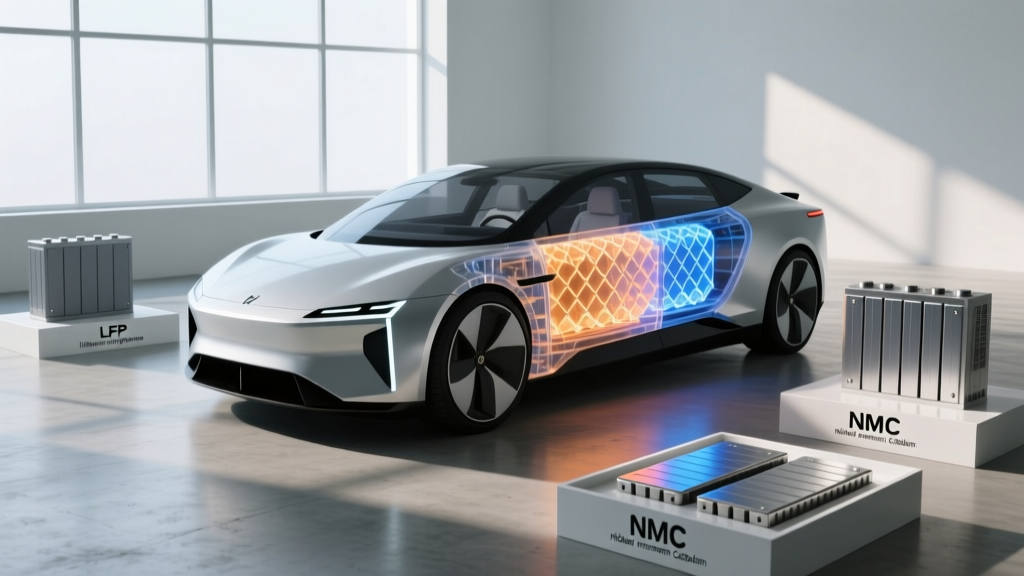
What you can buy right now are EVs powered by two mature, well-understood chemistries — LFP (lithium iron phosphate) and NMC/NCA (nickel manganese cobalt / nickel cobalt aluminum) — each with distinct trade-offs in range, longevity, cold-weather performance, and cost. Understanding today's batteries, how they degrade, what warranties actually cover, and how to monitor State of Health (SoH) is far more useful for a current purchase decision than chasing a technology still years from mass-market availability.
This guide covers the chemistry you can buy today, the ceramic battery timeline you should watch, and the data-driven ownership realities every EV shopper needs.
LFP vs NMC/NCA: The Chemistry You Can Actually Drive
Every EV sold in the U.S. in 2026 uses one of two cathode chemistries. The choice affects your real-world range, how the pack ages, how it performs in January, and what you pay at the dealership.
| Attribute | LFP (Lithium Iron Phosphate) | NMC / NCA (Nickel-Based) |
|---|---|---|
| Energy density (cell-level) | ~160–180 Wh/kg | ~230–300 Wh/kg |
| Typical cycle life | 3,000–5,000+ cycles | 1,000–2,000 cycles |
| Cold-weather range loss (20 °F) | ~30–40% reduction | ~20–30% reduction |
| Recommended daily SoC | 100% (no penalty) | 80% for daily; 100% for trips |
| Thermal runaway risk | Very low | Low (with BMS management) |
| Cobalt / nickel content | None | Significant |
| Relative pack cost (2026) | ~$90–110/kWh | ~$120–145/kWh |
| Notable 2026 U.S. applications | Tesla Model 3 RWD, Model Y RWD, standard-range Ford Mustang Mach-E | Hyundai Ioniq 5, Kia EV6, Chevrolet Equinox EV (long-range), BMW iX, Rivian R1S/R1T |
Which Is Better — and Why?
Neither chemistry is universally superior. The right choice depends on your driving pattern:
- Choose LFP if you charge at home nightly, mostly drive under 200 miles per day, live in a moderate climate, and want the longest possible calendar life with minimal SoC management. Tesla's standard-range models have used CATL-supplied LFP packs since 2021, and the data shows these packs retain capacity exceptionally well over 100,000+ miles.
- Choose NMC/NCA if you need maximum EPA range from a single charge, regularly drive in sub-freezing temperatures, or want the fastest DC fast-charging speeds (many NMC packs sustain 200–250 kW peak rates). The trade-off is slightly faster long-term degradation and a recommendation to avoid sitting at 100% SoC for extended periods.
How Long Do EV Batteries Actually Last?
The short answer, backed by fleet data: most EV traction batteries outlast the vehicles they power. The long answer requires looking at degradation curves.
Real-World Degradation Data
Battery degradation is not linear. Most lithium-ion packs experience a steeper capacity drop in the first 1–2 years (roughly 2–5%), then settle into a slow, linear decline of about 1–2% per year. Here is what the data shows across major platforms:
Typical Capacity Retention by Mileage (Fleet Averages)
- 25,000 miles / 2 years: 95–97% remaining (all chemistries)
- 50,000 miles / 4 years: 92–95% remaining (NMC); 95–98% remaining (LFP)
- 100,000 miles / 8 years: 85–92% remaining (NMC); 90–96% remaining (LFP)
- 150,000 miles / 10+ years: 80–88% remaining (NMC); 87–94% remaining (LFP)
Sources: Geotab fleet battery health study, Tesla Impact Reports, Recurrent Auto battery data.
These figures represent averages. Individual results vary based on climate, charging habits, and thermal management system quality. Vehicles with active liquid cooling — essentially every modern EV — outperform older passively-cooled packs (like early Nissan Leaf cells) by a wide margin.
When Does Degradation Become a Problem?
For most owners, it does not — at least not during typical ownership periods. A 2026 EV with an EPA range of 300 miles that loses 10% capacity over eight years still delivers 270 miles. That remains sufficient for 95% of daily driving. The point at which a battery becomes practically limiting — say, dropping below 70% capacity — typically occurs beyond 200,000 miles for modern, liquid-cooled packs.
What Does the EV Battery Warranty Actually Cover?
Federal law mandates a minimum battery warranty of 8 years / 100,000 miles for EVs sold in the U.S., with California Air Resources Board (CARB) states requiring 10 years / 150,000 miles. Most manufacturers exceed these minimums in meaningful ways.
| Vehicle | Warranty Period | Capacity Threshold | Notes |
|---|---|---|---|
| Tesla Model 3 / Model Y (LFP) | 8 yr / 120,000 mi | 70% retention | LFP packs historically exceed threshold by wide margin |
| Hyundai Ioniq 5 / Ioniq 6 | 10 yr / 100,000 mi | 70% retention | Among the longest coverage in the segment |
| Chevrolet Equinox EV / Blazer EV | 8 yr / 100,000 mi | 60% retention (Blazer); 70% (Equinox) | Verify specific trim terms on window sticker |
| Ford Mustang Mach-E / F-150 Lightning | 8 yr / 100,000 mi | 70% retention | Covers battery and hybrid/electric components |
| BMW iX / i4 | 8 yr / 100,000 mi | 70% retention | Includes high-voltage battery and related systems |
| Rivian R1S / R1T | 8 yr / 175,000 mi | 70% retention | Notably high mileage cap for the segment |
Critical fine print: Warranty coverage triggers only when measured capacity drops below the stated threshold — typically 70% of original capacity. A battery at 72% is not a warranty claim, even if you notice reduced range. The warranty covers defects and abnormal degradation, not the gradual, expected capacity loss that occurs with any electrochemical cell. Always review the specific warranty booklet for your vehicle; terms change by model year.
How Much Does an EV Battery Replacement Cost?
This is the question that generates the most anxiety — and the most misinformation. Let's separate the data from the fear.
| Vehicle | Battery Size (usable kWh) | Estimated Replacement Cost | Context |
|---|---|---|---|
| Tesla Model 3 RWD (LFP) | ~57.5 kWh | $10,000–$14,000 | LFP cell costs have dropped sharply; labor adds $1,500–$3,000 |
| Hyundai Ioniq 5 (NMC) | ~77.4 kWh | $14,000–$19,000 | Modular pack design may allow partial module replacement |
| Ford F-150 Lightning (extended) | ~131 kWh | $22,000–$30,000 | Largest consumer pack; highest raw material cost |
| Chevrolet Equinox EV | ~85 kWh | $13,000–$17,000 | Ultium platform designed for serviceability |
| BMW iX xDrive50 | ~105.2 kWh | $20,000–$28,000 | Premium segment; OEM parts pricing |
When is replacement typically needed? In practice, almost never during original ownership. The vehicles most likely to need out-of-warranty battery replacements are those approaching 200,000+ miles — an age at which many have been traded, sold, or retired for other reasons. The Recurrent Auto battery study found that fewer than 2% of EVs in their dataset of 15,000 vehicles required battery replacement, and most of those were covered under warranty.
Also worth noting: battery prices have fallen roughly 80% since 2013 on a per-kWh basis, according to BloombergNEF. By the time a 2026 EV actually needs a new pack in the 2030s, replacement costs will likely be substantially lower than today's estimates.
Factors That Accelerate Battery Degradation
Not all miles are equal when it comes to battery wear. These are the factors that measurably shorten pack life, ranked by impact:
- Frequent DC fast charging to high SoC: Regularly charging above 80% at DC fast stations generates sustained high temperatures inside cells. Occasional road-trip fast charging is fine; daily reliance on DCFC accelerates degradation by an estimated 1–3% over the pack's life versus exclusive Level 2 charging.
- Sustained high State of Charge: Letting an NMC battery sit at 100% SoC for days or weeks — especially in hot weather — stresses the cathode. LFP chemistry tolerates 100% storage far better.
- Extreme heat exposure: Ambient temperatures above 95 °F, combined with high SoC, are the single worst condition for lithium-ion longevity. Garage parking in hot climates measurably extends battery life.
- Deep discharge cycles: Routinely running the battery below 10% SoC stresses cells. The buffer at the bottom of the gauge (typically 2–5% hidden reserve) protects against true zero, but habitual deep cycling still adds wear.
- Cold-weather fast charging without preconditioning: Charging a cold battery at high power causes lithium plating on the anode — a permanent capacity loss mechanism. Always use your vehicle's preconditioning feature before DC fast charging in cold weather.
How to Maximize Battery Health
The practical prescription is straightforward: charge at home on Level 2 (240V, typically 7.2–11.5 kW) for daily use, set your charge limit to 80% for NMC or 100% for LFP, use DC fast charging for road trips without guilt, precondition before fast charging in cold weather, and avoid letting the car sit at extreme SoC levels for extended periods. Follow these guidelines and your pack will very likely outlive your ownership.
How to Check and Monitor Battery State of Health (SoH)
State of Health (SoH) is the percentage of original capacity your battery currently holds. A brand-new pack is 100% SoH; a pack that holds 75 kWh out of its original 82 kWh is at roughly 91% SoH.
Methods Available to Owners
- In-vehicle diagnostics: Some 2026 models — including newer Tesla software versions, Hyundai/Kia EVs with updated infotainment, and BMW iDrive — display a battery health percentage or degradation indicator in the settings menu. Check under "Battery" or "Energy" settings.
- OBD-II scanner apps: Third-party tools like OBDeleven, Carista, or EV-specific apps (such as Tessie for Teslas or ABRP with OBD adapters) can read SoH data from the battery management system (BMS). This is often more granular than what the dash displays.
- Dealer diagnostic report: Any authorized service center can pull a full battery health report. Request this during routine service, especially if you are evaluating a used EV purchase.
- Third-party services: Companies like Recurrent Auto offer free battery health reports that compare your pack's degradation to a fleet of identical vehicles — useful context for understanding whether your degradation is normal or anomalous.
For used-EV buyers: Always request a battery health report before purchase. A 2023 model with 40,000 miles showing 94% SoH is in excellent shape. The same car at 88% SoH may indicate abusive charging habits or a defect worth investigating under warranty.
Ceramic Batteries and Solid-State: What's Real and What's Ahead
Ceramic solid-state batteries replace the liquid electrolyte in conventional lithium-ion cells with a solid ceramic material. This eliminates flammability risk, enables the use of lithium-metal anodes (dramatically increasing energy density), and theoretically allows faster charging without the degradation associated with liquid electrolyte breakdown.
Current Status (2026)
As of 2026, no mass-production vehicle sold in the U.S. uses a ceramic solid-state battery. Here is where the major players stand:
- Toyota: Has announced a solid-state battery pilot for limited production vehicles, with a target of commercialization in the 2027–2028 timeframe. Specifics on U.S. availability, pricing, and which models remain unconfirmed. Treat all specs as preliminary.
- Samsung SDI: Supplying solid-state cells for prototype programs; mass production targeted for 2027–2029.
- QuantumScape: Continues to supply prototype cells to Volkswagen Group partners. Volume production timelines have shifted multiple times and remain unconfirmed for consumer vehicles.
- Nissan / Honda: Both have announced solid-state pilot lines, with commercial vehicles expected no earlier than 2028.
Realistic Expectations
The promised advantages of ceramic solid-state cells — 500+ mile range, 10-minute fast charging, 20-year lifespan — are compelling but remain unproven at mass-production scale and automotive price points. History suggests a pattern: solid-state batteries have been "five years away" for over a decade. The technology is genuinely advancing, but manufacturing yield, cost per kWh, and supply-chain scaling present enormous challenges.
For buyers making a decision in 2026, the practical advice is to evaluate vehicles on today's proven chemistry — LFP and NMC — rather than waiting for a technology that may not reach U.S. showrooms until 2029 or beyond at volume pricing. The EV you buy today will still be competitive when solid-state finally arrives, because charging infrastructure, software features, and vehicle design matter as much as cell chemistry.
Other Emerging Technologies to Watch
- Silicon-dominant anodes: Companies like Sila Nanotechnologies and Group14 are already supplying silicon-enhanced anode materials that boost energy density by 10–20% in some 2026 packs. This is shipping technology, not vaporware.
- Sodium-ion batteries: CATL and others have begun producing sodium-ion cells for lower-cost, shorter-range applications. Not yet in U.S. vehicles, but a potential game-changer for affordable city EVs if and when they arrive.
- Dry electrode manufacturing: Tesla's acquisition of Maxwell Technologies' dry electrode process is reducing cell manufacturing cost and energy consumption — a production innovation rather than a chemistry change, but one that lowers pack prices across the board.
Frequently Asked Questions
How long do EV batteries last in years and miles?
Modern liquid-cooled EV batteries typically retain 85–95% of original capacity at 100,000 miles and 80–90% at 150,000 miles, depending on chemistry and usage patterns. In calendar terms, most packs remain functional for 15–20 years before degrading to a point where range becomes limiting. LFP chemistry generally outlasts NMC in both cycle count and calendar aging.
How much does an EV battery cost to replace?
Out-of-warranty replacement costs in 2026 range from approximately $10,000 for a smaller LFP pack (Tesla Model 3 RWD) to $22,000–$30,000 for a large NMC pack (Ford F-150 Lightning extended range). However, battery replacement is rare — fewer than 2% of EVs require it, and most replacements occur under warranty coverage. Costs continue to decline year over year.
What does the battery warranty cover?
Federal law requires a minimum 8-year/100,000-mile battery warranty. The warranty covers capacity loss below a stated threshold (typically 70% of original capacity) and manufacturing defects. It does not cover normal, gradual degradation above the threshold, accident damage, or modifications. CARB states (including California, New York, and others) mandate 10-year/150,000-mile coverage.
How do I check my EV's battery health?
Check your vehicle's settings menu for a battery health indicator, use an OBD-II scanner app (OBDeleven, Tessie, or similar) to read BMS data, request a diagnostic report from your dealer, or use a third-party service like Recurrent Auto for fleet-comparison data. For used-EV purchases, always verify SoH before committing.
Is LFP or NMC better for my EV?
LFP offers longer cycle life, lower cost, no cobalt, and tolerance for daily 100% charging — ideal for commuters and home chargers. NMC delivers higher energy density (more range per kWh of battery weight) and better cold-weather performance — ideal for long-distance drivers and cold climates. Neither is universally better; the right choice depends on your driving pattern and climate.
Are ceramic solid-state batteries available in any 2026 EV?
No. As of 2026, no mass-production vehicle sold in the U.S. uses a ceramic solid-state battery. Toyota, Samsung SDI, QuantumScape, and others are in pilot or prototype stages, with commercial availability projected for 2027–2029 at the earliest. All published specs for these cells should be treated as preliminary and subject to change.
Does fast charging damage my EV battery?
Occasional DC fast charging — such as on road trips — causes negligible additional wear on a modern, liquid-cooled battery. Daily reliance on DC fast charging, especially to high SoC levels and in hot weather, can accelerate degradation by a small but measurable amount. For daily charging, Level 2 (home or workplace) at 7–11 kW is optimal for longevity.