Why CATL's Sodium-Ion Battery Matters for 2026 EV Buyers
For years, the EV battery conversation has centered on two lithium-ion chemistries: NMC (nickel manganese cobalt) and LFP (lithium iron phosphate). In 2026, a third option is entering mass production — CATL's sodium-ion battery, first previewed in 2021 and now reaching commercial-scale deployment in select Chinese-market vehicles and energy storage systems. If you've been searching for CATL sodium-ion battery availability 2026, the short answer is: it's here in limited applications, but not yet in most EVs sold in the United States.
This guide breaks down what sodium-ion technology actually offers, how it compares to the LFP and NMC packs already in millions of EVs on the road, and what current battery ownership really looks like — from degradation curves and warranty coverage to replacement costs and health-monitoring best practices.
CATL Sodium-Ion Batteries: 2026 Availability and What They Offer
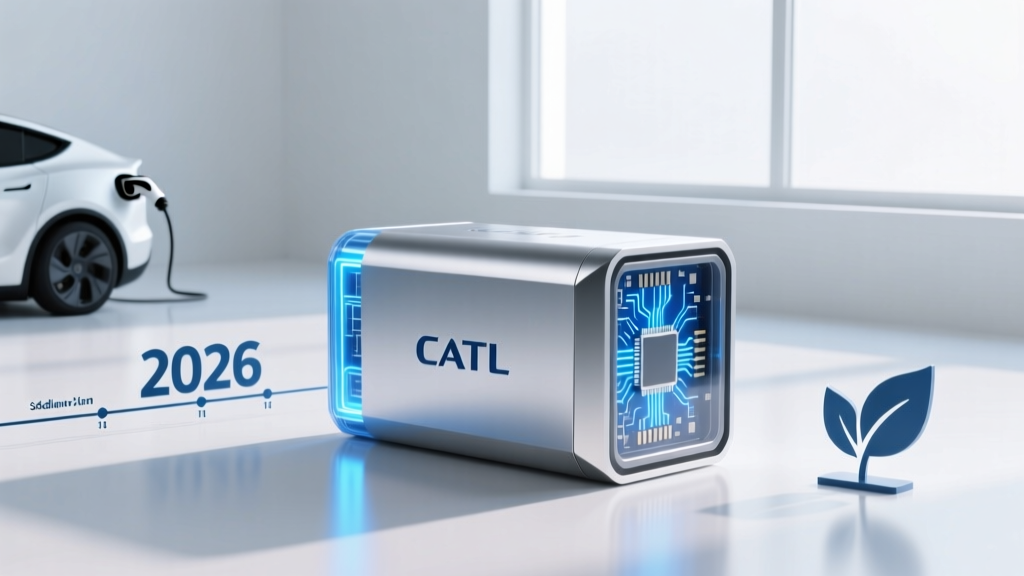
CATL (Contemporary Amperex Technology Co. Limited), the world's largest EV battery manufacturer, announced its first-generation sodium-ion cell in July 2021 with an energy density of 160 Wh/kg at the cell level. By 2026, CATL has scaled production and begun integrating sodium-ion packs into budget-oriented EVs — primarily through its partnership with Chery Automobile in China, where the technology targets the sub-¥100,000 (roughly $14,000) micro-EV and city-car segment.
Key specs of CATL's Gen-1 sodium-ion cell (2026 production):
- Energy density: ~160 Wh/kg (cell-level), compared to ~170-200 Wh/kg for LFP and ~250-300 Wh/kg for NMC
- Cold-weather performance: Retains over 90% capacity at -20°C (-4°F), significantly outperforming both LFP and NMC in freezing conditions
- Fast-charge capability: 10-80% in approximately 15 minutes under optimal thermal conditions
- Thermal stability: Superior to NMC; passes nail-penetration tests without thermal runaway
- Raw material advantage: Sodium is roughly 400x more abundant than lithium, eliminating dependence on lithium, cobalt, and nickel supply chains
The trade-off is energy density. A sodium-ion pack delivering the same range as a 60 kWh LFP pack would weigh approximately 15-25% more, making it best suited for compact and city EVs rather than long-range sedans or large SUVs. For US buyers, sodium-ion availability in 2026 is effectively zero in domestically sold vehicles — CATL's US-market footprint remains constrained by IRS §30D battery-sourcing requirements that exclude batteries with components from certain foreign entities of concern (FEOC), and CATL qualifies as such under current rules.
Battery Chemistry Showdown: LFP vs NMC vs Sodium-Ion
Understanding which chemistry powers your EV matters for range, longevity, charging behavior, and cold-weather usability. Here's how the three primary chemistries compare as of 2026:
| Attribute | NMC/NCA (Nickel-based) | LFP (Lithium Iron Phosphate) | Sodium-Ion (CATL Gen-1) |
|---|---|---|---|
| Energy density (cell-level) | 250–300 Wh/kg | 170–200 Wh/kg | ~160 Wh/kg |
| Cycle life (to 80% capacity) | 1,000–2,000 cycles | 3,000–5,000+ cycles | ~3,000+ cycles (estimated) |
| Cold performance (-20°C) | ~60–70% retention | ~50–60% retention | ~90%+ retention |
| Cost per kWh (pack-level, 2026) | $120–$145 | $80–$100 | $60–$80 (projected at scale) |
| Thermal stability | Moderate (requires BMS) | High | Very high |
| State-of-charge estimation | Linear voltage curve (easy) | Flat voltage curve (harder) | Moderate (steeper than LFP) |
| Typical EV applications | Long-range, performance | Standard-range, fleet, daily | Budget city EVs, storage |
| Key raw materials | Lithium, nickel, cobalt, manganese | Lithium, iron, phosphate | Sodium, iron, manganese |
LFP vs NMC — which is better? There's no universal winner. NMC delivers the highest energy density, making it the default for long-range vehicles like the Tesla Model S, Hyundai Ioniq 6 Long Range, and BMW iX. If you need 300+ miles of EPA range in a midsize sedan, NMC is still the practical choice. LFP sacrifices some range per kilogram but wins on cycle life (often 3-5x longer), cost, and thermal safety — which is why Tesla uses LFP in the Model 3 and Model Y Standard Range trims, and Ford uses it in the F-150 Lightning Standard Range. For daily commuting with home charging, LFP is arguably the more durable, lower-stress chemistry.
Sodium-ion enters as a budget alternative that trades range for extreme cold resilience, low cost, and supply-chain independence. If CATL or competitors bring sodium-ion to the US market post-2026 (likely through non-FEOC joint ventures or licensing), expect it first in entry-level models targeting the $20,000-$28,000 price bracket.
How Long Do EV Batteries Actually Last?
The fear that EV batteries need frequent, expensive replacement is one of the most persistent myths in the industry. Real-world degradation data tells a more reassuring story.
Typical lithium-ion EV battery degradation (aggregated fleet data):
- Year 1: ~2-5% capacity loss (initial formation loss)
- Years 2-5: ~1-2% per year (linear phase)
- Years 6-10: ~1-1.5% per year (gradual taper)
- At 100,000 miles: Most modern packs retain 88-94% of original capacity
- At 200,000 miles: Typical retention is 80-88%, depending on chemistry and usage
Data from Geotab's fleet study of over 10,000 EVs shows an average annual degradation rate of approximately 2.3% across all chemistries and conditions — meaning the average EV battery retains roughly 88% capacity after 5 years. LFP packs in temperate climates with moderate charging habits often exceed 90% retention at the 5-year mark.
The critical insight: most EV batteries will outlast the vehicle itself. A 2026 EV with a 300-mile EPA range and 85% capacity retention at year 10 still delivers ~255 usable miles — more than adequate for the vast majority of drivers. Complete battery failure (sudden, catastrophic loss) is extremely rare in modern packs with active thermal management.
Battery Warranty Terms: What's Actually Covered
Federal law mandates that EV battery warranties cover a minimum of 8 years or 100,000 miles (whichever comes first) in most states, and 10 years/150,000 miles in California Air Resources Board (CARB) states including California, New York, Massachusetts, and others. Here's how major manufacturers structure their coverage in 2026:
| Manufacturer | Warranty Term | Capacity Threshold | Coverage Details |
|---|---|---|---|
| Tesla (Model 3/Y LFP) | 8 yr / 100,000 mi | 70% retention | Defects + excessive degradation below threshold |
| Tesla (Model S/X NMC) | 8 yr / 150,000 mi | 70% retention | Defects + excessive degradation below threshold |
| Hyundai/Kia | 10 yr / 100,000 mi | 70% retention | Defects + degradation; transferable to 2nd owner (reduced term) |
| Ford | 8 yr / 100,000 mi | 70% retention | Defects + excessive degradation |
| GM (Ultium platform) | 8 yr / 100,000 mi | 70% retention | Defects + capacity loss below threshold |
| BMW | 8 yr / 100,000 mi | 70% retention | Defects + degradation; some models offer 8yr/125,000 mi |
| Rivian | 8 yr / 175,000 mi | 70% retention | Defects + excessive degradation |
What the warranty covers: Manufacturing defects, cell failures, and capacity degradation that falls below the stated threshold (typically 70% of original capacity). If your 80 kWh pack drops below 56 kWh usable capacity within the warranty period, the manufacturer must repair or replace it at no cost.
What it doesn't cover: Damage from accidents, flooding, improper modifications, or use outside manufacturer guidelines (e.g., persistent 100% SoC storage on NMC packs if the manual advises against it). Normal gradual degradation above the 70% threshold is considered expected wear and is not warrantable.
EV Battery Replacement Costs: The Real Numbers
Out-of-warranty battery replacement is the scenario that generates the most anxiety. Here's what it actually costs in 2026, based on manufacturer service data and independent repair shop estimates:
| Vehicle / Pack Size | Chemistry | Replacement Cost (parts + labor) | Typical Replacement Timeline |
|---|---|---|---|
| Tesla Model 3 Std Range (60 kWh) | LFP | $12,000 – $15,000 | Rarely needed within 15+ years |
| Tesla Model Y Long Range (75-82 kWh) | NMC | $14,000 – $18,000 | Rarely needed within 12-15 years |
| Hyundai Ioniq 5 (77.4 kWh) | NMC | $13,000 – $17,000 | Rarely needed within 12-15 years |
| Ford F-150 Lightning Ext Range (131 kWh) | NMC | $20,000 – $28,000 | Rarely needed within 12-15 years |
| Chevrolet Bolt EV (65 kWh) | NMC | $10,000 – $14,000 | Recall-replaced packs; otherwise 15+ years |
| Nissan LEAF (40-62 kWh) | NMC (passive cooling) | $8,000 – $12,000 | Earlier degradation possible; 10-12 years |
Context that matters: Pack-level battery prices have fallen from over $1,000/kWh in 2010 to roughly $80-$145/kWh in 2026, depending on chemistry. BloombergNEF's 2025 battery price survey confirms this downward trajectory, and sodium-ion cells are expected to push pack prices below $60/kWh at scale — which would bring a 60 kWh replacement pack below $5,000 in parts cost alone.
Additionally, module-level repair is increasingly viable. Many modern packs (including GM's Ultium and Hyundai's E-GMP platform) allow individual module replacement rather than full-pack swaps, reducing out-of-warranty repair costs by 40-60%. A single failed module might cost $1,500-$3,000 to replace versus $15,000+ for a complete pack.
Factors That Affect EV Battery Life — and How to Maximize It
Battery degradation is inevitable but highly variable. The same pack can lose 8% or 18% over five years depending on how it's treated. Here are the primary factors and evidence-based strategies to slow degradation:
1. State of Charge (SoC) habits:
- NMC packs: Avoid sustained storage at 100% or below 10%. Daily charging to 80-90% is optimal. Charge to 100% only before long trips and drive off promptly.
- LFP packs: Tesla and Ford recommend periodic 100% charges (weekly or bi-weekly) because LFP's flat voltage curve makes SoC estimation inaccurate without full-calibration cycles. Daily 100% is more acceptable on LFP than on NMC.
- Sodium-ion (future): Early CATL guidance suggests LFP-like behavior — less sensitivity to high SoC, but long-term data is still accumulating.
2. Fast-charging frequency:
- DC fast charging (50-350 kW) generates significant heat. Occasional use (road trips, 1-2 times per week) has minimal impact. Daily DC fast charging, especially without preconditioning, accelerates degradation by an estimated 1-3% per year versus Level 2 home charging.
- Always use battery preconditioning when navigating to a fast charger — most modern EVs do this automatically when a Supercharger or DC station is set as your navigation destination.
3. Temperature extremes:
- Sustained exposure to ambient temperatures above 95°F (35°C) accelerates electrolyte decomposition. Garage parking in hot climates measurably extends pack life.
- Extreme cold doesn't cause permanent damage but temporarily reduces available capacity. Charging in sub-freezing temperatures without preconditioning can cause lithium plating on NMC anodes — a permanent degradation mechanism. Most EVs block or severely limit DC fast charging below 32°F until the pack warms.
4. Depth of discharge:
- Shallow cycles (e.g., 40-80%) are gentler than deep cycles (5-100%). You don't need to obsess over this — modern BMS systems manage it automatically — but avoiding frequent 0% events (running the pack completely dead) is wise.
How to Check and Monitor Your Battery's State of Health (SoH)
State of Health (SoH) is the percentage of your battery's original usable capacity that remains available. A new 75 kWh pack at 92% SoH effectively holds ~69 kWh. Here's how to monitor it:
- In-vehicle displays: Some EVs (notably the Nissan LEAF with its 12-bar capacity gauge, and Tesla via the service menu) show degradation indicators. Tesla owners can access SoH data through the hidden service mode or via the TeslaFi/third-party apps that read vehicle telemetry.
- OBD-II diagnostic tools: Devices like the OBDLink MX+ paired with apps such as LeafSpy (Nissan), ABRP (generic), or Tesla-specific tools can read the BMS-reported SoH figure directly.
- Dealer diagnostic reports: Request a battery health check during scheduled service. Most manufacturers can print a SoH report showing current vs. original capacity.
- Manual calculation: Track your kWh used per full charge cycle. If your 77.4 kWh pack (Hyundai Ioniq 5) originally accepted 74 kWh from 5-100% and now accepts only 66 kWh, your SoH is roughly 89%.
- Range tracking: Compare your current EPA-equivalent range (miles per kWh × current usable kWh) to the original sticker. A consistent 10% range drop over 3 years with similar driving conditions suggests ~10% degradation — though seasonal temperature effects must be factored out.
Emerging Battery Tech: Solid-State, Silicon Anode, and What's Next
Beyond sodium-ion, several next-generation technologies are in development. Here's a realistic, no-hype assessment of their timelines:
- Solid-state batteries: Toyota, Samsung SDI, and QuantumScape are targeting limited production between 2027-2030. Solid-state cells promise 350-500 Wh/kg energy density (potentially 500+ mile EVs) and faster charging. However, manufacturing cost and yield challenges remain unsolved at scale. Expect initial deployment in premium, low-volume vehicles — not mainstream models — before 2030. Not currently available in any production EV.
- Silicon-dominant anodes: Companies like Sila Nanotechnologies and Group14 are replacing graphite anodes with silicon composites, boosting energy density by 20-40%. Mercedes-Benz's G-Class electric (2025+) uses silicon-anode cells from Sila. Expect broader adoption by 2027-2028 as production scales. Limited availability now; expanding.
- Lithium manganese iron phosphate (LMFP): An evolution of LFP adding manganese for ~15-20% higher energy density while retaining LFP's cost and safety advantages. CATL and Gotion are shipping LMFP cells in 2025-2026. Expect LMFP to become the dominant "standard-range" chemistry by 2028-2029. Entering production now.
- Sodium-ion (2nd generation): CATL has stated it aims for 200 Wh/kg in Gen-2 sodium-ion cells, which would make the chemistry viable for mid-range vehicles (250-300 mile EPA). Timeline: 2027-2029 at earliest. Announced; not yet in production.
For buyers in 2026, these technologies are context — not purchasing factors. Today's LFP and NMC packs are mature, well-understood, and backed by comprehensive warranties. The best battery is the one that matches your driving pattern, climate, and budget right now.
Frequently Asked Questions
How long do EV batteries last in years and miles?
Modern liquid-cooled EV batteries (LFP and NMC) typically retain 80-90% capacity after 10 years or 150,000-200,000 miles under normal use. Most packs will functionally outlast the vehicle they're installed in. The 8-year/100,000-mile federal warranty minimum provides a strong baseline; many packs exceed this by a wide margin.
How much does it cost to replace an EV battery?
Full pack replacement costs range from approximately $8,000 for a smaller pack (Nissan LEAF, 40 kWh) to $28,000 for the largest packs (Ford F-150 Lightning Extended Range, 131 kWh). Most common mid-size packs (60-80 kWh) fall in the $12,000-$18,000 range including labor. However, replacement is rarely needed — the vast majority of EVs are retired or sold before the pack fails. Module-level repairs can reduce costs by 40-60%.
What does the EV battery warranty cover?
Manufacturer battery warranties cover defects and capacity degradation below a specified threshold — typically 70% of original capacity — for 8 years/100,000 miles (or 10 years/100,000-150,000 miles in CARB states and for certain brands). If your battery drops below the threshold within the warranty period, the manufacturer replaces or repairs it at no cost. Warranties do not cover accident damage, misuse, or normal gradual degradation above the threshold.
How do I check and maximize my EV battery health?
Monitor SoH through your vehicle's service menu, OBD-II diagnostic tools, dealer health reports, or by tracking kWh accepted per charge cycle. To maximize longevity: charge NMC packs to 80-90% daily (100% only for trips), charge LFP packs to 100% periodically for calibration, minimize daily DC fast charging, precondition before fast charging, avoid sustained storage at extreme SoC levels, and garage-park in hot climates.
LFP vs NMC — which battery chemistry is better for me?
Choose NMC if you need maximum range (300+ miles EPA) in a larger or performance-oriented vehicle, and you're willing to manage SoC more carefully (avoiding sustained 100%). Choose LFP if you prioritize longevity, lower cost, thermal safety, and daily-driver convenience (regular 100% charging is acceptable). For most commuters with home charging and daily drives under 60 miles, LFP is the lower-stress, longer-lasting option. NMC remains necessary for long-range and towing applications.
Will CATL sodium-ion batteries be available in US EVs in 2026?
Not in any meaningful volume. CATL's sodium-ion packs are entering Chinese-market budget EVs in 2026, but US availability is blocked by FEOC sourcing rules under IRS §30D clean vehicle credit requirements. If sodium-ion reaches the US market, it will likely be through non-CATL manufacturers or licensed production — and not before 2028 at the earliest.