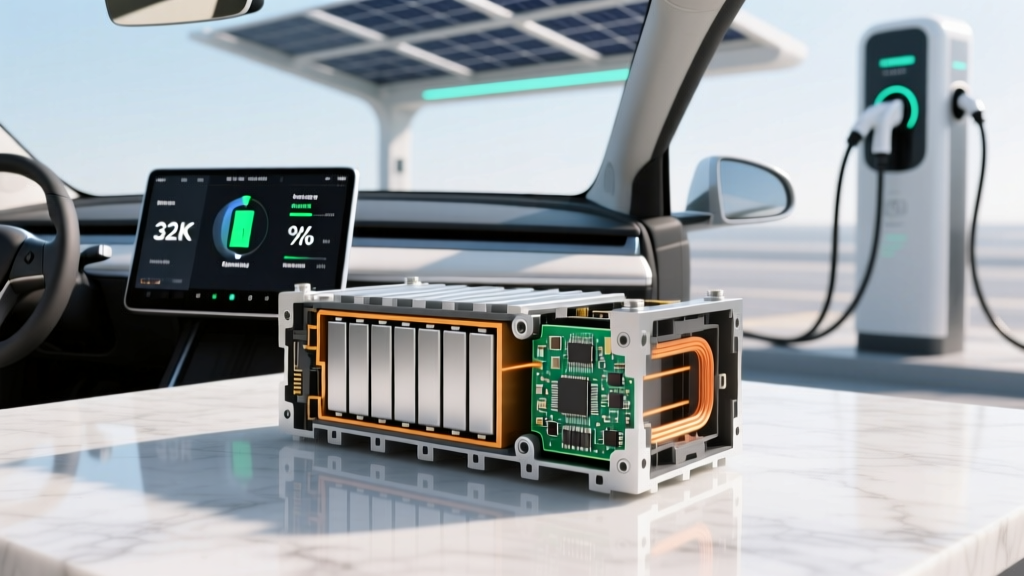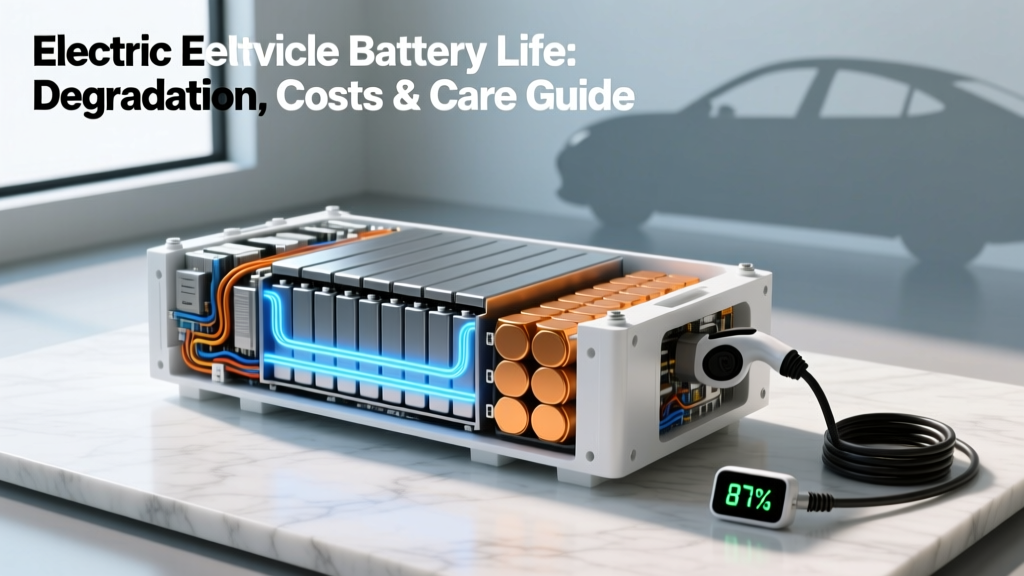
If you have been following EV battery news, you have likely seen the term CATL sodium battery surface repeatedly since the Chinese battery giant first announced its first-generation sodium-ion cells in 2021 and began shipping commercial packs in 2023–2024. By 2026, sodium-ion chemistry has moved from lab curiosity to real production cells — but almost entirely in the Chinese domestic market, in small city cars and energy-storage systems. For U.S. EV buyers, the bigger question is practical: how does sodium-ion stack up against the lithium chemistries you can actually buy today, and when — or if — will it arrive in vehicles sold stateside?
This guide breaks down CATL's sodium-ion technology against the two dominant lithium chemistries (LFP and NMC/NCA), covers real degradation data, warranty terms, replacement costs, and the battery-care habits that actually move the needle on longevity.
What Is a CATL Sodium-Ion Battery?
Sodium-ion batteries replace lithium in the cathode and electrolyte with sodium, an element that is roughly 1,000 times more abundant in the Earth's crust than lithium and can be sourced from soda ash or seawater nearly anywhere on the planet. CATL's first-generation sodium-ion cell, announced in mid-2021, delivered an energy density of approximately 160 Wh/kg at the cell level — lower than modern NMC (~230–260 Wh/kg) and roughly on par with older LFP cells (~150–170 Wh/kg). CATL has stated it targets 200 Wh/kg in subsequent generations.
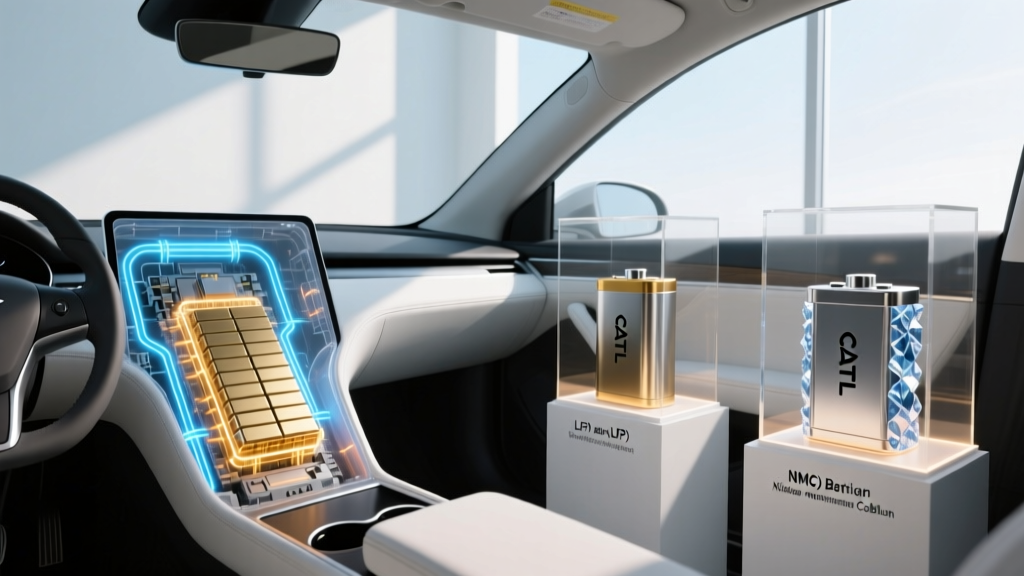
The AB battery pack — CATL's hybrid architecture that interleaves sodium-ion and lithium-ion cells in a single pack — is designed to offset sodium's lower energy density by letting the lithium cells carry the bulk of range while the sodium cells contribute superior cold-weather performance and fast-charge acceptance. CATL claims the sodium cells retain over 90% of their capacity at −20 °C (−4 °F), a figure that neither LFP nor NMC can match without aggressive thermal management.
As of 2026, CATL sodium-ion packs are in production vehicles in China — notably in certain Chery and JAC city EVs — but no sodium-ion EV is currently sold or announced for the U.S. market. U.S. buyers choosing a battery chemistry in 2026 are still deciding between LFP and NMC/NCA.
LFP vs NMC/NCA vs Sodium-Ion: Chemistry Trade-Offs
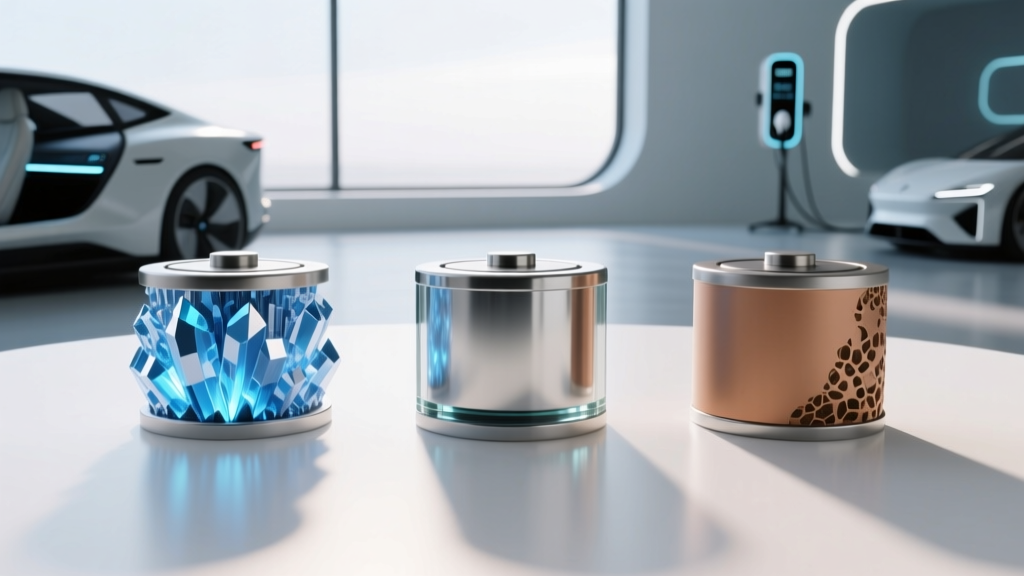
Every EV battery is a compromise among energy density, cycle life, cost, safety, and temperature tolerance. Here is how the three chemistries compare on the metrics that matter to owners:
| Metric | NMC / NCA | LFP (LiFePO₄) | Sodium-Ion (CATL Gen 1) |
|---|---|---|---|
| Cell energy density | 230–260 Wh/kg | 150–180 Wh/kg | ~160 Wh/kg |
| Pack energy density | 160–190 Wh/kg | 130–160 Wh/kg | ~140 Wh/kg (est.) |
| Typical cycle life | 1,000–2,000 cycles | 3,000–6,000+ cycles | 3,000–5,000 cycles (claimed) |
| Cold performance (−20 °C capacity retention) | ~70–75% | ~60–70% | >90% |
| Thermal runaway risk | Moderate | Very low | Very low |
| Raw-material cost pressure | High (Li, Co, Ni) | Moderate (Li, Fe, P) | Low (Na, Fe, Mn — no Li) |
| Fast-charge acceptance | Good (peak 250–350 kW) | Good (peak 170–250 kW) | Excellent (15-min 10–80% claimed) |
| Current U.S. vehicle availability | Wide | Growing (Tesla, Ford, Rivian base trims) | None as of 2026 |
Key takeaway: NMC/NCA wins on energy density — meaning more range in a lighter, smaller pack — which is why it powers most long-range and performance EVs. LFP wins on cycle life, safety, and cost, making it the default for standard-range models where the slightly heavier pack is an acceptable trade-off. Sodium-ion's edge is cold-weather performance and raw-material independence, but its lower energy density confines it to shorter-range applications until cell-level Wh/kg improves.
How Long Do EV Batteries Actually Last?
The fear that an EV battery will need a $20,000 replacement at 100,000 miles is largely a myth carried over from early-generation packs. Real-world data from fleets and long-term owners tells a different story.
Real-World Degradation Data Points:
- Tesla Model 3/Y (NMC/NCA): Tesla's 2023 Impact Report showed an average of ~12% capacity loss at 150,000 miles across the fleet, with the degradation curve flattening significantly after the first 30,000 miles.
- Tesla Model 3 Standard Range (LFP): LFP packs show minimal measurable degradation in the first 50,000 miles; many owners report >95% State of Health (SoH) at 60,000 miles.
- Nissan Leaf (early passive-cooled NMC): The outlier — 2011–2017 Leafs with air-cooled packs in hot climates saw 20–30% loss by 80,000 miles, underscoring that thermal management matters more than chemistry alone.
- Chevrolet Bolt EV (NMC, liquid-cooled): Post-recall replacement packs show <5% degradation at 50,000 miles in fleet data.
- Hyundai Ioniq 5 / Kia EV6 (NMC, liquid-cooled, 800V): Early data (2022–2025 models) indicates ~5–8% loss at 60,000 miles under mixed driving and DC fast-charging use.
The general pattern: modern liquid-cooled packs lose roughly 5–10% capacity in the first 100,000 miles, then degrade at a much slower rate. Most EV batteries will outlast the vehicle's body and interior. A total pack failure is exceedingly rare outside of manufacturing defects (which warranties cover).
What Does the Battery Warranty Actually Cover?
Federal law in the U.S. mandates that EV batteries carry a minimum warranty of 8 years / 100,000 miles (10 years / 150,000 miles in California Air Resources Board states). Most manufacturers exceed this baseline. Here is how major warranties compare:
| Manufacturer / Model | Warranty Period | Capacity Retention Threshold |
|---|---|---|
| Tesla Model 3 RWD (LFP) | 8 yr / 100,000 mi | 70% |
| Tesla Model 3 Long Range (NMC) | 8 yr / 120,000 mi | 70% |
| Ford Mustang Mach-E (NMC) | 8 yr / 100,000 mi | 70% |
| Hyundai Ioniq 5 (NMC) | 10 yr / 100,000 mi | 70% |
| Chevrolet Equinox EV (NMC) | 8 yr / 100,000 mi | 70% |
| Rivian R1T / R1S (NMC) | 8 yr / 175,000 mi | 70% |
| BMW i4 / iX (NMC) | 8 yr / 100,000 mi | 70% |
The 70% retention threshold is the industry standard trigger. If your battery's usable capacity falls below 70% of its original kWh within the warranty window, the manufacturer will repair or replace it — typically by swapping in a refurbished pack, not a brand-new one. In practice, very few modern liquid-cooled packs hit this threshold within the warranty period. Data from fueleconomy.gov and long-term fleet studies consistently show 80–90% retention at the 8-year mark for thermally managed packs.
How Much Does an EV Battery Replacement Cost?
Out-of-warranty battery replacement is the single biggest cost anxiety for EV buyers — and the one most likely to be overstated in headlines. Here are actual and estimated replacement costs by vehicle category:
| Vehicle / Pack Size | Battery kWh | Replacement Cost (parts + labor) | Typical Need Trigger |
|---|---|---|---|
| Chevrolet Bolt EV | 65 kWh | $14,000–$16,000 | Defect / physical damage (rare) |
| Tesla Model 3 Standard Range | 60 kWh (LFP) | $12,000–$15,000 | Very rare within 200k mi |
| Tesla Model Y Long Range | 75 kWh (NMC) | $16,000–$20,000 | Very rare within 200k mi |
| Ford Mustang Mach-E ER | 91 kWh (NMC) | $18,000–$22,000 | Very rare within 200k mi |
| Hyundai Ioniq 5 | 77.4 kWh (NMC) | $15,000–$19,000 | Very rare within 200k mi |
| Mercedes EQS | 108 kWh (NMC) | $25,000–$32,000 | Very rare within 200k mi |
Two critical context points: First, most EV batteries never need full replacement during the vehicle's useful life. Pack-level failures are usually isolated module or cell-group issues, and many shops now perform module-level repairs for $2,000–$5,000 rather than a full swap. Second, battery cell prices have continued to fall — BloombergNEF reports pack-level prices averaging below $120/kWh in 2025, down from $200+/kWh just a few years ago. If you do need a replacement in 2032, it will almost certainly cost less than today's estimates.
Factors That Actually Affect Battery Life
Not all miles are equal when it comes to degradation. The following factors have the most measurable impact on long-term State of Health:
Battery Care Checklist — Maximize Your Pack's Lifespan
- Limit DC fast-charging frequency. Occasional road-trip fast charging is fine, but daily 150+ kW DC sessions accelerate degradation by ~1–3% over 100,000 miles compared to primarily Level 2 home charging. The heat generated at high C-rates stresses cell chemistry over time.
- Avoid sustained 100% State of Charge. For NMC/NCA packs, daily charging to 80% and only going to 100% for road trips measurably extends cycle life. LFP packs are an exception — manufacturers like Tesla recommend periodic 100% charges for LFP to allow the battery management system (BMS) to recalibrate cell balancing.
- Don't let the pack sit at 0% for extended periods. A deeply depleted pack left unplugged for weeks can suffer irreversible copper-dissolution damage. If storing an EV, leave it at ~50% SoC plugged into a Level 1 or Level 2 charger.
- Precondition in extreme cold. Using the vehicle's preconditioning feature (most EVs offer this via the app) warms the pack before driving and before DC fast charging, reducing lithium plating risk and improving charge acceptance.
- Park in shade or a garage in extreme heat. Sustained high ambient temperatures (above 95 °F / 35 °C) accelerate calendar degradation even when the vehicle is not driven. Liquid-cooled packs handle this better than passively cooled ones, but garage parking still helps.
- Use the vehicle regularly. Calendar aging is a real factor — a battery that sits unused degrades at a similar rate to one in moderate use. Driving and cycling the pack keeps the BMS active and cells balanced.
How to Check Your Battery's State of Health
State of Health (SoH) is expressed as a percentage: a brand-new pack is 100% SoH; a pack that can now hold only 85% of its original kWh capacity is at 85% SoH. Here is how to monitor it:
- In-vehicle displays: Some EVs (notably the Nissan Leaf with its 12-bar health indicator, and newer Hyundai/Kia models with SoH readouts in the service menu) provide a built-in SoH estimate. Tesla does not natively display SoH but shows estimated range at full charge, which you can compare to the original EPA figure.
- OBD-II diagnostic apps: Tools like OBD2 scanners paired with apps such as Leaf Spy (Nissan), TeslaFi or Tessie (Tesla), or Car Scanner (general) can read BMS-reported SoH, cell voltage deltas, and pack temperature data directly.
- Dealer diagnostic reports: Any authorized service center can pull a full battery health report during a service visit. Request this proactively if you are approaching the warranty threshold and want documentation.
- Charge-log analysis: If you track your charging sessions (via your home charger's app or a service like Recurrent), you can estimate SoH by comparing the kWh added from a known SoC% to 100% against the pack's original usable capacity.
According to data aggregated by Recurrent Auto, the average 3-year-old EV in their dataset shows an SoH of approximately 93–96%, well within warranty thresholds.
Emerging Battery Tech: Solid-State, Silicon Anode, and What Comes Next
Sodium-ion is one of several next-generation chemistries in development. Here is a realistic timeline for the technologies most likely to reach production vehicles:
- Solid-state batteries: Toyota, Samsung SDI, and QuantumScape have all announced pilot production, but no mass-market solid-state EV is on sale as of 2026. Toyota has targeted 2027–2028 for limited deployment in Japan, with U.S. availability likely 2029 or later. Solid-state promises 350–500 Wh/kg cell density and faster charging, but manufacturing yield and cost remain unsolved at scale. Treat any "solid-state EV" claim before 2028 with skepticism.
- Silicon-dominant anodes: Companies like Sila Nanotechnologies and Group14 are supplying silicon-carbon anode materials that boost energy density by 10–20% over graphite. These are already in limited production (e.g., Mercedes G 580 EQG option) and will spread to more models through 2027–2028.
- CATL condensed-matter battery: Announced in 2023 with a claimed 500 Wh/kg cell density, targeted at aviation and high-end EVs. No confirmed U.S. vehicle deployment as of 2026.
- Sodium-ion expansion: CATL, HiNA, and Faradion (Reliance) are scaling sodium-ion production. If sodium cell density reaches 200 Wh/kg in a second-generation cell, it becomes viable for 200–250 mile city EVs globally — but U.S. market entry depends on trade policy, supply-chain localization, and automaker adoption decisions that remain uncertain.
The honest assessment: incremental improvements in LFP and NMC — better electrolytes, silicon-blend anodes, improved cell-to-pack integration — will deliver more near-term range and cost gains than any single breakthrough chemistry. The battery in the EV you buy today is already very good, and it will almost certainly outlast the car around it.
Frequently Asked Questions
How long do EV batteries last in years and miles?
Modern liquid-cooled EV batteries typically retain 80–90% of their original capacity after 150,000 miles and 10+ years of use. Many will outlast 200,000 miles before reaching the 70% capacity threshold that triggers a warranty claim. Early-generation passively cooled packs (2011–2017 Nissan Leaf) degraded faster, but that design is no longer in production.
How much does it cost to replace an EV battery?
Full pack replacement costs range from roughly $12,000 for a Tesla Model 3 LFP pack to $32,000 for a Mercedes EQS — but full replacements are extremely rare. Most out-of-warranty issues are resolved with module-level repairs costing $2,000–$5,000. Cell prices continue to decline, so future replacements will likely cost less than current estimates.
What does the EV battery warranty cover?
All U.S.-market EV batteries carry a minimum 8-year/100,000-mile warranty (10 years/150,000 miles in CARB states) against capacity loss below 70% of original. This covers defects and abnormal degradation. It does not cover damage from accidents, flooding, or unauthorized modifications. Check IRS and manufacturer documentation for how battery replacement interacts with tax-credit eligibility if you purchase a used EV.
How do I check and maximize my battery's health?
Monitor SoH through your vehicle's service menu, OBD-II apps, or dealer diagnostics. Maximize longevity by favoring Level 2 home charging over daily DC fast charging, keeping NMC packs between 20–80% SoC for daily use, preconditioning in cold weather, and avoiding prolonged storage at 0% or 100% charge. LFP packs should be charged to 100% periodically for BMS calibration.
LFP vs NMC — which chemistry is better?
Neither is universally better; the right choice depends on your priorities. Choose NMC/NCA if you need maximum range (300+ miles) or tow frequently — its higher energy density means a lighter, more compact pack. Choose LFP if you want the longest cycle life, lowest cost, and best thermal safety, and can accept a slightly shorter range or heavier pack. For most daily commuters who charge at home, LFP is the pragmatic choice in 2026.
Will CATL sodium-ion batteries be available in U.S. EVs?
Not in the near term. As of 2026, CATL sodium-ion packs are in production in Chinese-market city EVs and stationary storage, but no U.S.-market vehicle has been announced with sodium-ion chemistry. Trade policy, Inflation Reduction Act battery-sourcing requirements, and the need for localized supply chains make U.S. adoption unlikely before 2028–2029 at the earliest.