The CATL Million Mile Battery: Separating Hype From Hardware
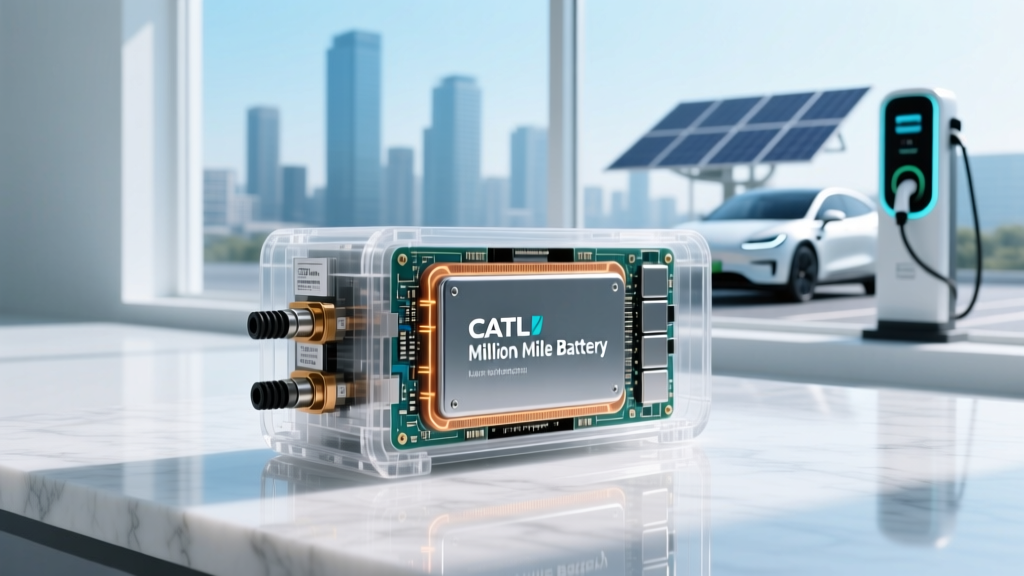
When Contemporary Amperex Technology Co. Limited (CATL) announced a battery capable of 16 years and 1.24 million miles (2 million kilometers) of service life, the EV world took notice. Dubbed the "million mile battery," it promised to outlast virtually every other component in a vehicle — and potentially the vehicle itself. But what does that claim actually mean for someone buying an EV in 2026? And how does it compare to the batteries already powering millions of electric cars on the road today?
The short answer: CATL's million-mile cell is real hardware, not vaporware. It's a lithium iron phosphate (LFP) cell designed for extreme cycle durability, primarily targeting commercial fleets, energy storage, and high-mileage applications. But understanding its significance requires understanding battery chemistry, degradation physics, and the gap between lab-rated cycle life and real-world ownership. Let's build that understanding from the ground up.
LFP vs. NMC: The Chemistry Trade-Off That Defines Battery Life
Every EV battery uses a specific cathode chemistry, and the two dominant families in 2026 are LFP (lithium iron phosphate) and NMC/NCA (nickel manganese cobalt / nickel cobalt aluminum). The CATL million mile battery is LFP-based, which is central to its longevity claim.
| Attribute | LFP (LiFePO₄) | NMC / NCA |
|---|---|---|
| Energy Density (cell-level) | 160–200 Wh/kg | 230–300 Wh/kg |
| Typical Cycle Life (to 80% SoH) | 3,000–6,000+ cycles | 1,000–2,500 cycles |
| Cold-Weather Performance | Moderate (reduced below 14°F / -10°C) | Better low-temp discharge |
| Thermal Stability / Safety | Excellent (higher runaway threshold ~518°F) | Good (lower thermal runaway threshold) |
| Cost per kWh (cell) | ~$55–$75 | ~$80–$110 |
| Cobalt / Nickel Content | None | Significant (supply-chain / ethical concern) |
| Typical Use in 2026 | Tesla Model 3 RWD, BYD Blade, standard-range models, commercial | Long-range, performance, large SUV/truck packs |
The core trade-off: NMC packs more energy into less weight and volume, making it the default for 300+ mile range vehicles where pack size and mass matter. LFP sacrifices some energy density but delivers dramatically longer cycle life, better safety margins, and lower cost. For a vehicle driven 15,000 miles per year, even an NMC battery rated at 1,500 cycles translates to roughly 300,000+ miles before reaching 80% capacity — already far more than most owners will drive.
CATL's million-mile cell pushes LFP cycle life to an extreme: rated for approximately 4,000–6,000+ charge-discharge cycles while retaining 80% of original capacity. At an average of 250 miles per full cycle equivalent, that math yields the headline 1.24-million-mile figure. In practice, most passenger vehicles will never accumulate enough cycles to reach this limit.
How Long Do EV Batteries Actually Last? Real Degradation Data
Battery degradation is not linear. Most lithium-ion packs experience a steeper capacity drop in the first 1–2 years (the "break-in" phase), then settle into a slow, nearly linear decline for the remainder of their life. Here's what the data shows across major chemistries:
- Tesla Model 3/Y (NMC, 2019–2023): ~5–8% loss at 100,000 miles; ~10–13% at 200,000 miles (Tesla Impact Report)
- Chevrolet Bolt EV (NMC, 2017–2023): ~6–10% loss at 100,000 miles (owner-reported fleet data)
- Tesla Model 3 RWD (LFP, 2022–2025): ~3–5% loss at 50,000 miles; degradation curve flattens significantly
- BYD Blade Battery (LFP): Rated 5,000+ cycles to 80% SoH in lab testing; real-world fleet data still maturing
- Hyundai Ioniq 5 (NMC, 2022–2025): ~4–7% loss at 60,000 miles based on owner community tracking
For context, the average US driver covers about 14,000 miles per year. At that rate, a 200,000-mile battery life represents over 14 years of driving. The vast majority of EV batteries will outlast their vehicles' useful economic life — a fact that gets lost in replacement-cost headlines.
The CATL million-mile cell, if deployed in a passenger vehicle, would theoretically retain 80% capacity after 1.24 million miles. That's roughly 88 years at the US average driving rate. The practical implication isn't that you'll drive a million miles — it's that even aggressive use (ride-hailing, delivery fleets, high-mileage commuting) won't meaningfully degrade the pack within the vehicle's structural lifespan.
What Does the Battery Warranty Actually Cover?
Federal law mandates that EV battery warranties cover a minimum of 8 years / 100,000 miles (in California and CARB-adopting states, it's 10 years / 150,000 miles). But the details matter — specifically the capacity retention threshold that triggers a warranty claim.
| Manufacturer | Warranty Term | Capacity Threshold | Notes |
|---|---|---|---|
| Tesla (Model 3/Y LFP) | 8 yr / 100,000 mi | 70% retention | Covers defects + capacity below threshold |
| Tesla (Model 3/Y Long Range) | 8 yr / 120,000 mi | 70% retention | Higher mileage for NMC packs |
| Hyundai / Kia | 10 yr / 100,000 mi | 70% retention | Among the longest terms in the US market |
| Ford (Mach-E, F-150 Lightning) | 8 yr / 100,000 mi | 70% retention | Covers battery + electric powertrain components |
| GM (Ultium platform) | 8 yr / 100,000 mi | 70% retention | Applies across Cadillac, Chevy, GMC EVs |
| BYD (global markets) | 8 yr / 100,000 mi (varies by market) | 70% retention | Blade LFP cells; some markets offer extended |
What triggers a claim: If your battery's usable capacity drops below 70% of its original kWh rating within the warranty period, the manufacturer must repair or replace it — typically with a refurbished pack that meets the threshold, not necessarily a brand-new unit. Manufacturing defects (bad cells, BMS failures, coolant leaks into the pack) are covered regardless of capacity.
What's not covered: Gradual degradation above the 70% threshold is considered normal wear. Damage from accidents, flooding, or aftermarket modifications voids coverage. Using non-approved chargers generally does not void the warranty, but manufacturers may scrutinize DC fast-charging patterns if a defect claim arises.
EV Battery Replacement Cost: What You'd Actually Pay
If your battery fails outside warranty — or you're buying a used EV with a degraded pack — replacement cost is the number that generates anxiety. Here's the current landscape:
| Vehicle / Pack Size | Battery Chemistry | Replacement Cost (Parts + Labor) | Typical Need Scenario |
|---|---|---|---|
| Tesla Model 3 RWD (~60 kWh) | LFP | $10,000–$14,000 | Rare before 200k+ mi; accident / defect |
| Tesla Model Y LR (~75 kWh) | NMC | $13,000–$18,000 | Rare before 200k+ mi |
| Chevrolet Bolt EV (~65 kWh) | NMC | $14,000–$16,000 | Post-recall replacements; original packs improved |
| Ford F-150 Lightning Ext. (~131 kWh) | NMC | $22,000–$30,000 | Large pack = higher cost; rare need |
| Hyundai Ioniq 5 (~77 kWh) | NMC | $14,000–$19,000 | Rare before 200k+ mi |
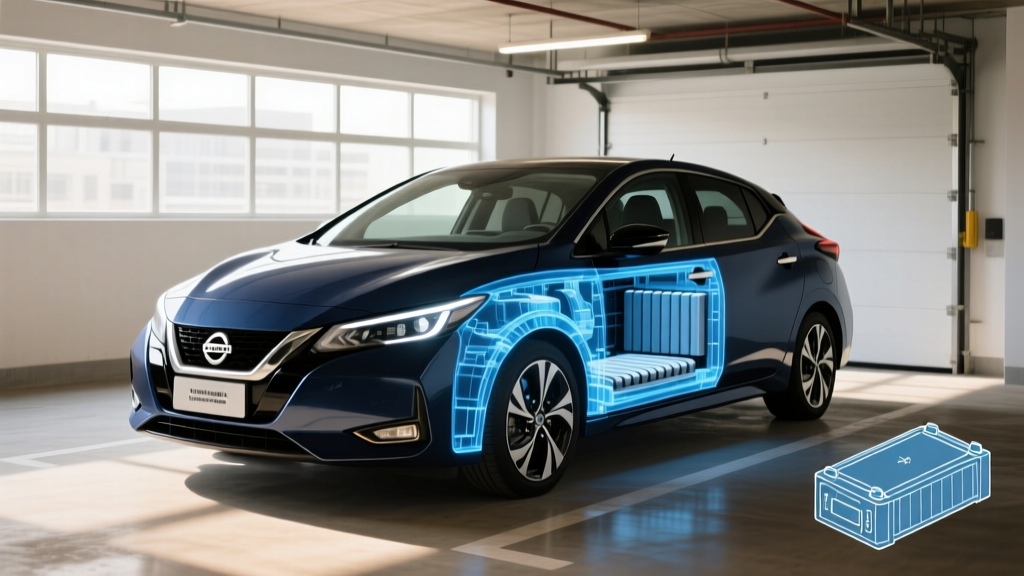
| Nissan Leaf (40–62 kWh) | NMC (passive cooling) | $8,000–$12,000 | Higher degradation risk (no active thermal mgmt) |
The reality check: Most EV batteries never need replacement during typical ownership. Out-of-warranty failures are statistically uncommon — data from fleet operators and warranty companies shows battery replacement rates well under 2% for vehicles under 150,000 miles. The vehicles most likely to need a pack swap are early-model EVs with passive thermal management (like the first-generation Nissan Leaf) or vehicles exposed to extreme conditions (sustained high-temperature climates with frequent DC fast charging).
For the CATL million-mile cell specifically, the economic argument shifts: if the battery will outlast the chassis, suspension, and interior, the replacement-cost question becomes moot for the original owner. Fleet operators and second/third owners are the ones who benefit from knowing a pack has 80%+ capacity remaining at 300,000 miles.
Factors That Accelerate (or Preserve) Battery Life
Battery longevity isn't just about chemistry — it's about how you use and store the pack. Lithium-ion cells degrade faster under specific stress conditions. Here's what matters, ranked by impact:
- Avoid sustained 100% State of Charge: For NMC batteries, set your daily charge limit to 80%. LFP batteries tolerate 100% better and Tesla/BYD actually recommend periodic full charges for LFP to calibrate the BMS.
- Minimize DC fast-charging frequency: Occasional road-trip fast charging is fine. Daily 150+ kW DC sessions accelerate degradation by ~1–3% over 100,000 miles compared to Level 2 home charging.
- Avoid extreme heat exposure: Parking in direct sun in 100°F+ climates for extended periods stresses cells. Use a garage or shaded spot when possible. Active thermal management (liquid cooling) mitigates this significantly.
- Don't store at 0% or 100%: If leaving your EV for weeks, set SoC to ~50%. Storage at full charge or near-empty accelerates calendar degradation.
- Use preconditioning: When navigating to a DC fast charger, your EV's thermal management will warm or cool the battery to the optimal charging temperature. This protects cells and improves charge speed.
- Cold-weather charging: Plugging in when the battery is cold (below 32°F) at high power can cause lithium plating on the anode. Most modern EVs restrict charge rate when cold — let the system manage it.
The LFP advantage here: LFP cells are more tolerant of high SoC storage and frequent full charges. This is one reason CATL's million-mile cell uses LFP — the chemistry's inherent stability allows it to endure stressors that would degrade NMC cells faster. If you're a driver who needs to charge to 100% daily (ride-hailing, long commutes), an LFP-equipped vehicle is the more durable choice.
How to Check Your Battery's State of Health (SoH)
State of Health (SoH) is the percentage of original capacity your battery retains. A new EV has 100% SoH; a pack with 85% SoH that originally held 75 kWh now holds ~63.75 kWh usable. Here's how to monitor it:
Built-in vehicle displays: Some manufacturers provide SoH readouts directly. Hyundai/Kia EVs show battery health in the service menu. Tesla does not display SoH natively, but third-party apps like TeslaFi or Stats estimate it from charge logs.
OBD-II diagnostic tools: Devices like the OBDLink MX+ paired with apps such as LeafSpy (Nissan Leaf) or Car Scanner (multi-brand) can read the BMS-reported SoH directly. This is the most accurate consumer method.
Manual calculation: Charge to 100% (or a known percentage), note the displayed range, and compare it to the EPA-rated range at the same SoC. If your 310-mile EPA vehicle shows 265 miles at 100%, your approximate SoH is 265/310 = ~85%. This method has a ±3% margin due to temperature and driving-style variables.
Dealer diagnostic: Most service centers can pull a full battery health report during routine service. Request this when buying a used EV — it's the equivalent of a compression test on a gas engine.
Emerging Battery Tech: Solid-State, Silicon Anode, and Beyond
The CATL million-mile cell represents the peak of current lithium-ion engineering. But several next-generation technologies are in development:
Solid-state batteries: These replace the liquid electrolyte with a solid material (ceramic, sulfide, or polymer), promising higher energy density (300–500 Wh/kg at cell level), faster charging, and improved safety. Toyota has announced solid-state production targeting 2027–2028, initially in limited-run vehicles. Samsung SDI and QuantumScape are also pursuing commercialization. Realistic timeline for mainstream availability: 2029–2032.
Silicon-dominant anodes: Replacing graphite anodes with silicon can boost energy density by 20–40%. Companies like Sila Nanotechnologies and Group14 are supplying silicon-composite anodes to manufacturers now, with increasing adoption in 2025–2027 model-year vehicles. This is an incremental improvement, not a revolution — but it meaningfully extends range per kWh.
Sodium-ion batteries: CATL is also producing sodium-ion cells for low-cost, low-range applications (city cars, energy storage). Sodium-ion offers lower energy density (~120–160 Wh/kg) but uses abundant, cheap materials. Not expected in US-market passenger EVs before 2028.
These technologies are forward-looking and should not factor into a current purchase decision. Today's LFP and NMC batteries — especially high-cycle variants like CATL's — already deliver lifespans that exceed typical vehicle ownership by a wide margin.
Frequently Asked Questions
Is the CATL million mile battery available in US-market EVs?
Not directly as of 2026. CATL supplies cells to Tesla (for China-built Model 3/Y), BYD, and several Chinese and European automakers. US-market vehicles may use CATL LFP cells, but the specific million-mile-rated cell is primarily deployed in commercial and fleet applications in Asia and Europe. US availability depends on trade policy and CATL's manufacturing footprint expansion.
How long do EV batteries last in years and miles?
Most modern EV batteries (2020+) are designed to retain 70–80% of original capacity after 150,000–200,000 miles, or roughly 12–15 years at average US driving rates. LFP batteries like CATL's million-mile cell are rated for significantly more — 300,000+ miles with minimal degradation. In practice, the vehicle's body, suspension, and electronics are more likely to fail before the battery.
How much does an EV battery cost to replace?
Replacement costs range from ~$8,000 for smaller packs (Nissan Leaf 40 kWh) to $22,000–$30,000 for large packs (Ford F-150 Lightning 131 kWh). Most mainstream EVs fall in the $12,000–$18,000 range including labor. However, out-of-warranty replacements are rare — fleet data shows failure rates under 2% within the first 150,000 miles.
LFP vs. NMC — which battery chemistry is better?
It depends on your use case. Choose LFP if you prioritize longevity, lower cost, daily 100% charging needs, and maximum safety margin — and can accept slightly less range for a given pack weight. Choose NMC if you need maximum range in a lighter, more compact pack (long-range trims, towing, performance models). Neither is universally "better" — they solve different engineering problems.
Does frequent DC fast charging damage the battery?
Frequent DC fast charging (multiple times per week at 150+ kW) accelerates degradation by roughly 1–3% over 100,000 miles compared to predominantly Level 2 home charging. Occasional fast charging on road trips has negligible impact. Modern battery management systems actively limit charge rate when cells are hot or cold to protect longevity.
Should I wait for solid-state batteries before buying an EV?
No. Solid-state batteries are not expected in mainstream, affordably priced US-market vehicles before 2029–2032. Current LFP and NMC batteries already offer lifespans exceeding typical ownership periods. Waiting 5+ years for next-generation tech means forgoing the fuel savings, performance, and incentives available today.