Why CATL Batteries Are Powering More EVs Every Year
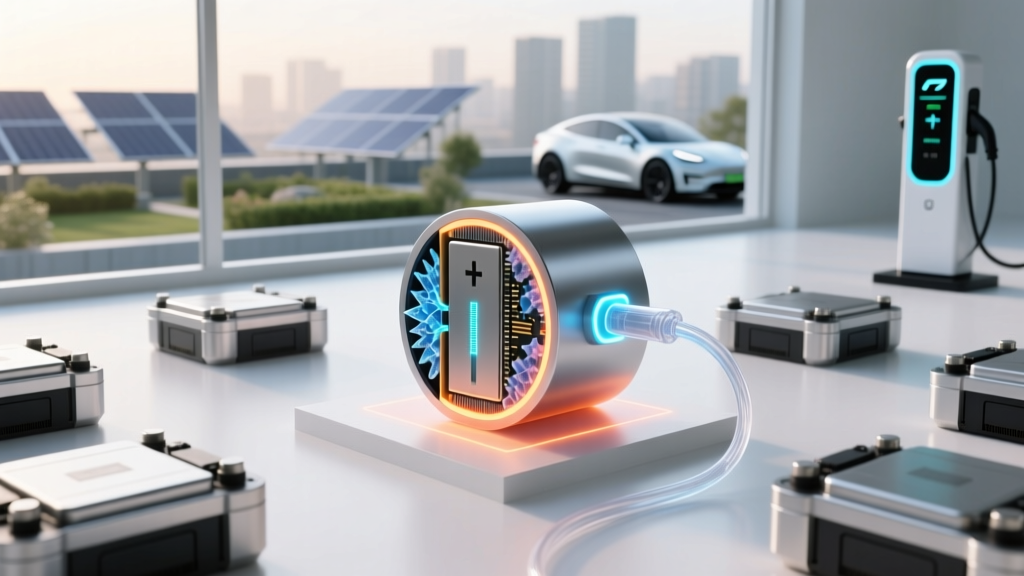
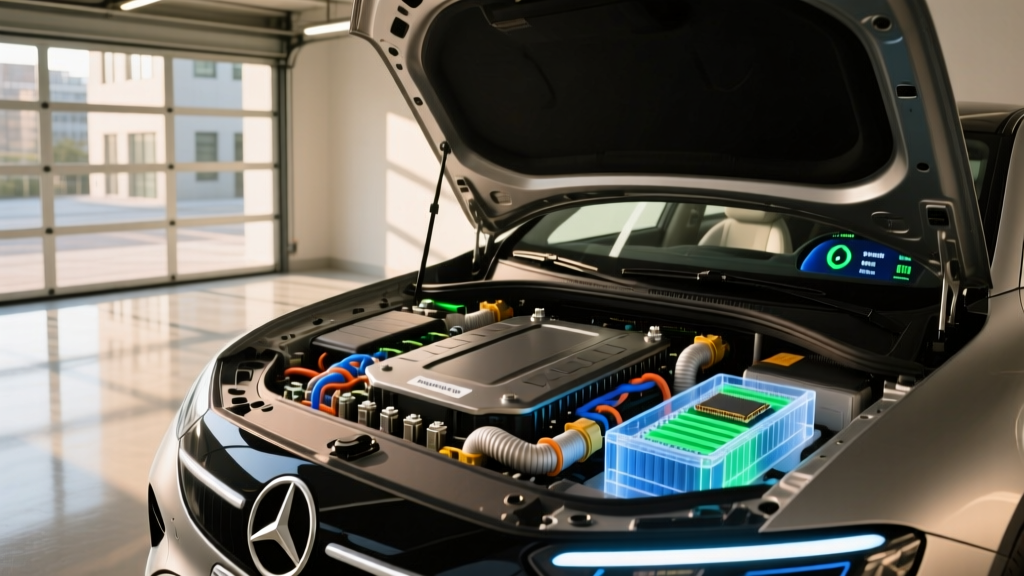
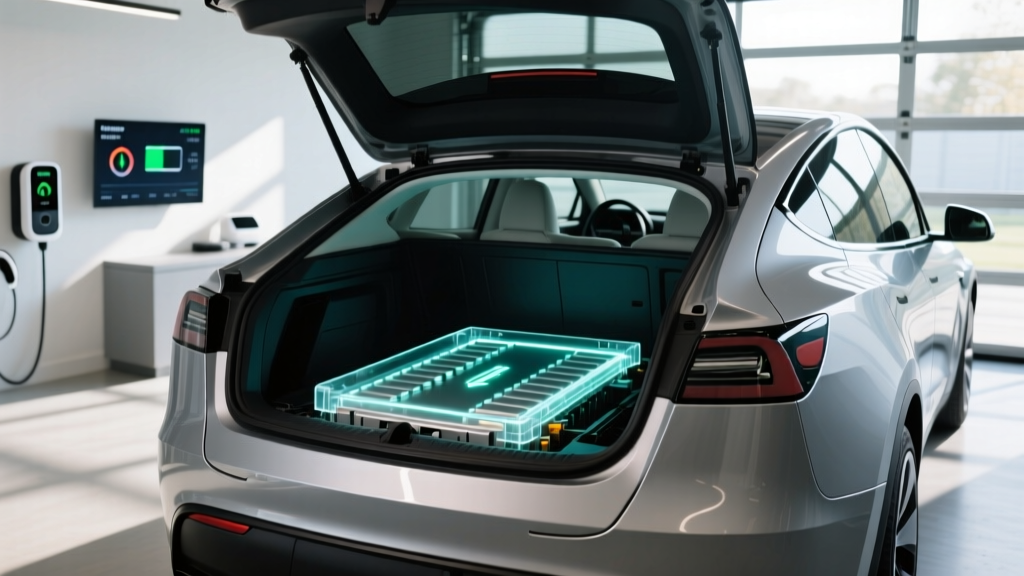
Contemporary Amperex Technology Co., Limited (CATL) supplies battery cells to more automakers than any other manufacturer on the planet. If you drive or are shopping for a Tesla Model 3 Standard Range, a Ford Mustang Mach-E Standard Range, a Volvo EX30, or several BMW and Stellantis models, there is a strong chance a CATL cell is sitting beneath your floorboards. In 2025, CATL held roughly 37% of the global EV battery market by installed capacity, and that share continues to grow as more OEMs adopt its lithium iron phosphate (LFP) and nickel manganese cobalt (NMC) cells.
But what does that actually mean for you as a buyer or owner? This guide breaks down the chemistry inside CATL batteries, real-world degradation data, warranty protections, replacement costs, and practical steps to maximize longevity — with the exact numbers you need to make an informed decision.
LFP vs NMC: Understanding CATL's Two Core Chemistries
CATL manufactures cells in two dominant chemistries, each with distinct trade-offs. Understanding which one is in your vehicle (or the one you're considering) is the single most important battery-spec decision you'll make.
| Attribute | LFP (Lithium Iron Phosphate) | NMC (Nickel Manganese Cobalt) |
|---|---|---|
| Energy Density | ~160–200 Wh/kg (cell level) | ~220–300 Wh/kg (cell level) |
| Typical Cycle Life | 3,000–6,000+ full cycles | 1,000–2,000 full cycles |
| Cold-Weather Performance | Moderate — ~15–25% range loss below 20°F | Better — ~10–20% range loss below 20°F |
| Cost per kWh (cell) | ~$80–$100 (2025–2026 pricing) | ~$110–$140 |
| Thermal Stability | Excellent — higher onset temp for thermal runaway | Good — requires more active thermal management |
| Cobalt Content | None | Contains cobalt (supply-chain and ethical concerns) |
| Common Applications | Standard Range trims, fleet vehicles, budget EVs | Long Range / Performance trims, premium EVs |
| Recommended Charge Habit | Can be charged to 100% regularly | Best kept between 20–80% for daily use |
The practical takeaway: LFP sacrifices some range per kilogram but delivers dramatically longer cycle life, lower cost, and the ability to charge to 100% without accelerating degradation. NMC gives you more range in a lighter, smaller pack — ideal for Long Range models — but demands more careful state-of-charge management. CATL's LFP cells (branded in part as the "Shenxing" LFP fast-charging line announced in late 2023 and entering volume production through 2025–2026) have closed the charging-speed gap significantly, with peak rates reaching 350+ kW on compatible architectures.
How Long Do CATL EV Batteries Actually Last?
The short answer: far longer than most buyers assume. CATL LFP cells are rated for 3,000 to over 6,000 full charge-discharge cycles before reaching 80% of original capacity. In real-world terms, even at the conservative 3,000-cycle figure, a 60 kWh LFP pack that averages 3 miles per kWh would deliver roughly 540,000 miles of cumulative driving before hitting that 80% threshold — far exceeding the lifespan of virtually any vehicle chassis.
NMC cells from CATL typically deliver 1,000–2,000 cycles to 80% capacity. For an 80 kWh NMC pack at 3 mi/kWh, that translates to 240,000–480,000 miles before significant degradation. Again, most vehicles are retired well before these mileages.
- Tesla Model 3 Standard Range (CATL LFP, 60 kWh): Fleet data aggregated by Recurrent Auto (2024–2025) shows approximately 5–7% range loss over the first 60,000 miles, with the curve flattening significantly afterward.
- NMC packs in general (multiple OEMs using CATL and other suppliers): Geotab's 2024 longitudinal study of 10,000+ EVs found an average annual capacity loss of 1.8% across all chemistries, with LFP packs averaging closer to 1.2% per year.
- High-mileage fleet vehicles (CATL LFP): Chinese ride-hailing fleet data (BYD and CATL packs) published in 2024 showed 12–15% degradation after 180,000 miles (roughly 4 years of heavy use).
The critical insight: degradation is not linear. Most EV batteries experience a steeper drop in the first 10,000–20,000 miles (typically 2–4%), then settle into a very gradual, near-linear decline for the remainder of their life. This "break-in" loss often alarms new owners but is normal and expected.
What Does the Battery Warranty Actually Cover?
Federal law in the United States mandates that EV batteries carry a minimum warranty of 8 years or 100,000 miles (whichever comes first). In California Air Resources Board (CARB) states, that extends to 10 years or 150,000 miles. Most automakers using CATL cells meet or exceed these minimums. The warranty guarantees that the battery will retain a specified percentage of its original capacity — typically 70% — over the warranty period.
| OEM / Model Example | Warranty Period | Capacity Retention Guarantee | Notes |
|---|---|---|---|
| Tesla Model 3 RWD (CATL LFP) | 8 yr / 100,000 mi | ≥70% | CARB states: 8 yr / 100,000 mi (same) |
| Ford Mustang Mach-E SR (CATL LFP) | 8 yr / 100,000 mi | ≥70% | Transferable to subsequent owners |
| Volvo EX30 (CATL LFP/NMC) | 8 yr / 100,000 mi | ≥70% | Includes battery management system |
| BMW iX / i4 (CATL NMC) | 8 yr / 100,000 mi | ≥70% | Coverage includes thermal management components |
What voids a warranty: Modifications to the battery management system (BMS), physical damage from accidents or flooding, use of non-OEM-approved charging equipment that causes damage, and failure to follow basic maintenance guidelines (such as ignoring coolant system service intervals). Normal degradation within the threshold is covered; degradation beyond the 70% line triggers a replacement or repair at no cost.
EV Battery Replacement Costs: What to Expect
Here is where honest context matters. Catastrophic battery failure requiring a full pack replacement outside of warranty is rare. According to Recurrent Auto's 2024 data, fewer than 2.5% of EVs across all brands have required battery replacements, and the vast majority of those were covered under warranty due to manufacturing defects — not age-related degradation.
When replacement is needed (typically due to collision damage, manufacturing defect just outside warranty, or extreme abuse), costs vary dramatically by pack size and OEM:
| Vehicle / Pack Size | Chemistry | Estimated Replacement Cost (Parts + Labor) | Typical Trigger |
|---|---|---|---|
| Tesla Model 3 SR (~60 kWh) | CATL LFP | $12,000–$16,000 | Collision, post-warranty defect |
| Ford Mach-E SR (~70 kWh) | CATL LFP | $14,000–$18,000 | Collision, module failure |
| Volvo EX30 (~69 kWh) | CATL NMC | $15,000–$20,000 | Collision, post-warranty |
| BMW iX xDrive50 (~111 kWh) | CATL NMC | $22,000–$30,000 | Large pack, collision damage |
| Module-level repair (1–2 modules) | Varies | $2,500–$6,000 | Single module imbalance or failure |
The trend is favorable: CATL's cell pricing has dropped from over $150/kWh in 2022 to roughly $80–$100/kWh for LFP and $110–$140/kWh for NMC as of 2025–2026. As packs age out of warranty in larger numbers (starting around 2028–2030 for the 2020–2022 EV wave), the aftermarket and refurbished battery market will grow, further reducing out-of-pocket costs.
What Degrades a CATL Battery — and What Doesn't
Not all miles are created equal when it comes to battery health. The factors below have the most significant measured impact on long-term capacity retention.
- Limit DC fast charging to road trips. Frequent use of 150+ kW DC fast charging accelerates degradation by an estimated 0.3–0.5% per year compared to Level 2 home charging. Occasional fast charging is fine; daily fast charging is not ideal.
- Manage state of charge (SoC). For NMC packs, keep daily SoC between 20–80%. For LFP packs, charging to 100% regularly is acceptable and even recommended periodically for BMS cell-balancing accuracy.
- Avoid extreme SoC in extreme temperatures. Don't leave an NMC pack at 100% SoC in 100°F+ heat for extended periods. Don't leave any pack at 0% in sub-zero cold for days.
- Use preconditioning. When navigating to a DC fast charger, your vehicle's thermal management system will warm or cool the battery to the optimal temperature window (~25–40°C), enabling faster charging and reducing lithium plating risk.
- Don't obsess over avoiding fast charging entirely. Modern BMS and thermal management systems in CATL-equipped vehicles are sophisticated. The difference between "never fast charges" and "fast charges on 20% of sessions" is marginal — perhaps 1–2% additional degradation over 8 years.
- Keep up with coolant system maintenance. The battery thermal management loop uses glycol coolant that degrades over time. Follow OEM service intervals (typically every 4–5 years) to ensure efficient heat transfer.
What does NOT meaningfully degrade your battery: Regenerative braking (it actually reduces brake wear and has negligible battery impact), Level 2 overnight charging (this is the ideal charging method), and driving in rain or cold (the pack is sealed and thermally managed). The fear that EV batteries need replacement like smartphone batteries every few years is not supported by fleet data.
How to Monitor Your CATL Battery's State of Health
State of Health (SoH) is the metric that tells you what percentage of your battery's original capacity remains. A new battery is at 100% SoH; at 70% SoH, you've lost 30% of your original range.
How to check SoH:
- In-vehicle diagnostics: Some OEMs (Tesla via the service menu, BMW via iDrive) display a battery health percentage or estimated range compared to original. Tesla's service mode provides cell-level voltage delta data useful for identifying module imbalance.
- OBD-II tools: Devices like the OBDLink SX combined with apps such as EV Battery Health or Scan My Tesla can read detailed BMS data, including individual cell voltages, pack voltage, current, and estimated SoH.
- Third-party services: Companies like Recurrent Auto offer free battery health reports that compare your pack's degradation curve against a fleet of identical vehicles, giving you a clear picture of whether your battery is degrading normally or is an outlier.
- Dealer diagnostic scan: Any authorized service center can run a full battery health report, often required for warranty claims. Request this proactively around the 60,000–80,000 mile mark to establish a baseline.
A healthy CATL LFP pack at 60,000 miles should show roughly 93–96% SoH. An NMC pack at the same mileage typically shows 91–95% SoH. If your readings fall significantly below these ranges, schedule a diagnostic with your dealer — you may have a module imbalance that is correctable under warranty.
What's Next: CATL's Condensed-Matter and Solid-State Roadmap
CATL has publicly announced several next-generation battery technologies. It is important to distinguish what is in production today from what remains in development.
Currently in production (2025–2026):
- Shenxing LFP: A superfast-charging LFP cell capable of 4C charging rates (adding ~400 km / 250 miles of range in approximately 10 minutes on compatible 800V architectures). Entering volume production across multiple OEM platforms.
- Qilin (CTP 3.0): Cell-to-pack architecture that eliminates modules entirely, improving volume utilization by ~15–20% and reducing pack weight. Already in production in vehicles like the Zeekr 009 and select Tesla applications.
- Sodium-ion (first generation): CATL began limited production of sodium-ion cells in 2024–2025 for low-cost, short-range applications (urban EVs, energy storage). Energy density (~120–160 Wh/kg) is lower than LFP, but raw material costs are dramatically cheaper and cold-weather performance is superior.
In development — not yet in production vehicles:
- Condensed-matter battery: Announced in 2023 with a claimed energy density of 500 Wh/kg. CATL targets initial applications in electric aviation before automotive adoption. Realistic automotive timeline: 2028–2030 at the earliest, likely in premium applications first.
- All-solid-state cells: CATL has a solid-state research program but has not announced a production timeline. Industry-wide, Toyota, Samsung SDI, and QuantumScape are targeting 2027–2030 for initial solid-state production. Expect limited availability in high-end models first, with mainstream adoption not before 2032–2035.
- Silicon-anode enhancements: Incrementally increasing the silicon content in anodes (replacing graphite) boosts energy density by 10–20%. CATL and competitors are integrating silicon-carbon composite anodes in current-generation NMC cells, with further increases expected through 2028.
For buyers today, these future technologies are interesting context but should not delay a purchase. Current CATL LFP and NMC cells already deliver 200,000+ miles of usable life with minimal degradation — sufficient for the vast majority of ownership cycles.
Frequently Asked Questions About CATL Batteries
How long do CATL EV batteries last in years and miles?
CATL LFP cells are rated for 3,000–6,000+ full cycles, translating to 300,000–540,000+ miles before reaching 80% capacity. NMC cells deliver 1,000–2,000 cycles, or roughly 240,000–480,000 miles. In calendar years, most CATL packs will outlast 15+ years of typical driving (12,000–15,000 miles/year) before significant degradation. Real-world fleet data from Geotab's longitudinal study confirms an average annual loss of just 1.2–1.8% across chemistries.
How much does it cost to replace a CATL battery?
Full pack replacement costs range from approximately $12,000 for a 60 kWh LFP pack (Tesla Model 3 SR) to $30,000 for a 111 kWh NMC pack (BMW iX). Module-level repairs cost $2,500–$6,000. However, fewer than 2.5% of EVs require out-of-warranty replacements, and cell pricing continues to decline year over year.
Is LFP better than NMC?
Neither is universally "better" — they serve different needs. LFP is better for buyers who prioritize longevity, lower cost, cobalt-free sourcing, and the convenience of charging to 100% daily. NMC is better for buyers who need maximum range in a lighter package and are willing to manage SoC between 20–80%. For most daily drivers covering under 250 miles between charges, LFP offers the better ownership experience.
Does frequent DC fast charging damage CATL batteries?
Exclusive reliance on DC fast charging (150+ kW) can accelerate degradation by roughly 0.3–0.5% per year compared to Level 2 charging. However, mixed use — primarily Level 2 at home with occasional DC fast charging on road trips — has a negligible impact on long-term health. Modern CATL cells paired with OEM thermal management systems handle fast charging far better than early-generation EV batteries did.
Can I check my CATL battery health myself?
Yes. Use your vehicle's built-in diagnostics (if available), an OBD-II scanner with EV-compatible software, or a free service like Recurrent Auto to track your State of Health over time. A dealer diagnostic scan provides the most comprehensive report and is recommended around 60,000–80,000 miles to establish a warranty-baseline record.
Are CATL batteries safe?
CATL LFP cells have among the highest thermal runaway onset temperatures of any lithium-ion chemistry (~270°C vs ~210°C for NMC), making them inherently more stable. All CATL packs sold in the US must pass NHTSA safety standards and UN38.3 transport testing. Thermal runaway incidents in CATL-equipped vehicles are exceedingly rare and typically linked to severe collision damage rather than spontaneous failure.