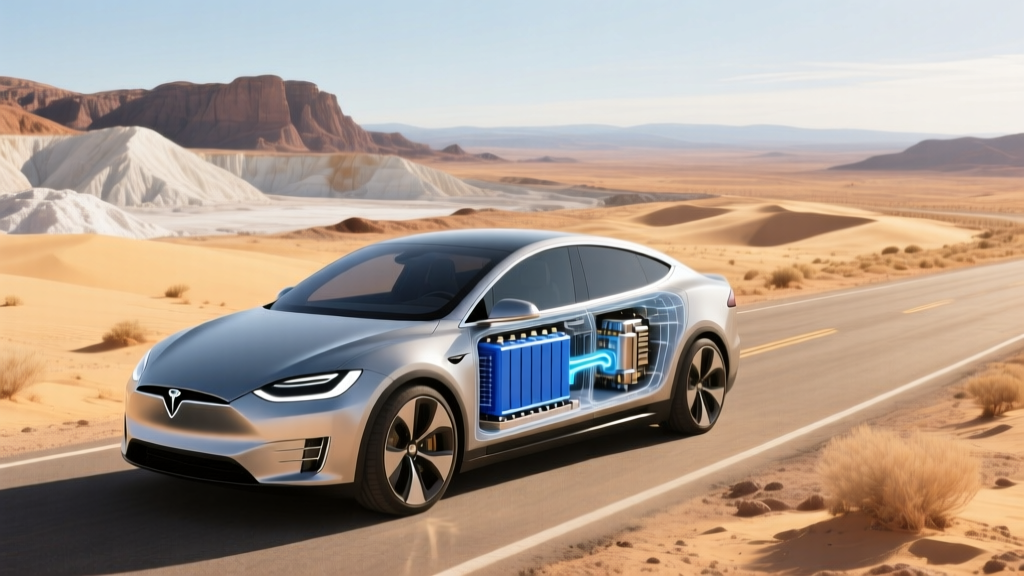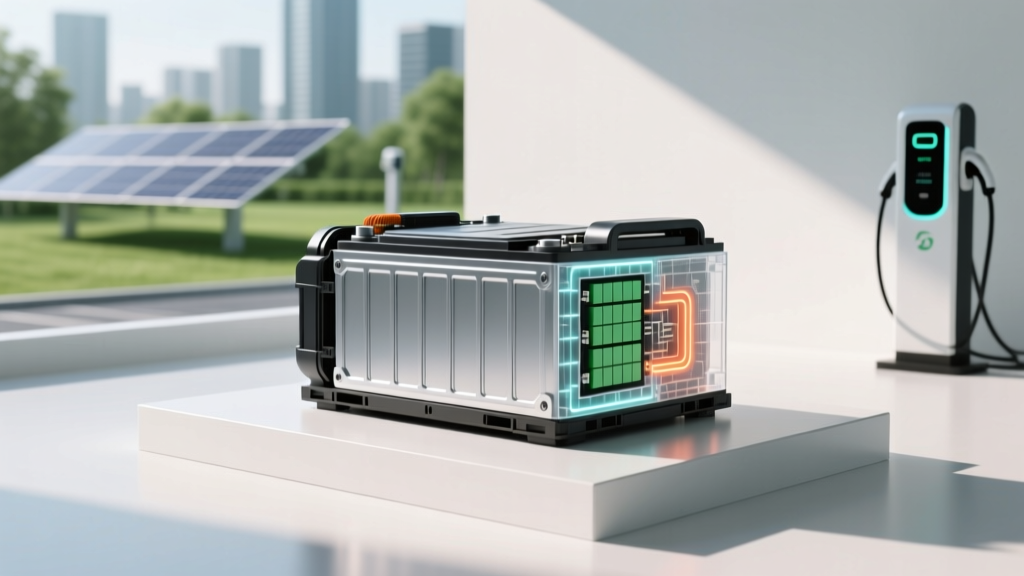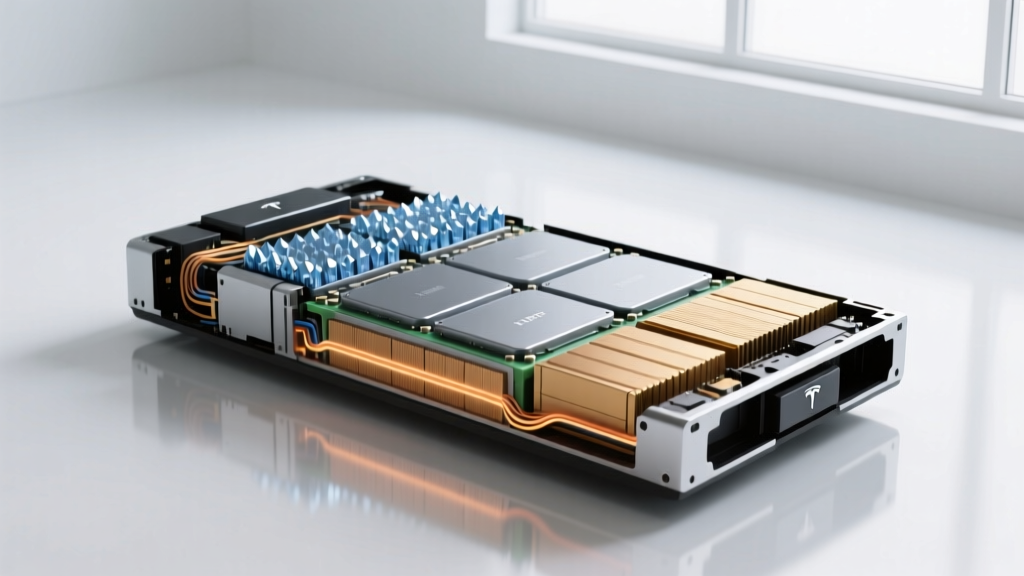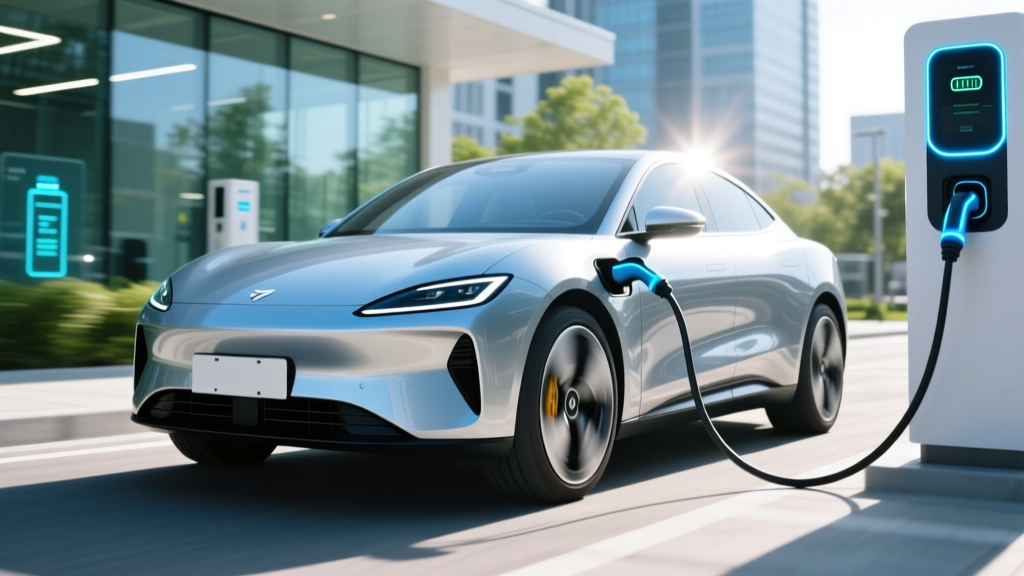
If you've ever plugged in your electric vehicle and wondered, "Can you start a car while charging the battery?" — the short answer is yes, but with important nuances that differ from gasoline vehicles. In a battery-electric vehicle (BEV), pressing the power button while plugged in doesn't crank an engine. Instead, it activates the vehicle's low-voltage systems, climate control, and infotainment while the high-voltage traction battery continues to accept a charge. This guide unpacks exactly what happens under the hood, then goes deep on the battery chemistry, degradation science, warranty coverage, and replacement economics every EV owner or buyer needs to understand.
Can You Start a Car While Charging the Battery? What Actually Happens
When you plug an EV into a Level 2 or DC fast charger and then press the start or power button, the vehicle enters what most automakers call "accessory" or "ready" mode. Here's what's happening at the system level:
- Climate control activates. The HVAC compressor and resistive heater (or heat pump) draw power from the wall via the charger rather than depleting the battery, which is useful for preconditioning the cabin before a trip.
- Infotainment and displays power on. You can use navigation, music, and app interfaces normally.
- Charging continues uninterrupted. The Battery Management System (BMS) coordinates incoming charge current with any auxiliary loads, so plugging in at 11 kW and running the heater at 2 kW simply means a net charge rate of roughly 9 kW.
- Drive mode is locked out. The vehicle will not shift into Drive while the charge connector is seated — a hard safety interlock mandated by NHTSA regulations across all street-legal EVs sold in the US.
The 12-volt auxiliary battery — which powers lights, door locks, and control modules — is simultaneously maintained by the DC-DC converter drawing from either the high-voltage pack or the charger. This is fundamentally different from a gasoline car, where "starting" means engaging a 12V starter motor to crank an internal combustion engine. In an EV, there is no starter motor, no alternator, and no cranking event.
EV Battery Chemistry: LFP vs NMC vs NCA Explained
The lithium-ion cells inside your EV's battery pack are not all created equal. The cathode chemistry determines energy density, lifespan, cold-weather performance, and cost. As of the 2026 model year, three chemistries dominate the US market:
- LFP (Lithium Iron Phosphate): Used in standard-range Tesla Model 3 and Model Y, base Ford Mustang Mach-E, and several Chinese-market imports. LFP offers lower energy density (~160 Wh/kg at the cell level) but excels in cycle life (3,000–5,000+ cycles to 80% capacity), thermal stability, and lower raw-material cost. LFP can be routinely charged to 100% without accelerating degradation — a significant daily-use advantage.
- NMC (Nickel Manganese Cobalt): Found in most long-range EVs including the Hyundai Ioniq 5, Kia EV6, Chevrolet Equinox EV, and BMW iX. NMC delivers higher energy density (~220–260 Wh/kg), enabling longer range in the same physical pack size. Cycle life is typically 1,000–2,000 cycles to 80%. Manufacturers recommend charging to 80% for daily use and reserving 100% for road trips.
- NCA (Nickel Cobalt Aluminum): Primarily used by Tesla in long-range and performance models and by Rivian. NCA offers the highest energy density (~260–280 Wh/kg) and strong power delivery but shares NMC's sensitivity to high state-of-charge stress and elevated temperatures.
| Attribute | LFP | NMC | NCA |
|---|---|---|---|
| Energy density (cell) | ~160 Wh/kg | ~220–260 Wh/kg | ~260–280 Wh/kg |
| Cycle life to 80% SoH | 3,000–5,000+ | 1,000–2,000 | 1,000–1,500 |
| Recommended daily SoC | 100% | 80% | 80% |
| Cold-weather performance | Moderate (10–15% range loss at 20°F) | Better (~8–12% loss at 20°F) | Good (~8–12% loss at 20°F) |
| Cost per kWh (pack-level) | ~$90–$110 | ~$120–$145 | ~$130–$155 |
| Thermal runaway risk | Very low | Moderate | Moderate |
| Common vehicles (2026) | Tesla Model 3 RWD, Model Y RWD | Ioniq 5, EV6, Equinox EV | Tesla LR/Performance, Rivian |
Which is better? If your priority is maximum range per charge and you don't mind managing state-of-charge habits, NMC or NCA is the stronger pick. If you want a battery you can charge to 100% every night without worry and plan to keep the car for 10+ years or 200,000+ miles, LFP's superior cycle life and lower cost make it compelling — provided you can accept slightly shorter EPA range and greater cold-weather sensitivity.
How Long Do EV Batteries Last? Real-World Degradation Data
EV batteries don't suddenly fail like a broken timing belt. They gradually lose capacity over time and charge cycles — a process measured as State of Health (SoH), where 100% is brand-new capacity and 80% is the threshold most warranties use to define "end of useful life."
Here is what fleet data, owner surveys, and manufacturer testing show about typical degradation trajectories:
- Year 1 / 15,000 mi: ~2–3% loss (97–98% SoH)
- Year 3 / 45,000 mi: ~5–7% loss (93–95% SoH)
- Year 5 / 75,000 mi: ~8–10% loss (90–92% SoH)
- Year 8 / 120,000 mi: ~10–14% loss (86–90% SoH)
- Year 10 / 150,000 mi: ~12–18% loss (82–88% SoH)
Source: Recurrent Auto battery health data (2025 report), Tesla Impact Report, and fleet analysis from fueleconomy.gov.
LFP packs degrade more slowly in calendar terms due to their chemistry's inherent stability. Data from Tesla's standard-range fleet suggests LFP packs retain approximately 92–95% SoH at 100,000 miles when routinely charged to 100% — a result that would significantly degrade an NMC pack treated the same way.
The initial "break-in" drop of 2–3% in the first year is normal and reflects SEI (solid electrolyte interphase) layer formation on the anode. After that, degradation typically linearizes to roughly 1.5–2.5% per year under moderate use.
Factors That Accelerate (or Slow) Battery Degradation
Not all miles and charge cycles are equal. The following factors have measurable, data-backed effects on how quickly your pack loses capacity:
Fast-Charging Frequency
DC fast charging at 150–350 kW generates significant heat inside the cells. Occasional road-trip fast charging has minimal impact, but daily DCFC use can add 1–3% extra degradation over five years compared to exclusive Level 2 home charging. A 2024 study by the Idaho National Laboratory found that Tesla Model 3 packs charged exclusively on DC fast chargers showed roughly 5% more capacity loss at 100,000 miles versus packs charged primarily on Level 2.
Extreme Temperatures
Prolonged exposure to ambient temperatures above 95°F accelerates electrolyte decomposition. Vehicles parked outdoors in Phoenix or Dubai without garage shelter degrade faster. Conversely, extreme cold (below 10°F) doesn't permanently damage the pack but temporarily reduces available capacity by 20–30% due to slowed lithium-ion diffusion — a reversible effect. Most modern EVs use active liquid thermal management to mitigate both extremes, preconditioning the pack during charging and driving.
State-of-Charge Habits
For NMC and NCA chemistries, regularly holding the battery at 100% SoC causes cathode lattice stress and electrolyte oxidation. The practical guidance:
- Daily charging limit: 80% (set via the vehicle's app or infotainment)
- Charge to 100% only when departing on a trip within a few hours
- Avoid leaving the car at 100% SoC overnight or for multi-day parking
- Try not to let SoC regularly drop below 10–15% — deep discharge also stresses cells
LFP owners can disregard the 80% limit; Tesla, Ford, and BYD all recommend periodic 100% charges for LFP to allow the BMS to recalibrate cell-balancing.
- ✅ Set daily charge limit to 80% (NMC/NCA) or 100% (LFP)
- ✅ Use Level 2 home charging as your primary method
- ✅ Enable battery preconditioning before DC fast charging (automatic when navigating to a charger in most EVs)
- ✅ Avoid parking at 100% SoC in extreme heat for extended periods
- ✅ Keep the pack above 10% SoC when possible; don't let it sit at 0% for days
- ✅ Use scheduled departure/charging features to time charges and minimize time at high SoC
What Does the EV Battery Warranty Cover?
Federal law mandates that EV batteries carry a minimum warranty of 8 years or 100,000 miles (10 years/150,000 miles in California Air Resources Board states). Most automakers exceed these minimums. The warranty covers capacity loss below a specified threshold — typically 70% of original capacity — as well as manufacturing defects and BMS failures.
| Manufacturer | Duration | Mileage | Capacity Threshold |
|---|---|---|---|
| Tesla | 8 years | 100,000–120,000 mi | 70% retention |
| Hyundai / Kia | 10 years | 100,000 mi | 70% retention |
| GM (Chevrolet/Cadillac) | 8 years | 100,000 mi | 70% retention |
| Ford | 8 years | 100,000 mi | 70% retention |
| BMW | 8 years | 100,000 mi | 70% retention |
| Rivian | 8 years | 175,000 mi | 70% retention |
What's covered: Cell-level capacity degradation below the threshold, BMS malfunctions, coolant leaks affecting the pack, and manufacturing defects. What's typically excluded: Damage from accidents, flooding, improper modifications, or use of non-approved charging equipment. Warranty claims require a dealer diagnostic scan showing SoH below the threshold — not just a perceived range reduction, which can be influenced by weather, tire pressure, and driving style.
EV Battery Replacement Cost: What You'll Actually Pay
Battery replacement is the single biggest fear among prospective EV buyers — but context matters enormously. The vast majority of EV batteries outlast the vehicle's useful economic life. According to data from Recurrent Auto, fewer than 1.5% of EVs in their monitored fleet of over 15,000 vehicles have required a full pack replacement outside of recall campaigns.
When replacement is needed — typically due to a manufacturing defect, physical damage, or extreme degradation beyond warranty coverage — costs vary dramatically by pack size and vehicle:
| Vehicle | Pack Size | Chemistry | Replacement Cost (Parts + Labor) |
|---|---|---|---|
| Tesla Model 3 RWD | ~60 kWh | LFP | $8,000–$12,000 |
| Tesla Model Y LR | ~82 kWh | NCA | $12,000–$16,000 |
| Hyundai Ioniq 5 | 77.4 kWh | NMC | $11,000–$15,000 |
| Chevrolet Equinox EV | ~85 kWh | NMC (Ultium) | $12,000–$17,000 |
| Ford F-150 Lightning ER | ~131 kWh | NMC | $18,000–$25,000 |
| Rivian R1T (Max Pack) | ~149 kWh | NMC | $20,000–$28,000 |
These costs are expected to decline 5–10% annually as pack-level pricing falls and the third-party EV battery refurbishment market matures. Some independent shops now offer module-level repairs — replacing only the degraded modules rather than the entire pack — for $3,000–$7,000 on packs with modular architectures like the Chevrolet Bolt and earlier Nissan Leaf.
How to Check and Monitor Your EV's Battery Health
Most modern EVs provide limited direct SoH visibility through the infotainment system, but several reliable methods exist:
In-Vehicle Diagnostics
Some vehicles, including Tesla (via Service Mode), Hyundai/Kia (via the dealer diagnostic tool), and BMW, display battery health metrics. Tesla owners can access a "Battery Health" test in Service Mode that performs a controlled discharge measurement and reports estimated capacity. This test takes approximately 24 hours and requires the car to sit unused.
Third-Party Apps and OBD-II Tools
Apps like Recurrent, TeslaFi, and Scan My Tesla (for Tesla vehicles) log charging data over time and calculate SoH by comparing the energy accepted during a full charge cycle against the pack's rated capacity. For non-Tesla EVs, OBD-II dongles paired with apps like Car Scanner or LeafSpy (for Nissan) can read BMS-reported capacity figures.
Dealer Assessment
Any authorized dealer can perform a battery health check, typically as part of a routine service visit. This is the method required for warranty claims. Request a printout showing measured capacity in kWh versus the original rated capacity.
Manual Calculation
Charge the battery from a known low SoC (e.g., 10%) to 100% using a metered Level 2 charger that reports kWh delivered. If your 77.4 kWh Ioniq 5 accepts only 65 kWh for a 10–100% charge (accounting for ~90% charging efficiency, so roughly 72 kWh at the wall × 0.9 = ~65 kWh net to battery), that suggests approximately 84% SoH. This method requires patience and a smart charger with energy metering.
What's Next: Solid-State, Silicon Anodes, and Future Battery Tech
The battery industry is pursuing several next-generation technologies that promise step-change improvements — but realistic timelines matter more than press-release promises.
Solid-State Batteries
Solid-state cells replace the liquid electrolyte with a solid ceramic or polymer separator, potentially doubling energy density (to 400–500 Wh/kg at the cell level), eliminating flammability risk, and enabling 10-minute fast charging. Toyota has announced limited production of solid-state EVs for 2027–2028, initially in small volumes and at premium price points. Samsung SDI, QuantumScape, and Solid Power are also targeting 2027–2029 production timelines. Widespread, affordable solid-state EVs are not expected before 2030.
Silicon Anode Technology
Replacing graphite anodes with silicon can increase energy density by 20–40%. Companies like Sila Nanotechnologies and Group14 Technologies are already supplying silicon-dominant anode materials to battery manufacturers. Expect to see silicon-anode cells in production EVs starting in 2026–2027, initially in premium models where the cost premium is easier to absorb.
Sodium-Ion Batteries
Sodium-ion chemistry uses abundant, cheap sodium instead of lithium, offering lower cost (~$50–$70/kWh at pack level) and excellent cycle life, but significantly lower energy density (~120–140 Wh/kg). CATL and BYD have begun deploying sodium-ion packs in Chinese-market city cars. US-market adoption is likely limited to low-cost urban EVs and energy storage, with a realistic timeline of 2027–2029.
Frequently Asked Questions
Can you start an EV while it's plugged in and charging?
Yes. Pressing the power button while connected to a charger activates the vehicle's electronics, climate control, and displays. The car will not enter Drive mode while the charge connector is inserted — this is a mandatory safety interlock. Charging continues normally, with the Battery Management System balancing incoming power against any auxiliary loads like HVAC.
Does sitting in a charging EV with the heat on slow down the charge?
Minimally. A heat pump draws roughly 1–3 kW; a resistive heater can draw 4–6 kW at maximum output. If you're charging at 11 kW on a Level 2 home charger and the heater draws 3 kW, your net charge rate drops to about 8 kW — adding perhaps 15–20 minutes to a full charge session. On a 150+ kW DC fast charger, the effect is negligible.
How long do EV batteries last before needing replacement?
Based on fleet data through 2025, the average liquid-cooled EV battery retains 85–90% of its original capacity at 150,000 miles (roughly 10 years of average US driving). Most batteries will outlast the vehicle's economic life. Full replacements before 200,000 miles are uncommon — fewer than 1.5% in monitored fleets — and are typically covered under the 8-year/100,000-mile federal warranty minimum.
Is LFP better than NMC for long-term ownership?
For owners who plan to keep their EV 8+ years and want minimal charging-habit management, LFP is the stronger choice. It tolerates 100% daily charging, offers 3,000–5,000+ cycle life, and costs less to replace. The trade-off is lower energy density (shorter range for a given pack size) and slightly worse cold-weather range retention. For maximum range and fast-charging speed, NMC remains the better fit.
Will leaving my EV plugged in for days damage the battery?
No — modern EVs manage this automatically. Once the battery reaches the set charge limit (80% or 100%), the charger stops delivering current. The vehicle periodically draws small amounts of power to maintain the 12V auxiliary battery and keep the BMS active. This is called "trickle maintenance" and is completely safe. In fact, leaving the car plugged in with a charge limit set to 50–80% is one of the best storage strategies for extended parking.
Does fast charging really hurt my battery?
Occasional DC fast charging — say, 1–2 times per week on road trips — has a small, measurable effect on long-term degradation (perhaps 1–2% additional loss over 100,000 miles). Daily DCFC use is more impactful, adding 3–5% extra degradation versus exclusive Level 2 charging. The primary mechanism is heat: high charge rates raise cell temperatures, accelerating electrolyte breakdown. Preconditioning the battery before fast charging (standard on most 2024+ EVs when navigating to a charger) significantly mitigates this by warming or cooling cells to the optimal temperature window before high-power charging begins.
Sources: fueleconomy.gov (US EPA), NHTSA, manufacturer warranty documentation (Tesla, Hyundai, GM, Ford, BMW, Rivian), Recurrent Auto battery health reports, Idaho National Laboratory EV charging studies.