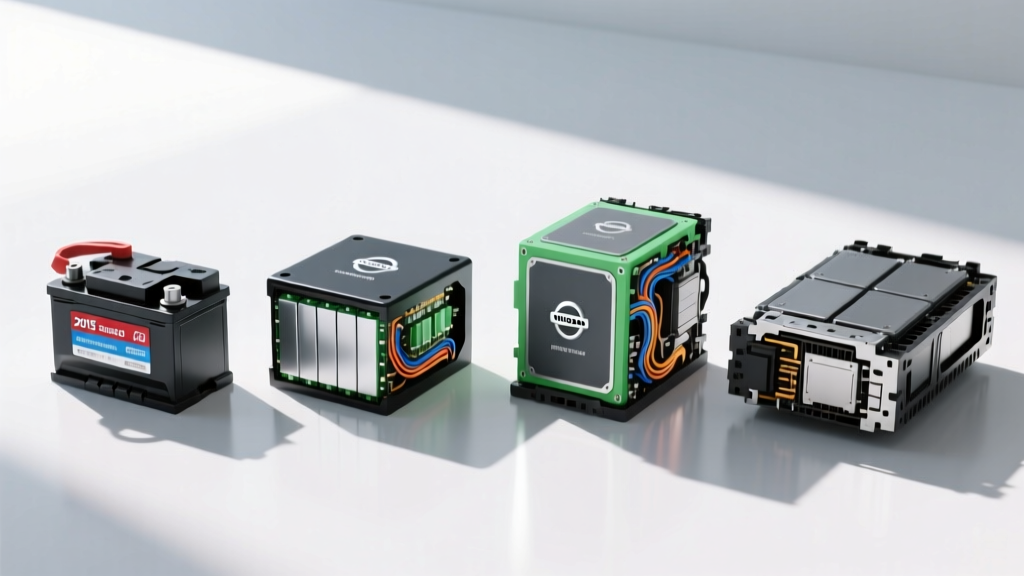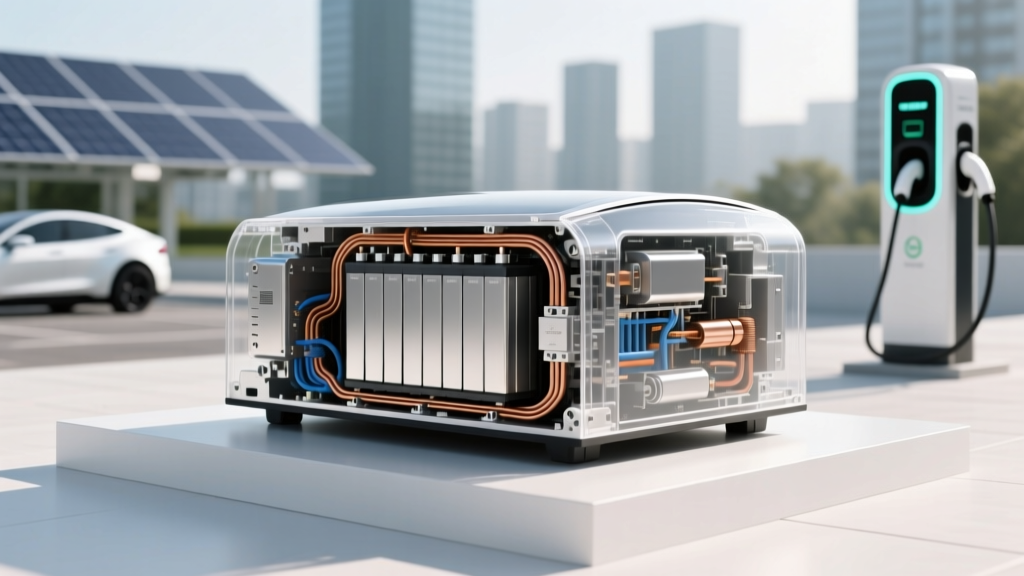
Search forums or parts stores for "cable jumper battery" and you'll find thousands of results for jump-starting dead car batteries. But if you own an electric vehicle, those thick copper-clamp cables and portable lithium jump packs are aimed at a completely different system than the one powering your car. Understanding that distinction — and what actually keeps an EV battery healthy over a decade or more of driving — is one of the most important things any current or prospective EV owner can learn.
This guide breaks down EV traction battery chemistry, real-world degradation data, warranty coverage, replacement economics, and the daily habits that extend (or shorten) your pack's useful life.
The 12V vs. Traction Battery Distinction
Every EV on the road in 2026 carries two batteries:
- High-voltage traction battery: Typically 400V–800V architecture, ranging from ~47 kWh (Nissan Leaf) to ~131 kWh (GMC Hummer EV). This is the energy reservoir that actually moves the car.
- 12V auxiliary battery: A small lead-acid or lithium-ion battery (often ~12V, 45–70 Ah) that powers the vehicle's computers, lights, door locks, and infotainment — exactly like a conventional car battery.
When someone searches for a cable jumper battery, they're almost always looking to revive the 12V system. And yes, an EV's 12V battery can go flat — usually from parasitic drain if the car sits unplugged for weeks, or because the DC-DC converter (which charges the 12V from the traction pack) hasn't been triggered. In that scenario, a standard jump pack or jumper cables connected to another vehicle's 12V system can wake the car up, allowing the traction battery to take over via the DC-DC converter.
What you absolutely cannot do is use any consumer cable jumper battery product to jump-start or recharge the high-voltage traction pack. That pack requires carefully managed DC or AC charging at specific voltages and communication protocols (CCS, NACS, CHAdeMO). Attempting to apply external voltage to HV components is extremely dangerous and will void your warranty.
EV Battery Chemistry: LFP vs. NMC vs. NCA
The two dominant lithium-ion chemistries in 2026 EVs are LFP (lithium iron phosphate) and NMC/NCA (nickel manganese cobalt / nickel cobalt aluminum). Each has distinct engineering trade-offs that affect range, longevity, cost, and how you should treat the pack day-to-day.
| Attribute | LFP (e.g., Tesla Model 3 RWD, Ford Mustang Mach-E Select) | NMC/NCA (e.g., Hyundai Ioniq 5, Rivian R1T, BMW iX) |
|---|---|---|
| Energy density | Lower (~160–180 Wh/kg cell-level) | Higher (~230–300 Wh/kg cell-level) |
| Typical pack size | 50–66 kWh usable | 72–131 kWh usable |
| Cycle life | 3,000–5,000+ full cycles before 80% retention | 1,000–2,000 full cycles before 80% retention |
| Cold-weather performance | More range loss in freezing temps (~30–40%) | Better low-temp discharge; ~20–30% loss |
| Charging to 100% | Recommended weekly for BMS calibration | Best kept at 80% daily; 100% for trips only |
| Cost per kWh (pack-level) | ~$90–$110 | ~$120–$155 |
| Cobalt/nickel dependency | None | Significant (supply-chain and ethical factors) |
The bottom line: LFP sacrifices some energy density and cold-weather range but wins decisively on cycle life and cost. For a daily commuter who charges at home and rarely needs 300+ miles in one shot, LFP is the more durable, lower-stress choice. NMC/NCA packs deliver the range and performance that larger vehicles and road-trippers need, but they demand more careful state-of-charge management to maximize longevity.
How Long Do EV Batteries Actually Last?
The short answer: in most cases, the traction battery will outlast the rest of the vehicle. Real-world fleet data consistently shows modern lithium-ion packs retaining 85–92% of original capacity after 100,000 miles.
Observed Degradation Data Points:
- Tesla Model 3/Y (NMC, 2018–2023 fleet data): ~5% loss at 50,000 miles; ~8–10% loss at 100,000 miles; degradation curve flattens significantly after year 3.
- Chevrolet Bolt EV/EUV (NMC, 2017–2023): Recurrent fleet data shows median ~7% degradation at 80,000 miles, with the vast majority of packs retaining above 90% capacity.
- Nissan Leaf (LMO/NMC, passively cooled): Older passively cooled packs (2011–2017) showed 15–25% loss at 80,000 miles in hot climates. The 2018+ Leaf Plus with improved thermal management performs significantly better (~8–12% at 80k miles).
- Hyundai/Kia E-GMP platform (Ioniq 5, EV6, 77.4 kWh NMC): Early fleet data at 60,000 miles shows ~4–6% degradation, aided by robust liquid cooling and preconditioning.
- Tesla Model 3 RWD (LFP, CATL cells): Anecdotal and fleet reports indicate 2–4% loss at 50,000 miles, consistent with LFP's superior cycle-life profile.
Source: Fleet data aggregated by Recurrent Auto and manufacturer longevity reports.
The key insight is that degradation is non-linear. Most capacity loss occurs in the first 20,000–30,000 miles (the so-called "break-in" phase), after which the curve flattens considerably. A pack that shows 5% loss at 40,000 miles is not on track to lose 25% by 200,000 — it will likely plateau around 10–15% total loss well past 150,000 miles.
What the Battery Warranty Actually Covers
Federal mandate requires a minimum 8-year/100,000-mile warranty on EV battery packs (10 years/150,000 miles in California Air Resources Board states). But the details matter enormously.
| Manufacturer | Warranty Term | Capacity Threshold | Notes |
|---|---|---|---|
| Tesla (Model 3/Y) | 8 yr / 120,000 mi (LR/AWD); 8 yr / 100,000 mi (RWD LFP) | 70% retention | Covers defects and excess degradation below threshold |
| Hyundai / Kia | 10 yr / 100,000 mi | 70% retention | Among the most generous terms in the industry |
| Ford (Mach-E, F-150 Lightning) | 8 yr / 100,000 mi | 70% retention | Covers battery components and degradation |
| GM (Ultium platform) | 8 yr / 100,000 mi | 70% retention | Includes battery and electric propulsion components |
| Rivian | 8 yr / 175,000 mi (Standard); 8 yr / 120,000 mi (some configs) | 70% retention | Higher mileage cap for adventure-oriented vehicles |
| BMW | 8 yr / 100,000 mi | 70% retention | Transferable to second owner |
Critical detail: The 70% threshold means the manufacturer only owes you a remedy if your pack degrades below 70% of its original capacity within the warranty window. A pack at 72% at year 7 is technically "within spec," even though you've lost 28% of your range. In practice, very few modern liquid-cooled packs hit that threshold under normal use — which is why out-of-warranty replacements remain rare.
EV Battery Replacement Cost: What to Expect
This is the question that generates the most anxiety — and the most misinformation. Let's look at actual numbers.
| Vehicle / Pack Size | Approximate Replacement Cost (Parts + Labor) | Context |
|---|---|---|
| Nissan Leaf (40 kWh) | $6,500–$9,000 | Older packs; refurbished options available for less |
| Tesla Model 3 RWD LFP (~57 kWh) | $10,000–$14,000 | CATL supply; pricing has dropped as LFP scales |
| Tesla Model Y LR (~75 kWh NMC) | $13,000–$18,000 | Structural pack in newer models adds labor complexity |
| Hyundai Ioniq 5 (77.4 kWh) | $14,000–$20,000 | E-GMP platform; module-level repair may be possible |
| Ford F-150 Lightning Ext. Range (131 kWh) | $22,000–$32,000 | Largest consumer pack; labor-intensive removal |
| Rivian R1T (Large Pack, ~128 kWh) | $20,000–$28,000 | Skateboard architecture; specialized service network |
When is replacement actually needed? Based on current degradation trajectories, the vast majority of 2020+ EVs with liquid-cooled packs will never need a full battery replacement during their first-owner lifecycle (typically 10–15 years / 150,000–200,000 miles). Out-of-warranty replacements today are overwhelmingly driven by:
- Physical damage (collision, ground strike, flood) — covered by insurance, not the battery warranty.
- Manufacturing defects in early-production packs (e.g., the Chevrolet Bolt recall for fire risk) — covered by manufacturer recall.
- Extreme high-mileage use (fleet vehicles, rideshare at 250,000+ miles) — the small percentage of cases where degradation crosses the functional threshold.
For the average owner driving 12,000–15,000 miles per year, the battery is the least likely major component to require replacement.
Factors That Accelerate (or Preserve) Battery Life
Battery degradation isn't random. It's driven by measurable electrochemical stressors that you can control.
Habits That Extend Battery Life
- Charge to 80% daily (NMC/NCA): Storing a pack at 100% state of charge accelerates electrolyte decomposition. Set your charge limit to 80% for routine use and bump to 100% only before long trips.
- Charge to 100% regularly (LFP): LFP cells have a very flat voltage curve, making it hard for the BMS to estimate SoC without periodic full charges. Tesla and Ford recommend 100% at least once per week for LFP packs.
- Precondition before DC fast charging: Most EVs automatically warm the battery when you navigate to a charger. If yours doesn't, plug in and let the pack reach ~68°F–77°F (20°C–25°C) before initiating a fast charge. Cold packs charge slower and experience more lithium plating stress.
- Use Level 2 home charging as your primary method: Slow, steady Level 2 charging (7–11 kW) generates far less thermal stress than repeated 150–350 kW DC fast charging.
- Avoid prolonged storage at extreme SoC: If leaving the car for 2+ weeks, set the charge limit to ~50% and keep it plugged in so the thermal management system can maintain temperature.
Habits That Accelerate Degradation
- Exclusive DC fast charging: Fleet data shows vehicles that rely primarily on DCFC degrade 2–4% more over 100,000 miles than those charging predominantly on Level 2. Not catastrophic, but measurable.
- Repeated 100% charges on NMC packs: High SoC + high temperature is the worst combination for nickel-based cathodes.
- Frequent deep discharges to 0%: Dropping below 5% regularly stresses the anode. Most BMS systems have a buffer (typically 2–5 kWh hidden below the "0%" display), but habitually running the pack dry is unnecessary risk.
- Parking in extreme heat at high SoC: A pack sitting at 95%+ in 105°F Phoenix summer heat is under maximum electrochemical stress. If you must park in heat, keep SoC around 50–60%.
How to Check Your Battery's State of Health (SoH)
State of Health (SoH) is expressed as a percentage: 100% means the pack holds its original rated capacity; 90% means it holds 90% of that. Here's how to monitor it:
- In-vehicle displays: Tesla shows battery health in the Service menu (added via 2024 software update). Hyundai/Kia provides a battery health indicator in the EV settings menu. Ford's MyFordPass app includes a battery health readout.
- OBD-II diagnostic tools: Devices like the OBDeleven or dedicated EV scanners (e.g., from A Better Route Planner partner tools) can read the BMS-reported SoH directly. This is the most accurate consumer-accessible method.
- Third-party telemetry apps: Services like Recurrent and TezLab (for Tesla) track your range over time and estimate SoH based on observed energy consumption vs. original EPA figures.
- Dealer diagnostics: Any authorized service center can pull a full battery health report. Request one before purchasing a used EV — it's the single most valuable data point.
What to look for: A 3-year-old EV with 40,000 miles showing 94% SoH is perfectly normal. The same car at 85% SoH warrants investigation — it may indicate excessive fast-charging, a defective module, or a BMS calibration issue that a dealer can sometimes resolve with a software reset and full charge-discharge cycle.
Emerging Battery Tech: What's Real vs. What's Hype
Headlines about "next-gen batteries" are relentless. Here's a grounded assessment of what's actually coming and when:
- Solid-state batteries: Toyota, Samsung SDI, and QuantumScape are targeting limited production in 2027–2029 vehicles. Solid-state promises 30–40% higher energy density and faster charging. However, manufacturing scalability and cost remain unsolved at mass-market price points. Expect initial deployment in luxury/premium vehicles above $70,000 MSRP, not mainstream models, through at least 2030.
- Silicon-dominant anodes: Companies like Sila Nanotechnologies and Group14 are already shipping silicon-blend anodes in limited applications (e.g., Mercedes G-Class EV). Silicon can store ~10x more lithium than graphite, but expansion/contraction during cycling has limited durability. Expect gradual integration into NMC cells through 2027–2028, adding roughly 10–20% energy density improvement.
- Sodium-ion batteries: CATL and BYD are producing sodium-ion cells for low-cost, short-range applications in China. Energy density is ~30% lower than LFP, making it suitable for urban runabouts but not long-range vehicles. Possible US-market appearance in budget EVs post-2027.
- LMFP (lithium manganese iron phosphate): An evolution of LFP adding manganese for ~15–20% higher energy density while retaining LFP's cost and safety advantages. Expected in Tesla and other manufacturers' mid-range models by 2027–2028.
None of these technologies are available in production EVs you can buy today. Any vehicle currently on sale uses either LFP or NMC/NCA lithium-ion chemistry. Plan your purchase on what exists, not what's announced.
Frequently Asked Questions
Can I use a cable jumper battery to jump-start my EV?
You can use a standard jumper cable or portable jump pack to revive the 12V auxiliary battery if it's dead — this is identical to jump-starting a gas car. You cannot and must not attempt to apply any external voltage source to the high-voltage traction battery. The HV system is only charged through the vehicle's designated charge port using compatible EVSE equipment.
How long do EV batteries last in years and miles?
Based on fleet data from Recurrent and manufacturer reports, modern liquid-cooled EV batteries (2020+) typically retain 85–92% of original capacity at 100,000 miles and 80–88% at 150,000 miles. In calendar years, most packs are engineered for 15–20 years of service before reaching the 70% capacity threshold that triggers warranty coverage. The battery is statistically the most durable major component in the vehicle.
How much does it cost to replace an EV battery?
Full pack replacement ranges from approximately $6,500 for a small pack (Nissan Leaf 40 kWh) to $32,000 for the largest consumer packs (Ford F-150 Lightning 131 kWh). However, the overwhelming majority of EV owners will never need a replacement — modern packs are outlasting the vehicles around them. When replacements do occur, they're most often covered by warranty, recall, or insurance (collision damage).
What does the EV battery warranty cover?
Federal law mandates a minimum 8-year/100,000-mile warranty (10/150k in CARB states) covering defects and capacity loss below 70% of original capacity. This means the manufacturer will repair or replace the pack if it degrades below 70% within the warranty window. Some manufacturers (Hyundai, Kia, Rivian) offer terms exceeding the federal minimum. The warranty covers both manufacturing defects and excessive degradation — but not damage from collisions, flooding, or unauthorized modifications.
LFP vs. NMC — which battery chemistry is better?
Neither is universally "better." LFP wins on cycle life (3,000–5,000 cycles vs. 1,000–2,000), cost (~$90–110/kWh vs. $120–155/kWh), and safety (no thermal runaway risk from cobalt/nickel). NMC/NCA wins on energy density (enabling 300+ mile range in smaller packages), cold-weather performance, and fast-charging speed. If your daily driving is under 200 miles and you charge at home, LFP is the lower-stress, longer-lasting choice. If you regularly road-trip or need maximum range, NMC/NCA is the practical pick — just maintain 80% daily charge limits.
Does frequent DC fast charging damage the battery?
Exclusively relying on DC fast charging (150–350 kW) accelerates degradation by roughly 2–4% over 100,000 miles compared to primarily Level 2 charging, according to fleet data. It's not catastrophic — the battery won't "fail" from fast charging — but the cumulative thermal and electrochemical stress is measurable. The practical recommendation: use Level 2 for daily charging and reserve DCFC for road trips and situations where you genuinely need a quick top-up. Always precondition the battery before fast charging.
How do I maximize my EV battery's lifespan?
Set your charge limit to 80% for NMC/NCA packs (100% weekly for LFP). Use Level 2 home charging as your primary method. Precondition before fast charging. Avoid storing the vehicle at 100% SoC or below 10% SoC for extended periods. Park in shade or a garage when possible in extreme heat. These habits collectively can add 3–5% capacity retention over a 100,000-mile ownership period — the difference between 88% and 93% SoH at the 8-year mark.
Sources: EPA fuel economy data via fueleconomy.gov; IRS §30D clean vehicle credit rules via irs.gov; battery degradation fleet data from Recurrent Auto.