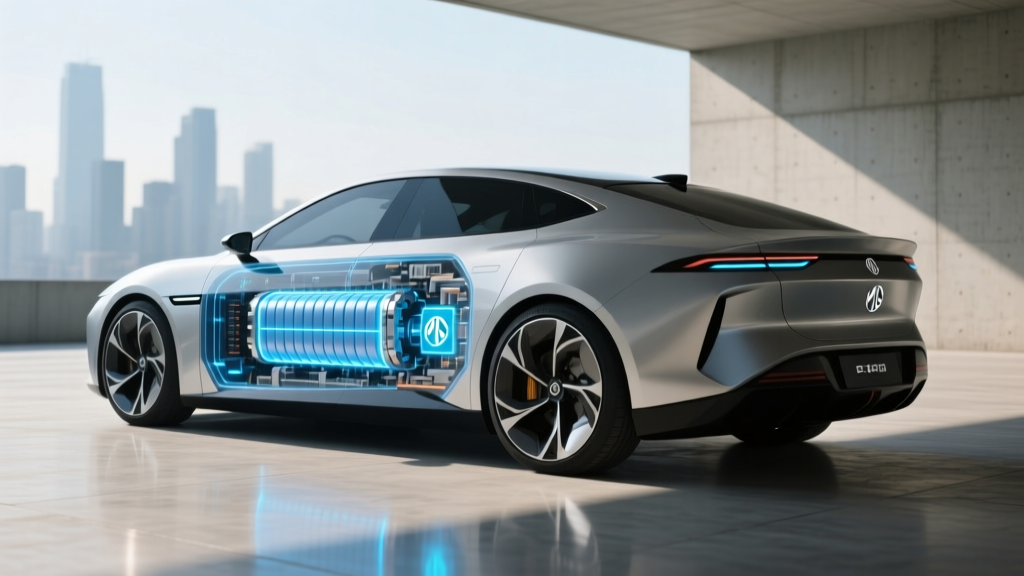
BYD has signaled it will bring a solid-state battery to production vehicles around 2027–2028, joining Toyota, Nissan, and Samsung SDI in the race to commercialize next-generation cells. For EV shoppers in 2026, the headline is exciting—but the practical question is whether to wait or buy now. To answer it, you need a clear picture of the chemistries actually shipping today, how long they last, what they cost to replace, and how solid-state might change the calculus.
This guide breaks down BYD's solid-state claims against the real-world performance of lithium iron phosphate (LFP) and nickel-manganese-cobalt/nickel-cobalt-aluminum (NMC/NCA) batteries, using degradation data, warranty terms, and ownership costs you can act on right now.
BYD's Solid-State Battery: What We Know in 2026
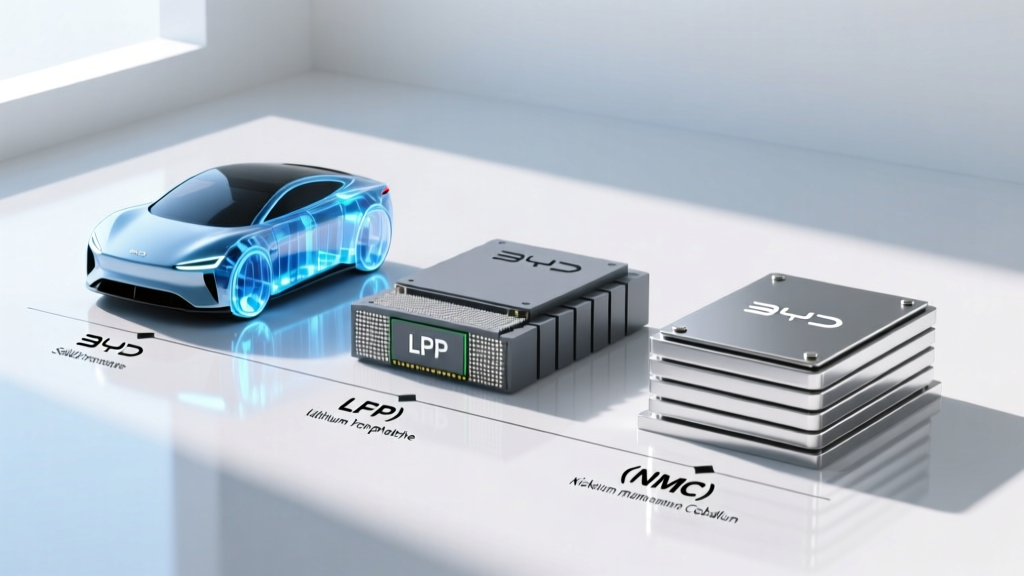
BYD's Blade Battery—an LFP cell in a cell-to-pack (CTP) configuration—already powers the Atto 3, Seal, Dolphin, and an expanding roster of export models. In late 2024 and into 2025, BYD executives confirmed parallel development of a solid-state (or semi-solid) cell, with small-scale production targeted for 2027 and broader rollout by 2028–2030. As of early 2026, no BYD vehicle on sale uses a solid-state pack; every current model runs on LFP.
The promised advantages mirror the broader solid-state pitch: higher energy density (potentially 400+ Wh/kg at the cell level, versus roughly 170–200 Wh/kg for today's LFP), faster charging without lithium plating risk, and improved thermal stability. But timelines in this space have slipped repeatedly. Toyota's own solid-state target moved from 2025 to 2027–2028, and Samsung SDI has pushed full solid-state to 2027 at the earliest. Treat any pre-2028 solid-state availability as announced, not confirmed.
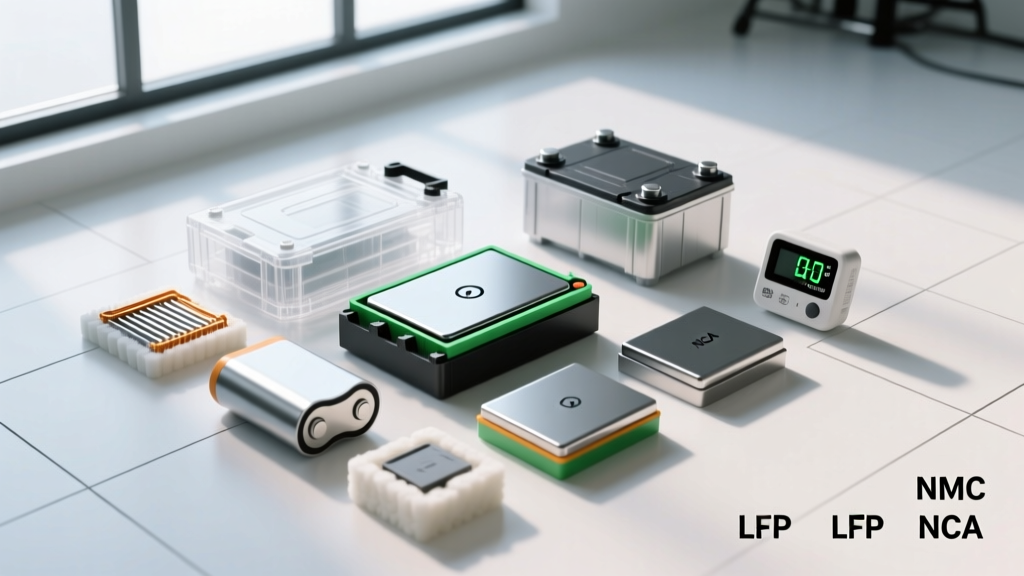
LFP vs NMC/NCA: The Chemistry Trade-Offs That Matter Today
Every EV battery on U.S. roads in 2026 uses one of two dominant cathode chemistries. Understanding the difference is more useful than chasing a solid-state timeline.
| Attribute | LFP (LiFePO₄) | NMC / NCA |
|---|---|---|
| Energy density (cell) | 160–200 Wh/kg | 250–300 Wh/kg |
| Typical cycle life | 3,000–6,000 cycles | 1,000–2,500 cycles |
| Cold-weather range loss | Higher (~30–40% at 20°F) | Moderate (~20–30% at 20°F) |
| Peak DC charge rate | Often capped ~150–170 kW | Up to 250–350 kW (800V) |
| Recommended daily SoC | 100% OK | 80% for daily use |
| Cobalt/nickel content | None | Yes (supply-chain exposure) |
| Cell cost (2026) | ~$70–90/kWh | ~$100–130/kWh |
| Notable users | BYD (all), Tesla Model 3 RWD, Ford Mustang Mach-E Select | Hyundai Ioniq 5/6, Kia EV6/EV9, Tesla LR/Perf, Rivian, GM Ultium |
Which is better? For a driver who charges at home nightly and prioritizes 15-year longevity, LFP wins on cycle life and cost. For a driver who road-trips frequently, needs 300+ miles of EPA range, or lives in a cold climate, NMC/NCA's density and charge speed are the better fit. Neither is universally superior—pick based on your driving pattern.
How Long Do EV Batteries Actually Last?
The short answer: almost always longer than the car itself. Data aggregated by Recurrent Auto across more than 15,000 vehicles shows median range retention of roughly 90–95% after 100,000 miles for modern liquid-cooled packs. Catastrophic failure before 150,000 miles is rare—under 2% of vehicles in major fleet studies.
Here's what real-world degradation looks like across chemistries:
- LFP (Tesla Model 3 RWD, BYD Atto 3): ~2–4% loss in the first year, then ~0.5% per year. Expect 92–96% State of Health (SoH) at 100k miles.
- NMC (Hyundai Ioniq 5, Kia EV6): ~3–5% first year, ~0.7–1% per year after. Expect 88–93% SoH at 100k miles.
- Early-generation Nissan Leaf (passive air-cooled, pre-2018): 15–25% loss by 100k miles—a cautionary tale about thermal management, not chemistry alone.
For context, the federal warranty minimum under the Clean Air Act framework is 8 years/100,000 miles for battery capacity in many states, and California's CARB rules push that to 10 years/150,000 miles for partial-zero-emission components. Most manufacturers exceed these floors.
What the Battery Warranty Actually Covers
Warranty language matters. A "8-year/100,000-mile" warranty sounds generous, but the trigger is almost always a capacity-retention threshold—typically 70% of original capacity. If your 75 kWh pack drops to 54 kWh (72%), you are not covered. Drop to 51 kWh (68%) and you are.
| Brand | Term | Capacity threshold | Chemistry |
|---|---|---|---|
| BYD (global, where sold) | 8 yr / 100,000 mi (varies by market) | ~70% | LFP Blade |
| Tesla Model 3/Y RWD | 8 yr / 100,000 mi | 70% | LFP |
| Tesla Model 3/Y LR & Perf | 8 yr / 120,000 mi | 70% | NMC/NCA |
| Hyundai / Kia (E-GMP) | 10 yr / 100,000 mi | 70% | NMC |
| GM (Ultium-based) | 8 yr / 100,000 mi | 70% | NMC |
| Ford (Mach-E, F-150 Lightning) | 8 yr / 100,000 mi | 70% | NMC (LFP on select) |
| Rivian | 8 yr / 175,000 mi | 70% | NMC |
Always read the fine print: some warranties exclude capacity loss attributable to repeated DC fast-charging above a stated frequency, and most require dealer or certified-shop diagnostics to validate a claim.
EV Battery Replacement Costs: The Honest Numbers
Replacement is the fear that keeps some buyers on the sideline. The reality: the vast majority of EVs are scrapped or traded before the pack needs replacement. When one does, costs have been falling as cell prices drop and more refurbished packs enter the market.
| Vehicle class | Pack size | New OEM pack (installed) | Refurbished / module repair |
|---|---|---|---|
| Compact (Chevy Bolt, BYD Dolphin) | 60–65 kWh | $9,000–$13,000 | $4,500–$7,000 |
| Mid-size (Model 3 RWD, Ioniq 5) | 70–80 kWh | $12,000–$17,000 | $6,000–$9,500 |
| Long-range / SUV (Model Y LR, EV9) | 80–100 kWh | $15,000–$22,000 | $8,000–$13,000 |
| Large truck (F-150 Lightning Ext.) | 131 kWh | $22,000–$32,000 | $12,000–$18,000 |
Module-level repair—replacing only the degraded or failed cell modules rather than the whole pack—is increasingly common at independent EV shops and can cut cost by 50% or more. It is the right first question to ask before accepting a full-pack quote.
Factors That Shorten (or Preserve) Battery Life
Chemistry sets the ceiling; your habits determine where you land. The three biggest degradation accelerators, in order:
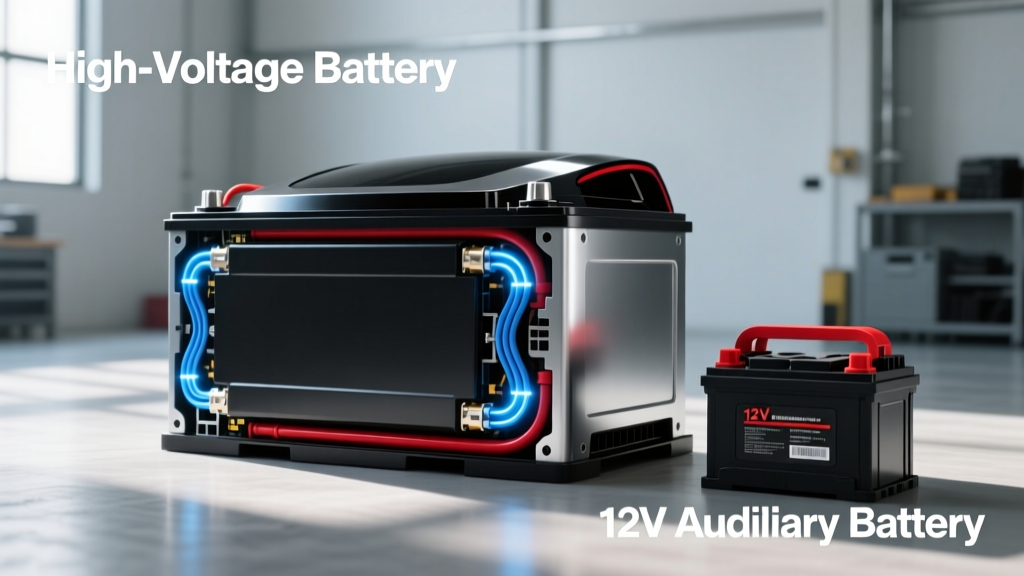
- High state of charge held for long periods. Sitting at 100% SoC for days stresses NMC/NCA cathodes. LFP tolerates 100% far better, which is why Tesla and BYD recommend periodic 100% charges on LFP for BMS calibration.
- Heat exposure. Repeated fast-charging in hot climates without adequate preconditioning accelerates electrolyte breakdown. Liquid-cooled packs (standard on nearly all 2026 EVs) mitigate this substantially.
- Frequent DC fast-charging to high SoC. Daily 150–350 kW sessions above 80% SoC add up. The Idaho National Lab fast-charge study showed measurable extra degradation when packs were DC-charged exclusively versus Level 2, though the absolute gap after 100k miles was in the single-digit percentage range.
Battery care checklist for 2026 owners:
- Set daily charge limit to 80% for NMC/NCA, 100% for LFP.
- Use Level 2 home charging as the default; reserve DC fast-charging for road trips.
- Enable preconditioning before fast-charging sessions (warms the pack to optimal temp).
- Avoid leaving the car at <10% or >95% SoC for more than 48 hours.
- In extreme cold, plug in when parked so the BMS can thermally manage the pack on grid power.
- Update BMS firmware via OTA when offered—manufacturers refine charge curves over time.
How to Check and Track Battery State of Health
State of Health (SoH) is the percentage of original usable capacity the pack currently holds. Most OEM apps surface this indirectly—via estimated range at 100%—but you can get a sharper readout:
- OEM app / in-car display: Tesla, Hyundai, Kia, and Rivian show estimated range at full charge; compare to the original EPA figure to approximate SoH.
- OBD-II + third-party app: Tools like Scan My Tesla, LeafSpy (Nissan), or Car Scanner pull BMS-reported SoH directly.
- Recurrent / Geotab fleet reports: If you buy used, ask for a SoH report; many CPO programs now include one.
- Dealer diagnostic: A service visit can print a formal SoH certificate, useful for resale or warranty claims.
Establish a baseline in your first month of ownership, then recheck quarterly. A drop of more than 1% per 10,000 miles after the first year warrants a dealer conversation.
Solid-State and Silicon-Anode: A Realistic Timeline
Solid-state batteries replace the liquid electrolyte with a solid ceramic, sulfide, or polymer conductor, enabling lithium-metal anodes and dramatically higher energy density. Silicon-anode cells (already in limited production by companies like Sila Nanotechnologies for the Mercedes G 580 EQ) boost capacity more modestly—roughly 20–40%—using existing manufacturing.
Realistic production outlook, based on manufacturer statements and analyst consensus as of 2026:
- 2026–2027: Semi-solid cells in limited, premium Chinese-market EVs (NIO 150 kWh pack, IM Motors). Not broadly exported.
- 2027–2028: Toyota, BYD, and Samsung SDI target low-volume solid-state production, likely in flagship models only, at significant price premium.
- 2029–2032: Cost parity with today's NMC plausible at scale; mainstream model adoption begins.
If you are deciding on a 2026 or 2027 EV purchase, waiting for solid-state is almost certainly not the right trade. Today's LFP and NMC packs, properly cared for, will outlast the vehicle's useful life for most owners.
Frequently Asked Questions
How long do EV batteries last in years and miles?
Modern liquid-cooled packs typically retain 88–96% capacity at 100,000 miles and 80–92% at 200,000 miles, depending on chemistry and use. Calendar life of 15–20 years is common before degradation crosses the 70% warranty threshold.
How much does it cost to replace an EV battery?
Out-of-warranty replacement ranges from roughly $9,000 on a compact EV to $32,000 on a large truck pack, installed. Module-level repair can halve those figures. Most packs never need replacement during first-owner life.
What does the battery warranty cover?
Typically 8 years/100,000 miles (10/100k for Hyundai/Kia, 8/175k for Rivian) against capacity loss below 70% of original. Manufacturing defects and module failures are covered; abuse, physical damage, and some extreme fast-charge patterns may be excluded.
How do I check my EV battery health?
Compare 100%-charge estimated range to the original EPA figure, use an OBD-II reader with BMS access (Scan My Tesla, LeafSpy, Car Scanner), or request a formal SoH report from a dealer.
LFP or NMC—which should I choose?
LFP for longevity, lower cost, and daily home charging to 100%. NMC/NCA for maximum range, faster DC charging, and cold-climate performance. Neither is universally better; match to your driving pattern.
Is the BYD solid-state battery available now?
No. As of 2026, all BYD production vehicles use the LFP Blade Battery. BYD has indicated solid-state production could begin around 2027–2028, but this is an announced target, not a confirmed on-sale date, and U.S. availability remains uncertain given current market access.
Sources: Recurrent Auto battery degradation studies, fueleconomy.gov for EPA range baselines, manufacturer warranty documentation (Tesla, Hyundai, BYD).