BYD's Blade Battery has become one of the most discussed energy storage designs in the electric vehicle industry, largely because it rethinks how lithium iron phosphate (LFP) cells are packaged. But beyond the marketing, buyers and engineers want specifics: What are the actual BYD Blade Battery dimensions? How does its chemistry compare to the nickel-manganese-cobalt (NMC) packs in most Western EVs? And what does long-term ownership really look like?
This guide breaks down the Blade Battery's physical specs, then zooms out to cover everything an EV buyer or owner needs to know about battery technology in 2026 — chemistry trade-offs, degradation data, warranty coverage, replacement costs, and how to maximize the lifespan of whatever pack is under your floor.
BYD Blade Battery Dimensions and Physical Design
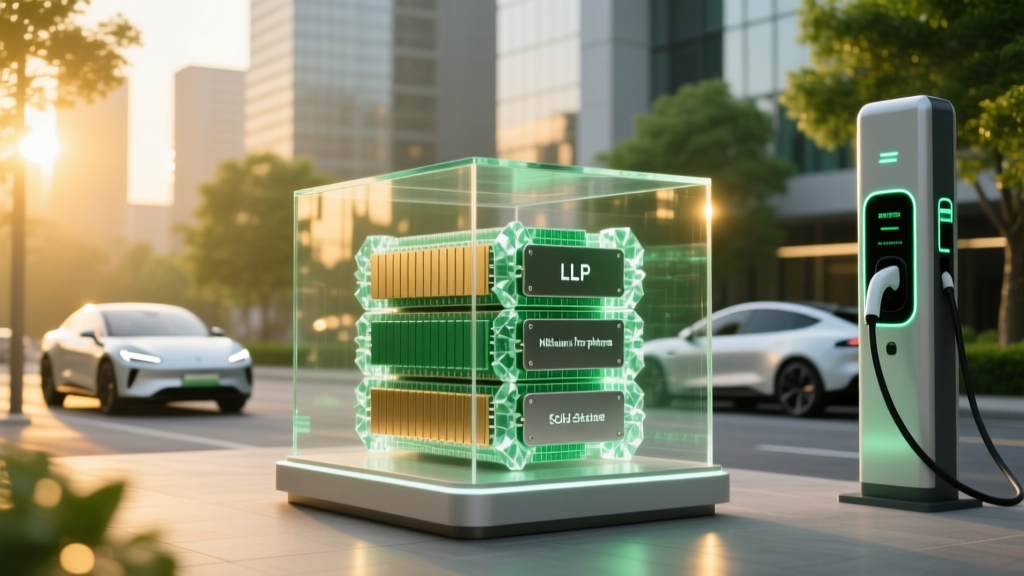
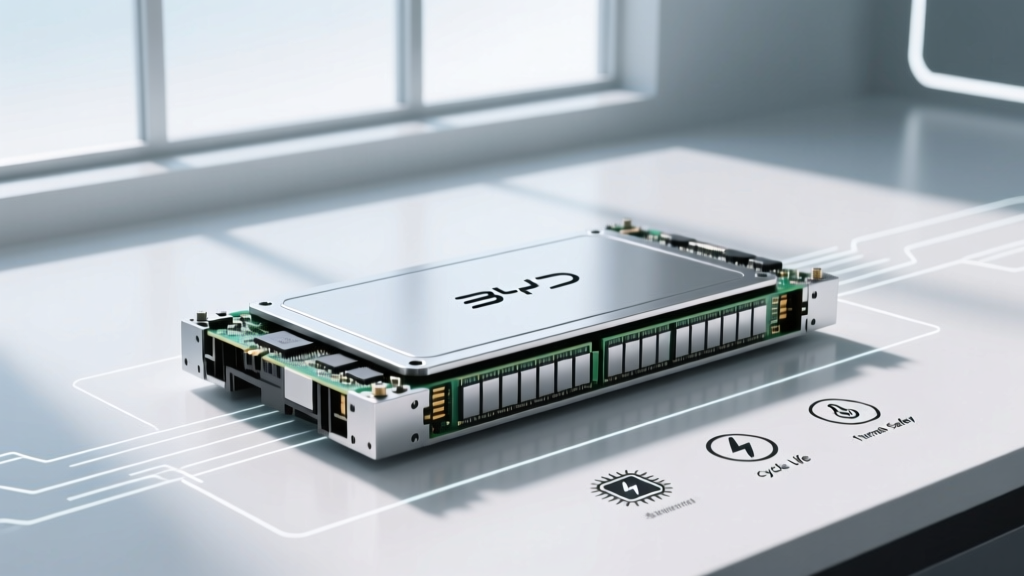
The BYD Blade Battery is not a single cell size — it's a form-factor philosophy. Instead of using conventional cylindrical or pouch cells grouped into modules, BYD uses long, thin, prismatic LFP cells arranged directly into the pack (cell-to-pack, or CTP). Each "blade" cell is roughly:
- Length: ~960 mm (37.8 inches)
- Width: ~118 mm (4.6 inches)
- Thickness: ~13.5 mm (0.53 inches)
These dimensions vary slightly depending on the specific pack configuration and vehicle application. The BYD Seal, for example, uses a 82.5 kWh Blade pack, while the Atto 3 (Yuan Plus) uses a smaller ~60.5 kWh version. The key innovation is structural: the blades themselves serve as load-bearing beams within the pack, improving torsional rigidity and eliminating the need for traditional module housings. This increases volumetric utilization by roughly 50% compared to conventional LFP packs, according to BYD's published engineering data.
The result is an LFP pack that narrows the energy-density gap with NMC — historically LFP's biggest weakness — while retaining LFP's advantages in cycle life, thermal stability, and cost.
LFP vs NMC: Which Chemistry Is Better and Why?
The two dominant EV battery chemistries in 2026 are lithium iron phosphate (LFP) and nickel-manganese-cobalt (NMC/NCA). Neither is universally "better" — the right choice depends on your priorities.
| Attribute | LFP (e.g., BYD Blade, Tesla Model 3 RWD) | NMC/NCA (e.g., Hyundai Ioniq 5, Ford F-150 Lightning) |
|---|---|---|
| Energy density (cell-level) | ~160–180 Wh/kg | ~230–300 Wh/kg |
| Typical cycle life | 3,000–5,000+ cycles | 1,000–2,500 cycles |
| Thermal stability | Excellent — onset of thermal runaway ~270°C | Moderate — onset ~210°C (NMC811) |
| Cold-weather performance | Weaker — more range loss below freezing | Better — less low-temp capacity reduction |
| Cost per kWh (pack-level) | ~$90–$110 | ~$120–$150 |
| Cobalt/nickel content | None — iron and phosphate only | Contains cobalt and/or nickel |
| Recommended daily SoC | 100% charging is fine | 80% for daily use, 100% for trips |
| Common applications | Standard-range models, fleet vehicles | Long-range and performance models |
The practical takeaway: If you prioritize longevity, safety, and lower cost — and you don't need maximum range in a compact package — LFP is the stronger pick. If you need the longest possible range in the lightest possible pack, NMC still wins on energy density. BYD's Blade design narrows the density gap enough that LFP now makes sense in midsize sedans and crossovers, not just budget city cars.
For cold-climate buyers, NMC retains an edge. LFP packs can lose 30–40% of rated range in sub-freezing conditions without preconditioning, compared to roughly 20–30% for NMC, based on Recurrent's real-world fleet data.
How Long Do EV Batteries Actually Last?
The short answer: far longer than most buyers assume. The traction battery in a modern EV is designed to outlast the vehicle itself in most cases.
Here's what the degradation data actually shows:
Typical EV Battery Degradation Curve
Based on aggregated fleet data from sources including Recurrent and Geotab's analysis of over 10,000 EVs:
- Year 1–2: ~2–5% capacity loss (initial settling)
- Year 3–5: ~1–2% loss per year (linear phase)
- Year 6–10: ~1% loss per year (gradual taper)
- At 150,000 miles: Average pack retains ~85–90% of original capacity
- At 200,000 miles: Most packs still above 80% capacity
LFP packs generally show slower degradation than NMC, with some BYD Blade and Tesla Model 3 LFP owners reporting 95%+ retention at 60,000 miles. NMC packs in vehicles like the Chevrolet Bolt and early Model 3 Long Range typically show 5–8% loss at 100,000 miles.
The critical threshold is 70–80% State of Health (SoH). Below 70%, range reduction becomes noticeable in daily driving. Most manufacturers warrant against dropping below this threshold (see below). Catastrophic failure — where a battery simply stops working — is rare and usually covered under warranty regardless of capacity.
What Does the Battery Warranty Cover?
Federal law in the US mandates a minimum EV battery warranty of 8 years / 100,000 miles (10 years / 150,000 miles in California Air Resources Board states). Most manufacturers meet or exceed this baseline.
| Manufacturer | Duration | Mileage | Capacity Retention Threshold |
|---|---|---|---|
| Tesla (Model 3/Y RWD — LFP) | 8 years | 100,000 miles | 70% |
| Tesla (Model 3/Y LR — NMC) | 8 years | 120,000 miles | 70% |
| Hyundai / Kia | 10 years | 100,000 miles | 70% |
| Ford (F-150 Lightning, Mach-E) | 8 years | 100,000 miles | 70% |
| BYD (global markets) | 8 years | 100,000 miles (varies by region) | 70% |
| General Motors (Ultium) | 8 years | 100,000 miles | 70% |
What's covered: Capacity loss below the stated threshold, manufacturing defects, and premature cell failure. What's typically not covered: Damage from accidents, improper charging equipment, flood/fire, or modifications to the battery management system. Normal gradual degradation above the threshold is considered expected wear.
Important note: The warranty guarantees a floor, not an expectation. Real-world data shows most packs significantly exceed these thresholds. The warranty is your safety net, not a prediction.
EV Battery Replacement Cost: What to Expect
Battery replacement is the single biggest fear for prospective EV buyers — and the most overstated cost concern in EV ownership. Here's the reality in 2026:
| Vehicle | Battery Size | Chemistry | Estimated Replacement Cost |
|---|---|---|---|
| Tesla Model 3 RWD | ~60 kWh | LFP | $7,000 – $10,000 |
| Tesla Model Y Long Range | ~75 kWh | NMC | $10,000 – $14,000 |
| Hyundai Ioniq 5 | 77.4 kWh | NMC | $11,000 – $15,000 |
| Ford F-150 Lightning (Extended) | ~131 kWh | NMC | $18,000 – $25,000 |
| Chevrolet Equinox EV | ~85 kWh | NMC (Ultium) | $12,000 – $16,000 |
| BYD Atto 3 (Yuan Plus) | 60.5 kWh | LFP (Blade) | $6,500 – $9,000 (global) |
These costs include the battery pack and labor but vary by region, service center, and whether refurbished packs are available. Pack-level pricing has declined from roughly $200/kWh in 2020 to approximately $110–$140/kWh in 2026, per BloombergNEF battery price surveys. LFP packs sit at the lower end of this range.
When is replacement actually needed? In most cases, it isn't — at least not during the vehicle's practical lifespan. The average EV battery in 2026 retains 85%+ capacity at 150,000 miles. Full replacement is typically only necessary after a collision, a manufacturing defect outside warranty, or at extremely high mileages (200,000+ miles) where capacity loss makes the vehicle impractical for its owner's needs. Module-level repairs — replacing individual cell groups rather than the entire pack — are increasingly available and cost significantly less ($2,000–$6,000).
Factors That Affect Battery Life
Not all miles are equal when it comes to battery wear. These are the factors that meaningfully accelerate or slow degradation:
Battery Longevity Best Practices
- Limit DC fast charging to road trips. Frequent use of 150+ kW DC chargers generates sustained heat that accelerates cell wear. Occasional fast charging is fine — daily fast charging adds measurable degradation over years.
- Avoid sitting at 100% SoC for extended periods. For NMC packs, set daily charge limit to 80%. LFP packs tolerate 100% better and BYD/Tesla actually recommend periodic full charges for LFP to calibrate the BMS.
- Don't let the pack sit near 0% for days. Deep discharge stresses cells. If storing, aim for ~50% SoC.
- Use preconditioning. Warming the battery before fast charging (most EVs do this automatically when you navigate to a charger) reduces stress and improves charge speed.
- Moderate extreme-temperature exposure. Garage parking in summer and winter reduces thermal cycling. Active thermal management systems in modern EVs handle most extremes, but sustained 110°F+ ambient heat without cooling (e.g., parked unplugged in Phoenix) adds wear.
- Regenerative braking at moderate levels. Max regen settings generate higher current flows back into the pack. Moderate settings are gentler on cells over hundreds of thousands of miles.
The single most impactful habit: reducing DC fast-charge frequency. Data from Geotab's fleet analysis shows vehicles that fast-charge more than three times per month degrade roughly twice as fast as those that rely primarily on Level 2 home charging. That doesn't mean you should avoid fast chargers on road trips — it means your daily routine should center on Level 2.
How to Check and Monitor Battery Health (SoH)
State of Health (SoH) is the percentage of original battery capacity remaining. A new EV starts at 100% SoH; a pack at 85% SoH has lost 15% of its original energy storage.
Here's how to check it:
- In-vehicle displays: Some EVs (notably the Hyundai Ioniq 5 and Kia EV6) show a battery health indicator in the settings menu. Tesla does not natively display SoH percentage, but the displayed range at 100% charge compared to the original EPA figure gives a rough proxy.
- OBD-II dongles + apps: Tools like the OBDLink MX+ paired with apps such as EV Health, Leaf Spy (Nissan Leaf), or TeslaFi (Tesla) can read the BMS-reported SoH directly.
- Dealer diagnostics: Any authorized service center can pull a full battery health report during a service visit. Request this if you're buying a used EV.
- Manual calculation: Charge to 100%, note the displayed range, and compare it to the original EPA-rated range. If your Ioniq 5 originally showed 303 miles at 100% and now shows 275 miles, your approximate SoH is ~91%. This method has margin of error (temperature and recent driving style affect displayed range) but provides a reasonable estimate.
For used-EV buyers, SoH is the single most important data point. A 2023 Model 3 at 45,000 miles with 94% SoH is a better buy than the same car at 30,000 miles with 88% SoH — the former was likely garage-charged on Level 2, while the latter may have seen heavy fast-charging use.
Emerging Battery Tech: Solid-State and Silicon Anodes
Looking ahead, two technologies are generating the most interest:
Solid-state batteries replace the liquid electrolyte with a solid material, promising higher energy density (~400+ Wh/kg at the cell level), faster charging, and improved safety. Toyota, Samsung SDI, and QuantumScape are among the companies targeting limited production vehicles by 2028–2030. However, manufacturing scalability and cost remain significant barriers. Solid-state packs are expected to debut in premium/low-volume applications before reaching mainstream price points, likely not before 2032–2035 for volume vehicles.
Silicon-anode batteries replace graphite anodes with silicon, which can store roughly 10x more lithium ions per gram. Companies like Sila Nanotechnologies and Group14 are already shipping silicon-dominant anode materials to battery manufacturers. Expect incremental adoption starting in 2026–2027 model-year premium EVs, with energy density improvements of 20–40% over current NMC cells. This is nearer-term and more likely to impact the market within the next few model years.
Neither technology is available in production EVs as of early 2026. Buyers should not delay a purchase waiting for solid-state — current LFP and NMC packs already deliver 200,000+ mile lifespans with manageable degradation.
Frequently Asked Questions
How long do EV batteries last in years and miles?
Most modern EV batteries retain 85–90% capacity at 150,000 miles and 80%+ at 200,000 miles. In years, that translates to 15–20+ years for the average driver (12,000–15,000 miles/year). LFP packs like the BYD Blade typically show even slower degradation due to their chemistry's inherent cycle-life advantage.
How much does an EV battery cost to replace in 2026?
Between $7,000 and $25,000 depending on pack size and chemistry. A 60 kWh LFP pack (Tesla Model 3 RWD, BYD Atto 3) costs roughly $7,000–$10,000; a 131 kWh NMC pack (F-150 Lightning Extended Range) can reach $18,000–$25,000. Module-level repairs are often possible for $2,000–$6,000. However, full replacement is rarely needed during the vehicle's practical lifespan.
What does the EV battery warranty actually cover?
Federally mandated minimum coverage is 8 years / 100,000 miles (10 years / 150,000 miles in CARB states). The warranty guarantees the pack will retain at least 70% of original capacity. If degradation exceeds this threshold within the warranty period, the manufacturer will repair or replace the battery at no cost. Damage from accidents, misuse, or unauthorized modifications is excluded.
How do I check my EV battery's State of Health?
Check your vehicle's settings menu for a battery health display (available on some Hyundai/Kia models), use an OBD-II reader with an EV-compatible app like TeslaFi or Leaf Spy, request a diagnostic report from your dealer, or compare your displayed range at 100% charge to the original EPA-rated range as a rough estimate.
LFP vs NMC — which battery chemistry should I choose?
Choose LFP if you want maximum longevity, lower cost, better thermal safety, and don't need the absolute longest range. Choose NMC if you need maximum range in a lighter pack, drive frequently in very cold climates, or want the fastest DC charging speeds. For most daily commuters who charge at home, LFP is the more practical and economical choice.
Does the BYD Blade Battery use LFP or NMC chemistry?
The BYD Blade Battery uses LFP (lithium iron phosphate) chemistry exclusively. Its blade-form-factor cell design improves volumetric energy density compared to conventional LFP packs, narrowing the gap with NMC while retaining LFP's superior cycle life, thermal stability, and cobalt-free composition.
Is it bad to charge my EV to 100% every day?
For NMC batteries, daily 100% charging accelerates degradation — set your daily limit to 80% and save 100% for road trips. For LFP batteries (including BYD Blade and Tesla Model 3 RWD), charging to 100% is acceptable and even recommended periodically to recalibrate the battery management system. Always consult your specific vehicle's owner's manual for manufacturer guidance.