BYD's Blade Battery platform has reshaped the global EV battery conversation since its debut, and the anticipated BYD Blade Battery 2.0 iteration promises to push lithium iron phosphate (LFP) chemistry further into the mainstream. For US-based EV shoppers evaluating models that may adopt this cell architecture — or simply trying to understand how LFP stacks up against the nickel-manganese-cobalt (NMC) packs in most American-market EVs — the chemistry inside the battery case matters as much as the badge on the hood.
This guide breaks down what Blade Battery 2.0 brings to the table, how LFP degradation actually behaves in the real world, what warranties cover, and what replacement costs look like if you ever need one. We'll also put LFP and NMC head-to-head with hard numbers so you can decide which chemistry fits your driving life.
What Is the BYD Blade Battery 2.0?
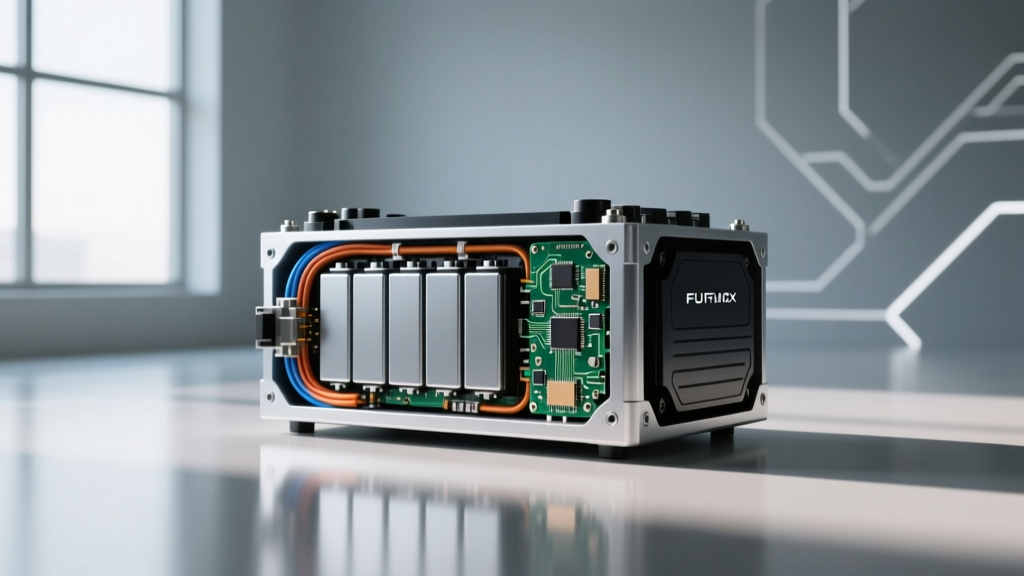
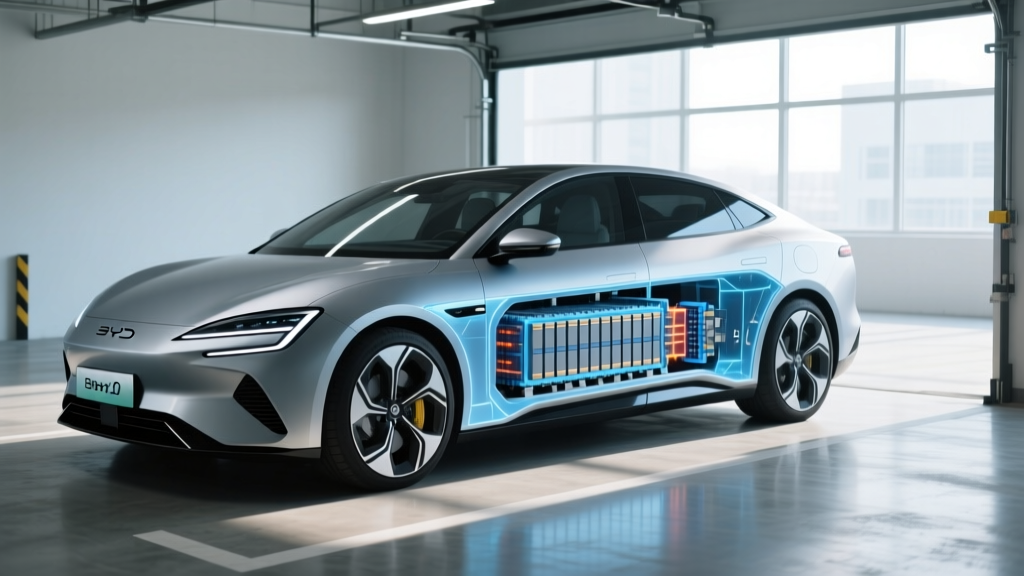
The original BYD Blade Battery, introduced in 2020, uses a cell-to-pack (CTP) design where long, thin LFP prismatic cells are stacked directly into the battery tray — eliminating intermediate modules. This approach boosts volumetric energy density by roughly 50% compared to traditional module-based LFP packs, narrowing the gap with NMC while retaining LFP's cost and safety advantages.
The BYD Blade Battery 2.0, announced for rollout across BYD's 2025–2026 model lineup, targets further improvements in energy density and charge acceptance. BYD has stated goals of exceeding 180 Wh/kg at the cell level (up from roughly 150–160 Wh/kg in the first generation) and supporting faster DC charging curves. If validated in production vehicles, these figures would make Blade 2.0 one of the most energy-dense LFP packs available, competitive with mid-range NMC offerings on a per-kilogram basis.
For context, BYD's current US-adjacent offerings (the Atto 3, Seal, and Dolphin sold in Europe, Australia, and Southeast Asia) use Blade Battery packs ranging from 44.9 kWh to 82.5 kWh. Whether BYD enters the US market directly remains uncertain due to tariff structures and IRS §30D critical-mineral sourcing rules that affect federal tax credit eligibility.
LFP vs NMC: The Chemistry Showdown
Choosing between LFP and NMC isn't about one being universally "better" — it's about matching chemistry strengths to your ownership pattern. Here's how they stack up on the metrics that matter:
| Attribute | LFP (Lithium Iron Phosphate) | NMC (Nickel Manganese Cobalt) |
|---|---|---|
| Cell-level energy density | 150–180 Wh/kg (Blade 2.0 target: >180) | 220–300 Wh/kg |
| Pack-level energy density | 120–160 Wh/kg (CTP design helps) | 160–210 Wh/kg |
| Cycle life (to 80% capacity) | 3,000–6,000+ cycles | 1,000–2,500 cycles |
| Thermal stability / safety | Excellent — resists thermal runaway to ~270°C | Good — thermal runaway onset ~210°C |
| Cold-weather performance | Weaker — 15–30% range loss below freezing | Better — 10–20% range loss below freezing |
| Cost per kWh (pack level) | $90–$115 (2025–2026 estimates) | $120–$155 |
| Cobalt / nickel content | None | Significant — supply-chain and ethical concerns |
| State of Charge (SoC) recommendation | Can charge to 100% daily; periodic full charge helps BMS calibration | Best kept 20–80% for daily; 100% only for trips |
| Typical applications | Standard-range models, fleet/ride-share, budget EVs | Long-range, performance, luxury EVs |
The bottom line: If you prioritize longevity, lower cost, and daily-charge convenience (and don't regularly drive in sub-freezing climates), LFP is the stronger play. If you need maximum range in a lighter package and can manage 20–80% daily charging discipline, NMC delivers.
How Long Do EV Batteries Actually Last?
The short answer: almost certainly longer than you'll own the car. The long answer requires looking at real degradation data rather than marketing claims.
Modern EV batteries are engineered for a usable lifespan of 15–20 years or 200,000–300,000 miles before reaching 70–80% of original capacity — the threshold most manufacturers and owners consider "end of automotive life" (though the pack still functions, just with reduced range).
Real-World Degradation Data Points
- Tesla fleet data (2024 Impact Report): Model 3/Y packs retain ~88% capacity at 150,000 miles; ~85% at 200,000 miles across both NMC and LFP variants.
- Geotab fleet study (2024, ~10,000 EVs): Average annual degradation of 1.8% across all chemistries, meaning ~82% retained after 10 years under typical use.
- BYD Blade Battery (first-gen, taxi fleet data from Shenzhen): LFP packs in high-cycle ride-share use showed ~10–12% degradation at 300,000 km (~186,000 miles) — consistent with LFP's superior cycle life.
- NMC high-performance packs (Porsche Taycan, early Model S): Slightly higher degradation rates of 2.0–2.5% annually when frequently DC fast-charged or operated at high SoC in hot climates.
For the BYD Blade Battery 2.0 specifically, the improved cell chemistry and thermal management are expected to match or exceed first-generation Blade longevity. LFP's inherent cycle-life advantage (3,000–6,000 cycles to 80% capacity) means that even at one full cycle per day, you'd need 8–16 years to approach meaningful degradation — and most drivers don't fully cycle their battery daily.
Battery Warranty Terms: What's Actually Covered
Federal law in the US mandates a minimum battery warranty of 8 years / 100,000 miles for EVs certified under California's ZEV program (which most major manufacturers follow nationwide). However, the capacity-retention threshold varies by brand:
| Manufacturer | Warranty Period | Capacity Retention Threshold | Chemistry |
|---|---|---|---|
| Tesla (Model 3 RWD / LFP) | 8 yr / 100,000 mi | 70% | LFP (CATL) |
| Tesla (Model Y LR / NMC) | 8 yr / 120,000 mi | 70% | NMC (Panasonic) |
| Hyundai / Kia | 10 yr / 100,000 mi | 70% | NMC (SK On) |
| Ford (Mustang Mach-E) | 8 yr / 100,000 mi | 70% | NMC (LG / SK On) |
| BYD (global markets) | 8 yr / 100,000 mi (varies by region) | 70% | LFP (Blade) |
| GM (Ultium platform) | 8 yr / 100,000 mi | 70% (some models 60%) | NMC (LG Ultium) |
What triggers a warranty claim: If your battery's State of Health (SoH) drops below the stated threshold within the warranty window, the manufacturer must repair or replace the pack at no cost. In practice, most warranty replacements involve swapping individual modules or cell groups rather than the entire pack, which is faster and cheaper for the OEM.
What's NOT covered: Damage from collisions, flooding, improper modifications, or using non-approved charging equipment. Normal degradation above the threshold (e.g., losing 15% over 8 years but staying above 70%) is considered expected wear and is not a warranty event.
EV Battery Replacement Costs: The Real Numbers
This is where fear-mongering thrives — so let's anchor this in actual data. Battery replacement is rarely needed during typical ownership, but costs have been falling steadily as pack prices decline.
| Battery Size | Chemistry | Estimated Replacement Cost (Parts + Labor) | Example Models |
|---|---|---|---|
| 40–55 kWh | LFP | $5,500–$8,500 | BYD Dolphin, Nissan Leaf, base Model 3 |
| 60–75 kWh | LFP | $7,500–$11,000 | BYD Atto 3, Tesla Model 3 RWD |
| 75–90 kWh | NMC | $10,000–$16,000 | Model Y LR, Mach-E ER, Ioniq 5 |
| 90–110 kWh | NMC | $14,000–$22,000 | Model S/X, Taycan, Rivian R1T |
| 110+ kWh | NMC | $18,000–$30,000+ | Hummer EV, F-150 Lightning ER, Silverado EV |
Key context: Pack-level LFP prices have fallen below $100/kWh in some 2025–2026 contracts (per BloombergNEF data), meaning a 60 kWh Blade 2.0 pack could theoretically cost $6,000 in cells alone before labor, BMS, and markup. By the time most current EVs need a replacement (if ever), costs will likely be lower still.
Most EV batteries outlast the vehicle's economic life. According to fueleconomy.gov, the average EV battery replacement rate in the first 10 years of ownership is well under 5%, with most replacements tied to manufacturing defects caught under warranty rather than age-related degradation.
Factors That Accelerate (or Preserve) Battery Life
Battery degradation isn't random — it follows predictable physics. Here are the variables you can actually control:
Battery Care Essentials
- Limit DC fast charging to road trips. Frequent use of 150+ kW DC chargers generates sustained heat that accelerates electrolyte breakdown. For daily driving, Level 2 home charging (7–11 kW) is ideal.
- Avoid prolonged 100% or 0% SoC. For NMC packs, set your charge limit to 80% for daily use. LFP packs are more tolerant and actually benefit from periodic 100% charges for BMS cell-balancing calibration — but don't leave them sitting at 100% for days.
- Precondition before fast charging. Most EVs warm the battery to optimal temperature (30–40°C) before accepting peak DC charge rates. If your car offers navigation-based preconditioning (Tesla, Hyundai, BMW), use it — it protects the cells and speeds up your charge.
- Park in shade or a garage when possible. Sustained exposure to ambient temperatures above 35°C (95°F) accelerates calendar degradation even when the car isn't driven. Battery thermal management systems help but can't fully offset extreme heat soak.
- Don't baby it too much. Modern BMS systems are sophisticated. Driving normally — including occasional highway speeds and regen braking — is perfectly fine. The marginal benefit of hyper-cautious charging habits is small compared to the convenience loss.
Cold Weather: The LFP Caveat
LFP chemistry has a known weakness in freezing temperatures. Internal resistance rises more sharply than in NMC cells, which means reduced charge acceptance (slower DC charging in winter) and greater range loss. Expect 15–30% range reduction in sustained sub-freezing driving with an LFP pack, versus 10–20% for NMC. If you live in Minnesota or Maine and commute long distances in winter, NMC may be the better fit — or plan for a heat-pump-equipped EV with active battery preconditioning to mitigate the gap.
How to Monitor Your Battery's State of Health (SoH)
State of Health (SoH) is the percentage of original capacity your battery can still hold. A new pack is 100% SoH; a pack at 85% SoH holds 85% of its original kWh.
Checking SoH in Your EV
- In-car displays: Tesla provides a battery health readout in the service menu (or via the Tesla app on newer software). Hyundai/Kia's infotainment system includes an EV battery diagnostics page. BYD vehicles sold globally include SoH in the vehicle settings under "Energy" or "Battery Information."
- OBD-II diagnostic tools: Third-party devices like the OBDLink SX paired with apps such as LeafSpy (Nissan), ABRP, or Scan My Tesla can read pack-level SoH, individual cell voltages, and degradation curves.
- Dealer diagnostic reports: Any authorized service center can pull a full battery health report, including cell imbalance data and historical charge-cycle counts. Request one before buying a used EV — it's the single most important pre-purchase check.
- Charging data analysis: Track how many kWh your car accepts on a full charge (from near-zero to full) using your home charger's meter or app. Compare this to the pack's rated usable capacity. If your 75 kWh pack consistently accepts only 63 kWh on a full charge, your SoH is approximately 84%.
Emerging Battery Tech: What's Next After Blade 2.0
The battery landscape is evolving rapidly, but it's critical to separate production-ready technology from lab-stage promises:
Silicon-Dominant Anodes
Replacing graphite anodes with silicon can boost cell energy density by 20–40%. Companies like Sila Nanotechnologies and Group14 are supplying silicon-composite anode materials to manufacturers including Mercedes-Benz (for the upcoming G-Class EV) and Panasonic. Expect limited production deployment in 2026–2027 models, with broader adoption by 2028–2029 as manufacturing scales.
Semi-Solid-State Batteries
NIO's 150 kWh semi-solid-state pack (developed with WeLion) entered limited service in China in 2024, delivering over 620 miles of range in the ET7 sedan. Toyota, Samsung SDI, and QuantumScape continue to announce solid-state milestones, but mass-production timelines remain 2028–2030 at the earliest for mainstream vehicles. These packs promise 30–50% energy density gains and faster charging but face cost and manufacturing-yield challenges that haven't been solved at scale.
Sodium-Ion Batteries
CATL and BYD are both developing sodium-ion cells as a lower-cost alternative for entry-level EVs and energy storage. Energy density is roughly 30% below LFP, making sodium-ion suitable for city cars and short-range applications but not long-range highway vehicles. Expect first production deployments in Chinese-market micro-EVs in 2026–2027.
For buyers shopping today or in the next 2–3 years, LFP (including Blade 2.0) and NMC remain the proven, production-scale chemistries. Waiting for solid-state means waiting years — and paying a premium when it first arrives.
Frequently Asked Questions
How long do EV batteries last in years and miles?
Most modern EV batteries are designed to last 15–20 years or 200,000–300,000 miles before degrading to 70–80% of original capacity. Fleet data from Tesla, Geotab, and BYD taxi programs consistently shows 82–88% capacity retention at 150,000 miles. LFP packs like the BYD Blade Battery typically outlast NMC in cycle count, though NMC performs better in extreme cold.
How much does it cost to replace an EV battery?
Full pack replacement costs range from roughly $5,500 for a small LFP pack (40–55 kWh) to $22,000+ for large NMC packs (100+ kWh). However, less than 5% of EV batteries require replacement in the first decade, and most failures are covered under the mandatory 8-year/100,000-mile warranty. Module-level repairs are increasingly common and cost significantly less than full pack swaps.
What does the EV battery warranty actually cover?
US federal law requires a minimum 8-year/100,000-mile battery warranty. Most manufacturers guarantee the pack will retain at least 70% of original capacity during that period. If SoH drops below the threshold, the manufacturer repairs or replaces the battery at no cost. Warranties do not cover collision damage, flooding, or modifications. Always check your specific brand's terms — some, like Hyundai/Kia, extend to 10 years.
How do I check and maximize my EV battery health?
Check SoH through your car's built-in diagnostics menu, an OBD-II scanner app, or a dealer diagnostic report. To maximize longevity: favor Level 2 home charging over frequent DC fast charging, avoid leaving the car at 100% or 0% SoC for extended periods, precondition the battery before fast charging, and park in shade when possible in hot climates. LFP owners should periodically charge to 100% for BMS calibration.
Is LFP or NMC better for my EV?
Neither is universally better. LFP wins on cost ($90–115/kWh vs. $120–155/kWh), cycle life (3,000–6,000 vs. 1,000–2,500 cycles), thermal safety, and daily-charging convenience (100% SoC is fine). NMC wins on energy density (220–300 vs. 150–180 Wh/kg), cold-weather performance, and weight — making it better for long-range and performance vehicles. If you drive a standard-range EV in a moderate climate and charge at home, LFP is likely the smarter long-term bet.
Will the BYD Blade Battery 2.0 be available in US-market EVs?
As of early 2026, BYD does not sell passenger vehicles in the United States, and current US tariff structures plus IRS §30D battery-sourcing requirements make near-term entry challenging. However, BYD's Blade Battery technology is influencing the broader LFP supply chain — CATL, Gotion, and other LFP cell suppliers are competing on similar cell-to-pack architectures. US-market EVs from Tesla, Ford, and others increasingly use LFP chemistry in standard-range trims, benefiting from the same fundamental advances.