If you own or are considering a BMW X3 xDrive30e plug-in hybrid, the high-voltage traction battery is the single most expensive component in the vehicle. Whether you're researching a replacement, planning long-term ownership, or simply trying to understand what's under the floor, knowing the exact battery specifications, part sourcing, and real-world degradation behavior is essential. This guide covers the BMW X3 xDrive30e high voltage battery part number, replacement economics, PHEV-specific battery chemistry, and how to maximize pack longevity over the life of the vehicle.
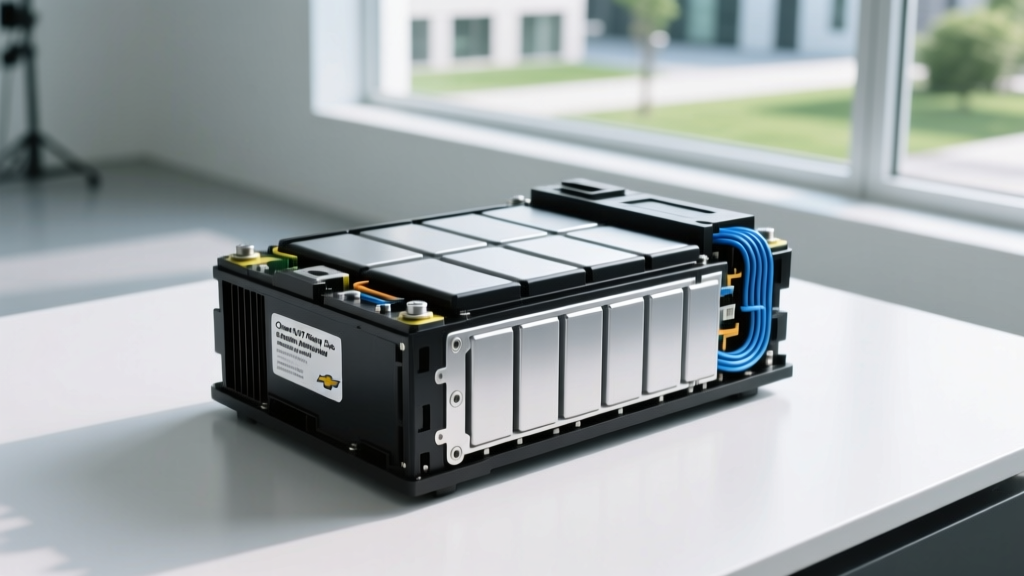
BMW X3 xDrive30e High Voltage Battery: Specs and Part Number
The current-generation BMW X3 xDrive30e (G45 platform, introduced for the 2025 model year and continuing into 2026) uses a significantly upgraded high-voltage battery compared to its predecessor (the G01-generation X3 xDrive30e). Here are the key specifications:
| Specification | Value |
|---|---|
| Gross battery capacity | ~19.7 kWh (G45, 2025–2026) |
| Usable capacity (approx.) | ~17.0–17.5 kWh |
| Cell chemistry | NMC (Nickel Manganese Cobalt) — prismatic cells |
| Nominal voltage | ~350–400V |
| EPA electric-only range | ~35–38 miles (2025/2026 MY, per fueleconomy.gov) |
| Battery location | Under rear seat / rear floor pan |
| Thermal management | Liquid-cooled and heated |
| OEM supplier | CATL / Samsung SDI (BMW sources from multiple Tier 1 suppliers by production batch) |
Regarding the part number: BMW does not publish a single universal retail part number for the complete high-voltage battery assembly the way it does for a brake pad or air filter. The HV battery is a restricted service part — it can only be ordered by BMW-certified dealerships and authorized high-voltage repair centers through BMW's internal parts system (ETK/BMW TIS). The part number is VIN-specific and varies by production date, supplier batch, and hardware revision.
To obtain the exact part number for your vehicle:
- Contact a BMW dealership parts department with your full 17-digit VIN.
- Access BMW's ETK (Electronic Parts Catalog) through a subscription or authorized dealer portal — search under Group 61 (General Electrical System) → Subgroup 61/27 (Energy Storage).
- Typical BMW HV battery part numbers for PHEV models follow the pattern 61 27 X XXX XXX (e.g., 61 27 9 XXX XXX or 61 27 5 XXX XXX), but the final digits are VIN- and build-date-dependent.
Important distinction: The high-voltage traction battery discussed here is entirely separate from the 12V auxiliary battery that powers the vehicle's electronics, lighting, and starter systems. The 12V battery is a conventional AGM or lithium-iron-phosphate auxiliary unit and is far less expensive to replace (~$250–$450). This guide focuses exclusively on the high-voltage pack.
NMC vs LFP Chemistry: What's in Your X3 and Why It Matters
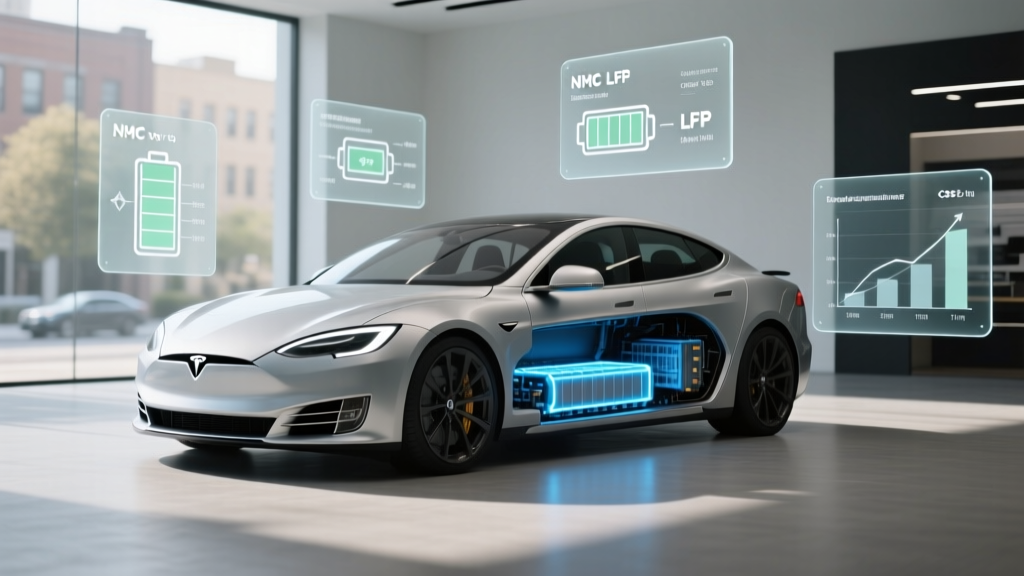
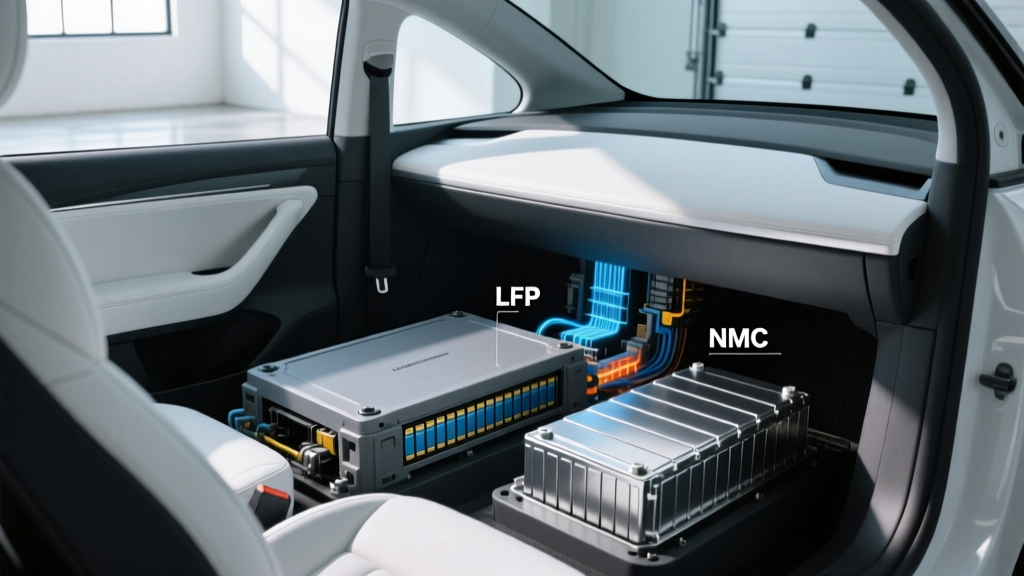
The BMW X3 xDrive30e uses NMC (Nickel Manganese Cobalt oxide) lithium-ion cells. This is standard across nearly all BMW plug-in hybrids and battery-electric vehicles. But the broader EV market includes LFP (Lithium Iron Phosphate) chemistry as well — here's how they compare:
| Attribute | NMC (Nickel Manganese Cobalt) | LFP (Lithium Iron Phosphate) |
|---|---|---|
| Energy density (Wh/kg) | 220–300 Wh/kg (cell level) | 140–180 Wh/kg (cell level) |
| Cycle life (to 80% capacity) | 1,000–2,000 cycles | 3,000–6,000+ cycles |
| Cold-weather performance | Better low-temp discharge capability | Reduced performance below 32°F; slower charging in cold |
| Thermal stability / safety | Good, but more prone to thermal runaway than LFP | Excellent — highly resistant to thermal runaway |
| Cost per kWh (cell level) | ~$110–$140/kWh (2025–2026) | ~$75–$100/kWh (2025–2026) |
| Recommended SoC for daily use | 20–80% for longevity | Can be charged to 100% regularly; periodic full charge recommended for BMS calibration |
| Common applications | BMW, VW, Hyundai/Kia, most long-range EVs | Tesla Model 3/Y RWD, BYD, Ford LFP Mustang Mach-E, commercial/fleet |
Why BMW chose NMC for the X3 xDrive30e: Plug-in hybrids have extremely constrained battery packaging — the pack must fit in a vehicle architecture shared with ICE variants. NMC's higher energy density allows BMW to deliver ~19.7 kWh gross in a compact enclosure, enabling the 35+ mile electric range that makes the PHEV practical for daily commuting. An LFP pack of the same capacity would be significantly heavier and larger.
The trade-off: NMC degrades faster than LFP over time, particularly when subjected to high state-of-charge, extreme temperatures, and frequent DC fast charging. However, for a PHEV with a relatively small battery that cycles through partial charges daily, real-world degradation has been manageable for most owners (see data below).
How Long Do EV and PHEV Batteries Last? Real Degradation Data
Battery degradation is not linear — it follows a curve where the most rapid loss occurs in the first 1–2 years (typically 2–5%), then slows to roughly 1–2% per year thereafter. Here's what the data shows across PHEV and BEV platforms:
Typical degradation trajectory (NMC-based packs):
- Year 1: 2–4% capacity loss (initial SEI layer formation and cell settling)
- Year 2–3: 1–2% per year additional loss
- Year 5: Cumulative loss of approximately 8–12% from original capacity
- Year 8: Cumulative loss of approximately 12–18% from original capacity
- Year 10+: Many packs still above 70–75% original capacity, though with wider variance
For the BMW X3 xDrive30e specifically, the PHEV battery is smaller and cycles more frequently than a full BEV pack, which can accelerate wear. However, BMW's liquid thermal management system and conservative buffer strategy (the ~2–2.5 kWh buffer between gross and usable capacity) help mitigate this. Real-world owner reports on BMW forums and PHEV tracking communities suggest:
- G01-generation X3 xDrive30e (2020–2024, ~12 kWh gross): Owners report approximately 8–14% degradation at 60,000–80,000 miles / 4–5 years. Electric-only range drops from an original ~18–20 EPA miles to ~15–17 miles.
- G45-generation X3 xDrive30e (2025–2026, ~19.7 kWh gross): Too new for long-term data, but the larger buffer and improved thermal management should yield better longevity percentages than the G01.
Key insight: Most EV and PHEV batteries outlast the practical ownership period of the vehicle. Complete battery failure before 150,000 miles is rare — gradual capacity loss is the norm, not sudden death. According to data aggregated by Geotab's fleet battery study, the average EV battery loses about 2.3% capacity per year across all chemistries and use patterns.
Battery Warranty Coverage: What BMW Guarantees
BMW's high-voltage battery warranty for PHEV models sold in the United States is structured as follows:
| Warranty Parameter | BMW PHEV Coverage |
|---|---|
| Duration | 8 years / 80,000 miles (whichever comes first) |
| Capacity retention threshold | 70% of original usable capacity |
| What's covered | Capacity loss below 70%, cell/module defects, BMS failures, thermal management system faults |
| What's NOT covered | Damage from accidents, improper aftermarket modifications, unauthorized repairs, neglect of cooling system maintenance |
| Remedy | BMW will repair or replace the battery (may use refurbished/remanufactured units of equivalent capacity) |
| Transferability | Yes — warranty transfers to subsequent owners automatically |
Practical meaning: If your X3 xDrive30e's battery degrades below 70% of its original usable capacity within 8 years or 80,000 miles, BMW must address it at no cost to you. For the G45 model with ~17.5 kWh usable, the threshold is approximately 12.25 kWh remaining. In practice, this means electric-only range would need to drop below roughly 25 miles (from an original ~35–38) to trigger a warranty claim.
How to document degradation for a warranty claim: BMW dealerships can perform an HV battery health check using BMW's ISTA diagnostic system, which reads the battery's State of Health (SoH) percentage directly from the BMS. Some owners also track degradation through the iDrive energy flow display by comparing full-charge estimated range over time, though dealer diagnostics are required for a formal warranty claim. See BMW's official warranty information at bmwusa.com/vehicle/warranty.
BMW X3 xDrive30e Battery Replacement Cost: What to Expect
If your battery degrades beyond the warranty threshold after the warranty period expires — or if it sustains physical damage — here's what replacement looks like financially:
| Cost Component | Estimated Range |
|---|---|
| New OEM HV battery (BMW, ~19.7 kWh PHEV pack) | $8,000 – $14,000 |
| Labor (HV-certified technician, 4–8 hours) | $800 – $1,600 |
| BMS programming, coding, and coolant service | $400 – $800 |
| Total replacement (new OEM) | $9,200 – $16,400 |
| Remanufactured/refurbished pack (if available) | $5,000 – $9,000 (total installed) |
| Individual module replacement (if only 1–2 modules degraded) | $1,500 – $4,000 (parts + labor) |
Context for PHEV vs BEV replacement costs: Because the X3 xDrive30e's battery is relatively small (~19.7 kWh gross) compared to a full BEV (75–100+ kWh), replacement costs are proportionally lower. A full BEV battery replacement (e.g., BMW iX xDrive50 with ~111 kWh) can exceed $25,000–$35,000.
When is replacement typically needed? For most PHEV owners who follow reasonable battery care practices, a full HV battery replacement is unlikely to be necessary during the first 10–12 years of ownership. Module-level repairs (replacing individual degraded cell modules rather than the entire pack) are increasingly offered by independent EV repair shops and can significantly reduce costs. However, BMW dealerships typically replace the entire assembly.
Is a third-party or used battery viable? The secondary market for BMW PHEV batteries is still developing. Salvage-yard units from low-mileage totaled vehicles can be found for $3,000–$6,000, but they require BMW ISTA programming and carry unknown degradation history. This route is best pursued only through an experienced independent BMW/PHEV specialist.
Maximizing Battery Health: PHEV-Specific Care Strategies
PHEV batteries face a unique stress profile compared to full BEVs: they cycle through deeper discharge/charge events more frequently (a daily commute might use 80–100% of the pack), and the smaller capacity means each kWh of degradation is more noticeable. Here's how to mitigate wear:
- Use scheduled/deferred charging: Set your BMW's charging timer so the battery reaches full charge just before departure, rather than sitting at 100% SoC for hours overnight. The iDrive system allows departure-time programming — use it.
- Avoid prolonged storage at extreme SoC: If the vehicle will sit unused for more than a week, aim for approximately 50–60% SoC. BMW's battery management system includes a storage-mode feature on newer models.
- Minimize DC fast charging when Level 2 is available: The X3 xDrive30e supports AC Level 2 charging (up to ~7.4 kW on the onboard charger), which is the ideal daily charging method. DC fast charging at high power generates more heat and accelerates degradation — reserve it for road trips.
- Allow battery preconditioning: In cold weather, use the BMW app or departure timer to precondition the cabin and battery while still plugged in. A cold NMC battery charges slowly and experiences more stress during regenerative braking.
- Maintain the cooling system: The HV battery shares the vehicle's thermal management loop. Follow BMW's coolant service intervals — neglected coolant can reduce cooling efficiency and accelerate battery degradation.
- Don't obsess over 100% vs 80% for PHEV: Unlike BEVs (where daily 80% limits are strongly recommended), PHEV batteries are designed with larger buffers relative to their size, and you need the full range for daily commuting. Charge to 100% for your commute — the buffer protects the cells. Just avoid letting it sit at 100% for extended periods.
Checking Battery Health: State of Health (SoH) Monitoring
BMW provides several methods for monitoring your X3 xDrive30e's high-voltage battery condition:
1. Dealer diagnostic (most accurate): A BMW service center can run an ISTA battery health report that provides an exact SoH percentage, individual cell voltage spread, internal resistance measurements, and cooling system performance data. Request this at each annual service or before purchasing a used X3 xDrive30e.
2. iDrive range tracking (owner method): After a full charge, note the estimated electric-only range displayed in the instrument cluster. Compare this over months. A gradual decline from, say, 37 miles to 33 miles over two years suggests roughly 10% degradation. This is imprecise (range estimates vary with temperature and driving style) but useful for trend monitoring.
3. Third-party OBD-II tools: Apps like BimmerCode, BimmerLink, or generic OBD-II readers with BMW-specific PIDs can read battery SoH, cell voltages, and temperature data from the vehicle's CAN bus. BimmerLink (~$40 app + ~$30 OBD-II adapter) provides a battery health percentage that correlates closely with dealer readings for most BMW PHEV/EV models.
4. My BMW App: The connected app shows current charge level and estimated range but does not currently display a direct SoH percentage. BMW has indicated that expanded battery health telemetry may come through future ConnectedDrive updates.
Emerging Battery Technology: What's on the Horizon
While the current X3 xDrive30e uses conventional NMC prismatic cells, BMW is investing heavily in next-generation battery technology through its Neue Klasse platform (debuting 2025–2027 across the BMW lineup). Here's what's coming:
BMW Gen6 cylindrical cells (Neue Klasse, 2025–2027): BMW's next-generation BEV platform will use 46mm-diameter cylindrical cells (similar in form factor to Tesla's 4680) with improved NMC chemistry. BMW claims 30% faster charging, 20% higher energy density, and reduced cobalt content. These are confirmed for Neue Klasse BEVs and may eventually trickle down to future PHEV architectures.
Silicon-dominant anodes: Companies like Sila Nanotechnologies and Group14 are supplying silicon-based anode materials that can increase energy density by 20–40% over conventional graphite anodes. BMW has a partnership with Sila, and silicon-anode cells are expected in production vehicles by the late 2020s.
Solid-state batteries: Toyota, Samsung SDI, and QuantumScape are targeting 2027–2030 for initial solid-state battery production in limited vehicle applications. Solid-state cells promise 2–3x energy density, faster charging, and improved safety. However, mass-market availability at PHEV-relevant cost points is realistically a 2030+ proposition. BMW has not announced solid-state plans for its PHEV lineup specifically.
What this means for current X3 xDrive30e owners: Your NMC battery is mature, proven technology. While future chemistries will offer improvements, replacement parts for the G45 X3 xDrive30e should remain available through BMW's parts network for at least 15–20 years, and the aftermarket will grow as these vehicles age.
Frequently Asked Questions
How long do EV batteries last in years and miles?
Most modern EV and PHEV batteries with NMC chemistry last 150,000–200,000+ miles before degrading to 70–80% of original capacity. In years, that typically translates to 12–15+ years of usable service. BMW's warranty covers 8 years / 80,000 miles at a 70% capacity threshold, but many packs significantly outlast their warranty period. Fleet data from Geotab shows average degradation of about 2.3% per year across all EV platforms.
How much does it cost to replace the BMW X3 xDrive30e high-voltage battery?
A complete new OEM replacement runs approximately $9,200–$16,400 including parts, labor, and programming. Remanufactured packs (when available) reduce this to $5,000–$9,000. Individual module replacement — if only specific cell groups have degraded — can cost $1,500–$4,000. For context, this is significantly less than full BEV battery replacements, which can exceed $25,000 for large packs.
What does the BMW PHEV battery warranty cover?
BMW covers the high-voltage battery for 8 years or 80,000 miles against capacity loss below 70% of original usable capacity, as well as manufacturing defects in cells, modules, the BMS, and thermal management components. The warranty is fully transferable to subsequent owners. It does not cover damage from accidents, unauthorized modifications, or failure to maintain the cooling system.
How do I check my BMW X3 xDrive30e battery health?
The most accurate method is a dealer ISTA diagnostic, which provides an exact State of Health (SoH) percentage and cell-level data. Owners can also monitor trends by tracking full-charge electric range over time via the iDrive display, or use third-party OBD-II tools like BimmerLink to read SoH data from the vehicle's CAN bus. Request a battery health report at each annual service visit.
Is LFP or NMC better for a PHEV battery?
NMC is the better choice for PHEVs like the X3 xDrive30e due to its higher energy density — PHEV battery enclosures are space-constrained, and NMC delivers more kWh in a smaller, lighter package. LFP offers superior cycle life and lower cost, but its lower energy density makes it impractical for the compact packaging of a plug-in hybrid. LFP is better suited to full BEVs where there's more room for a larger pack (e.g., Tesla Model 3 RWD, Ford Mustang Mach-E Select).
Can I get the exact BMW X3 xDrive30e high voltage battery part number online?
Not directly. BMW restricts HV battery parts to authorized dealers and certified HV repair centers. The part number is VIN-specific and can only be confirmed by providing your 17-digit VIN to a BMW parts department. Part numbers typically fall under BMW ETK Group 61, Subgroup 61/27, following the format 61 27 X XXX XXX, but the exact number depends on your vehicle's build date and supplier batch.
Does frequent DC fast charging damage my PHEV battery?
Frequent DC fast charging accelerates degradation compared to AC Level 2 charging, primarily due to elevated cell temperatures and high C-rates. However, the X3 xDrive30e's relatively small battery and liquid cooling system moderate this effect. For daily use, AC Level 2 charging at home (up to 7.4 kW) is ideal. Reserve DC fast charging for road trips and occasional use — a few fast charges per month will not meaningfully impact long-term battery health.