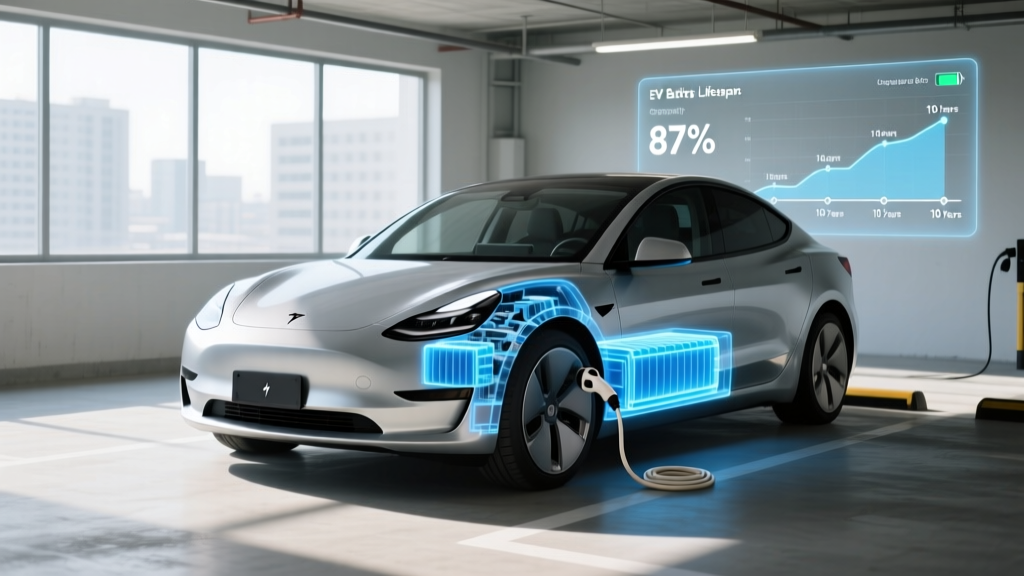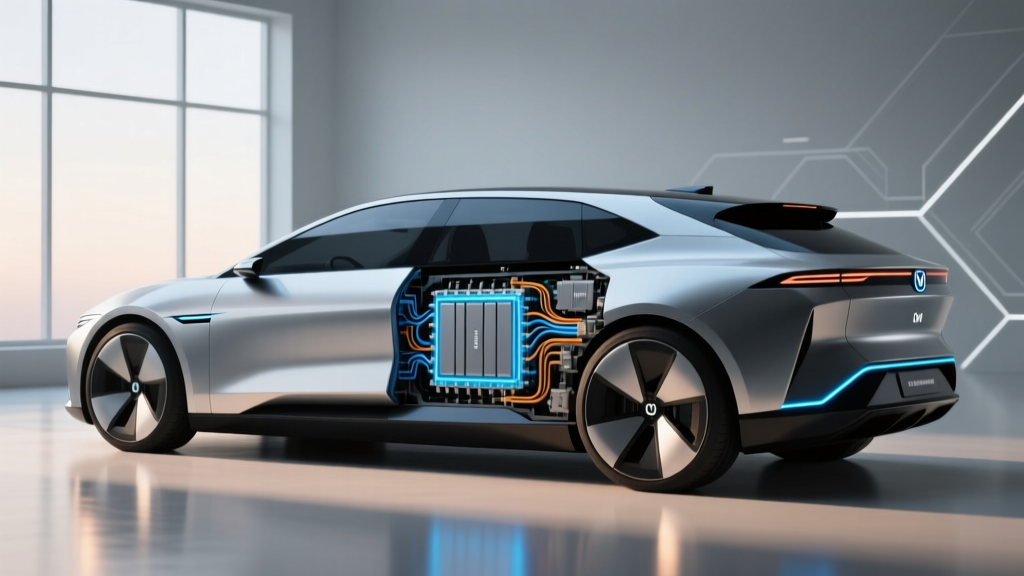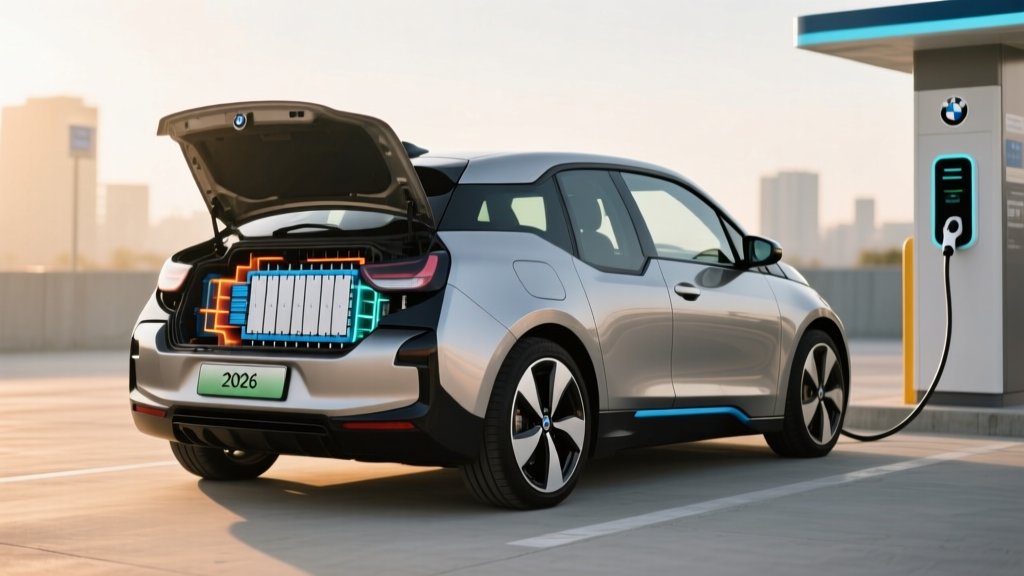
The BMW i3 was discontinued in 2021, but tens of thousands remain on US roads. As these vehicles age past the 8-year federal battery warranty window, owners face a question that dominates i3 forums: what does a BMW i3 battery replacement actually cost, and is it worth it? This guide breaks down the real numbers for the 60 Ah, 94 Ah, and 120 Ah battery packs, examines degradation data from high-mileage examples, and explains how to evaluate whether replacement, module repair, or retirement makes financial sense for your specific i3.
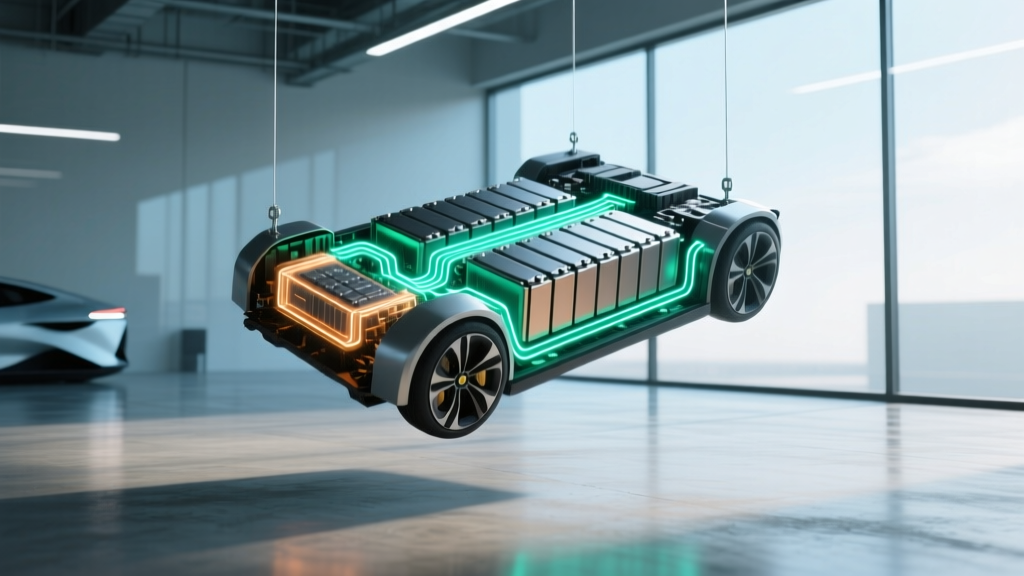
BMW i3 Battery Pack Variants: What's Under the Floor
BMW produced the i3 with three distinct high-voltage traction battery generations. Understanding which pack your car has is the first step in estimating replacement cost and remaining useful life.
| Generation | Model Years | Gross kWh | Usable kWh | Chemistry | EPA Range (BEV) |
|---|---|---|---|---|---|
| 60 Ah | 2014–2016 | 22.0 | 18.8 | NMC (Samsung SDI) | 81 mi |
| 94 Ah | 2017–2018 | 33.2 | 27.2 | NMC (Samsung SDI) | 114 mi |
| 120 Ah | 2019–2021 | 42.2 | 37.9 | NMC (Samsung SDI) | 153 mi |
All three packs use NMC (nickel-manganese-cobalt) lithium-ion cells supplied by Samsung SDI in a prismatic format. The physical dimensions of the battery housing remained constant across all three generations — BMW simply swapped in higher-density cells. This means a 2014 i3 originally equipped with the 60 Ah pack can potentially be retrofitted with a 94 Ah or 120 Ah pack, though this requires BMW dealership programming and is not a simple plug-and-play swap.
Battery Chemistry: Why the i3 Uses NMC (and What LFP Would Mean)
The i3's NMC chemistry was chosen for energy density — critical in a compact car with limited under-floor space. But NMC isn't the only option in the EV market. Here's how it compares to the LFP (lithium iron phosphate) chemistry now used in vehicles like the Tesla Model 3 Standard Range and some BYD models:
| Factor | NMC (i3 Chemistry) | LFP |
|---|---|---|
| Energy Density | Higher (~200–260 Wh/kg cell-level) | Lower (~140–180 Wh/kg) |
| Cycle Life | 1,000–2,000 cycles to 80% SoH | 3,000–5,000+ cycles to 80% SoH |
| Cold Performance | Better low-temp discharge | Reduced performance below 32°F |
| Thermal Stability | Good; requires active thermal management | Excellent; inherently more stable |
| Cost per kWh | Higher (cobalt/nickel content) | Lower (iron/phosphate — no cobalt) |
| Recommended SoC | 20–80% daily for longevity | Can charge to 100% regularly |
For i3 owners, the NMC chemistry means you should avoid routinely charging to 100% or letting the pack sit at very low states of charge for extended periods. The i3's battery management system (BMS) includes a top and bottom buffer — the usable capacity figures above already account for this — but disciplined charging habits still meaningfully slow degradation.
BMW i3 Battery Degradation: What the Data Shows
Real-world degradation data from i3 fleet operators, owner surveys, and third-party testing services like Geotab's EV Battery Degradation Study paints a consistent picture:
- Year 1–2: 2–4% capacity loss (initial settling)
- Year 3–5: ~1–2% per year (linear phase)
- Year 6–8: ~1–2% per year continues; most packs at 82–90% State of Health (SoH)
- Year 9–12: Gradual taper; high-mileage examples report 70–80% SoH
Based on aggregated fleet data, the average EV battery loses approximately 2.3% of capacity per year, though the i3's relatively small pack and air-cooled thermal system (the i3 uses refrigerant-based cooling but not the aggressive liquid-loop systems in larger packs) can push degradation slightly higher in hot climates or with frequent DC fast charging.
The 60 Ah i3 (2014–2016) is the most affected by degradation simply due to age. A 2015 i3 that started with 18.8 usable kWh may now have 14–16 usable kWh — translating to roughly 55–65 real-world miles. This is where replacement conversations become most urgent.
Owners can verify their pack's State of Health through:
- BMW iDrive hidden service menu: Accessible via a button sequence, displaying SoH percentage
- OBD-II apps: Tools like BimmerCode or LeafSpy-style readers that query the BMS directly
- BMW dealership diagnostic: A formal SoH readout during service visits (may incur a diagnostic fee out of warranty)
BMW i3 Battery Warranty: What's Covered and What Isn't
BMW's high-voltage battery warranty for the i3 aligns with the federal minimum mandated by the EPA and CARB states:
| Coverage Element | Specification |
|---|---|
| Duration | 8 years / 80,000 miles (whichever comes first) |
| CARB States | 10 years / 150,000 miles in California and adopting states |
| Capacity Retention Threshold | 70% of original usable capacity |
| What Triggers a Claim | SoH drops below 70% as measured by BMW diagnostic tool |
| Remedy | Repair, module replacement, or full pack replacement at BMW's discretion |
| Exclusions | Physical damage, flood, unauthorized modifications, improper charging equipment |
For 2014–2016 i3 owners, the 8-year/80,000-mile warranty has expired as of 2024–2025. The 2017–2018 (94 Ah) models are exiting warranty in 2025–2026. Only 2019–2021 (120 Ah) models remain under the standard federal battery warranty as of 2026.
If you're in a CARB-adopting state (California, Colorado, Connecticut, Maine, Maryland, Massachusetts, New Jersey, New York, Oregon, Rhode Island, Vermont, Washington, and others), your coverage extends to 10 years/150,000 miles — a significant advantage. Check the EPA's EV battery warranty guidance for current state-by-state rules.
BMW i3 Battery Replacement Cost: 2026 Pricing Breakdown
This is the core concern for aging i3 owners. Replacement costs vary dramatically based on pack generation, sourcing, and whether you go through BMW or an independent specialist.
| Pack Type | BMW Dealership (New OEM) | Independent EV Shop (Refurbished) | Module-Level Repair |
|---|---|---|---|
| 60 Ah (22 kWh) | $14,000–$18,000 | $8,000–$12,000 | $2,500–$5,000 (2–4 bad modules) |
| 94 Ah (33 kWh) | $18,000–$22,000 | $11,000–$15,000 | $3,000–$6,000 |
| 120 Ah (42 kWh) | $20,000–$24,000 | $14,000–$18,000 | $3,500–$7,000 |
Several important caveats apply to these figures:
- Labor is significant: The i3's battery sits beneath the carbon-fiber-reinforced plastic (CFRP) passenger cell. Removal requires specialized lifting equipment and typically 6–10 hours of labor at $150–$200/hour at a dealership.
- Module-level repair is viable: The i3 pack consists of 8 modules (60 Ah/94 Ah) or 8 modules (120 Ah, different cell count per module). If only 1–3 modules have degraded disproportionately, a specialist can replace individual modules for a fraction of a full pack swap.
- Refurbished packs exist: Several independent EV shops source low-mileage packs from salvaged i3s (often from fleet vehicles or collision write-offs). These typically carry a 1–2 year aftermarket warranty.
- Retrofit upgrades: Some specialists offer 60 Ah to 94 Ah or 120 Ah upgrades using refurbished packs, giving older i3s substantially more range. Expect to pay $12,000–$18,000 for this service including programming.
- Replace if: Your i3 is otherwise in excellent condition, you rely on it daily, the rest of the car (suspension, interior, electronics) is solid, and you plan to keep it 4+ more years. A $14,000 replacement on a car worth $12,000–$16,000 can be justified if it extends the vehicle's life to 200,000+ miles.
- Repair modules if: Diagnostics show 1–3 weak modules while the rest are healthy. This is the most cost-effective path for 60 Ah and 94 Ah packs.
- Retire or sell if: The car has other major issues (CFRP damage, A/C compressor failure, REx engine problems on Range Extender models), or if the replacement cost exceeds the vehicle's market value by more than 50%.
Factors That Accelerate i3 Battery Degradation
Not all i3 packs age equally. These factors have the largest measurable impact on long-term State of Health:
DC Fast Charging Frequency
The i3 supports up to 50 kW DC fast charging (CCS Combo on later models, CHAdeMO on some early imports). While 50 kW is modest by modern standards, frequent DCFC sessions — especially in hot weather — accelerate NMC degradation. Data from fleet studies suggests that vehicles DCFC-ing more than 3 times per week degrade approximately 1–2% faster per year than those primarily Level 2 charging. Occasional road-trip fast charging has negligible impact.
Extreme Temperature Exposure
The i3's thermal management system is adequate but not class-leading. Parking in direct sun in Arizona or Nevada summers, or regularly charging in sub-zero temperatures without preconditioning, stresses the cells. Battery packs in moderate climates (Pacific Northwest, Northeast) consistently show better SoH retention than those in desert or deep-South environments.
State of Charge Habits
NMC chemistry degrades fastest at the extremes — above 90% and below 10% SoC. BMW's BMS includes buffers (roughly 2–3 kWh top and bottom), but routinely charging to 100% and letting the car sit for days still accelerates calendar aging. The ideal daily charge target for NMC is 70–80%.
Range Extender (REx) Usage Patterns
i3 REx models have a smaller battery that cycles more deeply because the gasoline range extender kicks in at ~6% SoC. This means the battery sees more full-depth cycles, which can accelerate wear compared to pure BEV i3s that are charged more frequently at moderate depths.
- Set daily charge limit to 80% (adjust via iDrive or charging timer)
- Use Level 2 (7.4 kW) as your primary charging method
- Limit DC fast charging to road trips — avoid daily DCFC
- Precondition the battery before charging in cold weather (use the iDrive departure timer)
- Avoid letting the car sit below 15% SoC for more than 48 hours
- Park in shade or a garage during hot months
- Check SoH via OBD-II app every 6 months to track degradation trends
Checking Your i3's Battery Health: Step by Step
Before committing to a replacement, confirm your pack's actual condition. Here's how to get a reliable SoH reading:
- OBD-II Dongle + App: Purchase a compatible OBD-II adapter (e.g., Vgate iCar Pro Bluetooth, ~$30) and use an app like BimmerCode or the i3-specific "i3 Battery Health" reader. These query the BMS for SoH percentage, individual module voltages, and cell deviation.
- Full Charge Test: Charge to 100% on Level 2 and note the displayed range estimate. Compare to the original EPA figure for your pack generation. A 120 Ah i3 showing 110 miles at 100% suggests roughly 72% SoH.
- BMW Dealership Diagnostic: Request a formal battery health report. BMW's ISTA diagnostic system provides module-by-module voltage data and an official SoH percentage. Expect a $150–$250 diagnostic fee out of warranty.
- Check for Module Imbalance: If one or two modules show significantly lower voltage than the rest (deviation >100 mV), the pack may benefit from module-level repair rather than full replacement.
Emerging Battery Technology: What's on the Horizon
While the i3 itself is out of production, battery technology continues to advance. These developments won't directly help current i3 owners, but they inform the broader replacement-parts ecosystem and future EV purchases:
- Solid-state batteries: Toyota, Samsung SDI, and QuantumScape are targeting 2027–2029 for limited production. Solid-state cells promise higher energy density and improved safety, but retrofitting them into existing vehicles is extremely unlikely due to different form factors, voltage architectures, and BMS requirements.
- Silicon-dominant anodes: Companies like Sila Nanotechnologies and Group14 are shipping silicon-anode cells that offer 15–25% more energy density than graphite anodes. These are appearing in premium 2025–2026 models but won't reach the aftermarket for legacy vehicles for several years.
- Sodium-ion batteries: CATL and BYD are producing sodium-ion cells for lower-cost applications. These offer excellent cycle life but lower energy density — unlikely to be relevant for compact passenger car retrofits.
- Aftermarket remanufacturing growth: As more EVs age out of warranty, the independent battery remanufacturing industry is scaling. Expect more i3-compatible refurbished packs and module sets to become available through 2028, potentially driving replacement costs down 15–25% from current levels.
These technologies are forward-looking and not currently available as i3 replacement options. For now, OEM-equivalent NMC replacements and refurbished packs remain the practical paths.
Frequently Asked Questions
How long do BMW i3 batteries last in real-world use?
Based on fleet data and owner reports, i3 batteries typically retain 75–85% of original capacity after 8 years and 80,000 miles. Many packs reach 150,000+ miles before dropping below 70% SoH. The 60 Ah pack (2014–2016) is now 9–12 years old and commonly shows 70–80% SoH, while the 120 Ah pack (2019–2021) is still relatively young with most examples above 90% SoH.
How much does a BMW i3 battery replacement cost in 2026?
A full OEM pack replacement through BMW ranges from $14,000–$24,000 depending on the pack generation (60/94/120 Ah). Independent specialists offer refurbished packs for $8,000–$18,000. Module-level repair — replacing only the degraded cells — costs $2,500–$7,000 and is often the most economical option when only a few modules are weak.
What does the BMW i3 battery warranty cover?
BMW covers the high-voltage battery for 8 years/80,000 miles (10 years/150,000 miles in CARB states) against capacity loss below 70% of original usable capacity. The warranty does not cover physical damage, flood, unauthorized modifications, or degradation from improper charging equipment. For 2014–2016 models, the standard warranty has expired; 2019–2021 models remain covered as of 2026.
Can I upgrade my 60 Ah i3 to a 120 Ah battery?
Yes, but it requires a specialist. The physical battery housing is identical across all i3 generations, so a 94 Ah or 120 Ah pack physically fits. However, the BMS, charging software, and instrument cluster must be reprogrammed. Expect to pay $12,000–$18,000 for a complete retrofit including the refurbished pack and programming. This upgrade takes a 60 Ah i3 from ~81 EPA miles to ~153 EPA miles.
Is LFP better than the NMC battery in my i3?
It depends on the metric. LFP offers significantly longer cycle life (3,000–5,000 cycles vs. 1,000–2,000 for NMC) and better thermal stability. However, NMC provides higher energy density — essential for the i3's compact form factor — and better cold-weather performance. The i3 was designed around NMC, and no LFP retrofit exists. For your next EV purchase, LFP is excellent if you want maximum longevity and don't need maximum range.
How do I check my i3 battery's State of Health?
The most accessible method is an OBD-II Bluetooth adapter paired with a BMW-compatible app like BimmerCode, which reads SoH directly from the BMS. You can also estimate SoH by charging to 100% and comparing the displayed range to the original EPA rating, or request a formal diagnostic at a BMW dealership (typically $150–$250 out of warranty).
Does DC fast charging damage my i3 battery?
Occasional DC fast charging (a few times per month on road trips) has minimal impact. However, daily DCFC use — especially in hot weather — accelerates NMC degradation by roughly 1–2% per year compared to Level 2 charging. The i3's 50 kW peak charge rate is relatively gentle compared to modern 250+ kW systems, but the pack's thermal management is also less robust. Prioritize Level 2 home charging for daily use.
The BMW i3 remains a uniquely engineered EV, and its battery replacement economics depend heavily on which pack generation you own, your local climate, and whether module-level repair is an option. For most 94 Ah and 120 Ah owners, the pack will outlast the car's useful life. For 60 Ah pioneers, a module repair or refurbished pack swap can keep these innovative city cars on the road for years to come.