The BMW i3 remains one of the most distinctive electric vehicles ever built. Produced from 2014 through 2021, it pioneered carbon-fiber construction and purpose-built EV architecture at a time when most automakers were still converting gas cars. But as these vehicles age past the decade mark, owners and prospective used buyers are asking the same question: how is the BMW i3 battery holding up, and what does it cost if something goes wrong?
This guide covers every i3 battery generation — the original 22 kWh (60 Ah), the 33 kWh (94 Ah) introduced for 2017, and the final 42.2 kWh (120 Ah) that debuted for 2019 — with real degradation data, replacement cost ranges, warranty specifics, and practical health-monitoring strategies. We'll also contextualize the i3's Samsung SDI NMC cells within the broader EV battery landscape so you can make an informed ownership or purchase decision.
BMW i3 Battery Generations: Specs and Chemistry
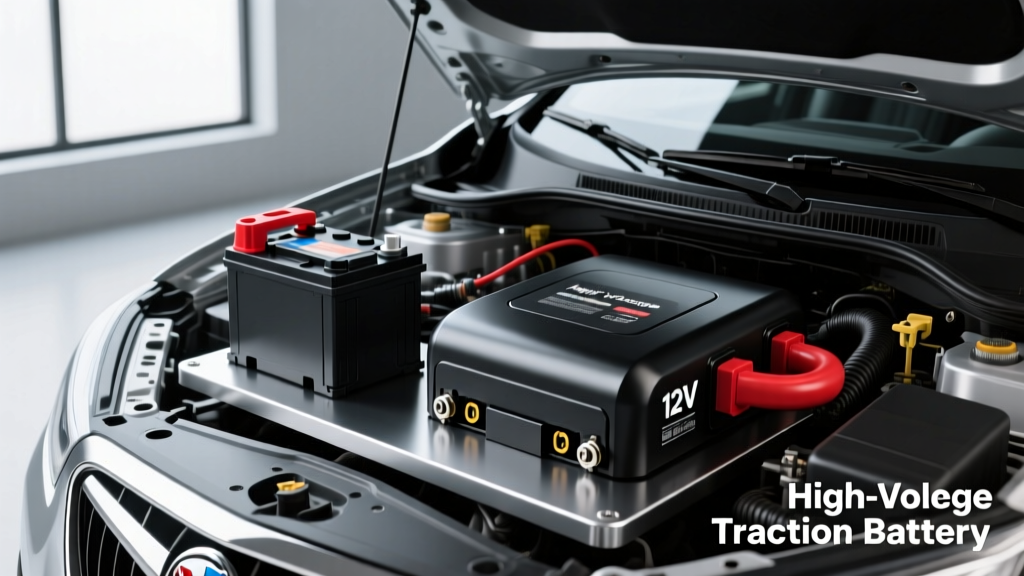
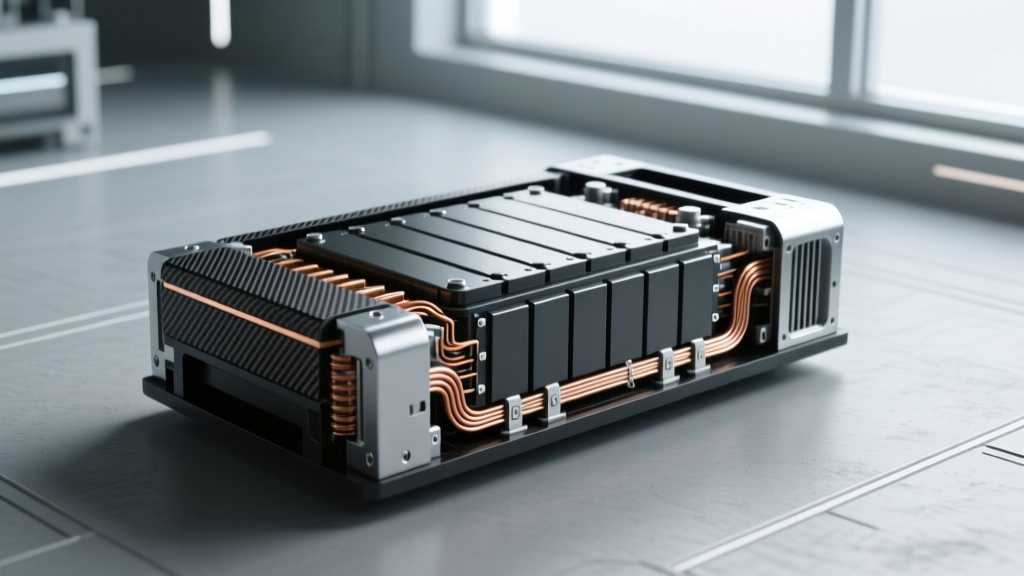
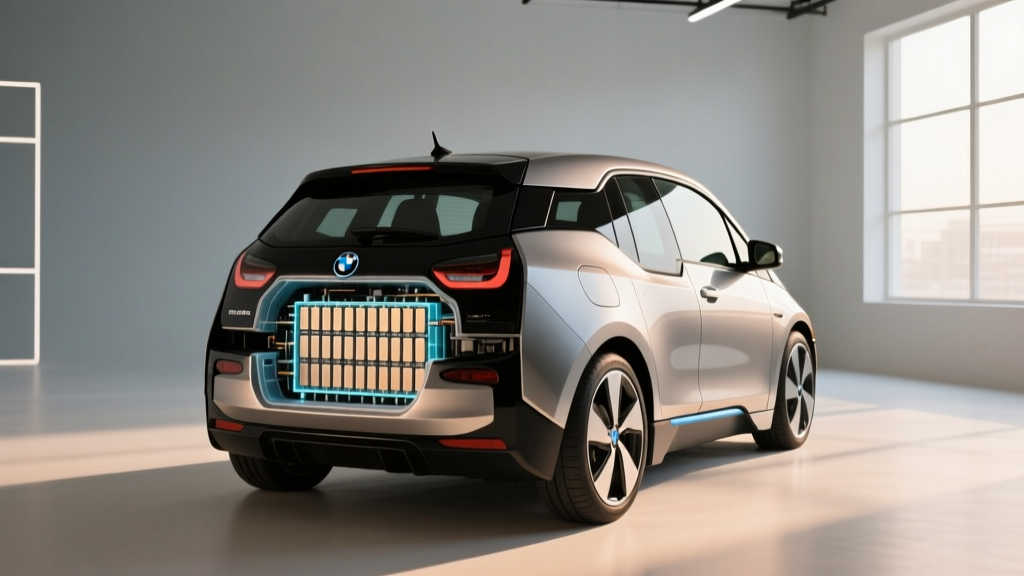
BMW offered three distinct high-voltage traction battery packs across the i3's production run. All three use NMC (nickel manganese cobalt) lithium-ion cells manufactured by Samsung SDI, housed in an aluminum enclosure under the passenger floor. NMC chemistry was the dominant choice for performance-oriented EVs of this era, offering high energy density at the cost of somewhat faster degradation compared to LFP alternatives.
| Generation | Model Years | Gross Capacity | Usable Capacity | Cell Rating | EPA Range | Chemistry |
|---|---|---|---|---|---|---|
| 60 Ah | 2014–2016 | 22 kWh | ~18.8 kWh | 60 Ah | 81 mi | NMC (Samsung SDI) |
| 94 Ah | 2017–2018 | 33 kWh | ~27.2 kWh | 94 Ah | 114 mi | NMC (Samsung SDI) |
| 120 Ah | 2019–2021 | 42.2 kWh | ~37.9 kWh | 120 Ah | 153 mi | NMC (Samsung SDI) |
The usable capacity is notably lower than gross capacity because BMW engineers a substantial buffer — roughly 14–18% of total capacity — to protect the cells from deep discharge and full saturation, both of which accelerate degradation. This conservative buffer strategy is a key reason i3 packs have aged relatively well compared to some competitors from the same era.
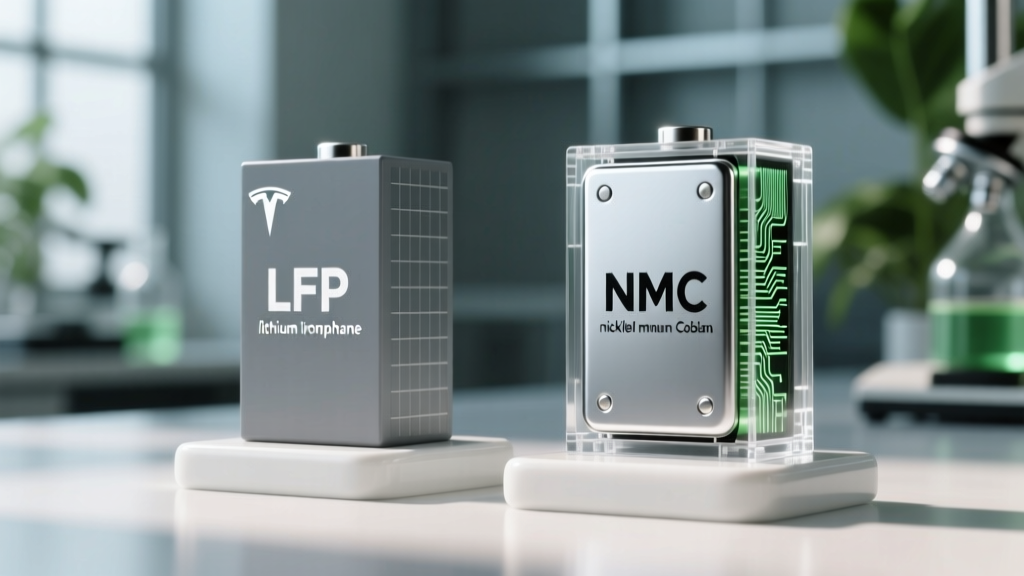
NMC vs LFP: Why the i3 Uses NMC and What It Means for You
Understanding the chemistry inside your i3's battery is essential for predicting its longevity and planning your charging habits. The i3's NMC cells were chosen for energy density — packing maximum range into the i3's compact footprint — but they come with trade-offs that every owner should understand.
| Attribute | NMC (i3's Chemistry) | LFP (e.g., Tesla Model 3 RWD, BYD) |
|---|---|---|
| Energy Density | High (~200–250 Wh/kg cell-level) | Moderate (~150–180 Wh/kg cell-level) |
| Cycle Life | ~1,000–2,000 full cycles | ~3,000–5,000+ full cycles |
| Cold-Weather Performance | Better low-temp discharge | Reduced performance below freezing |
| Thermal Stability | Good; requires active management | Excellent; inherently more stable |
| Degradation Profile | Steeper early loss, then gradual | Very linear, slow degradation |
| Cost per kWh | Higher (cobalt content) | Lower (no cobalt or nickel) |
| Recommended Daily SoC | 80% for longevity | 100% is acceptable |
For the i3 owner, the practical implication is clear: NMC cells degrade faster when routinely charged to 100% or deeply discharged. BMW's built-in buffer mitigates this somewhat, but you'll maximize pack life by keeping daily state of charge between 20% and 80%, reserving full charges for road trips. According to data from the Geotab EV Battery Health study, NMC packs across the industry lose an average of 2.3% capacity per year under typical use — meaning after 8 years, you can expect roughly 80–85% of original capacity remaining.
BMW i3 Battery Degradation: What the Data Shows
Degradation is the single biggest concern for used i3 buyers and long-term owners. Unlike a gas engine that might fail catastrophically, EV batteries slowly lose capacity over time and charge cycles. The i3's Samsung SDI NMC cells follow a pattern common to NMC chemistry: a slightly steeper loss in the first 1–2 years (roughly 3–5%), followed by a slower, more linear decline.
Based on aggregated fleet data and owner reports from forums like SpeakEV and BMW i3 communities, here's what typical degradation looks like across i3 generations:
- 60 Ah (22 kWh) — 2014–2016 models: After 8–10 years and 80,000–120,000 miles, expect 75–85% State of Health (SoH). Some early packs with heavy DC fast charging exposure have dropped to 70–75%. A 2014 i3 with 80% SoH delivers roughly 65 miles of real-world range — a noticeable reduction from its original 81-mile EPA rating.
- 94 Ah (33 kWh) — 2017–2018 models: After 6–8 years and 60,000–90,000 miles, expect 82–90% SoH. These packs benefit from improved cell chemistry and better thermal management calibration. Real-world range at 85% SoH: approximately 95–100 miles.
- 120 Ah (42.2 kWh) — 2019–2021 models: After 4–6 years and 40,000–70,000 miles, expect 88–95% SoH. The newest packs with the largest buffers are holding up best. Real-world range at 92% SoH: approximately 130–140 miles.
Several factors can accelerate these timelines. Frequent DC fast charging (especially at 50 kW, which is the i3's maximum DC rate) generates heat that stresses NMC cells over time. Repeated exposure to ambient temperatures above 95°F or below 20°F without preconditioning also contributes to faster capacity loss. And habitually charging to 100% and leaving the car parked at full state of charge for days at a time is one of the most damaging behaviors for NMC chemistry.
BMW i3 Battery Warranty: What's Covered and for How Long
BMW's high-voltage battery warranty for the i3 provides coverage that was competitive at launch and remains relevant for used buyers evaluating remaining coverage. The warranty covers defects and excessive capacity loss — but the definition of "excessive" matters.
| Coverage Element | Specification |
|---|---|
| Duration | 8 years or 80,000 miles (whichever comes first) |
| Capacity Retention Threshold | 70% of original usable capacity |
| What's Covered | Defects, cell imbalance, excessive degradation below 70% |
| What's Not Covered | Damage from accidents, improper charging equipment, modifications, or neglect |
| Transferable to Second Owner? | Yes — warranty follows the vehicle, not the original buyer |
| Remedy | Module-level replacement or full pack replacement at BMW's discretion |
The 70% threshold is important context. A 120 Ah i3 with 70% SoH still holds roughly 26.5 kWh of usable energy — enough for approximately 105–110 real-world miles. For the 60 Ah pack, 70% SoH means about 13 kWh usable, yielding roughly 50–55 miles. If you're buying a used 2014–2016 i3, the factory warranty has likely expired or is very close to expiring, making a pre-purchase battery health check essential.
For California and states that have adopted California Air Resources Board (CARB) emissions standards, the battery may qualify as a "specified major emission control component" under the PZEV warranty extension, potentially extending coverage to 10 years or 150,000 miles in those jurisdictions. Check with a local BMW dealer to confirm applicability to your specific vehicle and state.
BMW i3 Battery Replacement Cost: What to Budget
If your i3's battery has degraded below acceptable levels or suffered a fault outside warranty coverage, replacement is the next question. The i3's modular battery design — the pack consists of 8 individual modules wired in series — gives owners more flexibility than many competing EVs, since individual modules can theoretically be replaced rather than the entire pack.
| Option | Estimated Cost | Notes |
|---|---|---|
| Single Module Replacement (OEM) | $1,500–$2,500 per module | Viable if only 1–2 modules are degraded; requires BMW dealer or specialist |
| Full Pack — Remanufactured | $8,000–$11,000 | Most common route for out-of-warranty i3s; sourced from BMW or authorized recyclers |
| Full Pack — New OEM | $12,000–$16,000 | Limited availability as BMW winds down i3 parts production |
| Used Pack from Salvage | $3,000–$6,000 | Risky — SoH varies; requires independent testing before purchase |
| Aftermarket/Third-Party Rebuild | $5,000–$8,000 | Specialist shops can replace cells within the original housing; quality varies |
Labor typically adds $1,000–$2,000 to any of these options. The i3's battery is mounted low in the chassis and requires a specialized lift table for removal — not a DIY job.
The good news: total battery failure in the i3 is rare. Most packs that need attention have one or two weak modules rather than a fully failed pack. A qualified EV technician can perform a module-level balance check to identify the specific weak cells. If you're considering a used i3, budget $2,000–$4,000 as a contingency for potential module replacement within your first few years of ownership — especially for 2014–2016 models.
How to Check and Maximize Your BMW i3 Battery Health
Monitoring your i3's State of Health (SoH) is straightforward thanks to several built-in and third-party tools. Here's how to stay on top of your pack's condition:
- iDrive Range Display: The i3's instrument cluster shows estimated range based on recent driving behavior. While not a direct SoH readout, a noticeable decline in full-charge range over months is a reliable degradation indicator. Reset your trip computer after a full charge and track the displayed range monthly.
- BMW Connected App: The official app provides charging status and estimated range, though it doesn't display raw SoH percentage.
- OBD-II Scanner with EV Capability: Tools like the BimmerCode or BimmerLink apps (paired with an OBD-II adapter) can read the battery management system's internal SoH percentage directly. This is the most accurate method available to owners without a dealer visit. Expect to spend $40–$60 on the adapter and $30–$40 on the app.
- Dealer Diagnostic: A BMW service center can run a full high-voltage battery health report, including per-module voltage readings and capacity tests. Typically $100–$200 if not covered under warranty.
Once you know your SoH, these practices will help slow further degradation:
- Set your charge limit to 80–85% for daily driving (use the iDrive charge limit setting or a smart Level 2 charger with scheduling)
- Avoid DC fast charging when possible — the i3's 50 kW DC rate isn't extreme, but heat accumulation still stresses NMC cells over hundreds of sessions
- Use preconditioning (via the BMW Connected app or iDrive timer) to warm the battery before charging in cold weather — this activates the thermal management system and reduces charge-induced stress
- Don't leave the car parked at 100% SoC for more than 24 hours, especially in hot weather
- Avoid regularly driving below 10% SoC — the lower buffer protects against deep discharge, but routinely hitting the buffer boundary isn't ideal
- Park in shade or a garage during summer months; sustained pack temperatures above 104°F (40°C) accelerate NMC degradation
- If storing the i3 for more than 2 weeks, leave it plugged in with a 50% charge target so the battery management system can maintain optimal SoC
Looking Ahead: Solid-State and Silicon Anode Batteries
While the i3's NMC pack represents the state of the art for its era, battery technology continues to advance. Two developments are worth watching, though neither is currently available in any production vehicle as of 2026:
Solid-state batteries replace the liquid electrolyte in current lithium-ion cells with a solid material, promising higher energy density, faster charging, and improved safety. Toyota has announced plans for limited solid-state production in its vehicles around 2027–2028, and Samsung SDI (the i3's cell supplier) is developing solid-state cells with a similar timeline. However, industry analysts at BloombergNEF project that solid-state packs won't reach cost parity with current lithium-ion technology until the early 2030s. For i3 owners, this technology won't be retrofittable to existing vehicles.
Silicon anode batteries are closer to commercialization. Companies like Sila Nanotechnologies and Group14 are supplying silicon-dominant anode materials to automakers, with Mercedes-Benz's EQG expected to be among the first production vehicles using the technology. Silicon anodes can increase energy density by 20–40% compared to graphite anodes used in the i3's cells. Again, this is forward-looking technology that won't apply to the current i3 platform.
For today's i3 owner or buyer, the practical takeaway is that your NMC pack — properly cared for — should provide reliable service for the vehicle's remaining useful life. Most EV batteries, including the i3's, are outlasting the cars they're installed in.
Buying a Used BMW i3? Here's Your Battery Decision Framework
If you're evaluating a used i3, the battery's condition should be the primary factor in your purchase decision. Here's how to approach it:
- You need 130+ miles of real-world range for daily commuting
- You want maximum remaining factory warranty coverage
- You plan to keep the car 4+ years and want the slowest degradation curve
- Budget allows $22,000–$32,000 (used market, 2026 pricing)
- You need 90–110 miles of range and mostly drive in moderate climates
- You want a value sweet spot — typically $14,000–$20,000 used
- You're comfortable budgeting $2,000–$4,000 for potential module replacement
- You need a city-only runabout with 55–75 miles of range
- Your budget is under $12,000
- You have verified SoH above 80% via OBD-II scan before purchase
- You accept that warranty coverage has likely expired and a module replacement may be needed
Regardless of generation, always verify SoH before purchase. An OBD-II scan takes 5 minutes and can save you thousands.
Frequently Asked Questions
How long does a BMW i3 battery last?
Based on fleet data and owner reports, BMW i3 batteries typically retain 75–90% of their original capacity after 8–10 years and 80,000–120,000 miles, depending on the generation and how the vehicle was charged and stored. The 120 Ah (2019–2021) models are holding up best, with most showing 88–95% SoH at the 5-year mark. Complete battery failure is rare — most i3 packs will outlast the car's economic life.
How much does it cost to replace a BMW i3 battery?
A full remanufactured i3 battery pack costs $8,000–$11,000 plus $1,000–$2,000 in labor. New OEM packs, where available, run $12,000–$16,000. However, because the i3 uses a modular design, individual module replacement is often possible for $1,500–$2,500 per module, making partial repairs a viable and more affordable option.
What does the BMW i3 battery warranty cover?
BMW covers the i3's high-voltage battery for 8 years or 80,000 miles against defects and capacity loss below 70% of original usable capacity. The warranty is transferable to subsequent owners. In CARB-adopting states, extended coverage of 10 years/150,000 miles may apply. The warranty does not cover damage from accidents, unauthorized modifications, or improper charging equipment.
How do I check my BMW i3 battery health?
The most accurate owner-accessible method is using the BimmerLink app with an OBD-II Bluetooth adapter, which reads the battery management system's internal State of Health (SoH) percentage directly. A BMW dealer can also run a full diagnostic with per-module voltage readings. Tracking your full-charge range estimate in the iDrive display over time is a useful free method for spotting degradation trends.
Is the BMW i3's NMC battery worse than LFP?
NMC and LFP serve different priorities. The i3's NMC cells offer higher energy density (more range in a smaller, lighter pack) and better cold-weather performance, which suited the i3's compact design and European market origins. LFP batteries, found in newer vehicles like the Tesla Model 3 RWD, offer longer cycle life and can tolerate daily 100% charging. For the i3's use case — a lightweight urban EV — NMC was the correct engineering choice at the time.
Can I upgrade my 60 Ah i3 to the 120 Ah battery?
While technically possible — the physical pack dimensions are similar — a generation upgrade requires BMW software coding and compatibility verification that only a few specialist shops can perform. The cost ($10,000–$18,000) often exceeds the value gain in the vehicle. Most owners are better served by selling the 60 Ah model and purchasing a 120 Ah i3 directly.
Sources: fueleconomy.gov (EPA range data), BMW USA owner documentation, Geotab EV Battery Degradation Study, IRS.gov (for any applicable used EV credit under IRC §25E).