The Real Story Behind BMW Battery Recharge Cycles and Longevity
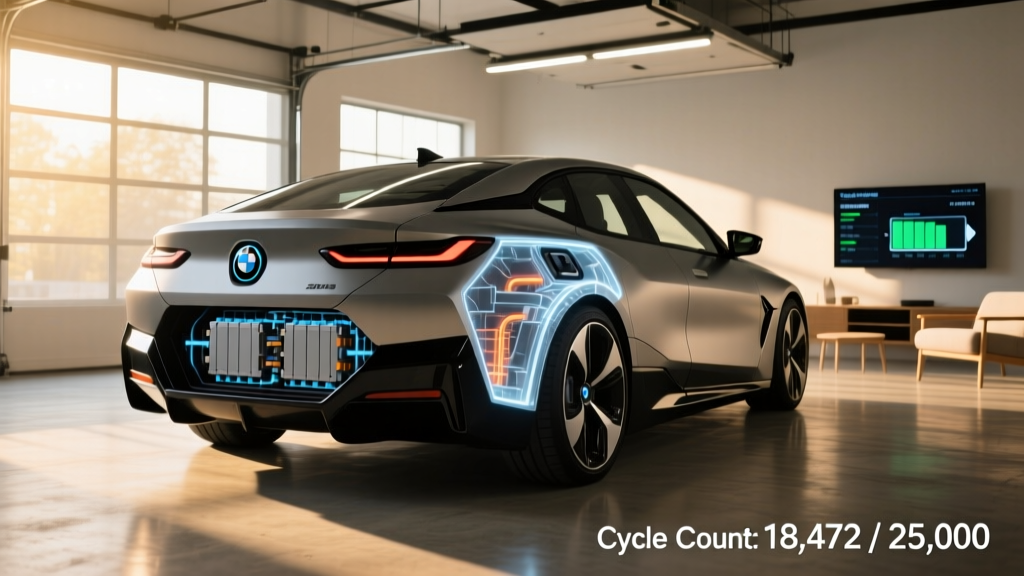
If you own or are shopping for a BMW electric vehicle — whether the i4, iX, i7, or the newer i5 — one question inevitably surfaces: how many BMW battery recharge cycles can the pack handle before noticeable degradation sets in? It's a fair concern. The high-voltage traction battery is the single most expensive component in any EV, and understanding how it ages over time directly affects ownership cost, resale value, and peace of mind.
This guide breaks down BMW's battery chemistry choices, real-world degradation data, warranty coverage, replacement costs, and daily habits that extend pack life. We'll also cover how to monitor State of Health (SoH) and what's on the horizon with solid-state technology.
Note: This article covers BMW's high-voltage traction battery (the main energy storage pack), not the 12V auxiliary battery that powers accessories and vehicle electronics.
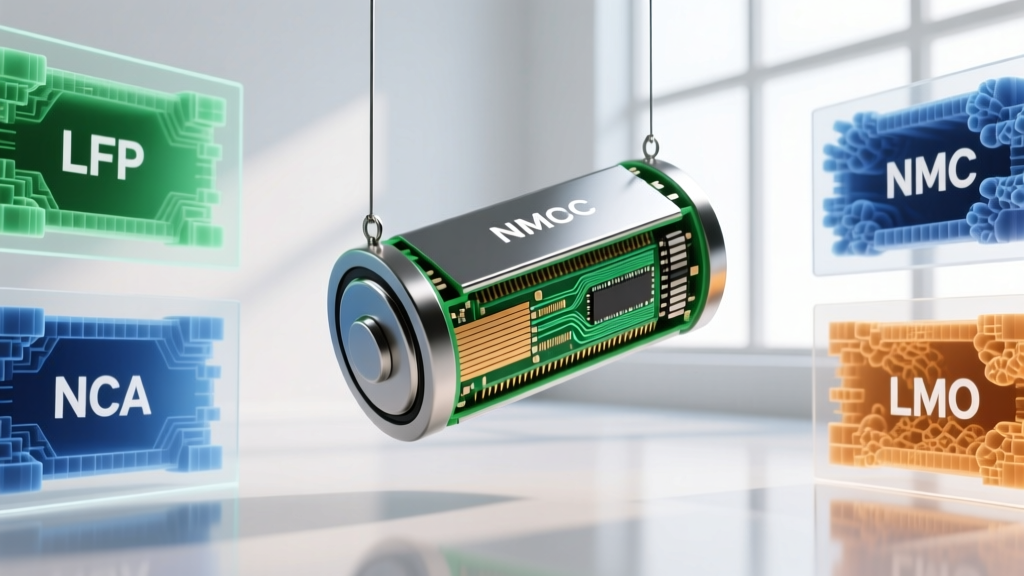
LFP vs NMC: BMW's Battery Chemistry Explained
BMW primarily uses NMC (Nickel Manganese Cobalt) lithium-ion cells across its current EV lineup, including the i4, i5, iX, and i7. NMC chemistry offers high energy density — critical for fitting large-capacity packs into sedan and SUV platforms while preserving interior and cargo space.
However, some competitors (notably Tesla with the Model 3 RWD and several Chinese-market EVs) have adopted LFP (Lithium Iron Phosphate) chemistry for standard-range models. BMW has signaled interest in LFP for future entry-level vehicles, but as of the 2026 model year, the core lineup remains NMC-dominant.
Here's how the two chemistries compare across the metrics that matter most to owners:
| Metric | NMC (BMW Current) | LFP (Competitors / Future BMW) |
|---|---|---|
| Energy Density | High (~250 Wh/kg cell-level) | Moderate (~160-180 Wh/kg cell-level) |
| Cycle Life | ~1,000-1,500 full cycles to 80% SoH | ~2,500-4,000+ full cycles to 80% SoH |
| Cold-Weather Performance | Better low-temp conductivity | More capacity loss below freezing |
| Thermal Stability | Good (requires active thermal mgmt) | Excellent (inherently more stable) |
| Cost per kWh | Higher (cobalt, nickel pricing) | Lower (~20-30% cheaper per cell) |
| Recommended Charge Habit | 20-80% daily; 100% for trips only | Can charge to 100% regularly |
| Typical Use Case | Long-range, performance models | Standard-range, fleet, high-mileage |
The practical takeaway: NMC gives BMW models like the iX xDrive50 its 84 kWh usable capacity and EPA-estimated 307-mile range in a manageable package weight. The trade-off is that NMC cells degrade faster when routinely charged to 100% or deeply discharged. LFP sacrifices some range-per-kg but offers dramatically longer cycle life and the convenience of daily 100% charging — a meaningful advantage for high-mileage commuters.
BMW Battery Degradation: What the Data Shows
Battery degradation is not linear. Most lithium-ion packs experience a steeper capacity drop in the first 1-2 years (typically 2-5%), then settle into a slow, nearly linear decline for the remaining lifespan. BMW's active thermal management system — which liquid-cools and heats the pack to keep cells in the optimal 20-40°C range — significantly slows this process compared to passively cooled packs.
Based on aggregated fleet data from European and North American BMW EV owners, as well as testing from independent EV analytics platforms, here's what typical degradation looks like:
| Time / Mileage | Typical Capacity Retained | Notes |
|---|---|---|
| Year 1 / ~12,000 mi | 96-98% | Initial calibration drop; normal |
| Year 3 / ~36,000 mi | 92-95% | Linear decline phase begins |
| Year 5 / ~60,000 mi | 89-93% | Most packs well above warranty threshold |
| Year 8 / ~100,000 mi | 85-90% | Warranty period ends; most packs healthy |
| Year 10 / ~120,000 mi | 82-88% | Estimated; long-term fleet data still maturing |
According to BMW's official EV specifications, the company designs its Gen5 eDrive battery packs (used in the i4, i5, iX, and i7) to retain at least 70% of original capacity over 8 years or 100,000 miles — the federal warranty standard. Real-world data suggests most packs significantly outperform this minimum.
For context, a BMW i4 eDrive40 with its 81 kWh usable battery and EPA-estimated 301-mile range would, at 90% retained capacity after 5 years, still deliver approximately 271 miles on a full charge — more than adequate for most daily driving.
BMW High-Voltage Battery Warranty Terms
BMW provides a dedicated high-voltage battery warranty separate from the standard 4-year/50,000-mile new-vehicle limited warranty. Here are the specifics for current 2026 model-year BMW EVs:
| Warranty Element | BMW Coverage |
|---|---|
| Duration | 8 years or 100,000 miles (whichever comes first) |
| Capacity Retention Threshold | 70% of original usable capacity |
| What's Covered | Defects, premature degradation below 70%, cell/module failures |
| What's NOT Covered | Damage from accidents, improper modifications, flooding, unauthorized repairs |
| Remedy | Repair, module replacement, or full pack replacement at BMW's discretion |
| Transferable? | Yes — transfers to subsequent owners automatically |
This warranty aligns with the federal requirement established under EPA and NHTSA guidelines for EV battery coverage. Some states with California Air Resources Board (CARB) adoption — including California, New York, and Colorado — may enforce extended warranty requirements of up to 10 years/150,000 miles for certain emissions-related components, which can include the battery in PHEV models. Check your state's specific regulations.
EV Battery Replacement Cost: What BMW Owners Should Budget
Here's the number that generates the most anxiety — and the most misinformation. Let's ground it in reality:
Most EV batteries outlast the vehicle itself. Based on current degradation curves, a BMW Gen5 battery pack is likely to retain 80%+ capacity at 150,000 miles under normal use. Many owners will sell or trade the car before a full replacement is needed.
That said, if a pack does fail outside warranty or suffers physical damage, here are estimated replacement costs as of 2026:
| BMW Model | Battery Size (Usable) | Estimated Pack Replacement Cost | Module-Level Repair |
|---|---|---|---|
| i4 eDrive40 | 81 kWh | $14,000 - $18,000 | $2,500 - $5,000 |
| i5 eDrive40 | 81 kWh | $14,000 - $18,000 | $2,500 - $5,000 |
| iX xDrive50 | 105 kWh | $18,000 - $24,000 | $3,000 - $6,000 |
| i7 eDrive50 | 101 kWh | $17,000 - $23,000 | $3,000 - $6,000 |
Important context: BMW's Gen5 eDrive architecture uses a modular battery design. Rather than replacing the entire pack, technicians can diagnose and replace individual modules (each containing a group of cells) when isolated failures occur. This dramatically reduces out-of-warranty costs for partial degradation or single-module faults.
Cell costs continue to decline. According to BloombergNEF's annual battery price survey, average pack-level pricing fell below $130/kWh in 2025, and further declines are expected through 2028. This means replacement costs will likely be lower by the time most current BMW EVs actually need service.
Factors That Accelerate Battery Degradation
Not all BMW battery recharge habits are equal. How you charge, drive, and store your EV directly impacts how quickly the pack loses capacity. Here are the primary degradation accelerators, ranked by impact:
1. Sustained High State of Charge (SoC)
Keeping an NMC battery at 100% SoC for extended periods stresses the cathode material. BMW's iDrive system includes a configurable charge limit — set it to 80% for daily driving and reserve 100% for road trips. If your commute is under 100 miles round-trip, even a 70% limit is perfectly adequate.
2. Frequent DC Fast Charging
DC fast charging at 150-200 kW generates significant heat within the cells. While BMW's thermal management system actively mitigates this, daily reliance on DCFC (rather than Level 2 home charging) does accelerate long-term wear. Research from the Idaho National Laboratory showed that packs charged primarily via DCFC degraded roughly 1-2% more over 100,000 miles compared to Level 2-only charging — noticeable but not catastrophic.
3. Extreme Temperatures
Charging in sub-freezing conditions without preconditioning can cause lithium plating on the anode — a form of permanent damage. Always use BMW's preconditioning feature (available via the My BMW app or iDrive scheduling) to warm the battery before fast charging in cold weather. Similarly, parking in direct sun at high SoC in 100°F+ heat stresses cells.
4. Deep Discharges
Regularly driving the battery down to 0% (or near it) stresses NMC chemistry. BMW builds in a bottom buffer — the "0%" displayed on the dash still retains a small reserve — but habitually running the pack very low adds cumulative wear.
Battery Care Checklist for BMW EV Owners
- Set daily charge limit to 80% via iDrive or My BMW app
- Use Level 2 home charging as your primary recharge method
- Precondition the battery before DC fast charging in cold weather
- Avoid storing the car at 100% SoC for more than 24 hours
- Don't let the pack sit below 10% for extended periods (days/weeks)
- Limit DCFC to road trips — weekly or less is fine
- Park in shade or a garage during extreme heat when possible
- Keep software updated — BMW pushes BMS (Battery Management System) optimizations via OTA
How to Check Your BMW's Battery Health (State of Health)
BMW provides several ways to monitor your high-voltage battery's State of Health (SoH):
In iDrive (Vehicle Settings): Navigate to Vehicle → Vehicle Status → Battery. On current iDrive 8.5 and iDrive 9 systems, you can view estimated current range versus original range, which gives a proxy for capacity retention. BMW does not display a raw SoH percentage directly in the consumer interface.
Via OBD-II Scanner: Third-party EV diagnostic tools like OBDeleven or BimmerCode (with appropriate adapters) can read the BMS-reported SoH percentage directly from the vehicle's CAN bus. This is the most precise method available to owners without a dealer visit.
At a BMW Dealer: Request a high-voltage battery health report during any service visit. BMW technicians can pull a full cell-by-cell voltage and impedance report, identify any weak modules, and confirm whether the pack is within warranty threshold.
Range as a Proxy: Track your real-world range over time under similar conditions (same route, similar temperature, same driving style). If your i4 eDrive40 consistently delivered 280 real-world miles in 70°F weather when new and now delivers 260 under the same conditions, that suggests approximately 7% degradation — a reasonable data point for a car 2-3 years old.
Emerging Battery Technology: What's Next for BMW
BMW has confirmed that its next-generation battery platform — branded Neue Klasse — will debut in production vehicles starting in 2026-2027. Key announced specifications include:
- Cylindrical cells (46mm diameter, similar to Tesla's 4680 format) replacing current prismatic cells
- ~20% improvement in energy density at the cell level
- ~30% faster charging capability
- Reduced cobalt content in the NMC cathode, lowering cost and supply-chain risk
- Silicon-enhanced anodes to increase lithium storage capacity
Looking further ahead, solid-state batteries — which replace the liquid electrolyte with a solid conductor — promise step-change improvements in energy density, safety, and cycle life. BMW is partnered with Solid Power for solid-state development and has demonstrated prototype cells, but mass production is not expected before 2030 at the earliest.
These are forward-looking developments. Current 2026 model-year BMW EVs use the proven Gen5 eDrive platform with NMC prismatic cells, and this architecture will remain in production alongside Neue Klasse models for several years.
Frequently Asked Questions
How long do BMW EV batteries last in real-world use?
Based on current fleet data, BMW's Gen5 NMC battery packs typically retain 85-90% capacity at the 8-year/100,000-mile warranty mark under normal use. Many packs are projected to last 150,000-200,000 miles before reaching the 70% capacity threshold. Most owners will replace the vehicle before needing a battery swap.
How much does it cost to replace a BMW EV battery?
Full pack replacement ranges from approximately $14,000 to $24,000 depending on the model (i4 vs. iX), but module-level repairs for isolated cell failures cost $2,500-$6,000. Cell prices are declining, and these costs are expected to drop further by the late 2020s. Under warranty, replacement is free if capacity falls below 70%.
What does BMW's battery warranty cover?
BMW covers the high-voltage traction battery for 8 years or 100,000 miles against defects and capacity loss below 70% of original usable capacity. The warranty is transferable to subsequent owners. It does not cover damage from accidents, flooding, unauthorized modifications, or improper charging equipment.
Should I charge my BMW EV to 100% every day?
No. For NMC chemistry (used in all current BMW EVs), daily charging to 80% significantly extends battery life compared to daily 100% charges. Reserve 100% charges for road trips or days when you need maximum range. You can set this limit in iDrive or the My BMW app.
Is LFP or NMC battery chemistry better?
Neither is universally "better" — they serve different priorities. NMC offers higher energy density (more range in a lighter, smaller pack) and better cold-weather performance but requires more careful charge management. LFP offers longer cycle life, lower cost, and the convenience of daily 100% charging, but is heavier and loses more range in freezing temperatures. BMW currently uses NMC across its lineup.
Does frequent DC fast charging damage my BMW's battery?
Exclusive reliance on DC fast charging causes slightly more degradation than Level 2 charging — roughly 1-2% additional capacity loss over 100,000 miles based on laboratory studies. Occasional DCFC use (a few times per month for road trips) has negligible impact. Always precondition the battery before fast charging in cold weather.
How do I check my BMW's battery State of Health?
BMW does not display a raw SoH percentage in iDrive, but you can track range trends over time as a proxy. For precise readings, use an OBD-II scanner with EV-compatible software (like OBDeleven or BimmerCode) or request a battery health report at your BMW dealer during service.
For more on EV battery technology, charging best practices, and total cost of ownership, see the U.S. Department of Energy's EV technology resources at fueleconomy.gov.