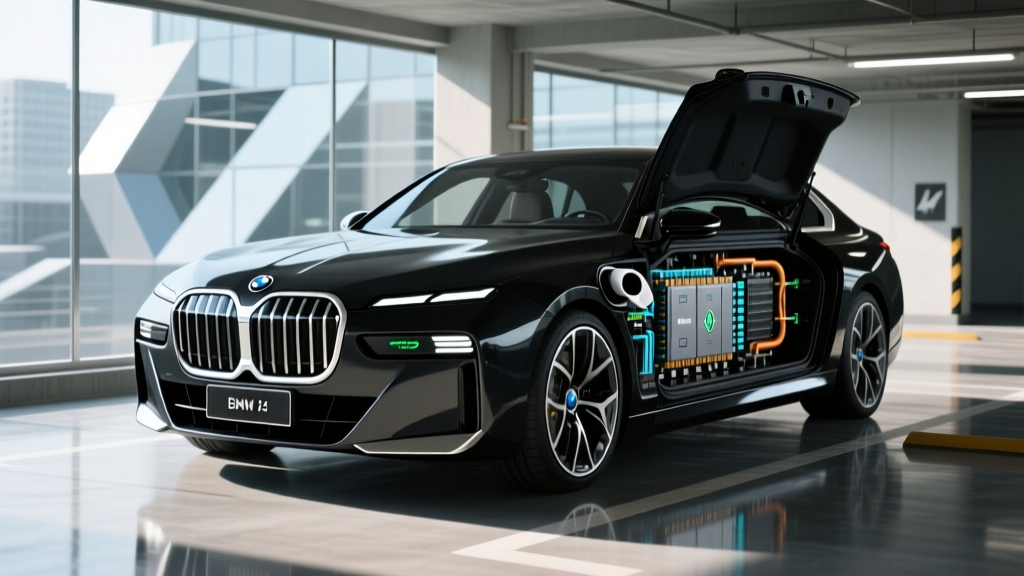
What "Battery Discharged: Start Engine" Means in a BMW EV or PHEV
If you've seen the battery discharged start engine BMW warning on your iDrive display, you're not alone — and the fix depends entirely on whether you're driving a BMW plug-in hybrid (like the X5 xDrive50e or 330e) or a fully electric model (like the i4 or iX). This message is BMW's way of telling you the 12-volt auxiliary battery has dropped below the voltage threshold needed to boot the vehicle's electronics and close the high-voltage contactors.
In a PHEV, "start engine" means the car wants to fire up the internal combustion engine to recharge the 12V system via the DC-DC converter. In a BEV like the i4 or iX, there's no engine to start — so the equivalent warning reads more like "12V battery critically low" and the car may refuse to enter Ready mode until the 12V system recovers or is replaced.
This guide goes well beyond that warning. Whether you're troubleshooting a discharged 12V system or researching the long-term health and economics of BMW's high-voltage batteries, here are the exact numbers on chemistry, degradation, warranty coverage, replacement costs, and what's coming next.
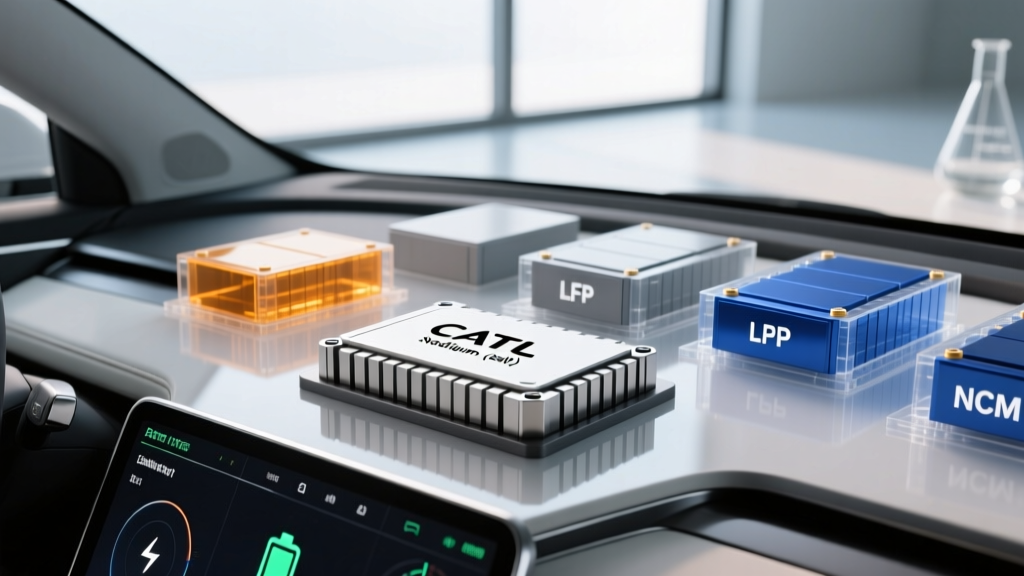
BMW's High-Voltage Battery Lineup: LFP vs NMC Chemistry Explained
BMW's 2025–2026 electrified lineup uses two distinct battery chemistries depending on the model and market. Understanding which one your vehicle has is the single biggest factor in long-term ownership cost, daily charging habits, and range predictability.
| Attribute | NMC / NCA (Gen5 eDrive) | LFP (Lithium Iron Phosphate) |
|---|---|---|
| Models using it | i4, iX, i7, i5, iX1, iX3 (most trims) | Select entry-level variants in specific markets; expanding with Neue Klasse (2026+) |
| Energy density | Higher (~250–300 Wh/kg cell-level) | Lower (~160–200 Wh/kg cell-level) |
| Usable pack sizes | 66.5 kWh (i4 eDrive35) to 101.7 kWh (i7) | Typically 60–75 kWh where offered |
| Cycle life | ~1,000–1,500 full cycles to 80% SoH | ~2,500–4,000+ full cycles to 80% SoH |
| Cold-weather performance | Better low-temp discharge; preconditioning critical | More range loss below 32°F; slower DC charge acceptance when cold |
| Daily charging to 100% | Not recommended long-term (accelerates degradation) | BMW and cell makers recommend regular 100% charges for cell balancing |
| Cost per kWh (pack-level) | ~$130–$160 | ~$90–$115 |
| Thermal runaway risk | Low but higher than LFP | Extremely low — inherently more stable chemistry |
The practical takeaway: NMC dominates BMW's current US lineup because it delivers the range and performance buyers expect from a premium EV. LFP's longer cycle life and lower cost make it ideal for daily-commuter vehicles where maximum range isn't the priority. BMW's upcoming Neue Klasse platform (arriving late 2025 for production, US deliveries expected 2026–2027) will introduce cylindrical cells with both NMC and potentially LFP options, promising up to 30% more energy density and faster charging.
How Long Do BMW EV Batteries Actually Last? Degradation Data
The fear that an EV battery will "die" at 100,000 miles is not supported by fleet data. BMW's Gen5 eDrive batteries — used in the i4, iX, and i7 — have demonstrated slower-than-expected degradation in real-world monitoring.
- Year 1 / ~15,000 mi: 2–4% capacity loss (initial formation drop)
- Year 3 / ~45,000 mi: 5–8% total loss
- Year 5 / ~75,000 mi: 8–12% total loss
- Year 8 / ~100,000 mi: 10–15% total loss (well within warranty threshold)
For a BMW i4 eDrive40 with an EPA-estimated 301 miles of range and an 81.5 kWh usable battery, a 12% loss at year 5 means roughly 265 miles of usable range — still very livable for daily driving and road trips.
The degradation curve is not linear. Most lithium-ion batteries lose capacity faster in the first year or two (the "formation" period), then settle into a slow, gradual decline. This is why BMW's warranty threshold is set at 70% capacity retention — it provides a wide margin that very few batteries actually breach under normal use.
BMW High-Voltage Battery Warranty: Exact Terms and Coverage
BMW's high-voltage battery warranty for US-market EVs and PHEVs is aligned with the federal minimum but structured with specific thresholds you should understand before purchasing.
| Coverage Item | BEV (i4, iX, i5, i7) | PHEV (X5 xDrive50e, 330e, etc.) |
|---|---|---|
| Duration | 8 years / 80,000 miles (whichever comes first) | 8 years / 80,000 miles |
| Capacity retention threshold | 70% of original usable capacity | 70% of original usable capacity |
| What's covered | Defects, premature degradation below threshold | Defects, premature degradation below threshold |
| What's NOT covered | Normal wear above 70%, cosmetic damage, aftermarket modifications | Same exclusions |
| 12V auxiliary battery | 4 years / 50,000 miles (standard new-vehicle warranty) | 4 years / 50,000 miles |
| Transferable to second owner? | Yes — automatically transfers with VIN | Yes |
If your BMW i4's battery drops to 68% State of Health (SoH) at year 6 and 65,000 miles, BMW will repair or replace the battery at no cost. In practice, BMW typically replaces individual modules rather than the entire pack when possible, which is faster and keeps the car out of the shop for less time.
For the 12V battery — the one most likely causing your "battery discharged start engine" warning — coverage falls under the standard 4-year/50,000-mile new-vehicle limited warranty. If you're outside that window, a replacement AGM or lithium 12V battery for a BMW i4 or iX typically costs $250–$450 installed at a dealer.
EV Battery Replacement Cost: What BMW Owners Actually Pay
If your high-voltage battery fails outside warranty — or if you're buying a used BMW EV and want to budget for a worst-case scenario — here are the current replacement cost ranges.
| Model | Pack Size (Usable) | Estimated Replacement Cost | Typical Need Timeline |
|---|---|---|---|
| BMW i4 eDrive40 | 81.5 kWh | $16,000–$22,000 | Rarely needed; most packs outlast 200,000+ mi |
| BMW iX xDrive50 | 105.2 kWh | $20,000–$28,000 | Same — module-level repair more common |
| BMW i7 xDrive60 | 101.7 kWh | $19,000–$26,000 | Same |
| BMW i5 eDrive40 | 81.2 kWh | $15,500–$21,000 | Same |
Context that matters: According to data from Consumer Reports and fleet analyses, fewer than 2% of modern EV batteries require full replacement within the first 10 years. Most degradation-related issues are resolved through module-level service (replacing 1–3 of the 8–12 modules in the pack) at a fraction of the full-pack cost — typically $3,000–$7,000 per module including labor.
For PHEVs like the X5 xDrive50e with its smaller 25.7 kWh battery, replacement costs are proportionally lower: roughly $8,000–$12,000 for a full pack, though again, full replacements are uncommon.
Factors That Accelerate (or Preserve) Your BMW's Battery Life
Battery longevity isn't random — it's a function of how you charge, where you park, and how you drive. Here's a practical checklist based on lithium-ion electrochemistry, not marketing.
- Set a daily charge limit of 80% for NMC batteries. Use the iDrive charging menu or BMW Charging app. Only charge to 100% when you'll drive within the next few hours.
- Minimize DC fast charging to 1–2 times per week if possible. Daily 200 kW+ sessions accelerate electrolyte decomposition. Home Level 2 (7–11 kW) is ideal for routine charging.
- Precondition before fast charging. BMW's thermal management system works best when the battery is 95–104°F at the charge port. Use the BMW app to precondition 15–30 minutes before arriving at a DC station. This avoids the sluggish charge curve that cold batteries produce.
- Avoid prolonged storage at 100% or below 10% SoC. If leaving the car for 2+ weeks, set charge limit to 50% and keep it plugged in so the thermal management system can maintain temperature.
- Extreme heat is worse than extreme cold for degradation. Parking in shade or a garage in summer does more for battery longevity than any winter precaution. Sustained battery temps above 95°F accelerate calendar aging.
- Don't baby the car too much. Occasional 100% charges (once a month) help the BMS recalibrate cell balancing. Driving hard occasionally is fine — it's sustained high-SoC + high-temp that causes damage.
How to Check Your BMW EV Battery Health (State of Health)
BMW does not expose a granular State of Health (SoH) percentage directly in the iDrive menu the way some competitors do. Here are the methods available to BMW EV owners in 2025–2026:
Method 1: BMW Service Department Diagnostic
Any BMW dealer can run a high-voltage battery health report using the ISTA diagnostic system. This gives a precise SoH percentage and individual cell/module voltage spread. Request this during any service visit — it's typically included at no charge if you ask.
Method 2: OBD-II Dongle + Third-Party App
Devices like the OBDLink SX or vLinker FD, paired with apps such as BimmerCode or Carly for BMW, can read the high-voltage battery's reported SoH, cell voltages, and charge/discharge cycle count. This costs $40–$80 for the hardware plus a one-time or subscription app fee.
Method 3: Range-Based Estimation
If your BMW i4 eDrive40 originally showed 301 miles at 100% charge and now consistently shows 270 miles at 100% (in similar temperatures), that's roughly a 10% degradation indicator. This method is imprecise because the BMS can recalibrate, but it's a useful trend tracker.
Method 4: Pre-Purchase Inspection (Used EVs)
If buying a used BMW EV, insist on a dealer HV battery health report as a condition of sale. A SoH below 85% on a vehicle with under 60,000 miles may indicate abusive charging patterns or a defective module.
What's Next: Solid-State and Silicon-Anode Batteries for BMW
BMW has publicly committed to solid-state battery technology through its partnership with Solid Power, but realistic timelines matter more than press-release optimism.
Solid-state batteries replace the liquid electrolyte with a solid ceramic or polymer separator, promising higher energy density (potentially 400+ Wh/kg at the cell level), faster charging, and improved safety. BMW has stated it will begin testing solid-state cells in prototype vehicles before 2027, with limited production possible by 2028–2030.
Silicon-anode batteries — which replace graphite anodes with silicon to increase lithium-ion storage capacity — are closer to market. Companies like Sila Nanotechnologies and Group14 are already supplying silicon-dominant anode materials for consumer electronics and early automotive applications. BMW's Neue Klasse platform may incorporate partial silicon-anode cells in its next-gen NMC chemistry, potentially boosting energy density by 15–20% over current Gen5 cells.
Frequently Asked Questions
How long do EV batteries last in years and miles?
Modern BMW EV batteries (Gen5 eDrive, NMC chemistry) are designed to retain 70%+ capacity for at least 8 years or 80,000 miles under warranty, and fleet data shows most retain 85–90% at that point. In practical terms, these batteries regularly exceed 150,000–200,000 miles before capacity loss becomes a meaningful inconvenience. According to Geotab's longitudinal fleet study, the average EV battery loses about 2.3% capacity per year across all brands — meaning a 15-year usable lifespan is realistic.
How much does an EV battery cost to replace in a BMW?
Full high-voltage battery replacement for current BMW EVs ranges from $15,500 to $28,000 depending on the model and pack size. However, full replacements are rare — most out-of-warranty issues are resolved through module-level repair at $3,000–$7,000 per module. The 12V auxiliary battery (the usual cause of "battery discharged" warnings) costs $250–$450 to replace.
What does the BMW EV battery warranty cover?
BMW covers the high-voltage battery for 8 years or 80,000 miles against defects and capacity loss below 70% of original usable capacity. The warranty transfers automatically to subsequent owners. The 12V auxiliary battery is covered under the standard 4-year/50,000-mile new-vehicle warranty. Normal degradation above the 70% threshold is considered expected wear and is not covered.
How do I check and maximize my BMW EV battery health?
Check SoH through a dealer ISTA diagnostic report, an OBD-II dongle with BimmerCode, or by tracking your 100%-charge range estimate over time. Maximize longevity by charging to 80% daily on Level 2, limiting DC fast charging to 1–2 sessions per week, preconditioning before fast charges, avoiding prolonged storage at extreme SoC levels, and parking in shade during hot weather.
LFP vs NMC — which battery chemistry is better for a BMW?
Neither is universally better. NMC offers higher energy density (more range in a smaller, lighter pack) and better cold-weather performance, making it the right choice for BMW's premium long-range models like the i4, iX, and i7. LFP offers dramatically longer cycle life (2,500–4,000+ cycles vs 1,000–1,500), lower cost, and superior thermal stability, but sacrifices range and cold-weather capability. For a daily commuter who can charge at home every night, LFP is arguably the smarter long-term bet. For road-trip-heavy drivers in cold climates, NMC remains the practical choice.
Why does my BMW say "battery discharged start engine" if it's an electric car?
In BMW PHEVs (like the X5 xDrive50e or 330e), this message refers to the 12V auxiliary battery, not the high-voltage traction battery. The car is asking to start the gas engine to recharge the 12V system via the DC-DC converter. In a pure BEV like the i4 or iX, the equivalent warning indicates the 12V battery is critically low and the car may not enter Ready mode. In both cases, the solution is typically a 12V battery replacement ($250–$450) or a jump-start/charge of the 12V system — not a high-voltage battery issue.