If you're researching a BMW battery car — whether the i4 Gran Coupe, the iX SUV, or the newer i5 sedan — the high-voltage traction battery is likely your biggest long-term ownership question. How long will it last? What chemistry is inside? And if the worst happens, what does replacement actually cost?
This guide breaks down BMW's current battery architecture, degradation realities backed by fleet data, federal warranty mandates, and the daily habits that preserve (or erode) your pack's State of Health. We'll also cover the LFP vs. NMC trade-off that now shapes BMW's lineup strategy.
BMW's Battery Chemistry: NMC Dominates, but LFP Is Entering the Conversation
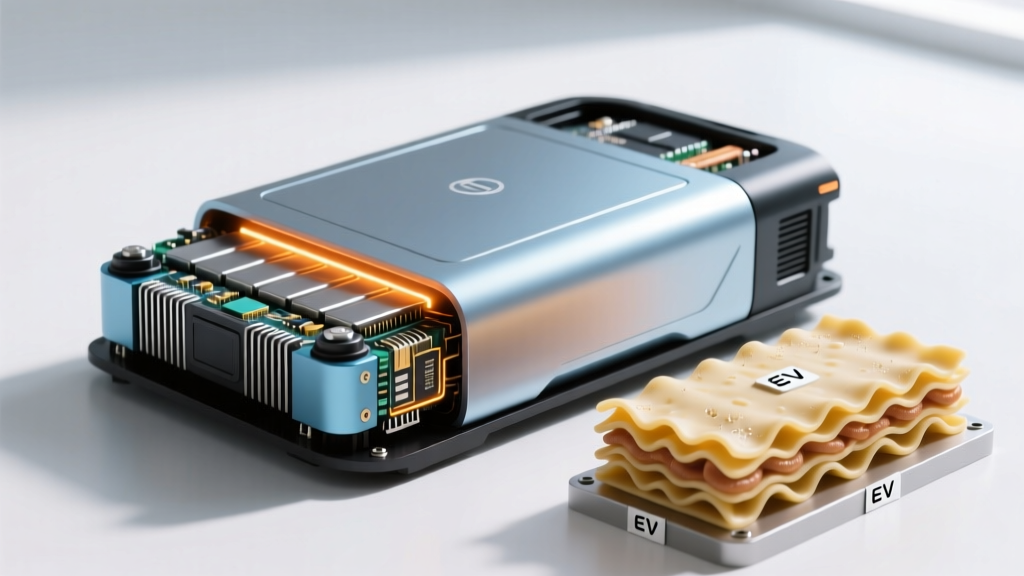
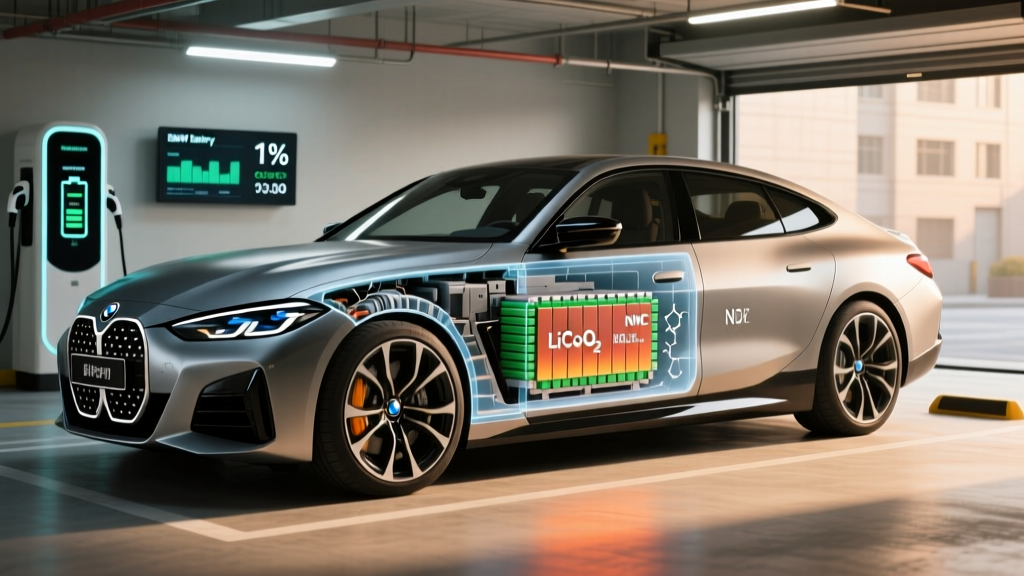
As of the 2026 model year, BMW's EV lineup — the i4, i5, i7, iX, and iX1 — relies primarily on NMC (Nickel Manganese Cobalt) lithium-ion cells, supplied largely by CATL and Samsung SDI in BMW's fifth-generation eDrive architecture. BMW has been comparatively conservative in cell sourcing, favoring prismatic NMC cells packaged into modular battery trays that allow individual module replacement rather than full-pack swaps.
However, BMW has signaled that future entry-level models (the upcoming Neue Klasse platform vehicles expected in late 2026/2027) will offer LFP (Lithium Iron Phosphate) variants for cost-sensitive trims. Understanding the difference matters now, because it will affect your purchase decision within the next year or two.
| Attribute | NMC (Current BMW i4/iX/i5) | LFP (Emerging / Entry-Level) |
|---|---|---|
| Energy Density | Higher (~230–260 Wh/kg cell-level) | Lower (~160–180 Wh/kg cell-level) |
| Typical Pack Size | 83.9 kWh gross (i4 eDrive40), 111.5 kWh gross (iX xDrive50) | Expected 60–75 kWh for future entry trims |
| Cycle Life | ~1,000–1,500 full cycles to 80% SoH | ~2,500–4,000 full cycles to 80% SoH |
| Cold-Weather Performance | Better low-temp discharge; heat pump standard on iX | More range loss below 32°F; requires stronger preconditioning |
| Charging to 100% | BMW recommends 80–90% daily; 100% for trips only | Can charge to 100% regularly without accelerated wear |
| Cost per kWh (cell) | ~$110–130/kWh | ~$75–95/kWh |
| Cobalt Content | Reduced but present (~5–10%) | Zero cobalt |
Which is better? For current BMW buyers, NMC is what's available, and it's the right choice for the range and performance targets BMW sets. The i4 eDrive40 achieves an EPA-estimated 307 miles on its 83.9 kWh (gross) NMC pack. LFP will trade roughly 15–20% of that range for significantly longer cycle life and lower cost — ideal for buyers who commute short distances and want a pack that could outlast the vehicle itself.
Real-World Degradation: What the Data Actually Shows
Battery degradation follows a nonlinear curve: the steepest loss occurs in the first 12–18 months (typically 2–5%), after which the rate flattens considerably. For BMW's Gen5 eDrive packs, real-world fleet data from European and North American owners tells a reassuring story.
BMW EV Battery Degradation — Observed Fleet Averages:
- Year 1 / 15,000 miles: 2–4% capacity loss (initial SEI layer formation)
- Year 3 / 45,000 miles: 5–8% total loss
- Year 5 / 75,000 miles: 8–12% total loss
- Year 8 / 100,000 miles: 10–15% total loss (projected, based on Gen5 fleet trajectory)
Sources: Geotab fleet battery health studies (2024–2025 data), BMW owner community telemetry (Bimmerpost/iX forums), Recurrent Auto battery reports.
To put this in context: an i4 eDrive40 that loses 12% capacity over 75,000 miles still retains roughly 270 miles of its original 307-mile EPA range. That's a meaningful reduction, but not a dealbreaker for most drivers — and it's well above the threshold where warranty coverage would kick in.
The key insight: most BMW EV batteries will outlast the vehicle's useful economic life. Catastrophic failure (sudden cell or module death) is rare, covered under warranty, and distinct from the gradual degradation described above.
Battery Warranty: What BMW Covers (and the Federal Floor)
Federal law mandates that EV batteries carry a minimum warranty of 8 years or 100,000 miles (whichever comes first) in most states, with California Air Resources Board (CARB) states requiring 10 years or 150,000 miles. BMW meets or exceeds these thresholds across its EV lineup.
| Model | Warranty Period | Mileage Cap | Capacity Threshold | CARB-State Extension |
|---|---|---|---|---|
| i4 (all trims) | 8 years | 100,000 miles | 70% of original capacity | 10 yr / 150,000 mi |
| i5 (all trims) | 8 years | 100,000 miles | 70% of original capacity | 10 yr / 150,000 mi |
| i7 (all trims) | 8 years | 100,000 miles | 70% of original capacity | 10 yr / 150,000 mi |
| iX (all trims) | 8 years | 100,000 miles | 70% of original capacity | 10 yr / 150,000 mi |
What the 70% threshold means: If your iX xDrive50 (EPA 324 miles, 111.5 kWh gross pack) degrades to below 70% usable capacity — roughly 227 miles of range — within 8 years/100,000 miles, BMW must repair or replace the battery at no cost. Based on the degradation data above, hitting this threshold under normal use is unlikely; you'd need to consistently abuse the pack with daily 100% charges, frequent DC fast charging in extreme heat, and deep discharges.
The warranty covers defects and excessive capacity loss. It does not cover damage from accidents, flooding, or unauthorized modifications. If you live in a CARB state (California, New York, Massachusetts, Washington, and others), your coverage extends to 10 years/150,000 miles — a significant advantage for second owners.
Replacement Cost: The Numbers and the Reality
This is the question that generates the most anxiety — and the most misinformation. Let's separate the worst-case sticker price from the realistic ownership scenario.
| Model | Pack Size (Gross) | Full-Pack Replacement (Parts + Labor) | Module-Level Repair | Typical Need Timeline |
|---|---|---|---|---|
| i4 eDrive40 | 83.9 kWh | $16,000–$22,000 | $2,500–$5,000 per module | Rarely needed before 150,000+ mi |
| i5 eDrive40 | 84.3 kWh | $17,000–$23,000 | $2,500–$5,500 per module | Rarely needed before 150,000+ mi |
| iX xDrive50 | 111.5 kWh | $22,000–$30,000 | $3,000–$6,000 per module | Rarely needed before 150,000+ mi |
| i7 eDrive50 | 105.7 kWh | $20,000–$28,000 | $3,000–$6,000 per module | Rarely needed before 150,000+ mi |
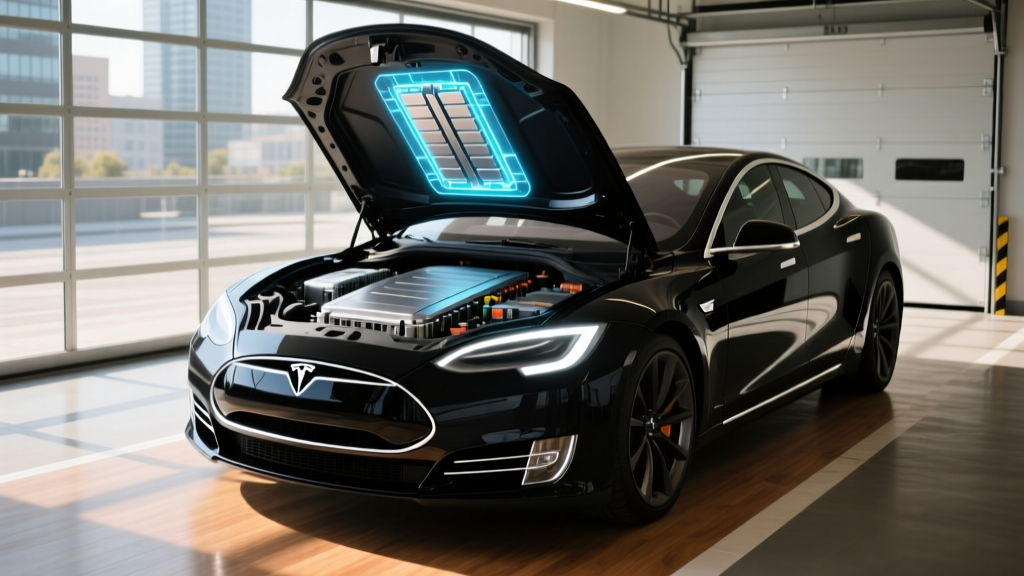
The critical context: BMW's Gen5 eDrive architecture uses a modular battery design. If one cell group or module fails, a BMW-certified technician can replace that individual module rather than the entire pack. This brings most out-of-warranty repair scenarios into the $2,500–$6,000 range — comparable to a major engine repair on a conventional vehicle.
Full-pack replacement at $16,000–$30,000 is a worst-case scenario that applies primarily to catastrophic physical damage (collision, flood) or extreme end-of-life degradation well beyond 150,000 miles. Cell prices continue to decline — BloombergNEF data shows pack-level costs dropping roughly 8–12% annually — meaning a replacement in 2032 will cost substantially less than today's figures.
Five Habits That Preserve Your BMW Battery's State of Health
Battery degradation is inevitable, but its rate is largely within your control. These five practices, drawn from BMW's own owner guidance and battery research, will maximize your pack's lifespan:
- Set a daily charge limit of 80–90%. BMW's iDrive system lets you configure a target State of Charge. Charging to 100% regularly accelerates NMC wear by increasing cell voltage stress. Reserve 100% charges for road-trip mornings.
- Avoid frequent DC fast charging above 150 kW when unnecessary. Occasional fast charging is fine — BMW's thermal management system preconditioning protects the pack. But daily 200 kW sessions generate cumulative heat stress. Use Level 2 home charging (7.4–11 kW) as your primary method.
- Don't let the battery sit at very low SoC for extended periods. If you're traveling and leaving the car parked, leave it at 40–60% SoC. Storing below 10% for weeks can cause copper dissolution in the anode.
- Precondition before fast charging in cold weather. BMW's navigation-to-charger feature automatically warms the battery when a DC fast charger is set as your destination. This isn't just about speed — charging a cold battery forces lithium plating, a permanent degradation mechanism.
- Park in shade or a garage during summer heat. Sustained battery temperatures above 95°F (35°C) accelerate calendar aging. A garage can reduce pack temperature by 10–15°F compared to direct-sun parking.
How to Check Your BMW Battery's State of Health
Unlike some EVs that display a battery health percentage directly in the infotainment system, BMW's approach to State of Health (SoH) monitoring is less transparent. Here's how to get the data:
BMW iDrive / My BMW App: The My BMW app provides charging status and range estimates but does not currently display a raw SoH percentage. BMW dealerships can run a battery diagnostic that reports module-level voltage variance and overall capacity retention — request this during scheduled service visits.
OBD-II Diagnostic Tools: Third-party apps like BimmerCode and BimmerLink, paired with an OBD-II adapter (such as the OBDLink SX or Vgate iCar), can read BMW's internal battery management system (BMS) data. This includes real-time SoH percentage, individual cell-group voltages, and total energy throughput. A healthy 2-year-old i4 should show 94–97% SoH; anything below 90% at low mileage warrants a dealer visit.
Third-Party Battery Health Reports: Companies like Recurrent Auto offer free battery health reports that compare your pack's degradation against a fleet of identical vehicles. You share anonymized telematics data and receive a personalized degradation curve. This is especially useful before buying a used BMW EV — it gives you an independent check on the seller's claims.
What's Next: Solid-State and Silicon-Anode Batteries
BMW has been one of the most vocal legacy automakers in pursuing next-generation battery technology. Here's where things stand — with realistic timelines, not hype:
Solid-State Batteries: BMW has a development partnership with Solid Power and has tested prototype solid-state cells. The company has publicly stated that solid-state packs will debut in production vehicles "in the second half of this decade" — meaning 2027–2029 at the earliest. Solid-state technology promises 20–40% higher energy density and improved safety (no liquid electrolyte), but manufacturing scalability remains the unsolved challenge. These batteries are not available in any production BMW today.
Silicon-Anode Cells: BMW's Neue Klasse platform (launching 2026–2027) will introduce cylindrical cells with a higher nickel content and, in some variants, silicon-enhanced anodes. This incremental chemistry improvement targets 20–30% higher energy density and faster charging rates compared to current Gen5 prismatic NMC cells. This is a more near-term upgrade and is the technology most likely to appear in a BMW you can actually buy within the next two years.
Sodium-Ion: BMW has not announced sodium-ion plans, but CATL (a key BMW supplier) has begun mass-producing sodium-ion cells for Chinese-market vehicles. These are lower-cost, lower-density packs suited to entry-level urban EVs. Don't expect these in a US-market BMW soon, but they represent a cost-reduction pathway for the broader industry.
Frequently Asked Questions
How long do BMW EV batteries last in years and miles?
Based on current fleet data, BMW Gen5 eDrive batteries retain approximately 85–90% of their original capacity at 100,000 miles (roughly 8 years of average driving). Most packs will remain functional and above 70% capacity well past 150,000 miles. The battery will almost certainly outlast the vehicle's economic life unless subjected to consistent abuse.
How much does it cost to replace a BMW EV battery?
A full-pack replacement ranges from approximately $16,000 (i4) to $30,000 (iX) including labor. However, BMW's modular design allows individual module replacement at $2,500–$6,000 per module, which is the more common repair scenario. Full replacements are rare and typically only needed after collision damage or extreme degradation beyond 150,000 miles.
What does the BMW battery warranty actually cover?
BMW covers the high-voltage battery for 8 years/100,000 miles (10 years/150,000 miles in CARB states) against defects and capacity loss below 70% of original usable capacity. This covers internal cell failures, BMS defects, and excessive degradation. It does not cover physical damage from accidents or environmental events.
Is it bad to fast-charge my BMW every day?
Occasional DC fast charging is fine — BMW's thermal management system preconditioning protects the pack. But relying exclusively on 150+ kW DC fast charging generates cumulative heat stress that accelerates degradation over time. For daily charging, a Level 2 home charger at 7.4–11 kW is optimal for long-term battery health.
Should I buy a BMW with NMC or wait for LFP?
If you need a BMW EV now, NMC is your only option in the current i4/i5/iX/i7 lineup, and it delivers the range and performance BMW targets. If you're considering a future Neue Klasse entry-level model and your daily commute is under 50 miles, an LFP variant (expected 2027–2028) will offer longer cycle life and the ability to charge to 100% daily — at the cost of roughly 15–20% less range.
Does cold weather permanently damage the battery?
No. Cold weather reduces range temporarily (expect 20–30% less range at 20°F) because the battery's internal resistance increases and energy is diverted to cabin heating. This is reversible — range returns when temperatures rise. The only cold-weather risk is charging a cold battery at high power, which can cause lithium plating. Always use BMW's preconditioning feature before fast charging in winter.
Battery specifications, warranty terms, and pricing reflect 2026 model-year information and are subject to change. Consult your local BMW dealer and review the official warranty booklet for your specific vehicle. Federal tax credit eligibility under IRS §30D depends on MSRP caps, buyer income limits, and battery component sourcing requirements that change annually — verify with a tax professional before purchase.