If you've been searching for BlueOvalSK Battery Park photos and details, you're looking at one of the most significant EV battery manufacturing investments on U.S. soil. The $5.6 billion, 4,300-acre megasite in Stanton, Tennessee — a joint venture between Ford and South Korea's SK On — is designed to produce up to 129 gigawatt-hours (GWh) of battery cells annually across three plants. That's enough to supply roughly 1.5 million electric vehicles per year.
But beyond the aerial construction photos and press-release renderings, what does BlueOvalSK actually mean for EV buyers? The answer sits at the intersection of cell chemistry, long-term degradation, warranty protection, and the eventual question every EV owner asks: how much will a replacement cost? This guide uses the BlueOvalSK facility as a lens to break down everything you need to know about EV battery technology in 2026.
What BlueOvalSK Battery Park Actually Produces
BlueOvalSK (the name combines Ford's "Blue Oval" branding with SK On) began phased production in 2025. The facility manufactures lithium-ion pouch cells primarily using NMC (nickel-manganese-cobalt) chemistry, destined for the Ford F-150 Lightning, next-generation Ford EVs, and potentially Lincoln models. The site's three plants are being brought online sequentially, with full 129 GWh capacity targeted by 2027.
The significance for consumers: localized cell production reduces supply-chain vulnerability, potentially stabilizes battery pack pricing, and supports domestic-content requirements under the IRS §30D federal tax credit battery-sourcing rules. Vehicles using BlueOvalSK cells are positioned to qualify for the critical-minerals and battery-component portions of the credit, subject to MSRP caps ($80,000 for trucks/SUVs, $55,000 for sedans) and buyer income limits.
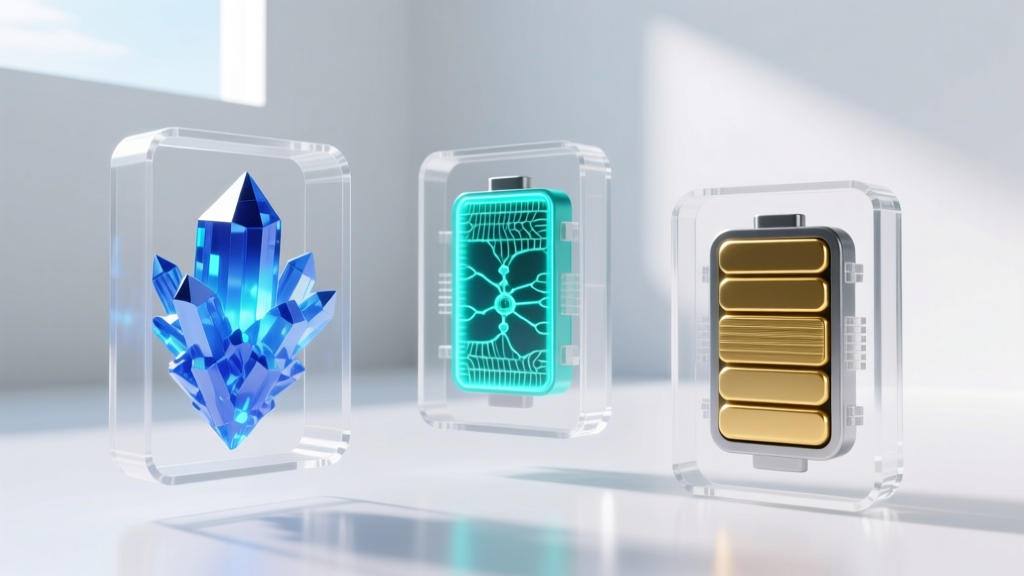
LFP vs. NMC: The Chemistry Divide Explained
BlueOvalSK focuses on NMC chemistry, but the broader EV market increasingly offers two distinct battery types. Understanding the trade-offs is essential before you buy.
| Attribute | LFP (Lithium Iron Phosphate) | NMC/NCA (Nickel-Manganese-Cobalt / Nickel-Cobalt-Aluminum) |
|---|---|---|
| Energy Density | Lower (~160-180 Wh/kg cell-level) | Higher (~220-280 Wh/kg cell-level) |
| Range per kWh | Heavier pack for same range | More range from lighter, smaller pack |
| Cycle Life | 3,000-5,000+ cycles to 80% capacity | 1,000-2,000 cycles to 80% capacity |
| Cold-Weather Performance | Greater range loss in freezing temps (~30-40%) | Better cold retention (~20-30% loss) |
| Fast-Charging Tolerance | Handles frequent DCFC well; can charge to 100% regularly | Degrades faster with repeated 100% SoC + frequent DCFC |
| Cost per kWh | ~$80-100/kWh (2026 pack-level) | ~$110-140/kWh (2026 pack-level) |
| Cobalt Content | Zero cobalt — fewer ethical/supply concerns | Contains cobalt and nickel — higher sourcing complexity |
| Typical Use | Standard-range trims (Tesla Model 3 RWD, Ford Mustang Mach-E Select LFP) | Extended-range/performance trims (F-150 Lightning Extended, most long-range EVs) |
The practical takeaway: If you drive a predictable daily commute, charge at home, and want maximum battery longevity, LFP is the stronger choice. If you need maximum range per charge, tow frequently, or live in a cold climate where winter range loss matters, NMC delivers better real-world utility. BlueOvalSK's NMC focus reflects Ford's priority on range-dense packs for trucks and larger SUVs where weight and energy density are non-negotiable.
How Long Do EV Batteries Actually Last?
The fear of a dead battery at 80,000 miles is largely a relic of early EVs. Modern thermal management systems, improved cell chemistry, and smarter battery management software have pushed real-world lifespans well beyond most owners' time with the vehicle.
- Year 1-2: Most EVs lose 2-5% capacity as cells stabilize (initial "formation" loss).
- Year 3-5: Degradation slows to roughly 1-2% per year under normal use.
- Year 8 (typical warranty boundary): Expect 85-92% original capacity retained for NMC; 90-95%+ for LFP.
- 100,000 miles: Data from fueleconomy.gov and fleet studies show most modern liquid-cooled packs retain 88-93% capacity.
- 200,000 miles: Well-maintained NMC packs often sit at 75-85% capacity; LFP packs frequently exceed 90%.
Translation: A 300-mile EPA range when new might realistically deliver 260-275 miles at year eight. Annoying, but not debilitating for most drivers.
The key variable is how the battery is used. A Tesla Model 3 driven in Phoenix with daily 100% charges and frequent Supercharger use will degrade faster than one garage-parked in Seattle and charged to 80% on Level 2 overnight. Chemistry matters too — LFP's superior cycle life means a Tesla Model 3 RWD (LFP) will typically outlast a Long Range AWD (NMC) under identical conditions.
What the Battery Warranty Actually Covers
Federal law mandates a minimum 8-year/100,000-mile warranty on EV battery packs for emissions-related compliance, and most manufacturers match or exceed this baseline. Here's how the major warranties stack up:
| Manufacturer | Warranty Period | Capacity Threshold | What Triggers a Claim |
|---|---|---|---|
| Ford (F-150 Lightning, Mach-E) | 8 years / 100,000 miles | Below 70% SoH | Battery falls below 70% original usable capacity |
| Tesla (Model 3/Y NMC) | 8 years / 120,000 miles | Below 70% SoH | Capacity drops below 70% as measured by BMS |
| Tesla (Model 3 RWD LFP) | 8 years / 100,000 miles | Below 70% SoH | Same threshold, shorter mileage limit |
| Hyundai / Kia (Ioniq 5, EV6) | 10 years / 100,000 miles | Below 70% SoH | Longest duration in mainstream market |
| GM (Ultium-based: Blazer EV, Silverado EV) | 8 years / 100,000 miles | Below 70% SoH (some trims 60%) | Varies by model; check specific terms |
| Rivian (R1T, R1S) | 8 years / 175,000 miles | Below 70% SoH | Highest mileage threshold among startups |
Critical nuance: The warranty covers capacity loss below the threshold, not a total battery failure. If your 250-mile EPA truck drops to 180 miles at year seven (72% retained), you're still above the 70% line and the warranty won't trigger. Most claims involve defective modules or BMS failures rather than gradual degradation, which rarely dips below 70% within the warranty window.
EV Battery Replacement Cost: What to Expect
Out-of-warranty battery replacement remains the elephant in the room for used-EV buyers and high-mileage owners. Costs vary dramatically by pack size, chemistry, and whether you need a full pack or individual module replacement.
| Vehicle | Pack Size (usable kWh) | Chemistry | Full Pack Replacement | Module Repair (if available) |
|---|---|---|---|---|
| Tesla Model 3 RWD | ~57 kWh | LFP | $12,000 – $16,000 | $2,500 – $4,000 per module group |
| Tesla Model Y LR AWD | ~75 kWh | NMC | $16,000 – $22,000 | $3,000 – $5,000 per module |
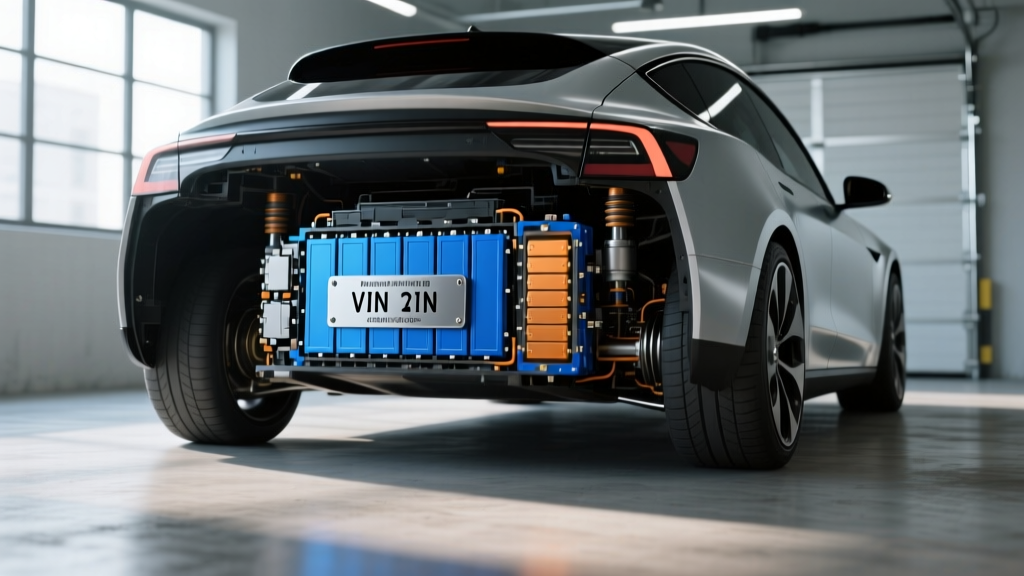
| Ford F-150 Lightning Extended | ~131 kWh | NMC (BlueOvalSK) | $25,000 – $35,000 | Module-level repair TBD at scale |
| Hyundai Ioniq 5 | ~77.4 kWh | NMC | $15,000 – $20,000 | $3,000 – $4,500 per module |
| Chevrolet Bolt EV/EUV (older) | ~65 kWh | NMC | $14,000 – $18,000 | Recall-replaced packs at no cost |
When is replacement actually needed? In practice, very few owners face a full out-of-pocket replacement. Most packs outlast the vehicle's useful economic life. The scenarios where replacement occurs: (1) manufacturing defects caught under warranty, (2) physical damage from collisions or flooding (covered by insurance), or (3) extreme degradation on high-mileage fleet vehicles past 200,000 miles. For a typical owner driving 12,000 miles/year, the battery will likely retain 80%+ capacity when the car is retired or traded.
Factors That Accelerate Battery Degradation
Not all miles are equal when it comes to battery wear. These are the documented factors that measurably shorten pack life:
- Limit DC fast charging to road trips. Frequent 150+ kW DCFC sessions generate sustained heat. Studies show exclusive DCFC use can add 2-4% additional degradation over 100,000 miles vs. primarily Level 2 charging.
- Avoid sustained 100% State of Charge (NMC only). Set daily charge limit to 80% for NMC packs. LFP packs are an exception — manufacturers like Tesla recommend periodic 100% charges for LFP to allow BMS cell-balancing calibration.
- Don't let the pack sit at 0% or 100% for days. Extreme SoC at rest accelerates calendar aging. If storing the vehicle, target 50-60% SoC.
- Precondition before fast charging. Most EVs do this automatically when a DCFC is set in navigation. A cold battery charges slower and experiences more lithium plating stress.
- Park in shade or a garage in extreme heat. Sustained 95°F+ ambient temperatures with a high SoC is the single worst combination for calendar degradation. Thermal management helps, but it can't fully compensate when parked unplugged.
- Use Level 2 home charging as your primary method. A 7-11 kW Level 2 charger adds minimal thermal stress and keeps the pack in its comfort zone.
The BlueOvalSK NMC cells destined for the F-150 Lightning include Ford's advanced liquid thermal management system, which actively cools and heats the pack to maintain optimal cell temperature. This hardware significantly mitigates — but does not eliminate — the degradation factors above.
How to Monitor Your Battery's State of Health
State of Health (SoH) is the percentage of original usable capacity your battery currently holds. Monitoring it helps you track degradation trends and provides documentation if you ever need a warranty claim.
Methods to check SoH:
- In-vehicle displays: Some manufacturers (BMW iX, Mercedes EQS) show a SoH percentage directly in the infotainment system. Ford and Tesla do not expose this natively.
- OBD-II dongle + app: Tools like OBDLink SX paired with apps such as EV Health or LeafSpy (Nissan-specific) can read BMS data including SoH, cell voltages, and pack temperature. For Tesla, apps like Tessie or TeslaFi pull SoH estimates from the vehicle's API.
- Manual calculation: Charge to 100%, note the displayed range, and compare to the original EPA figure. A new F-150 Lightning Extended Range shows ~320 miles at 100%; if yours shows 288 miles at full charge after three years, that's roughly 90% SoH. (Account for the fact that displayed range uses recent driving efficiency, not EPA lab conditions.)
- Dealer diagnostic: Request a battery health report during service visits. Most dealers can print a BMS readout showing capacity, cell balance, and fault codes.
For BlueOvalSK-supplied Ford vehicles, the FordPass app provides estimated range and charging status but does not currently display a SoH percentage directly. Third-party OBD tools remain the most reliable owner-accessible method.
What's Next: Solid-State, Silicon Anodes, and Realistic Timelines
BlueOvalSK's current output is conventional lithium-ion with liquid electrolyte. But the next generation of battery technology promises step-changes in energy density and charge speed. Here's what's real versus what's still lab-stage:
Silicon-dominant anodes (replacing graphite): Companies like Sila Nanotechnologies and Group14 are already shipping silicon-carbon composite anode materials that boost energy density 10-20%. These are entering production in 2025-2026 model-year vehicles in limited applications. Expect gradual adoption rather than a sudden switch.
Semi-solid-state batteries: Cells using a gel or hybrid solid/liquid electrolyte (from companies like QuantumScape and Solid Power, the latter backed by Ford and BMW) are in advanced validation. Low-volume production for specific models is anticipated by 2027-2028, but mass-market availability at competitive pricing remains unlikely before 2030.
Full solid-state batteries: The theoretical endgame — replacing liquid electrolyte entirely with a solid ceramic or sulfide conductor, enabling faster charging, higher energy density, and improved safety. Toyota has announced a 2027-2028 target for limited deployment, but industry consensus places widespread solid-state adoption in the 2030-2035 window. Treat any claim of "solid-state EVs available now" with skepticism; no mass-produced vehicle currently uses a full solid-state pack.
For buyers in 2026, NMC and LFP lithium-ion remain the proven, warrantied, and economically rational choice. BlueOvalSK's scale investment signals that the industry expects these chemistries to dominate through at least the end of the decade.
Frequently Asked Questions
How long do EV batteries last in years and miles?
Modern liquid-cooled EV batteries with NMC chemistry typically retain 85-92% capacity at 8 years / 100,000 miles. LFP packs often exceed 90% in the same timeframe. Many packs reach 200,000+ miles before dropping below 80% capacity. Complete failure before 150,000 miles is rare and usually covered by warranty.
How much does it cost to replace an EV battery in 2026?
Full pack replacement ranges from approximately $12,000 (smaller LFP packs) to $35,000 (large NMC packs like the F-150 Lightning Extended Range). Module-level repairs, where available, cost $2,500-$5,000 per module. Most owners never pay this — packs typically outlast the vehicle, and defects within the warranty period (8 years / 100,000+ miles) are covered.
What does the EV battery warranty actually cover?
Standard warranties guarantee the battery will retain at least 70% of original usable capacity for 8 years / 100,000 miles (some manufacturers offer 10 years or higher mileage limits). Coverage includes capacity loss below the threshold, defective cells or modules, and BMS failures. Normal gradual degradation above the threshold is not a warrantable condition.
How do I check and maximize my EV battery health?
Monitor SoH via OBD-II diagnostic tools, dealer service reports, or manual range comparisons at full charge. To maximize longevity: charge primarily on Level 2, limit NMC packs to 80% daily SoC, avoid frequent DC fast charging, precondition before DCFC sessions, and don't leave the vehicle parked at 0% or 100% for extended periods. LFP owners can charge to 100% regularly.
LFP vs. NMC — which battery chemistry is better?
Neither is universally better; they serve different needs. LFP wins on cycle life (3,000-5,000+ cycles), lower cost, cobalt-free sourcing, and tolerance for daily 100% charging. NMC wins on energy density (more range from a lighter pack), cold-weather performance, and suitability for large vehicles where pack weight matters. Choose LFP for commute-focused daily driving; choose NMC for maximum range, towing, and cold climates.