When Ford and SK On committed over $11 billion to build the BlueOval SK Battery Park in Glendale, Kentucky, they weren't just pouring concrete — they were betting the future of Ford's electric lineup on a specific battery chemistry, manufacturing approach, and supply chain. For anyone shopping a Ford Mustang Mach-E, F-150 Lightning, or future Ford EV, understanding what comes out of this facility directly answers the questions that matter most: How long will the battery last? What chemistry is inside? And what happens if something goes wrong?
This guide breaks down the battery technology behind BlueOval SK Battery Park, places it in the broader context of EV battery science, and gives you the exact numbers on degradation, warranty coverage, replacement costs, and how to maximize your pack's lifespan.
What Is BlueOval SK Battery Park?
BlueOval SK Battery Park is a massive 1,500-acre battery manufacturing campus in Hardin County, Kentucky, operated as a joint venture between Ford Motor Company and South Korea's SK On. The facility houses two production plants, each capable of producing roughly 43 gigawatt-hours (GWh) of battery cells annually — enough to supply hundreds of thousands of EV battery packs per year.
The cells produced here are primarily nickel-manganese-cobalt (NMC) lithium-ion pouch cells, the chemistry Ford has standardized across its highest-volume EVs including the F-150 Lightning and Mustang Mach-E Extended Range. This matters because battery chemistry dictates your vehicle's range, charging speed, cold-weather behavior, and long-term degradation profile.
BlueOval SK represents Ford's strategy to onshore battery production, reduce reliance on Asian cell imports, and meet the domestic-content requirements of the IRS §30D federal tax credit. Vehicles with cells from this plant are positioned to qualify for the credit's battery-component and critical-mineral sourcing thresholds — though buyer income caps and MSRP limits still apply, so always verify eligibility for your specific situation.
NMC vs LFP: The Chemistry Inside Your Ford EV
The cells rolling out of BlueOval SK Battery Park are NMC (nickel-manganese-cobalt) chemistry. But Ford also uses LFP (lithium iron phosphate) cells in certain trims, sourced from CATL. Understanding the trade-offs between these two chemistries is essential for choosing the right vehicle.
| Attribute | NMC (BlueOval SK) | LFP (CATL-supplied) |
|---|---|---|
| Energy density | ~250–300 Wh/kg (cell level) | ~160–200 Wh/kg (cell level) |
| Typical use in Ford EVs | Extended Range / Max Range trims | Standard Range trims |
| Cycle life | ~1,000–2,000 full cycles to 80% SoH | ~3,000–5,000+ full cycles to 80% SoH |
| Cold-weather performance | Better low-temp discharge; less range loss | Greater range loss below 32°F; slower cold charging |
| Charging to 100% regularly | Not recommended; accelerates degradation | Can be charged to 100% daily with minimal impact |
| Thermal stability | Good; requires active thermal management | Excellent; inherently more stable |
| Cost per kWh | Higher (~$120–140/kWh cell cost in 2026) | Lower (~$80–100/kWh cell cost in 2026) |
| Cobalt content | Yes (supply-chain and ethical considerations) | No cobalt or nickel |
Which is better? It depends on your use case. If you need maximum range per charge (road trips, towing with the F-150 Lightning, cold-climate commuting), NMC is the stronger choice — it packs more energy into less weight and handles cold better. If you primarily drive locally, charge at home nightly, and want a battery that will likely outlast the vehicle with minimal degradation, LFP is the more durable, lower-cost option.
Ford's strategy mirrors the broader industry: NMC for performance and range, LFP for cost and longevity. BlueOval SK Battery Park focuses on the NMC side of that equation, supplying cells for the higher-trim, higher-range vehicles where energy density is paramount.
How Long Do EV Batteries Last? Real Degradation Data
This is the number-one question from prospective EV buyers, and the answer is more reassuring than most expect. Modern EV batteries — including the NMC cells from BlueOval SK — are engineered to last the usable life of the vehicle.
- Year 1 / ~15,000 miles: 2–5% capacity loss (initial settling)
- Year 3 / ~45,000 miles: 5–8% total capacity loss
- Year 5 / ~75,000 miles: 8–12% total capacity loss
- Year 8 / ~120,000 miles: 10–15% total capacity loss
- Year 10+ / ~150,000+ miles: 12–20% total capacity loss (highly dependent on usage patterns)
Sources: Geotab fleet data analysis, Recurrent Auto battery health reports, manufacturer warranty thresholds.
Several key patterns emerge from aggregated fleet data:
- Degradation is front-loaded. Most capacity loss occurs in the first 12–24 months as the battery chemistry stabilizes. After that, the curve flattens significantly.
- The "buffer" matters. Ford, like most automakers, locks off a portion of the battery's total capacity (typically 5–10%) as a buffer. When your dash shows 100%, you're actually at ~90–95% of true cell capacity. This buffer shrinks over time to mask degradation from the driver.
- Most packs outlive the car. A pack retaining 80–85% capacity at 150,000 miles still provides substantial range. A Mach-E Extended Range that started at 312 miles EPA would still deliver roughly 250–265 miles at that point — more than adequate for daily use.
Ford's Battery Warranty: What's Actually Covered
Ford provides a high-voltage battery warranty across its EV lineup that meets or exceeds the federal minimum. Here are the specifics:
| Coverage Element | Terms |
|---|---|
| Duration | 8 years or 100,000 miles (whichever comes first) |
| Capacity retention threshold | Minimum 70% of original usable capacity |
| Defect coverage | Full replacement for manufacturing defects |
| California-emissions states | 10 years / 150,000 miles in CARB-adopting states |
| Transferable to second owner? | Yes — warranty follows the VIN |
| Covers degradation alone? | Yes, if capacity drops below 70% within warranty period |
The 70% threshold is the industry standard (Tesla, Hyundai, Volkswagen all use similar benchmarks). In practice, very few modern NMC or LFP packs fall below 70% within 8 years under normal use. Fleet data from Recurrent Auto shows that the vast majority of EVs retain 85%+ capacity at the 8-year mark, meaning the warranty is more of a safety net than a prediction.
One important distinction: this warranty covers the high-voltage traction battery — the large pack that powers the electric motor and determines your range. It does not cover the 12-volt auxiliary battery (which powers accessories and computers), which is a separate, conventional component with its own shorter warranty.
EV Battery Replacement Cost: What to Budget (and When)
Out-of-warranty battery replacement is the scenario that generates the most anxiety. Let's ground this in actual numbers rather than speculation.
| Vehicle | Battery Size (Usable kWh) | Estimated Replacement Cost |
|---|---|---|
| Ford Mustang Mach-E Extended Range | 91 kWh (NMC) | $18,000–$24,000 |
| Ford F-150 Lightning Extended Range | 131 kWh (NMC) | $25,000–$35,000 |
| Ford Mustang Mach-E Standard Range (LFP) | 70 kWh (LFP) | $12,000–$16,000 |
| Typical mid-size BEV (industry avg) | 75–85 kWh | $14,000–$20,000 |
These figures include the battery pack and labor but can vary based on dealer pricing, regional labor rates, and whether a full pack or individual module replacement is performed. Some failures can be addressed by replacing a single module (a fraction of the pack) rather than the entire unit — a repair that may cost $2,000–$5,000.
When is replacement typically needed? Based on current degradation data, most EV owners will never need a battery replacement during their ownership. The scenarios where replacement occurs are:
- Manufacturing defect (covered under warranty)
- Physical damage from a collision or ground strike (covered by insurance)
- Extreme degradation after 200,000+ miles (the vehicle may be retired for other reasons first)
Context matters: a $25,000 battery replacement at 180,000 miles on a vehicle that saved $12,000–$18,000 in fuel and maintenance over its life is not the financial catastrophe that headlines suggest. And cell prices continue to decline — packs that cost $200/kWh in 2020 are approaching $100–120/kWh at the cell level in 2026.
Factors That Accelerate (or Preserve) Battery Life
Your battery's longevity isn't just about time and miles — it's heavily influenced by how you use and store the vehicle. Here's what the data shows:
- Avoid sustained 100% State of Charge. For NMC batteries, daily charging to 80% is the sweet spot. Charge to 100% only when you need the full range for a trip. (LFP owners: charging to 100% regularly is fine and actually recommended for BMS calibration.)
- Minimize DC fast charging when possible. Occasional fast charging is fine, but daily reliance on 150+ kW DC charging accelerates degradation. Home Level 2 charging (7–11 kW) is gentler on the cells. The charging curve also tapers significantly above 80% SoC — that last 20% takes longer and generates more heat.
- Don't let the battery sit at 0% or 100% for extended periods. If storing the vehicle for weeks, aim for ~50% SoC. Extreme SoC levels combined with time accelerate calendar aging.
- Use preconditioning. Ford's app allows you to precondition the battery before fast charging or departure. Warming the pack to optimal temperature (~70–80°F cell temp) before a DC charge session reduces stress and improves charge speed.
- Extreme heat is worse than extreme cold for longevity. Prolonged exposure to ambient temperatures above 95°F while at high SoC accelerates chemical degradation. If you live in a hot climate, park in shade or a garage when possible.
- Cold weather reduces range but doesn't permanently damage the battery. You may see 20–30% range reduction at 20°F, but this is temporary. Capacity returns as temperatures rise.
Following these guidelines, an NMC pack from BlueOval SK should comfortably deliver 150,000–200,000+ miles while retaining 80%+ of original capacity. Many early Tesla Model S and Nissan Leaf packs have exceeded 200,000 miles with 75–85% retention — and those were earlier-generation cells with less sophisticated thermal management than Ford's current liquid-cooled architecture.
Monitoring Battery Health: How to Check State of Health (SoH)
State of Health (SoH) is the percentage of your battery's current maximum capacity compared to its original capacity when new. A new battery is at 100% SoH; one that can hold 85 kWh out of an original 100 kWh is at 85% SoH.
Here's how Ford EV owners can monitor their battery's health:
In-Vehicle and App Methods
- FordPass App: Provides basic battery status and charging information. While Ford doesn't display a direct SoH percentage in the app (as of the 2026 model year), you can monitor your vehicle's estimated full-charge range over time as a proxy for degradation.
- Dashboard range estimate: Track your "miles at 100% charge" over months. If your Mach-E Extended Range showed 310 miles at full charge when new and now shows 285 miles, that's roughly 8% degradation — normal for the first 30,000–50,000 miles.
- OBD-II diagnostic tools: Third-party apps like LeafSpy (Nissan), TeslaFi (Tesla), and emerging Ford-compatible tools can pull detailed battery data including cell voltage variance, pack temperature, and estimated SoH through the OBD-II port. This is the most granular owner-accessible method.
- Dealer diagnostic: A Ford dealer can run a full battery health report that provides SoH percentage, cell balance data, and any fault codes. Request this during routine service visits, especially as the vehicle approaches the warranty mileage threshold.
What Good SoH Data Looks Like
Don't panic over small fluctuations. Battery management systems recalibrate periodically, and temperature, recent driving style, and charge habits all affect the displayed range estimate. Look for trends over months, not day-to-day changes. A steady, slow decline of 1–3% per year after the first year is typical and healthy.
Emerging Battery Technology: What's Next After BlueOval SK
BlueOval SK Battery Park produces today's proven NMC technology, but the battery landscape is evolving rapidly. Here's a realistic assessment of what's coming — and when:
Silicon-Dominant Anodes
Replacing graphite anodes with silicon can boost energy density by 20–40%. Companies like Sila Nanotechnologies and Group14 are already shipping silicon-anode materials in limited production. Expect broader adoption in EV cells by 2027–2028, potentially increasing range without increasing pack size.
Solid-State Batteries
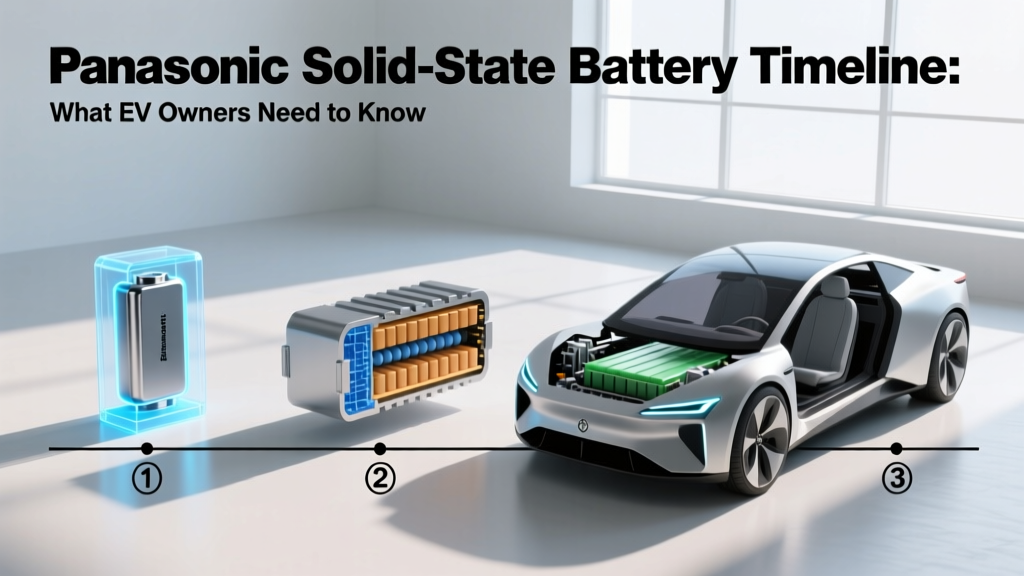
Solid-state cells replace the liquid electrolyte with a solid material, promising higher energy density, faster charging, and improved safety. Toyota, Samsung SDI, and QuantumScape have all demonstrated working prototypes. However, mass production at automotive scale remains the primary bottleneck. Realistic timelines for solid-state EVs in meaningful volume: 2028–2030 at the earliest, likely starting in premium segments at higher price points.
Sodium-Ion Batteries
Sodium-ion chemistry uses abundant, cheap materials and performs well in cold weather, but has lower energy density than lithium-ion. CATL has begun limited production. Best suited for budget EVs and stationary storage — not likely to replace NMC in long-range vehicles, but could appear in entry-level models by 2027–2028.
For buyers shopping today, these technologies are forward-looking and not yet available in production vehicles. The NMC cells from BlueOval SK represent mature, well-understood technology with proven degradation characteristics and a robust supply chain. Waiting for solid-state means waiting years — and today's batteries are already delivering 300+ mile ranges with 8-year warranties.
Frequently Asked Questions
How long do Ford EV batteries from BlueOval SK last?
Based on fleet degradation data for modern NMC cells, expect 80–90% capacity retention at 100,000 miles (roughly 6–8 years of average driving). Most packs will deliver 150,000–200,000+ miles before dropping below 70% capacity — the threshold where Ford's warranty triggers a replacement. The battery will likely outlast other major vehicle components.
How much does it cost to replace an F-150 Lightning or Mach-E battery?
Out-of-warranty replacement runs approximately $18,000–$24,000 for a Mach-E Extended Range pack (91 kWh) and $25,000–$35,000 for an F-150 Lightning Extended Range pack (131 kWh). However, most replacements are covered under the 8-year/100,000-mile warranty or by insurance (for physical damage). Module-level repairs for isolated cell failures can cost $2,000–$5,000.
Does Ford's battery warranty cover normal degradation?
Yes. If your high-voltage battery drops below 70% of its original usable capacity within 8 years or 100,000 miles (10 years/150,000 miles in CARB states), Ford will repair or replace it under warranty. This covers both manufacturing defects and abnormal degradation.
Should I choose NMC or LFP for my Ford EV?
Choose NMC (BlueOval SK-sourced) if you need maximum range, tow frequently, or live in a cold climate — the higher energy density and better cold-weather performance justify the higher cost. Choose LFP if you primarily drive locally, want the longest possible cycle life, prefer charging to 100% daily, and want to minimize upfront cost. Both chemistries are well-supported by Ford's warranty.
Does frequent DC fast charging damage the battery?
Occasional fast charging has minimal impact. However, daily reliance on high-power DC charging (150+ kW) does accelerate degradation compared to Level 2 home charging. The heat generated during rapid charging stresses the cells. If fast charging is your primary method, try to limit sessions to 80% SoC (the charge curve tapers significantly above this point anyway) and use preconditioning to warm the battery before plugging in.
Can I check my battery's State of Health myself?
Yes, though Ford doesn't provide a direct SoH percentage in the FordPass app as of 2026. Monitor your full-charge range estimate over time as a proxy — a gradual decline of 1–3% per year after the first year is normal. For more detailed data, an OBD-II diagnostic tool or a dealer battery health report will provide specific SoH metrics and cell balance information.