Why BlueOval Battery Park Matters for EV Buyers
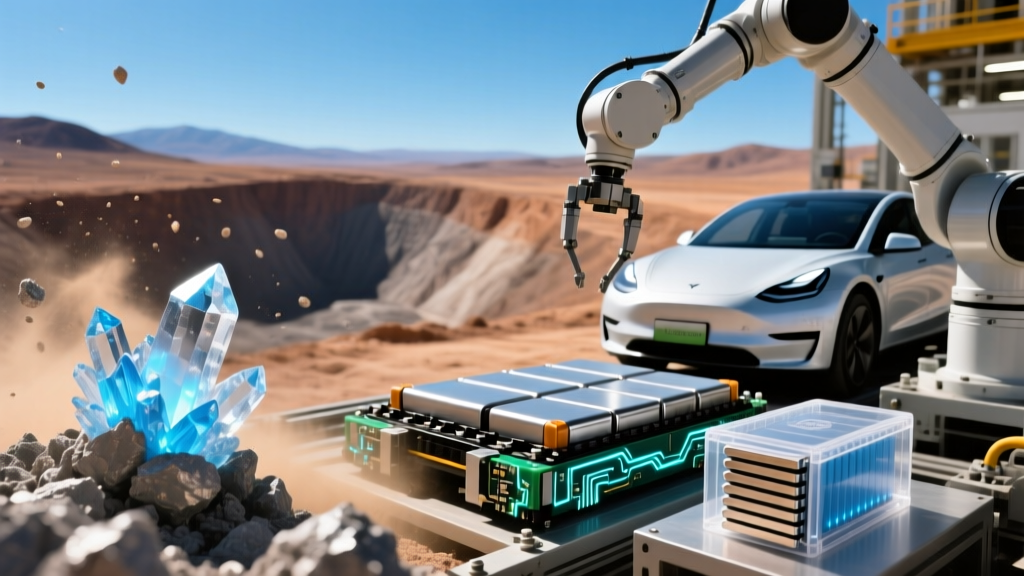
Ford's BlueOval Battery Park in Marshall, Michigan, represents a strategic pivot in how American automakers source and manufacture EV battery cells. Announced as a $3.5 billion facility leveraging LFP (lithium iron phosphate) technology licensed from CATL, the plant signals that the next generation of Ford EVs — from future Mustang Mach-E trims to next-gen electric trucks — will increasingly rely on domestically produced LFP cells. For buyers and owners, this shift has direct implications for battery longevity, cost, charging behavior, and warranty coverage.
This guide breaks down what BlueOval Battery Park's LFP focus means in practical terms, compares LFP against the NMC chemistry Ford has historically used, and provides the data you need to understand EV battery degradation, replacement costs, and health management in 2026.
LFP vs NMC Chemistry: The Trade-Offs That Define Your EV
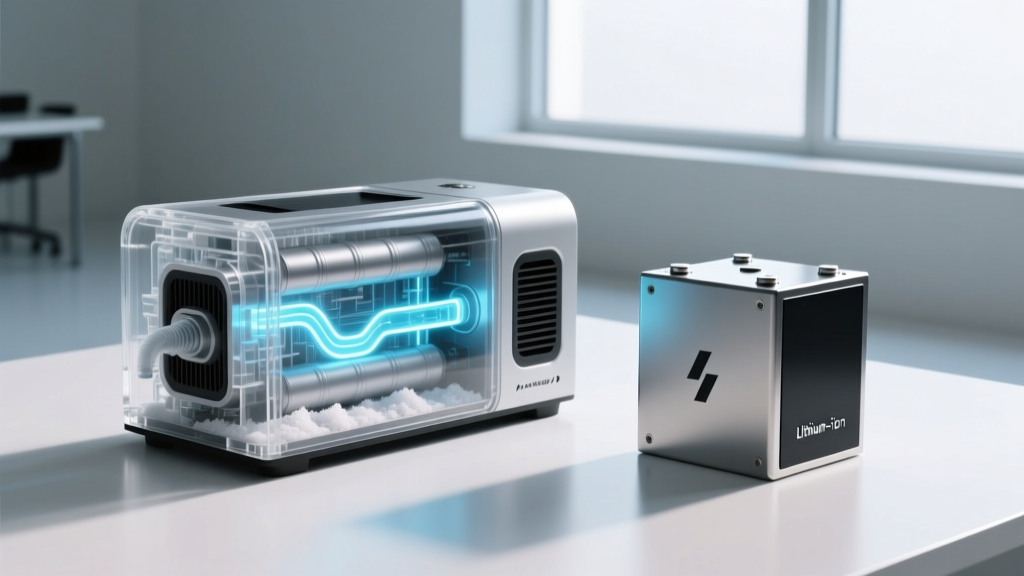
The battery cells produced at BlueOval Battery Park are LFP — a chemistry fundamentally different from the NMC (nickel manganese cobalt) and NCA (nickel cobalt aluminum) cells found in most long-range EVs today. Neither is universally "better"; the right choice depends on your driving patterns, climate, and budget.
| Attribute | LFP (Lithium Iron Phosphate) | NMC / NCA (Nickel-Based) |
|---|---|---|
| Energy Density | Lower (~160-180 Wh/kg cell-level) | Higher (~220-300 Wh/kg cell-level) |
| Cycle Life | 3,000-5,000+ full cycles to 80% SoH | 1,000-2,000 cycles to 80% SoH |
| Cold-Weather Performance | Weaker; higher internal resistance below 32°F (0°C) | Better low-temperature discharge capability |
| Cost per kWh | ~$80-100/kWh (2026 cell pricing) | ~$110-140/kWh (2026 cell pricing) |
| Thermal Stability | Excellent; higher onset temp for thermal runaway (~270°C) | Good, but lower thermal runaway threshold (~210°C) |
| State-of-Charge Calibration | Flat voltage curve makes SoC estimation harder | Steeper voltage curve; easier SoC estimation |
| Recommended Daily Charge | 100% daily is fine (no upper-SoC degradation risk) | 80% daily recommended; 100% for trips only |
| Cobalt/Nickel Content | None — eliminates critical-mineral sourcing concerns | Contains cobalt and nickel — subject to §30D sourcing rules |
| Typical Use Case | Standard-range models, daily commuters, fleet vehicles | Long-range, performance, cold-climate, towing-heavy use |
The practical takeaway: LFP sacrifices roughly 15-25% energy density compared to NMC, meaning a vehicle with an LFP pack will either have less range for the same pack weight or require a physically larger, heavier battery to match NMC range. However, LFP's dramatically longer cycle life — often 2-3x that of NMC — means the battery will retain usable capacity far longer under equivalent use. For a daily commuter driving 30-50 miles and charging at home, LFP's longevity advantage is substantial. For a road-tripper in Minnesota winters who needs every mile of EPA range, NMC remains the better fit.
How Long Do EV Batteries Actually Last? Real-World Degradation Data
Battery degradation is the single most common concern among prospective EV buyers. The data, however, consistently shows that modern EV batteries outlast most owners' time with the vehicle.
Typical Degradation Trajectory (Based on Aggregated Fleet Data):
- Year 1 / 15,000 miles: 2-5% capacity loss (initial formation loss, steepest part of the curve)
- Year 3 / 45,000 miles: 5-8% total loss from original capacity
- Year 5 / 75,000 miles: 7-12% total loss
- Year 8 / 120,000 miles: 10-17% total loss (varies significantly by chemistry and use pattern)
- Year 10 / 150,000 miles: 12-22% total loss
Sources: Geotab fleet battery health study, Recurrent Auto battery data reports, OEM warranty filings.
LFP batteries, like those BlueOval Battery Park will produce, typically sit at the lower end of these ranges — or below them. Tesla's LFP-equipped Model 3 Standard Range vehicles have shown less than 5% degradation at 100,000 miles in multiple fleet analyses. NMC batteries, particularly in vehicles subjected to frequent DC fast charging and high-SoC storage, trend toward the upper end.
The critical insight is that degradation is non-linear. Most capacity loss occurs in the first 12-18 months (the "formation" phase), after which the degradation rate flattens considerably. A battery that has lost 8% in year three is not on track to lose 8% every three years — it will likely lose only 2-4% per subsequent three-year period.
EV Battery Warranty Terms: What Ford (and Others) Actually Cover
Federal law mandates a minimum battery warranty of 8 years / 100,000 miles for EVs sold in the United States, with a capacity retention threshold — typically 70% of original capacity. Ford's current battery warranty meets this standard, and BlueOval Battery Park's LFP cells are expected to exceed these thresholds comfortably based on LFP's inherent longevity.
| Manufacturer | Warranty Period | Mileage Limit | Capacity Retention Threshold | Chemistry Covered |
|---|---|---|---|---|
| Ford (Mustang Mach-E, F-150 Lightning) | 8 years | 100,000 miles | 70% of original capacity | NMC (current); LFP (future trims) |
| Tesla (Model 3/Y LFP) | 8 years | 100,000 miles (RWD); 120,000 miles (LR/AWD) | 70% | LFP (RWD); NMC (LR/AWD) |
| Hyundai / Kia (E-GMP platform) | 10 years | 100,000 miles | 70% | NMC |
| Rivian (R1T / R1S) | 8 years | 175,000 miles | 70% | NMC (Samsung SDI) |
| GM (Ultium platform) | 8 years | 100,000 miles | 70% | NMC (Ultium) |
What the warranty covers: Defects in materials or workmanship, and capacity loss below the stated threshold under normal use. It does not cover damage from collisions, flooding, improper modifications, or use of non-approved charging equipment.
What "70% capacity" means in practice: If your 91 kWh Mustang Mach-E Extended Range originally delivered 312 miles of EPA range, a warranty claim requires the battery to have degraded below ~218 miles of equivalent range. Based on current degradation data, very few vehicles reach this threshold within the warranty period.
EV Battery Replacement Costs: The Numbers and When It's Needed
Full battery pack replacement is rare — industry data suggests fewer than 1-2% of EV batteries require replacement outside of collision damage. When needed, costs depend on pack size, chemistry, and whether the replacement is new, remanufactured, or refurbished.
| Vehicle / Pack Size | Chemistry | Replacement Cost (Parts + Labor) | Typical Replacement Trigger |
|---|---|---|---|
| Ford Mustang Mach-E Standard Range (70 kWh usable) | NMC | $12,000 - $16,000 | Collision damage; rare cell failure |
| Ford F-150 Lightning Extended Range (131 kWh usable) | NMC | $22,000 - $30,000 | Collision damage; manufacturing defect |
| Tesla Model 3 RWD (60 kWh usable, LFP) | LFP | $10,000 - $14,000 | Collision; very rare under normal use |
| Hyundai Ioniq 5 (77.4 kWh usable) | NMC | $14,000 - $18,000 | Cell module failure; collision |
| Chevrolet Bolt EV (65 kWh usable) | NMC | $9,000 - $14,000 (post-recall pricing) | Original recall replacement; collision |
Two critical context points: First, most EV batteries never need full replacement. Module-level repair — replacing individual cell groups rather than the entire pack — is increasingly common and costs $2,000-$6,000 depending on the number of modules affected. Second, LFP packs from facilities like BlueOval Battery Park are expected to reduce replacement costs by 15-30% compared to equivalent NMC packs due to lower raw material costs and simpler thermal management requirements.
Factors That Accelerate (or Preserve) Battery Life
Your daily habits have a measurable impact on long-term battery health. The physics is well-established — here's what actually matters:
Battery Care Essentials — Maximize Your Pack's Lifespan
- Avoid sustained high SoC storage (NMC): Storing an NMC battery at 100% SoC for days or weeks accelerates electrolyte decomposition. Charge to 80% daily; reserve 100% for road trips. LFP note: LFP chemistry tolerates 100% SoC storage without meaningful additional degradation — Ford and Tesla both recommend periodic 100% charges for LFP to recalibrate the BMS.
- Minimize DC fast charging frequency: Occasional DC fast charging (1-2x per week) has negligible impact. Daily DC fast charging at 150+ kW, especially without battery preconditioning, can add 2-4% additional degradation over 100,000 miles compared to Level 2 home charging. Source: NREL battery aging studies.
- Precondition before fast charging: Most modern EVs precondition the battery when you navigate to a DC fast charger. This warms the cells to the optimal 25-35°C range, enabling faster charging and reducing lithium plating risk. If your vehicle doesn't auto-precondition, allow 10-15 minutes of driving before arriving at the charger in cold weather.
- Extreme temperature management: Prolonged exposure to ambient temperatures above 95°F (35°C) with high SoC accelerates degradation. In hot climates, park in shade or a garage when possible. In cold climates, the battery management system (BMS) limits charging speed and regen when cells are below freezing — this is protective, not a malfunction.
- Don't obsess about shallow cycles: Modern BMS systems manage cell balancing automatically. You do not need to "exercise" the battery with full discharge-charge cycles. Partial charges (e.g., 30% to 70%) are perfectly healthy for both LFP and NMC.
- Keep software updated: OEMs regularly refine BMS algorithms via OTA updates, improving thermal management and charge profiles. Always install updates promptly.
How to Check and Monitor Your Battery's State of Health (SoH)
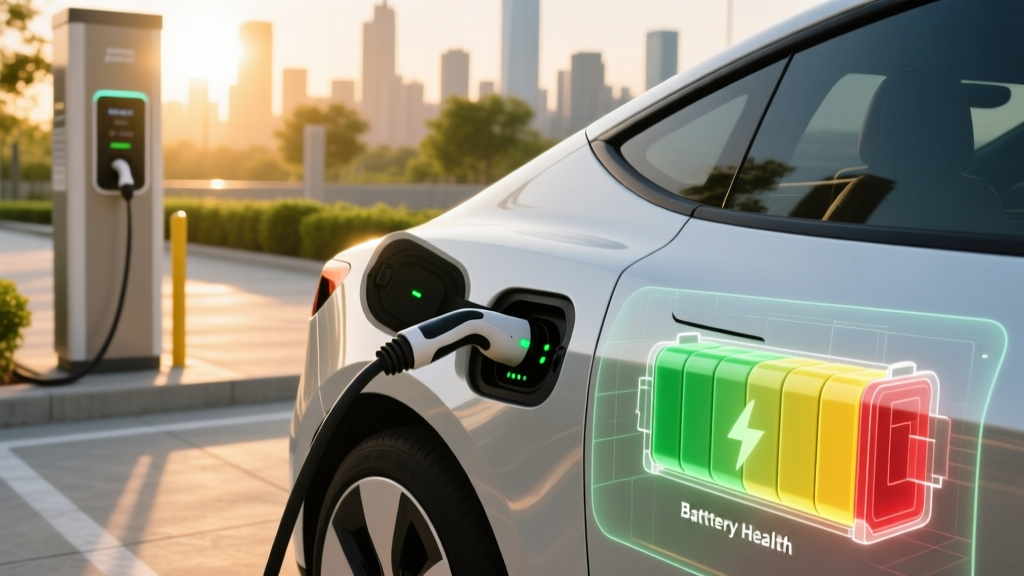
State of Health (SoH) is the percentage of original battery capacity remaining. A new EV has 100% SoH; a battery at 85% SoH holds 85% of its original kWh. Monitoring SoH helps you track degradation, plan for warranty claims if needed, and assess value when buying or selling a used EV.
Methods to Check SoH
1. In-Vehicle Diagnostics: Some manufacturers include a battery health screen. Tesla displays a "Battery Health" percentage in the Service menu on newer software versions. Ford's SYNC system provides limited battery status information. Hyundai/Kia's Bluelink connected services can report battery condition.
2. Third-Party Apps and OBD-II Readers: Devices like the OBDLink MX+ paired with apps such as Car Scanner or LeafSpy (for Nissan) can read the BMS-reported SoH directly. For Teslas, the Tessie or Stats apps pull SoH data from the vehicle's API.
3. Dealer Diagnostic Reports: A service center can run a full battery health report showing per-module voltage variance, total capacity, and SoH. Request this when purchasing a used EV — it's the most authoritative source.
4. Recurrent / Geotab Fleet Reports: Services like Recurrent Auto offer free battery health tracking by connecting to your vehicle's telematics. They provide SoH trend lines and compare your degradation against their fleet averages.
What's Normal vs. Concerning
A SoH reading of 92-96% after 2-3 years is typical and not cause for alarm. A reading below 85% within the first 5 years or 60,000 miles may indicate an issue worth investigating under warranty — particularly if one or more cell modules show significantly lower voltage than others (indicating an imbalance rather than uniform degradation).
Looking Ahead: Solid-State, Silicon Anode, and Next-Gen Battery Tech
BlueOval Battery Park's LFP focus is a near-term strategy — practical, cost-effective, and manufacturable today. But the battery industry is advancing rapidly, and several next-generation technologies are on the horizon:
Solid-State Batteries: These replace the liquid electrolyte with a solid ceramic, polymer, or sulfide material, promising 30-50% higher energy density, faster charging (potentially 10-80% in under 10 minutes), and improved safety. Toyota has announced limited solid-state production for 2027-2028, and QuantumScape is working with Volkswagen. Realistic timeline for mass-market availability: 2029-2032. Cost remains the primary barrier — current solid-state prototypes are 2-4x more expensive per kWh than liquid-electrolyte cells.
Silicon Anode Technology: Replacing graphite anodes with silicon can increase energy density by 20-40%. Companies like Sila Nanotechnologies (partnered with Mercedes-Benz) and Group14 (partnered with Porsche) are bringing silicon-dominant anodes to production vehicles starting in 2025-2026, initially in performance applications. Expect this technology to trickle down to mainstream models by 2028-2029.
Sodium-Ion Batteries: CATL and BYD have begun producing sodium-ion cells for entry-level EVs in China. These offer lower energy density than LFP but eliminate lithium entirely, reducing cost and supply-chain risk. US availability timeline: 2027-2029, likely in fleet and budget segments first.
For current buyers, these technologies are forward-looking context — not reasons to delay a purchase. Today's LFP and NMC batteries, including those from BlueOval Battery Park, already offer lifespans exceeding 200,000 miles with proper care, backed by 8-year warranties.
Frequently Asked Questions
How long do EV batteries last in years and miles?
Most modern EV batteries retain 78-90% of original capacity at 150,000 miles (approximately 10 years of average driving). LFP batteries, like those BlueOval Battery Park will produce, often retain 85-93% at the same mileage. Very few batteries reach the 70% warranty threshold within 8 years / 100,000 miles. Many EV batteries will outlast the vehicle's body, suspension, and interior.
How much does it cost to replace an EV battery?
Full pack replacement costs range from $9,000 to $30,000 depending on pack size and chemistry, with most mainstream EVs falling in the $12,000-$18,000 range. However, fewer than 2% of EV batteries require full replacement — module-level repairs ($2,000-$6,000) are far more common. LFP packs are expected to be 15-30% cheaper to replace than equivalent NMC packs.
What does the Ford EV battery warranty cover?
Ford's EV battery warranty covers 8 years or 100,000 miles (whichever comes first) against defects and capacity loss below 70% of original capacity. This covers both NMC packs in current vehicles and LFP packs from BlueOval Battery Park in future models. It does not cover collision damage, improper modifications, or use of non-approved charging equipment. Check the Ford EV owner resources for your specific model year's warranty documentation.
LFP vs NMC — which battery chemistry is better for me?
Choose LFP if you: drive under 250 miles daily, charge primarily at home, live in a moderate or warm climate, want maximum battery lifespan, and prioritize lower cost. Choose NMC if you: regularly drive 300+ miles between charges, need maximum range in cold weather, tow frequently, or prioritize peak performance. LFP is the pragmatic daily-driver choice; NMC is the range-maximizing choice.
Does frequent DC fast charging damage my battery?
Occasional DC fast charging (1-3 times per week) causes negligible additional degradation — typically less than 1% extra loss over 100,000 miles. Daily exclusive fast charging without preconditioning can add 2-4% extra degradation. The bigger factors are sustained high SoC storage (for NMC) and extreme heat exposure. If you rely on DC fast charging, ensure your vehicle's battery preconditioning is active and try to charge to 80% rather than 100% at high-power stations.
Can I check my EV battery health myself?
Yes. Use an OBD-II reader (such as the OBDLink MX+, ~$60) paired with a compatible app to read BMS-reported SoH. Tesla owners can use the Tessie or Stats apps. You can also request a battery health report from your dealer's service department. For ongoing tracking, services like Recurrent Auto offer free SoH monitoring via telematics connection.
Will BlueOval Battery Park batteries qualify for the federal EV tax credit?
Under IRS §30D rules, the federal tax credit of up to $7,500 requires that battery components and critical minerals meet specific domestic-content and sourcing thresholds that phase in annually through 2029. Because BlueOval Battery Park manufactures cells domestically and LFP chemistry eliminates cobalt and nickel (reducing reliance on foreign critical minerals), Ford's LFP-equipped vehicles are structurally well-positioned for credit eligibility. However, exact eligibility depends on the final assembly location, MSRP caps ($55,000 for sedans, $80,000 for SUVs/trucks/vans), buyer income limits ($150,000 single / $300,000 joint AGI), and the specific model year's sourcing documentation. Always verify current eligibility on the IRS website or with a tax professional before purchase.