Every electric vehicle on the road today carries a high-voltage traction battery packed with lithium, cobalt, nickel, manganese, or iron phosphate. When those cells reach end-of-life—or when manufacturing defects sideline a pack—they don't go to a landfill. Instead, they enter a rapidly maturing industrial pipeline that shreds them into a granular material known as black mass, recovering up to 95% of critical minerals for reuse in new cells. For EV owners and shoppers, understanding black mass battery recycling matters because it directly affects long-term battery replacement costs, raw-material supply chains, and the environmental footprint of the vehicle you drive.
This guide covers the full lifecycle: how long modern EV batteries actually last, what degradation looks like in real data, what warranties cover, what replacement costs, and how black mass recycling closes the loop.
How Long Do EV Batteries Actually Last?
The short answer: far longer than most first-time EV buyers expect. Based on fleet data and manufacturer reports through 2025, the average liquid-cooled lithium-ion traction battery retains roughly 85–90% of its original capacity after 100,000 miles and approximately 75–82% after 200,000 miles, depending on chemistry and usage patterns.
Geotab's longitudinal study of over 10,000 EVs found a median annual degradation rate of about 1.8% per year for vehicles with active thermal management, compared to roughly 2.5% per year for passively cooled packs (like early Nissan LEAF models). Tesla's 2024 Impact Report stated that Model 3 and Model Y batteries retain approximately 85% capacity at 200,000 miles. Hyundai and Kia report similar figures for their E-GMP platform vehicles (Ioniq 5, EV6), which use NMC chemistry with active liquid cooling.
- Year 1 / 15,000 mi: ~2–3% loss (initial formation settling)
- Year 3 / 45,000 mi: ~6–8% total loss
- Year 5 / 75,000 mi: ~9–12% total loss
- Year 8 / 120,000 mi: ~13–17% total loss
- Year 10 / 150,000 mi: ~16–22% total loss
Source: Geotab EV Battery Degradation Study; Tesla Impact Report 2024. Rates vary by climate, charging habits, and chemistry.
Most modern EV batteries will outlast the vehicle's body, suspension, and interior. Complete failure before 150,000 miles is rare and usually attributable to a manufacturing defect covered under warranty—not normal wear.
LFP vs NMC/NCA: Chemistry Trade-Offs That Affect Longevity and Recycling
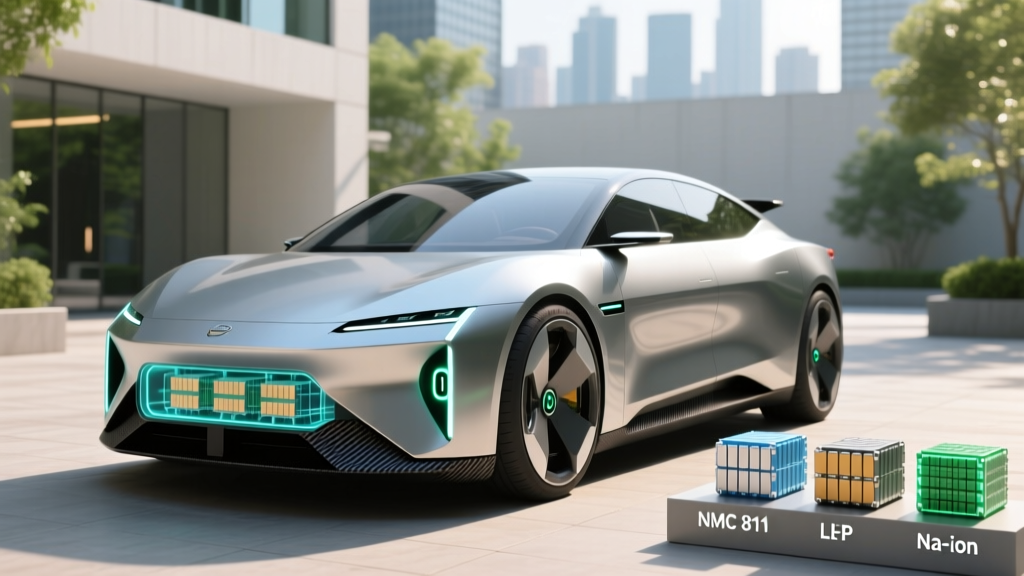
Not all EV batteries are the same. The two dominant chemistries in 2026 are LFP (lithium iron phosphate) and NMC/NCA (nickel manganese cobalt / nickel cobalt aluminum). Each has distinct implications for lifespan, performance, and what ends up in the black mass recycling stream.
| Attribute | LFP (LiFePO4) | NMC / NCA |
|---|---|---|
| Energy Density | Lower (~160 Wh/kg cell-level) | Higher (~250–300 Wh/kg cell-level) |
| Cycle Life | 3,000–5,000+ cycles to 80% SoH | 1,000–2,000 cycles to 80% SoH |
| Cold-Weather Performance | More range loss below 20°F (~30–40% reduction) | Better low-temp output (~20–30% reduction) |
| Cost per kWh | Lower (no cobalt or nickel) | Higher (cobalt/nickel commodity exposure) |
| Recycling Value (Black Mass) | Lower — iron/phosphate less valuable | Higher — cobalt/nickel recovery more profitable |
| Typical Applications (2026) | Tesla Model 3 RWD, Ford Mustang Mach-E Select, BYD models | Long-range AWD trims, Hyundai Ioniq 5, Rivian, Lucid |
| Recommended Daily SoC | 100% OK — LFP tolerates full charge | 80% daily; 100% only for trips |
Which is better? It depends on your use case. LFP wins for daily commuting, longevity, and cost; it can be charged to 100% regularly without accelerating degradation. NMC/NCA wins for maximum range, cold-weather driving, and towing—but requires more careful state-of-charge management. From a recycling standpoint, NMC black mass commands higher commodity prices because of cobalt and nickel content, making those packs more economically attractive to recyclers like Redwood Materials, Li-Cycle, and Cirba Solutions.
What Does the Battery Warranty Actually Cover?
Federal law in the United States mandates that EV batteries carry a minimum warranty of 8 years or 100,000 miles (whichever comes first). In California Air Resources Board (CARB) states, that extends to 10 years or 150,000 miles. Most manufacturers exceed the federal minimum.
| Manufacturer | Warranty Term | Capacity Retention Threshold |
|---|---|---|
| Tesla (Model 3/Y LFP) | 8 yr / 100,000 mi | 70% of original capacity |
| Tesla (Model 3/Y LR, Model S/X) | 8 yr / 120,000 mi | 70% of original capacity |
| Hyundai / Kia (E-GMP) | 10 yr / 100,000 mi | 70% of original capacity |
| Ford (Mach-E, F-150 Lightning) | 8 yr / 100,000 mi | 70% of original capacity |
| Rivian (R1T / R1S) | 8 yr / 175,000 mi | 70% of original capacity |
| GM (Ultium-based) | 8 yr / 100,000 mi | 70% of original capacity |
The critical detail: warranties cover capacity falling below the threshold (typically 70%), not normal gradual degradation above that line. If your 82 kWh pack drops to 57 kWh (roughly 70%) within the warranty period, the manufacturer must repair or replace it. In practice, warranty claims for capacity loss are uncommon—most packs stay well above the threshold.
EV Battery Replacement Cost: What You'd Actually Pay
If a battery fails outside warranty—or if you're buying a used EV with a degraded pack—replacement costs remain the most-cited fear among EV skeptics. Here are real-world figures based on 2025–2026 service data and manufacturer estimates:
| Vehicle / Battery Size | Estimated Replacement Cost (Parts + Labor) | Typical Need Scenario |
|---|---|---|
| Tesla Model 3 RWD (60 kWh LFP) | $12,000–$15,000 | Rare before 200k mi; usually defect-related |
| Tesla Model Y LR (75 kWh NMC) | $14,000–$18,000 | Rare before 200k mi |
| Hyundai Ioniq 5 (77.4 kWh NMC) | $15,000–$20,000 | Very rare; covered under 10-yr warranty |
| Ford F-150 Lightning (131 kWh Ext. Range) | $25,000–$35,000 | Largest packs cost most; labor-intensive removal |
| Chevy Bolt EV (65 kWh NMC) | $14,000–$16,000 | Post-recall replacements; covered by GM extended warranty |
| Nissan LEAF (40–62 kWh, passive cooling) | $8,000–$12,000 | Higher degradation rates; replacements more common at 100k+ mi |
Context matters: according to fueleconomy.gov and industry data, the average age of a scrapped passenger vehicle in the U.S. is about 12 years. Most EVs will be retired for collision damage, suspension wear, or electronics obsolescence before the traction battery needs replacement. The fear of a surprise $20,000 bill is real but statistically unlikely for vehicles with active thermal management.
Black Mass Battery Recycling: How the Loop Closes
When an EV battery is retired—whether from a crash-damaged vehicle, a warranty replacement, or end-of-life—it enters the recycling chain. Here's how black mass battery recycling works in practice as of 2026:
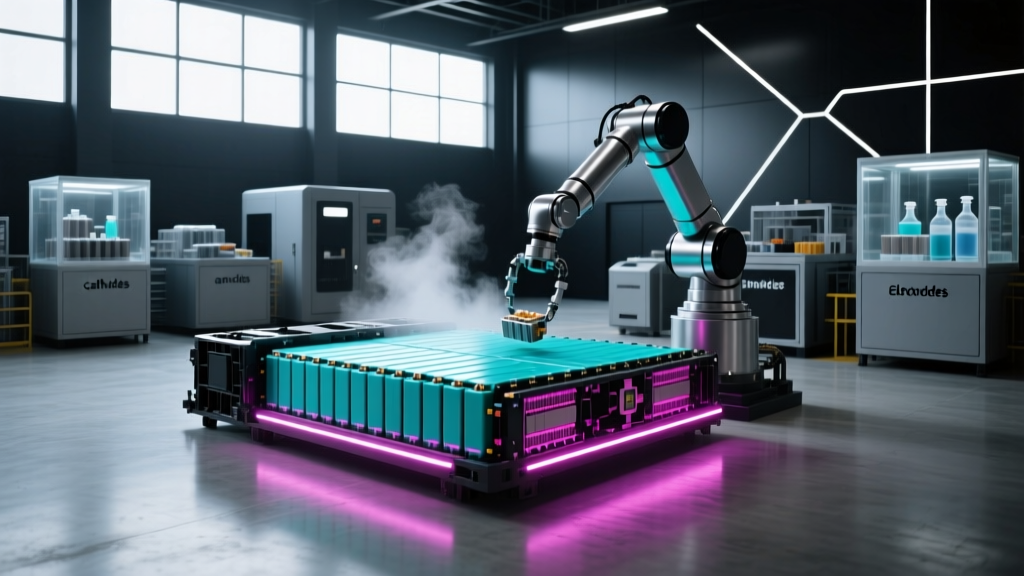
- Discharge & Disassembly: The pack is fully discharged, then manually or robotically disassembled into modules. Usable modules may be diverted to second-life applications (stationary energy storage, solar farm buffers).
- Shredding: Cells are mechanically shredded in an inert atmosphere to prevent thermal runaway. The output is a dark, granular powder—black mass—containing lithium, cobalt, nickel, manganese, copper, aluminum, and graphite.
- Separation: Black mass undergoes hydrometallurgical processing (acid leaching and solvent extraction) or, increasingly, direct recycling (preserving the cathode crystal structure). Recovery rates in 2026 reach 90–95% for cobalt and nickel, 80–90% for lithium, and 95%+ for copper and aluminum.
- Reintegration: Recovered materials are refined to battery-grade precursors and sold back to cathode manufacturers. Redwood Materials, operating facilities in Nevada and South Carolina, supplies recycled anode and cathode materials directly to Panasonic, Ford, and Volvo.
The economics are significant. A single NMC pack from a long-range EV can contain $800–$1,500 worth of recoverable cobalt and nickel at 2025 commodity prices. LFP packs contain less valuable material—iron and phosphate are cheap—which is why the industry is investing in direct recycling methods that preserve cathode structure rather than breaking it down to elemental metals.
According to the U.S. Department of Energy, domestic black mass recycling capacity is projected to exceed 200,000 metric tons per year by 2028, reducing reliance on mined critical minerals and supporting the IRS §30D tax credit's battery-sourcing requirements. Vehicles using domestically recycled critical minerals can help satisfy the credit's supply-chain provisions, though buyers should verify eligibility with a tax professional.
Factors That Accelerate (or Preserve) Battery Life
Degradation isn't purely a function of time and miles. How you charge, drive, and store your EV materially affects how much capacity your pack retains—and how much recyclable material eventually reaches the black mass stream.
- Limit DC fast charging to road trips. Frequent 150+ kW sessions accelerate lithium plating and electrolyte breakdown. For daily use, Level 2 (7–11 kW) at home is ideal.
- Manage state of charge. For NMC/NCA packs, keep daily SoC between 20–80%. LFP packs can be charged to 100% regularly—Tesla and Ford recommend this for LFP calibration.
- Avoid extreme SoC in extreme heat. A pack at 100% SoC in 100°F+ ambient temperatures undergoes accelerated calendar degradation. If storing the vehicle, leave it at ~50% SoC.
- Use preconditioning. Preconditioning warms or cools the battery before fast charging, reducing stress and improving charge acceptance. Most EVs do this automatically when a charger is set as a navigation destination.
- Don't baby the car. Moderate acceleration and highway driving are fine. The myth that you must always drive gently to preserve battery life is overstated—thermal management handles the load.
How to Monitor Your Battery's State of Health (SoH)
State of Health (SoH) is the percentage of your battery's original capacity that remains usable. A new 82 kWh pack at 90% SoH delivers roughly 73.8 kWh. Here's how to check it:
- In-vehicle displays: Tesla provides a projected range figure that updates based on recent driving; compare it to the EPA sticker (fueleconomy.gov) for a rough SoH estimate. Hyundai's Bluelink app shows battery health status. Nissan LEAF displays "bars" on the dash (12 bars = ~85%+ SoH).
- OBD-II diagnostic tools: Devices like the OBDLink SX paired with apps such as LeafSpy (Nissan) or Scan My Tesla can read actual pack capacity, cell voltage variance, and cycle count.
- Dealer diagnostics: Any authorized service center can run a full battery health report showing measured kWh capacity vs. original. Request this when buying a used EV.
- Third-party services: Companies like Recurrent Auto offer free battery health reports based on telematics data, comparing your pack's degradation to a fleet average of the same model.
Cell voltage variance is a key indicator: if one module reads significantly lower than others (e.g., 3.45V vs. a pack average of 3.72V), it signals an imbalance that may require module-level service before it triggers a warranty claim.
Emerging Battery Tech: Solid-State, Silicon Anodes, and What's Realistic
The battery landscape is shifting, but timelines matter. Here's where next-generation technologies stand in 2026:
- Silicon-dominant anodes: Companies like Sila Nanotechnologies and Group14 are shipping silicon-blend anodes in limited production (e.g., Mercedes G-Class EV). These boost energy density by 15–25% over graphite anodes but are not yet at mass-market scale. Expect broader availability by 2028–2029.
- Semi-solid-state batteries: NIO's 150 kWh semi-solid pack is available in China for the ET7 sedan, offering ~620 miles CLTC range. However, this uses a hybrid gel-electrolyte approach—not a true all-solid-state cell. U.S. availability is not confirmed.
- Full solid-state batteries: Toyota, Samsung SDI, and QuantumScape have announced pilot production lines, but commercial-scale solid-state cells for consumer EVs remain projected for 2029–2032. Claims of earlier availability should be treated as preliminary.
- Sodium-ion batteries: CATL and BYD are producing sodium-ion cells for low-cost, short-range EVs in China. These use no lithium, cobalt, or nickel—fundamentally changing the recycling equation since sodium-ion black mass has minimal commodity value.
For buyers in 2026, today's NMC and LFP chemistries remain the practical choice. They're proven, well-understood, recyclable, and backed by warranties that make long-term ownership predictable.
Frequently Asked Questions
How long do EV batteries last in years and miles?
Most liquid-cooled EV batteries retain 75–85% capacity at 200,000 miles and 10–15 years of service. Complete failure before 150,000 miles is rare and typically covered under the manufacturer's 8-year/100,000-mile warranty (10 years/150,000 miles in CARB states).
How much does it cost to replace an EV battery?
Replacement costs range from roughly $8,000 for a small pack (Nissan LEAF, 40 kWh) to $35,000 for the largest packs (Ford F-150 Lightning Extended Range, 131 kWh). Most owners never pay this—the battery outlasts the vehicle, or the failure occurs under warranty.
What does the EV battery warranty cover?
Warranties guarantee that the battery will retain at least 70% of its original capacity for the warranty term (typically 8 years/100,000 miles minimum). If capacity drops below that threshold, the manufacturer repairs or replaces the pack at no cost. Warranties do not cover damage from accidents, flooding, or unauthorized modifications.
How do I check and maximize my EV battery health?
Monitor SoH through your vehicle's app, OBD-II diagnostic tools, or dealer service reports. Maximize longevity by using Level 2 home charging for daily needs, keeping NMC packs between 20–80% SoC (LFP can go to 100%), avoiding prolonged storage at full charge in extreme heat, and using preconditioning before DC fast charging.
LFP vs NMC — which battery chemistry is better?
LFP offers longer cycle life (3,000–5,000 cycles), lower cost, and the ability to charge to 100% daily—but has lower energy density and worse cold-weather performance. NMC delivers more range per kWh, better cold-weather output, and higher recycling value in the black mass stream—but degrades faster and requires SoC management. Choose LFP for daily commuting and value; choose NMC for maximum range and cold climates.
What is black mass and why does recycling it matter?
Black mass is the shredded output of end-of-life lithium-ion cells—a powder containing lithium, cobalt, nickel, manganese, copper, aluminum, and graphite. Recycling it recovers 80–95% of these materials for reuse in new batteries, reducing mining demand, lowering battery costs, and supporting domestic supply chains that affect federal tax credit eligibility.