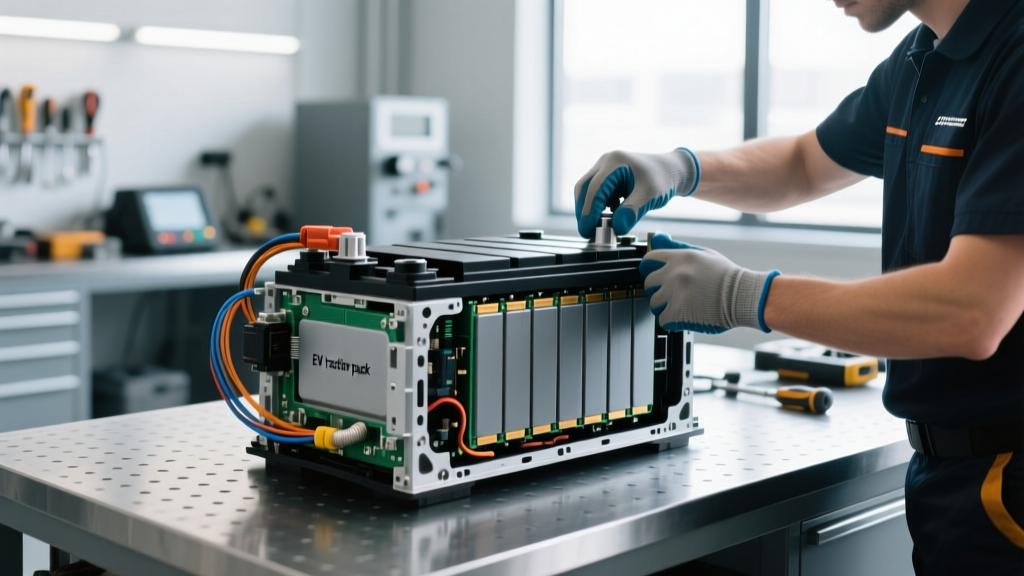
The Biggest Battery Packs in Production EVs: A Data-Driven Breakdown
Shoppers searching for the "biggest battery" in an electric vehicle usually mean one of two things: the largest energy capacity (measured in kilowatt-hours, or kWh) for maximum range, or the longest-lasting battery in terms of lifespan and durability. This guide covers both, with exact figures for 2026 production models.
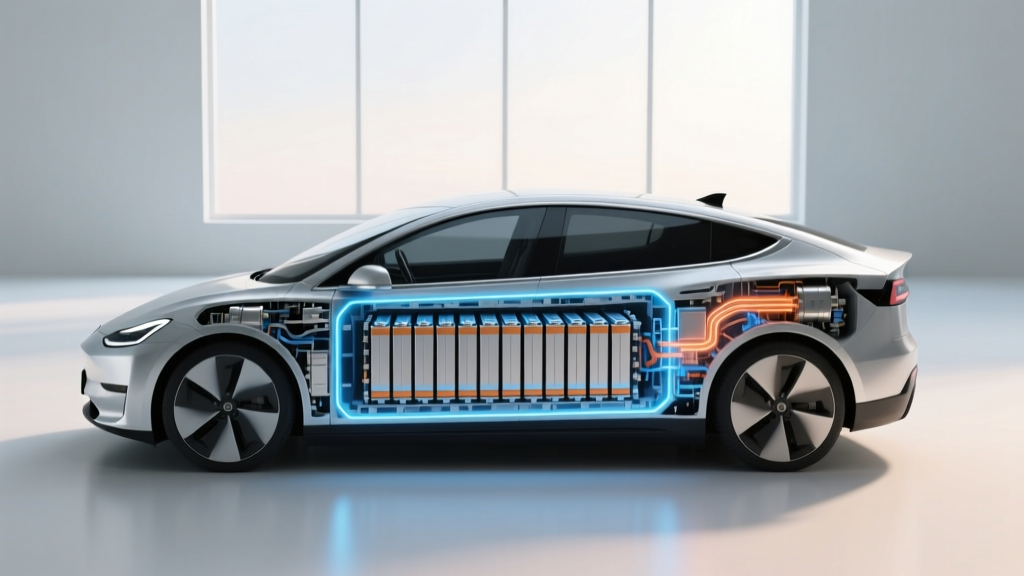
A critical distinction first: kW (kilowatts) measures power — how fast energy flows in or out. kWh (kilowatt-hours) measures energy — the total amount stored. A bigger kWh number means more energy in the tank, which generally translates to more miles. But battery chemistry, vehicle weight, and thermal management all shape how far that energy actually takes you.
Here are the production EVs with the largest usable battery packs currently sold in the U.S. market:
| Vehicle | Usable kWh | Chemistry | EPA Range | Real-World Highway* | Base MSRP |
|---|---|---|---|---|---|
| Lucid Air Grand Touring | 112 kWh | NMC | 516 mi | ~400–430 mi | $125,600 |
| GMC Hummer EV Pickup (24-module) | ~212 kWh (est.) | NMC (Ultium) | 329 mi | ~260–280 mi | $98,845 |
| Rivian R1T Dual-Motor Max Pack | 149 kWh | NMC | 410 mi | ~320–350 mi | $90,000 |
| Cadillac Escalade IQ | ~200 kWh (est.) | NMC (Ultium) | 460 mi | ~370–400 mi | $129,990 |
| Tesla Model S Long Range | ~100 kWh | NMC/NCA | 402 mi | ~320–350 mi | $79,990 |
| Mercedes-Benz EQS 580 | 118 kWh | NMC | 390 mi | ~310–340 mi | $105,550 |
*Real-world highway estimates reflect sustained 70–80 mph driving in moderate temperatures. Cold weather (below 32°F) can reduce these figures by an additional 15–30%, depending on whether the vehicle uses a heat pump for cabin heating.
LFP vs NMC vs NCA: The Chemistry Behind the Biggest Battery Packs
Not all lithium-ion batteries are the same. The three dominant chemistries in 2026 EVs are NMC (nickel-manganese-cobalt), NCA (nickel-cobalt-aluminum), and LFP (lithium iron phosphate). The biggest battery packs by kWh tend to use NMC because it offers the highest energy density — more kWh per kilogram of battery weight.
| Factor | NMC / NCA | LFP |
|---|---|---|
| Energy density | High (~250–300 Wh/kg cell-level) | Moderate (~160–200 Wh/kg cell-level) |
| Typical cycle life | 1,000–2,000 cycles to 80% SoH | 3,000–5,000+ cycles to 80% SoH |
| Cold-weather performance | Better at low temps; less range loss | More range loss below 32°F; slower cold charging |
| Charging to 100% | Recommended 80–90% daily; 100% for trips only | Can (and should) be charged to 100% regularly |
| Cost per kWh | Higher ($130–$160/kWh pack-level, 2026 est.) | Lower ($90–$120/kWh pack-level, 2026 est.) |
| Thermal runaway risk | Higher (though still very rare with BMS management) | Significantly lower — more chemically stable |
| Used in | Long-range / performance trims (Lucid, Tesla LR, Rivian Max) | Standard-range trims (Tesla Model 3 RWD, base Model Y, Ford Mustang Mach-E Select) |
Which is better? For maximum range from a single charge, NMC wins — it's why every vehicle on the "biggest battery" list above uses NMC or NCA. For maximum longevity and daily usability (charging to 100% without worry), LFP wins. A Tesla Model 3 RWD with its ~60 kWh LFP pack may only deliver 272 EPA miles, but that pack will likely retain more capacity after 200,000 miles than a comparable NMC pack would, and it costs significantly less to replace if that ever becomes necessary.
How Long Do EV Batteries Actually Last? Degradation Data
The fear that EV batteries will die prematurely is one of the most persistent myths in automotive buying. Real-world data tells a more reassuring story — though with important caveats.
Typical degradation trajectory for modern liquid-cooled EV batteries (2020–2026 models):
- Year 1 / 15,000 mi: 2–5% capacity loss (initial "break-in" drop, mostly from SEI layer formation)
- Year 3 / 45,000 mi: 5–8% total loss
- Year 5 / 75,000 mi: 7–10% total loss
- Year 8 / 120,000 mi: 10–15% total loss
- Year 10+ / 150,000+ mi: 12–20% total loss (highly usage-dependent)
These figures come from aggregated fleet data reported by sources like Recurrent Auto, which tracks over 15,000 EVs in real-world conditions. Tesla's own 2023 Impact Report showed its Model 3/Y packs retaining approximately 85% capacity at 200,000 miles.
Factors that accelerate degradation beyond these baselines:
- Frequent DC fast charging above 150 kW — occasional use is fine; daily 350 kW sessions generate sustained heat that stresses cells
- Regularly sitting at 100% SoC in hot weather — especially damaging for NMC/NCA chemistry
- Deep discharges below 10% SoC — repeatedly draining the battery to near-zero stresses the anode
- Extreme ambient temperatures without preconditioning — charging a cold-soaked battery in sub-freezing weather without thermal preconditioning can cause lithium plating
- Consistent high-C-rate discharge — repeated hard launches and sustained high-speed driving generate internal heat
What Does the EV Battery Warranty Actually Cover?
Federal law mandates a minimum battery warranty of 8 years / 100,000 miles for all EVs sold in the U.S. (California and states adopting CARB standards require 10 years / 150,000 miles). But what "covers" means varies by manufacturer.
| Manufacturer | Warranty Period | Capacity Retention Threshold | What Triggers a Claim |
|---|---|---|---|
| Tesla (Model 3/Y) | 8 yr / 120,000 mi (LR) or 100,000 mi (RWD) | 70% | Battery falls below 70% of original capacity |
| Hyundai / Kia (E-GMP) | 10 yr / 100,000 mi | 70% | Capacity below 70% or cell/module failure |
| GM (Ultium platform) | 8 yr / 100,000 mi | 70% | Capacity below 70% or defect |
| Ford (Mustang Mach-E, F-150 Lightning) | 8 yr / 100,000 mi | 70% | Capacity below 70% or component failure |
| Rivian (R1T/R1S) | 8 yr / 175,000 mi | 70% | Capacity below 70% or defect |
| BMW (iX, i4) | 8 yr / 100,000 mi | 70% | Capacity below 70% or failure |
Critical detail: The 70% threshold means your battery must lose more than 30% of its original capacity before the manufacturer is obligated to repair or replace it under warranty. In practice, based on degradation data above, very few modern liquid-cooled packs hit this threshold within the warranty period under normal use. Warranty claims are more commonly triggered by isolated cell or module failures (manufacturing defects) than by gradual degradation.
Also note: warranties typically do not cover capacity loss from abuse — such as repeated deep discharges, aftermarket modifications, or damage from collisions or flooding. Always check the specific warranty booklet for your vehicle.
How Much Does an EV Battery Replacement Cost?
This is the question that generates the most anxiety — and the most misleading headlines. Here's the actual data for 2026:
| Vehicle | Battery Size (Usable) | Estimated Pack Cost | Estimated Labor + Total |
|---|---|---|---|
| Tesla Model 3 RWD (LFP) | ~60 kWh | $7,000–$9,000 | $10,000–$13,000 |
| Tesla Model Y Long Range | ~75 kWh | $10,000–$13,000 | $13,000–$17,000 |
| Hyundai Ioniq 5 / Kia EV6 | 77.4 kWh | $11,000–$14,000 | $14,000–$18,000 |
| Ford F-150 Lightning (Extended Range) | ~131 kWh | $18,000–$24,000 | $22,000–$30,000 |
| GMC Hummer EV (24-module) | ~212 kWh | $30,000–$40,000 | $35,000–$48,000 |
| Lucid Air Grand Touring | 112 kWh | $16,000–$22,000 | $20,000–$28,000 |
When is replacement actually needed? For the vast majority of owners: never during their ownership. Pack-level replacement costs have been declining roughly 8–12% annually as cell prices fall and more refurbished packs enter the market. Additionally, many shops now offer module-level repairs — replacing only the degraded or failed modules within a pack — for $2,000–$6,000, rather than swapping the entire pack.
The vehicles with the biggest battery packs (Hummer EV, Cadillac Escalade IQ) carry the highest replacement costs, which is an important ownership-cost consideration for buyers of these heavy-duty electric trucks and SUVs.
How to Check and Maximize Your EV Battery Health
Monitoring your battery's State of Health (SoH) — the percentage of original capacity remaining — is straightforward on most modern EVs.
Checking Battery SoH
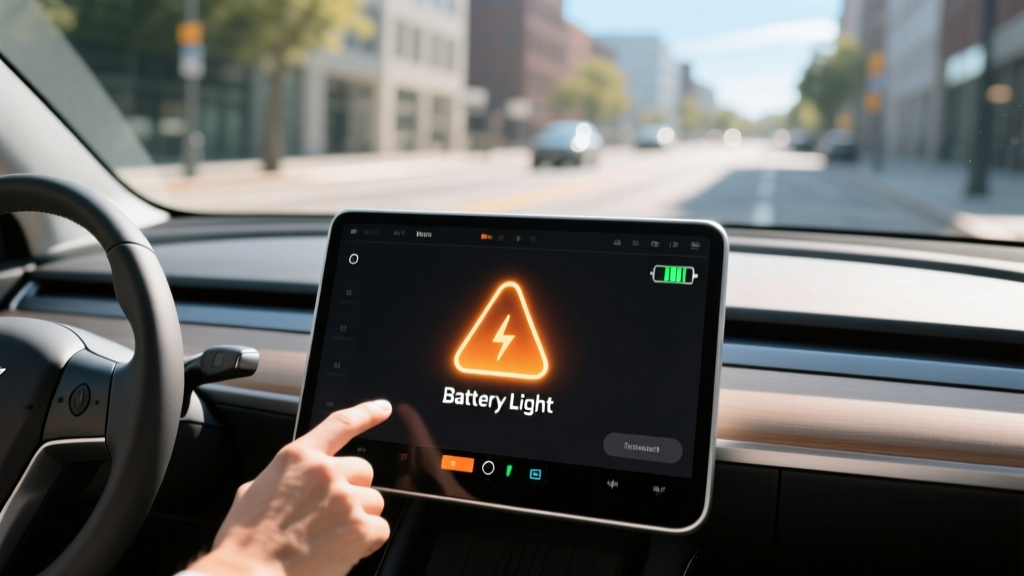
- In-vehicle display: Tesla, Rivian, BMW, and Mercedes-Benz offer battery health indicators in the vehicle settings menu. Hyundai/Kia provides this through the infotainment system on 2024+ models.
- OBD-II dongles + apps: Tools like OBDeleven (VW Group), Scan My Tesla, or the Recurrent app can read detailed battery telemetry including SoH, cell voltage variance, and coolant temperature.
- Dealer diagnostic: Any authorized service center can pull a full battery health report. Request one during routine service visits.
- Manual calculation: Charge to 100% (or your normal max for NMC), note the displayed range, and compare it to the original EPA sticker. A 402-mile Model S showing 355 miles at 100% has roughly 88% SoH.
Battery Care Best Practices
- ✅ NMC/NCA daily limit: Set charge limit to 80–90% for daily driving; charge to 100% only before long trips and drive off soon after reaching full.
- ✅ LFP daily limit: Charge to 100% at least once per week — LFP cells need full charges for accurate BMS calibration.
- ✅ Avoid prolonged storage above 90% or below 15% SoC — if leaving the car for weeks, aim for ~50% SoC.
- ✅ Use preconditioning before DC fast charging — most EVs do this automatically when you navigate to a charger; it warms the battery to optimal charging temperature (~77–95°F cell temp).
- ✅ Minimize repeated same-day DC fast charges — one 350 kW session is fine; three in a row on a road trip generates cumulative heat stress.
- ✅ Park in shade or a garage during extreme heat — sustained 100°F+ ambient temps at high SoC accelerate calendar degradation.
- ✅ Don't habitually drain below 10% — occasional deep discharges are fine, but regularly running the battery to near-zero stresses the anode.
- ❌ Don't fast-charge a cold-soaked battery without preconditioning — lithium plating can occur below ~40°F cell temps at high charge rates.
Emerging Battery Tech: Solid-State and Beyond
If you're wondering whether today's biggest battery packs will look quaint in a few years, the answer is yes — but the timeline matters.
Solid-state batteries replace the liquid electrolyte in current lithium-ion cells with a solid conductor (ceramic, sulfide, or polymer). The promises are compelling: 40–50% higher energy density (meaning a physically smaller pack with the same kWh), faster charging, and dramatically improved safety (no flammable liquid electrolyte). Toyota has announced solid-state EV production beginning in 2027–2028, initially in limited volumes for premium models. Samsung SDI targets 2027 for mass production. Nissan and Honda have similar 2028–2030 timelines.
Silicon-dominant anodes are closer to market. Companies like Sila Nanotechnologies and Group14 are supplying silicon-carbon composite anode materials that boost energy density by 15–25% over conventional graphite anodes. These are already appearing in some premium cells and are expected to become mainstream by 2027–2028.
Sodium-ion batteries are emerging as a low-cost alternative for standard-range and fleet vehicles. CATL and BYD have begun production, with energy densities around 140–160 Wh/kg — lower than LFP, but significantly cheaper and free of lithium, cobalt, and nickel. Expect these in entry-level EVs and commercial vehicles starting 2026–2027, primarily in Chinese-market models initially.
Realistic buyer guidance: If you need an EV now, today's NMC and LFP batteries are mature, well-understood, and backed by strong warranties. Waiting for solid-state means a 2–4 year delay at minimum, with early availability restricted to expensive, low-volume vehicles. The batteries in 2026 EVs are the best they've ever been — and the data supports their longevity.
Frequently Asked Questions
How long do EV batteries last in years and miles?
Based on aggregated fleet data, modern liquid-cooled EV batteries typically retain 85–90% of their original capacity at 150,000 miles and 10+ years of use. Many packs from 2018–2020 vehicles are still in service at 200,000+ miles with 80%+ capacity. Catastrophic failure (sudden death) is extremely rare; degradation is gradual and linear after the initial break-in period. Most EV batteries will outlast the vehicle's other major components.
How much does an EV battery cost to replace?
Out-of-warranty full pack replacement ranges from approximately $10,000 for a Tesla Model 3 RWD (60 kWh LFP) to $35,000–$48,000 for a GMC Hummer EV (~212 kWh NMC). Module-level repairs, where only the degraded section is replaced, cost $2,000–$6,000. These costs have been declining steadily and are expected to continue falling. Under normal ownership, the probability of needing a full pack replacement is low — the vast majority of EVs are retired or sold before their batteries reach end-of-life.
What does the EV battery warranty cover?
All U.S.-market EVs carry a minimum 8-year/100,000-mile battery warranty (10 years/150,000 miles in CARB states). Coverage triggers when the battery's usable capacity falls below a threshold — typically 70% of original — or when a manufacturing defect causes cell or module failure. Warranties do not cover damage from accidents, flooding, or abuse. Always consult your specific vehicle's warranty booklet for exact terms, as they vary by manufacturer and model year.
How do I check my EV battery's State of Health?
Most 2024+ EVs display battery health metrics in the vehicle settings menu. For more granular data, OBD-II dongle apps like Scan My Tesla or OBDeleven can read SoH percentage, individual cell voltages, and pack temperature. Your dealer can also pull a full diagnostic report. A simple manual check: charge to your normal maximum, note the displayed range, and compare it to the original EPA rating.
LFP vs NMC — which battery chemistry is better for me?
Choose NMC/NCA if you need maximum range per charge, live in a cold climate, or frequently take long road trips — it offers higher energy density and better cold-weather performance. Choose LFP if you prioritize longevity, want to charge to 100% daily without worry, prefer lower replacement costs, and mostly drive in moderate climates. LFP is the better choice for daily commuting; NMC is the better choice for range-maximizing use cases. Neither is universally "better" — it depends on your driving pattern.
Does the biggest battery always mean the most range?
No. The GMC Hummer EV has the largest production battery (~212 kWh) but only 329 EPA miles due to its 9,000+ lb weight and poor aerodynamics. The Lucid Air Grand Touring achieves 516 EPA miles from a 112 kWh pack because it's lighter and far more aerodynamically efficient. Efficiency (miles per kWh) matters as much as raw battery size. When evaluating EVs, look at fueleconomy.gov for kWh/100mi figures alongside EPA range.