Ask any seasoned EV owner what keeps them up at night and the answer is almost always the same: battery health. The high-voltage traction battery is the single most expensive component in your electric vehicle, and how you charge it day to day determines whether it delivers 300,000 reliable miles or starts shedding capacity at an alarming rate. This guide breaks down the best way to charge battery in car based on real chemistry data, manufacturer warranty terms, and degradation patterns observed across millions of EV miles on the road.
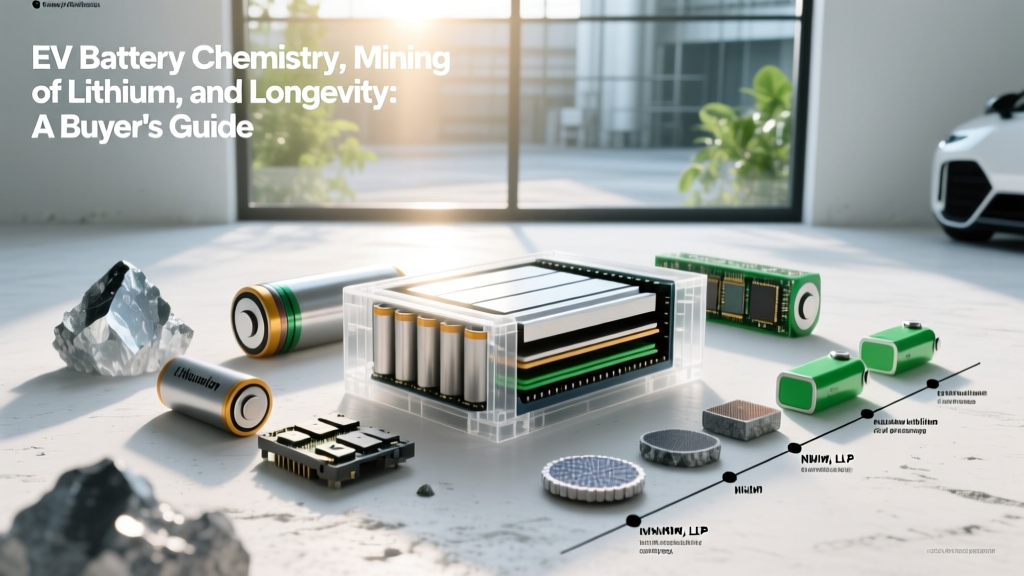
Understanding Your Battery Chemistry: LFP vs NMC
Before you optimize your charging routine, you need to know what's under your floor. Two dominant lithium-ion chemistries power virtually every EV sold in the US for the 2026 model year, and the best charging strategy depends entirely on which one you have.
| Attribute | LFP (Lithium Iron Phosphate) | NMC / NCA (Nickel Manganese Cobalt / Nickel Cobalt Aluminum) |
|---|---|---|
| Energy Density | Lower (~160 Wh/kg cell-level) | Higher (~250-300 Wh/kg cell-level) |
| Cycle Life | 3,000-5,000+ cycles to 80% SoH | 1,000-2,000 cycles to 80% SoH |
| Cold-Weather Performance | Greater range loss below 32°F; slower charging | Better low-temp conductivity; less range penalty |
| Cost | Lower — no cobalt or nickel | Higher — commodity-sensitive pricing |
| Recommended Daily SoC Ceiling | 100% (manufacturers encourage it) | 80% for daily; 100% only before trips |
| Typical Applications (2026) | Tesla Model 3/Y RWD, Ford Mustang Mach-E Select (LFP option), BYD models | Tesla Long Range/Performance, Hyundai Ioniq 5/6, Rivian, BMW iX, most AWD/Long Range trims |
The trade-off is straightforward: LFP sacrifices energy density for longevity and lower cost, which is why it appears in standard-range and RWD trims. NMC/NCA packs more energy into less space — essential for 300+ mile range targets — but is more sensitive to high state-of-charge stress and elevated temperatures. According to Argonne National Laboratory's battery lifecycle research, NMC cells stored at 100% SoC at elevated temperatures degrade up to three times faster than those held at 50% SoC.
How Long Do EV Batteries Actually Last?
The fear that EV batteries need replacing every few years is not supported by fleet data. Tesla's 2025 Impact Report showed its Model 3/Y battery packs retain an average of 85% capacity after 200,000 miles. Hyundai and Kia's 84 kWh NMC packs in the Ioniq 5 and EV6 have demonstrated roughly 90-93% State of Health (SoH) at 60,000 miles in independent owner surveys tracked by communities like the Ioniq 5 Forum and InsideEVs.
Typical Degradation Curve (NMC Pack, Temperate Climate)
| Mileage | Approximate SoH | Notes |
|---|---|---|
| 0 (new) | 100% | Full rated capacity |
| 15,000 mi / 1 year | 96-98% | Initial "break-in" drop — normal and expected |
| 50,000 mi / 3-4 years | 92-95% | Gradual linear decline |
| 100,000 mi / 7-8 years | 87-92% | Still well above warranty threshold |
| 150,000 mi / 10+ years | 83-88% | Noticeable range reduction but fully functional |
| 200,000 mi | 80-85% | Approaching warranty threshold on some packs |
LFP packs typically track 3-5% higher on this scale at equivalent mileage due to superior cycle life.
The key insight: degradation is nonlinear. You lose a few percent quickly in the first year, then the curve flattens into a slow, predictable decline. Most EV batteries will outlast the vehicle's body, suspension, and interior before they become functionally unusable.
What Does the Battery Warranty Actually Cover?
Federal law mandates a minimum 8-year/100,000-mile warranty on EV battery packs for emissions-related components, and most manufacturers exceed this baseline. The critical detail is the capacity retention threshold — the SoH percentage below which the manufacturer must repair or replace the pack.
| Manufacturer (2026 Models) | Warranty Period | Capacity Threshold | Notes |
|---|---|---|---|
| Tesla (Model 3/Y LFP) | 8 yr / 120,000 mi | 70% | LFP packs get higher mileage allowance |
| Tesla (Model 3/Y Long Range) | 8 yr / 120,000 mi | 70% | NMC pack |
| Hyundai / Kia (Ioniq 5/6, EV6) | 10 yr / 100,000 mi | 70% | Among the longest coverage periods |
| Ford (Mustang Mach-E, F-150 Lightning) | 8 yr / 100,000 mi | 70% | Covers battery and electric drivetrain components |
| Rivian (R1T, R1S) | 8 yr / 120,000 mi | 70% | Covers NMC Samsung SDI and newer LFP packs |
| BMW (i4, iX, i7) | 8 yr / 100,000 mi | 70% | Gen5 eDrive battery |
| GM (Ultium-based: Equinox EV, Blazer EV, Silverado EV) | 8 yr / 100,000 mi | 70% | Ultium platform warranty |
Warranty claims are rare. According to data compiled by Recurrent Auto, fewer than 1.5% of EVs in their dataset of over 15,000 vehicles have required a warranty battery replacement. The 70% threshold is set conservatively — the vast majority of packs never cross it within the warranty window.
The Best Way to Charge Battery in Car: Rules by Chemistry
Here's where chemistry-specific habits matter most. The "best" charging routine is not universal — it depends on whether your pack is LFP or NMC.
For NMC/NCA Packs (Most Long Range and Performance Trims)
- Daily charging ceiling: 80%. Set your car's charge limit to 80% for everyday driving. Lithium-nickel cathodes experience accelerated calendar degradation when held at high SoC, especially in warm climates.
- 100% only when needed. Charge to 100% the morning of a road trip, not the night before. Minimizing time spent at full charge is the single most impactful habit for NMC longevity.
- Avoid letting SoC drop below 10% for extended periods. Deep discharge stresses the anode. If you're storing the car, aim for 50% SoC.
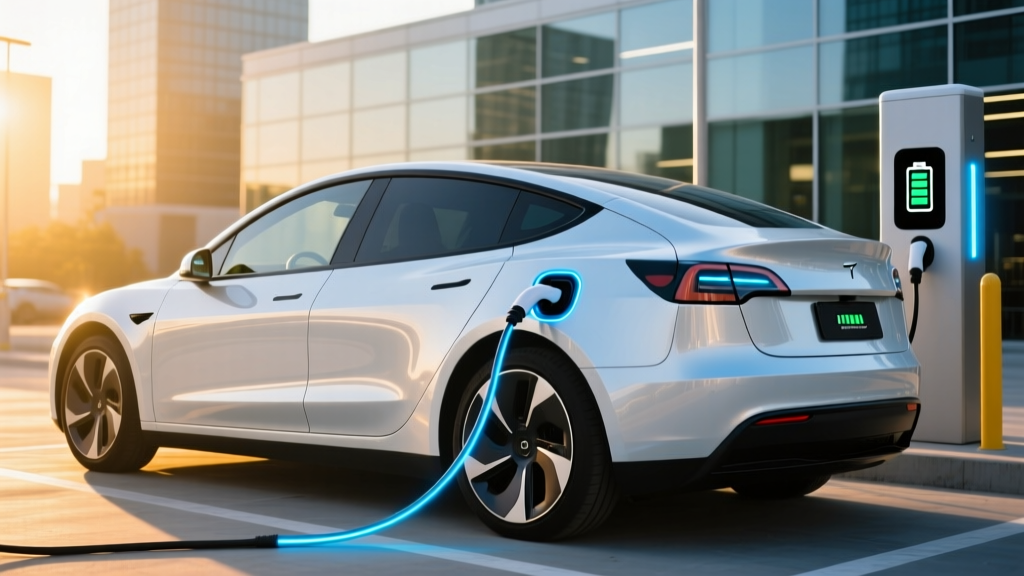
- DC fast charging: use it, but don't rely on it exclusively. Occasional 150-250 kW fast charging is fine. However, data from Recurrent Auto shows that vehicles that DC fast charge more than 90% of the time exhibit slightly higher degradation rates — roughly 1-2% additional loss over 100,000 miles compared to predominantly Level 2 charging.
For LFP Packs (Standard Range / RWD Trims)
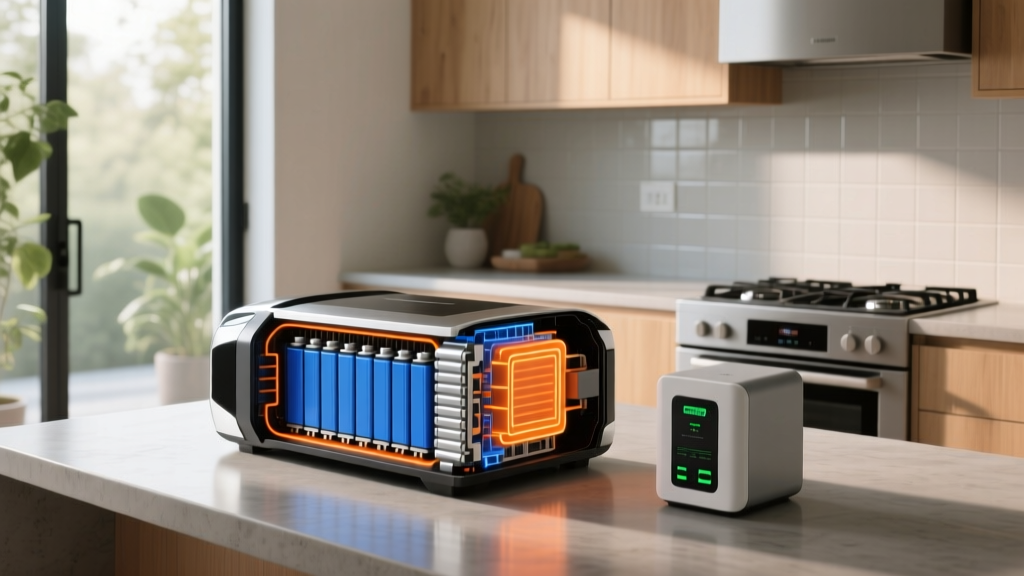
- Charge to 100% regularly — at least once per week. LFP cells have a very flat voltage curve, which makes it difficult for the battery management system (BMS) to estimate SoC accurately. Tesla, Ford, and BYD all recommend periodic 100% charges to recalibrate the BMS.
- Daily 100% is acceptable. LFP chemistry is far more tolerant of high SoC storage. You do not need to baby these packs the way you would NMC.
- Cold weather caveat: LFP cells accept charge more slowly below freezing. Always precondition the battery before DC fast charging in winter — most EVs do this automatically when you navigate to a charger.
Daily and Weekly Battery Care Checklist
- Set charge limit to 80% (NMC) or 100% (LFP) based on your chemistry
- Plug in at home on Level 2 whenever possible — slow charging generates less heat
- Precondition the battery before fast charging in cold weather (navigate to charger in the car's nav system)
- Avoid leaving the car at 100% SoC in hot weather for more than a few hours
- Don't let the car sit below 10% SoC for more than a day or two
- Use scheduled charging to finish charging right before you leave — minimizes time at high SoC
- For long-term storage (2+ weeks), set SoC to approximately 50%
How Much Does an EV Battery Replacement Cost?
This is the question that generates the most anxiety — and the most misinformation. Let's ground it in actual numbers.
| Vehicle / Pack Size | Battery Capacity | Estimated Replacement Cost (2026) | Context |
|---|---|---|---|
| Tesla Model 3 RWD (LFP) | ~57 kWh | $8,000 – $12,000 | LFP packs are cheaper to replace; modular repair may reduce cost |
| Tesla Model Y Long Range | ~75 kWh | $12,000 – $16,000 | Out-of-warranty full pack replacement |
| Hyundai Ioniq 5 / Kia EV6 | ~77.4 kWh | $13,000 – $18,000 | NMC pack; 10-year warranty reduces likelihood of owner-paid replacement |
| Ford F-150 Lightning Extended Range | ~131 kWh | $20,000 – $28,000 | Largest consumer pack; highest replacement cost |
| Chevrolet Equinox EV | ~85 kWh | $14,000 – $19,000 | Ultium platform; module-level repair may be possible |
| Rivian R1T (Dual Motor) | ~128 kWh (Large Pack) | $18,000 – $25,000 | Complex pack architecture |
Important context: these are worst-case, full-pack, out-of-warranty replacement figures. In practice, many battery issues are resolved by replacing individual modules rather than the entire pack, which can cut costs by 50-70%. And because the vast majority of failures occur within the warranty period, the owner's out-of-pocket cost is typically $0. Battery replacement should be viewed similarly to a transmission replacement on a gas car — expensive, but rare within the vehicle's normal service life.
Monitoring Battery Health: How to Check Your SoH
State of Health (SoH) is the metric that tells you what percentage of your battery's original capacity remains. Here's how to track it:
Built-In Vehicle Tools
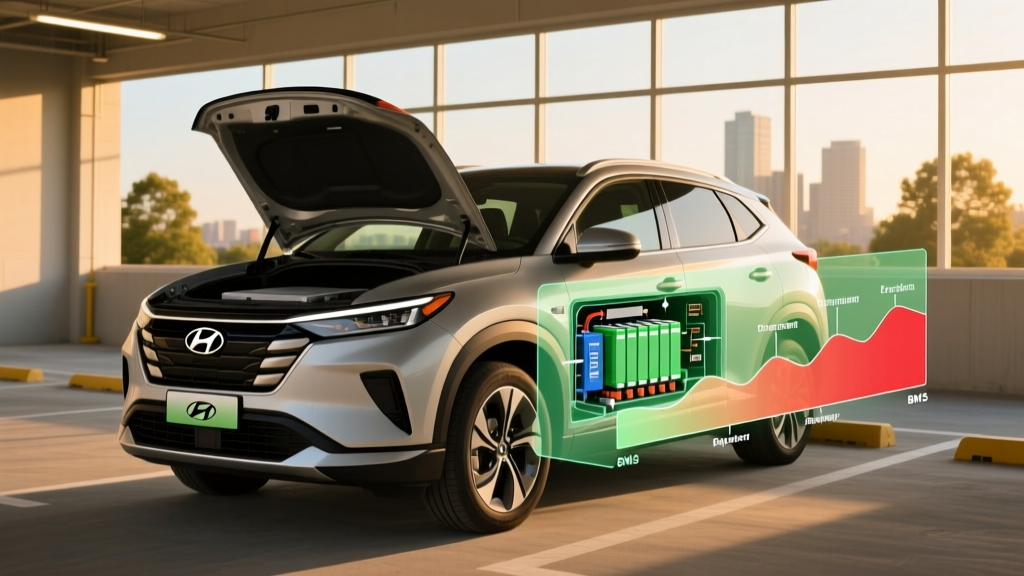
- Tesla: The service menu (accessible via the software screen in 2024+ models) shows a battery health test result. You can also monitor the rated range at 100% SoC over time and compare it to the original EPA figure.
- Hyundai / Kia: The EV-specific menu in the infotainment system displays battery SoH as a percentage on many 2024+ models. The Bluelink / Kia Connect app may also show this data.
- BMW: The iDrive system includes a battery health report accessible through the service menu.
- GM (Ultium): The myChevrolet / myCadillac app provides battery health status for 2025+ models.
Third-Party Tools
- OBD-II dongles + apps: Devices like the OBDLink SX paired with apps such as EVNotify, LeafSpy (Nissan Leaf), or ABRP (A Better Route Planner) can read real-time SoH data from the BMS.
- Recurrent Auto: This free service connects to your vehicle's telematics and provides ongoing battery health reports benchmarked against similar vehicles in their fleet dataset.
- Dealer diagnostic: Any authorized service center can run a full battery health report. Request this during routine service visits.
Factors That Accelerate Battery Degradation
Not all miles are created equal. These are the conditions that measurably shorten pack life, based on data aggregated by the National Renewable Energy Laboratory (NREL) and fleet analytics firms:
- Exclusive DC fast charging: High charge rates (150-350 kW) generate significant heat. Vehicles that fast-charge over 90% of the time show 1-3% additional degradation at 100,000 miles compared to those using predominantly Level 2.
- Hot climates without garage parking: Sustained battery temperatures above 95°F accelerate calendar aging. In Phoenix and Las Vegas, average degradation rates are 1-2% higher than in moderate climates like Portland or Boston.
- Habitual 100% SoC on NMC packs: Storing an NMC battery at full charge for extended periods — say, plugging in to 100% every night and not driving until evening — compounds stress. The combination of high SoC and time is the primary driver of calendar degradation.
- Frequent deep discharges (below 5% SoC): Deep cycling strains the anode's graphite structure. Occasional low-SoC events are fine; habitual deep discharges are not.
- Towing and heavy loads: Sustained high-current draw (towing a trailer at highway speeds) generates internal heat. This doesn't destroy batteries, but it does accelerate wear compared to light-duty commuting.
What's Coming: Solid-State and Silicon Anode Batteries
The next generation of battery technology is often discussed in breathless terms, so let's set realistic expectations based on current 2026 timelines.
Silicon anode batteries — which replace graphite anodes with silicon to boost energy density by 20-40% — are entering limited production. Companies like Sila Nanotechnologies and Group14 are supplying materials for vehicles expected in the 2027-2028 timeframe. These are incremental improvements, not a revolution, and they do not fundamentally change charging best practices.
Solid-state batteries — which replace the liquid electrolyte with a solid conductor — promise faster charging, higher energy density, and improved safety. Toyota has announced a solid-state pack targeting 2027-2028 production vehicles, while Samsung SDI and QuantumScape are pursuing similar timelines. However, manufacturing scale-up remains the major bottleneck. Industry analysts at BloombergNEF project that solid-state batteries will reach cost parity with current lithium-ion around 2032-2035. Until then, the LFP and NMC packs in today's EVs represent mature, well-understood technology with proven longevity.
How long do EV batteries last in years and miles?
Most EV batteries retain 80-90% of their original capacity at 150,000-200,000 miles (10-15 years of average driving). Fleet data from Tesla, Hyundai, and independent analytics firm Recurrent Auto confirms that the vast majority of packs outlast the vehicles they're installed in. Degradation is front-loaded — you'll see the biggest drop in year one, then it stabilizes.
How much does an EV battery cost to replace?
Full out-of-warranty replacement ranges from approximately $8,000 for a smaller LFP pack (Tesla Model 3 RWD) to $20,000-$28,000 for a large pack like the F-150 Lightning Extended Range (131 kWh). However, most replacements occur under warranty at no cost to the owner, and module-level repairs can cut out-of-warranty costs by 50-70%.
What does the battery warranty cover?
Federal law requires a minimum 8-year/100,000-mile battery warranty. Most manufacturers guarantee that the pack will retain at least 70% of its original capacity during that period. If SoH drops below the threshold, the manufacturer must repair or replace the pack at no cost. Hyundai and Kia extend this to 10 years / 100,000 miles.
How do I check and maximize my battery health?
Monitor SoH through your vehicle's built-in battery health display, third-party apps like Recurrent Auto, or dealer diagnostics. To maximize health: charge to 80% daily on NMC packs (100% is fine for LFP), use Level 2 home charging as your primary method, precondition before fast charging in cold weather, avoid storing the car at 100% SoC in heat, and don't let the battery sit below 10% for extended periods.
LFP vs NMC — which is better and why?
Neither is universally better. LFP offers longer cycle life (3,000-5,000+ cycles), lower cost, and tolerance for 100% daily charging, making it ideal for commuters who charge at home and don't need maximum range. NMC provides higher energy density, better cold-weather performance, and more range in the same physical space, making it the right choice for road-trippers and those in cold climates who need every mile of their 300+ EPA-rated range. The best battery is the one whose characteristics match your driving pattern.
Does DC fast charging damage my EV battery?
Occasional DC fast charging does not meaningfully harm your battery. Modern BMS systems actively manage temperature and taper charge rates to protect the cells. However, data shows that vehicles relying on DC fast charging for over 90% of their charging sessions exhibit 1-3% more degradation over 100,000 miles compared to those primarily using Level 2. Think of fast charging as a road-trip tool, not your daily routine.