The Battery Is the Car: Why Chemistry Dictates Your Best EV Under $45K
When shopping for the best plug-in or battery vehicle under $45K, most buyers fixate on EPA range and 0-60 times. But the single most expensive component in any electrified vehicle — the high-voltage traction battery — deserves equal scrutiny. The battery's chemistry, thermal management, and warranty terms determine not just how far you drive today, but how much range you'll retain in year seven and what you'll pay if something goes wrong out of warranty.
In 2026, the sub-$45K electrified segment spans a wide spectrum: from the Tesla Model 3 Rear-Wheel Drive at $38,990 with its lithium iron phosphate (LFP) pack, to the Hyundai Ioniq 5 SE Standard Range at $42,900 with nickel manganese cobalt (NMC) chemistry, to plug-in hybrids like the Toyota RAV4 Prime at $44,490 that pair a smaller NMC battery with a gas engine. Each chemistry carries distinct trade-offs in energy density, longevity, cold-weather behavior, and cost — and understanding them is the key to picking the right vehicle for your ownership horizon.
LFP vs NMC/NCA: The Chemistry Showdown That Shapes Your Purchase
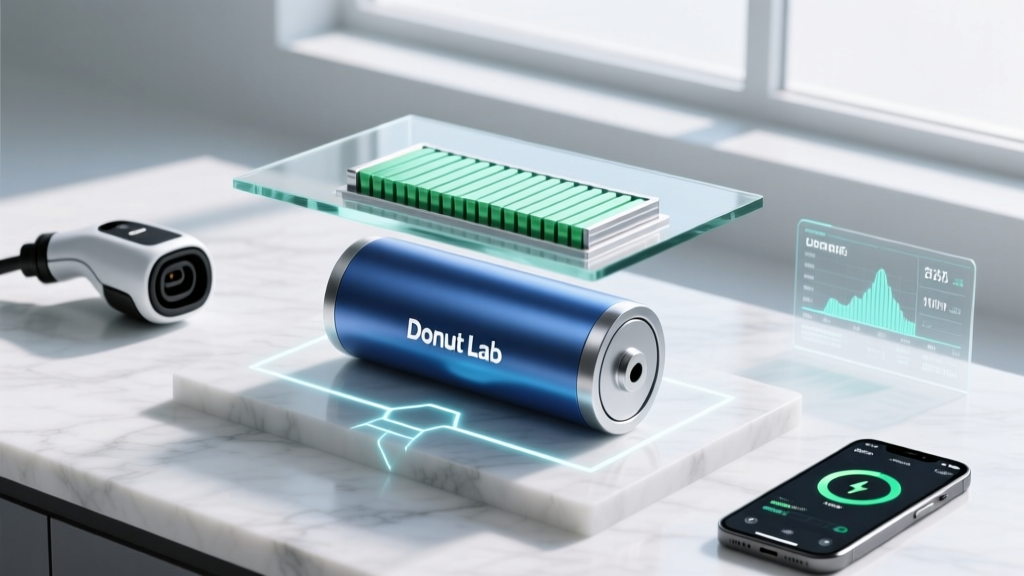
Two battery chemistries dominate the 2026 EV market below $45K: lithium iron phosphate (LFP) and nickel manganese cobalt (NMC), with nickel cobalt aluminum (NCA) appearing in some Tesla variants. The choice isn't about which is universally "better" — it's about which aligns with how you drive, where you live, and how long you plan to keep the car.
| Attribute | LFP (Lithium Iron Phosphate) | NMC / NCA (Nickel-based) |
|---|---|---|
| Energy Density | Lower (~160 Wh/kg cell-level) | Higher (~230-260 Wh/kg cell-level) |
| Typical Range in Sub-$45K EVs | 240-272 mi EPA | 270-340 mi EPA |
| Cycle Life | 3,000-5,000+ cycles to 80% SoH | 1,500-2,500 cycles to 80% SoH |
| Cold-Weather Performance | More range loss (~35-40% at 20°F) | Better cold retention (~25-30% loss at 20°F) |
| Recommended Charging Habit | Can charge to 100% daily | Best kept 20-80% daily; 100% for trips |
| DC Fast-Charging Speed | Generally slower (peak 170 kW typical) | Generally faster (peak 200-250 kW typical) |
| Critical Mineral Concerns | No cobalt or nickel — lower supply-chain risk | Cobalt/nickel sourcing affects §30D tax credit eligibility |
| Cost per kWh (pack-level) | ~$100-115/kWh | ~$125-145/kWh |
| Examples Under $45K (2026) | Tesla Model 3 RWD, Chevrolet Equinox EV 2LT, base Ford Mustang Mach-E Select | Hyundai Ioniq 5 SE, Kia EV6 Light, VW ID.4 Pro |
Choose LFP if: You plan to own the vehicle 8+ years, charge primarily at home, live in a mild climate, and value maximum cycle life over peak range. Tesla's Model 3 RWD and the Chevrolet Equinox EV 2LT both use LFP packs and encourage daily 100% charging — a significant convenience advantage.
Choose NMC if: You need maximum EPA range per charge, frequently drive in cold climates, rely on DC fast charging for road trips, or prioritize faster 10-80% charge times. The Hyundai Ioniq 5's NMC pack delivers up to 310 miles EPA (Long Range AWD, though that trim crosses $45K) and peaks at 240 kW on a DC fast charger, adding roughly 180 miles in 18 minutes under optimal conditions.
How Long Do EV Batteries Actually Last? Real Degradation Data
The fear that EV batteries need replacement every few years is not supported by fleet data. Modern liquid-cooled battery packs in 2026 vehicles are engineered for the life of the car — and most outlast the vehicle's useful economic life.
Typical Degradation Curves (Fleet & Owner-Reported Data):
- Year 1 / 15,000 mi: 2-5% capacity loss (initial "break-in" drop is normal across both chemistries)
- Year 3 / 45,000 mi: 5-9% total loss for NMC; 3-6% for LFP
- Year 5 / 75,000 mi: 8-12% total loss for NMC; 5-8% for LFP
- Year 8 / 120,000 mi: 10-15% total loss for NMC; 6-10% for LFP
- Year 10 / 150,000 mi: 12-18% for NMC; 8-12% for LFP
These figures draw on aggregated data from sources including Recurrent Auto's fleet analytics and Tesla's own Impact Report. The degradation curve is not linear — the steepest drop occurs in the first year, then the rate flattens considerably. An LFP pack in a 2026 Tesla Model 3 RWD that starts with 272 miles of EPA range will likely still deliver 245-255 miles at year eight. That's still enough for the average American's 37-mile daily round-trip commute with substantial buffer.
Real-world caveat: Degradation accelerates with frequent DC fast charging (especially above 150 kW), sustained high state-of-charge storage (sitting at 100% for days in hot weather), and repeated exposure to extreme heat without adequate thermal management. LFP chemistry is inherently more resistant to calendar degradation, which is why Tesla recommends 100% daily charging for its LFP-equipped vehicles.
Battery Warranty Terms: What's Covered and What's Not
Federal law mandates that EV battery warranties cover a minimum of 8 years / 100,000 miles. Most automakers meet or exceed this floor, but the details — particularly the capacity retention threshold — vary meaningfully.
| Vehicle | Battery Warranty | Capacity Threshold | Chemistry |
|---|---|---|---|
| Tesla Model 3 RWD ($38,990) | 8 yr / 100,000 mi | 70% retention | LFP |
| Chevrolet Equinox EV 2LT (~$36,900) | 8 yr / 100,000 mi | 70% retention | LFP (Ultium) |
| Hyundai Ioniq 5 SE ($42,900) | 10 yr / 100,000 mi | 70% retention | NMC |
| Kia EV6 Light (~$42,900) | 10 yr / 100,000 mi | 70% retention | NMC |
| Volkswagen ID.4 Pro (~$40,700) | 8 yr / 100,000 mi | 70% retention | NMC |
| Ford Mustang Mach-E Select (~$42,995) | 8 yr / 100,000 mi | 70% retention | LFP (Select SR) / NMC (Extended) |
| Toyota RAV4 Prime PHEV ($44,490) | 10 yr / 150,000 mi (hybrid battery) | Varies by diagnostic | NMC (18.1 kWh) |
What the warranty covers: Defects in materials or workmanship, and capacity loss below the stated threshold (typically 70% of original capacity). If your 84 kWh NMC pack degrades to below 58.8 kWh usable within the warranty period, the manufacturer must repair or replace it — often with a refurbished unit of equivalent capacity.
What it doesn't cover: Damage from accidents, flooding, improper modifications, or use outside manufacturer guidelines. Gradual degradation above the 70% threshold is considered normal wear. Note that PHEV batteries like the RAV4 Prime's 18.1 kWh pack carry separate hybrid-system warranties; Toyota's 10-year/150,000-mile hybrid battery coverage is among the most generous in the segment.
EV Battery Replacement Cost: What You'd Actually Pay (and When)
Out-of-warranty battery replacement is the specter that haunts many prospective EV buyers. Here's the reality: it's expensive, but it's also increasingly rare.
| Vehicle | Battery Size (kWh) | Estimated Replacement Cost | Typical Need Timeline |
|---|---|---|---|
| Tesla Model 3 RWD | 60 kWh (LFP) | $10,000 - $14,000 | 15-20+ years / 200K+ mi (if ever) |
| Chevrolet Equinox EV | 85 kWh (Ultium LFP) | $12,000 - $16,000 | 15-20+ years |
| Hyundai Ioniq 5 SE | 58 kWh (NMC, Std Range) | $9,000 - $13,000 | 15-20+ years |
| Volkswagen ID.4 Pro | 82 kWh (NMC) | $13,000 - $18,000 | 15-20+ years |
| Ford Mustang Mach-E Select | 72 kWh (LFP, Std Range) | $11,000 - $15,000 | 15-20+ years |
| Toyota RAV4 Prime (PHEV) | 18.1 kWh (NMC) | $4,000 - $7,000 | 15+ years (smaller pack = lower cost) |
Several important context points: First, pack-level battery prices have fallen from over $1,200/kWh in 2010 to approximately $115-140/kWh in 2026, per BloombergNEF tracking. Second, most replacements involve individual module swaps rather than full-pack replacements, which cuts costs by 40-60%. Third, and most critically — the vast majority of EV batteries never need replacement. Data from fueleconomy.gov and fleet operators shows that less than 2% of EV battery packs have required full replacement outside of warranty claims for defects.
For plug-in hybrids like the RAV4 Prime, the smaller battery means lower replacement cost, and the gas engine provides a fallback even if battery capacity degrades significantly. This makes PHEVs a compelling risk-mitigated choice for buyers in areas with limited charging infrastructure.
Factors That Accelerate (or Preserve) Battery Health
Battery longevity isn't purely a function of time and mileage — your habits meaningfully influence the degradation curve.
Habits That Preserve Battery Health:
- Charge to 80% daily (NMC): Set your charge limit to 80% for routine driving. Reserve 100% for road trips. LFP owners can ignore this — charge to 100% as recommended.
- Precondition before fast charging: Use your vehicle's navigation to route to a DC fast charger, which triggers battery preconditioning — warming the pack to optimal temperature (typically 30-40°C) for faster, gentler charging.
- Avoid storing at 100% or below 10%: If leaving the car for a week or more, set SoC to 50-60%. Extended storage at extremes accelerates calendar degradation.
- Use Level 2 home charging as your primary method: A 7-11 kW Level 2 charger adds 25-44 miles per hour and is far gentler on the pack than repeated 150+ kW DC sessions.
- Park in shade or a garage during summer: Sustained pack temperatures above 40°C (104°F) accelerate degradation. Thermal management systems help, but they can't fully compensate for a car baking in an Arizona parking lot for days.
Habits That Accelerate Degradation:
- Exclusive reliance on DC fast charging (150+ kW) — expect 1-3% additional loss per year vs. Level 2-only charging
- Repeated 0% discharges (running the battery completely empty)
- Frequent towing or high-load driving in extreme heat
- Ignoring software updates that optimize battery management algorithms
Monitoring Battery Health: How to Check Your State of Health (SoH)
State of Health (SoH) is the percentage of your battery's original capacity that remains available. A new pack is 100% SoH; a pack that's degraded to hold 75 kWh from an original 84 kWh is at ~89% SoH.
In-vehicle tools: Most 2026 EVs provide battery health information through the infotainment system or mobile app. Tesla offers a battery health readout in the service menu. Hyundai and Kia include SoH estimation in their EV-specific settings. The Chevrolet Equinox EV surfaces this through the myChevrolet app.
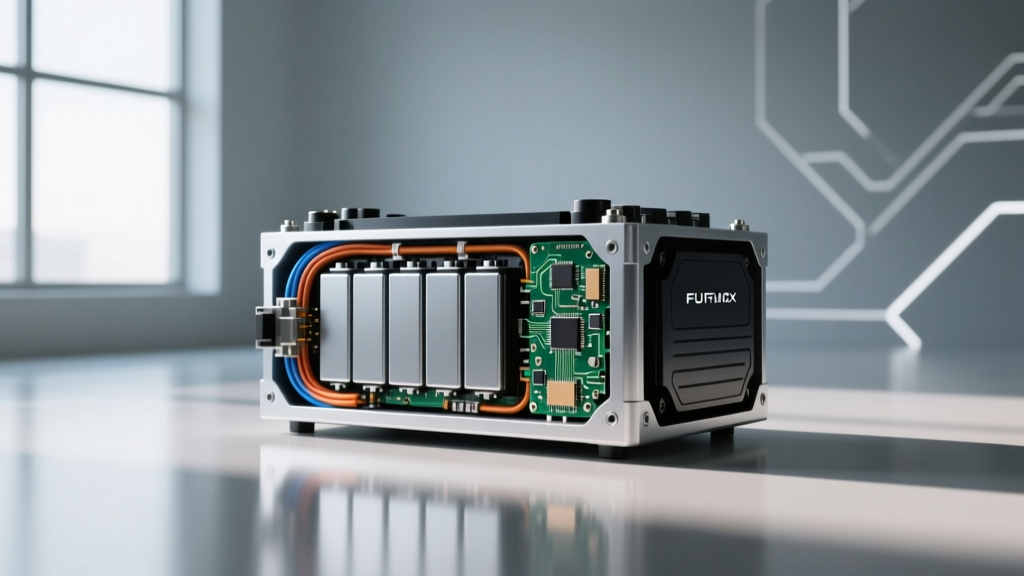
OBD-II diagnostic tools: Third-party tools like the OBDLink MX+ paired with apps such as EV Health or Car Scanner can read the battery management system's (BMS) reported SoH, cell voltage variance, and pack temperature. This is especially useful when buying a used EV — a 3-minute OBD-II scan can reveal whether the pack is healthy or nearing warranty-threshold territory.
Dealer diagnostics: Any authorized dealer can run a full battery health report. Request this during routine service visits. For pre-purchase inspections on used EVs, this report should be non-negotiable.
Range-based estimation: Track your vehicle's rated range over time. If your 272-mile Model 3 RWD consistently shows 260 miles at 100% after one year, that's approximately 95.6% SoH — well within normal expectations. Compare against EPA-rated range from fueleconomy.gov, not the inflated "ideal" range some vehicles display.
Top Battery and Plug-In Vehicles Under $45K in 2026: Our Picks by Chemistry
Based on battery technology, warranty coverage, real-world efficiency, and total value, here are the strongest contenders in the sub-$45K segment for 2026:
Best LFP Pick: Tesla Model 3 Rear-Wheel Drive — $38,990
The Model 3 RWD's 60 kWh LFP pack delivers 272 miles EPA, and Tesla's recommendation to charge to 100% daily means you get full use of that range every day. The LFP chemistry's superior cycle life (3,000-5,000 cycles) translates to 900,000+ theoretical miles before hitting 80% capacity — far beyond the car's mechanical life. DC fast charging peaks at approximately 170 kW, with a 10-80% session taking about 25 minutes. Efficiency is an outstanding 26 kWh/100mi (130 MPGe combined per EPA data). The 8-year/100,000-mile warranty with a 70% threshold is standard.
Best NMC Pick: Hyundai Ioniq 5 SE Standard Range — $42,900
The Ioniq 5 SE's 58 kWh NMC pack provides 240 miles EPA (Standard Range RWD). Hyundai's 10-year/100,000-mile battery warranty is the best in the segment — two extra years beyond the federal minimum. The 800V architecture enables DC fast charging at up to 240 kW on the Long Range variant (the Standard Range peaks around 180 kW), with 10-80% in approximately 18-22 minutes under optimal conditions. The NMC chemistry offers better cold-weather range retention for northern-climate buyers, and the vehicle-to-load (V2L) feature lets you power devices or a home during outages.
Best Plug-In Hybrid Pick: Toyota RAV4 Prime — $44,490
For buyers not ready to go fully electric, the RAV4 Prime's 18.1 kWh NMC battery delivers 42 miles of EPA electric-only range — enough to cover most daily commutes without burning fuel. Once depleted, the hybrid system achieves 38 MPG combined. The 10-year/150,000-mile hybrid battery warranty is exceptional, and the small pack means replacement cost stays under $7,000 in the unlikely event it's needed out of warranty. Total system output is 302 hp, with a 0-60 time of 5.7 seconds — making it the quickest RAV4 Toyota sells.
Federal Tax Credit Note
Under current IRS §30D rules, the new clean vehicle credit offers up to $7,500 — but eligibility depends on MSRP caps ($55,000 for sedans, $80,000 for SUVs/trucks), buyer income limits ($150K single / $300K joint), critical mineral sourcing, and battery component manufacturing requirements. The Tesla Model 3 RWD and Chevrolet Equinox EV have qualified for partial or full credits in recent tax years, but sourcing rules tighten annually. The RAV4 Prime qualifies as a PHEV if its battery meets the 7 kWh minimum. Always verify current-year eligibility with a tax professional before purchasing — point-of-sale transfer is available at participating dealers.
Emerging Battery Tech: What's Coming (and When)
Several next-generation battery technologies are in development, but none are commercially available in 2026 production vehicles under $45K. Here's a realistic timeline:
- Solid-state batteries: Toyota and Samsung SDI have announced prototype cells promising 500+ mile range and 10-minute fast charging. Toyota targets limited production in 2027-2028, but initial deployment will be in premium vehicles well above $45K. Mass-market solid-state is realistically 2030+.
- Silicon anode cells: Companies like Sila Nanotechnologies and Group14 are producing silicon-dominant anode materials that boost energy density by 20-40%. These are beginning to appear in premium EVs and will trickle down to mainstream models by 2028-2029.
- Sodium-ion batteries: CATL and other manufacturers are producing sodium-ion cells that eliminate lithium entirely, with lower cost but also lower energy density. These are best suited for city EVs and could appear in budget models by 2027-2028.
- LFP improvements: CATL's second-generation LFP cells and BYD's Blade Battery 2.0 continue to close the energy-density gap with NMC while maintaining LFP's cost and longevity advantages.
For buyers shopping today, these technologies are forward-looking and should not delay a purchase. Current LFP and NMC packs are mature, well-warrantied, and proven to last the life of the vehicle.
Frequently Asked Questions
How long do EV batteries last in years and miles?
Modern liquid-cooled EV batteries in 2026 vehicles typically last 15-20 years or 200,000+ miles before degrading to 70-80% of original capacity. LFP chemistry tends to outlast NMC by a significant margin in cycle life. Most EV batteries will outlive the vehicle they're installed in. Fleet data shows less than 2% of packs require full replacement due to failure.
How much does an EV battery cost to replace?
Full pack replacement costs range from $4,000-$7,000 for PHEV batteries (like the RAV4 Prime's 18.1 kWh pack) to $10,000-$18,000 for full BEV packs (58-85 kWh). However, module-level repairs often cost 40-60% less. Most batteries never need replacement — they degrade gradually and remain functional for the vehicle's entire life. Pack-level prices continue to decline, and by the time an out-of-warranty replacement might be needed (15+ years out), costs will likely be significantly lower than today.
What does the EV battery warranty actually cover?
Federal law requires a minimum 8-year/100,000-mile warranty on EV batteries. Coverage includes defects in materials and workmanship, plus capacity loss below a stated threshold — typically 70% of original capacity. Hyundai and Kia exceed this with 10-year/100,000-mile coverage; Toyota offers 10 years/150,000 miles for hybrid batteries. The warranty does not cover damage from accidents, improper modifications, or gradual degradation above the threshold.
How do I check and maximize my EV's battery health?
Check SoH through your vehicle's infotainment system, mobile app, or an OBD-II diagnostic tool like the OBDLink MX+. For maximization: charge NMC to 80% daily (LFP to 100%), precondition before DC fast charging, avoid storing at extreme SoC levels, prioritize Level 2 home charging, and park in shade during hot weather. Request a dealer battery health report during annual service visits.
LFP vs NMC — which battery chemistry is better?
Neither is universally superior. LFP wins on longevity (3,000-5,000 cycles vs 1,500-2,500 for NMC), cost ($100-115/kWh vs $125-145/kWh), daily charging convenience (100% OK), and supply-chain ethics (no cobalt). NMC wins on energy density (more range per kg), cold-weather performance (25-30% loss vs 35-40% at 20°F), and DC fast-charging speed. If you keep cars 8+ years and live in a mild climate, LFP is the stronger choice. If you need maximum range and drive in cold weather, NMC is preferable.
Do plug-in hybrid batteries degrade faster than full EV batteries?
PHEV batteries experience more charge cycles per mile driven because of their smaller capacity — the RAV4 Prime's 18.1 kWh pack cycles more frequently than a 60 kWh BEV pack over the same distance. However, Toyota engineers for this by using conservative buffer zones (you never use the full 18.1 kWh) and robust thermal management. The 10-year/150,000-mile warranty reflects Toyota's confidence. Real-world data on Toyota hybrid batteries shows excellent longevity, with many original packs lasting 200,000+ miles.
Will solid-state batteries make current EVs obsolete?
Not in the near term. Solid-state batteries are expected to debut in premium vehicles at $70K+ around 2027-2028, with mass-market adoption realistically 2030 or later. Current LFP and NMC packs are mature, well-understood, and backed by strong warranties. Waiting for solid-state means waiting at minimum 3-5 years with no guarantee of affordable pricing. If an EV meets your needs today, the battery technology is ready.