If you've been following EV headlines, you've seen the promise: solid-state batteries that double range, charge in 10 minutes, and never catch fire. But which company is actually closest to delivering them to your driveway? And more importantly, what does that mean for the EV you might buy this year?
This guide does two things. First, it ranks the contenders for best automaker for solid-state battery advancements based on announced timelines, patent portfolios, and prototype data. Second — because you still need to make a purchase decision with today's chemistry — it explains exactly how current lithium-ion batteries (LFP and NMC/NCA) degrade, what they cost to replace, and how to maximize the pack you actually buy.
The Solid-State Race: Who's Leading in 2026?
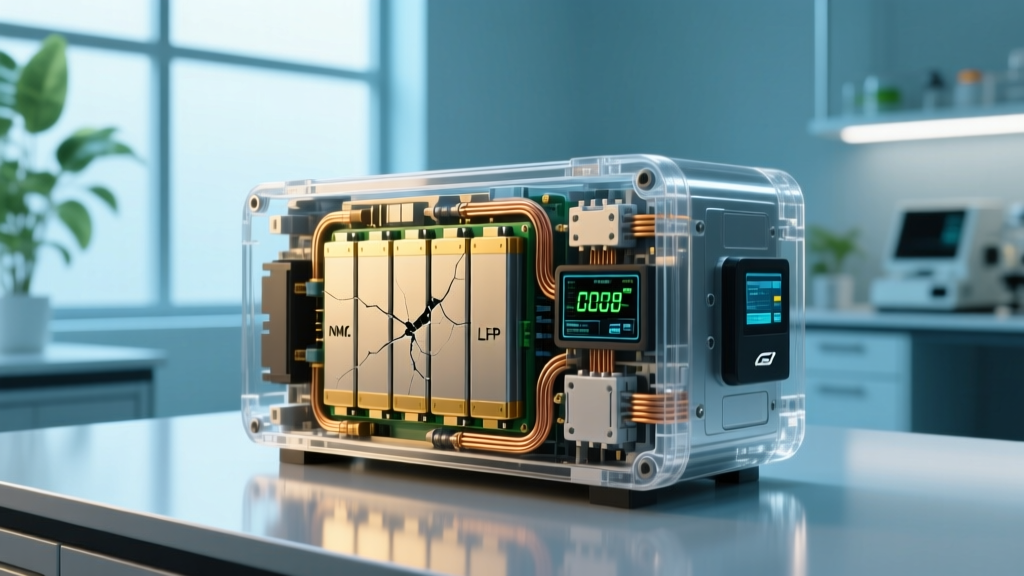
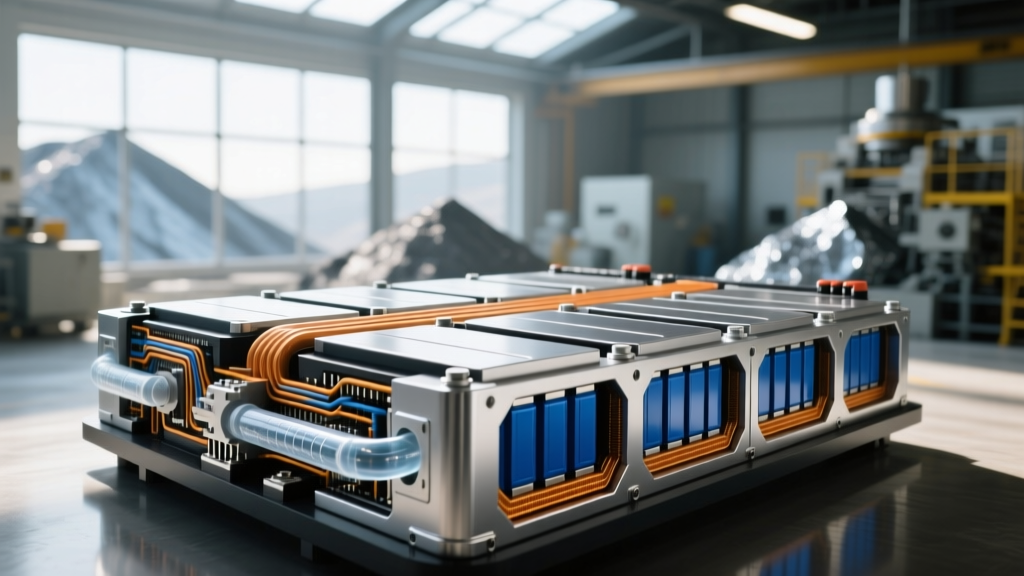
Solid-state batteries replace the liquid electrolyte in today's lithium-ion cells with a solid material (ceramic, sulfide, or polymer). The theoretical gains are significant: 2x energy density, faster charging, and reduced fire risk. But "theoretical" and "mass-produced at automotive scale" are very different things. Here's where the major players stand as of early 2026.
No automaker is currently selling a mass-market EV with a solid-state battery in the United States. Every vehicle on dealer lots today uses liquid-electrolyte lithium-ion cells (NMC, NCA, or LFP). The timelines below reflect announced production targets, which in the battery industry have historically slipped by 2–4 years.
Toyota — The Patent Leader, Still Pre-Production
Toyota holds the largest solid-state battery patent portfolio of any automaker — over 1,300 patents by most counts. The company has repeatedly announced a 2027–2028 target for limited production in a hybrid application, with a full BEV application expected around 2028–2030. Their prototype claims include 745 km (~463 miles) of range and a 10-minute 10–80% charge. However, Toyota has pushed back solid-state timelines at least three times since 2020, so treat these figures as preliminary engineering targets, not guaranteed specifications.
Nissan — Building the Pilot Line
Nissan announced a solid-state pilot production line at its Yokohama plant, targeting 2028 for limited vehicle integration. Nissan's approach uses a sulfide-based electrolyte and aims for a 50% reduction in battery cost per kWh compared to current NMC cells. The company has been more conservative in public claims than Toyota, which may indicate a more realistic timeline — or simply less ambition.
Samsung SDI — The Supplier Wildcard
Not an automaker but a critical supplier, Samsung SDI has begun sample shipments of all-solid-state cells to multiple OEMs. Their published target is mass production by 2027, with claimed energy density of 900 Wh/L (roughly double today's best NMC cells). If Samsung SDI delivers, the technology could appear in vehicles from BMW, Hyundai, or Stellantis before any automaker's in-house effort reaches production.
QuantumScape (Volkswagen Partnership) — Public but Unproven
QuantumScape, backed by Volkswagen's PowerCo, has delivered prototype cells to automotive partners and published testing data showing over 800 charge cycles with less than 10% degradation. Their anode-less lithium-metal design is novel but untested at scale. VW has signaled a 2028–2030 target for integration, though QuantumScape's stock and public claims should be viewed through the lens of a pre-revenue company seeking continued investment.
Honda and BMW — Watching from the Wings
Honda has partnered with SES AI (formerly SolidEnergy Systems) on a hybrid solid-state approach, targeting a prototype vehicle demonstration in 2026 but no production commitment. BMW's solid-state partnership with Solid Power yielded a demonstration vehicle in 2025, but BMW has since pivoted messaging toward its current-generation NMC cells and upcoming silicon-anode enhancements — a more incremental, nearer-term improvement.
Today's Real Chemistry: LFP vs. NMC/NCA Explained
While solid-state remains 2–5 years from your driveway, today's EVs use two dominant cathode chemistries. Understanding the trade-off is essential for your purchase decision.
| Attribute | LFP (Lithium Iron Phosphate) | NMC/NCA (Nickel Manganese Cobalt / Nickel Cobalt Aluminum) |
|---|---|---|
| Energy Density | Lower (~160–180 Wh/kg cell-level) | Higher (~220–260 Wh/kg cell-level) |
| Typical Range Application | Standard Range trims (250–330 mi EPA) | Long Range / Performance trims (310–400+ mi EPA) |
| Cycle Life | 3,000–5,000+ cycles to 80% SoH | 1,000–2,000 cycles to 80% SoH |
| Cold-Weather Performance | More range loss in freezing temps (~30–40%) | Better cold performance (~20–30% loss) |
| Charging Recommendation | Can charge to 100% daily without accelerated wear | Best kept at 80% daily; 100% for road trips only |
| Cost per kWh | Lower — no cobalt or nickel | Higher — commodity-priced nickel and cobalt |
| Thermal Stability | Excellent — very low fire risk | Good but requires more active thermal management |
| Notable 2026 Applications | Tesla Model 3 RWD, Ford Mustang Mach-E Select, Rivian Standard | Hyundai Ioniq 5 Long Range, BMW i4, Chevrolet Equinox EV RS |
Which is better? It depends on your driving pattern. If you commute daily, charge at home, and don't need maximum range, LFP offers superior longevity and the convenience of 100% daily charging. If you road-trip frequently, live in a cold climate, or need every available mile, NMC/NCA delivers higher energy density and better cold-weather usability.
How Long Do EV Batteries Actually Last?
The short answer: almost certainly longer than you'll own the car. Real-world fleet data from sources like fueleconomy.gov and third-party aggregators (Recurrent Auto, Geotab) consistently show that modern EV batteries lose approximately 5–10% of capacity over the first 5 years or 100,000 miles, after which degradation slows considerably.
Degradation Data Points (Fleet Averages)
- Tesla Model 3/Y (NMC, 2020–2024): ~7–9% loss at 100,000 miles, per Tesla's 2024 Impact Report and third-party fleet data.
- Chevrolet Bolt EV/EUV (NMC, 2017–2023): ~5–8% loss at 80,000 miles; early 2017 models with recalled battery packs replaced under warranty show near-new capacity.
- Nissan LEAF (passive-cooled NMC, 2011–2017): 15–25% loss at 80,000 miles — a cautionary tale about thermal management. Post-2018 LEAF Plus with active cooling shows markedly better retention.
- Hyundai Ioniq 5 / Kia EV6 (NMC, 2022–2025): Insufficient long-term data (too new), but early indicators suggest 4–6% loss at 50,000 miles.
- LFP-equipped vehicles (Tesla Model 3 RWD, Ford Mach-E Select): Limited multi-year data, but LFP's inherent cycle-life advantage suggests 3–5% loss over 100,000 miles.
The typical degradation curve is non-linear: a steeper initial drop (2–4% in the first year), followed by a long, slow decline. Most packs will retain 80–85% of original capacity at 150,000 miles — well beyond the average American ownership period of ~8 years.
What Does the Battery Warranty Actually Cover?
Federal law mandates a minimum EV battery warranty of 8 years / 100,000 miles (10 years / 150,000 miles in California and states that follow CARB standards). Here's how major automakers structure their coverage:
| Automaker | Warranty Term | Capacity Retention Threshold | Notes |
|---|---|---|---|
| Tesla | 8 yr / 120,000 mi (Model 3/Y), 8 yr / 150,000 mi (Model S/X) | 70% | Transfers to subsequent owners automatically |
| Hyundai / Kia | 10 yr / 100,000 mi | 70% | Among the longest terms in the industry |
| Ford | 8 yr / 100,000 mi | 70% | Covers battery and high-voltage components |
| GM (Chevrolet/Cadillac) | 8 yr / 100,000 mi | 70% (60% for Ultium-based commercial) | Includes propulsion components |
| Rivian | 8 yr / 175,000 mi | 70% | Higher mileage cap reflects adventure-use positioning |
| BMW | 8 yr / 100,000 mi | 70% | Includes capacity test at dealer |
Key nuance: The warranty threshold (usually 70%) means the manufacturer will repair or replace the battery only if it degrades below that level within the warranty period. A battery at 72% SoH at year 8 is considered "within spec." In practice, very few modern EVs fall below 70% within warranty terms unless there's a manufacturing defect.
EV Battery Replacement Cost: What You'd Actually Pay
This is the number that generates the most anxiety — and the most misinformation. Here's the reality:
| Vehicle / Battery Size | Battery Pack Cost (Parts) | Labor & Ancillary | Total Estimated Range |
|---|---|---|---|
| Tesla Model 3 RWD (~60 kWh LFP) | $8,000–$11,000 | $1,500–$2,500 | $9,500–$13,500 |
| Tesla Model Y Long Range (~82 kWh NMC) | $12,000–$16,000 | $2,000–$3,000 | $14,000–$19,000 |
| Hyundai Ioniq 5 (~77.4 kWh NMC) | $11,000–$15,000 | $2,000–$3,500 | $13,000–$18,500 |
| Ford F-150 Lightning Extended (~131 kWh NMC) | $18,000–$25,000 | $3,000–$5,000 | $21,000–$30,000 |
| Chevrolet Bolt EV (~65 kWh NMC) | $9,000–$13,000 | $1,500–$2,500 | $10,500–$15,500 |
When is replacement typically needed? Almost never during the useful life of the vehicle for modern (2020+) EVs with active thermal management. Out-of-warranty replacements are primarily seen in early-generation vehicles (2011–2016 Nissan LEAF, early Tesla Roadster) or vehicles with physical damage to the pack. Battery cell prices have fallen from over $1,000/kWh in 2010 to approximately $100–$130/kWh in 2026, and continue to decline — meaning replacement costs will be lower if you ever do need one, 15 years from now.
Additionally, many shops now offer module-level repair — replacing only the degraded cell modules within the pack rather than the entire unit — for $3,000–$6,000, depending on the vehicle.
Factors That Accelerate (or Preserve) Battery Life
Your battery's longevity isn't just about age — it's about how you treat it. These factors have the greatest measurable impact on degradation rate:
- Limit DC fast charging to road trips. Frequent use of 150+ kW DC fast chargers (more than 2–3 times per week) can add 1–3% additional degradation over 100,000 miles vs. primarily Level 2 charging. For daily needs, a home Level 2 charger at 7–11 kW is ideal.
- Avoid extreme state-of-charge storage. Don't leave your EV sitting at 100% or below 10% for days or weeks. For NMC/NCA packs, store at 40–60% if not driving for extended periods. LFP packs tolerate 100% storage better but 50% is still ideal for long sits.
- Use preconditioning. When navigating to a DC fast charger, your vehicle's thermal management system will warm or cool the battery to optimal charging temperature (~25–35°C). Always use the built-in navigation preconditioning feature — it preserves battery health and improves charge speed.
- Mitigate extreme heat exposure. Parking in shade or a garage during summer reduces calendar degradation. Sustained battery temperatures above 40°C (104°F) accelerate chemical wear. Vehicles with active liquid cooling (nearly all 2020+ EVs) manage this far better than passively cooled packs.
- Cold weather won't permanently damage your battery, but charging a frozen pack at high power can cause lithium plating. Most modern EVs prevent this by limiting charge rate until the pack warms — another reason to precondition.
- Don't obsess over 80% vs. 100% for LFP. LFP chemistry benefits from periodic 100% charges for cell balancing. Follow your vehicle manufacturer's specific guidance — it varies by chemistry.
How to Check Your Battery's State of Health (SoH)
State of Health (SoH) is the percentage of original capacity your battery can still hold. A brand-new battery is at 100% SoH; a battery that held 75 kWh when new but now holds 67.5 kWh is at 90% SoH.
Methods for Monitoring SoH
In-vehicle displays: Many EVs (Tesla, Hyundai/Kia, BMW, Rivian) show a battery health indicator or estimated range vs. original in the settings menu. Tesla's service menu includes a "Battery Health Test" that provides a percentage readout.
OBD-II diagnostic tools: Devices like the OBDLink SX paired with apps such as EV Battery Health or Torque Pro can read the battery management system's (BMS) internal SoH estimate. This is the most accessible DIY method and typically costs $30–$50 for the hardware.
Dealer diagnostic report: Requesting a battery health check at a service center provides a certified SoH printout — useful for pre-purchase inspections on used EVs or warranty claims. Most dealers perform this for free or a nominal fee ($0–$50).
Third-party services: Companies like Recurrent Auto offer free battery health reports that compare your pack's degradation to a fleet of identical vehicles. You share anonymized telematics data; they return a personalized SoH estimate and peer comparison.
What SoH Number Should Concern You?
Anything above 85% at 5 years / 75,000 miles is typical and healthy. Between 75–85%, your pack is degrading faster than average — review your charging habits. Below 70% within the warranty period, you likely qualify for a warranty repair or replacement.
Beyond Solid-State: Near-Term Battery Improvements to Watch
While solid-state dominates headlines, two nearer-term technologies are already improving the batteries in EVs you can buy or will buy within 1–2 years:
Silicon-dominant anodes: Companies like Sila Nanotechnologies and Group14 are replacing graphite anodes with silicon-composite materials, boosting energy density by 10–20% without changing the cathode chemistry. Mercedes-Benz's upcoming G-Class EV (announced for 2025–2026) is expected to be among the first production vehicles using this technology. This is a meaningful improvement arriving far sooner than solid-state.
Sodium-ion batteries: Using abundant sodium instead of lithium, these cells are cheaper and perform better in extreme cold, though with lower energy density. CATL has begun production, and initial applications are in Chinese-market EVs. US-market adoption may follow in budget-oriented models by 2028–2029.
Structural battery packs: Tesla's structural pack (integrating cells into the vehicle chassis) and similar approaches from BYD and CATL reduce weight and cost, improving efficiency without changing cell chemistry. This is already in production in the Model Y and several Chinese-market vehicles.
Frequently Asked Questions
How long do EV batteries last in years and miles?
Modern EV batteries (2020 and newer with active thermal management) typically retain 80–90% of original capacity at 150,000 miles or 10–15 years. Most will outlast the vehicle's useful economic life. Early-generation EVs without liquid cooling (2011–2016 Nissan LEAF) degraded significantly faster.
How much does an EV battery cost to replace?
Full pack replacement ranges from approximately $9,500 (smaller LFP packs) to $30,000 (large truck packs like the F-150 Lightning Extended Range) in 2026. Module-level repairs cost $3,000–$6,000. However, replacement is rarely needed for modern EVs within their useful life.
What does the battery warranty cover?
Federally mandated minimum coverage is 8 years / 100,000 miles against capacity loss below 70% of original. Many automakers match or exceed this (Hyundai/Kia offer 10 yr / 100,000 mi; Rivian offers 8 yr / 175,000 mi). Warranties cover defects and excessive degradation but not physical damage from accidents or abuse.
How do I check and maximize my EV battery health?
Check SoH via your vehicle's settings menu, an OBD-II scanner with an EV app, or a dealer diagnostic report. Maximize health by favoring Level 2 home charging over frequent DC fast charging, avoiding prolonged storage at 100% or below 10% SoC (for NMC), using preconditioning before fast charging, and parking in shade during extreme heat.
LFP vs NMC — which chemistry is better and why?
Neither is universally better. LFP offers longer cycle life (3,000–5,000 cycles vs. 1,000–2,000), lower cost, better thermal stability, and the convenience of daily 100% charging — ideal for commuters and daily drivers. NMC/NCA provides higher energy density (more range in the same package), better cold-weather performance, and is necessary for long-range and performance trims. Choose based on your driving pattern, not which is "superior."
Which automaker is the best bet for solid-state batteries?
Toyota holds the most patents and the most aggressive published timeline (2027–2028 limited production), making it the current leader on paper. However, Samsung SDI's supplier approach may deliver solid-state cells to multiple brands sooner than any single automaker's in-house effort. Neither will produce a mass-market, affordable solid-state EV before 2030 based on current evidence. If you're buying in the next 3–5 years, buy the best lithium-ion EV for your needs today — don't wait for solid-state.