The Real Chemistry Inside Your EV: LFP vs NMC/NCA Explained
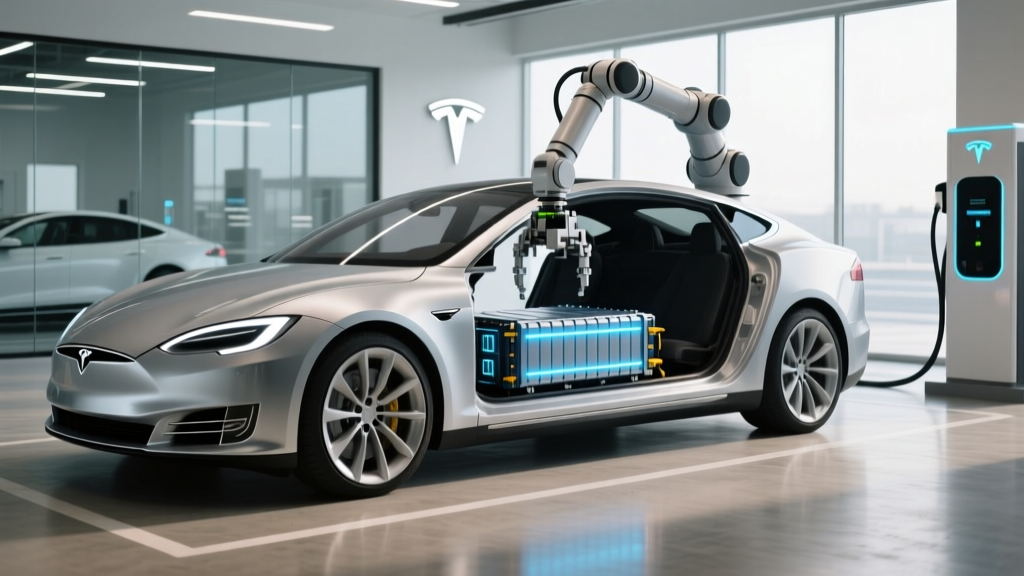
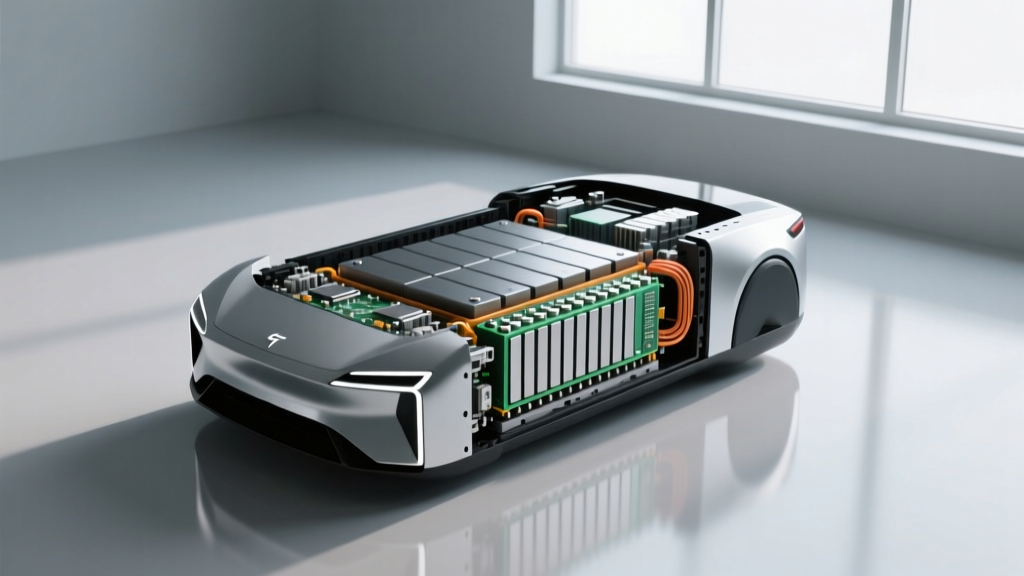
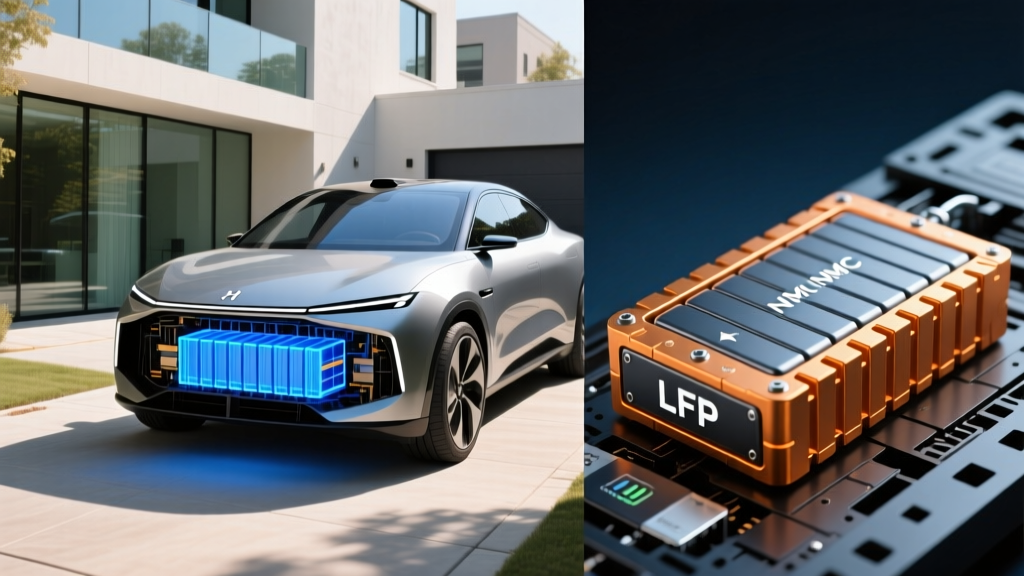
Every electric vehicle sold in the US today relies on a lithium-ion traction battery, but not all lithium-ion packs are built the same. The cathode chemistry — the specific blend of metals and compounds on the positive electrode — determines how much energy the battery holds, how fast it charges, how it handles cold weather, and how many years it will serve before meaningful degradation sets in. For 2026 model-year EVs, two chemistries dominate: NMC/NCA (nickel manganese cobalt / nickel cobalt aluminum) and LFP (lithium iron phosphate).
Understanding which battery used for electric cars best suits your driving pattern is one of the highest-leverage decisions you can make as a buyer. Here is how they compare on the metrics that matter.
| Metric | LFP (LiFePO₄) | NMC / NCA |
|---|---|---|
| Energy density (cell-level) | ~160–180 Wh/kg | ~230–300 Wh/kg |
| Typical cycle life (to 80% SoH) | 3,000–5,000+ cycles | 1,000–2,000 cycles |
| Cold-weather range retention (20°F) | ~55–65% of EPA | ~65–75% of EPA |
| Recommended daily charge limit | 100% (benefits from full charges) | 80% for daily; 100% for trips |
| DC fast-charge tolerance | Excellent (flat charge curve) | Good, but heat accelerates wear |
| Raw-material cost exposure | Low (no cobalt, no nickel) | High (cobalt, nickel price volatility) |
| Pack-level cost (2026 est.) | ~$90–$110/kWh | ~$115–$145/kWh |
| Notable 2026 vehicles using it | Tesla Model 3 RWD, Model Y RWD, Ford Mustang Mach-E Select (LFP option), Rivian R1S Standard | Hyundai Ioniq 5, Kia EV6, Chevy Equinox EV, BMW i4, Lucid Air, Porsche Taycan |
Bottom line: If your commute is under 200 miles round-trip, you charge at home nightly, and you plan to keep the car 8+ years, LFP's superior cycle life and 100% daily-charge tolerance make it the longevity winner. If you need maximum range in a single charge, frequently drive in sub-freezing climates, or tow heavy loads, NMC/NCA's higher energy density and better cold-weather performance justify the trade-off.
How Long Do EV Batteries Actually Last? Degradation Data by the Numbers
The fear that an EV battery will "die" at 80,000 miles is largely a myth carried over from early-2010s Nissan Leafs that lacked active thermal management. Modern liquid-cooled packs tell a very different story.
According to long-term fleet data aggregated by Recurrent Auto, which tracks over 15,000 EVs in real-world conditions, the average EV battery retains approximately 90–93% of its original capacity at 5 years / 75,000 miles and roughly 85–90% at 8 years / 120,000 miles. Degradation is not linear: the steepest drop (2–4%) typically occurs in the first 12–18 months as the solid-electrolyte interphase (SEI) layer stabilizes, after which the curve flattens considerably.
| Age / Mileage | Avg. Capacity Retained | Real-World Impact (300-mi EPA pack) |
|---|---|---|
| New | 100% | ~300 miles EPA |
| 1 year / 15,000 mi | 96–98% | ~290–294 miles |
| 3 years / 45,000 mi | 93–95% | ~279–285 miles |
| 5 years / 75,000 mi | 90–93% | ~270–279 miles |
| 8 years / 120,000 mi | 85–90% | ~255–270 miles |
| 10 years / 150,000 mi | 80–87% | ~240–261 miles |
Sources: Recurrent Auto fleet data (2024–2025); Tesla Impact Report 2024 (Model 3/Y fleet showing ~12% degradation at 200,000 miles); Geotab aggregated fleet study. Individual results vary based on climate, charging habits, and chemistry.
Tesla's own 2024 Impact Report states that Model 3 and Model Y batteries retain an average of 88% capacity at 200,000 miles, which aligns with the upper end of independent fleet data. Hyundai-Kia's E-GMP platform vehicles (Ioniq 5, EV6) have shown similarly strong retention in European fleet studies, largely due to their robust 800V thermal management systems that keep cells in the optimal 25–35°C window during fast charging.
What Does the EV Battery Warranty Actually Cover?
Federal law mandates that all EV batteries carry a minimum warranty of 8 years / 100,000 miles (10 years / 150,000 miles in CARB states including California, New York, Massachusetts, and others). But the details — specifically the capacity-retention threshold — vary by automaker and matter enormously.
| Automaker | Warranty Term | Capacity Threshold | What Triggers a Claim |
|---|---|---|---|
| Tesla (Model 3/Y RWD — LFP) | 8 yr / 100,000 mi | 70% | SoH drops below 70% under normal use |
| Tesla (Model 3/Y LR, Model S/X) | 8 yr / 120,000 mi | 70% | SoH drops below 70% |
| Hyundai / Kia | 10 yr / 100,000 mi | 70% | Capacity below 70% confirmed via diagnostic |
| General Motors (Ultium) | 8 yr / 100,000 mi | 70% (60% for Bolt EV/EUV legacy) | Capacity below threshold verified by dealer |
| Ford (Mach-E, F-150 Lightning) | 8 yr / 100,000 mi | 70% | SoH below 70% per Ford diagnostic tool |
| Rivian | 8 yr / 120,000 mi | 70% | Capacity below 70% |
| BMW | 8 yr / 100,000 mi | 70% | Verified via BMW service diagnostic |
Key nuance: Warranty coverage applies to defects and excessive degradation, not to gradual, normal capacity loss above the threshold. If your battery drops to 72% at year 7, you will not receive a replacement — the battery is functioning within spec. Additionally, warranties typically exclude damage from accidents, flooding, improper charging equipment, or unauthorized modifications. The IRS §30D tax credit has separate battery-sourcing requirements that do not affect your warranty but do affect purchase incentives.
EV Battery Replacement Cost: What You Will Actually Pay (and When)
Out-of-warranty battery replacement is the single biggest cost fear among prospective EV buyers. Here is what the data shows for 2026:
| Vehicle | Battery Size | Chemistry | Replacement Cost (Parts + Labor) |
|---|---|---|---|
| Tesla Model 3 RWD | ~60 kWh | LFP | $8,000–$12,000 |
| Tesla Model Y Long Range | ~82 kWh | NMC/NCA | $12,000–$16,000 |
| Hyundai Ioniq 5 | 77.4 kWh | NMC | $11,000–$15,000 |
| Chevy Equinox EV | ~85 kWh | NMC (Ultium) | $12,000–$16,000 |
| Ford F-150 Lightning Ext. Range | 131 kWh | NMC | $18,000–$25,000 |
| Lucid Air Grand Touring | 112 kWh | NMC | $20,000–$27,000 |
| Porsche Taycan (Performance Plus) | 93.4 kWh | NMC | $18,000–$24,000 |
Costs based on 2025–2026 dealer service estimates and third-party EV repair shops. Prices include the battery pack and labor but may not include ancillary components (coolant, contactors, BMS recalibration). Refurbished packs are increasingly available at 30–50% less.
When is replacement actually needed? For the vast majority of owners, it is not. Given that the average US driver covers ~13,500 miles per year (FHWA data), an 8-year-old EV will have roughly 108,000 miles — well within the warranty window and the battery's demonstrated lifespan. Full pack replacement outside of warranty is currently rare and is typically triggered by physical damage (collision, flood) or manufacturing defects in early-production cells rather than end-of-life degradation.
Module-level repair is also increasingly viable. Many modern packs (GM Ultium, Hyundai E-GMP, BMW Gen5) allow individual module replacement rather than the entire pack, reducing costs to $2,000–$6,000 for a single degraded or failed module.
Five Factors That Determine How Long Your Battery Will Last
Chemistry and warranty set the baseline, but your habits determine where on the degradation curve your battery lands. Here are the five factors with the largest measurable impact, ranked by effect size:
- 1. Extreme State of Charge (SoC) exposure: Storing an NMC battery at 100% SoC for extended periods accelerates electrolyte decomposition and cathode micro-cracking. For NMC/NCA, target 80% daily and 100% only when departing for a trip. LFP batteries tolerate — and benefit from — regular 100% charges because the BMS needs full-charge voltage readings to accurately calibrate cell balancing.
- 2. DC fast-charging frequency: Occasional DC fast charging (1–2 sessions per week) has minimal impact on modern liquid-cooled packs. However, daily use of 150+ kW chargers — especially without preconditioning — can add 1–3% extra annual degradation versus exclusive Level 2 home charging. Tesla's own fleet data shows vehicles that Supercharge >90% of the time exhibit ~2–3% more degradation at 100,000 miles versus predominantly home-charged vehicles.
- 3. Temperature extremes: Sustained exposure to ambient temperatures above 95°F (35°C) accelerates calendar aging regardless of driving. In hot climates (Arizona, Texas, Southern California), garage parking and preconditioning while plugged in meaningfully extend pack life. In cold climates, the battery's internal resistance rises, temporarily reducing range, but cold actually slows calendar degradation — the primary cold-weather risk is attempting DC fast charging on a cold-soaked pack without preconditioning, which can cause lithium plating.
- 4. Depth of discharge patterns: Regularly draining to 0% and charging to 100% (full cycles) stresses NMC cells more than partial cycles (e.g., 30%–80%). Lithium-ion batteries experience the least mechanical stress when operating in the 20%–80% SoC window. For LFP, the 0%–100% range is more forgiving, but avoiding prolonged sits at 0% is still wise.
- 5. Calendar aging: Even a parked EV battery degrades over time. A battery stored at 50% SoC in a cool garage will lose roughly 1–2% capacity per year from calendar aging alone. Storing at 100% SoC in 100°F heat can push calendar aging to 4–6% per year. If you plan to park your EV for weeks, set the charge limit to 50–60%.
How to Check Your Battery's State of Health (SoH)
State of Health (SoH) is the percentage of original capacity your battery can currently hold. A new battery is 100% SoH; a battery that originally held 77.4 kWh and now holds 70 kWh is at ~90.4% SoH. Here is how to monitor it:
In-vehicle displays: Tesla provides a battery health estimate in the Service menu (Settings → Service → Battery Health Test, introduced in 2024). Hyundai/Kia's infotainment system on E-GMP vehicles includes an EV battery diagnostic screen accessible through the engineering menu. BMW's iDrive shows a SoH percentage in the vehicle status section.
OBD-II diagnostic tools: Third-party OBD-II readers like the OBDLink MX+ paired with apps such as EV Health or LeafSpy (for Nissan) can read the Battery Management System (BMS) directly, providing SoH percentage, individual cell voltages, and pack temperature data. These tools cost $50–$120 and are the most accurate consumer-accessible method.
Charging-log estimation: If your home Level 2 charger tracks total energy delivered (e.g., ChargePoint, Emporia, Tesla Wall Connector), you can estimate SoH by comparing the kWh required to charge from 10% to 100% against the battery's original usable capacity. If your 77.4 kWh pack now requires only 69 kWh for a full charge, your SoH is approximately 89%.
Dealer diagnostic: Any authorized dealer can run a full battery health report. This is especially valuable before purchasing a used EV — request the report as part of pre-purchase inspection.
What Comes After Lithium-Ion? Solid-State and Silicon-Anode Batteries
Next-generation battery technologies are frequently hyped, but realistic timelines matter for purchase decisions today.
Solid-state batteries replace the liquid electrolyte with a solid ceramic or polymer separator, promising 30–50% higher energy density, faster charging, and reduced fire risk. Toyota has announced a solid-state EV for 2027–2028, initially in limited production for luxury models. Samsung SDI and QuantumScape are targeting similar timelines for pilot-scale production. However, manufacturing yield challenges and cost remain significant barriers; widespread solid-state adoption in mainstream EVs is realistically a 2030+ proposition.
Silicon-anode batteries (replacing graphite anodes with silicon-dominant composites) are closer to market. Sila Nanotechnologies and Group14 Technologies are supplying silicon-anode materials to Mercedes-Benz and other OEMs starting in 2025–2026, offering 10–20% energy-density gains over conventional graphite anodes. These are evolutionary improvements within the existing lithium-ion framework rather than revolutionary replacements.
Sodium-ion batteries are emerging for lower-cost, shorter-range applications. CATL has begun mass production for Chinese-market EVs, and the chemistry could reach US-market budget EVs by 2027–2028. Sodium-ion offers lower energy density (~120–150 Wh/kg) but dramatically lower material costs and excellent cycle life.
For buyers shopping today: current lithium-ion technology (both LFP and NMC) is mature, reliable, and backed by robust warranties. Waiting for solid-state is not a practical strategy unless your purchase timeline is 4+ years out and you are targeting a premium vehicle segment.
Frequently Asked Questions
How long do EV batteries last in years and miles?
Based on fleet data from Recurrent Auto and manufacturer reports, modern liquid-cooled EV batteries typically retain 85–90% of original capacity at 8 years / 120,000 miles and 80–87% at 10 years / 150,000 miles. Tesla reports Model 3/Y packs retain ~88% at 200,000 miles. Most EV batteries will outlast the vehicle's economic life. Catastrophic failure (sudden, total loss) is extremely rare — degradation is gradual and linear.
How much does it cost to replace an EV battery?
Out-of-warranty replacement costs range from approximately $8,000 for a 60 kWh LFP pack (e.g., Tesla Model 3 RWD) to $25,000+ for a 131 kWh NMC pack (e.g., F-150 Lightning Extended Range). However, most replacements are covered under the 8-year/100,000-mile federal warranty. Module-level repairs are increasingly available for $2,000–$6,000. Refurbished packs offer 30–50% savings over new OEM units.
What does the battery warranty cover, and what does it exclude?
The warranty covers defects in materials/workmanship and excessive capacity degradation below the stated threshold (typically 70% of original capacity over 8 years / 100,000 miles). It excludes damage from collisions, floods, improper charging equipment, unauthorized modifications, and normal gradual capacity loss above the threshold. In CARB states, coverage extends to 10 years / 150,000 miles.
How do I maximize my EV battery's lifespan?
For NMC/NCA: charge to 80% daily, use 100% only for trips, avoid frequent DC fast charging when Level 2 is available, precondition before fast charging in cold weather, and avoid prolonged storage at 100% or 0% SoC. For LFP: charge to 100% regularly (at least weekly) for BMS calibration, but still avoid prolonged storage at 0%. For all chemistries: use preconditioning in extreme temperatures, park in shade/garage in hot climates, and maintain your home Level 2 charger as your primary charging method.
LFP vs NMC — which battery is better for my situation?
Choose LFP if: you charge at home nightly, your daily driving is under 200 miles, you prioritize long-term cycle life (3,000–5,000+ cycles), you want to charge to 100% without anxiety, and you live in a moderate climate. Choose NMC/NCA if: you need maximum single-charge range (300+ miles), you frequently drive in sub-freezing temperatures (better cold retention), you tow heavy loads, or you regularly take long road trips where every mile of range matters. Neither chemistry is universally "better" — the right choice depends on your driving pattern.
Does DC fast charging damage my battery?
Modern liquid-cooled packs handle DC fast charging well, but exclusive reliance on 150+ kW chargers adds approximately 2–3% extra degradation over 100,000 miles compared to predominantly Level 2 charging. The key mitigating factor is preconditioning: if your EV warms the battery to its optimal charging temperature before you arrive at the charger (Tesla, Hyundai E-GMP, and BMW all do this automatically when a charger is set as your navigation destination), the impact is minimal. Avoid DC fast charging a cold-soaked battery without preconditioning — this is the scenario most likely to cause lithium plating and accelerated wear.
Can I check my battery health before buying a used EV?
Yes. Request a battery health diagnostic report from an authorized dealer (typically $100–$200 if not included in a pre-purchase inspection). Alternatively, use an OBD-II reader with EV-compatible software to read SoH directly from the BMS. Compare the reported SoH against the warranty threshold: a 5-year-old EV at 92% SoH has significant warranty headroom remaining; one at 73% may approach a warranty claim within a few years.