Search for "battery tender for hybrid cars" and you will find dozens of $30-$60 trickle chargers designed to keep a 12-volt auxiliary battery topped up during storage. These devices are useful — a dead 12V battery will strand a Prius just as surely as a dead 12V will strand a Camry. But they have zero effect on the high-voltage traction battery that actually propels your hybrid or plug-in hybrid. Understanding that distinction is the starting point for proper electrified-vehicle battery care.
This guide covers what actually determines the lifespan of your hybrid or EV traction battery, how fast degradation really occurs (with real data), what the warranty protects, and which habits genuinely extend battery health — whether you drive a Toyota RAV4 Prime, a Ford Escape PHEV, or a full battery-electric vehicle.
The Two Batteries in Your Hybrid: Why a Tender Only Helps One
Every hybrid, PHEV, and BEV sold in the US has two separate battery systems:
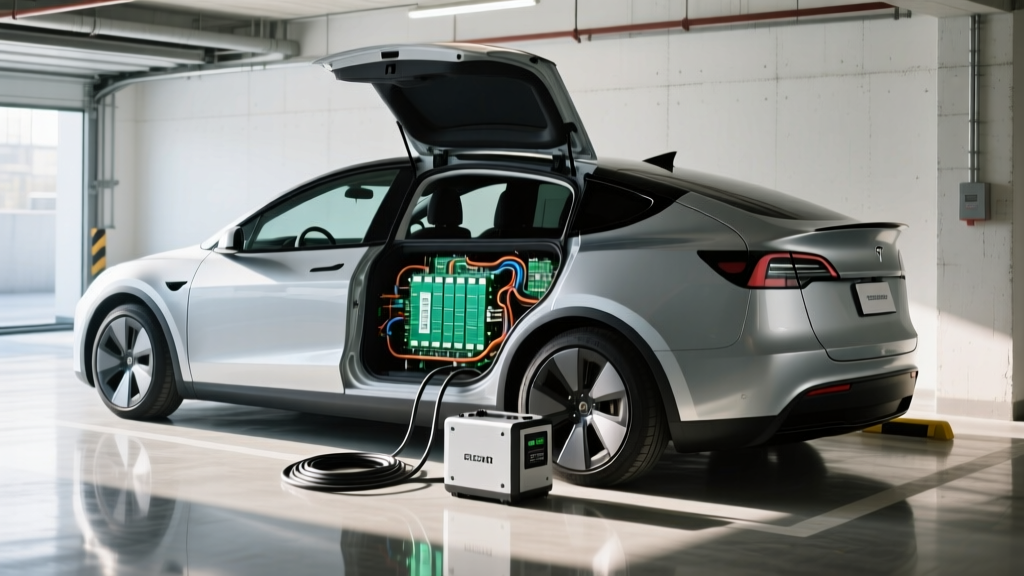
- 12V auxiliary battery — powers lights, infotainment, ECU, and door locks. Typically a lead-acient or lithium-iron-phosphate unit under 1 kWh. A battery tender (smart trickle charger) maintains this battery during long-term storage, preventing sulfation and voltage drop.
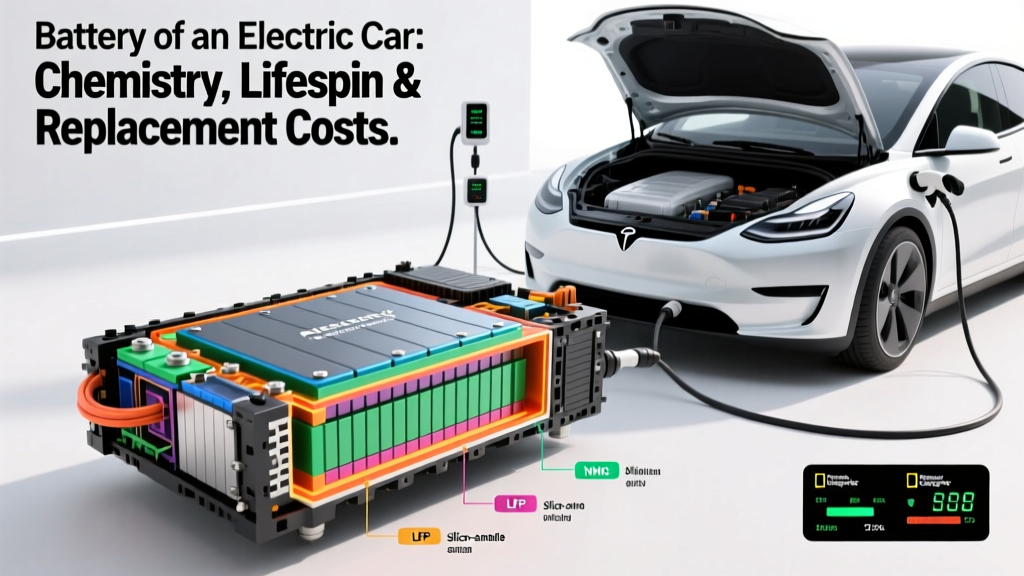
- High-voltage traction battery — the main energy store that drives the electric motor(s). Ranges from ~1 kWh (mild hybrids) to ~18 kWh (PHEVs like the RAV4 Prime) to 75-100+ kWh (full BEVs). This battery has its own Battery Management System (BMS) that handles cell balancing, thermal regulation, and state-of-charge limits. You cannot connect a consumer battery tender to it, and doing so would be dangerous.
If your goal is to protect the traction battery, the tools and habits are entirely different from plugging in a Battery Tender Plus. Let's look at what actually matters.
Battery Chemistry: LFP vs NMC Trade-Offs
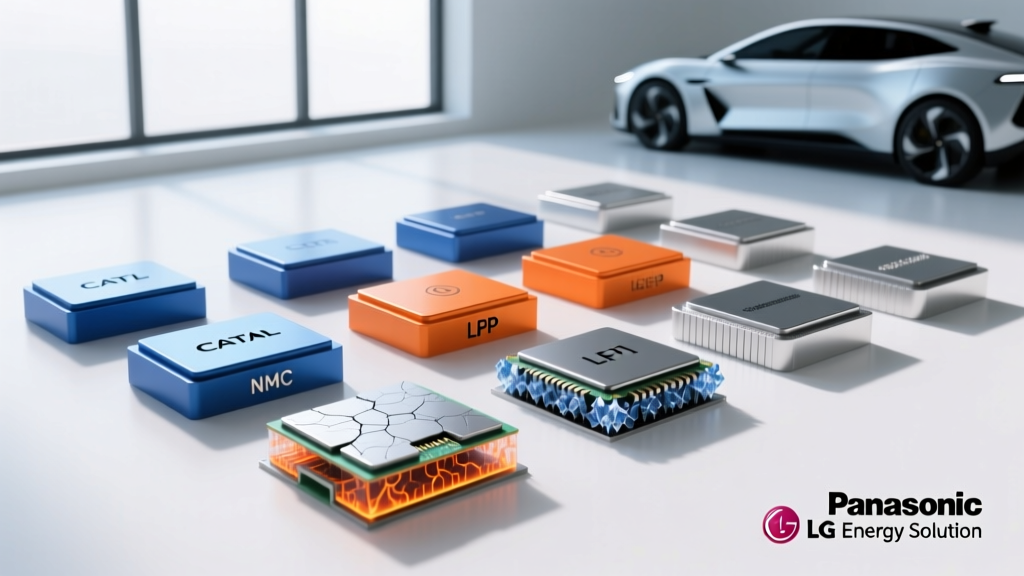
The two dominant lithium-ion chemistries in 2026-model-year electrified vehicles are NMC/NCA (nickel-manganese-cobalt / nickel-cobalt-aluminum) and LFP (lithium iron phosphate). The chemistry inside your pack determines its energy density, cycle life, cold-weather behavior, and cost profile.
| Attribute | LFP (LiFePO4) | NMC / NCA |
|---|---|---|
| Energy density (Wh/kg, cell-level) | 160–200 Wh/kg | 250–300 Wh/kg |
| Typical cycle life (to 80% SoH) | 3,000–6,000+ cycles | 1,000–2,500 cycles |
| Cold-weather performance (-10°C) | Reduced — slower charge acceptance, ~15-25% range loss | Better low-temp discharge; ~10-20% range loss with heat pump |
| Cost (per kWh, pack-level 2026) | ~$80–$100/kWh | ~$110–$140/kWh |
| Recommended daily SoC limit | 100% OK (periodic full charge helps BMS calibration) | 80% preferred for daily use |
| Thermal runaway risk | Very low | Low but higher than LFP |
| Common in (2026 US models) | Tesla Model 3/Y RWD, Ford Mustang Mach-E Select (LFP option), Rivian Standard | Most PHEVs, Hyundai Ioniq 5/6, Kia EV6, Chevy Equinox EV, BMW iX |
Which is better? It depends on your use case. NMC/NCA wins on range-per-pound — critical for long-range BEVs and space-constrained PHEVs where the pack must fit under a rear seat. LFP wins on longevity and cost, making it ideal for standard-range vehicles, frequent daily charging, and fleet/robotaxi applications. Tesla's shift to LFP in standard-range Model 3 and Model Y vehicles since 2021 has been validated by fleet data showing minimal degradation even after 100,000+ miles.
Most PHEVs (Toyota RAV4 Prime, Jeep Wrangler 4xe, Chrysler Pacifica Hybrid) use NMC chemistry because the pack is small (13-18 kWh) and must deliver high power density in a compact package. The smaller pack also means deeper daily cycles, which makes the warranty terms especially important.
How Long Do EV and Hybrid Batteries Actually Last?
The short answer: most traction batteries outlast the vehicles they power. Data from Recurrent Auto, Geotab fleet studies, and manufacturer warranty claims consistently show that modern lithium-ion packs lose capacity slowly, not suddenly.
Typical Degradation Curve — Real-World Data Points
| Time / Mileage | Average Capacity Retained | Source / Context |
|---|---|---|
| Year 1 / ~12,000 mi | 96–98% | Initial calibration settle; Geotab 2024 fleet study |
| Year 3 / ~36,000 mi | 92–95% | Recurrent Auto aggregated data across 15+ models |
| Year 5 / ~60,000 mi | 88–93% | Typical mid-life; most owners notice minimal range change |
| Year 8 / ~100,000 mi | 82–90% | Warranty threshold period; most packs still above 70% |
| Year 10+ / 150,000+ mi | 75–85% | Long-term data from Tesla Model S/X, early Leaf (air-cooled, faster degradation) |
Sources: Geotab EV Battery Degradation Study, Recurrent Auto public reports. Individual results vary by chemistry, climate, and charging habits.
A critical nuance: degradation is non-linear. Most packs lose 2-5% in the first year (calendar aging and initial SEI layer formation), then settle into a slower ~1-2% annual loss. The feared "cliff" where a battery suddenly becomes unusable is extremely rare in liquid-cooled packs with modern BMS designs. The Nissan Leaf's early air-cooled packs were a notable exception, degrading faster in hot climates — a problem largely solved industry-wide by active thermal management.
For PHEVs specifically, the smaller battery undergoes more frequent deep cycles (often draining from 100% to near 0% daily in EV mode). Toyota addresses this by over-buffering the RAV4 Prime's 18.1 kWh pack — only about 14.5 kWh is usable — to reduce stress on individual cells. Even so, PHEV owners should pay close attention to warranty terms.
What Does the Battery Warranty Actually Cover?
Federal law mandates a minimum 8-year / 100,000-mile warranty on hybrid and EV traction batteries (10 years / 150,000 miles in CARB states including California, New York, Massachusetts, and others). But the capacity retention threshold — the point at which the manufacturer must replace or repair the pack — varies significantly.
| Manufacturer / Model | Warranty Term | Capacity Threshold | Notes |
|---|---|---|---|
| Tesla Model 3/Y (LFP) | 8 yr / 120,000 mi | 70% | LFP packs generally exceed threshold by wide margin |
| Tesla Model S/X (NMC) | 8 yr / 150,000 mi | 70% | Longer mileage term for premium models |
| Toyota RAV4 Prime (PHEV) | 8 yr / 100,000 mi (10/150k CARB) | 70% (hybrid battery warranty) | Separate hybrid system warranty covers inverter, transaxle |
| Hyundai Ioniq 5 / Kia EV6 | 10 yr / 100,000 mi | 70% | Among the longest time-based coverage |
| Ford Mustang Mach-E | 8 yr / 100,000 mi | 70% | Battery Management System covered separately |
| BMW i4 / iX | 8 yr / 100,000 mi | 70% | Module-level replacement available (not full pack) |
| Chevy Equinox EV / Blazer EV | 8 yr / 100,000 mi | 60% (some trims) | Verify threshold — GM has used 60% on some Ultium packs |
Always verify current terms on the manufacturer's official warranty guide. Thresholds and terms can change by model year. Source: Manufacturer warranty booklets, fueleconomy.gov.
The 70% threshold is the industry norm, meaning your pack could lose 30% of its original capacity before the manufacturer is obligated to act. In practice, very few liquid-cooled packs hit that mark within the warranty period. The warranty covers defects and abnormal degradation — not damage from accidents, flooding, or improper modifications.
EV Battery Replacement Cost: What to Expect
This is the number that generates the most anxiety, and the most misinformation. Let's ground it in actual figures.
| Vehicle Type | Example Model | Battery Size (kWh) | Estimated Cost Range |
|---|---|---|---|
| Mild Hybrid (MHEV) | RAM 1500 eTorque | 0.5–1 kWh | $1,500 – $3,000 |
| Traditional Hybrid (HEV) | Toyota Prius / Camry Hybrid | 1.0–1.6 kWh | $2,000 – $4,500 |
| Plug-in Hybrid (PHEV) | RAV4 Prime / Wrangler 4xe | 13–18 kWh | $6,000 – $12,000 |
| BEV (Standard Range) | Tesla Model 3 RWD | 57–60 kWh | $8,000 – $14,000 |
| BEV (Long Range) | Hyundai Ioniq 5 / Tesla Model Y LR | 75–82 kWh | $12,000 – $20,000 |
| BEV (Large Pack) | GMC Hummer EV / Ford F-150 Lightning ER | 120–200+ kWh | $20,000 – $35,000+ |
Costs based on 2025–2026 dealer and third-party replacement quotes. Module-level repairs (replacing individual cell groups rather than the full pack) can reduce BEV costs by 40-60%. Pack-level prices have declined ~8-12% annually since 2022 as cell costs fall.
When is replacement typically needed? For most liquid-cooled BEV and PHEV packs, the answer is: rarely within the vehicle's normal service life. A 2023 study by Recurrent Auto found that fewer than 1.5% of EV batteries have been replaced under warranty. The vehicles most likely to need a pack swap are early-generation models with passive (air) cooling — think 2011-2017 Nissan Leaf or early Fiat 500e — and even those are increasingly serviced via module replacement rather than full pack swaps.
The realistic scenario for most 2026 buyers: your battery will still have 80-90% capacity when you sell or trade the vehicle. Replacement cost matters primarily as a tail-risk consideration for second or third owners of high-mileage vehicles.
Factors That Actually Affect Battery Life
Not all miles and charges are created equal. Here are the factors with the greatest measurable impact on traction battery longevity, ranked by significance:
Battery Care Checklist: What Helps and What Hurts
🔴 High-Impact Factors (Most Degradation)
- Sustained high State of Charge (100%) in NMC packs: Storing an NMC battery at 100% for days or weeks accelerates electrolyte oxidation. Charge to 80% for daily use; reserve 100% for road trips. (LFP packs tolerate 100% storage better — follow your manufacturer's guidance.)
- Extreme heat exposure: Battery temperatures above 40°C (104°F) sustained for hours accelerate calendar aging. Park in shade or garages in hot climates. Active thermal management mitigates this significantly in modern vehicles.
- Frequent DC fast charging to high SoC: Repeated 350 kW sessions to 90-100% generate heat and lithium plating risk. Data from Geotab's fleet study showed vehicles that DC fast-charged more than 3x/month showed slightly faster degradation — but the difference was ~2-3% over 4 years, not catastrophic.
🟡 Moderate-Impact Factors
- Deep discharges (below 10% SoC): Running the pack to near-zero regularly stresses cells. The BMS reserves a buffer (typically 3-5% at the bottom), but habitually arriving at 0% is unnecessary wear.
- Cold-weather fast charging without preconditioning: Charging a cold NMC pack at high power can cause lithium plating on the anode. Most 2026 models automatically precondition the battery when you navigate to a charger — use this feature.
- Calendar aging: Even a parked EV battery degrades slowly. A pack stored at 50% SoC in moderate temperatures ages far less than one stored at 100% in heat.
🟢 Best Practices for Maximum Longevity
- Daily SoC target: 80% (NMC) or 100% (LFP) — set your charge limit in the vehicle app
- Level 2 home charging is ideal — slower charging (7-11 kW) generates less heat than DCFC
- Use preconditioning — enable battery prep when navigating to a fast charger
- Park in moderate temperatures when possible — garaged vehicles show measurably slower degradation
- Drive it normally — aggressive acceleration draws high current but has minimal impact compared to SoC and temperature habits
How to Check and Monitor Battery Health (State of Health)
State of Health (SoH) is the percentage of your battery's current maximum capacity relative to its original capacity when new. A pack with 90% SoH that originally held 75 kWh can now store ~67.5 kWh. Here's how to check it:
Manufacturer Apps and In-Vehicle Displays
Most 2026 EVs and PHEVs provide battery health data through the infotainment system or companion app. Tesla's app shows estimated range at 100% (which you can compare to the original EPA figure). Hyundai/Kia's Bluelink and Toyota's app provide battery health reports on some models. The Nissan Leaf's "battery health bars" on the dash (12 bars when new) are one of the most visible — though imprecise — SoH indicators.
OBD-II Diagnostic Tools
For more precise readings, an OBD-II dongle paired with apps like Leaf Spy (Nissan), TeslaFi, or ABRP (A Better Routeplanner) OBD integration can read the BMS-reported SoH directly. This is the gold standard for used-EV buyers: plug in, read the actual SoH percentage, and compare it to the seller's claims.
Third-Party Battery Health Reports
Services like Recurrent and some dealer-certified pre-owned programs now include battery health certificates. If you're buying a used EV or PHEV, requesting a BMS readout is as important as a compression test was for gas cars.
What SoH Number Should Concern You?
For a 3-5 year-old EV, expect 88-95% SoH. Below 85% at this age warrants investigation — it may indicate frequent high-SoC storage, extreme-climate use, or a defective module. Below the warranty threshold (usually 70%), the manufacturer is responsible for remediation.
Emerging Battery Technology: What's Next (and When)
Several next-generation battery technologies are in development, but realistic timelines matter. None of these are available in 2026 production vehicles sold in the US:
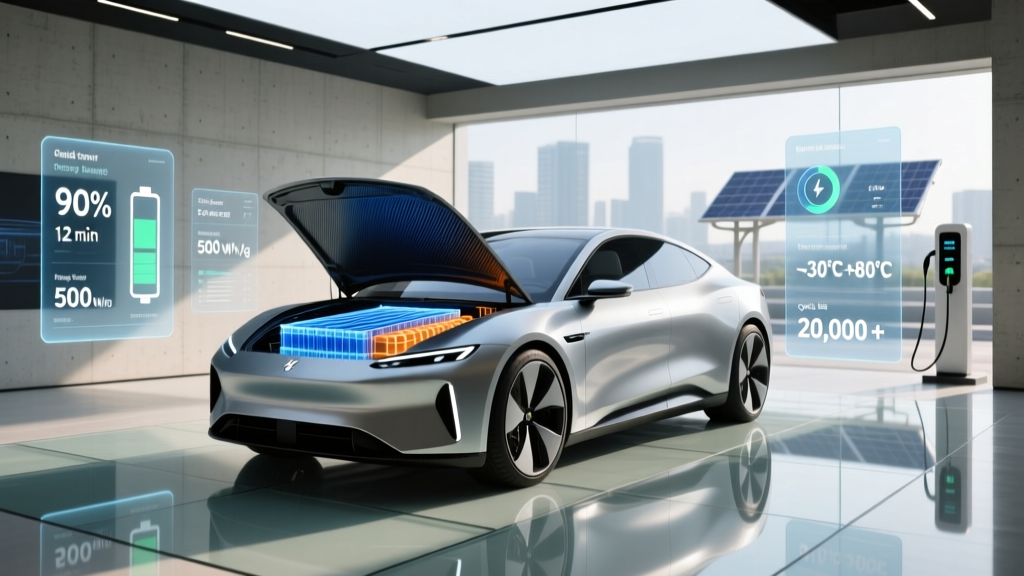
- Solid-state batteries: Promise 2x energy density, faster charging, and improved safety by replacing liquid electrolyte with a solid conductor. Toyota has announced pilot production for 2027-2028, initially in limited-run vehicles in Japan. Samsung SDI and QuantumScape are targeting 2028-2030 for broader production. Realistic US availability: 2029-2032 for mainstream models.
- Silicon-dominant anodes: Replacing graphite anodes with silicon can boost energy density 20-40%. Sila Nanotechnologies and Group14 are supplying early production cells for 2026-2027 model-year vehicles (Mercedes G-Class EV uses Sila silicon anode cells). Currently available in limited applications; broader adoption expected 2027-2029.
- Sodium-ion batteries: Lower cost and no lithium or cobalt required, but ~30% lower energy density than LFP. CATL and BYD are producing sodium-ion cells for Chinese-market vehicles. US availability uncertain; likely 2028+ and initially in stationary storage or low-range fleet vehicles.
- LMFP (lithium manganese iron phosphate): An evolution of LFP with ~15-20% higher energy density while retaining LFP's safety and cycle-life advantages. Tesla and Ford are evaluating LMFP for upcoming models. Expected in US production vehicles 2027-2028.
For buyers today, these timelines mean: current LFP and NMC chemistries are mature, well-understood, and backed by over a decade of real-world data. Waiting for solid-state is not a practical purchase strategy.
So, Do You Need a Battery Tender for Your Hybrid?
If your goal is to maintain the 12V auxiliary battery during extended storage (30+ days without driving), then yes — a smart battery tender (like a Battery Tender Plus or NOCO Genius) is a $30-$50 investment that prevents the frustrating "dead 12V" scenario that disables the vehicle even though the traction pack is full.
If your goal is to protect the high-voltage traction battery, a battery tender is irrelevant. Instead:
- Set your daily charge limit appropriately (80% for NMC, 100% for LFP)
- Store the vehicle at ~50% SoC if it will sit unused for weeks
- Park in temperature-moderate environments when possible
- Use preconditioning before DC fast charging
- Monitor SoH via your vehicle app or OBD-II tool annually
The traction battery in a 2026 hybrid or EV is engineered to outlast the rest of the vehicle. Your job is simply to avoid the handful of habits that accelerate wear — and to understand that the $40 trickle charger on Amazon is doing important but very specific work on a very different battery.
Frequently Asked Questions
Can a battery tender damage my hybrid's traction battery?
No. A consumer battery tender connects only to the 12V auxiliary battery terminals and has no electrical connection to the high-voltage traction pack. The two systems are isolated by design. You cannot accidentally charge the traction battery with a 12V tender.
How long do hybrid batteries last in miles?
Modern hybrid and PHEV traction batteries (2020 and newer) typically retain 85-93% capacity at 100,000 miles based on fleet data. Toyota's hybrid synergy drive batteries in the Prius have demonstrated 200,000+ mile lifespans in taxi and fleet use. Full EV batteries in liquid-cooled packs commonly exceed 150,000 miles before approaching the 70% warranty threshold.
Is it worth replacing a hybrid battery out of warranty?
It depends on the vehicle's value and condition. A $3,000-$4,500 Prius battery replacement on a vehicle otherwise in good shape with 180,000 miles can extend its life by 5+ years — often a sound economic decision. For a PHEV with a $10,000+ pack replacement, compare the cost to the vehicle's market value and consider whether trading in makes more financial sense.
Does fast charging really hurt my battery?
The impact is real but modest. Geotab's fleet data showed vehicles using DC fast charging 3+ times per month degraded approximately 2-3% more over 4 years compared to vehicles that primarily used Level 2 charging. For most owners, the convenience of occasional DCFC far outweighs this small capacity trade-off. The bigger degradation factors are sustained 100% SoC storage and extreme heat.
Should I charge my PHEV to 100% every night?
Check your owner's manual for the chemistry-specific recommendation. Most PHEVs use NMC cells, and manufacturers like Toyota and Ford recommend charging to 100% only when you plan to use the full electric range the next day. If your daily commute uses only 50% of the EV range, setting an 80% charge limit reduces cell stress. Some PHEVs don't offer adjustable charge limits — in that case, the BMS buffer (typically 10-15% top and bottom) provides built-in protection.
What's the difference between kW and kWh for battery care?
kW (kilowatts) is the rate of power flow — how fast energy goes in or out. A 150 kW DC fast charger delivers energy rapidly. kWh (kilowatt-hours) is the total energy stored — your battery's capacity. A 75 kWh battery holds 75 kilowatt-hours of energy. Battery care is primarily about managing kWh (how full the pack is, i.e., SoC) and controlling kW (avoiding excessive charge/discharge rates when the pack is cold or near full).
Where can I find official battery warranty information?
Check your vehicle's warranty booklet (included with purchase or available on the manufacturer's website). For federal warranty requirements, the EPA's electric vehicle basics page provides an overview. For tax credit eligibility related to battery sourcing, see IRS §30D guidance.