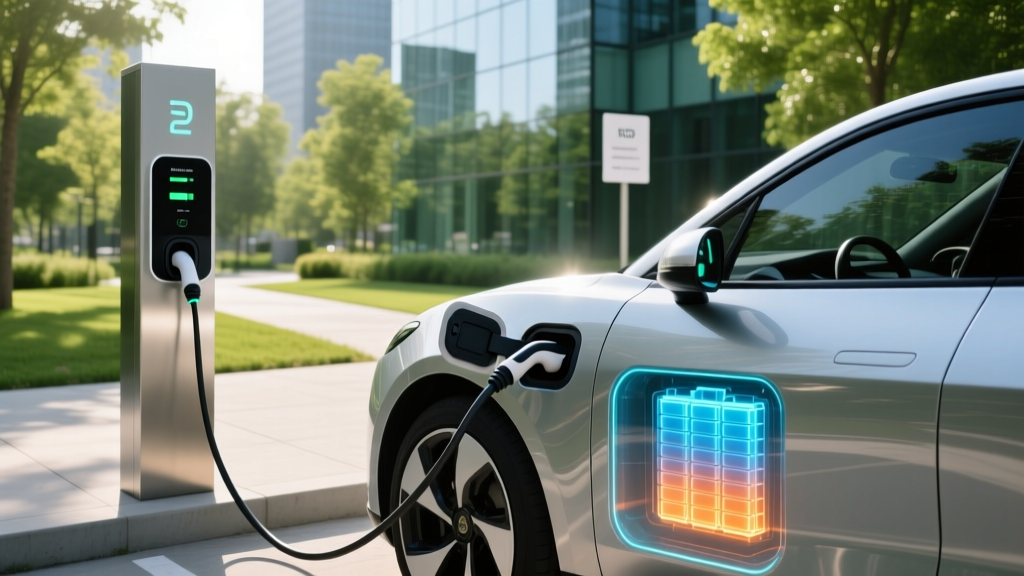
Electric pickup trucks like the Ford F-150 Lightning, Rivian R1T, and Chevrolet Silverado EV carry some of the largest battery packs on the road — ranging from 98 kWh to over 200 kWh. With packs this large, owners naturally wonder about long-term health, maintenance, and whether devices like a battery tender for truck EVs make sense. The short answer: a battery tender is relevant to your 12V auxiliary battery, not the high-voltage traction pack that actually propels the vehicle. But understanding how to care for that massive traction battery is critical to protecting a $20,000+ component.
This guide breaks down everything EV truck owners need to know about battery chemistry, real-world degradation data, warranty coverage, replacement costs, and the habits that maximize pack life — all from a 2026 ownership perspective.
First: The 12V Battery vs. the High-Voltage Traction Battery
Before we get into chemistry and degradation, let's clear up a common source of confusion. Every EV has two batteries:
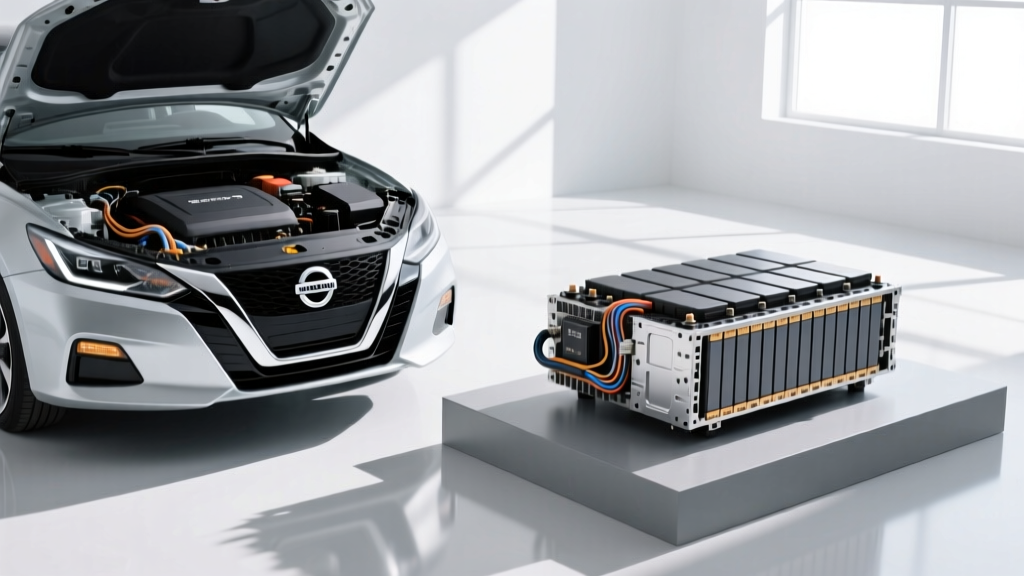
- 12V auxiliary battery: Powers lights, infotainment, door locks, and onboard computers. This is the battery a traditional "battery tender" or trickle charger maintains when the vehicle sits unused for weeks.
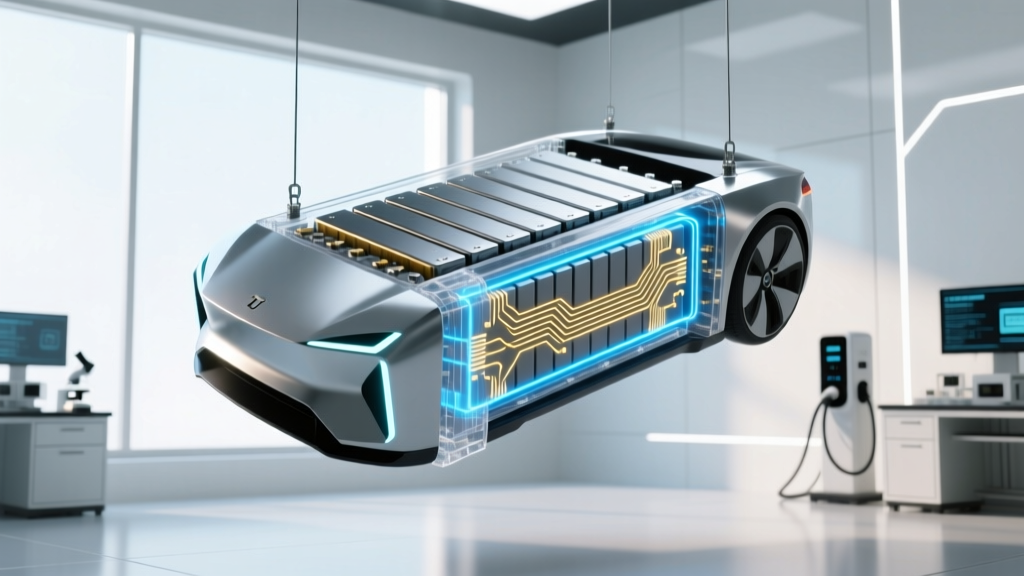
- High-voltage traction battery: The large lithium-ion pack (typically 400V or 800V architecture) that stores energy for the electric motors. This is the pack measured in kWh, covered by the federal battery warranty, and the subject of this guide.
A battery tender for truck applications — such as a Battery Tender Junior or NOCO Genius — is designed for the 12V system. If your EV truck sits in a garage for a month or more, a tender on the 12V battery is a smart move. Some EVs (including Teslas and Rivians) will gradually drain the 12V battery through always-on telemetry, and a dead 12V battery can prevent you from even turning the vehicle on, regardless of traction pack charge.
However, the high-voltage traction battery requires entirely different care strategies — and that's what the rest of this guide covers.
LFP vs. NMC/NCA: Which Chemistry Is in Your Electric Truck?
Not all EV batteries are built the same. The two dominant chemistries in 2026 electric trucks are LFP (lithium iron phosphate) and NMC (nickel manganese cobalt) or NCA (nickel cobalt aluminum). Each has distinct trade-offs.
| Attribute | LFP (LiFePO4) | NMC / NCA |
|---|---|---|
| Energy Density | Lower (~160-180 Wh/kg cell-level) | Higher (~220-260 Wh/kg cell-level) |
| Cycle Life | 3,000-5,000+ cycles to 80% SoH | 1,500-2,500 cycles to 80% SoH |
| Cold-Weather Performance | Weaker — slower charging below 32°F, ~15-20% range loss in deep cold | Better low-temp conductivity, ~10-15% range loss |
| Cost per kWh | Lower ($90-$110/kWh at pack level in 2026) | Higher ($120-$150/kWh at pack level) |
| Recommended Charge Habit | Can charge to 100% daily without accelerated degradation | Best kept between 20-80% for daily use; 100% only for trips |
| Thermal Stability | Excellent — highly resistant to thermal runaway | Good but requires more active thermal management |
| Current EV Truck Examples | Ford F-150 Lightning Standard Range (98 kWh), Tesla Cybertruck RWD (announced) | F-150 Lightning Extended Range (131 kWh), Rivian R1T (Large/Max packs), Silverado EV (200+ kWh) |
Which is better? It depends on your use case. If you drive daily and want maximum cycle life with the simplicity of charging to 100% every night, LFP is the pragmatic choice — and it's cheaper. If you need maximum range per charge for towing or long highway runs and don't mind managing state of charge, NMC/NCA delivers higher energy density in a lighter package.
Ford's decision to use LFP in the F-150 Lightning Standard Range was significant: it signaled that LFP is viable for heavy-duty applications where longevity and cost matter more than squeezing out every last mile of range.
How Long Do EV Truck Batteries Actually Last?
The fear that EV batteries need replacing every few years is not supported by data. Here's what real-world evidence shows:
Typical Degradation Curve for Liquid-Cooled EV Batteries:
- Year 1 / 15,000 miles: ~2-4% capacity loss (initial formation loss)
- Year 3 / 45,000 miles: ~5-8% total loss
- Year 5 / 75,000 miles: ~8-12% total loss
- Year 8 / 120,000 miles: ~10-15% total loss
- Year 10 / 150,000 miles: ~12-18% total loss (varies heavily by chemistry and use)
LFP packs tend to degrade more slowly than NMC, particularly when frequently charged to 100%. Data from fleet operators and sources like Recurrent Auto consistently show that most modern liquid-cooled packs retain 85-90% capacity at 100,000 miles.
For context, a 2026 F-150 Lightning Extended Range with its 131 kWh NMC pack and EPA-estimated 320 miles of range would still deliver roughly 272-288 miles at 100,000 miles — more than adequate for most drivers. The pack is designed to outlast the useful life of the truck itself in the majority of cases.
Geotab's long-term study of over 10,000 EVs found an average annual degradation rate of approximately 2.3% per year across all chemistries, with LFP vehicles showing slower rates. At that pace, a battery would retain roughly 77% capacity after 10 years — still above most warranty thresholds.
What Does the EV Battery Warranty Actually Cover?
Federal law mandates that EV battery warranties cover a minimum of 8 years or 100,000 miles (whichever comes first). In California and states adopting CARB standards, that extends to 10 years / 150,000 miles. Here's how major EV truck warranties compare for 2026:
| Vehicle | Warranty Period | Mileage Cap | Capacity Retention Threshold |
|---|---|---|---|
| Ford F-150 Lightning | 8 years | 100,000 miles | 70% of original capacity |
| Rivian R1T | 8 years | 175,000 miles | 70% of original capacity |
| Chevrolet Silverado EV | 8 years | 100,000 miles | 70% of original capacity (estimated) |
| Tesla Cybertruck (AWD) | 8 years | 120,000 miles | 70% of original capacity |
Key details to understand:
- The warranty covers capacity degradation below the threshold, not just total failure. If your 131 kWh pack drops to 89 kWh (below 70%), Ford is obligated to repair or replace it.
- Warranties typically exclude damage from accidents, flooding, improper modifications, or using the battery as a stationary power source beyond manufacturer-approved V2H/V2L features.
- Some manufacturers will replace only failed modules rather than the entire pack, which is less disruptive and less costly for them.
- Always check your specific owner's manual — terms can change between model years.
EV Truck Battery Replacement: Cost and When It's Needed
Let's address the elephant in the room: if your battery degrades beyond the warranty threshold or fails outright, what does replacement cost?
| Vehicle / Pack Size | Battery Chemistry | Estimated Replacement Cost (2026) | Typical Replacement Timeline |
|---|---|---|---|
| F-150 Lightning Std Range (98 kWh) | LFP | $12,000 - $16,000 | Rarely needed within 15 years |
| F-150 Lightning Ext Range (131 kWh) | NMC | $18,000 - $25,000 | Rarely needed within 12-15 years |
| Rivian R1T Large Pack (135 kWh) | NMC | $20,000 - $28,000 | Rarely needed within 12-15 years |
| Rivian R1T Max Pack (180 kWh) | NMC | $26,000 - $35,000 | Rarely needed within 12-15 years |
| Silverado EV (200+ kWh) | NMC | $28,000 - $40,000 | Rarely needed within 12-15 years |
| Tesla Cybertruck (123 kWh est.) | NMC/NCA | $16,000 - $22,000 | Rarely needed within 12-15 years |
Important context: These are out-of-warranty costs. The vast majority of EV batteries will never need replacement during the warranty period. According to data from Consumer Reports and Recurrent, fewer than 5% of EVs have required battery replacement within the first 10 years, and most of those were due to manufacturing defects covered under warranty, not normal degradation.
Battery pack prices have fallen roughly 90% since 2010 (per BloombergNEF), dropping from over $1,200/kWh to approximately $110-$140/kWh at the pack level in 2026. This trend means replacement costs will continue declining, and by the time most 2026 EV trucks actually need a new pack in the late 2030s, prices could be 30-50% lower than today's estimates.
Factors That Accelerate (or Slow) Battery Degradation
Not all miles are equal when it comes to battery wear. Here's what the data shows about the biggest factors:
Habits That Accelerate Degradation
- Frequent DC fast charging above 150 kW: High-current charging generates heat, which is the primary enemy of lithium-ion cells. Occasional fast charging is fine; daily DCFC sessions will measurably increase degradation. Tesla's own data showed vehicles that fast-charged frequently had ~2-3% more degradation at 100,000 miles versus those that primarily used Level 2.
- Regularly sitting at 100% SoC (NMC/NCA only): High state of charge stresses NMC cathodes. If you don't need the full range, set your charge limit to 80% for daily driving.
- Deep discharges to 0%: Letting the pack sit at very low SoC causes copper dissolution in the anode. Try not to regularly drop below 10%.
- Extreme heat exposure: Parking in 110°F+ ambient temperatures without thermal management active accelerates calendar aging. Garage parking in hot climates helps.
- Towing at high speeds in hot weather: This is the worst-case scenario — high discharge rates plus heat. The F-150 Lightning's range drops by roughly 50% when towing a 7,000-lb trailer at 70 mph, and the sustained high C-rate stresses cells.
Habits That Maximize Battery Life
- Level 2 home charging as your primary method: Slower charging at 7-19 kW generates minimal heat and is ideal for daily use.
- Keep NMC between 20-80% for daily use: Charge to 100% only when you need the full range for a trip.
- LFP owners: charge to 100% at least weekly: LFP cells need periodic full charges for the BMS to accurately calibrate SoC estimation. Ford and Tesla both recommend this.
- Use preconditioning before fast charging: Most EV trucks will warm or cool the battery to optimal temperature when you navigate to a DC fast charger. This protects cells and improves charge speed.
- Store at 50-60% SoC for long periods: If the truck will sit for weeks, aim for roughly half charge.
How to Check Your EV Truck's Battery Health (SoH)
State of Health (SoH) is a percentage representing your battery's current maximum capacity relative to its original capacity. Here's how to monitor it:
- In-vehicle displays: Tesla provides a battery health estimate in the service menu. Ford's SYNC system on the Lightning shows estimated range based on recent driving, which indirectly reflects degradation, but does not display a raw SoH percentage. Rivian's 2026 software update added a battery health indicator in the vehicle settings.
- OBD-II diagnostic tools: Devices like the OBDLink MX+ paired with apps such as EV Health or Car Scanner can read the BMS-reported SoH directly from the vehicle's CAN bus. This is the most accurate method available to consumers.
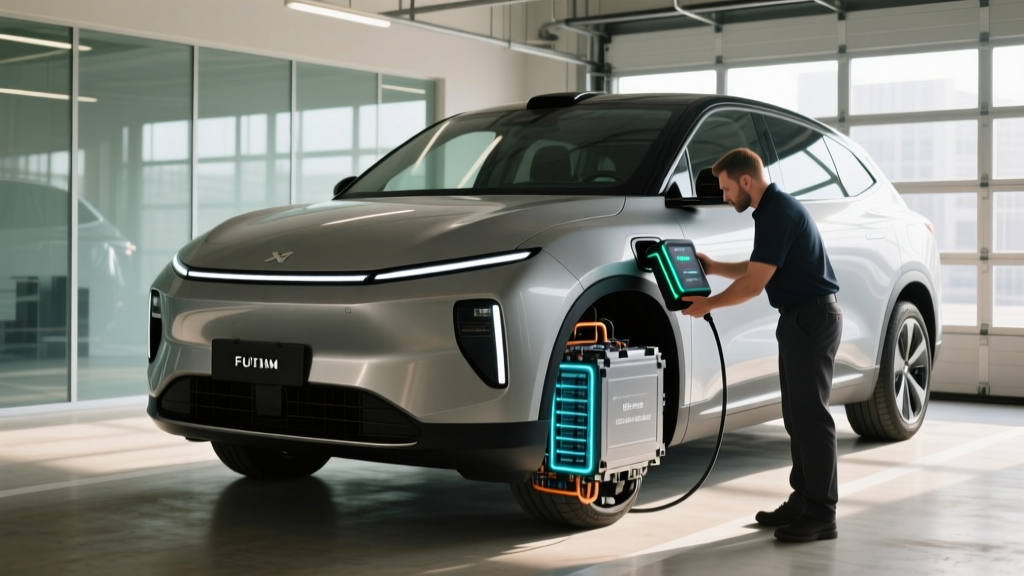
- Dealer diagnostics: Any authorized service center can pull a full battery health report. Request this during routine service visits, especially as you approach warranty mileage thresholds.
- Third-party services: Companies like Recurrent Auto offer free battery health reports by connecting to your vehicle's telematics data (with permission). They compare your pack's degradation to a fleet of identical vehicles.
If your SoH drops below 70% within the warranty period, contact your dealer immediately to initiate a warranty claim. Document your charging habits and mileage to support the claim.
Looking Ahead: Solid-State and Silicon Anode Batteries
Emerging battery technologies promise step-change improvements, but realistic timelines matter:
- Silicon anode batteries: Companies like Sila Nanotechnologies and Group14 are already shipping silicon-dominant anode materials that boost energy density by 20-40%. These are entering production vehicles in limited applications in 2026-2027, with broader EV truck adoption expected by 2028-2029. The Mercedes-Benz G-Class electric is among the first to feature silicon anode cells from Sila.
- Solid-state batteries: Toyota, Samsung SDI, and QuantumScape continue to develop solid-state cells that promise 500+ mile ranges and 10-minute charging. However, as of 2026, no solid-state EV is commercially available at scale. Toyota has announced limited production for 2027-2028, but these will debut in passenger cars, not trucks. Realistic mass-market solid-state EV truck availability is 2030 or later.
- Sodium-ion batteries: CATL and other Chinese manufacturers are producing sodium-ion cells for lower-cost, lower-range applications. These could appear in entry-level EV trucks by 2028, offering lower cost but reduced energy density.
None of these technologies should delay a 2026 EV truck purchase. Current lithium-ion packs already offer 15+ year useful lives with proper care, and replacement costs continue declining.
Frequently Asked Questions
Do I need a battery tender for my electric truck?
For the 12V auxiliary battery, yes — if the truck sits unused for more than 2-3 weeks at a time. A quality smart charger like a Battery Tender Plus or NOCO Genius will keep the 12V system healthy. For the high-voltage traction battery, no tender is needed or compatible. Simply plug into your Level 2 home charger and set the appropriate charge limit (80% for NMC daily, 100% for LFP).
How long do EV truck batteries last in years and miles?
Based on current degradation data, most liquid-cooled EV truck batteries will retain 75-85% of original capacity at 150,000 miles and 10+ years. Many will outlast the truck's body and suspension components. LFP packs in particular have demonstrated 3,000+ charge cycles with minimal degradation, which translates to 300,000+ miles for a truck with 300 miles of range per cycle.
How much does it cost to replace an EV truck battery?
Out-of-warranty replacement costs range from approximately $12,000 for a 98 kWh LFP pack (F-150 Lightning Standard Range) to $35,000+ for a 180 kWh NMC pack (Rivian R1T Max). However, fewer than 5% of EVs have needed battery replacement within the first decade, and most failures are covered under the 8-year/100,000-mile federal warranty mandate.
What does the EV battery warranty cover?
The battery warranty covers capacity loss below a specified threshold (typically 70% of original capacity) within 8 years or 100,000 miles. In CARB states, this extends to 10 years / 150,000 miles. It covers defects and abnormal degradation but excludes physical damage, accidents, flooding, and unauthorized modifications.
Is LFP or NMC better for an electric truck?
For daily driving and maximum longevity, LFP is the better choice — it offers longer cycle life, lower cost, and you can charge to 100% without worry. For maximum range, towing capability, and cold-weather performance, NMC/NCA is superior due to higher energy density. Most EV truck buyers who charge at home and drive under 300 miles daily are better served by LFP.
Does fast charging damage my EV truck battery?
Occasional DC fast charging causes negligible extra wear. However, data shows that vehicles relying primarily on DC fast charging (above 150 kW) experience roughly 2-3% more degradation over 100,000 miles compared to those using Level 2 charging. For daily use, Level 2 at home (7-19 kW) is the best option. Use DC fast charging for road trips without concern.
Can I check my EV truck's battery health myself?
Yes. Use an OBD-II scanner with EV-compatible software (OBDLink MX+ with EV Health or Car Scanner) to read the BMS-reported State of Health percentage. You can also request a battery health report from your dealer during service visits, or use a free service like Recurrent Auto that connects to your vehicle's telematics.
Sources: EPA fuel economy data via fueleconomy.gov; battery degradation research via Recurrent Auto; federal battery warranty requirements per EPA emissions standards.