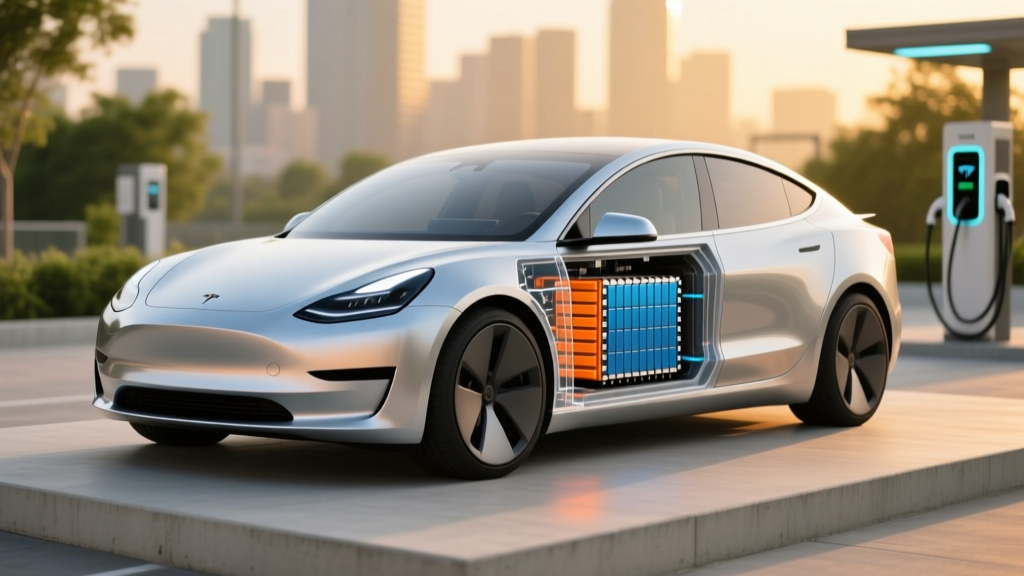
If you have shopped for a battery maintainer for a stored classic car or motorcycle, you have likely seen the term battery tender charger. These devices keep a 12V lead-acid battery topped off during long storage. But when you own an electric vehicle with a 60–100+ kWh high-voltage traction battery, the question changes entirely. Do you need a battery tender charger for an EV? The short answer is no — your EV manages its own traction battery internally. Understanding how that management works, however, is the key to maximizing battery life over 150,000+ miles.
This guide breaks down EV battery chemistry, real-world degradation data, warranty coverage, replacement costs, and the daily habits that preserve your pack's State of Health (SoH). Whether you drive an LFP-equipped Tesla Model 3 or an NMC-based Hyundai Ioniq 5, these principles apply.
LFP vs NMC/NCA: Which Battery Chemistry Is in Your EV?
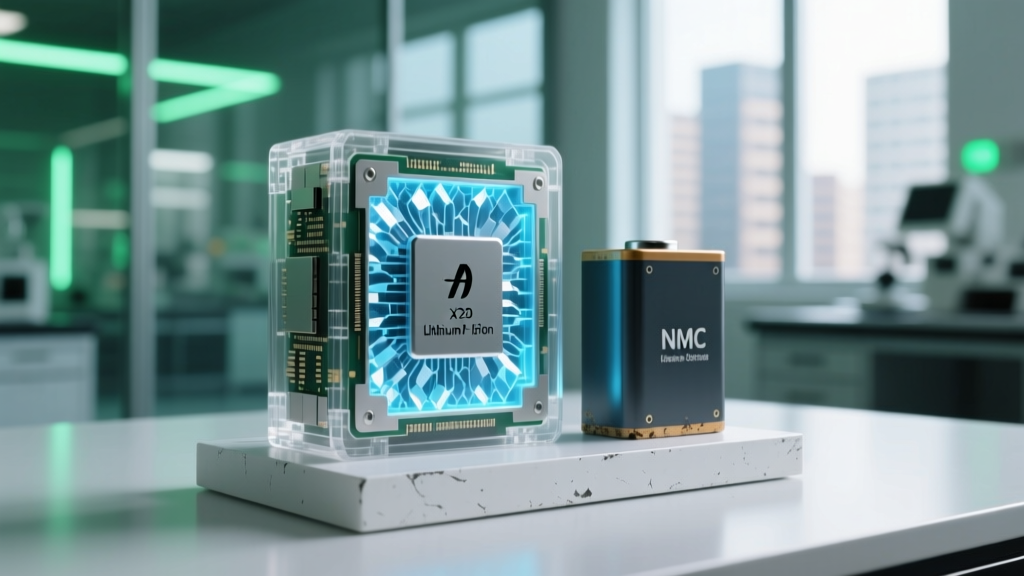
The two dominant lithium-ion chemistries in modern EVs are LFP (lithium iron phosphate) and NMC/NCA (nickel manganese cobalt / nickel cobalt aluminum). Your EV's chemistry dictates how you should charge it, how it handles cold weather, and how long it will last.
| Factor | LFP (LiFePO4) | NMC / NCA |
|---|---|---|
| Energy Density | Lower (~160 Wh/kg cell-level) | Higher (~250–300 Wh/kg cell-level) |
| Cycle Life | 3,000–5,000+ cycles to 80% SoH | 1,000–2,000 cycles to 80% SoH |
| Cold Performance | Weaker — more range loss below 32°F | Better low-temp discharge capability |
| Charging to 100% | Recommended regularly for BMS calibration | 80% daily recommended; 100% for trips only |
| Cost per kWh | Lower — no cobalt or nickel | Higher — commodity-linked metals |
| Thermal Stability | Excellent — lower runaway risk | Good — requires more active thermal mgmt |
| Common In (2026) | Tesla Model 3 RWD, Model Y RWD, Ford Mustang Mach-E Select (LFP option), BYD models | Hyundai Ioniq 5/6, Kia EV6/EV9, Chevy Equinox EV, BMW iX, most long-range AWD trims |
The takeaway: LFP wins on longevity and cost but sacrifices some range-per-kilogram and cold-weather efficiency. NMC/NCA delivers more range in a smaller, lighter pack but degrades faster if routinely charged to 100% or exposed to extreme heat. Neither chemistry requires an external battery tender charger — the vehicle's Battery Management System (BMS) handles cell balancing and protection.
How Long Do EV Batteries Actually Last?
Based on fleet data from sources like fueleconomy.gov and manufacturer-reported telemetry, most modern EV batteries retain between 85% and 93% of original capacity after 100,000 miles. Catastrophic failure before 150,000 miles is rare in liquid-cooled packs.
Typical Degradation Curve (NMC, liquid-cooled, moderate climate):
- Year 1 / 15,000 mi: ~3–5% loss (initial formation drop)
- Year 3 / 45,000 mi: ~7–9% total loss
- Year 5 / 75,000 mi: ~9–12% total loss
- Year 8 / 120,000 mi: ~12–16% total loss
- Year 10+ / 150,000+ mi: ~15–20% total loss (varies widely by use)
LFP packs typically show 2–4% less degradation at equivalent mileage, though cold-climate LFP owners may see slightly higher loss if the pack is frequently charged at low temperatures without preconditioning.
Real-world data from Recurrent Auto's fleet studies (covering over 15,000 EVs) confirms that degradation is non-linear: a sharper drop in the first year, then a long, slow plateau. Most EV batteries will outlast the vehicle's body, suspension, and interior before reaching end-of-life capacity.
What Does the EV Battery Warranty Actually Cover?
Federal law mandates a minimum 8-year / 100,000-mile battery warranty for EVs sold in the US (10 years / 150,000 miles in California Air Resources Board states). But what "coverage" means varies by automaker.
| Automaker | Warranty Term | Capacity Threshold | What Triggers a Claim |
|---|---|---|---|
| Tesla (Model 3/Y LFP) | 8 yr / 100,000 mi | Below 70% SoH | BMS-reported capacity under threshold |
| Tesla (Model 3/Y LR/Perf NMC) | 8 yr / 120,000 mi | Below 70% SoH | BMS-reported capacity under threshold |
| Hyundai / Kia | 10 yr / 100,000 mi | Below 70% SoH | Dealer diagnostic confirmation |
| GM (Chevy/Buick/Cadillac EVs) | 8 yr / 100,000 mi | Below 70% SoH (most trims); 60% on some Bolt-era packs | OnStar/diagnostic scan verification |
| Ford (Mach-E, F-150 Lightning) | 8 yr / 100,000 mi | Below 70% SoH | Dealer diagnostic scan |
| BMW | 8 yr / 100,000 mi | Below 70% SoH | BMW diagnostic system readout |
Critical detail: The warranty covers capacity degradation below the threshold and defects. It does not cover damage from accidents, flooding, improper modifications, or unauthorized charging equipment. If your 8-year-old EV shows 72% SoH, you are technically outside warranty coverage even though you have lost 28% of range.
EV Battery Replacement Cost: What to Expect in 2026
Battery replacement is the single biggest fear among prospective EV buyers. Here are real-world replacement cost ranges based on current service data and manufacturer parts pricing.
| Vehicle / Battery Size | Chemistry | Replacement Cost (Parts + Labor) | Typical Need Timeline |
|---|---|---|---|
| Tesla Model 3 RWD (~60 kWh) | LFP | $12,000–$16,000 | Rarely before 200,000+ mi |
| Tesla Model Y LR (~75 kWh) | NMC | $14,000–$20,000 | Rarely before 180,000+ mi |
| Hyundai Ioniq 5 (~77.4 kWh) | NMC | $14,000–$18,000 | Rarely before 170,000+ mi |
| Ford F-150 Lightning Ext. Range (~131 kWh) | NMC | $22,000–$30,000 | Rarely before 150,000+ mi |
| Chevy Equinox EV (~85 kWh) | NMC (Ultium) | $15,000–$20,000 | Rarely before 170,000+ mi |
Context matters: According to data from IRS §30D guidelines, the federal tax credit for new EVs is up to $7,500 (subject to MSRP caps, buyer income limits, and battery-sourcing requirements). That credit effectively offsets a significant portion of a future replacement cost. Additionally, refurbished and remanufactured packs are increasingly available at 30–50% below new-part pricing for out-of-warranty vehicles.
Most EV batteries will never need replacement during original ownership. The vehicles most likely to need one are high-mileage fleet vehicles, rideshare cars exceeding 40,000 miles/year, or those repeatedly exposed to extreme conditions without preconditioning.
What Factors Accelerate EV Battery Degradation?
Your battery's lifespan is not fixed — it responds directly to how you charge, drive, and store the vehicle. Here are the primary degradation accelerators:
- Frequent DC fast charging above 150 kW: Sustained high-C-rate charging generates heat. Occasional road-trip fast charging is fine; daily reliance on 350 kW chargers without preconditioning accelerates wear. Studies show vehicles that fast-charge more than 3x/week see 1–3% additional degradation over 100,000 miles vs. primarily Level 2 charging.
- Extreme heat exposure: Ambient temperatures above 95°F combined with high State of Charge (above 90%) stress NMC cells. Garage parking and preconditioning help significantly.
- Sustained 100% State of Charge: For NMC/NCA packs, sitting at 100% SoC for days (especially in heat) causes electrolyte oxidation. Charge to 80% daily, 100% only before trips. LFP packs are more tolerant and benefit from periodic 100% charges for BMS cell-balancing.
- Deep discharge (below 10%): Routinely driving below 10% SoC stresses the anode. Keep your daily floor around 15–20%.
- Cold charging without preconditioning: Charging a cold NMC pack (below 32°F) without thermal preconditioning can cause lithium plating on the anode — a permanent, irreversible form of degradation. Always use your EV's preconditioning feature before winter fast charging.
EV Battery Care Checklist:
- ☑ Set daily charge limit to 80% (NMC) or 100% (LFP)
- ☑ Use Level 2 home charging as your primary method
- ☑ Enable battery preconditioning before DC fast charging
- ☑ Avoid leaving the vehicle at 100% SoC for more than 24 hours
- ☑ Park in shade or a garage during summer months
- ☑ Plug in during extreme cold to allow thermal management
- ☑ Do not let SoC drop below 10% regularly
- ☑ Update vehicle firmware — OEMs refine BMS algorithms over time
How to Check Your EV's Battery Health (State of Health)
Unlike a 12V lead-acid battery where you might use a battery tender charger to maintain voltage during storage, an EV's high-voltage pack is monitored continuously by the BMS. Here is how owners can check SoH:
1. In-Vehicle Displays: Tesla provides a battery health estimate in the service menu (varies by software version). Some Hyundai/Kia models display SoH via the engineering diagnostic screen accessible through the infotainment system.
2. OBD-II Dongles and Apps: Tools like OBDLink SX paired with apps such as LeafSpy (Nissan Leaf), Scan My Tesla, or Car Scanner ELM OBD2 can read BMS-reported capacity figures. These pull the actual measured kWh vs. original nameplate capacity.
3. Dealer Diagnostics: Any authorized service center can run a full battery health report showing individual module voltage spread, internal resistance, and total capacity. Request this before purchasing a used EV.
4. Third-Party Reports: Services like Recurrent and NHTSA-adjacent battery health databases increasingly offer SoH estimates based on telematics data, particularly for popular models.
Why a Battery Tender Charger Doesn't Apply to Your EV Traction Battery
A traditional battery tender charger is designed to maintain a 12V lead-acid battery at a steady float voltage (around 13.2–13.8V) during storage. It delivers a small trickle current to counteract self-discharge.
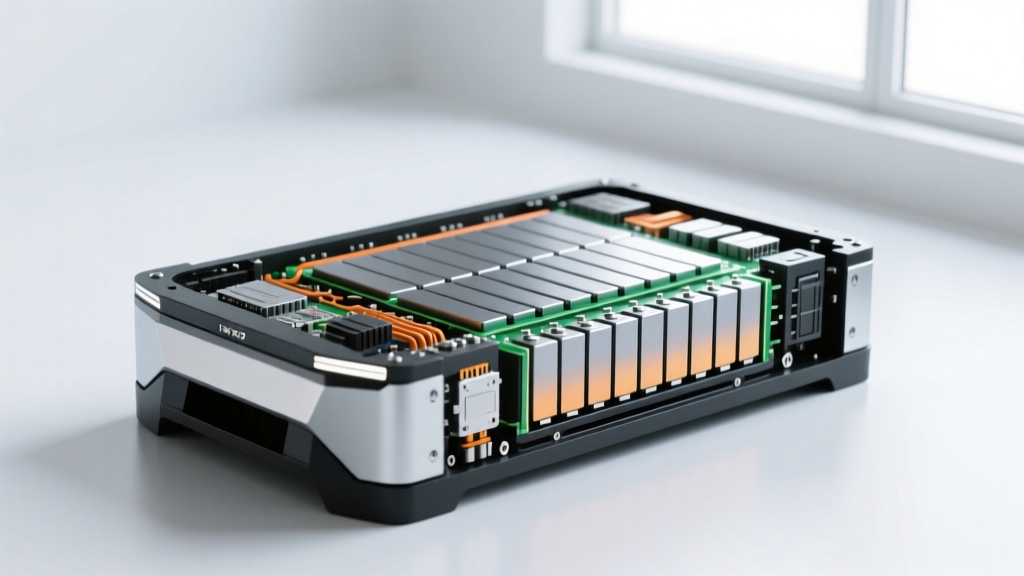
Your EV's high-voltage traction battery operates between roughly 300V and 800V and is managed by an onboard BMS that handles cell balancing, thermal regulation, and charge/discharge limits. The BMS draws a small amount of power from the pack to run monitoring circuits — this is called vampire drain and typically consumes 1–3 miles of range per day.
What you should do instead:
- Leave the EV plugged into a Level 2 charger during extended storage. The vehicle will maintain the target SoC automatically.
- Set the charge limit to 50% for storage longer than two weeks (NMC) or 60–70% (LFP).
- Disable Sentry Mode, cabin overheat protection, and third-party app polling to minimize vampire drain.
- If storing for 3+ months without power, aim for ~50% SoC and check monthly. Contact the dealer if SoC drops below 20% — deep discharge on an unplugged EV can trigger a locked-out state requiring a service visit.
Note: Your EV also has a 12V auxiliary battery (lead-acast in older models, lithium 12V in newer Teslas and some Hyundai/Kia models). This small battery powers lights, infotainment, and the contactor that connects the main pack. If your EV sits unplugged for weeks, the 12V battery can die — and yes, a battery tender charger can be used on the 12V auxiliary battery if it is lead-acid, following the vehicle owner's manual instructions. This is entirely separate from the traction battery.
What's Next: Solid-State and Silicon-Anode Batteries
Looking forward, two technologies promise meaningful improvements:
Solid-State Batteries: These replace the liquid electrolyte with a solid ceramic or polymer layer, offering potentially 2x energy density, faster charging, and improved safety. Toyota has announced solid-state production for select models by 2027–2028, though initial volumes will be limited and pricing premium. Samsung SDI and QuantumScape are targeting similar timelines. Realistically, broad market availability at competitive pricing is a 2029–2031 prospect.
Silicon-Anode Batteries: Companies like Sila Nanotechnologies and Group14 are replacing graphite anodes with silicon-dominant materials, boosting energy density by 20–40%. These are already appearing in limited production (Mercedes G-Class EV prototype, certain consumer electronics) and are expected in mainstream EVs by 2027–2028. They do not require entirely new manufacturing lines, making them likely to reach market faster than solid-state.
Neither technology is currently available in a production EV you can buy today. Any claims otherwise should be treated as preliminary or concept-stage.
Frequently Asked Questions
How long do EV batteries last in years and miles?
Most modern liquid-cooled EV batteries retain 85–93% capacity at 100,000 miles and are designed to provide usable service for 150,000–250,000+ miles before reaching 70% State of Health. In years, that typically translates to 12–20 years of normal use. LFP chemistry extends this further, with some fleet data showing 90%+ retention at 120,000 miles.
How much does an EV battery cost to replace?
Full replacement costs range from approximately $12,000 for a ~60 kWh LFP pack (Tesla Model 3 RWD) to $30,000 for a ~131 kWh NMC pack (F-150 Lightning Extended Range), including parts and labor. Refurbished packs are increasingly available at 30–50% less. Most original owners will never need a replacement — the battery typically outlasts other vehicle components.
What does the EV battery warranty cover?
Federal minimum coverage is 8 years / 100,000 miles (10 years / 150,000 miles in CARB states). Coverage triggers when the battery degrades below the manufacturer's stated capacity threshold — typically 70% State of Health. The warranty covers defects and abnormal degradation but not damage from accidents, misuse, or unauthorized modifications. Check your specific owner's manual for exact terms.
How do I check and maximize my EV battery health?
Check SoH via your vehicle's built-in diagnostics, an OBD-II reader with EV-compatible software, or a dealer diagnostic report. Maximize health by using Level 2 charging as your primary method, setting daily charge limits to 80% (NMC) or 100% (LFP), enabling preconditioning before fast charging, avoiding sustained high SoC in heat, and keeping firmware updated.
LFP vs NMC — which is better and why?
Neither is universally better. LFP offers longer cycle life (3,000–5,000+ cycles), lower cost, better thermal safety, and tolerance for 100% daily charging — ideal for standard-range commuting vehicles. NMC/NCA offers higher energy density (more range per kilogram), better cold-weather performance, and faster peak charging speeds — ideal for long-range and performance trims. Your choice should align with your driving pattern: short daily commutes favor LFP; road-trip-heavy or cold-climate driving favors NMC.
Can I use a battery tender charger on my electric vehicle?
A battery tender charger is designed for 12V lead-acid batteries. Your EV's high-voltage traction battery does not need and cannot use one. However, if your EV has a lead-acid 12V auxiliary battery and will sit unplugged for weeks, a battery tender charger can maintain that 12V battery per your owner's manual. For the traction battery, simply leave the EV plugged into a Level 2 charger with an appropriate SoC limit set.