The Battery Swapping Charging Infrastructure Market in 2026: Where Things Stand
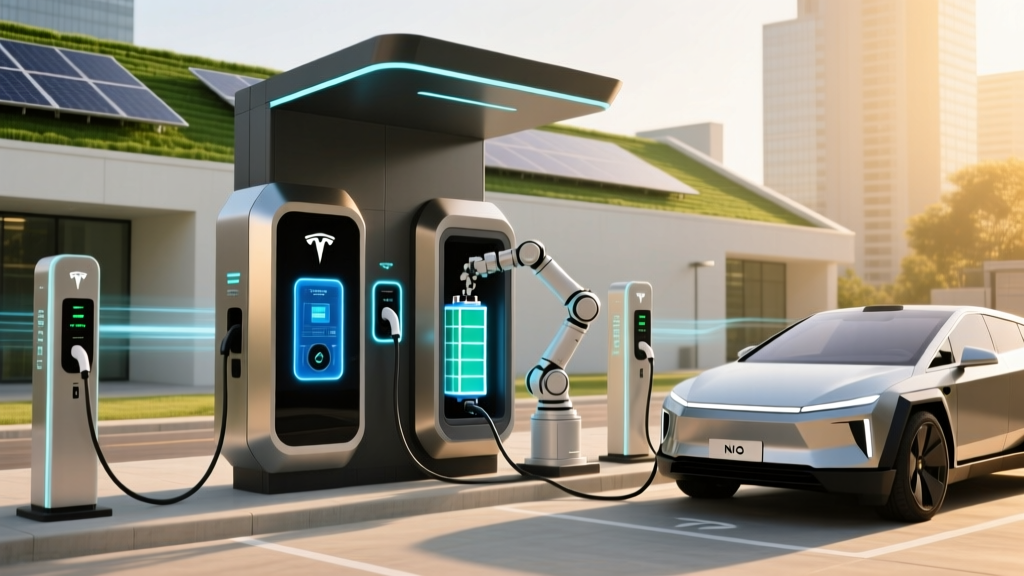
For years, the battery swapping charging infrastructure market has been pitched as the answer to range anxiety and long charge times. The concept is simple: drive into a station, have your depleted pack mechanically exchanged for a fully charged one in under five minutes, and drive away. In China, Nio has built over 3,200 swap stations globally by early 2026, and the company claims over 70 million cumulative swaps completed. Yet in the United States and Europe, battery swapping remains a niche concept while DC fast-charging networks have scaled aggressively. Tesla's Supercharger network, Electrify America, and Ionity have collectively deployed tens of thousands of high-power chargers — many now capable of 350 kW or more — making plug-in charging the dominant infrastructure paradigm outside of specific fleet and commercial applications.
Understanding this infrastructure split requires understanding the battery itself: its chemistry, how it degrades, what it costs to replace, and what warranties protect you. This guide covers the technical foundations that determine which infrastructure model — swapping or charging — makes sense, and what every EV owner and buyer needs to know about the pack powering their vehicle.
LFP vs NMC/NCA: Which Battery Chemistry Powers Your EV?
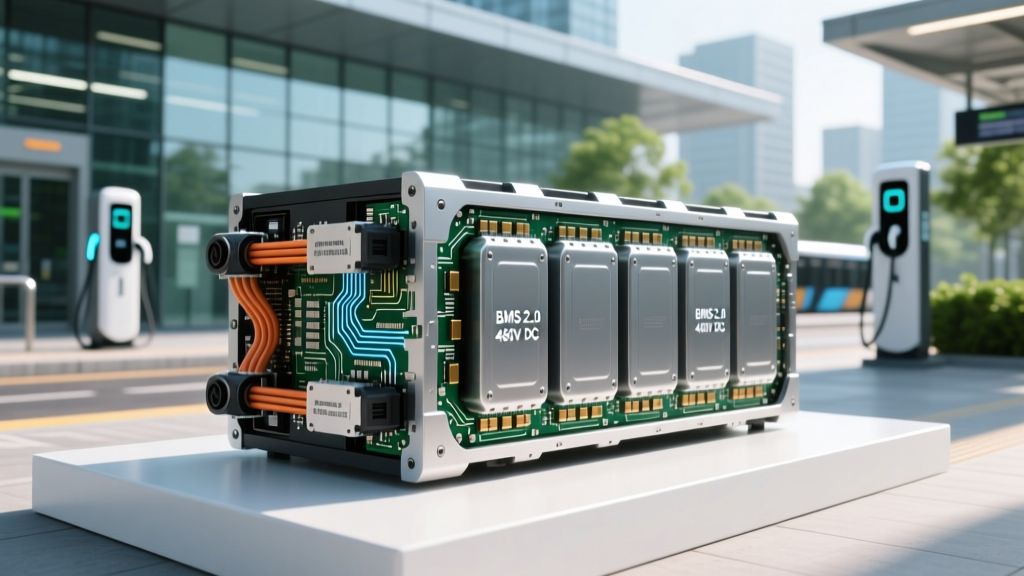
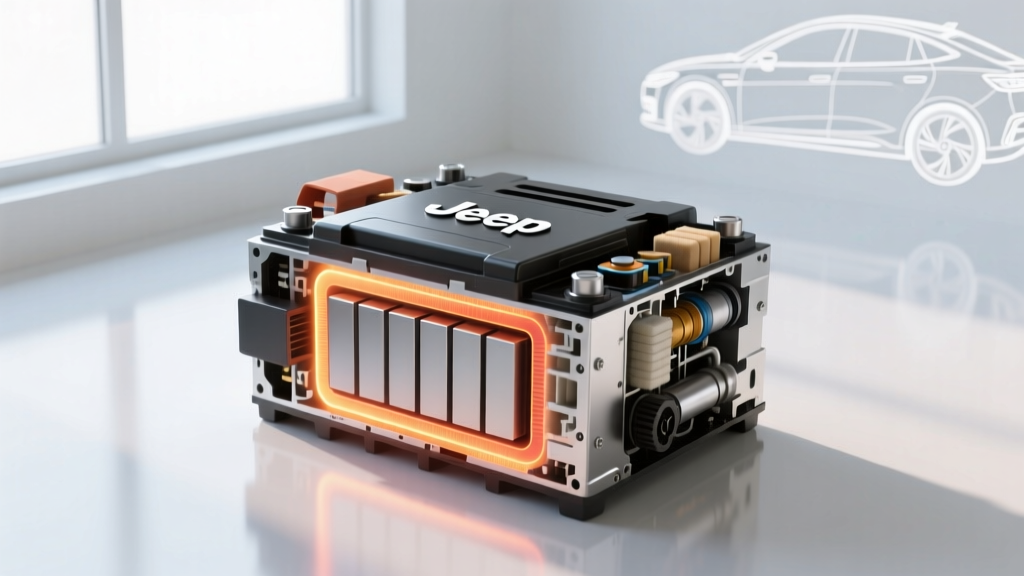
Not all lithium-ion batteries are the same. The two dominant chemistries in the 2026 EV market are lithium iron phosphate (LFP) and nickel-manganese-cobalt or nickel-cobalt-aluminum (NMC/NCA). The chemistry in your pack determines energy density, cycle life, cold-weather performance, and cost — and it directly affects how well a battery tolerates the demands of either daily fast charging or swap-station cycling.
| Attribute | LFP (Lithium Iron Phosphate) | NMC/NCA (Nickel-based) |
|---|---|---|
| Energy Density | Lower (~160-180 Wh/kg cell-level) | Higher (~220-260 Wh/kg cell-level) |
| Typical Cycle Life | 3,000-5,000+ cycles to 80% SoH | 1,000-2,000 cycles to 80% SoH |
| Cold-Weather Performance | More range loss below 32°F; slower charge acceptance | Better low-temp performance with active thermal management |
| Cost per kWh (2026) | ~$80-$100/kWh at pack level | ~$110-$140/kWh at pack level |
| Thermal Stability | Excellent — higher runaway threshold | Good but requires more robust BMS safeguards |
| Common 2026 Applications | Tesla Model 3/Y RWD, standard-range BYD models, Ford Mustang Mach-E Select (LFP option) | Tesla Long Range/Performance, Hyundai Ioniq 5/6, Rivian R1T/R1S, most premium EVs |
| Recommended Daily Charge Limit | 100% OK — LFP benefits from periodic full charges for BMS calibration | 80% for daily use; 100% only before long trips |
Which is better? There is no universal winner. NMC/NCA delivers more range in a lighter, more compact pack — critical for long-range and performance vehicles. LFP wins on longevity, cost, and safety, making it the preferred choice for standard-range models and fleet/robotaxi applications where high cycle counts matter. For the battery swapping charging infrastructure market, LFP's superior cycle life is a significant advantage: a swap-station battery that cycles daily needs to endure 3,000+ cycles before meaningful degradation, a threshold LFP reaches far more reliably than NMC.
How Long Do EV Batteries Last? Real-World Degradation Data
The most common question from prospective EV buyers is straightforward: how long will the battery last? The answer, backed by growing real-world data, is reassuring for most use cases. Modern EV batteries are engineered to outlast the typical ownership cycle of the vehicle itself.
Typical Degradation Curve (NMC/NCA packs, average use):
- Year 1 / 15,000 miles: ~2-4% capacity loss (initial formation loss)
- Year 3 / 45,000 miles: ~6-9% total loss
- Year 5 / 75,000 miles: ~9-12% total loss
- Year 8 / 120,000 miles: ~12-17% total loss
- Year 10 / 150,000 miles: ~15-22% total loss (varies significantly by usage patterns)
Data from fleet operators like Tesla's Impact Reports show that their NMC/NCA packs retain approximately 85% capacity at 150,000 miles. LFP packs in high-cycle applications (taxis, ride-hailing) have demonstrated retention above 90% after 200,000 miles in controlled fleet studies. Recurrent, an EV battery analytics company, has published data across multiple brands confirming that median degradation at 100,000 miles is roughly 10-12% for NMC packs — meaning a 300-mile EPA-rated EV would still deliver approximately 265-270 miles of range at that mileage.
The critical takeaway: most EV batteries will retain 75-85% of original capacity at 150,000 miles. They rarely need replacement during the vehicle's practical life, which is why the federal warranty mandate exists as a safety net, not an expectation.
What Does the EV Battery Warranty Cover?
Federal law in the United States mandates that EV batteries carry a minimum warranty of 8 years or 100,000 miles (10 years/150,000 miles in California Air Resources Board states). Most manufacturers meet or exceed this baseline. The warranty covers defects and excessive capacity loss — typically defined as falling below 70% of original capacity within the warranty period.
| Manufacturer / Model | Warranty Period | Capacity Retention Threshold | Chemistry |
|---|---|---|---|
| Tesla Model 3/Y Long Range | 8 yr / 120,000 mi | 70% | NMC |
| Tesla Model 3 RWD | 8 yr / 100,000 mi | 70% | LFP |
| Hyundai Ioniq 5 | 10 yr / 100,000 mi | 70% | NMC |
| Ford Mustang Mach-E | 8 yr / 100,000 mi | 70% | NMC (LFP on Select) |
| Rivian R1T / R1S | 8 yr / 175,000 mi | 70% | NMC |
| BMW i4 / iX | 8 yr / 100,000 mi | 70% | NMC |
What's covered: Manufacturing defects, cell failures, and capacity loss below the stated threshold. If your 84 kWh pack drops below ~59 kWh within the warranty window, the manufacturer must repair or replace it.
What's typically NOT covered: Gradual capacity loss above the threshold (e.g., dropping from 100% to 78% is considered normal wear), damage from accidents, improper charging equipment, or unauthorized modifications. Always review the specific warranty booklet from your manufacturer.
EV Battery Replacement Costs: What to Expect in 2026
Battery replacement is the specter that haunts EV skeptics, but context matters enormously. The vast majority of EV owners will never need a battery replacement. When replacements do occur — typically due to a manufacturing defect, physical damage, or extreme degradation well past the warranty period — costs have come down significantly as pack-level prices have fallen below $130/kWh for NMC and below $100/kWh for LFP.
| Model / Pack Size | Chemistry | Estimated Parts Cost | Labor (Est.) | Total Range |
|---|---|---|---|---|
| Tesla Model 3 RWD (~60 kWh) | LFP | $6,000 - $8,000 | $1,500 - $2,500 | $7,500 - $10,500 |
| Tesla Model Y LR (~82 kWh) | NMC | $9,500 - $12,000 | $1,500 - $2,500 | $11,000 - $14,500 |
| Hyundai Ioniq 5 (~77.4 kWh) | NMC | $9,000 - $11,500 | $2,000 - $3,000 | $11,000 - $14,500 |
| Ford F-150 Lightning Ext. (~131 kWh) | NMC | $15,000 - $20,000 | $2,500 - $4,000 | $17,500 - $24,000 |
| Rivian R1T Large Pack (~128 kWh) | NMC | $14,000 - $18,000 | $2,500 - $3,500 | $16,500 - $21,500 |
| Chevrolet Bolt EV (~65 kWh) | NMC | $7,500 - $9,500 | $1,500 - $2,500 | $9,000 - $12,000 |
These figures represent worst-case, out-of-warranty scenarios. In practice, most replacements occurring within the 8-10 year warranty window cost the owner nothing. Third-party battery refurbishment services are also emerging, offering module-level repair (replacing individual degraded cell groups rather than the entire pack) for $3,000-$6,000 on many models.
Battery Swapping vs Plug-In Charging: The Infrastructure Economics
The battery swapping charging infrastructure market faces a fundamental economic challenge in Western markets: DC fast charging has improved dramatically. A 2026 Hyundai Ioniq 5 with its 800V architecture can peak at 240 kW on a DC fast charger, adding 10-80% in approximately 18 minutes. Tesla V4 Superchargers deliver up to 350 kW. Porsche's upcoming platforms target 400+ kW. When a 15-20 minute charge stop aligns with a natural rest break on a road trip, the value proposition of a swap station — which requires massive capital investment in inventory (each station must stock 20-40 batteries worth $10,000-$20,000 each), real estate, and robotic equipment — becomes harder to justify.
Where swapping retains advantages:
- Fleet and commercial operations: Delivery vans, taxis, and ride-hailing vehicles that cannot afford 20-minute downtime. A 3-minute swap keeps vehicles earning.
- Urban areas without home charging: Dense city environments where residents lack garage access and curbside charging is impractical.
- Standardized platforms: In China, where government standards support multi-brand swap compatibility (led by Nio and backed by CATL's EVOGO service), the model scales more efficiently.
In the U.S., the infrastructure market has decisively chosen plug-in charging. The National Electric Vehicle Infrastructure (NEVI) program has funded tens of thousands of DC fast-charger ports along highway corridors. Battery swapping remains limited to pilot programs and niche commercial applications. For the average American EV buyer, the charging infrastructure that matters is a home Level 2 charger and a reliable public DC fast-charging network — not a swap station.
Factors That Accelerate Battery Degradation (and How to Avoid Them)
While modern battery management systems (BMS) do an excellent job protecting the pack, owner habits still influence long-term health. Understanding these factors helps maximize your battery's useful life and preserve resale value.
Battery Care Best Practices
- Avoid sustained 100% SoC: For NMC/NCA packs, set your daily charge limit to 80%. Reserve 100% for road-trip departure. LFP packs are more tolerant and benefit from periodic 100% charges for BMS cell-balancing calibration.
- Minimize DC fast-charging frequency: Occasional fast charging is fine, but daily use of 150+ kW DC charging accelerates degradation by roughly 1-3% over the pack's life compared to primarily Level 2 charging. If you have home charging, use it as your primary method.
- Avoid extreme SoC in extreme temperatures: Don't leave your EV sitting at 100% SoC in 100°F+ heat, or at very low SoC (below 10%) in sub-freezing conditions for extended periods. Both stress the cells chemically.
- Use preconditioning: Most EVs allow you to precondition the battery before fast charging or departure. This brings the pack to optimal temperature (typically 70-90°F), reducing charge time and preventing lithium plating in cold weather.
- Don't obsess over shallow cycles: Unlike old nickel-cadmium batteries, lithium-ion packs don't suffer memory effect. Partial discharges (e.g., 60% to 30%) are actually gentler than full 100%-to-0% cycles. Drive normally.
- Keep it plugged in when possible: In extreme heat or cold, a plugged-in EV can use grid power (not battery energy) to run the thermal management system, keeping the pack in its ideal temperature range.
How to Check and Monitor Your Battery's State of Health
State of Health (SoH) is the metric that tells you how much capacity your battery retains relative to when it was new. A SoH of 92% means your 82 kWh pack now holds approximately 75.4 kWh. Monitoring SoH helps you plan for the future, assess a used EV's condition, and detect abnormal degradation early.
How to check SoH:
- In-vehicle displays: Some manufacturers (Tesla, BMW, Hyundai) provide battery health metrics in the service menu or app. Tesla's app, for example, shows estimated range vs. new, which can be converted to a SoH percentage.
- OBD-II diagnostic tools: Devices like the OBDLink MX+ paired with apps such as EV Battery Health or Car Scanner can read the BMS-reported SoH directly. This is the most accurate consumer-accessible method.
- Third-party services: Companies like Recurrent offer battery health reports that compare your pack's performance against a database of identical vehicles, flagging outliers that may indicate a warranty claim is warranted.
- Dealer diagnostics: A service center can pull a full BMS log showing cell-level voltage variance, which reveals if individual modules are degrading unevenly — a sign of a potential defect.
Check your SoH at least once a year, or before purchasing a used EV. If degradation appears to be tracking below the warranty threshold trajectory (e.g., your pack is at 73% SoH at year 6), document it and contact the manufacturer before the warranty expires.
Emerging Battery Technologies: Solid-State, Silicon Anode, and Beyond
The battery swapping charging infrastructure market could be reshaped by next-generation battery technologies that dramatically reduce charge times and extend lifespan — potentially making swapping less relevant even in commercial applications. However, timelines for these technologies remain measured, and none are available in production consumer EVs as of 2026.
Solid-state batteries replace the liquid electrolyte with a solid ceramic, polymer, or sulfide material. The promise: higher energy density (potentially 400+ Wh/kg at the cell level), faster charging (0-80% in under 10 minutes), and improved safety due to elimination of flammable electrolyte. Toyota has announced solid-state battery prototypes and targets limited production in the late 2020s, but mass-market availability remains projected for 2029-2032 at the earliest. Samsung SDI and QuantumScape are also advancing prototypes, with Volkswagen investing in QuantumScape for potential integration in future models.
Silicon anode technology replaces or supplements the graphite anode with silicon, which can store roughly 10x more lithium ions per unit mass. Companies like Sila Nanotechnologies and Group14 Technologies are supplying silicon-dominant anode materials to manufacturers. The 2026 Mercedes-Benz G-Class EV (announced) is expected to feature a silicon-anode battery from Sila, targeting a 25% energy-density improvement. This technology is closer to market than solid-state but still limited to premium applications.
Sodium-ion batteries use abundant, inexpensive sodium instead of lithium. CATL has begun producing sodium-ion packs for lower-cost Chinese-market EVs. Energy density is lower (~140-160 Wh/kg), making them suited for city cars and energy storage rather than long-range vehicles. They are not expected in U.S.-market EVs before 2028.
These advances matter for infrastructure planning: if solid-state batteries deliver 500-mile ranges with 10-minute charge times, the economic case for battery swapping narrows further. The plug-in charging model becomes even more dominant.
Frequently Asked Questions
How long do EV batteries last in years and miles?
Most modern EV batteries are designed to retain 75-85% of their original capacity at 150,000 miles or 10+ years. LFP chemistries can exceed this, with fleet data showing 90%+ retention at 200,000 miles. The battery will likely outlast other major vehicle components.
How much does an EV battery cost to replace?
Out-of-warranty replacement costs range from approximately $7,500 for a 60 kWh pack (e.g., Tesla Model 3 RWD with LFP) to $24,000 for a 131 kWh pack (e.g., Ford F-150 Lightning Extended Range). Most owners never pay this — the federally mandated 8-year/100,000-mile warranty covers excessive degradation.
What does the battery warranty actually cover?
Battery warranties cover manufacturing defects and capacity loss below a defined threshold — typically 70% of original capacity — within 8 years/100,000 miles (10 years/150,000 miles in CARB states). Normal gradual degradation above the threshold is not covered. Review your manufacturer's warranty booklet for specifics.
How do I check and maximize my EV battery health?
Monitor State of Health (SoH) via your vehicle's app, an OBD-II diagnostic tool, or a dealer service visit. To maximize longevity: limit daily charges to 80% for NMC packs (100% is fine for LFP), minimize daily DC fast charging, precondition the battery in cold weather, and avoid leaving the vehicle at extreme SoC levels in extreme temperatures.
LFP vs NMC — which battery chemistry is better for me?
Choose NMC/NCA if you need maximum range and performance in a lighter pack — it's the standard for long-range and premium EVs. Choose LFP if you prioritize longevity, lower cost, and plan to keep the vehicle for many years or high mileage. LFP is the better chemistry for fleet, ride-hailing, and battery-swapping applications due to its superior cycle life of 3,000-5,000+ cycles.
Is battery swapping a viable alternative to plug-in charging in the U.S.?
As of 2026, battery swapping is not broadly available in the U.S. consumer market. The battery swapping charging infrastructure market remains concentrated in China (Nio, CATL EVOGO) and niche commercial/fleet applications. With DC fast chargers now delivering 250-350 kW and achieving 10-80% charges in 15-20 minutes, plug-in charging is the dominant and most accessible infrastructure model for American EV owners.
For current federal EV incentive information that may offset battery-related ownership costs, consult the IRS §30D Clean Vehicle Credit guidelines. For official efficiency and range data by model, visit fueleconomy.gov.