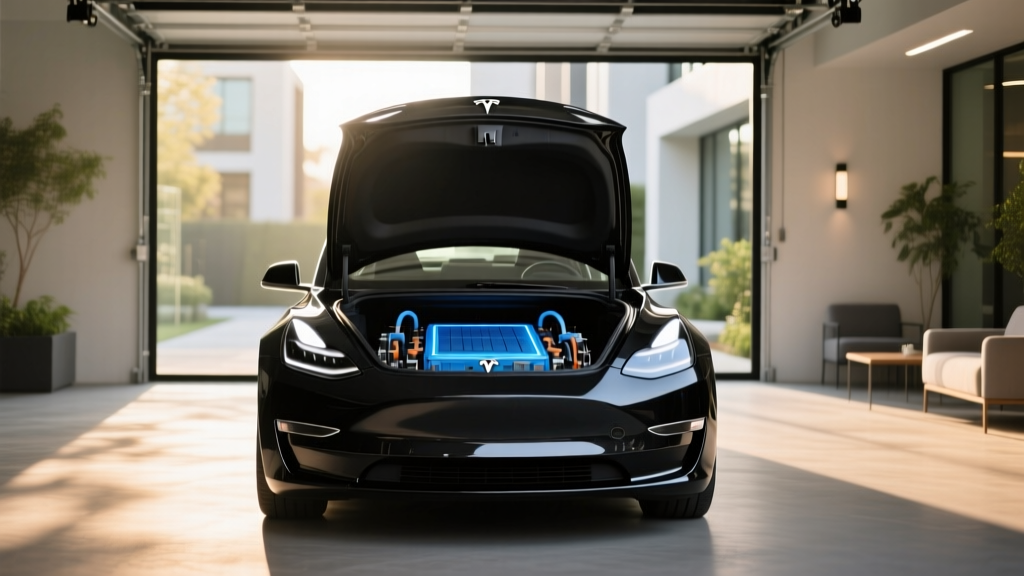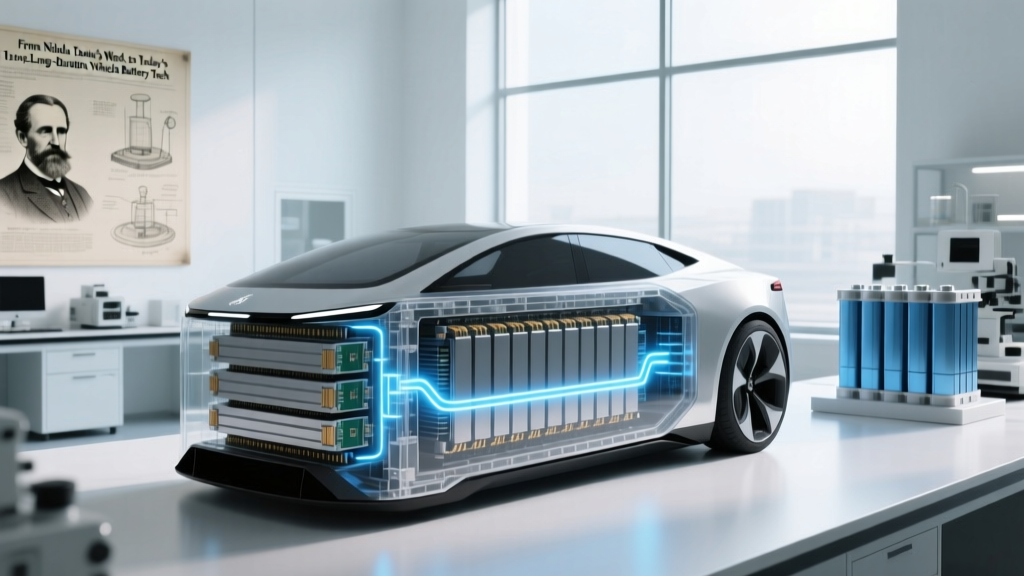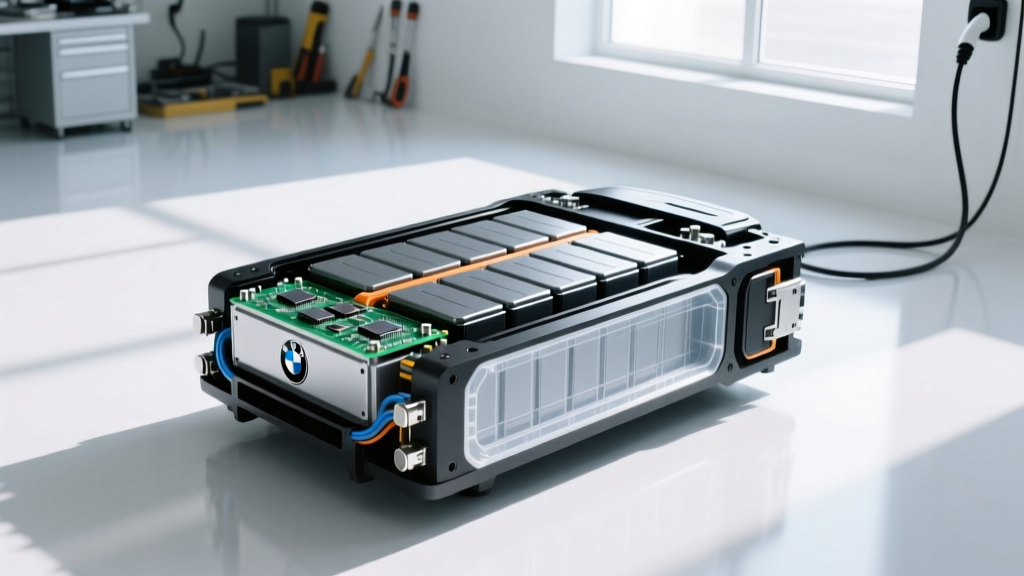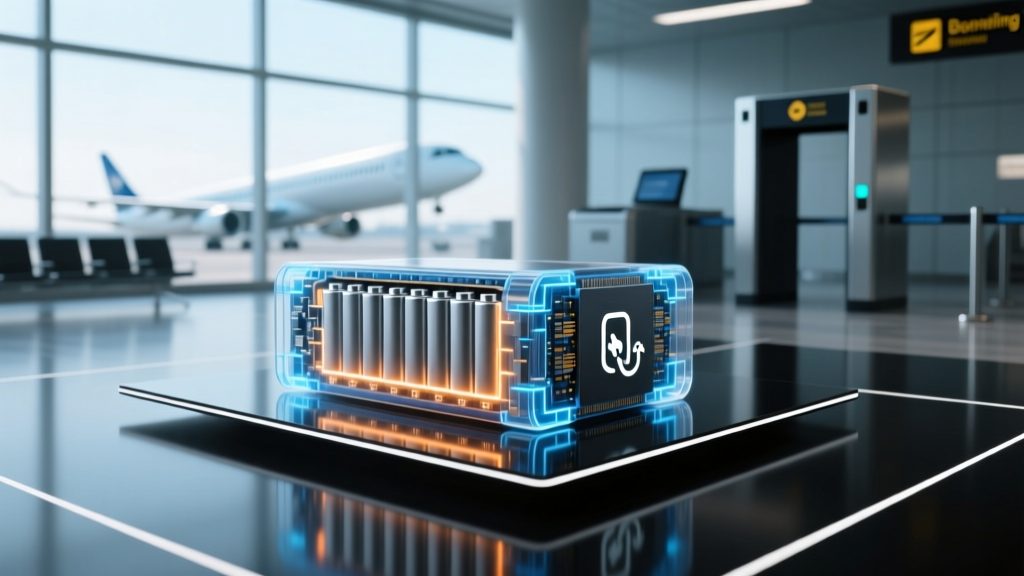
If you own an electric vehicle or rely on portable lithium-ion power banks, you've probably asked: can you bring battery packs on a plane? The short answer is yes — with strict limits on capacity, quantity, and where you pack them. But understanding why those rules exist requires a working knowledge of lithium-ion battery chemistry, the same science powering the 60–120 kWh traction batteries in modern EVs.
This guide covers everything from TSA and FAA lithium battery regulations to a full breakdown of EV battery technology: LFP versus NMC chemistry, real-world degradation data, warranty terms, replacement costs, and how to monitor and maximize your battery's State of Health (SoH) over 200,000+ miles.
Flying With Lithium Batteries: What the FAA and TSA Actually Allow
The FAA classifies lithium-ion batteries as hazardous materials due to thermal runaway risk — the same phenomenon that makes EV battery engineering so complex. Here's what applies to travelers in 2026:
- Carry-on only: Spare lithium-ion batteries and portable power banks must go in carry-on luggage. They are prohibited in checked baggage.
- Under 100 Wh: Unlimited quantity allowed in carry-on (typical phone chargers and small power banks fall here).
- 100–160 Wh: Maximum of two spare batteries per passenger, carry-on only, with airline approval.
- Over 160 Wh: Generally prohibited on passenger aircraft. This includes most e-bike batteries, large portable power stations, and any EV battery module.
- Installed batteries: Batteries installed in devices (laptops, cameras, phones) can go in checked or carry-on baggage, but the FAA recommends carry-on.
For context, a typical smartphone battery is around 12–15 Wh. A large laptop battery sits at 70–99 Wh. A Tesla Model Y's battery pack is roughly 75,000 Wh (75 kWh) — obviously not flying with you. The FAA battery safety page provides the complete regulatory framework.
LFP vs. NMC/NCA: Which EV Battery Chemistry Is Right for You?
Modern EVs use two dominant lithium-ion chemistries, each with distinct engineering trade-offs. Understanding these differences affects everything from your vehicle's range in winter to how many charge cycles the pack will tolerate before meaningful degradation.
| Attribute | LFP (Lithium Iron Phosphate) | NMC/NCA (Nickel Manganese Cobalt / Nickel Cobalt Aluminum) |
|---|---|---|
| Energy Density | Lower (~160–180 Wh/kg cell-level) | Higher (~220–300 Wh/kg cell-level) |
| Typical EV Range | 200–270 mi (EPA) | 250–400+ mi (EPA) |
| Cycle Life | 3,000–5,000+ cycles to 80% SoH | 1,000–2,500 cycles to 80% SoH |
| Cold-Weather Performance | Greater range loss in freezing temps (~30–40%) | Better cold-weather retention (~20–30% loss) |
| Charging to 100% Daily | Recommended — LFP benefits from full charges | Not recommended — 80% daily limit extends life |
| Cobalt Content | None (cobalt-free) | Contains cobalt (supply chain/ethics concern) |
| Cost per kWh | ~$80–100/kWh (2026 pack-level estimate) | ~$110–140/kWh (2026 pack-level estimate) |
| Vehicles Using It | Tesla Model 3/Y RWD, Ford Mustang Mach-E Select (LFP option), BYD models | Tesla Long Range/Performance, Hyundai Ioniq 5/6, Rivian, most premium EVs |
The practical takeaway: LFP is the better choice if you prioritize longevity, lower cost, and daily driving under 250 miles. NMC/NCA is better if you need maximum range, live in cold climates, or regularly road-trip. Neither chemistry is universally superior — it depends on your use case.
How Long Do EV Batteries Actually Last? Real Degradation Data
The fear that EV batteries need replacing every few years is not supported by fleet data. Most modern EV battery packs are engineered to outlast the vehicle itself.
Here's what real-world degradation looks like based on aggregated fleet data and owner reports:
- Year 1–2 (0–40,000 mi): 2–5% capacity loss. Initial drop is normal as the battery's solid-electrolyte interphase (SEI) layer stabilizes.
- Year 3–5 (40,000–80,000 mi): Degradation slows to roughly 1–2% per year. Total loss typically 5–10%.
- Year 6–10 (80,000–150,000 mi): Gradual linear decline. Most packs retain 85–92% of original capacity at 150,000 miles.
- Year 10+ (150,000–200,000+ mi): Packs that reach this milestone with proper care typically show 80–90% State of Health.
Tesla's 2025 Impact Report showed their fleet averaging roughly 12% degradation at 200,000 miles for NMC packs. LFP packs in Model 3 RWD vehicles have demonstrated even slower degradation curves, with many owners reporting 90%+ SoH at 100,000 miles. Data from fueleconomy.gov confirms that modern thermal management systems have significantly reduced the degradation rates seen in early-generation EVs like the 2011–2017 Nissan Leaf (which lacked active liquid cooling).
What Does the EV Battery Warranty Actually Cover?
Federal law mandates a minimum 8-year/100,000-mile warranty on EV battery packs (10 years/150,000 miles in California Air Resources Board states). But the details matter — not all warranty claims are equal.
| Manufacturer | Warranty Period | Mileage Limit | Capacity Retention Threshold |
|---|---|---|---|
| Tesla (Model 3/Y) | 8 years | 100,000–120,000 mi (varies by trim) | 70% minimum |
| Hyundai / Kia | 10 years | 100,000 mi | 70% minimum |
| Ford (Mach-E, F-150 Lightning) | 8 years | 100,000 mi | 70% minimum |
| Rivian | 8 years | 175,000 mi | 70% minimum |
| BMW (i4, iX) | 8 years | 100,000 mi | 70% minimum |
| GM (Ultium-based) | 8 years | 100,000 mi | 70% minimum |
What triggers a warranty claim: If your battery's usable capacity drops below the stated threshold (typically 70% of original) within the warranty period, the manufacturer will repair or replace the pack — often by swapping individual modules rather than the entire battery. A pack that originally held 80 kWh usable dropping below 56 kWh usable would qualify.
What's not covered: Damage from accidents, flooding, unauthorized modifications, or failure to follow the manufacturer's charging guidelines. Normal gradual degradation above the threshold is expected and not a warranty event.
EV Battery Replacement Cost: What You'll Actually Pay (and When)
Out-of-warranty battery replacement is the single biggest ownership fear. Here's the reality: it's expensive, but it's rarely needed within a vehicle's typical lifespan.
| Vehicle | Battery Size (kWh) | Chemistry | Estimated Replacement Cost |
|---|---|---|---|
| Tesla Model 3 RWD | ~60 kWh | LFP | $8,000–$12,000 |
| Tesla Model Y Long Range | ~75 kWh | NMC | $12,000–$16,000 |
| Hyundai Ioniq 5 | 77.4 kWh | NMC | $14,000–$18,000 |
| Ford F-150 Lightning Extended Range | ~131 kWh | NMC | $20,000–$30,000 |
| Rivian R1T (Large Pack) | ~135 kWh | NMC | $20,000–$28,000 |
| Chevrolet Equinox EV | ~85 kWh | NMC (Ultium) | $14,000–$18,000 |
These figures include parts and labor but can vary significantly by region and service center. Module-level repairs — replacing only the degraded cells rather than the entire pack — can cut costs by 40–60%. Independent EV repair shops are increasingly offering module-level service, which was nearly impossible five years ago.
When is replacement typically needed? For most owners, it isn't. The vast majority of EVs will be retired, sold, or totaled in an accident before the battery drops below 70% capacity. The vehicles most likely to need out-of-warranty replacements are high-mileage fleet vehicles, rideshare EVs exceeding 30,000 miles/year, or early-generation EVs with passive air cooling.
Factors That Accelerate (or Preserve) Battery Life
Battery degradation isn't random — it's driven by specific, controllable factors. Here's what the chemistry actually responds to:
Battery Care Checklist: Maximize Your Pack's Lifespan
- Avoid sustained 100% SoC (NMC/NCA only): Store your daily charge limit at 80%. Reserve 100% for road trips. LFP owners should charge to 100% at least weekly for cell balancing.
- Minimize DC fast charging when possible: Occasional fast charging is fine, but daily 150–350 kW sessions generate sustained heat that accelerates SEI layer growth. Use Level 2 home charging as your primary method.
- Don't let SoC sit at 0% or below 10% for days: Deep discharge stresses the anode. If storing the vehicle, leave it at 50–60% SoC.
- Precondition in extreme cold: Use your EV's preconditioning feature before fast charging in freezing weather. Charging a cold battery without preconditioning causes lithium plating, a permanent degradation mechanism.
- Park in shade or a garage when possible: Sustained exposure to ambient temperatures above 95°F (35°C) accelerates calendar degradation, even when the vehicle isn't driven.
- Use the vehicle's built-in thermal management: Modern EVs actively cool and heat the battery. Don't disable preconditioning or climate features designed to protect the pack.
The single most impactful habit? Level 2 home charging with an 80% daily limit for NMC packs. Owners who follow this consistently see 1–2% less degradation over 100,000 miles compared to those who rely heavily on DC fast charging and regularly charge to 100%.
How to Check Your EV Battery's State of Health (SoH)
State of Health (SoH) is the percentage of your battery's current maximum capacity compared to its original factory capacity. A brand-new pack is 100% SoH; a pack that can only hold 72 kWh of its original 80 kWh is at 90% SoH.
How to check SoH by brand:
- Tesla: Not directly displayed in the vehicle UI. Use the TeslaFi or Tessie third-party apps to log charge data and calculate SoH over time. Alternatively, a service center can pull a battery health report.
- Hyundai/Kia: The EV's infotainment system includes a battery health indicator under EV settings. The E-Call system can also transmit battery diagnostics to dealers.
- Ford: FordPass app displays estimated battery health. Dealers can run a full diagnostic via Ford's diagnostic tool.
- GM (Ultium): myChevrolet/myCadillac apps include battery health data. OnStar diagnostics can also report SoH.
- Universal method: OBD-II dongles paired with apps like ABRP (A Better Route Planner) or Car Scanner can read battery management system (BMS) data on most EVs, including cell voltage variance and estimated SoH.
For used-EV buyers, requesting a battery health report from the selling dealer or using an OBD-II reader is essential. A 4-year-old EV at 92% SoH is a strong buy; one at 78% SoH may face a warranty claim soon and should be priced accordingly.
What's Next? Solid-State and Silicon-Anode Batteries
Several next-generation battery technologies are in development, but none are available in production vehicles sold in the U.S. as of 2026:
- Solid-state batteries: Replace the liquid electrolyte with a solid conductor, promising 30–50% higher energy density, faster charging, and reduced fire risk. Toyota has announced a solid-state EV for 2027–2028, but production volumes are expected to be extremely limited. Samsung SDI and QuantumScape are also in advanced testing. Realistic mass-market timeline: 2029–2032.
- Silicon-anode batteries: Replace graphite anodes with silicon, boosting energy density by 20–40%. Sila Nanotechnologies and Group14 are supplying early silicon-anode materials, and some premium EVs may adopt the technology by 2027–2028.
- Sodium-ion batteries: Use abundant sodium instead of lithium, dramatically reducing cost. CATL has begun production in China for low-range city EVs. U.S. availability is uncertain and likely 2028+ at earliest.
These are promising developments, but current NMC and LFP chemistries remain the standard for all 2026-model-year EVs. Purchase decisions should be based on today's proven technology, not announced future breakthroughs.
FAQ: EV Batteries and Travel
Can I bring a portable EV charger on a plane?
Yes. Portable EV chargers (the cable and control box, without a battery) contain no lithium cells and can go in checked or carry-on luggage. They're just cables and electronics.
Can you bring battery packs on a plane if they're for a medical device?
Yes, with documentation. The FAA allows medically necessary battery-powered devices with some flexibility on size limits, but you must notify the airline in advance and carry medical documentation. Contact your airline's special assistance desk at least 48 hours before departure.
Why are spare lithium batteries banned from checked luggage?
If a lithium-ion cell enters thermal runaway in the cargo hold, the Halon fire suppression systems used in aircraft cargo compartments may not contain a lithium battery fire. In the cabin, flight attendants have access to fire containment bags and can respond immediately. The FAA's battery incident database documents why this rule exists.
Does frequent DC fast charging really hurt my battery?
Yes, but the effect is moderate, not catastrophic. Data from fleet studies suggests vehicles that DC fast charge more than 80% of the time show roughly 2–4% additional degradation over 100,000 miles compared to those that primarily use Level 2 charging. Occasional road-trip fast charging has negligible impact. It's the daily habit that matters.
Should I worry about battery replacement cost when buying an EV?
For most buyers, no. The battery will likely retain 80–90% of its capacity for the entire time you own the vehicle, and the 8-year/100,000-mile warranty covers premature degradation. Battery replacement is a real cost, but it's comparable to a transmission replacement on a gas car — expensive, but uncommon within typical ownership periods. If you plan to keep an EV for 15+ years and 200,000+ miles, budget for the possibility.
How do I check the IRS §30D tax credit eligibility for a new EV?
The IRS clean vehicle credit page details the current requirements: buyer income caps ($150,000 single / $300,000 joint), MSRP limits ($55,000 for sedans, $80,000 for SUVs/trucks), and battery critical-mineral and component sourcing rules. The credit can be transferred to the dealer as a point-of-sale discount. Consult a tax professional for your specific situation — rules change frequently.