What Actually Happens Inside Your EV Battery Pack
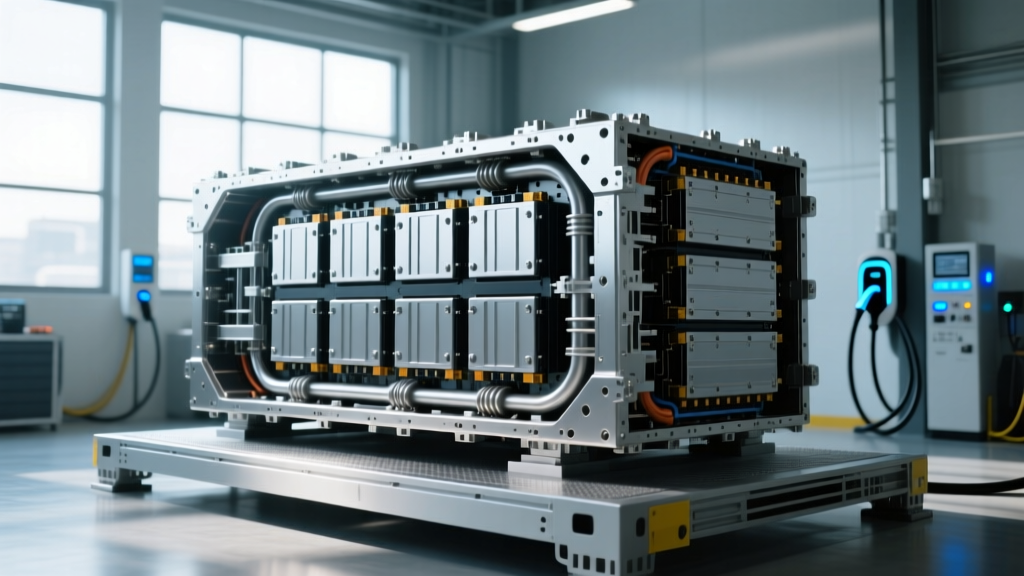
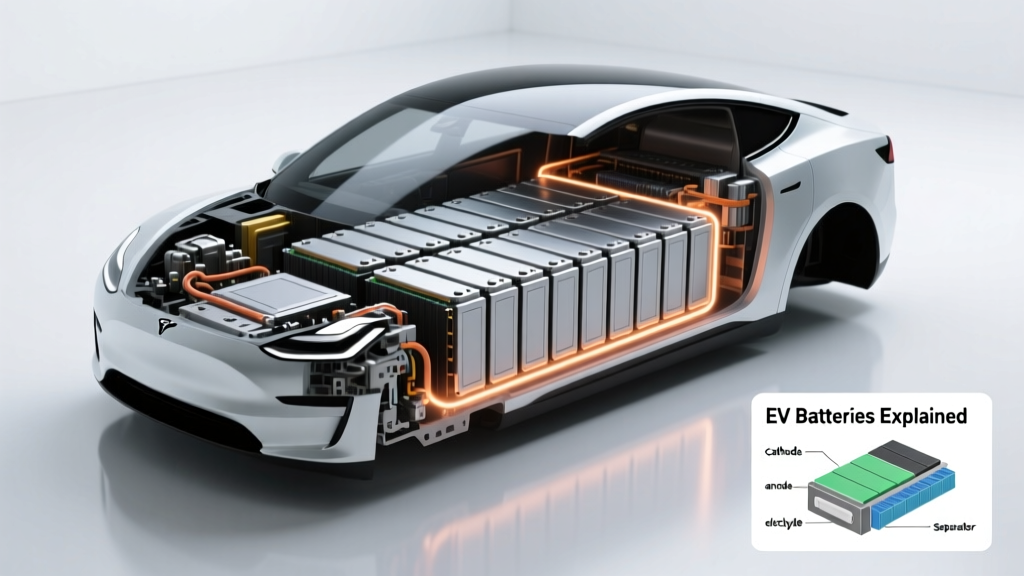
The high-voltage traction battery is the single most expensive component in any electric vehicle — and the one buyers worry about most. But the data tells a reassuring story: modern battery packs are outlasting initial projections, with most retaining 90% or more of their original capacity after 100,000 miles. Understanding what's inside that pack, how it degrades, and what it costs to replace separates informed EV buyers from anxious ones.
This guide covers the two dominant chemistries (LFP and NMC/NCA), real-world degradation figures from fleet and owner data, federal warranty mandates, replacement cost ranges across popular models, and the daily habits that meaningfully extend pack life.
LFP vs. NMC/NCA: Choosing Your Battery Chemistry
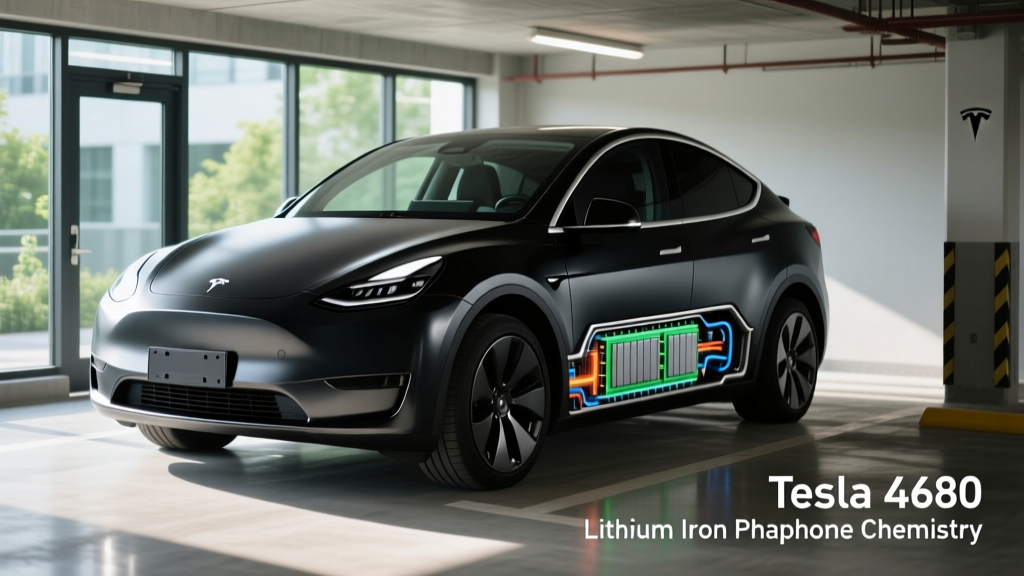
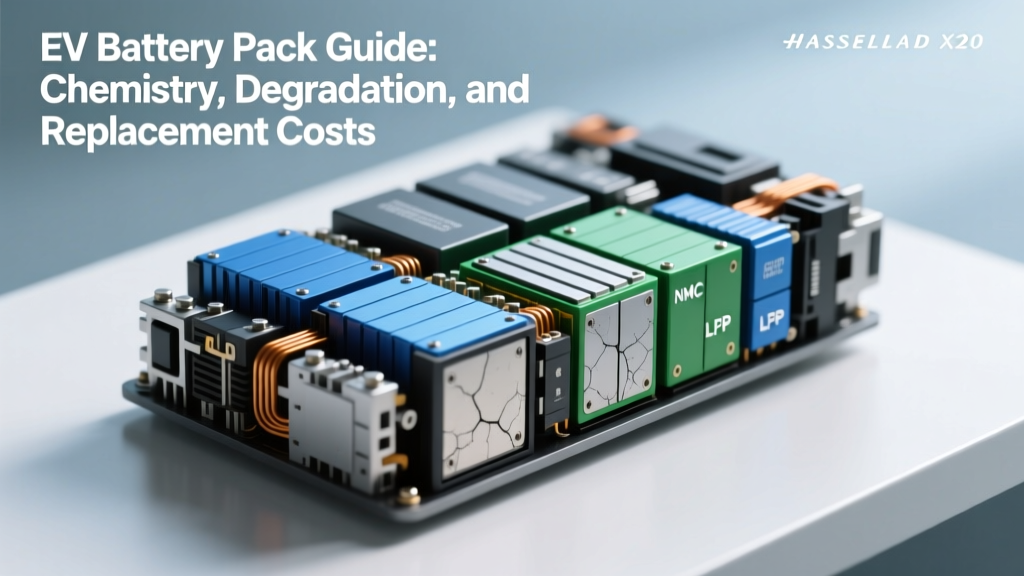
Every EV sold in 2026 uses one of two lithium-ion chemistries for its battery pack: Lithium Iron Phosphate (LFP) or Nickel Manganese Cobalt / Nickel Cobalt Aluminum (NMC/NCA). The choice affects range, longevity, cold-weather behavior, and price.
| Attribute | LFP (Lithium Iron Phosphate) | NMC / NCA (Nickel-based) |
|---|---|---|
| Energy Density | Lower (~160–180 Wh/kg cell-level) | Higher (~220–260 Wh/kg cell-level) |
| Typical Vehicles | Tesla Model 3 RWD, Model Y RWD, Ford Mustang Mach-E Select (2025+), BYD models | Tesla Long Range/Performance, Hyundai Ioniq 5/6, Rivian, Ford extended-range, most luxury EVs |
| Cycle Life | 3,000–5,000+ full cycles to 80% SoH | 1,500–2,500 full cycles to 80% SoH |
| Cold-Weather Performance | Weaker — more range loss below 32°F; slower DC charging without preconditioning | Better cold tolerance; more consistent charge speeds in winter |
| Recommended Daily SoC | 100% — LFP benefits from regular full charges for cell balancing | 80% daily; 100% only before long trips |
| Cost | Lower — no cobalt or nickel; cheaper raw materials | Higher — commodity-priced nickel and cobalt |
| Thermal Stability | Superior — less prone to thermal runaway | Good, but requires more robust thermal management |
Which is better? Neither is universally superior. LFP wins on longevity and cost, making it ideal for standard-range models and drivers who plan to keep their EV past 150,000 miles. NMC/NCA wins on energy density, which is why every long-range and performance EV still uses it — you simply can't fit 350+ miles of EPA range into a midsize sedan with LFP at current energy densities. If you live in a cold climate and prioritize winter range, NMC has a measurable edge.
How Long Do EV Battery Packs Last?
The short answer: almost certainly longer than you'll own the car. Data from multiple sources — including Tesla's fleet reports, Geotab's analysis of over 10,000 EVs, and owner-reported data on forums like InsideEVs and Recurrent Auto — converges on a consistent picture.
Typical Degradation Curve (Fleet-Averaged Data)
Based on aggregated fleet data from Recurrent Auto and manufacturer reports:
| Milestone | Average Capacity Retained | Real-World Impact (300-mi EPA pack example) |
|---|---|---|
| New | 100% | ~300 mi usable range |
| 1 year / 15,000 mi | ~97–98% | ~292–294 mi |
| 3 years / 45,000 mi | ~94–96% | ~282–288 mi |
| 5 years / 75,000 mi | ~91–94% | ~273–282 mi |
| 8 years / 120,000 mi | ~87–92% | ~261–276 mi |
| 10 years / 150,000 mi | ~84–90% | ~252–270 mi |
Key takeaway: Most modern packs lose roughly 1–2% per year in the first few years, then the curve flattens. The steepest drop happens in year one, after which degradation slows considerably. A 2026-model EV with a 300-mile EPA range will likely still deliver 260+ miles at the 10-year mark — still very usable for daily driving and road trips.
LFP packs tend to sit at the higher end of these ranges (slower fade), while high-performance NMC packs driven hard and charged frequently to 100% sit at the lower end. Liquid-cooled packs (standard on virtually all 2026 EVs) degrade significantly slower than the passive-air-cooled packs in early-2010s EVs like the first Nissan Leaf.
Federal Battery Warranty Mandates: What's Covered
The U.S. federal government mandates minimum battery warranty coverage for EVs, and most manufacturers meet or exceed these thresholds. Under EPA and CARB-aligned rules, the high-voltage battery pack must be warranted for a minimum of 8 years / 100,000 miles (whichever comes first) in most states, and 10 years / 150,000 miles in California and states that follow CARB standards.
Manufacturer Battery Warranties (2026 Models)
| Manufacturer | Warranty Term | Capacity Retention Threshold |
|---|---|---|
| Tesla (Model 3/Y RWD — LFP) | 8 yr / 100,000 mi | 70% of original capacity |
| Tesla (Model 3/Y Long Range) | 8 yr / 120,000 mi | 70% of original capacity |
| Hyundai / Kia | 10 yr / 100,000 mi | 70% of original capacity |
| Ford (Mach-E, F-150 Lightning) | 8 yr / 100,000 mi | 70% of original capacity |
| Chevrolet (Equinox EV, Blazer EV) | 8 yr / 100,000 mi | 70% of original capacity |
| Rivian | 8 yr / 120,000 mi | 70% of original capacity |
| BMW | 8 yr / 100,000 mi | 70% of original capacity |
What triggers a warranty claim? If your battery's State of Health (SoH) drops below the stated threshold — almost always 70% of original capacity — within the term, the manufacturer must repair or replace the pack at no cost to you. In practice, this almost always means replacing individual modules or cell groups rather than the entire pack. Out-of-warranty catastrophic failures are extremely rare in modern liquid-cooled packs; degradation is gradual and typically stays well above the 70% floor.
For the latest federal requirements, the U.S. Department of Energy's fueleconomy.gov maintains current EV incentive and compliance information.
EV Battery Replacement Costs: The Real Numbers
This is the question that dominates EV forums, and the answer is more nuanced than headline-grabbing "$20,000 battery swap" stories suggest. First, context: the vast majority of EV batteries never need full replacement during the vehicle's useful life. When they do, it's usually outside the warranty period on vehicles 12+ years old, and costs have been declining steadily.
Estimated Out-of-Warranty Battery Pack Replacement Costs (2026)
| Vehicle / Pack Size | Battery Capacity | Estimated Replacement Cost (Parts + Labor) |
|---|---|---|
| Tesla Model 3 RWD (LFP) | ~60 kWh | $8,000–$12,000 |
| Tesla Model Y Long Range | ~82 kWh | $12,000–$16,000 |
| Hyundai Ioniq 5 | 77.4 kWh | $11,000–$15,000 |
| Ford F-150 Lightning Extended Range | ~131 kWh | $18,000–$25,000 |
| Chevrolet Equinox EV | ~85 kWh | $10,000–$14,000 |
| Rivian R1T (Large Pack) | ~128 kWh | $16,000–$22,000 |
| BMW i4 eDrive40 | 83.9 kWh | $14,000–$19,000 |
Important caveats:
- These are full-pack replacement estimates. Many degradation-related repairs involve replacing individual modules ($1,500–$4,000) rather than the full pack.
- Labor costs vary significantly by region and whether you use a dealer or independent EV specialist.
- Battery prices per kWh have dropped from ~$1,200/kWh in 2010 to roughly $110–$130/kWh at the cell level in 2026 (per BloombergNEF data), and this trend continues to push replacement costs down.
- A remanufactured or refurbished pack (common for out-of-warranty replacements) can reduce costs by 30–40%.
- Most EVs are scrapped for collision damage, not battery failure. The battery typically outlasts the body.
Five Factors That Accelerate Battery Degradation
Battery chemistry sets the ceiling, but your habits determine where your pack lands within that range. Research from the National Renewable Energy Laboratory (NREL) and real-world fleet data point to five primary degradation accelerators:
Battery Care Essentials
- 1. Frequent DC Fast Charging Without Preconditioning. Hitting a 150+ kW charger with a cold battery forces the cells to accept current they can't efficiently absorb, generating excess heat and lithium plating risk. Always use your car's built-in preconditioning (navigation to a charger triggers this automatically on Tesla, Hyundai, Ford, and most 2026 EVs). Occasional DCFC is fine — daily DCFC without preconditioning accelerates wear.
- 2. Sustained High State of Charge. Storing an NMC/NCA battery at 100% SoC for days or weeks accelerates calendar degradation. If you don't need the full range daily, set your charge limit to 80%. LFP packs are an exception — they benefit from regular 100% charges to keep cells balanced.
- 3. Deep Discharge Cycles. Regularly running the pack below 10% SoC stresses the cells. Try to keep daily driving between 20–80% SoC for NMC, or 10–100% for LFP.
- 4. Extreme Heat Exposure. Ambient temperatures above 95°F combined with high SoC are the worst-case scenario for calendar aging. If you live in Phoenix or Dallas, park in shade or a garage when possible and avoid leaving the car at 100% SoC in summer heat.
- 5. Aggressive Regenerative Braking Settings in Cold Weather. High regen on a cold battery forces charge into cells that can't absorb it efficiently. Most 2026 EVs automatically reduce regen in cold temps, but if yours has a manual setting, dial it back in winter.
What does NOT meaningfully hurt your battery: Normal daily driving, moderate use of DC fast charging (1–2x per week with preconditioning), and Level 2 home charging at any amperage within the car's acceptance rate.
Monitoring Your Battery's State of Health (SoH)
State of Health is expressed as a percentage of original capacity. A new pack is 100% SoH; at 70% SoH, you've hit the typical warranty replacement threshold. Here's how to check yours:
Built-In Vehicle Displays
Most 2026 EVs display SoH or battery health in the settings menu. Tesla shows a "Battery Health" percentage under Service > Battery Health. Hyundai and Kia include it in the EV settings submenu. Ford provides a battery health indicator in the FordPass app.
OBD-II Diagnostic Tools
Third-party OBD-II readers paired with apps like Car Scanner, Leaf Spy (for Nissan), or Scan My Tesla can read detailed cell voltage data, pack impedance, and SoH estimates directly from the BMS (Battery Management System). These are invaluable for used-EV buyers.
Range-Based Estimation
If your EV's displayed range at 100% SoC has dropped from 310 miles to 285 miles over three years, that's roughly an 8% degradation — consistent with expected wear. This isn't as precise as a BMS read, but it's a good sanity check.
Dealer Diagnostics
Any authorized dealer can pull a full battery health report during a service visit. Request this if you suspect a warranty claim might be approaching, or before purchasing a used EV out of warranty.
What's Next: Solid-State and Silicon-Anode Batteries
Two technologies dominate the "next generation" battery conversation. Both are real, both are progressing, and neither is available in a production EV you can buy today.
Solid-State Batteries
Solid-state cells replace the liquid electrolyte with a solid conductor, promising higher energy density (potentially 400+ Wh/kg at the cell level), faster charging, and improved safety. Toyota has announced a solid-state battery targeting 2027–2028 production vehicles with ~750 km (WLTP) range and 10-minute fast charging. Samsung SDI and QuantumScape are also advancing prototypes. However, manufacturing scale-up remains the primary bottleneck. Realistic expectation: limited production in luxury or flagship models by 2028–2029, with mainstream availability not before 2030–2032.
Silicon-Anode Batteries
Replacing graphite anodes with silicon increases lithium-ion storage capacity significantly. Companies like Sila Nanotechnologies and Group14 are supplying silicon-anode materials to manufacturers now. The Mercedes G-Class electric (2025) uses silicon-anode cells from Sila for improved energy density. Expect gradual adoption through the late 2020s, often blended with graphite rather than as a full replacement.
Bottom line: If you're buying an EV in 2026, today's LFP and NMC packs are mature, well-understood technologies backed by extensive warranty coverage. Waiting for solid-state means waiting at least 3–5 years for limited availability at premium prices.
EV Battery Pack FAQ
How long do EV batteries last in years and miles?
Most modern liquid-cooled EV battery packs retain 85–92% of their original capacity at 150,000 miles or 10 years, based on fleet data from Recurrent Auto and manufacturer reports. With proper care, a pack can deliver usable range well past 200,000 miles. The federal warranty mandates coverage for at least 8 years / 100,000 miles.
How much does it cost to replace an EV battery pack?
Full pack replacement ranges from roughly $8,000 for a ~60 kWh LFP pack (Tesla Model 3 RWD) to $25,000 for a ~131 kWh pack (F-150 Lightning Extended Range). Most degradation-related repairs involve module replacement at $1,500–$4,000 rather than a full swap. Full replacements are rare and typically only needed on vehicles 12+ years old, outside warranty.
What does the EV battery warranty actually cover?
Federal law requires manufacturers to warranty the high-voltage battery for at least 8 years / 100,000 miles (10 years / 150,000 miles in CARB states) against capacity loss below 70% of original. If your pack's State of Health drops below that threshold within the term, the manufacturer repairs or replaces it at no cost. This covers degradation — not damage from collisions, flooding, or modifications.
How do I check my EV battery's health?
Check the built-in battery health display in your vehicle's settings menu (available on most 2026 models), use an OBD-II reader with apps like Car Scanner or Scan My Tesla for detailed BMS data, or request a full battery health report from your dealer. Monitoring your range at 100% SoC over time also provides a rough degradation estimate.
Is LFP or NMC better for my EV battery?
LFP is better if you prioritize maximum cycle life (3,000–5,000+ cycles), lower cost, and plan to keep the vehicle long-term. NMC/NCA is better if you need maximum range per charge (higher energy density) or live in a cold climate where LFP loses more winter range. Neither is universally "better" — the right choice depends on your driving patterns, climate, and ownership timeline.
Does frequent DC fast charging damage the battery?
Occasional DC fast charging (1–3 times per week) with proper preconditioning causes negligible additional degradation. Daily DCFC without preconditioning — especially on a cold pack — does accelerate wear over time. For daily charging, a Level 2 home charger at 7–11 kW is ideal for long-term battery health.