If you're researching the battery of hybrid cars—whether a conventional hybrid (HEV) like the Toyota Prius or a plug-in hybrid (PHEV) like the Chrysler Pacifica Hybrid—you've probably encountered conflicting claims about longevity, replacement costs, and chemistry. This guide cuts through the noise with hard data on degradation rates, warranty coverage, real-world replacement pricing, and the chemistry trade-offs that matter for your next purchase.
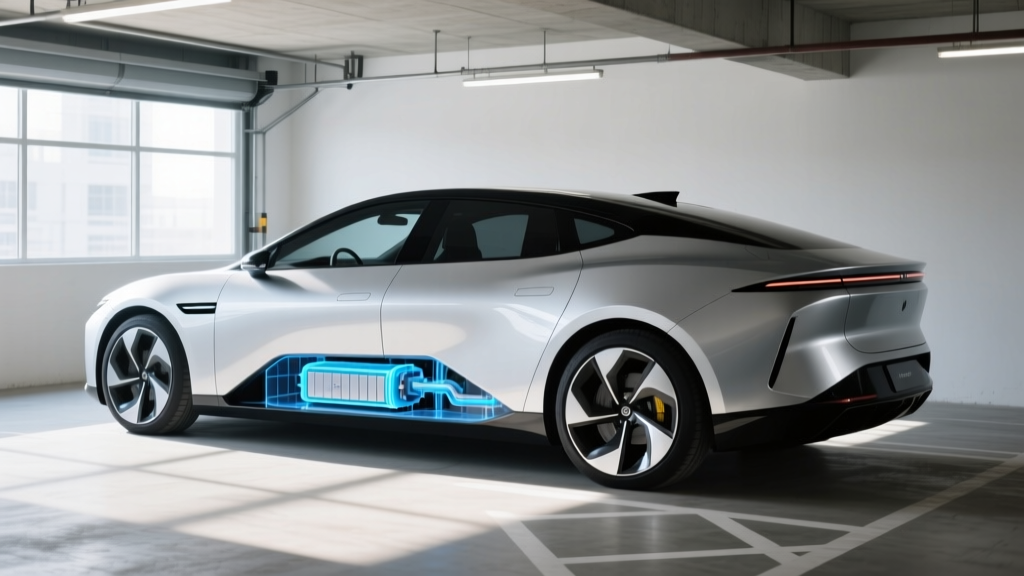
Unlike fully electric vehicles with 60–100+ kWh traction batteries, hybrid batteries are smaller—typically 1.0–1.6 kWh for HEVs and 12–20 kWh for PHEVs. That difference fundamentally changes how they degrade, what they cost to replace, and how you should think about long-term ownership.
HEV vs PHEV Battery Basics: Size, Chemistry, and Purpose
Before comparing chemistries, it's critical to distinguish the two hybrid battery categories, because their engineering priorities diverge sharply:
- HEV (conventional hybrid): Small battery (1.0–1.6 kWh usable), charged exclusively by regenerative braking and the engine. Never plugged in. Designed for high power throughput in shallow cycles—think thousands of micro-charge/discharge events daily.
- PHEV (plug-in hybrid): Larger battery (12–20 kWh usable), designed for 25–45 miles of electric-only range per the EPA. Charged via plug and engine. Operates in deeper discharge cycles more similar to a BEV, but with a smaller total pack.
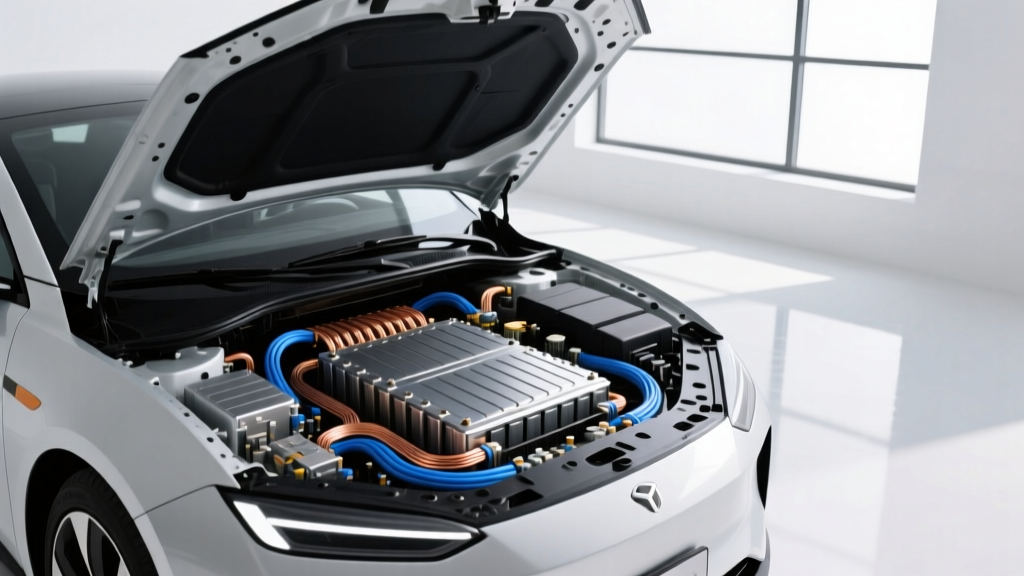
Neither HEV nor PHEV batteries are interchangeable with the 12V auxiliary battery under the hood—that small lead-acid or lithium unit runs the vehicle's electronics and is a separate, inexpensive maintenance item. The high-voltage traction battery is what we're analyzing here.
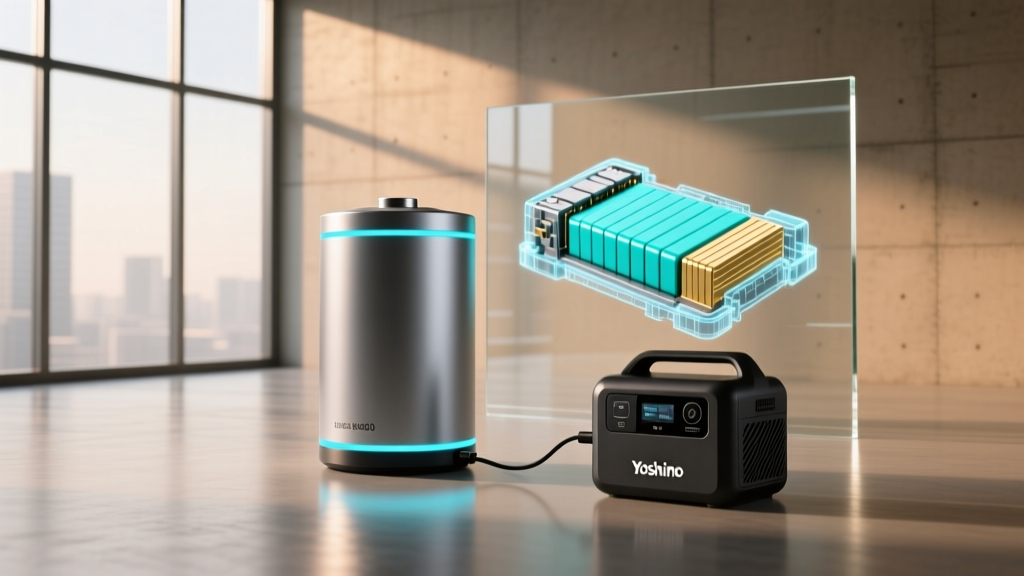
LFP vs NMC: Which Chemistry Powers Hybrid Batteries?
Most hybrid batteries on the road in 2026 use NMC (nickel manganese cobalt) or its variant NCA (nickel cobalt aluminum) chemistry. Toyota, Honda, Hyundai, and Stellantis have historically favored NMC for its energy density—critical when packaging a battery into a vehicle that also needs a fuel tank, exhaust system, and engine.
LFP (lithium iron phosphate) is increasingly used in some PHEV applications and is standard in many BEVs, but its lower energy density makes it less common in space-constrained HEVs.
| Factor | NMC / NCA | LFP |
|---|---|---|
| Energy density | Higher (180–260 Wh/kg cell-level) | Lower (140–180 Wh/kg cell-level) |
| Cycle life | 1,000–2,000 full cycles to 80% SoH | 3,000–5,000+ full cycles to 80% SoH |
| Cold-weather performance | Better low-temp power delivery | Reduced charge acceptance below 32°F; needs heating |
| Cost per kWh (cell) | Higher ($110–$140/kWh) | Lower ($80–$110/kWh) |
| Thermal stability | Good, but requires robust BMS | Excellent—higher thermal runaway threshold |
| Common hybrid applications | Most HEVs and PHEVs (Prius, RAV4 Prime, Wrangler 4xe) | Some newer PHEVs; more common in BEVs |
The takeaway: NMC dominates hybrid batteries because packaging space is at a premium—hybrids must fit a battery alongside a full ICE powertrain. LFP's cycle-life advantage matters less in HEVs because the battery operates in shallow 40–60% state-of-charge windows, which dramatically extends its effective lifespan regardless of chemistry.
How Long Does the Battery of Hybrid Cars Actually Last?
The short answer: in most cases, the hybrid battery will outlast the vehicle itself. But the data is more nuanced than that, and it differs between HEVs and PHEVs.
HEV Battery Degradation Data
Toyota Prius batteries—the most studied hybrid batteries on the road—show remarkably slow degradation. A Consumer Reports long-term analysis and fleet data from taxi operators indicate:
- Years 1–5 (0–75,000 miles): Typically 5–10% capacity loss. Most owners notice zero change in fuel economy.
- Years 5–10 (75,000–150,000 miles): An additional 5–10% loss. Total degradation of 10–20% is common. Fuel economy may drop 1–3 MPG from new.
- Years 10–15 (150,000–250,000 miles): Some packs reach 70–75% state of health (SoH). This is where replacements become more common, though many packs continue functioning.
Why do HEV batteries last so long? The battery management system (BMS) keeps the pack in a narrow state-of-charge window—typically between 40% and 80%. This shallow-cycling strategy dramatically reduces cell stress. A Prius battery rated for 1,500 full cycles at 100% depth of discharge might deliver 50,000+ equivalent shallow cycles at 20% depth.
PHEV Battery Degradation Data
PHEVs experience slightly faster degradation because they use deeper discharge cycles (often 80–90% of usable capacity). Real-world data from models like the Chevrolet Volt (first-generation, now a useful long-term data source) and current PHEVs shows:
- Years 1–5 (0–60,000 miles): 5–12% capacity loss. Electric-only range may drop from 42 to ~37 miles EPA.
- Years 5–10 (60,000–120,000 miles): Total degradation of 15–25%. Electric range drops further; the engine kicks in sooner.
- Years 10+ (120,000+ miles): Some packs reach 65–75% SoH. The vehicle remains fully drivable—just with reduced electric-only range and more engine operation.
Typical Hybrid Battery Degradation Curve (SoH % over years):
| Year | HEV SoH (typical) | PHEV SoH (typical) |
|---|---|---|
| 0 (new) | 100% | 100% |
| 3 | 93–96% | 90–95% |
| 5 | 88–93% | 85–92% |
| 8 | 82–88% | 78–86% |
| 10 | 78–85% | 73–82% |
| 15 | 70–80% | 65–78% |
Note: Individual results vary based on climate, driving habits, and charging patterns. Data synthesized from fleet reports, manufacturer disclosures, and independent testing.
Hybrid Battery Warranty Coverage: What's Protected?
Federal emissions regulations require that hybrid and EV batteries carry a minimum warranty of 8 years / 100,000 miles (in California Air Resources Board states, it's 10 years / 150,000 miles). Most manufacturers meet or exceed this baseline.
| Manufacturer | Hybrid Battery Warranty | Capacity Threshold | Transferable? |
|---|---|---|---|
| Toyota (HEV/PHEV) | 10 yr / 150,000 mi | Not explicitly defined; case-by-case | Yes, to subsequent owners |
| Honda (HEV/PHEV) | 8 yr / 100,000 mi (10/150k in CARB states) | Varies by model | Yes |
| Hyundai / Kia (HEV/PHEV) | 10 yr / 100,000 mi | Typically ~70% SoH | Yes (Hyundai); limited (Kia—first owner only in some cases) |
| Stellantis (Pacifica Hybrid, Wrangler 4xe) | 8 yr / 100,000 mi (10/150k in CARB states) | ~70% capacity retention | Yes |
| Ford (Escape PHEV, Maverick HEV) | 8 yr / 100,000 mi | Not publicly specified | Yes |
What the warranty covers: Defects in materials/workmanship and excessive capacity loss below the stated threshold. It does not cover damage from accidents, flooding, improper modifications, or use of non-approved charging equipment.
What triggers a warranty claim: If your PHEV's electric-only range drops significantly below the EPA-rated figure and a dealer diagnostic confirms SoH below the warranty threshold (often 70%), the manufacturer will repair or replace the battery at no cost. For HEVs, claims are typically triggered by dashboard warning lights and confirmed cell imbalance or capacity failure.
Hybrid Battery Replacement Cost: What to Budget
This is the concern that dominates hybrid buyer forums—and it's the area most prone to fear-mongering. Let's anchor this in actual pricing.
| Vehicle (Model Year) | Battery Size | OEM Battery Cost (part) | Total Installed Cost | Aftermarket/Remanufactured Option |
|---|---|---|---|---|
| Toyota Prius (2023–2026) | ~1.3 kWh (HEV) | $2,200–$3,000 | $3,000–$4,500 | $1,200–$2,000 (reconditioned) |
| Toyota RAV4 Prime (PHEV) | ~18.1 kWh | $6,000–$8,500 | $8,000–$11,000 | Limited availability |
| Chrysler Pacifica Hybrid | ~16 kWh | $5,500–$7,500 | $7,500–$10,000 | $4,000–$6,000 (reman.) |
| Jeep Wrangler 4xe | ~17.3 kWh | $6,500–$9,000 | $8,500–$12,000 | Limited availability |
| Hyundai Tucson PHEV | ~13.8 kWh | $4,500–$6,500 | $6,000–$8,500 | Emerging options |
| Ford Escape PHEV | ~14.4 kWh | $5,000–$7,000 | $6,500–$9,000 | Limited availability |
Context that matters:
- Most hybrid batteries never need replacement. With HEV degradation rates of 1–2% per year, a Prius battery at 15 years old may still be at 75–80% SoH—well within functional range.
- HEV replacements are cheaper because the packs are tiny (~1.3 kWh). A full OEM replacement on a Prius is $3,000–$4,500 installed—comparable to a major engine repair on a gas car.
- PHEV replacements cost more because the packs are 10–15x larger. However, PHEV batteries are also covered by the 8–10 year federal warranty, and most failures occur within that window.
- Remanufactured batteries are a growing market, especially for older Prius and Camry Hybrid models. These use tested, reconditioned cells and can cut costs by 40–60%.
Factors That Affect Hybrid Battery Lifespan
While hybrid batteries are generally robust, certain habits and conditions accelerate degradation:
Battery Care Checklist for Hybrid Owners
- Avoid sustained high SoC in PHEVs: If you don't need full electric range for your daily commute, charging to 80–90% rather than 100% reduces cell stress. Most PHEVs don't offer a charge-limit setting (unlike BEVs), so this may require timing your charge sessions.
- Minimize DC fast charging (PHEVs only): Most PHEVs don't support DC fast charging, but if yours does (e.g., some Mitsubishi Outlander PHEV trims), limit DCFC use to road trips. Level 2 charging is gentler on cells.
- Don't let PHEV batteries sit at 0% or 100% for weeks: If storing the vehicle, leave the PHEV battery around 50% SoC and start the vehicle periodically to let the BMS balance cells.
- Extreme heat is worse than extreme cold: Sustained ambient temperatures above 95°F accelerate electrolyte decomposition. Parking in shade or a garage in hot climates measurably extends battery life.
- Cold weather reduces performance, not lifespan: Below 32°F, expect reduced regen braking and temporarily lower electric range in PHEVs. This is reversible and does not cause permanent damage.
- Regular driving is better than sitting: Hybrid batteries benefit from regular use. The BMS performs cell-balancing during normal operation. Vehicles that sit unused for months can develop cell imbalance.
- Keep cooling pathways clear: Many hybrids (especially Toyota) have battery cooling air intakes near the rear seats. Don't block them with cargo or seat covers.
How to Check Your Hybrid Battery's State of Health
Unlike BEVs, which often include SoH readouts in the infotainment system or app, most hybrids don't surface battery health data directly to the driver. Here's how to get visibility:
Dealer Diagnostic Scan
Any authorized dealer can pull a battery health report using the manufacturer's diagnostic tool (e.g., Toyota Techstream, Ford FDRS). This shows individual cell voltages, internal resistance, and overall SoH percentage. Request this during routine service—many dealers will do it at no charge.
OBD-II Scanner Apps
For more frequent monitoring, an OBD-II Bluetooth adapter ($25–$50) paired with an app like Dr. Prius (Toyota-specific), Hybrid Assistant, or Torque Pro can read real-time battery data including:
- Current state of charge (% SoC)
- Individual cell block voltages (to spot imbalances)
- Battery temperature
- Charge/discharge current (amps)
- Estimated SoH based on capacity tests
The Dr. Prius Battery Life Check (Toyota HEV/PHEV)
This is a community-developed test that measures your Toyota hybrid battery's actual capacity. It works by forcing a controlled discharge from ~80% to ~40% SoC while the app records voltage and current data, then calculates remaining capacity in Ah (amp-hours). Comparing this to the battery's original rated capacity gives a SoH percentage. Many Prius owners run this test annually.
Emerging Battery Technology: What's on the Horizon?
Several next-generation battery technologies are in development that could eventually reach hybrid vehicles, though timelines remain uncertain:
Solid-State Batteries
Solid-state cells replace the liquid electrolyte with a solid material, promising higher energy density, faster charging, and improved safety. Toyota has announced plans for solid-state BEVs targeting the late 2020s, but hybrid applications are further out—likely 2030 or beyond. The cost premium of solid-state cells makes them impractical for the small battery packs in HEVs in the near term.
Silicon Anode Technology
Replacing graphite anodes with silicon can increase cell energy density by 20–40%. Companies like Sila Nanotechnologies and Group14 are already supplying silicon-dominant anode materials for some BEV applications. Expect this technology to trickle into PHEV batteries within the 2027–2029 timeframe, enabling longer electric-only range without increasing pack size.
Sodium-Ion Batteries
Sodium-ion chemistry eliminates lithium, cobalt, and nickel entirely, offering dramatically lower material costs. CATL and other manufacturers have begun production for stationary storage and low-range BEVs. Hybrid applications are plausible but not expected before 2028–2030, and energy density limitations make sodium-ion better suited to HEVs (small packs) than PHEVs.
All emerging technologies listed above are forward-looking and based on manufacturer announcements and industry analysis. Production timelines, pricing, and availability are subject to change.
Frequently Asked Questions
How long do hybrid car batteries last in years and miles?
Most HEV batteries last 12–15 years or 150,000–250,000 miles before reaching 70–75% state of health. PHEV batteries typically last 10–15 years with slightly faster degradation due to deeper discharge cycles. In both cases, the battery usually remains functional beyond these points—it simply provides less electric assist (HEV) or reduced electric-only range (PHEV). Catastrophic failure is rare; gradual capacity loss is the norm.
How much does it cost to replace a hybrid car battery?
HEV battery replacement (e.g., Toyota Prius, Camry Hybrid) costs $3,000–$4,500 installed for an OEM pack, or $1,200–$2,000 for a reconditioned unit. PHEV battery replacement (e.g., RAV4 Prime, Pacifica Hybrid, Wrangler 4xe) costs $6,000–$12,000 installed, depending on battery size. Most hybrid batteries never require replacement within the vehicle's normal lifespan, and failures within the warranty period (8–10 years / 100,000–150,000 miles) are covered by the manufacturer.
What does the hybrid battery warranty cover?
Hybrid battery warranties cover defects and excessive capacity loss for 8 years/100,000 miles (10 years/150,000 miles in CARB states including California, New York, Massachusetts, and others). The capacity threshold is typically around 70% state of health, though some manufacturers evaluate claims case-by-case. Warranties do not cover damage from accidents, flooding, or unauthorized modifications. Coverage is generally transferable to subsequent owners.
How do I check and maximize my hybrid battery health?
Request a battery health diagnostic from your dealer during routine service, or use an OBD-II scanner with apps like Dr. Prius or Hybrid Assistant to monitor cell voltages and SoH. To maximize lifespan: avoid prolonged storage at 0% or 100% SoC (PHEVs), park in shade in hot climates, drive regularly to let the BMS balance cells, and keep battery cooling air intakes unobstructed. HEV owners benefit from simply driving normally—the BMS manages SoC automatically.
LFP vs NMC: which battery chemistry is better for hybrids?
NMC is the dominant chemistry in hybrid batteries because its higher energy density allows smaller, lighter packs—critical when packaging alongside a gas engine. LFP offers superior cycle life (3,000–5,000+ cycles vs. 1,000–2,000 for NMC) and lower cost, but its lower energy density makes it impractical for most HEV applications. For PHEVs, LFP is viable and may appear in future models. In practice, the HEV's shallow-cycling strategy makes NMC cycle life sufficient for 15+ years of service.
Is a hybrid battery replacement worth it on an older car?
It depends on the vehicle's overall condition and your plans. A $3,000–$4,500 HEV battery replacement on a well-maintained 12-year-old Prius with 180,000 miles can extend the vehicle's life by another 5–8 years—often a better financial decision than buying new. For PHEVs with $8,000–$12,000 replacement costs, the math is tighter; consider the vehicle's residual value and whether a newer PHEV or BEV with a fresh warranty makes more sense.
Sources: EPA Fuel Economy for hybrid battery capacity and range data; manufacturer warranty documentation from Toyota, Hyundai, Stellantis, and Ford; Consumer Reports long-term hybrid reliability data.