What the Battery Light on Your Dash Actually Means in an EV
When a battery light on dash meaning triggers anxiety for an EV owner, the first step is knowing which battery your car is warning you about. Every modern electric vehicle carries two entirely separate battery systems: a high-voltage traction battery (typically 400V or 800V, storing 60–130 kWh) that propels the vehicle, and a conventional 12V auxiliary battery that powers the electronics, lights, infotainment, and safety systems.
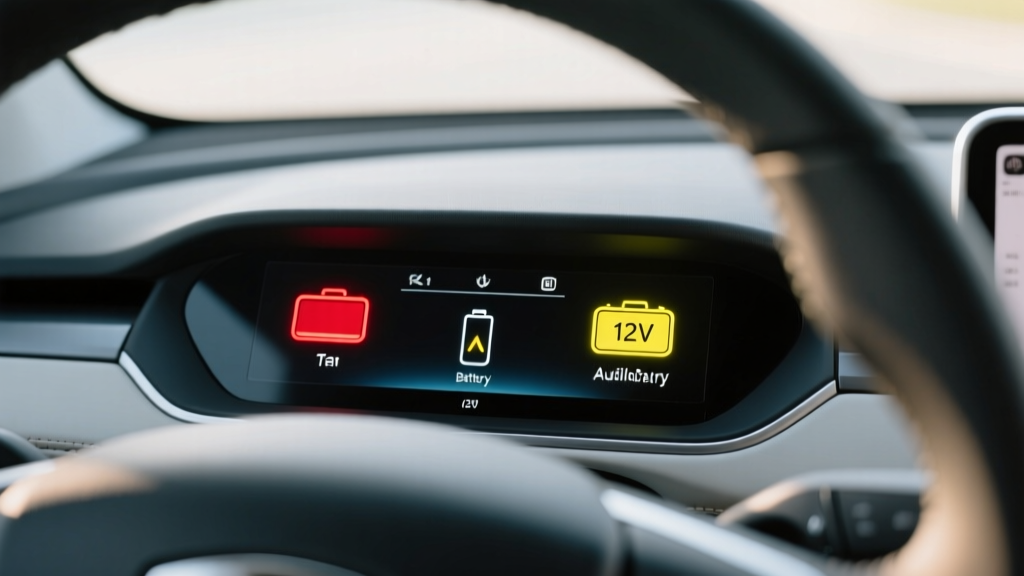
The illuminated battery icon on your instrument cluster almost always refers to the 12V auxiliary system—not the massive pack under the floor. This is the same red battery icon gas-car drivers have seen for decades, and it typically signals an alternator (or DC-DC converter, in an EV) fault or a failing 12V battery. However, EVs also use specific, distinct warning messages for high-voltage traction-battery issues, and confusing the two can lead to misdiagnosis and unnecessary panic.
Decoding Your EV Dashboard: 12V Auxiliary vs High-Voltage Traction Alerts
Understanding the difference between these two warnings is the single most important piece of knowledge for any EV owner dealing with a battery-related dash light.
The 12V Auxiliary Battery Warning (Red Battery Icon)
This is the most common "battery light on dash" scenario. In an EV, the 12V system is maintained by a DC-DC converter (which replaces the alternator found in gas cars). When this light illuminates, it typically means:
- The 12V battery itself is failing (common after 3–5 years, especially lead-acid types)
- The DC-DC converter has a fault and isn't maintaining the 12V system
- A parasitic drain is depleting the 12V battery (e.g., a module staying awake)
- Loose or corroded 12V terminal connections
What to do: If the car is drivable, head to a service center soon. If the 12V battery dies completely, the car cannot start—even if the traction battery is fully charged—because the 12V system controls the high-voltage contactors that connect the main pack.
High-Voltage Traction Battery Warnings
These are manufacturer-specific messages and icons, often amber or red, and they look distinctly different from the classic battery icon:
- Tesla: "Service Required" with a specific battery fault code, or "Reduced Power" message
- Hyundai/Kia: "Check Electric Vehicle System" with an EV-specific icon
- Ford: "Stop Safely Now" or "Powertrain Fault" for severe HV issues
- Chevrolet: "Service High-Voltage Charging System" or "Propulsion Power Reduced"
What to do: If you see a traction-battery-specific warning with reduced power, pull over safely and contact roadside assistance or your dealer. These warnings can indicate cell imbalance, thermal management faults, or contactor issues that require professional diagnosis.
How Long Do EV Traction Batteries Actually Last?
The fear that EV batteries need frequent replacement is one of the most persistent myths in electric mobility. The data tells a different story: modern lithium-ion traction batteries are engineered to outlast the typical ownership cycle of the vehicle itself.
Based on fleet data, manufacturer reports, and third-party studies from organizations like Recurrent Auto and Geotab, here is what real-world degradation looks like across major chemistries:
Degradation Data Points (Real-World Fleet Averages)
- Tesla Model 3/Y (NMC/NCA): ~5–8% capacity loss at 100,000 miles; ~10–12% at 200,000 miles (Source: Tesla Impact Reports)
- Chevrolet Bolt EV (NMC, LG Chem): ~8–10% loss at 100,000 miles; some early 2017–2019 models affected by recall-related replacements
- Hyundai Ioniq 5 / Kia EV6 (NMC): ~5–7% loss at 80,000 miles based on fleet telemetry
- Tesla Model 3 Standard Range (LFP): ~3–5% loss at 100,000 miles; LFP chemistry shows slower degradation curves
- Nissan Leaf (NMC, passively cooled): ~12–18% loss at 100,000 miles; earlier generations (2011–2017) degraded faster due to lack of active thermal management
Note: Degradation is non-linear—most batteries lose 2–4% in the first year, then the curve flattens significantly. Individual results vary based on climate, charging habits, and thermal management system quality.
Most modern EV batteries with active liquid cooling and heating are projected to retain 70–85% of original capacity at 150,000–200,000 miles, which translates to 12–15+ years of typical use. Complete failure requiring full replacement is rare outside of manufacturing defects covered under warranty.
LFP vs NMC/NCA: Which Battery Chemistry Is Right for You?
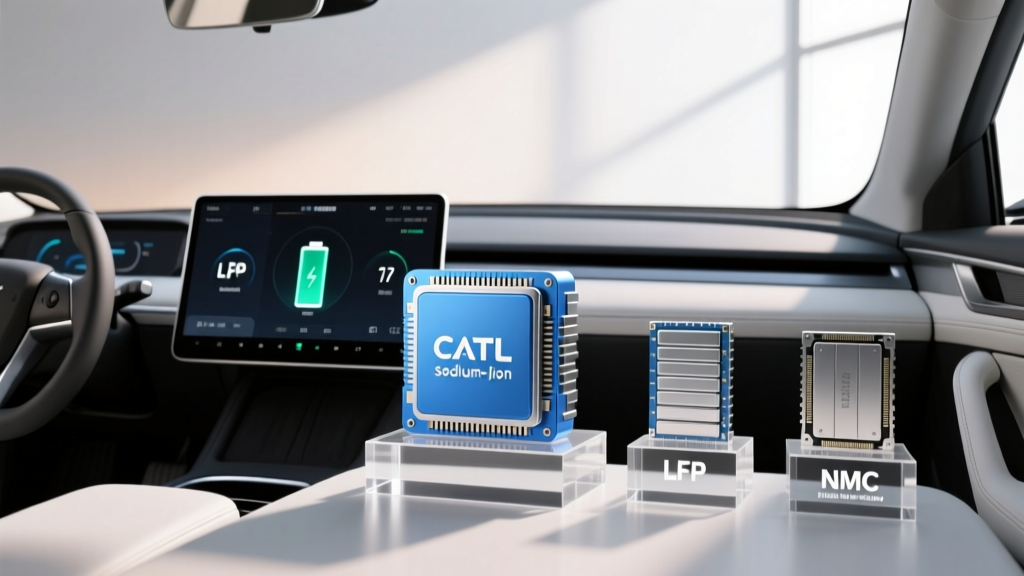
Your EV's battery chemistry fundamentally affects its range, longevity, charging behavior, and cold-weather performance. The two dominant chemistries in 2026 are LFP (lithium iron phosphate) and NMC/NCA (nickel manganese cobalt / nickel cobalt aluminum).
| Attribute | LFP (LiFePO₄) | NMC / NCA |
|---|---|---|
| Energy Density | Lower (~160–180 Wh/kg cell-level) | Higher (~220–300 Wh/kg cell-level) |
| Cycle Life | 3,000–5,000+ cycles to 80% SoH | 1,000–2,000 cycles to 80% SoH |
| Cold-Weather Performance | Weaker; more range loss below 32°F | Better cold-weather energy retention |
| Charging to 100% Daily | Recommended (helps BMS calibration) | Not recommended (80% daily limit preferred) |
| Cost per kWh | Lower (~$80–100/kWh pack-level in 2026) | Higher (~$110–140/kWh pack-level in 2026) |
| Thermal Stability / Safety | Excellent; very resistant to thermal runaway | Good with active thermal management |
| Common Vehicles (2026) | Tesla Model 3 RWD, Model Y RWD, some Ford & Rivian trims | Tesla Long Range, Hyundai Ioniq 5, Kia EV6, Ford Mustang Mach-E ER, Rivian R1S/T |
Choose LFP if: You want maximum cycle life, plan to keep the car 10+ years, mostly charge at home, and live in a moderate climate. You can charge to 100% daily without worry.
Choose NMC/NCA if: You need maximum range per charge, frequently drive in cold weather, take regular road trips requiring the longest possible range, or need the lightest possible pack for performance applications.
EV Battery Warranty Terms: What's Covered and for How Long
Federal law mandates that EV battery warranties must cover at least 8 years / 100,000 miles (in California Air Resources Board states, it's 10 years / 150,000 miles). Most manufacturers exceed these minimums. Here's how the major brands structure their coverage:
| Manufacturer | Coverage Period | Capacity Threshold | Notes |
|---|---|---|---|
| Tesla | 8 yr / 120,000 mi (Model 3/Y); 8 yr / 150,000 mi (Model S/X) | 70% retention | Covers defects + excessive degradation below threshold |
| Hyundai / Kia | 10 yr / 100,000 mi | 70% retention | Among the longest coverage periods |
| Ford | 8 yr / 100,000 mi | 70% retention | Covers HV battery + components |
| Chevrolet / GM | 8 yr / 100,000 mi | 70% retention (60% for Bolt) | Ultium platform covered across brands |
| Rivian | 8 yr / 175,000 mi (R1S/R1T) | 70% retention | Highest mileage threshold among mainstream brands |
| BMW | 8 yr / 100,000 mi | 70% retention | Transferable to subsequent owners |
Key warranty insight: These warranties cover the battery falling below the stated capacity threshold. If your battery degrades from 100% to 72% over 8 years, that's considered normal wear—you won't get a replacement. The warranty triggers only when capacity drops below 70% (or the stated threshold). Manufacturing defects causing sudden failure are covered regardless of capacity level.
EV Battery Replacement Cost: What You'll Actually Pay
This is the question that generates the most fear—and the most misinformation. Let's ground this in real numbers.
| Vehicle / Battery Size | Battery kWh (Usable) | Estimated Replacement Cost | Typical Need Timeline |
|---|---|---|---|
| Tesla Model 3 RWD (LFP) | 57.5 kWh | $8,000–$12,000 | Rarely needed; 200,000+ mi projected life |
| Tesla Model Y Long Range (NMC) | 75 kWh | $12,000–$16,000 | Rarely needed; 200,000+ mi projected life |
| Hyundai Ioniq 5 (NMC) | 77.4 kWh | $10,000–$15,000 | Rarely needed within ownership period |
| Ford F-150 Lightning Ext. Range | 131 kWh | $18,000–$25,000 | Very large pack; rarely needed |
| Chevrolet Equinox EV (NMC) | 85 kWh | $11,000–$16,000 | Rarely needed within ownership period |
| Rivian R1T Dual-Motor (NMC) | 128.9 kWh | $18,000–$22,000 | Covered to 175,000 mi under warranty |
The reality most buyers miss: According to data from Geotab's fleet analysis, fewer than 2% of EVs require a full battery replacement outside of warranty-covered defects. Pack-level costs have dropped from over $1,000/kWh in 2010 to approximately $110–140/kWh in 2026, and module-level repairs (replacing individual bad modules rather than the entire pack) can cost $2,000–$5,000 for many vehicles. Most EV batteries will outlive the vehicle's useful economic life.
Factors That Accelerate (or Preserve) Battery Health
How you charge, drive, and store your EV has a measurable impact on long-term battery degradation. Here are the evidence-based factors, ranked by impact:
Battery Care Checklist — Maximize Your Pack's Lifespan
- Avoid sustained 100% SoC (NMC/NCA only): For NMC/NCA batteries, set your daily charge limit to 80%. Charge to 100% only when you need the full range for a trip. LFP batteries are an exception—manufacturers recommend periodic 100% charges for BMS calibration.
- Minimize DC fast-charging frequency: Frequent DCFC (especially at 150+ kW) generates heat that accelerates degradation. Use DCFC for road trips; rely on Level 2 home charging for daily needs. Studies suggest vehicles that DCFC more than 3x/week degrade ~1–3% faster over 100,000 miles.
- Precondition before fast charging: Most modern EVs automatically precondition the battery when you navigate to a charger. This brings the pack to optimal temperature (typically 85–105°F) for faster charging and less stress on the cells.
- Avoid extreme SoC storage: Don't leave your EV sitting at 100% or below 10% for extended periods (weeks). If storing, set to ~50% SoC. Many EVs have a "storage mode" for this purpose.
- Use active thermal management: Keep your EV plugged in during extreme heat or cold so the thermal management system can maintain optimal battery temperature. This uses grid power rather than pack energy.
- Moderate your acceleration: Sustained high-current draws (repeated hard launches) generate internal cell heat. Occasional spirited driving is fine; daily drag-racing is not ideal for longevity.
How to Monitor Your EV's Battery State of Health (SoH)
State of Health (SoH) is the percentage of your battery's current maximum capacity compared to its original capacity when new. A battery at 92% SoH can store 92% of its original kWh. Here's how to check it:
Built-In Vehicle Tools
- Tesla: The app and service menu display estimated range at 100% charge. Compare this to the original EPA range to estimate SoH. Third-party apps like Tessie or TeslaFi provide more granular tracking.
- Hyundai/Kia: The EV app and infotainment system show battery health percentage in the diagnostics menu on newer models.
- Ford: FordPass app displays estimated battery health for Mach-E and F-150 Lightning owners.
- Chevrolet: myChevrolet app includes battery health monitoring for Ultium-based EVs.
Third-Party and OBD-II Tools
For more precise SoH readings, OBD-II dongles and apps like ABRP (A Better Routeplanner), Car Scanner, or LeafSpy (for Nissan Leaf) can read the BMS (Battery Management System) directly. These tools report real-time cell voltages, pack temperature, and calculated SoH with greater accuracy than dashboard estimates.
A practical DIY method: charge to 100%, note the displayed range, and compare it to the original EPA-rated range. If your 310-mile EPA vehicle now shows 280 miles at 100%, your SoH is approximately 90%. (Account for temperature—cold weather reduces displayed range temporarily.)
Looking Ahead: Solid-State and Silicon-Anode Batteries
Next-generation battery technologies are in active development and pilot production, but none are currently available in mass-market consumer EVs as of 2026. Here's a realistic timeline based on manufacturer announcements and industry analysis:
- Solid-state batteries: Toyota has announced pilot production with a target of limited vehicle integration by 2027–2028, claiming 750+ km (WLTP) range and 10-minute fast charging. Samsung SDI and QuantumScape are also in advanced testing phases. Mass-market availability is not expected before 2029–2030. These promise higher energy density (~400+ Wh/kg) and improved safety but face manufacturing scale-up challenges.
- Silicon-anode batteries: Companies like Sila Nanotechnologies and Group14 are supplying silicon-dominant anode materials to battery manufacturers. These improve energy density by 20–40% over conventional graphite anodes. Early integration is appearing in premium segments (e.g., Mercedes-Benz EQG prototypes), with broader adoption expected by 2027–2028.
- Sodium-ion batteries: CATL and BYD are producing sodium-ion cells for lower-cost, lower-range applications. These are appearing in some Chinese-market EVs and may reach global markets in budget segments by 2027. Energy density is lower than LFP, but raw material costs are significantly cheaper.
All timelines above are forward-looking estimates based on publicly announced manufacturer roadmaps and industry reports. Production delays are common in battery technology commercialization.
Frequently Asked Questions
My battery light came on—does this mean my EV's main battery is dying?
Almost certainly not. The standard red battery icon on your dash refers to the 12V auxiliary system, not the high-voltage traction battery. In EVs, this usually indicates a failing 12V battery (a $150–$300 part) or a DC-DC converter issue. Your main traction battery would trigger a specific EV-system warning message, not the classic battery icon.
How long do EV batteries last in years and miles?
Modern liquid-cooled EV batteries (NMC/NCA and LFP) are engineered to retain 70–85% of their original capacity at 150,000–200,000 miles, which translates to 12–15+ years of average driving. Fleet data from Tesla, Hyundai, and others confirms that the majority of packs will outlast the vehicle's economic life. Passively cooled packs (like early Nissan Leafs) degrade faster.
How much does it cost to replace an EV battery?
Full pack replacement costs range from approximately $8,000 for smaller packs (e.g., Tesla Model 3 RWD LFP, 57.5 kWh) to $25,000 for the largest packs (e.g., Ford F-150 Lightning Extended Range, 131 kWh). However, fewer than 2% of EVs ever require out-of-warranty replacement. Module-level repairs (replacing individual faulty cells or modules) cost $2,000–$5,000 and are more common than full pack swaps.
What does the EV battery warranty actually cover?
Federally mandated minimum coverage is 8 years/100,000 miles (10/150,000 in CARB states). The warranty covers manufacturing defects and capacity loss below a specified threshold—typically 70% of original capacity. Normal gradual degradation above that threshold is considered expected wear and is not covered. The warranty is usually transferable to subsequent owners, which supports EV resale values.
LFP vs NMC—which chemistry should I choose?
Neither is universally "better." LFP offers superior cycle life (3,000–5,000+ cycles), lower cost, better thermal safety, and the ability to charge to 100% daily—but has lower energy density and worse cold-weather performance. NMC/NCA delivers higher energy density (more range in a lighter pack), better cold-weather range retention, and faster peak charging—but should be limited to 80% daily and has a shorter cycle life. Choose based on your climate, driving patterns, and ownership timeline.
Can I check my EV battery health myself?
Yes. Most EVs display battery health or estimated range at 100% charge through the infotainment system or companion app. For more precise readings, OBD-II tools like Car Scanner or LeafSpy can read the BMS directly. A simple method: compare your 100% charge range to the original EPA rating. A significant drop (more than ~15%) within the warranty period may qualify you for a warranty claim.
Sources: EPA (fueleconomy.gov) for range and efficiency data; manufacturer warranty documentation; IRS.gov for §30D tax credit eligibility rules. Battery degradation figures compiled from fleet telemetry reports by Geotab and Recurrent Auto. Always verify warranty terms with your specific dealer and model year.